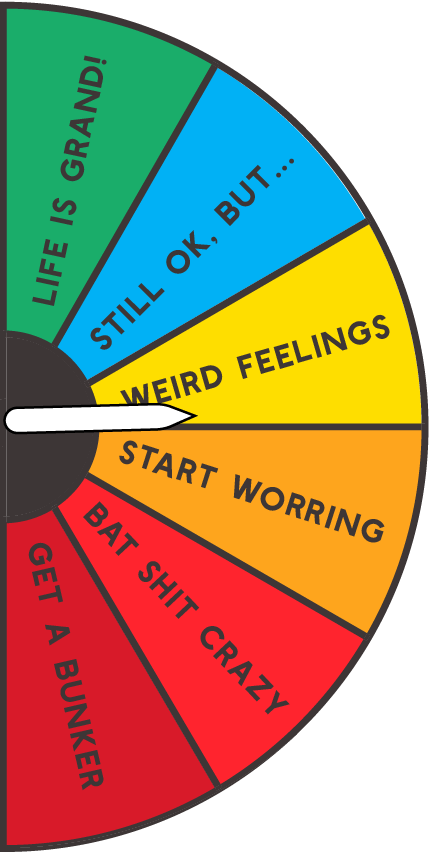
Volcanoes are erupting in The Philippines, but on-fire Australia received some welcome rain. The Iran war cries have been called off and The Donald’s military powers are about to be hamstrung by the Senate. Meanwhile, his impeachment trial is starting, and we’re all on Twitter for a front-row seat.


Gene Therapy Is Giving Blind People Their Sight Back
Featuring Emma Varvaloucas
Gene therapy has been quietly pulling off miracles, and this week, it got its Oscars moment. Emma Varvaloucas, Executive Director of The Progress Network, breaks down how a husband-and-wife scientific team’s decades-long quest has restored sight to over 100 blind Americans, and how a brand-new drug called Otarmeni just became the first-ever FDA-approved gene therapy for genetic deafness. The science is extraordinary. The price tags, less so.


Prefer to read? Check out the Audio Transcript
Although the transcription is largely accurate, in some cases it may be incomplete or inaccurate due to inaudible passages or transcription software errors.
Emma Varvaloucas: The deaf will hear and the blind see. That’s not a Bible quote, that’s our first story, and it’s one of the most extraordinary things happening in medicine right now. We’ve also got: Big Tobacco loses big in the United Kingdom. The US Senate actually agreed on something. And Meta’s plan to beam solar power down from space. Are we about to have Pluto-powered light bulbs? Maybe.
Welcome to the What Could Go Right? Progress Report, where we dive into all of the good news that almost all of us miss because it was buried under the tsunami of bad news. Let’s get into it.
On April 18th, there was an event in Los Angeles that you might not have heard about. It was the 12th annual Breakthrough Prize Awards, also known as the Oscars of Science, because the scientists also want to have their little red carpet moment, okay? And I think they deserve it. And to make things interesting, the winners don’t get little golden statues. Oh, no, six teams walk away with $3 million each.
One of the prestigious awards in life sciences went to Katherine High, Jean Bennett, and Albert Maguire. That’s the scientist team behind Luxturna, which is the first gene therapy to restore vision in blind people. There are more than 100 people in the United States blind as of a few years ago who can now see.
And I don’t mean that in a cutesy like, “Oh, they got a stronger glasses prescription,” kind of way. These are people who are born with a rare condition, Leber congenital amaurosis, or LCA, that causes total blindness by early adulthood, and now they can see. How does it work? Let me break it down.
The therapy replaces a single defective gene, one that normally helps the retina respond to light. It’s a one and done treatment, and so far it lasts. What’s even cooler is that nearly all eligible LCA patients in the US have now received the treatment. These kids can now attend regular schools, play outside safely at night, and in some cases even qualify for a driver’s license. One even became a horse trainer. That’s amazing and truly life-changing for these families.
Bennett and Maguire, by the way, are husband and wife. The couple that restores sight together stays together. Am I right? When they started this work to reverse inherited blindness back in the 1980s, they said it was like thinking that you wanted to go to the moon in 1950.
They spent years testing on mice and dogs, which they later adopted, by the way. The dogs, not the mice. I don’t know what happened to the mice, though. Are we worried about the mice? And then they were ready for human trials after the dog adoption at the turn of the millennium, which is where the third winner, Katherine High, came into the picture.
The three had to push forward very, very carefully with human trials because in 1999, a teenager named Jesse Gelsinger became the first person to die while enrolled in a gene therapy trial. All ongoing research was investigated, funding dried up, the whole field nearly collapsed. But a quarter century later, the gears have started turning again.
Bennett and McGuire’s work in particular has paved the way for more than 100 retinal gene therapy trials alone, and the FDA has now approved five gene therapies in total, including just last month, the very first one for genetic deafness, a drug called Otarmeni. Otarmeni targets a specific faulty gene that causes a form of hearing loss in about 50 newborns a year in the US. Small numbers, but for those families it is everything.
And more science good news! One of those other gene therapy FDA approvals is Casgevy, the first and only one to use the gene editing tool CRISPR. It’s a treatment primarily for the blood disease sickle cell, which affects millions of people worldwide.
Now, there is one enormous caveat here, and I’d be doing you a disservice not to name it: the price. Luxturna costs over $800,000 to treat both eyes, and that’s the cheapest of the five FDA-approved gene therapies, except one special case, which we’ll get into. Casgevy, the sickle cell disease treatment, costs over $2 million and has only been introduced in a handful of the world’s richest countries. In the US, it is covered by Medicaid in about 30 states, though.
Now, Otarmeni’s makers did something unusual. They’re giving it away for free, although they don’t control what doctors charge to administer it. The science here is genuinely miraculous, helping the deaf to hear and the blind to see. These are feats in my mind of biblical proportions, and there are more on the way, but making them accessible, that’s the next breakthrough that the world is waiting for.
Before we get into our shorter stories, here are some numbers that will make you smile. Over 2 million, that’s the number of electric vehicles now on the roads of the United Kingdom. 42%, the drop in teen pregnancy rates worldwide since 2000. Apparently, we’re all watching 16 and Pregnant, and it did the job it was supposed to do.
About 7 in 10: Americans who trust vaccine scientists, similar to trust in scientists generally. Listen, that was a lot better than what I was expecting. 21 new adult cheetahs spotted in Iran, plus six cubs this year. And 475: days AI can spot pancreatic cancer before it appears on scans. And onwards and upwards to our quick hits.
First up, the United Kingdom passed a landmark piece of legislation. It’s a generational ban on smoking. This one is genuinely novel. They’re not just raising the smoking age. The law permanently bans anyone born on or after January 1st, 2009 from ever legally buying tobacco products. And imagine if you were born on December 31st, 2008. You must be so happy right now.
The idea is that slowly, slowly, one day, no one in the UK will be able to legally buy cigarettes or vapes. The UK is trying to create a smoke-free generation, which sounds almost too ambitious, but the early evidence suggests it might actually work. And maybe not surprisingly, this law is pretty popular and drew support from conservative, labor, and liberal Democrat voters. I think probably everyone shares the same feelings of dread and anxiety watching their kids sleep with their candy-flavored vapes instead of a stuffed animal.
Next up is another legal win, except this time it’s a ban coming from the US Senate. The Senate unanimously passed a resolution to ban members and their staffers from betting on prediction markets.
This came after—and I want you to really sit with this—a flurry of bets placed right before the start of the Iran conflict, and after some politicians were caught betting on their own races. One of them was apparently doing it to make a point, but the others, not so much.
Now, before you go feeling sorry for all those poor politicians, don’t worry. As we can tell from this administration, there are still plenty of ways to be in political office and line your pockets.
The resolution passed unanimously, which in the current Senate feels like a small miracle of its own. We finally found something that everybody agrees on. Stock market next? Anyone? Guys?
And finally, a story that feels a little out of this world. Stay with me. Meta has inked a deal with a satellite startup to transmit light from space directly into solar farms on the ground. Why, you might ask yourself? Well, solar collectors can work around the clock if you put them into space, because there’s no night up there.
And this startup thinks it can get around the regulatory risks by using near-infrared light rather than a high-powered laser or a microwave beam, which is what people have tried in the past. Meta is just trying to power their energy-sucking data centers, but I do love the thought of our light bulbs, microwaves, and TVs one day being powered directly from space. Maybe this is the way we finally start communicating with those aliens.
And that’s all for this week’s Progress Report. I hope these stories remind you that there is so much good going on in the world, so it’s important not to be blinded by all of the bad, although maybe scientists can reverse that too.
So if you got some value from this show, maybe something you could bring up at your next Met Gala fashion critique, please send the show to a friend who could really use some positive news. And make sure to like and subscribe to our YouTube channel and follow us on your preferred podcast platform and leave us a review.
And if you’d like more of these stories delivered right to your inbox, sign up for our newsletter. The link is in the description. Do you have a good news story you’d like to see covered next week? Let us know in the comments. Thanks for watching, and see you next week on The Progress Report.
LOAD MORE
Meet the Hosts

Emma Varvaloucas