Volcanoes are erupting in The Philippines, but on-fire Australia received some welcome rain. The Iran war cries have been called off and The Donald’s military powers are about to be hamstrung by the Senate. Meanwhile, his impeachment trial is starting, and we’re all on Twitter for a front-row seat.

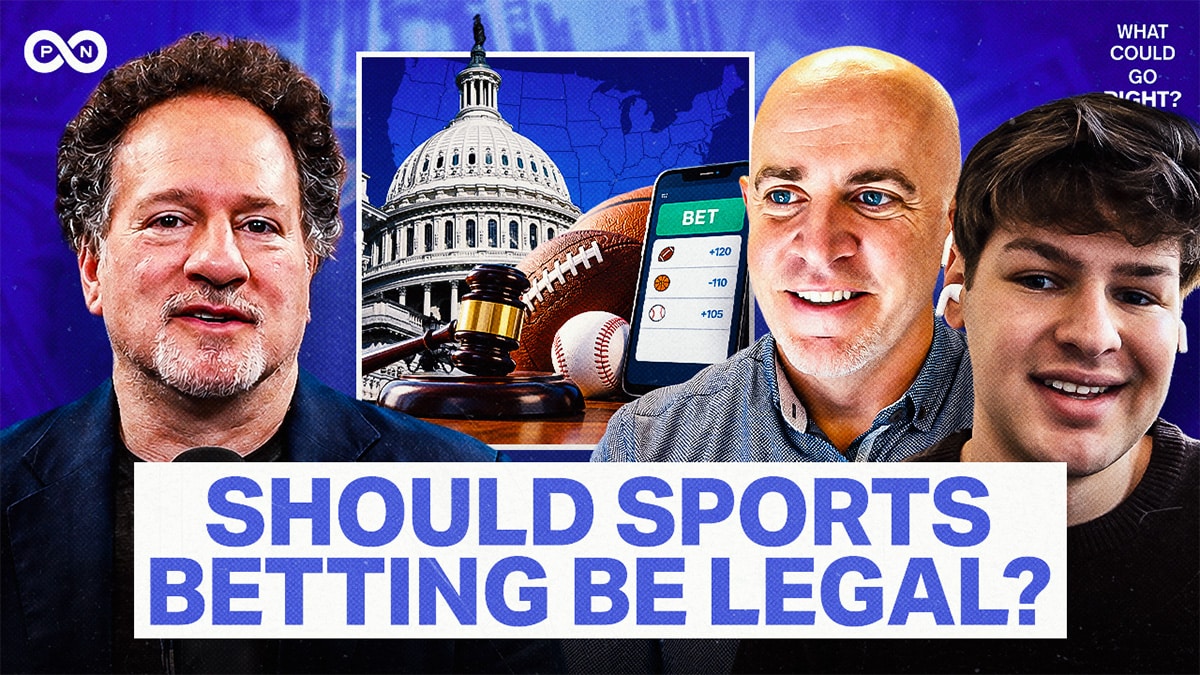
The Science of Sports Betting: How Gambling Apps Are Changing Our Brains
Featuring Dr. Brendan Dwyer and Isaac Rose-Berman
Legal betting has exploded in the US. With the phone in your pocket, you can bet on the specific outcome of a game or who will attend the next State of the Union address. But legal betting has plenty of controversy, including how it affects sports fandom and the way it’s marketed to young men. Are the concerns overblown or do we need a real plan to address real harm? Two guests join our host Zachary Karabell for this conversation. Dr. Brendan Dwyer is a professor and the director of research at the Center for Sport Leadership at Virginia Commonwealth University (VCU), and Isaac Rose-Berman is a fellow at the American Institute for Boys and Men, focused on gambling research and policy.


Prefer to read? Check out the Audio Transcript
Although the transcription is largely accurate, in some cases it may be incomplete or inaccurate due to inaudible passages or transcription software errors.
Zachary Karabell: DraftKings, FanDuel, Kalshi, Polymarket, Robinhood, all the gambling on all the apps, and sports betting in particular. This has become the golden age of online sports betting, and there is a lot of concern about the billions being spent now On these apps, especially by the youth. You cannot turn on a sports event without being inundated with sports ads.
In fact, they’re sponsoring a lot of these things. So we’re gonna have a conversation today about all of that. Is it recreational in a kind of an innocent way? Is it generally fine, even if it is, for a set of the population, quite harmful? Is gambling like drinking? Is it okay to do it in moderation, or is any of it too much?
We’re gonna have that conversation with two people today who have spent a good deal of their time looking at these questions. I’m Zachary Karabell. This is my podcast, What Could Go Right? I’m joined today by Dr. Brendan Dwyer, who’s a professor and the director of research at the Center for Sport Leadership at Virginia Commonwealth University, VCU, a big sports school, and also by Isaac Rose-Berman, who is a gambling research and policy fellow at the American Institute for Boys and Men, which is headed by an earlier What Could Go Right?
guest, Richard Reeves. And I am really interested in hearing both of their perspectives. Also, because we’re gonna have a bit of a generational conversation today, which you will discover in just a moment. Brendan, Isaac, it is a pleasure to have you both today to discuss what is increasingly a pretty, I guess, central part of our culture, right?
Gambling has become front and center in, in pop culture. I once tried to write a book about gambling, and, uh, like my first book proposal, which never became a book, was to write about gambling in the United States ‘cause it seemed to me like as a theme from, you know, the whole Deadwood frontier, poker-playing people in the saloons to horse track racing to the lottery as a way to raise state money and, and call it a game.
Like, all these things seem pretty woven into American society pretty deeply. So I mean, I, I, I’m always a little bit cautious when the predicate for these discussions is, “Oh my God, gambling’s out of control. I can’t believe it,” right? Isaac, you got into this partly because you started gambling and started making money and also thinking about, okay, what does this mean culturally, not just what does this mean p- personally.
And Brendan, you, you know, you come at it more from an academic, although maybe, you know, you were like an inveterate gambler and then, and then did this as well. Sometimes I feel like we are a little bit too shocked, shocked that there’s gambling in America.
Brendan Dwyer: Yeah, I would agree with that. Gambling, and sports gambling in particular, has been around forever.
It’s just, it was pushed to the fringes. You know, it was pushed to offshore gambling sites more recently because of internet access. But even before that, it was in local neighborhoods through a bookie. If you really wanted to gamble on sports and you had the money and you had the ingenuity, you could bet on sports.
It’s Been part of our culture. We’ve always wanted to show that we knew something more than somebody else. We were passionate sports fans and wanted to put money down to get money back. It’s just now it is more in our face than ever before.
Isaac Rose-Berman: Yeah, I mean, I, I think you hit it right on the head, Zach. It, it’s not just a question of gambling itself, but rather how it intersects with other aspects of our culture today.
So the digitization, the fact that not only is it, you know, legal, but you don’t need to go to a casino to place a bet. It’s in your phone, it’s 24/7. And so the accessibility, the way that the vice has iterated, I think of it very similar to marijuana, not only in terms of its accessibility, but, you know, the, you know, the weed that we’re smoking today is not our grandparents’ weed, and the same thing is true for gambling, right?
People aren’t betting on who’s gonna win a game, they’re betting on what pitch is gonna occur next. And so legalization occurs and then popularity and then advertising and then the potency of these vices increases as well, then you combine that with technology and suddenly we have a, a gamblified society.
Zachary Karabell: You know, it’s funny. So look, I, I go into a lot of these discussions, and this has certainly been a theme of this podcast of What Could Go Right? I’m, I’m less pessimistic about America in the present because I’m more pessimistic about America in the past. And so the bogey is kind of a different one. And so I wanna…
I do wanna push you both on this, which is there was, as, as you just said, Brendan, there was a lot of gambling in the shadows, and some of that was romanticized, you know, even, even in our lifetimes. You know, the movie The Sting, right? The, the whole point of The Sting was not, “Ooh, Robert Redford and Paul Newman are bad,” it was like, “Ooh, isn’t this very cool how they caught the other guy who was very bad?”
And, you know, maybe it’s better that it is actually out in the open that there is a regulatory framework, maybe a flawed one. Right? There was no regulatory framework in the 19th century around, you know, running any of this stuff. So human beings are gonna do this. I take your, your weed analogy, Isaac. And, and a similar one, right?
People are gonna do these things. Isn’t it better that it be out there, public, maybe regulated?
Isaac Rose-Berman: Yeah. So to be clear, I, I strongly believe sports betting should be legal and regulated. And I think to your earlier point about state lotteries, Zach, what is the ratio, do you think, of Americans’ losses on state lotteries to legal regulated sports books in 2025 and
Zachary Karabell: 2026?
Losses in lotteries? I’m just gonna guess. Losses in lotteries are a multiple of, you know, 5 to 10X.
Isaac Rose-Berman: It’s about twice as much. Sports betting losses go up every year, but lottery losses are also much more regressive. Sports bettors tend to be white. They tend to be more educated. They tend to be upper middle class.
Lottery is often concentrated in poor communities, in predominantly Black and brown communities, and, you know, you don’t see people getting too upset about the lottery. If we were talking about the lottery, we could have a separate conversation. I think that there are a lot of things that are messed up about it.
You know, you have online lotteries now, which are effectively state-run slot apps, which are pretty messed up in my opinion. But yeah, I think the big thing is really the salience of this, right? And sports for so long was separated from gambling. You had the commissioners of these leagues say, “We would never wanna be associated with gambling,” and then quickly it gets legalized, and boom, you know, you have DraftKings ads every commercial.
So I think it’s not really just the financial aspect of it and how much money people are losing, but the cultural salience. And Americans love sports, not only because we wanna bet on them, but because they’re an incredible thing. And to have this quick about-face where I can’t turn on the TV now and not see LeBron in a Polymarket or a DraftKings commercial after being told for so many years that the leagues would never get in bed with these companies is pretty jarring for a lot of people.
Brendan Dwyer: Yeah, I would agree with that, and I also agree with Isaac’s point about it being legal is, a majority of sports fans and those that bet on sports are responsible bettors. So the idea that everyone is an addict or everyone is a problem sports bettor is just wrong. We have sports bettors like any of, any consumer or any sports fan that it’s a spectrum And prior to it being legal, there was addiction, and then there was also if you had a sports bookie and they were associated with any sort of racketeering, you had the issue of if you don’t pay your bets, then what?
Now it’s legalized, and yes, there may be issues with where you’re getting their money and there could be financial challenges. Those were there before. I would say that the gamblification aspect and the way that you can increase the impulsivity or utilize that impulsivity is so much easier now because it is on our phone.
We can use Venmo immediately, our credit cards immediately. It’s just so much easier to bet quickly, impulsively, and it just ramps up. And that, like you mentioned, the about-face from where it was and how Adam Smith… No, not Adam Smith. I forget the name of the, uh… Adam Silver, sorry, I should know that. The NBA commissioner
Zachary Karabell: is- Yeah, it’s often, it’s easy to get confused.
A, a nine- an 18th century famous, uh, Scottish economist and a Jewish balding head of, uh, of the NBA. I mean, I constantly am getting them mixed up.
Brendan Dwyer: Well, I teach our sport business class. I should really know the NBA commissioner. He’s such a unique looking individual. You know, his thoughts about Sports betting and then how it changed in 2014, and, you know, how we’ve adopted it so quickly that there is integrity issues with it, and we’re seeing those integrity issues, not just those advertisements, but players’ actions, not just college athletes, but pro athletes, and I think people have an issue with that culturally.
Zachary Karabell: The ratio of lotteries to legalized sports betting does show you how quickly l- legalized sports betting has increased, right? ‘Cause last time I had looked at it, it was fractional relative to lotteries. I’m actually much more negative about lotteries ‘cause I think they are ways that state governments have kind of covertly, as, as Isaac said, done a regressive tax on people while kind of acting sanctimonious and saying, “We’re, we’re regulating this.
This is careful,” ‘cause there’s absolutely no regulations about how many lotto tickets you buy or how many Powerball or Mega Millions. Whereas at least, and, and correct me if I’m wrong on this, yeah, you can use Venmo for DraftKings. At least now at least you can’t go into debt to DraftKings to bet.
Isaac Rose-Berman: As, as Brendan said, you need to post up.
I will say, Zach, fun fact for you, state lotteries are the only entities that are exempt from truth in advertising laws because- Ah … they are run by the government, so they don’t have to follow those. Um- That’s, that’s good, man. Yeah, but I, I– The, to the point about the increase, it’s, it’s a bit tricky because so much of this was underground for so long that if you look at the official numbers of how much Americans lost to sports betting, you’re only getting the illegal numbers, and there’s a lot of debate about the size of the black market.
I think everybody can agree, right? We all, we all see the world around us, and we can tell that a lot more people are betting on sports now than they were in the past. Just how much is a little bit tricky. And, and to Brendan’s earlier point about the distribution of losses, like most consumption activities, you’re looking at a few percent of the population that is about 80% of the losses.
But then the flip side of that is a study from last year showed that 60% of all bettors in the NFL accounted for only 1% of sportsbook revenue. So, like, the median person who is betting on sports is placing a, a $5 long shot parlay a couple times a week and losing maybe a few hundred dollars a year, and this is billed as an entertainment product.
And for someone who’s losing, you know, a couple hundred bucks a year, which I believe is less than the current cost of streaming all of the NFL games, it’s very reasonable. Now, obviously, there are costs that are not financial when it comes to gambling as well, but the idea that all men in America, for example, are losing tons of money sports betting is just simply not really borne out by the facts.
Zachary Karabell: I mean, Brendan, where do you come down on this? ‘Cause you’ve, you’ve written things and spoken critically of k- kind of hooking people on the game, right? And, and the gamification of gambling being a, a way to obviously extract more income. Some of the same critique of the trading apps like Robinhood. It creates the same dopamine effect of betting with the immediacy of an app and also all the different ways you can bet.
People watching FIFA matches for, for how many corner kicks and not how many goals ‘cause they had done a bet of how many corner kicks a game. But I guess, uh, you know, my question in all that is kind of so what and what’s wrong with that?
Brendan Dwyer: Yeah, I– it’s an entertainment product. I think where they have to be careful is with young people, and the challenge of understanding majority of 18 to 24-year-olds, especially males, are not fully capable of making rational decisions.
They haven’t fully progressed in terms of their decision-making. Is it every male 18 to 24-year-old? No, it’s a broad statement. But these heavy advertisements, especially if you watch the World Cup, we’re gonna watch the NFL this weekend, college football, they are clearly targeting this demographic. And you’re talking about establishing a norm of behavior.
You’re talking about a group think. It’s more of a social thing that they are trying to establish, and it’s just risky because there is research, research that I’ve even conducted, where you have younger people that are more impulsive. That means they’re chasing their losses. After they have losses, they’re more likely to bet again.
After their losses, they’re more likely to reach out to athletes for blame or dehumanization. I just think there needs to be some sort of regulation associated with these advertisements. It’s still under the context of understanding Is this the majority of sports bettors? No. But I do think when it comes to young people, it has to be about education, and it has to be about protecting consumers of a certain age group.
And, uh, it’s 18 to 24-year-olds where I’ve found is most at risk. Isaac, I’m curious to hear your opinion on that ‘cause you’re close to that age demographic.
Isaac Rose-Berman: Yeah, yeah. No longer. I’m an old man now. No, look, I, I, I completely agree, right? I think there, you’re gonna be hard-pressed to find an advertising regulation that, that I’m not on board with.
I think the bigger question, to go back to what you were talking about with Robinhood, Zach, is sort of the blurred line between gambling and investing. I mean, to be clear, if you download the Robinhood app now, they are pushing sports betting as, in the last few months, sports betting via prediction markets on Robinhood, you know, federally regulated event contracts are the biggest driver of their revenue.
This is a, obviously a negative-sum game, right? When there’s, nothing is being created when I bet on the Seahawks and you bet on the 49ers, and we shift money back and forth, and the platform takes a fee, and the platforms are taking a very fat fee. And so the incentives are not aligned there. I think the, the harm really is about the conflation between these two activities, and when you have the displacement of people taking money that they otherwise would’ve saved or invested and put it into, you know, sports event contracts or sports betting, that’s, that’s the real danger.
You probably shouldn’t be allowed to have an app that houses your stocks also have your sports bets on it, even though these companies explicitly want to create the everything app. So I think there needs to be more friction involved. But yeah, Brendan is exactly right. The, the risks are often highest for young people, although I will also say that they’re very high for the older people as well.
In particular, I used to go to my grandparents’ retirement community, and there was a bus that would take them directly to Atlantic City, right? And they’d get a free roll of quarters. Look, you go to the slots, you’re still gonna see a lot of old people, and gambling, like many vices, becomes far more dangerous when it is combined with isolation, particularly socially.
And when you look at rates of social isolation, part of it is true for young people who are sitting on their phones, but part of it is also true for a lot of older Americans, which is why you see really dangerous rates of, of gambling addiction and compulsivity among a lot of very old people as well.
Zachary Karabell: No, I mean, it’s, you know, it just kinda reminds me, in the Robinhood thing, like use your Trump meme coin to bet on the latest latter-day Chicago Black Sox point-shaving scandal.
There is clearly destructive behavior that can go with this. You know, to me, there’s this like constant, very American oscillation between a lot of permissiveness juicing up the experience, and then a lot of moralizing and hand-wringing and legitimate concern about collectively self-destructive behavior, and then we kind of do the pendulum between these things without easily coming to some degree of midground.
I mean, maybe Las Vegas in the 1990s and early aughts was some degree of midground, and I gather from both of you, you know, you’re certainly not gambling purists. You’re not saying, “Oh my God, this is gonna bring down society as we know it,” but you’ve both talked a lot about, “Hey, we need better guardrails here.”
So, like, what would those guardrails look like?
Brendan Dwyer: I think there’s advertising related to parlays, especially on social media. Parlays are, uh, a collection of bets. Let’s say you wanted to bet on a money line or you wanted to bet on over/under, that is just a single bet. If you combine two bets together, then it all of a sudden becomes a parlay.
The opportunity of winning more money happens, but the chance of winning decreases substantially. They’re exciting because it’s more like winning the lottery. You put $20 down with a chance of winning all of a sudden $100 or $200, and people like doing these things, especially younger men, because it goes from the opportunity from, you know, put $20 down to winning $600 as opposed to just winning, you know, $50.
These are where the sportsbooks really make their money ‘cause that’s where they make the, the biggest juice. And so I think the advertisement of those, because it is clearly where they’re most profitable, I don’t like that they Have the talking heads during broadcasts and prior to broadcasts, so the Terry Bradshaws and all of those individuals talking before NFL games also having their own specific parlay right before the game, also advertising.
To me, those are just things that I think are easy to take away. Uh, we’re never gonna eliminate all the advertising. They’re for-profit companies, they’re important for the industry of sport, but I think they’re, um, the elimination of parlays, especially close to the game and right after the game would be a n- would be one.
And the other one would be automatic notifications that you don’t have to sign out of on your phone. So they are very good at timing when your bet has lost or when your bet has won, and they will contact or communicate you right away to have you re-up for the next bet.
Zachary Karabell: Hmm.
Brendan Dwyer: So that is something that I think would be an easy regulation.
Isaac Rose-Berman: I actually disagree a little bit. So I think in terms of advertising, yes, once again, I’m in favor of basically all advertising restrictions. I think it’s insane that we have, you know, athletes doing this, that d- you can’t… Right? I used to go to baseball games with my dad, and it was, like, this great pure experience.
The fact that a father can’t do that with his son anymore and be inundated with DraftKings ads is, is bad. On parlays specifically, I actually, I disagree with sort of most people on them. So, so first of all, just to reiterate what Brendan said- I don’t know. I
Zachary Karabell: think there’s nothing better, as you’ll find out, than being a father and losing money on a bet because your son told you to.
Isaac Rose-Berman: There you go. Even, even better. So, so parlays-
Zachary Karabell: You missed, you missed a, you’ve missed a crucial bonding experience.
Brendan Dwyer: I got a, I got a 12-year-old, so I hear you.
Isaac Rose-Berman: So parlays are just, it’s, it rolls over your bets, right? So let’s say you place a bet. You can place a bet on the Yankees and a bet on the Mets. If you do a parlay of the two of them, it’ll automatically take the stake and roll it over.
And so what that does, it effectively, as Brendan said, increases your wager size. You’re risking a little bit to win a lot. And because you’re effectively betting more, the percent pull that the house takes is higher. So if you look, as Brendan said, you know, the average loss on a parlay is anywhere from, you know, 10 to 30%, whereas if you just bet on one individual thing, it’s usually gonna be closer to 5%.
Those have always been popular, and this is true in horse racing as well, right? If you think of top three betting, right, like, you pick the exact horses. People have always wanted to risk a little bit to win a lot. What’s really changed since the legalization of sports betting is the technology behind them, and we’ve- created something called the same game parlay, initially the single game parlay.
And what that is is the ability to combine multiple bets from one game. So going back to my previous example, if you wanna bet on the Mets and the Yankees, it’s a pretty easy bet to create because those are independent events, and so it doesn’t take any complex math to figure out what the odds of combining the two of them are.
But if you wanna bet on Aaron Judge to hit a home run, the Yankees to win, and their pitcher to have eight strikeouts, that’s actually quite a complex problem there because there’s a bunch of different correlations that go in different ways. And so about five years ago, those types of bets started being created, and they’re incredibly popular because they allow people to get that lotto experience while only watching one game.
So I can be locked into only the Yankees game, predict all of these different things, and that is going to give me my big payout. Those are incredibly popular. You know, you’re looking at roughly 50% of all wagers are, are same game and single game parlays. And because of all of the correlations in there, as Brendan said, the return to the house is very high.
Where I disagree with him a little bit, uh, is not on the advertising, but on the fact that these are necessarily very dangerous bets because the thing is people often optimize for the amount that they stand to win, right? And so if you risk $10 to win $100 as opposed to risking $100 to win $100, what happens if you lose your $10 bet, you’re like, “Okay, you know, that’s unfortunate.
Maybe I’ll place another one, but I wasn’t really expecting to win.” Whereas if you’re betting 100 to win 100 and you lose, you’re much more likely to double down, chase your losses. And so parlays are actually associated Even though with a higher house edge, with a lower average wager size. So it’s just a sort of a specific thing there, but I, I think Brendan is exactly right in terms of the advertising, the sort of apps themselves.
I have friends who work in, you know, design and user experience for the sports betting companies. They’re incredibly smart, they’re incredibly good at their jobs, and their job, like any technology company, is to get their users to stay on the app as long as possible and to enjoy the experience. But of course, when we’re talking about in gambling, you know, spending more time on the app and enjoying your experience is highly correlated with losing money.
Right? So I would, I would turn to you, Zach, and say, “Well, when it comes to social media, what restrictions should we put on to make sure that Instagram or TikTok aren’t as addictive?” And then probably just take some form of that and apply them to DraftKings and FanDuel or Calci. I don’t really see that much of a difference other than the fact they’re monetizing based on your money as opposed to just your eyeballs.
Zachary Karabell: Yeah, I mean, I am, I’m probably the wrong person to ask about a regulatory framework ‘cause I tend to be more libertarian about these things. A normal bell curve distribution of human beings, there will be X percentage who will be, uh, destructively addicted, X percentage who will be recreational, and X percentage who won’t care.
That curve can shift 5 to 10% on the distribution of a population, and can be pushed that way by advertising, by social forces. There’s also a curve, a sort of an adaptation curve. So all this stuff is pretty new, the DraftKings phenomenon, and unfortunately, if, if you’re the young people when the new thing gets introduced, whether that’s Instagram or DraftKings, you’re, you’re probably gonna suffer the, the most severe consequences of that new thing because no one’s really figured out what the balance is.
But some of that balance kind of happens irrespective of whatever the governmental framework is. I’m not trying to say this blithely. I am the one who’s likely to say those things are, are, are transitory and are working their way through the system, whereas regulations, once enacted, are really, really difficult to un-enact.
And usually what happens is you enact a regulation, then you enact another regulation to remediate the regulation that you did the first time, and then you enact yet another one and you create another regulator, and then you’re kind of off to the proverbial races.
Brendan Dwyer: And that likely is, uh, might be what’s happening because you’re 100% right, this is still very new.
While there have been states that have been legally betting online for almost eight years now, or over eight years now, there’s still majority of states and individuals haven’t had that long of time. And so they are still getting used to it, and they are still adapting, and there’s still, you know, a novelty effect that is going to wear off, and they’re going to get used to it.
And while A lot of sports fans that are a vocal minority that are really upset with the inundation of all these advertisements, and they think everyone is sports betting and everyone is an addict. That will eventually go away because they’ll get used to these advertisements. I do think though, you know, as Isaac said, there is something a bit disingenuous when you see the athletes and the teams have just so put the arms around betting so closely when it was just 10 years ago that it was something where it was an integrity issue, and all of a sudden it’s not I’m very curious to see how they continue to change rules, adopt rules from an inte-integrity perspective.
But from a consumer regulation, you’re probably right. They’re probably just biding their time to see how the market reacts because there might be a novelty effect. I know in education we’re dealing with a novelty effect. Everyone wanted to take an online class. Everybody was online, online, online, asynchronous.
Now all students wanna come back to the classroom, which to me is awesome.
Zachary Karabell: What, what about this boom in physical casino spaces? So it used to be Atlantic City, Las Vegas were pretty much it. Some of the riverboat casinos in Mississippi, then you had the bingo palaces and the beginning of, uh, Native American reservation casinos, which obviously Foxwoods and, and now basically m-many, many states are saying, “Okay, the, the, the jig is up.
We’re losing revenue. We’re losing opportunities here. People like doing this.” So you have Steve Cohen, controversial billionaire, wants to develop that whole area arou- in, in Flushing, New York, as a kind of a hotel thing. You have a whole series of other developments around the country. From both of you who’ve talked about the alienation, the isolation, I mean, Isaac, you talked about that for both young and old people.
Aren’t casinos a good thing? You know, people have to go into them. They, they usually go with friends. Uh, you’re right, Isaac, there’s often a lot of retirement home, I mean, there was that, the buses that would, like, go from Midtown Manhattan. They’d give people a, the, you know, a big gulp full of quarters.
They’d bus them down to Atlantic City and bus them back. Isn’t, isn’t that not such a bad thing, creating social spaces for people to do stuff together?
Isaac Rose-Berman: To be clear, I think, you know, people gambling in person together is far superior to them gambling online. I, I, I’m not sure the degree to which what you’re describing is actually widespread as opposed to just a New York-specific phenomenon where we have these three, uh, big casinos.
There’s a lot of weird stuff in other states with, you know, skill-based gaming machines and, like, quasi-slot machines that, like, if you go into a gas station in some random place, they’re basically just gonna have a slot machine. I actually don’t know the numbers off the top of my head on if the number of casinos has increased, but there’s a lot of cannibalization happening.
And I would say to go back to our earlier conversation about what regulations would be in place, I actually think the number one thing that I’m in favor of is preventing online casino, right? So I think that you should be allowed to bet on who is going to win in the Yankees game tonight, but you should not be allowed to play online blackjack for a couple reasons.
The first being it’s a far more addictive product. We know that. The revenue is far higher, so there are currently I believe 40 states with legal online sports betting and only seven with legal online casino. And in the states with both legal online casino and online sports betting, you’re looking at, like, four to five times as much revenue, AKA losses, that are coming from online casino.
So I think that’s really where, one, regulation, I think it’s pretty clear. You know, we don’t need to have online casino. In most countries, their online sports betting and casino is together. But in the US, we’ve sort of separated them, and it’s not a coincidence that if I cross the border to New Jersey right now, I can’t download the DraftKings Sportsbook app without it being integrated with the DraftKings Casino app.
But I can download the DraftKings Casino app without the DraftKings sports betting app. Because all of these companies, DraftKings and FanDuel, you can read their investor reports, they do not want to be sports betting companies because sports betting is not a good business. They want to be online casino companies.
If you think about traditional sports betting, you’re risking an amount of money, it takes three hours, and the house is getting a 5% cut. You have to pay the leagues, you have to pay LeBron, you have to pay your developers. It’s just not a good business. Whereas if you think about an online slot, it’s 24/7.
You know, you never have to adjust the odds, you don’t have to worry about anything, and, and people end up losing way more money. So I think y- that’s what the thing I would care about is, you know, getting rid of online casino and making sure it doesn’t proliferate. But, but to your point about the spread of, of casinos in general, I think it’s mostly not good, right?
I think s- you know, policymakers see this as, “Here’s how we can get some free, easy revenue without actually taxing people.” They don’t take into account the long-term social costs. But, but yeah, I’m, I’m not really sure. I know a lot of places, they’ve, they’ve seen a real, uh, decrease in, in casino attendance since the spread of online gambling.
Uh, I don’t know if that’s true across the country.
Zachary Karabell: The number of commercial gambling, physical gambling places has increased about 20% over the past year, so there’s almost 500 now. Does that square with some of your research then? Yeah, but so I, I…
Isaac Rose-Berman: Yeah, I would, I would just, I would question whether that’s a societal trend or whether the fact that we live in an era of deregulation of everything, right?
So it’s just-
Zachary Karabell: Sure. No, no. I was just saying There clearly are more physical places to gamble than there used
Isaac Rose-Berman: to be I mean, there’s, there’s, yeah. W- when I, when I go to a gas station everywhere and anywhere in the country, I’m getting sold, you know, black market Viagra and illegal THC and whatever, and like-
Zachary Karabell: You don’t have
Isaac Rose-Berman: to buy it, you
Zachary Karabell: know
Isaac Rose-Berman: is that, I don’t, I don’t, I know I don’t have to buy it, but sometimes, s- sometimes you wanna buy it just like you wanna gamble, and so I’m, it’s, uh, you know, the question of, like, the supply and demand here, like, where is the increase really coming from? I think we live in a time of, you know, lax regulation.
It was just announced, uh, uh, a few days ago that Donald Trump Jr.’s VC company has, like, a $300 million investment in Polymarket, I believe. Mm-hmm. And so, like, all of these things, all of these things go together, you know, when you have people at the top and, and in politics that are profiting from that, it makes it a lot easier.
Casinos are gr- are generally a great business. It’s good to be the house.
Brendan Dwyer: Yeah, I would think, f- I can’t speak a lot to the casino aspect of it in general, but I can say from a sports betting aspect of the casino, going to a sports book within a casino in general is a pro-social experience And if they’re building these complexes, the one in Richmond, Virginia, where I live, has failed several times.
Um, I don’t know if it was ever focused. It’s not– It was way before it was legal to bet on your phone or bet anywhere in Virginia. But it, if you are building these complexes, and you’re focusing it on sports and as part of a greater sport and entertainment district, that is unique. If it’s based around a sports book, I mean, I think basing sports betting on a pro-social experience, you know, it’s a three-hour game, you’re there, you’re eating, you’re drinking, you’re doing it w- among other people, I think that is, as Isaac said, a much better than sitting in your basement, sitting on your phone, where it can just be an isolated-
Isaac Rose-Berman: Yeah
Brendan Dwyer: you know, cycle, a destructive cycle. I think that would be a good reason to get a casino. But in terms of the other, you know, Isaac’s points about DraftKings, you know, DraftKings, FanDuel, they own a substantial p- part of the market share. We’re talking about o- close to 80% or 70%, and it’s still a tough business for them.
The profit margins aren’t as much as people think, given the highly cluttered marketplace, given all the taxes they have to pay. So it makes sense that they would wanna transition into more of a traditional casino. But if it is focused on pro-social, that’s something that when I studied, I originally started fantasy sports before I got into studying betting.
The pro-social component is really what draws people to- To fantasy, yeah … um, playing, to playing fantasy.
Isaac Rose-Berman: Yeah, to be, to be clear, I, I think, I think the cure to the male loneliness epidemic is, uh, more social gambling. I think we need to get more poker games, we need more fantasy sports, we need more people going to the casino betting together.
To be clear, to, to Brendan’s point, s- in-person sports books at casinos are right now, and have always historically, been effectively a loss leader. They have… The casino does not wanna have a sports book. They’d rather replace it, just like they’d rather replace all the poker rooms with slot machines, ‘cause that’s by far more profitable.
They have them there so people will come in, they’ll watch the game, and then whether they win or lose their bet and get some drinks, they’ll then go and lose it all at the tables and the slot machines. So the, the, you have to understand the incentives here, like even when we romanticize, you know, in-person sports betting, which I do, I think it’s great.
I was just in Vegas a couple weeks ago at Circa Sports Book, which is the largest in-person sports book in the world. Good friends with the people there. I think they’re awesome. They barely make money. Like, they make a little bit of money, but like relative to the rest of the casino, they’re, they’re doing terribly, but having a giant sports book there is great to get people in the door, and they then go lose it all at the slots.
Zachary Karabell: What about the America versus the world, or America in comparison to the rest of the world? The biggest non-American example of a kind of a casino haven was Macau in, uh, off the coast of China or off the coast of Hong Kong, depending on who you were and how you described it. And, you know, one thing that I think is notable, and here I’m gonna do the kinda what could go right shtick, is There’s always been an aspect of American gambling.
Look, every culture gambles. They gamble differently. You know, they’re– they do cockfights, uh, the Haiti and Dominican Republic. You do boxing everywhere in the world or Krav Maga or… Like, everybody bets on something somewhere somehow. That is not uniquely any culture. But you could say there was an element of American gambling in the ran- romanticization of going for the golden ring.
You know, the ambition of changing your life circumstances dramatically. Hard work is, is great and all, but, uh, there’s no guarantee. And, and the, the kind of the, the Honeymooners, uh, uh, Jackie Gleason, Art Carney, and the, that famous episode where Ar- Art Carney tries to convince Jackie Gleason to invest in a, in a string of poloponies, po- poloponies.
Like, there’s this American thing of gambling as a, yeah, an id-like manifestation of we can… Anything is possible. Your greatest dreams are possible. And sure, that’s often, uh, bullshit, and it’s a, it’s a dream, not a reality, but it can be a potently powerful dream if it propels you to constantly aspire to change your circumstances, rather than the kinda more apathetic or, or resigned You know, oh well, this is just the way it is
Isaac Rose-Berman: First to tackle your point about the geography, Macau, yes, sort of the gambling hub of Asia, almost like Vegas.
But I think that the difference there is that just like Vegas, you have a set place where everybody goes to gamble, right? I, I think the, the better example is actually Australia, where they’ve had legal gambling for a very long time. You go to every pub, there’s gonna be a pokie machine. You look at the average losses, I believe Australians lose about four or five times as much to gambling as, as any other people in the world.
Uh, and so that’s, I think, this question of not just do you have a set place where, you know, gambling and perhaps all other vices are housed, I think that’s actually quite a good thing, so that you don’t have that in people’s day-to-day life versus a society overall that just has gambling much more widespread and integrated.
But to your point about this idea of like gambling as, you know, speculation and gambling as like, okay, you can, you know, strike it rich. I like to say that gambling is a verb and a noun, right? And so gambling the verb is, you know, speculating on something in the attempt to win more money. And you can do that on a sporting event, you can do that on a stock option, you can do that by buying a house or a business.
Anything can be gambling. But gambling as a noun is this activity where it is, in my opinion, this is not, not a set definition, but how I think about it, gambling as an activity is a game that is structurally zero or negative sum, as in nothing is being created, money is being shifted between participants, and generally there is a house that is profiting from it.
So if I buy a stock, everybody involved in that transaction theoretically can make money. The stock market can go up, they can, you know, the company, the– my broker can take a fee, but something can be created. When I bet on a sporting event, that’s not the case. And so when you think about, going back to what I said before about this conflation between gambling and investing, my concern is that you have people who in previous generations would’ve been speculating on things that like, at least in theory, can all go up, whether it’s the housing market or stocks.
And you have them shifting towards things like Sports betting or options where they’re structurally z- negative sum and they literally cannot go up. Like everybody, by definition, cannot win, and when you talk about the amount that these pro- these companies are profiting from it, they’re going to lose a lot.
And so I think, you know, some clarity around definitions here, because yeah, I don’t really think there’s much of a difference between the guy placing a parlay on DraftKings and the guy buying a zero day option on Tesla, and yet we’re sort of thinking about them in these different ways. Th- they’re- underlying all of this is a sense of financial nihilism among young people, and I’ll, I’ll be the, I’ll speak for young people here, that, look, you know, housing is too expensive.
I’m never gonna be able to, you know, make enough at my job, so I might as well buy a lotto ticket and, and strike it rich, whether that’s the Mega Millions, my mega long shot parlay, or, you know, buying Donald Trump coin, hopefully getting in early. It’s this underpinning of financial nihilism that is driving young people to, to want to gamble.
Zachary Karabell: The, the man who was recently young makes some good points. What do you, what do you think, Brendan?
Brendan Dwyer: I mean, those are a lot of really good points. One thing I’ll push back on a little bit is to say that sports betting isn’t different, because the one thing that sports betting brings that’s different from any other form of betting, in my opinion, is sports fandom.
Like sports fandom is so different in terms of the emotionality it provides. We have decades of fans that are bringing the, not just I’m a Florida Gator fan, but I consider myself a Gator Which is just a strange phenomena, right? And so if you bring that perspective that I am that big of a passionate sports fan, and you add that component to a sports bet, it’s gonna change your entire philosophy associated with how you’re gonna bet.
There’s some people that will actually just hedge their fandom because they don’t– they realize that they’re gonna be so crushed if their team loses, they might as well bet on the other team to win, that way they know that they will financially benefit from somehow, and they’ll feel good at least whether the team wins or loses.
So I think you have to consider the fact that the emotionality of sport and how important it is to people inside is going to create a difference in sports betting compared to, you know, betting on poker or betting on a horse race. It’s just a different form of sports betting, and we haven’t changed that.
It hasn’t become transactional yet for people my g- age, my generation, that haven’t been betting for decades. It might be different for younger people because they’ve kinda had these last couple years of sports betting online. But for people that have just been sports fans and not sports bettors, they’re hard to transition those feelings.
In terms of internationally, I would, uh, agree with the, you know, whether it’s the UK or it’s Australia, you can’t go to one of their sporting events and not just be inundated with all the opportunities to bet, the casual nature of it. Not just at the pub, but, like, at the stadium. You’ll see them rush at halftime to the physical gates and parlors where you can bet at the game, the difference what’s gonna happen in the second half.
And I think that’s the change in culture, and as we talked about the regulation standpoint, yes, they do have a few stronger regulations than we do have right now in terms of sponsorship, in terms of advertisement, but in terms of at the actual facility betting and some of the regulations about locations, they don’t, and maybe that’s how we are looking as a society.
We’ll just wait it out a little bit in terms of regulation because we’re looking to Australia, the UK, a few other countries that are similar to us.
Isaac Rose-Berman: I’ll just say one more thing. It’s a bit, it’s a bit tricky because on the one hand, you know, we wanna look to other countries. On the other hand, like, this is America, right?
Obviously, if we’re gonna do it, we’re gonna do it bigger and better, and why the hell should we look to anybody else for, for advice when we can do it all ourselves? And that was kind of the approach that regulators took with sports betting initially, where they didn’t look at any of these other examples.
They said, “We’re gonna do this totally differently,” and oh, whoops, this product evolved too quickly. We didn’t take lessons from anywhere else, and now we’re, you know, eight years later, like, “Uh, what the heck are we doing?” And you have, you know, politicians and legislators who legalized this activity, who have come out and said, “I had no idea what we were gonna get into, and I probably, in hindsight, if I’d known, wouldn’t have actually done this.”
Zachary Karabell: All right, last question for both of you as we wrap up this stimulating conversation. Like, where do you think we are in 10 years with all this? And particularly if there’s more AI and VR and AR, what’s the gambling universe look like, do you think, and are you feeling okay about that, grim about that, or neutral?
Brendan Dwyer: I think there will be stricter regulations on the prediction markets. I think they’ll get a, a handle on some regulation on it in terms of age limits, whether it is gonna be regulated at all at the state level. I also think they will have stricter age policies and verification validation for younger people so that I can’t tell you how many times I’ve heard of high schoolers, middle schoolers that are finding loopholes and able to bet- Online.
I’m hoping in 10 years that they’re able to make that much harder for young people to bet. But in general, I am optimistic about sports betting. I think it is something that is gonna power our sports industry. It’s not gonna go anywhere. It is an additional revenue stream for all the sports businesses.
Like I mentioned several times, Isaac, I think as well, majority of sports fans do it responsibly. It is a fun activity if it’s done responsibly, and I think it should be there. So I’m, I’m optimistic on how it’s going to be part of our culture, and it’s gonna be part of being a engaged sports fan.
Isaac Rose-Berman: 10 years is a really long time, so I’m gonna-
Brendan Dwyer: Not when you’re 47.
Isaac Rose-Berman: I guess, yeah. I mean, I’ll, I’ll go, I’ll go five years, and I’ll just note a couple things. So I think first it’s highly correlated with who is in office, not only when it comes to prediction markets, but all forms of gambling. I think that if we are to have, you know, Democrats in power, it’s much more likely to be more regulated and cracked down upon.
If Republicans are in office and we generally have a, a laxer regulatory ecosystem, you’re gonna continue to see the proliferation of, of new and varied forms of gambling. The second thing is I think you’re gonna see a lot more personalization. So as Brendan and I both talked about, you know, when I log on to DraftKings and when you log on to DraftKings, Zach, we’re being shown the same thing right now.
And maybe we’re gonna get some custom-tailored promotions, and maybe we’re gonna get a suggested bet, but mostly it’s the same thing. I think in 10 years, with the advent of, you know, AI and data analysis, these companies are gonna get so much better at knowing exactly what we want, and they’re gonna be able to give it to us, so that when I log on, I’m not even gonna have to look for a bet.
They’re gonna know exactly what bet I want, and they’re gonna feed it to me. And then the last thing is just as Brendan said, I think the future of online gambling, especially in terms of young people’s access to it, is highly correlated with these other things in terms of whether or not we’re able to age-gate social media or apply restrictions.
You see this, you know, for pornography in Texas. And I think those are actually quite complicated. You know, you have personal liberty issues, but you have consumer and young people protection. I don’t know where those will go, but whatever happens with the state of, you know, access to online porn and social media for young people, that is what is going to happen for online gambling.
So, you know, you force me to make a bet, yeah, in, in 10 years people are still gonna be betting. They’re gonna be betting in different ways, but it- the ga- gambling companies are gonna be a lot better at doing their job, which means people are probably gonna be losing a bunch more.
Zachary Karabell: I want to thank both of you for an incredibly entertaining and provocative conversation.
Isaac Rose-Berman: Thank you.
Brendan Dwyer: Thanks.
Zachary Karabell: Well, that was fun, and I learned something. I, you know, I didn’t realize the stuff about Australia and some of the, uh, ins and outs of the gamification is, is worth learning, the kind of convergence of, uh, financial apps like Robinhood with betting apps like DraftKings. And there’s a little bit of a, you know, if you feel this is a social malady that is part of a whole series of other social maladies like social media and the breakdown of societies and isolation, then gambling is certainly, and online gambling, and the, the apps are certainly easily slotted into a negative cause of a lot of negative things.
I do think not just the physical gathering of people at sportsbooks, but there’s a certain amount of just pure fun that comes with gambling, and I think we, we talked about that, and we- you can lose sight of that in the greater scheme of either moral dudgeon or social concern about the youth. I wanna thank Kaleidoscope for producing these episodes.
I wanna thank my team at the Progress Network for being my team at the Progress Network and scouring the known universe every week for stories of uplift and positivity. I wanna thank all of you in a 24/7 world for dedicating this hour of your time to this and to me and to us. And please, if you’ve not already, sign up for the Progress Network newsletter, What Could Go Right?,
on Substack and/or for My Edgy Optimist on Substack. It’s two for the price of one, and the price of one is free. I will be back with you next week, and thank you as always.
LOAD MORE
Meet the Hosts

Zachary Karabell