Volcanoes are erupting in The Philippines, but on-fire Australia received some welcome rain. The Iran war cries have been called off and The Donald’s military powers are about to be hamstrung by the Senate. Meanwhile, his impeachment trial is starting, and we’re all on Twitter for a front-row seat.

What Could Go Right? Pressing Forward
The American press is resilient, even in the face of Trump's lawsuits and despite its imperfections.

Emma Varvaloucas
This is our weekly newsletter, What Could Go Right? Sign up here to receive it in your inbox every Thursday at 5am ET. You can read past issues here.
Pressing Forward
Controlling the media has long been part of the playbook for authoritarians (see Orbán, Viktor) and their fanboys. President Donald Trump, Orbán Fanboy No. 1, added to his recent string of press affronts/assaults with a certain $10 billion lawsuit against The Wall Street Journal about a birthday card.
Forget that the lawsuit is weak on the merits and (if it actually proceeds) could dredge up more unflattering information about Trump’s relationship with Jeffrey Epstein. More important—and encouraging—to keep in mind is the fact that not all of the president’s press strikes hit. Trump has settled with ABC and CBS, but has lost cases against The New York Times, CNN, The Washington Post, and most recently, the journalist Bob Woodward.
Like those defendants, the WSJ so far seems inclined to fight. It certainly has the resources to do so. That Trump and WSJ owner Rupert Murdoch seem to have moved beyond mutual back scratching is also oddly heartening. As Techdirt editor Mike Masnick put it, “Murdoch isn’t exactly known for backing down when someone tries to shake him down.” Indeed, Trump threatened to sue the WSJ before the story was published, and the paper ran with it anyway. Elsewhere in the Murdoch empire, Fox News is running editorials that the Trump administration is trying to “divert attention” away from the Epstein scandal by fabricating others.
Now, we recognize that the American press has its own long list of failings, and, yes, Trump’s constant bleating about FAKE NEWS has helped to erode the public’s trust in it to basement levels. But its pulse is very much still beating.
That the American media landscape is extraordinarily diffuse and dominated by the private sector may have been considered drawbacks in other times. Today, though, these characteristics are not insubstantial defenses against the damage that Trump has been able to wreak in other arenas. That American defamation laws favor the press—a global anomaly—is also a blessing to be counted, as is the fact that public broadcasting in the United States is undergirded by a private nonprofit, The Corporation for Public Broadcasting, “with a statutory ‘firewall’ that forbids political interference,” as public affairs professor Sam Martin explains in The Conversation.
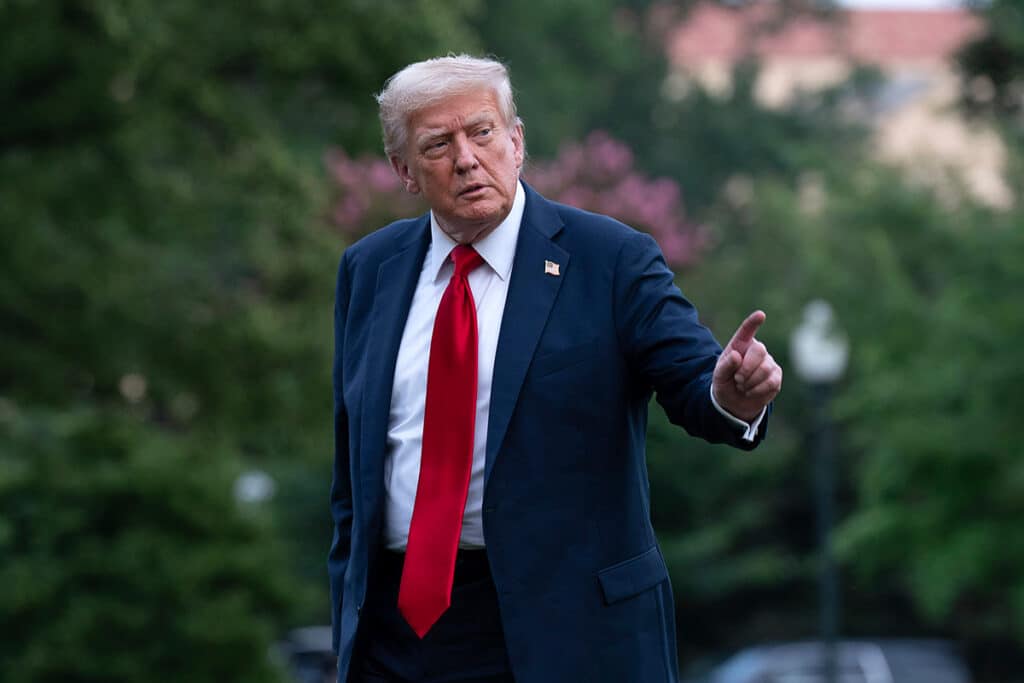
What is the ordinary person to do in times like these? When it comes to the press, one thing is to recognize its crucial role in keeping us informed. The constant ticker of Trump’s latest malarkey is overwhelming, but it does have an effect. Americans, for instance, have recently soured on his immigration tactics, and he has lost ground with groups that swung for him in the election. In the ongoing saga of Trump vs. American Democracy, the press is much more “public ear to the ground” than “public enemy.”
Another is to support the press with our eyeballs and dollars. Louisville Public Media, for instance, which was facing a $376,000 budget shortfall as a result of the federal funding cut, had it all replaced and more by reader donations. Many other outlets are still seeking audience support.
It took Orbán eight years to consolidate control over the Hungarian media landscape. Trump is doing what he can where he can. We still have time to fend him off.
What Could Go Right? S7 E20: Education Where the Internet Can’t Reach with Laura Hosman

Zachary Karabell and Emma Varvaloucas shine a light on a powerful form of providing education. This week, they’re joined by Laura Hosman of Arizona State University, creator of SolarSPELL, an offline, solar-powered digital library making education possible where internet access doesn’t exist. Discover how SolarSPELL is transforming classrooms from remote Pacific islands to refugee camps in Syria, empowering teachers, and closing the digital divide with nothing but sunlight and ingenuity. They discuss bridging educational gaps, building digital literacy, and proving that when it comes to global progress, there’s plenty that can still go right. | Listen now
By the Numbers
11.9%: Multidimensional poverty rate of children, ages 5–14, in Rwanda in 2024—less than half the rate in 2017.
2: Number of marine protected areas designated by Pakistan, the country’s first steps toward preserving its marine environment. Other spots are under consideration.
1.5B: Number of people, since 2010, in Asia and Latin America that have gained access to modern cooking stoves (so long, open fires).
Quick Hits
🤝 Over the weekend, the Democratic Republic of Congo and the separatist rebel group M23 agreed to formulate a comprehensive peace agreement to end fighting that has gone on intermittently since 2012. The step comes after the DRC signed a peace agreement with the government of Rwanda, which backs the rebels, in June.
⚕️ President Trump’s dismantling of USAID has led to dire warnings of millions of potential lives lost. There are, however, some silver linings: Congressional Republicans rescued PEPFAR, an HIV/AIDS program that has saved 25 million people since 2003, from the fiscal chopping block. And organizations like the World Health Organization and the Gates Foundation are exploring ways to cover other previously funded efforts, such as statistical health surveys that form the backbone of development work.
⚖️ Missouri has ended its luxury tax on period products and diapers, becoming the 31st state to do so. No. 30, Alabama, ended its sales tax on period and maternity products (including baby formula) entirely in May.
🇯🇵 Japan has completed an expansion of its earthquake-detection system so that it can monitor, in real time, tectonic activity under the ocean floor. The country will now have a 20-second warning for earthquakes and 20 minutes for tsunamis.
🛢️ China’s electric car and truck boom has the country approaching a milestone: peak demand for oil, which the International Energy Agency now estimates will occur within two years. China’s EV success has also slowed worldwide growth in demand.
🔋 There are now about 11,400 high-speed, public charging stations in the US, and hundreds more are being added every few months. Driven by the private sector, the rapid expansion has continued despite the Trump administration’s freezing of construction subsidies.
📱 Most Dutch schools have followed policies that restrict the use of smartphones in classrooms since January 2024. And a new, government-led study says it’s working. Large majorities of students reported improvements in their concentration and their schools’ social environment.
👀 What we’re watching: Britain’s center-left government announced that they will lower the voting age to 16, joining a very small club of countries—including Austria, Brazil, and Ecuador—that allows under-18s to vote. They will also introduce automatic voter registration and other reforms to campaign law.
TPN Member Originals
(Who are our Members? Get to know them.)
- Why Trump’s tariffs on Brazil will backfire | GZERO | Ian Bremmer
- Bipartisan outrage over Epstein is just what America needs | Bloomberg ($) | Matthew Yglesias
- The unlimited horizon, part 1 | The Roots of Progress | Jason Crawford
- Trump ramps up threats to remove Powell | Tangle | Isaac Saul
- A contented summer of Europe’s discontent | The Edgy Optimist | Zachary Karabell
- Why Trump hates Europe | Yascha Mounk | Yascha Mounk
- Bracing for China Shock 2.0 | Faster, Please! | James Pethokoukis
- Trump’s war | Diane Francis | Diane Francis
- The cost of Trump’s surrender to China | NYT ($) | David Brooks
- Listen up. Ketanji Brown Jackson is speaking to you | NYT ($) | John McWhorter
- How to be more charismatic, but not too much more | The Atlantic ($) | Arthur C. Brooks
- Resist | No Mercy/No Malice | Scott Galloway
- You can train yourself to be more curious | Flourishing Friday | Clay Routledge
- Obama on the male malaise: 8 takeaways | Of Boys and Men | Richard V. Reeves