
Volcanoes are erupting in The Philippines, but on-fire Australia received some welcome rain. The Iran war cries have been called off and The Donald’s military powers are about to be hamstrung by the Senate. Meanwhile, his impeachment trial is starting, and we’re all on Twitter for a front-row seat.


The Progress Report: This Bacteria Beats Dengue Fever
Featuring Emma Varvaloucas
Emma brings you a solo edition of the Progress Report, highlighting several positive global advancements. Brazil goes bold with a two-part strategy against dengue fever, involving both a homegrown vaccine and specially bred mosquitoes that carry an anti-dengue bacteria. Africa is leading a major expansion of school meal programs for children. And around the world we have two stories of security, with the High Seas Treaty recently ratified to protect international waters along with a reported rise in people’s sense of safety.


Prefer to read? Check out the Audio Transcript
Although the transcription is largely accurate, in some cases it may be incomplete or inaccurate due to inaudible passages or transcription software errors.
Emma Varvaloucas: Hey everyone. Welcome to What Could Go Right? and this is our weekly Friday mini episode called the Progress Report, where usually Zachary and I, but today it’s just I, it’s just me to go over a bit of a roundup of some good news items that I am, if maybe not 100 percent positive, at least 98, let’s say, percent positive, that haven’t come your way either through newsletters, podcasts, definitely not your social media feed and the Progress Report really just exists to balance out that newsfeed and that media feed with the kind of never ending gloom and doom, especially the politicization of everything right now, such a nerve being touched in the United States, and we wanna give you a little bit of something different because there are a lot of positive things going on in the world, a lot of positive things going on inside of the US and outside of the US.
Although today I think we’re going to take more of a global focus and just give you, you know, a taste of maybe what your nervous system feels like after a grouping of these kinds of news items, rather than a grouping of the latest bombings, the latest government overreach, the latest poor science information coming out. Instead of that, we’re gonna talk about something else.
So let’s get straight into it. As I mentioned, I am flying solo today and we are actually nearly at the end of our latest season. So we have one more Progress Report episode for you coming out next week, and then we’re gonna have to bid you adieu for a few months. We’ll be back. So don’t miss us too much. All right, let’s get into it.
Let’s start with Brazil. So Brazil unfortunately is facing unprecedented dengue fever outbreaks. I mean, they’ve been dealing with dengue fever for forever, but particularly with climate change in the last handful of years, the outbreaks have gotten really bad, record numbers of cases, high numbers of deaths, and the Brazilian government is doing something so fascinating to try to combat this.
It’s a dual pronged strategy, and the first strategy is a little bit more straightforward, a little bit more what you would expect. There is a vaccine against dengue fever that you can give to the most vulnerable populations. However, it’s only produced by one pharmaceutical company in Japan, and as far as vaccines go, it’s pretty expensive. It’s $19 a dose. So Brazil is only able to buy say a few million of these, which is not nearly as much as they need.
So they are going ahead and they have been developing their own single dose vaccine, so they’re hoping to produce something pretty soon that’s more effective, cheaper, and locally produced, which means they, of course, have control over how much they’re gonna pay for that.
And that’s success in and of itself. But the thing I really wanna tell you about it, because it’s, it’s so, so fascinating, is the other part of this dual pronged strategy, and that is to essentially replace, if not the entire mosquito population, a large portion of the mosquito population. Essentially, dengue fever is transmitted to humans by mosquitoes, and there has been research into how we might be able to produce a population of mosquitoes that doesn’t transmit dengue fever.
This is primarily led by a company in Australia. They’ve been doing this research for about a decade. They take a mosquito and essentially breed them to be infected with a particular bacteria, which is naturally occurring. A bunch of mosquitoes have this bacteria on their own. It’s just that the, the particular breed that spreads dengue fever doesn’t have this bacteria.
So they’re like, okay, let’s get all the mosquitoes that spread dengue infected with this bacteria. Slowly over time, the entire mosquito population ends up being infected with the bacteria because the females infected with it produce offspring with it, and the males that are infected with it don’t produce any offering at all when they meet with the females.
So the bacteria essentially stops the transmission of dengue fever. It cuts down on the mosquitoes’ viral loads, and they have tested out essentially breeding mosquitoes and releasing them into the native mosquito populations in Vietnam and Indonesia. Indonesia’s the place where the best science has come out insofar as the results, and they’ve actually piloted it in Brazil as well, and it had pretty good results.
But Brazil is now scaling this up, so they are going to be releasing these mosquitoes into 11 different regions of the country. And what they needed to do to breed enough mosquitoes, and when I say breed enough mosquitoes, I mean to the tune of a hundred million eggs per week. They built the world’s largest mosquito factory. I’m using factory kind of tongue in cheek. They’re not, it’s not like they’re building like a, a fake mosquito or gene editing or anything like that. It’s not as creepy as it sounds. They’re just releasing mosquitoes into the wild that have been bred with this bacteria inside of them.
Still might sound creepy. Some Brazilians are not happy about this. I will, I will say that. They are doing it and at scale they’re releasing it into 11 different regions of the country. Like I said, there has been pretty good results before when they’ve looked into this, but at the same time, Brazil is going to do the world’s first randomized controlled trial, it’s kind of like the golden standard of science trials, to see if this is going to cut down on dengue fever cases. They’re hoping that if the World Health Organization receives the results of this trial and that the trial is effective, the World Health Organization will actually start to recommend this mosquito infected with bacteria strategy as a legitimate strategy to combat dengue fever.
And as I mentioned, there are a bunch of countries that are doing this already at a smaller scale, but Brazil is really the one leading the charge to scale it up. If you’re interested, the bacteria is called Wolbachia and it doesn’t harm mosquitoes, in case we have any like mosquito activists listening to the podcast right now. But yeah, it’s, it’s a fascinating story. If you wanna read about it more in depth, i’m pulling from an article in Nature. It’s called How Billions of Hacked Mosquitoes and a Vaccine Could Beat the Deadly Dengue Virus.
So let’s move away from Brazil, talk about the world at large. We’ve talked about this many times on this podcast. A lot of our kind of standard progress indicators moved backwards during the pandemic. It was the worst of times, it was the worst of times. I’m sure that you remember. But now there are a lot of things that are, are moving again in the right direction. And one of those is perhaps counterintuitive given the amount of conflict that’s going on in the world right now. This is backed up by data. There, there’s more conflict going on in the world right now than there has been in previous years. So it’s not an artifact of your newsfeeds. There, there really is a lot going on right now besides even the ones that we hear about all the time, such as Israel, Palestine. There’s a lot going on in the wider world, smaller conflicts all around Africa. But anyway. It’s not what I’m here to tell you about.
I’m here to tell you about despite the fact that we are living in a, in a high conflict handful of years right now, people actually worldwide feel safer than ever. Obviously we’re not talking about combat zones here. We’re talking about a general perception of safety. Inside of the countries where there is no conflict, there’s been a pretty big rise. Again, there was a kind of backwards trend and has reversed and we’re actually reaching record high numbers of people saying that they feel safe within their countries.
So this was a big survey done by Gallup. There was a rise in Asia Pacific, Western Europe, Middle East and North Africa, despite everything I just said. Sub-Saharan Africa is about, is flat, Latin American and Caribbean, up. Northern America, this one’s interesting, is flat. And then there’s been this massive jump in particular Gallup points out in post-Soviet Eurasia. These numbers, by the way, they’re counting from 2006 to 2024. So post-Soviet Eurasia had the biggest jump. It went from about 37% of people in 2006 reporting that they felt safe to a pretty big 71%.
And to give that some context, the world average is 73%. So 73% of people feel safe in almost all the regions. Perceptions set new records they said, or tied previous ones. So like we’re living in a very safe era in a lot of places. Who would’ve thunk?
Of course not a surprise, a lot of the punitive heavy countries are the places where people feel the most safe. So Singapore, Tajikistan, China, Oman, Saudi Arabia. Not really a surprise there. Basically the only one that’s in the top 10 that is like Western Europe or North America is Norway. Norway ties Hong Kong and Kuwait with feelings of safety at 91%. And in Singapore, 98, an astounding 98% of people feel safe. That’s good for Singapore.
So, curious how you guys feel about that. If you wanna write into hello@theprogressnetwork.org, give us your take, give us your thoughts, whether you feel safe, where you live or not. Greece, looking at the numbers for Greece and the US are very interesting to me because they have one of the biggest gaps in the world between what men say versus what women say. So men feeling they feel safe versus women feeling they feel safe. Unsurprisingly, much more men say they feel safe than women across the board. Depending what country you’re of course, but a couple of the countries where the biggest gaps were between men and women were Greece and the US, which was curious for me personally. But if you wanna learn more about that, you can head over to Gallup and look at their global safety survey.
I have a bunch of stuff today. I’m on a roll. I’m feeling really inspired, so we’re gonna, we’re gonna keep going. There’s a new report out by the World Food Program, and if you read a bunch of development reports like I do, a lot of the times they’re like, Hey, like this, this good thing has happened, but blah, blah, blah. This is actually a report where they’re like, Hey, this is a rare success. They’re even celebrating themselves. It’s so rare to see people in the development world celebrating themselves. So, but that is our entry into this news. The big news is that there has been a 20% increase in just four years, that’s huge, in the number of children receiving meals in school through domestic programs, which is great.
It’s actually, it’s, it’s a ton of people. It’s nearly 80 million more children are now receiving school meals. That brings the global total to at least 466 million children. A lot of that surge is being led by Africa, additional 20 million African children are now being fed through national school meals programs. They noted particular progress in Kenya, Madagascar, Ethiopia, and Rwanda, and it’s also becoming an increasingly large portion of government budgets there. So government’s really walking the walk insofar as making sure that their kids have opportunities to learn and eventually succeed. Love to see that. What’s there to caveat or feel bad about? Nothing. We feel great about that news. Thank you. Thank you, World Food Program. More kids getting fed, staying in school and being able to concentrate because they have full bellies.
So last but not least, let’s talk about another piece of news. I think I might have mentioned this on a previous Progress Report. I know we did a newsletter about it in June, and I’m not sure if we mentioned on the podcast, but if we did it’s gonna be an update. If we did not, this will be new news for people. The first treaty to protect international waters called the High Seas Treaty has been ratified. When we reported on it in June, it was on its way. It needed to have 60 countries ratify the treaty, and they were pretty sure that it was going to happen, but it hadn’t happened yet. We’ve now, I think, hit 61. Morocco was the, the big 60 that, that brought them over the, the marker there.
So the High Seas treaty is the first treaty ever to protect international waters. It’s basically going to make it easy for countries to collaborate on making new marine protected areas. One of the sustainable development goals for the world is to protect 30% of the world’s oceans by 2030. We’re pretty far from that. I think we’re a little over 10% at the moment. That doesn’t feel very inspiring at first blush, but the critical context for this is that in 2006, there were basically zero marine protected areas, I mean, like 0% of the world’s oceans were protected. So we are coming from, couldn’t be doing any worse and fast forward to now, like I said, I think it’s around 12 or 13%, although for that 12, 13%, how strong those protections are in different marine protected areas varies.
That being said, the High Seas Treaty is going to help with that because right now countries are allowed to set up marine protected areas up to 200 nautical miles from their shores. But when you get beyond that, you’re in international water. No particular country has jurisdiction. So this makes it so that countries can come together, say like, Hey, we wanna establish a marine protected area between let’s say Canada and the US It won’t happen between Canada and the US ’cause the US is not one of the signatories, but let’s say for theory’s sake it’s between Canada and the US. And then all the other countries that have ratify the treaty get to vote on whether or not they want to establish a marine protected area there.
Again, it’s the first time that humanity has really, really ever come together ever to do anything to protect the high seas other than the establishment of the marine protected areas. It does a few other things. The countries are now responsible for doing environmental impact assessments in the high seas that are beyond, like I said, those borders that go 200 nautical miles beyond their shores.
And there’s also a benefit sharing agreement, and this is, this is kind of interesting. Any discoveries that are made in international waters by any of these treaty signatories, so marine genetic material like bacteria, coral, or sponges. Basically things that end up being used in pharmaceuticals or biotech or cosmetics is also a really big one, anything that’s discovered in international waters is going to be shared by all of the people that are in the treaty. It’s meant to cut developing countries into these discoveries and these things that end up making countries a lot of money and the developing countries don’t have enough money to do these discoveries on the their own, these kinds of big expeditions and big scientific expeditions. Exactly how that’s gonna work out, I think they’re, they’re settling the details, but that is the, the spirit of the agreement that things that are found in international waters will kind of belong internationally, or at least to the countries that have signed the treaty.
Like I said, I think we’re at 61 ratified right now, but there was something like at least 80 that were interested in ratifying it when we reported on this in June. So additional ratifications might come through, but now that we’ve reached 60, the treaty is going to become legally binding as of January 2026.
Again, the US is not interested in this. Trump in particular wants to fast track deep sea mining in international waters. So as for now, count, count the US out. But it is, I think, a really good sign for marine protected areas in general, which I mentioned have been growing quite quickly since 2006. We probably won’t reach the sustainable development goal, although it’s probably a little bit early to say. But there have been some studies that have come out recently about whether marine protected areas actually work. If you really put strict protections in, does that actually really mean that commercial fishers are respecting the boundaries of that area? And it actually is yes. And they found through some of these studies that the ones that do have strict protections, there’s only one day of illegal fishing per year. Okay. It’s just a, an average to show you that it’s actually quite rare for commercial fishers to violate the bounds of a marine protected area. So, good news if you’re a, an overfished commercial fish or, or a threatened species in any one of these marine protected areas.
So that’s what I have for you today. It was a little bit of a tour, lots of different topics, so I hope you found something in there that was interesting to you. As I mentioned, we have one more episode of the Progress Report before we are going to take a break for a few months before our next season, but we will still be back with you next week for our normal interview episode, our normal Progress Report. Perhaps Zachary will make an appearance next week. We’re not sure, but if not, it’ll be me and we’ll have all of the palate cleansers of good news that are hopefully getting you through some pretty tumultuous times at the moment.
So have a great weekend. If you wanna reach out to us, we love to hear from you. You can email us at hello@theprogressnetwork.org. You can give us praise, you can give us criticism, you can give us ideas. Anything that you really wanna reach out to us about, we are here. And thank you as always for giving us your time and attention, especially in this attention economy, it really does mean a lot.
And we wanna thank the Podglomerate as well, and as always, for producing this podcast and making sure that it reaches all of you guys that are tuned in right now.
All right, so we’ll see you next time. Thanks so much.
LOAD MORE
Meet the Hosts
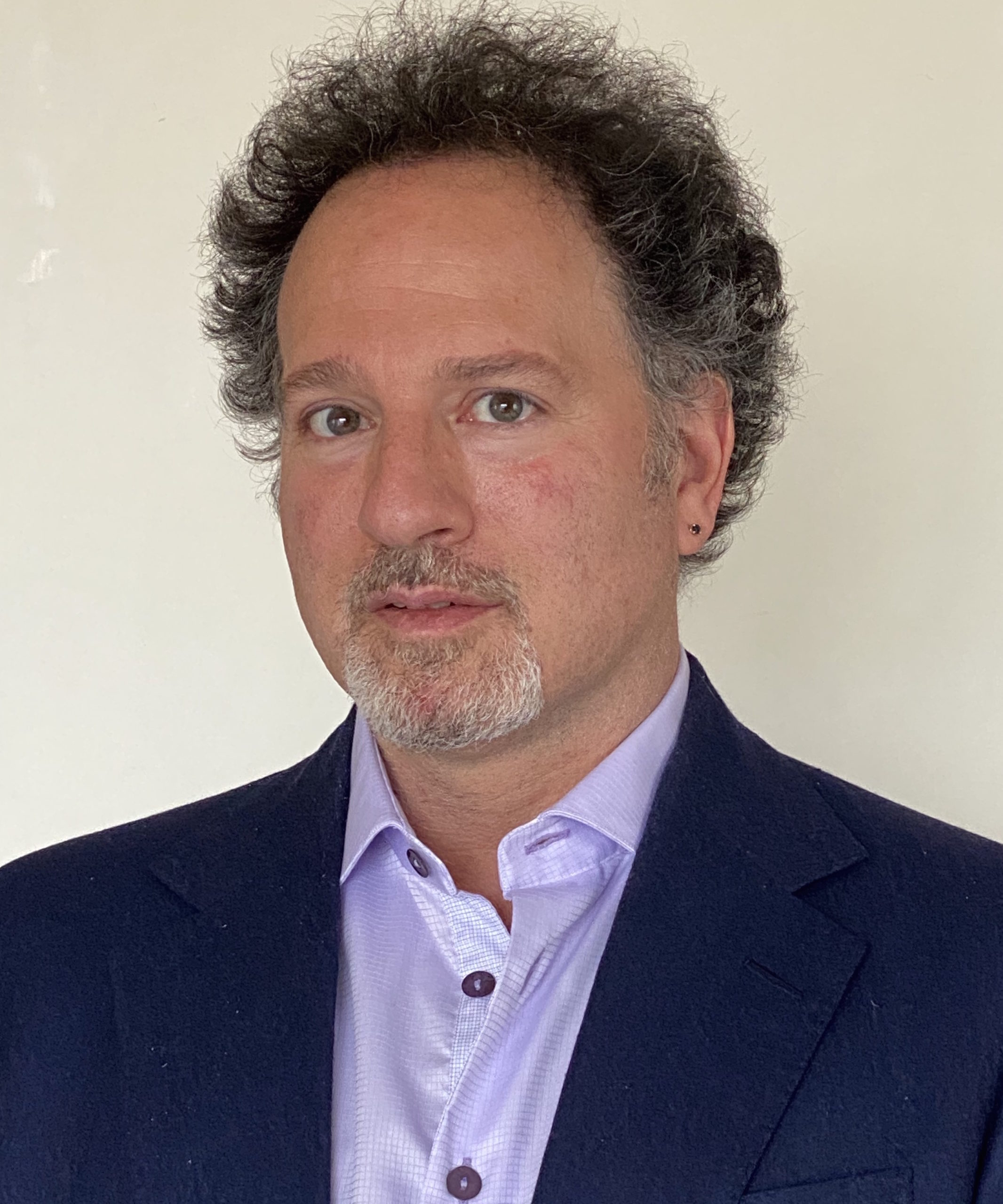
Zachary Karabell

Emma Varvaloucas