
Volcanoes are erupting in The Philippines, but on-fire Australia received some welcome rain. The Iran war cries have been called off and The Donald’s military powers are about to be hamstrung by the Senate. Meanwhile, his impeachment trial is starting, and we’re all on Twitter for a front-row seat.

What Could Go Right? We’re Divorcing Like It’s 1959
The divorce rate is falling, but so is the rate of Americans saying “I do.”

Emma Varvaloucas
This is our weekly newsletter, What Could Go Right? Sign up here to receive it in your inbox every Thursday at 5am ET. You can read past issues here.
We’re Divorcing Like It’s 1959

Nearly nine out of ten Americans believe that the divorce rate is increasing. It’s not—a couple who got married in the 1990s had a 47% chance of divorcing, but a couple marrying today, 40%, if current patterns hold. The divorce rate is actually at a 50-year low.
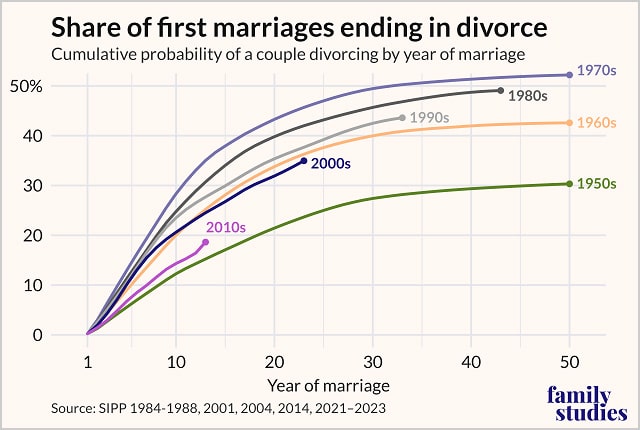
Hold the champagne, however. What at first seems like an indicator that marriage is back, baby, might just be the function of a smaller pool of candidates: Americans are also getting married at record low rates.
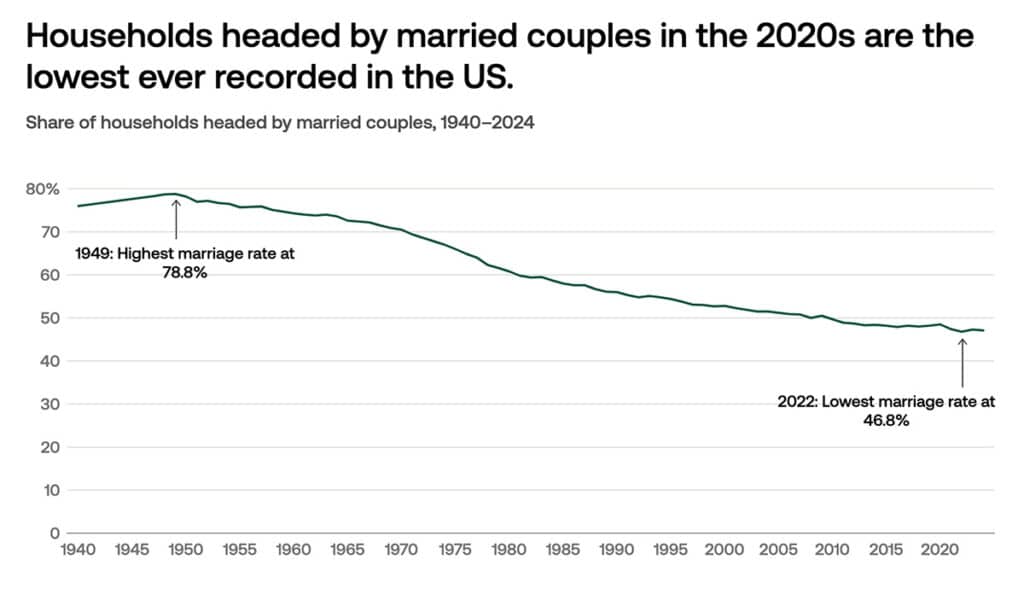
This has sparked an internal debate at The Progress Network. Do these data points represent progress or not?
On the one hand, those who get married nowadays are less likely to be taking the leap due to cultural pressure; women in particular no longer need to marry for financial reasons. That the marriage age has been rising and divorce rates falling also lends credence to the idea that people are choosing their partners more wisely (and after their brains have fully developed), and setting up the economic basis for a successful marriage. Why lament this state of affairs?
On the other hand, marriage confers real benefits that half of America is missing out on. Married people are both happier and wealthier than their divorced or single counterparts. And as I wrote about recently in the newsletter, the family is one of the most reliable producers of meaning in people’s lives (although not the only one, of course). While the marriage rate lingers at just under 50%, about 70% of high school teenagers expect that they will get married in the future, implying that there is a gap between the number of people who would like to get married and the number that actually do.
There is also the matter of marriage widening the class divide. Marriage rates among the highly educated and high-earning have remained stable, enriching them further, but have plummeted for everyone else. (Now that an educational gap has opened up between women and men, women are so far just fine with marrying men without college degrees as long as he makes decent money.) There is some evidence of the “marriage is for the upper class” trend reversing, though. A new report by the Institute for Family Studies, a conservative think tank, found that “the percent of children in lower-income families with married parents rose from 38% in 2012 to 42% in 2024.”
Some might find that any talk of increasing marriage rates as a societal good smacks too much of regression, especially with nostalgia for the 1950s “tradwife” exploding all over the manosphere. It also risks delegitimizing the perfectly legitimate lives of the never-married. Not to mention that all of this talk about data glosses over realities that can only be understood at the individual level. Some married people would be better off divorcing, after all.
There is still that headline news, however: those standing at the altar today now have a better chance of staying hitched.
P.S. I’m curious to hear what our readers think about this. Comment below or email hello@theprogressnetwork.org.
What Could Go Right? S7 E24: Is the US Still a Rule of Law Country? with Joyce Vance
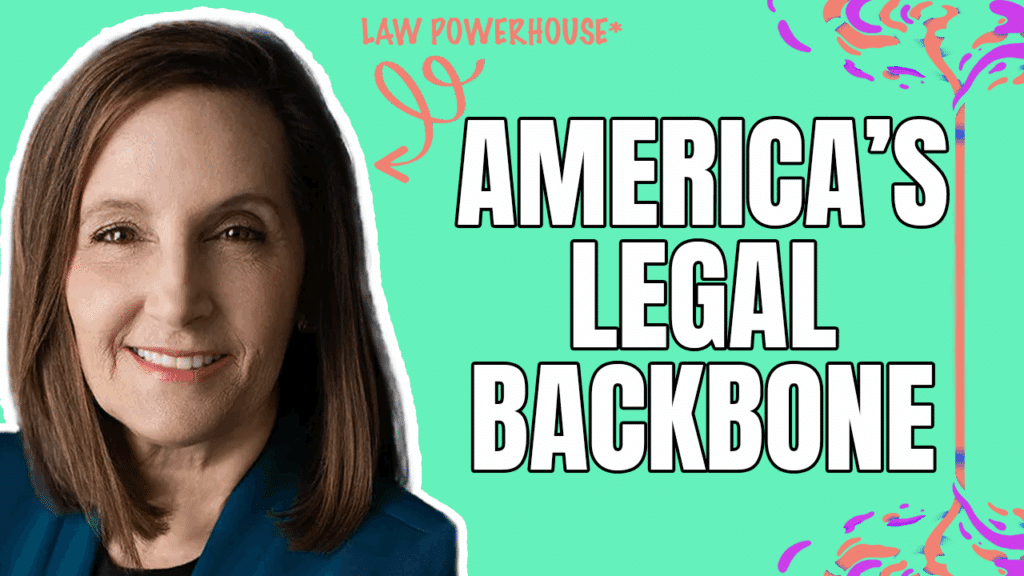
It’s time to right the ship of democracy! Zachary and Emma sit down with powerhouse legal expert Joyce Vance, former US Attorney and author of the popular Civil Discourse Substack and upcoming book Giving Up Is Unforgivable: A Manual for Keeping a Democracy. Pulling on her 25 years of experience at the DOJ, Joyce pulls back the curtain on how federal courts have confronted Donald Trump’s unprecedented use of power, the evolving responsibilities of the Supreme Court, and why the right to vote is democracy’s lifeline. | Listen now
By the Numbers
54%: Share of Americans who say they drink alcohol, the lowest on record since 1939
13.4M: Number of Mexicans lifted out of poverty between 2018 and 2024
581: Miles driven by an electric SUV on one charge, a new Guinness World Record
Quick Hits
💪 The great American fitness boom: You didn’t hear about it in the mainstream media, but among a raft of good health indicators, Americans are exercising more than ever before.
💉 In early trials, an experimental vaccine prevented pancreatic and colorectal cancer from recurring. The vaccine is peptide-based and works by targeting a gene mutation that causes the cancers.
🧬 Could scientists gene-edit away neurological diseases? They already can with liver and blood diseases, and brain ones are next: the science for it is early, but developing.
🐟 Marine protected areas (MPAs) really do work to protect marine life, as long as they explicitly prohibit industrial fishing. The overall story here is mixed: While more MPAs exist than ever before, few are as strict as they should be. But new technologies are helping to regulate fishing violators better.
🛢️ One thing you rarely hear about in the news anymore: oil spills. The amount of oil spilled worldwide from tankers nowadays is less than one-thirtieth of the amount in the 1970s.
🚘 Helsinki has gone a full year without a traffic death, the result of lower speed limits, more traffic cameras, and better infrastructure for pedestrians and cyclists.
👀 What we’re watching: A $30,000, American-made electric truck used to be the stuff of fantasies. It might still be, but Ford is taking a swing at it.
💡 Editor’s pick: “I believe a person should not be bowed by circumstance, but should grow and get their dreams through every possible way.” The resilience of the Afghan women who are learning how to code online while living under Taliban rule is remarkable.
TPN Member Originals
(Who are our Members? Get to know them.)
- The scandal is what’s legal . . . | The Edgy Optimist | Zachary Karabell
- Why I stopped being a climate catastrophist | The Ecomodernist | Ted Nordhaus
- The Make Russia Great Again “summit” | Lucid | Ruth Ben-Ghiat
- America’s new segregation | NYT ($) | David Brooks
- How managers can use the science of happiness | The Atlantic ($) | Arthur C. Brooks
- Mimicking China isn’t how the US should race against China | Faster, Please! | James Pethokoukis
- I’m in addiction recovery and I still drink wine | NYT ($) | Maia Szalavitz