
Volcanoes are erupting in The Philippines, but on-fire Australia received some welcome rain. The Iran war cries have been called off and The Donald’s military powers are about to be hamstrung by the Senate. Meanwhile, his impeachment trial is starting, and we’re all on Twitter for a front-row seat.

What Could Go Right? Gen Z, Guardians of Democracy
Protests have led to possibility in at least three spots around the globe.

Emma Varvaloucas
This is our weekly newsletter, What Could Go Right? Sign up here to receive it in your inbox every Thursday at 5am ET. You can read past issues here.
Gen Z, Guardians of Democracy
Current attitudes toward the health of democracy were perfectly summed up by a colleague’s reply when I mentioned this week’s newsletter would be about countries in democratic upswing. “There are countries in democratic upswing?” he deadpanned.
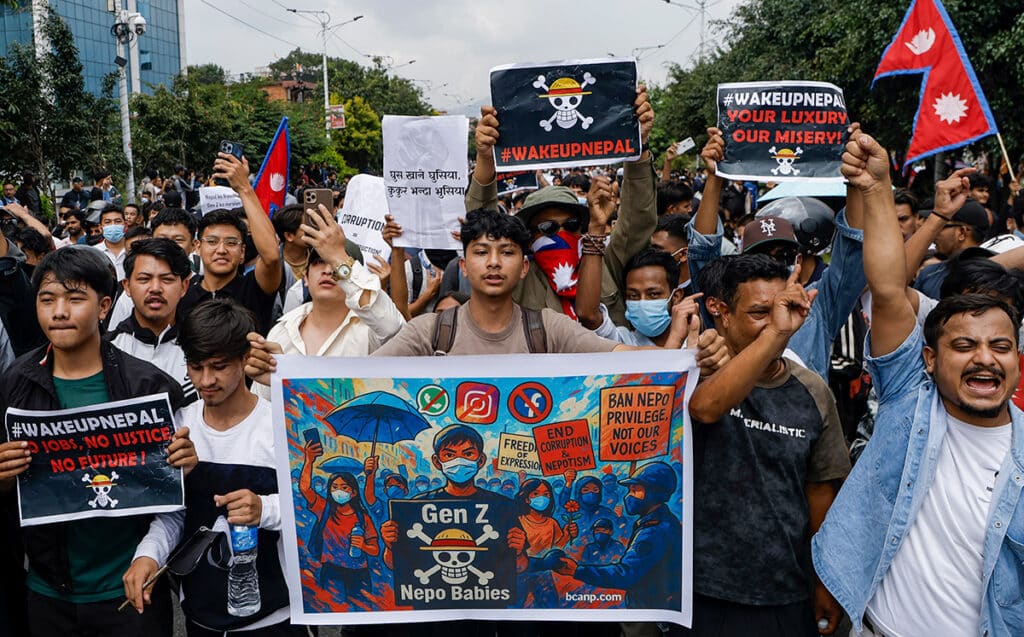
Sure are, and while they’re not enough to undo a global pattern of democratic backsliding, they are illustrative of the potential of Gen Z-led movements. The generation often saddled with a reputation for political apathy has been rocking governments from Peru to Indonesia, and in the case of three countries, has succeeded in overthrowing the current regime entirely.
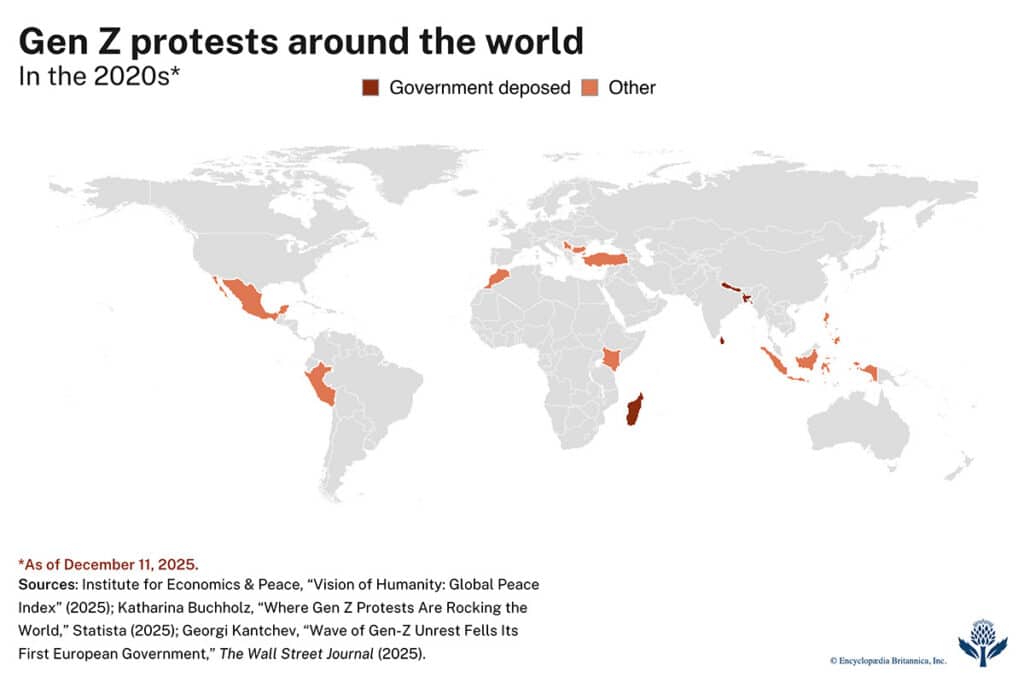
In Madagascar, for one, nationwide protests in the fall of 2025 led to a military takeover. A transitional government was appointed a month later, promising elections within two years. It’s an outcome far from assured in a country that has moved through six major political crises since its independence; that said, this is the first time that one was catalyzed by ordinary citizens instead of political elites.
In the other two, democratic prospects are much closer to the horizon.
Nepal
Five months ago, Gen Z-led protests toppled a government seen as nepotistic and out of touch. At least 75 civilians were killed, most of them by security forces but some by fires set during riots. Three months ago, The Economist pointed out that Kathmandu, Nepal’s capital, was suspended between hope and fear as the public waited to see whether the planning of new elections would bring a breath of fresh air to the country’s politics—or just a “fresh crisis.”
So far, things are looking breezy. This week, campaigning began for parliamentary elections, scheduled for early March. In the race are old-time politicians from Nepal’s previous government—participating despite an ongoing legal dispute about its dissolution—as well as relative newcomers. One is Balendra Shah, considered the frontrunner for prime minister, who is the former mayor of Kathmandu and the first to be elected as an independent candidate. (The 35-year-old also shares something in common with another young, unorthodox mayor halfway across the globe: a rap career.)
Younger Nepalis, looking to him and other non-establishment candidates to upend the status quo, have signed up to vote in droves: Since the election was announced, more than 915,000 people have registered for the first time, over two-thirds of them Gen Z. “For the first time,” writes Nepali scholar Hari Bansh Jha, “there is widespread public desire to replace entrenched political elites with new leadership focused on governance, accountability, and performance.”
A peaceful election is expected, with India supplying additional support.
Bangladesh
The furthest along, though, is Bangladesh.
Last week, Bangladeshis voted in their country’s first fair and free election since 2008, when former prime minister Sheikh Hasina took office—and stayed there. Once in power, she began manipulating the democratic system, rigging elections in favor of her party, detaining opposition leaders, and punishing online speech. In 2024, Bangladeshis decided they had had enough, and took to the streets. It was the third election that they had protested, and the third time that Hasina’s regime responded with violence; its crackdown killed as many as 1,400 people. This time, though, the protestors prevailed. Hasina fled to India, and an interim government was put into place.
The election went smoothly, with center-right party BNP winning a supermajority and its main opposition, an Islamist party, conceding defeat. A referendum detailing constitutional reforms, such as term limits for prime ministers and a bicameral legislature, also passed by a landslide. It’s a win for the students who led the protest movement. It’s also a bulwark against the country moving once again on an authoritarian trajectory, although some are disappointed by the final version of the reforms and are concerned about whether BNP will actually institute them.
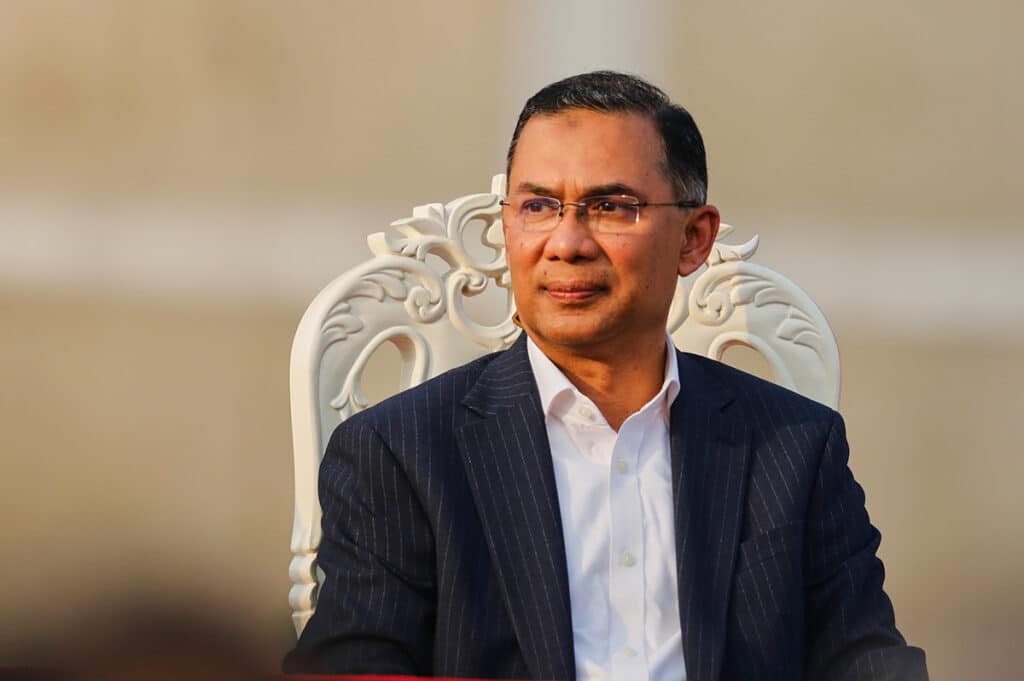
For now, however, success is being declared. “This victory belongs to people who aspire to and have sacrificed for democracy,” newly chosen prime minister Tarique Rahman said in his swearing-in speech on Saturday.
P.S. Since we’re on the topic of safeguarding democracy: The Trump administration ended its immigration enforcement operation in Minneapolis and withdrew all federalized National Guard troops from other US cities. A grand jury declined to indict six Democratic lawmakers over a social media video reminding the military to resist illegal orders; an immigration court dropped its case against a Turkish graduate student with pro-Palestinian views; and a judge has (temporarily) ordered the restoration of displays about slavery at George Washington’s former house. Last but not least, new ethics guidance for the federal judiciary clears judges to speak out against “illegitimate forms of criticism and attacks.”
By the Numbers
21: Months in a row that China’s CO2 emissions have been flat or falling
75%: Drop in Romania’s overall emissions between 1990 and 2023—as its GDP doubled
2040: Expected year EVs will be cheaper to own than gas-powered cars in Africa
16%: Year-on-year decrease in rhino poaching in South Africa in 2025
0: Lawmakers in the Missouri House who opposed a bill that would allow pregnant women to divorce without judicial interference
Quick Hits
💸 The ratio between spending by the world’s richest 10% (North America and Europe) and the poorest 50% has more than halved since 2000, as poorer countries become less poor and their residents buy more.
🍕 Americans spend about 10% of their income on food—including in restaurants and for takeout—less than half of what they spent in the 1940s on groceries alone.
🧑🎨 Ireland made its basic (supplementary) income for artists scheme permanent, a world first, after a post-pilot analysis found that it more than paid for itself in productivity gains and reduced reliance on other forms of welfare.
⛑️ A former USAID program devoted to innovating and testing new foreign aid approaches has been reconstituted under private philanthropy, after being shut down by the Trump administration last year.
🧬 A first-of-its-kind inhalable gene therapy helps the body suppress lung cancer tumor growth and will now be fast-tracked for potential approval by the FDA. The therapy works via a deactivated herpes virus.
🏭 Coal plants continue to shutter in the US, the fleet nearly halving since 2010. The president who has overseen a larger decline than any other? Trump (despite his best efforts).
📉 The death penalty is declining in Southeast Asia, with the exception of Singapore. Other nations are narrowing its applicability and abiding by de facto moratoriums on executions.
🐟 Endangered fish species are returning to China’s Yangtze River, five years after an “unprecedented” commercial fishing ban was introduced.
🧒 Hundreds of “invisible” children born in Bangladeshi brothels are now receiving birth certificates, after a push by advocacy groups. These children had previously been unable to be registered as they lacked the father’s information.
🌲 Bolivia added more than two million acres of protected areas in recent months, many of them under indigenous stewardship, in a continued attempt to push back against deforestation.
👀 What we’re watching: Could the Trump administration move biomedical research beyond animal experimentation?
TPN Member Originals
(Who are our Members? Get to know them.)
- Amid global chaos, the world’s economy is thriving | WaPo ($) | Zachary Karabell
- Why the world is drawing a line on social media for kids | TFP ($) | Jonathan Haidt
- Sanae Takaichi has the power to change Japan | GZERO | Ian Bremmer
- Black history is the measure of America’s democracy | WaPo ($) | Theodore R. Johnson
- AI anxiety: Is ‘something big happening,’ really? | Faster, Please! | James Pethokoukis
- Americans think everyone is corrupt | Slow Boring | Matthew Yglesias
- We have reached bottom | The Renovator | Anne-Marie Slaughter
- Trump + AI = ? | NonZero | Robert Wright
- Why MAGA wants you to think slavery wasn’t that bad | The Atlantic ($) | Thomas Chatterton Williams
- What we get wrong about online toxicity | Flourishing Friday | Clay Routledge
- Opposites really do attract | TFP ($) | Arthur Brooks