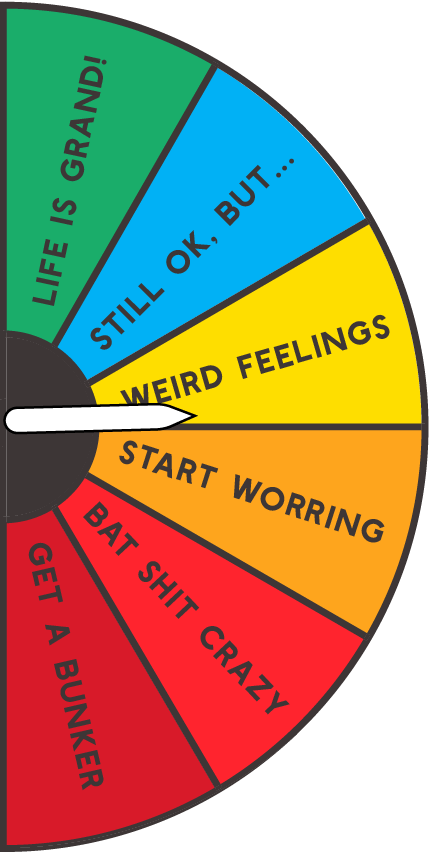
Volcanoes are erupting in The Philippines, but on-fire Australia received some welcome rain. The Iran war cries have been called off and The Donald’s military powers are about to be hamstrung by the Senate. Meanwhile, his impeachment trial is starting, and we’re all on Twitter for a front-row seat.

What Could Go Right? Did Anything Good Happen in the US in 2025?
Yes, and we have the receipts.

Emma Varvaloucas
This is our weekly newsletter, What Could Go Right? Sign up here to receive it in your inbox every Thursday at 5am ET. You can read past issues here.
Did Anything Good Happen in the US in 2025?

This year has been rough going for America—I’m assuming you don’t need a review. But did anything good happen at all? Thankfully, yes. Below, please find some of our favorite stories of progress in the US in 2025. And check your inboxes next Thursday for the global version of this list before we close for the holiday break.
Big Crime Drop
This year, American citizens enjoyed a significant drop in crime across a variety of types; 2025 may even end up with the lowest murder rate ever recorded. According to one commonly used database, the number of mass killings hasn’t been this low since 2006. (Who knows how long the dip will last, but it’s possible it may have some staying power, as it’s related to long-term trends that have tamped down violent crime more generally.)

It’s not just crime that has ebbed. Fatalities from drug overdoses, alcohol consumption, and traffic accidents all fell fast over the course of the year.
Notable Firsts
In January, New York became the first state to offer paid leave for prenatal care. Last month, New Mexico became the first state to offer free, universal childcare (although the rollout has been far from perfect).
The bipartisan Take It Down Act penalizes the distribution of nonconsensual intimate imagery, including AI-generated deepfakes, for the first time at the federal level. The law also requires platforms to remove material when requested by victims within 48 hours.
The Food and Drug Administration approved several exciting new treatments, foremost among them the injectable lenacapavir, which provides nearly perfect protection against HIV; if it can reach enough people, it promises to revolutionize care worldwide. Other notable approvals include those for a new type of non-opioid painkiller; the first at-home, over-the-counter STD test; and the first new antibiotic for urinary tract infections in 30 years. The agency also approved its first lab-grown seafood product (it’s salmon).
Renewable Energy: Down, but Not Out
The Trump administration has done a 180 from Biden-era policies related to renewable energy. A phaseout of federal tax credits—funding that was frozen by President Trump, then unfrozen by a Trump appointee—has left states racing to begin construction on as many eligible wind and solar projects as possible before the July 2026 deadline. The offshore wind industry has also been operating amid deeply uncertain conditions. Just this week, a federal judge overturned Trump’s executive order to halt all new permits for offshore wind development.
Though the Department of Energy has directed that aging coal plants be saved from retirement, it also recently approved the expansion of the nation’s first utility-led geothermal network in Massachusetts. Meanwhile, states like New York and Texas are newly interested in building nuclear reactors, and this year, the US surpassed 40 gigawatts of battery installations, defying even optimistic expectations.
For one glorious month, March, the share of US electricity generated from fossil fuels fell to under half for the first time ever.
There are only a handful of cities in the US that run on 100% renewable energy—including Burlington, Vermont, and Aspen, Colorado—but a newcomer joined the ranks this year. In April, Sun Prairie, Wisconsin, a suburb of Madison, announced that all municipal operations were running on renewable energy. This kind of local news rarely filters up to the national level, so please do write in and tell us if you know of other small-town examples!
Actual Legislative Progress
Bills related to artificial intelligence were introduced in every state this year and adopted or enacted in 38 of them, covering everything from unauthorized political deepfakes to anti-discrimination measures. In September, California passed the nation’s first AI safety law, which requires major AI companies to reveal their safety protocols. What will remain on the books after Trump’s planned executive order to deregulate AI, however, is an open question.
Thirty-one states passed laws to lower prescription drug costs, two-thirds of them aimed at the middlemen who negotiate prices among drug manufacturers, insurers, and pharmacies. Seventeen enacted restrictions around the use of cell phones in schools; Wisconsin was the latest, bringing the total to 36 states that have done so since 2023.
Several states passed gun safety measures. In Illinois, guns must now be surrendered to law enforcement in cases in which an order of protection has been served. Assault weapons have been banned in Rhode Island, and in Colorado, those who purchase semiautomatic guns must undergo safety training. In Maine, voters signaled that they want lawmakers to write a “red flag law,” which allows the temporary seizure of firearms from persons deemed to be a risk to themselves or others. Twenty states already have them.

Alabama and Tennessee joined more than half the US in banning Glock switches, which convert handguns into machine guns. (Glock also announced that they are phasing out the internal mechanisms that allow this conversion.)
Illinois, Virginia, Maine, New York, and New Mexico all passed legislation aimed at regulating PFAS, the “forever chemicals” present in everything from firefighting equipment to cookware.
Eight states—Delaware, Maine, Maryland, New York, Oregon, Vermont, Virginia, and Washington—passed medical debt legislation. Most of the laws include a provision that prevents the reporting of medical debt to credit bureaus, although recent guidance from the Consumer Financial Protection Bureau may mean that they will face court challenges.
Texas closed a loophole in its sexual assault laws, clarifying that someone too inebriated to give consent or drugged by someone other than their attacker will still be considered an assault victim. Missouri and Oregon raised the legal age of marriage to 18.
And, looking forward to 2026, paid family leave will go into effect in Maine, Maryland, Minnesota, and Delaware in the new year. Nineteen states will also raise their minimum wages.
One thing to note amid today’s chaotic national landscape: States are where things still actually get done. Over 135,000 bills were introduced in state legislatures in 2025, according to FiscalNotes’ State Sessions Recap; 29,000 of them were enacted. That’s a clearance rate far surpassing Congress’ 2%. (Colorado’s is an impressive 74%.)
A Good Year for Babies

Two weeks ago, we covered the story of baby KJ, the first recipient of a bespoke gene editing treatment that stabilized his liver condition and promises to open doors for sufferers of other rare diseases.
This year’s respiratory syncytial virus (RSV) season was different than previous ones, with the arrival of a first-ever vaccine as well as a new treatment for newborns afflicted with the virus. The result was a dramatic drop in baby hospitalizations, and a small decline in the infant mortality rate.
Something Nice for the Road

Manolo Betancur came to the US 25 years ago from his native Colombia. Today, he’s the owner of Manolo’s Bakery in Charlotte, North Carolina, the oldest immigrant Latino bakery in the Carolinas. Every year, he donates birthday cakes to those in the city experiencing homelessness. Today has the story.
By the Numbers
2028: Year that North Dakota expects to become the first state with 100% broadband internet access
2025: First year in Syria’s history that it recognized Human Rights Day
1.3%: Vietnam’s multidimensional poverty rate in 2025, down from 4.4% in 2021
Quick Hits
📊 Despite tariff uncertainties, prospects for global economic growth look stable again, with trade remaining robust. Long-term economic growth is not guaranteed, but for now, the World Bank suggests that a “collective sigh of relief might be in order.”
🦊 The world’s second-largest fur producer, Poland, will phase out fur farms. The development, a result of activists’ seventh attempt at getting a law passed, is the latest in a global downturn in the industry.
🦷 Mercury will be phased out of dental fillings worldwide by 2034. It’s the first time a collective agreement has been reached on the material, and it marks a reversal of a longstanding US position. Mercury has already been phased out across the European Union.
📉 Latin America saw its lowest-ever poverty rate in 2024, driven mainly by improvements in Mexico and Brazil. Other indicators, such as extreme poverty, are also down.
📱 Chile is the latest to ban smartphone use during class, joining more than 40% of the world.
🏥 Health insurance coverage rose and financial hardship associated with out-of-pocket healthcare costs fell between 2000 and 2023, according to a new report.
🛰️ This week in conservation: a plan to bring an extinct-in-the-wild animal back to the Sahara Desert; countries move to protect African hornbills; and German scientists relaunch a scuppered “internet of animals” project.
👀 What we’re watching: Will GLP-1 drugs revolutionize addiction treatment?
TPN Member Originals
(Who are our Members? Get to know them.)
- James Patterson’s maxims for a happy life | The Atlantic ($) | Arthur C. Brooks
- A tripolar world | Diane Francis | Diane Francis
- The affordability hoax | The Edgy Optimist | Zachary Karabell
- Venezuela reveals what Trump covets most | WaPo ($) | Theodore R. Johnson
- Populists are replacing meritocracy with something far worse | WaPo ($) | Fareed Zakaria
- America desperately needs new health care ideas. Here are five. | WaPo ($) | Ezekiel J. Emanuel
 MAGA discontent and the autocratic idea of foreign policy, with Anand Giridharadas | Lucid | Ruth Ben-Ghiat
- The David Sacks problem(s) | NonZero | Robert Wright
- The cult of therapy | No Mercy/No Malice | Scott Galloway
- ‘The American Revolution’ is not woke. It’s magnificent. | NYT ($) | John McWhorter
- The new hepatitis B vaccine recommendations | Tangle | Isaac Saul