
Volcanoes are erupting in The Philippines, but on-fire Australia received some welcome rain. The Iran war cries have been called off and The Donald’s military powers are about to be hamstrung by the Senate. Meanwhile, his impeachment trial is starting, and we’re all on Twitter for a front-row seat.


Are We Wasting Our Talent?
Featuring Rutger Bregman
Are we measuring success all wrong? Rutger Bregman seems to think so. Zachary and Emma welcome Rutger, a Dutch historian and journalist, and author of Moral Ambition: Stop Wasting Your Talent and Start Making a Difference. The founder of the School for Moral Ambition, Rutger challenges society’s flawed definition of success, stresses supportive and ambitious communities, and suggests how we can make a truly global impact. He highlights his own struggles with work-life balance and his pursuit of enthusiasm over exhaustion.


Prefer to read? Check out the Audio Transcript
Although the transcription is largely accurate, in some cases it may be incomplete or inaccurate due to inaudible passages or transcription software errors.
Zachary Karabell: Rutger, what does moral ambition mean to you in one sentence?
Rutger Bregman: Using whatever you have, whether that’s your talent, your access to certain networks, or your money, your financial capitals, to make this world a wildly better place.
Zachary Karabell: What Could Go Right? I’m Zachary Karabell, the founder of The Progress Network, joined as always by Emma Varvaloucas, my co-host, the executive director of The Progress Network, and this is What Could Go Right? our weekly podcast where we delve into a more constructive view of humanity, human nature, and things going on in the world as an antidote to, or an adjunct for all the bad news that surrounds us all the time.
We know a lot of things are going wrong in the world. That is not news. In fact, it is the news, but it is not news to any of us. We know that that’s true and because it’s such a dominant part of our collective social media, news, diet, you name it, we often, we believe, forget that there’s a lot going on in the world that is good and constructive, and there are a lot of people dedicating their lives to creating solutions to human problems.
And in that spirit, we’re gonna talk to somebody today who has indeed dedicated his life and created an organization whose sole dominant purpose is to say, Hey, wait a minute. There are a lot of things going on in the world that need attention, that business and the market alone or even at all, don’t solve for, and the government doesn’t solve for, but that people can, if they are ambitious to make positive change in the world, can in fact make positive change. And as we’ll see, there is always a complicated relationship between the desire to do that and needing the money to do that effectively so that these things are not detached from market or government, if markets and governments are in one form or another, a source of capital, if not human capital than actual capital.
Nonetheless, this idea that we can all make change if our focus is morally to make change, constructive change, and not just to make money. Although again, this is not a false dichotomy of like money bad doing good, good. It’s actually much more of a symbiotic, harmonious relationship between the two. And so Emma, who are we going to talk to today?
Emma Varvaloucas: Today we are talking to Rutger Bregman. If you don’t know who he is, he is a Dutch historian, journalist, and bestselling author. You might know of his previous books, Utopia for Realists or Humankind: A Hopeful History. But today we’re here to talk to him about. His latest book, which is called Moral Ambition.
Stop Wasting Your Talent and Start Making a Difference. And it’s connected to a project that is called The School for Moral Ambition, which is trying to turn idealism into action and actually solve some of the world’s biggest, most neglected problems. So are we ready to talk to Rutger and about his newfound, maybe not newfound, but his recently magnified moral ambition?
Zachary Karabell: Absolutely.
Rutger Bregman, it is a pleasure to have you back on What Could Go Right? We are not huge fans of recidivism here on What Could Go Right? but you have been an exception to an unwritten, unspoken, but nonetheless, hard and fast rule.
Rutger Bregman: Woo-hoo.
Zachary Karabell: there you go.
Rutger Bregman: I feel honored.
Zachary Karabell: So you have not only written a new book called Moral Ambition, you’ve also started a center.
You have relocated, you’ve moved to New York City, or at least you had the last time we spoke. I guess that that could have changed in the past weeks. I mean, everybody’s life is fluid these days. So, uh, one should probably assume nothing about where anyone is.
My sense is the book and the center are twined. They are two manifestations of the same thing, or two branches of the same tree. So I guess, pick a branch. Like what’s moral ambition? Why start a center? Why move to New York?
Rutger Bregman: Sure. So I spent about a decade of my career in what I always like to call the awareness industry. So that means writing articles, writing books, recording a lot of podcasts, expressing my opinions, and then hoping that some other people will do the actual work of making this world a much better place.
And I guess after a decade of doing that, I had a little bit of an early midlife crisis. You know, this is my early thirties, and I looked in the mirror and I didn’t really like what I saw. I was just like, what am I doing, right? Is, isn’t awareness and as vastly overrated, right? We often know about the many challenges we face as a species, whether that’s, I don’t know, the next pandemic that may be around the corner, you know, still massive global poverty, infectious disease, but I mean, do we do something about these things? I think very often there’s a huge gap between our awareness and the action. So I thought, you know what? The next decade of my career is devoted to actually building things, doing things, having some skin in the game.
The great motto of Theodore Roosevelt, the president who said, it’s not the critic who counts, but it’s the man or the women in the arena. So I thought, you know what? Let’s use my next book to launch something. As you know, books are great excuses to go on a publicity tour, which is nice if you start a new venture.
And I’ve co-founded an organization called the School for Moral Ambition. And what we do is, is we help the most ambitious, most talented people we can find to take on some of these most pressing challenges because sadly, a lot of them today are stuck in jobs that are perhaps not super socially meaningful.
So yeah, we wanna liberate them and yeah, both improve their lives and help them to make a much bigger contribution to the welfare of humanity.
Emma Varvaloucas: Yeah. So we just touched on this in our little pre-interview discussion about why so many people are stuck in in unfulfilling jobs, and what you told us then is that you thought that the definition of success was broken. So I’m wondering if you could repeat yourself a little bit about that, but then also answer the question of do you think that this is a problem of humanity?
Just like people are like this, like we’re more concerned with doing well for ourselves and doing well for others, or is this a particular issue of now?
Rutger Bregman: I love that question. So in the US you have the American Freshman Survey. This is a survey that has been done since the late sixties, and students have been asked this question about their most important values, like what do they want from their life? It turns out that in the late sixties and the early seventies, about 90% of students said that developing a meaningful philosophy of life was one of their most important life goals.
Back then, only 50% said that making a lot of money was one of their most important life goals. Today, those numbers have reversed, so now it’s 90% saying, yeah, I gotta make a lot of money, and only 50% saying, yeah, that that meaningful philosophy of life sounds important to me. That to me is pretty good evidence that we’re not talking about human nature here. This is culture.
As I studied some of the great movements of history, particularly the abolitionist movement, what really struck me is that they were often part of a much wider societal shift. I spent a lot of time, this is what we talked about a bit last time when we spoke, studying the British abolitionist movement, and I discovered that some of the main abolitionists, their ultimate life goal was not abolishing the slave trade or abolishing slavery? No, it was bringing virtue back making, doing good, more fashionable as one of William Wilberforce’s biographers said about him. Yeah. I guess that is my hope. That is my optimism that I think we can do that again and yeah, that’s what we’re trying to contribute to at the School for Moral Ambition.
Zachary Karabell: So you moved to New York from the Netherlands. I said that very strangely, but I was attempting an appropriate like Dutch English intonation and failed miserably. So why did you move? Does that say something about relative ambition, Europe versus the US? I mean, Americans like to think of themselves as far more driven and ambitious than Europeans, and sometimes I think Europeans, Western Europeans like to think of themselves as more capable of living a good life versus Americans who are driven.
Is there some truth to these cliches in terms of Europe versus US, and it’s very Western Europe, kind of Northwestern Europe. I mean, Emma could talk about this too, from Greece. So like why did you move? I think it’s interesting whenever anyone sort of picks up, radically changes their life, particularly to do something different that you could just as well have done from Amsterdam, probably done more inexpensively.
Rutger Bregman: I have come to the conclusion that all the cliches are basically true. My wife was seven months pregnant when we came here to the US and navigating US healthcare was a nightmare compared to Dutch healthcare. So that’s one cliche that is true.
We send our daughter to a school here and you know, just generally raising kids here, I mean, the safety of American parents just drives me nuts. Like we live in Park Slope and you have all these toddlers strapped up in their strollers and indeed it is like, come on, liberate the kids. So that’s like the second cliche that is true.
The third cliche that is true is that indeed it’s much more easy to be ambitious here. A decade ago, a couple of friends started a journalism platform in the Netherlands called The Correspondent, still exists, it’s done quite well. But when they started it, they organized sort of a dinner with basically a who is who of people in media and entrepreneurship in Amsterdam. The consensus back then was, oh, you’re gonna start this new venture that wants to revolutionize journalism. Not gonna work. You shouldn’t even bother.
Now, I had a similar dinner like that when we started the School for Moral Ambition in Manhattan, in New York. A couple of friends had invited some cool people over. The experience was literally the opposite. Like everyone was like, this is definitely gonna work. This is awesome. How can we help?
Zachary Karabell: I was invited to that dinner and I couldn’t make it, which I was really disappointed by it, ’cause I was gonna show up and say, what are you thinking?
Rutger Bregman: Yeah. But again, like the, that cliche is true as well. The work ethic, like the Netherlands has the shortest working week in the country. Right? If you send emails to, you know, quite a few of my colleagues in Amsterdam right now, you’ll get out of office replies that they’ll be back, I don’t know, sometime in 2026.
Well, if you send, if you send emails to my American colleagues or just, I don’t know, people here in the US, you get like out of office. If you get an out of office. It’s like I’m out of office this Friday from 10:00 AM to 11:00 AM but you can still reach me on this number and on that number and on that number, and if not, then you can try that person and that person.
So yeah, I’ve basically come to the conclusion that the cliches are true.
Zachary Karabell: Or you’ll get the out of office response, and then the person will respond 10 minutes later.
Rutger Bregman: Yeah, exactly. Yeah, yeah.
Zachary Karabell: Which just also frequently happens. Like, I’m sorry, I’m out of the office. And then they just like magically respond to you anyway.
Rutger Bregman: Yeah, yeah, yeah. If you’re building something, I think the United States is a magical place. It, it really is. You really need that energy. You really need that ambition. You really need people around you with a strong work ethic who are like, yes, let’s go.
I guess one thing where I’ve been pleasantly surprised is Dutch people can be a little bit arrogant. And when we, you know, look at Americans, we, we sometimes think like, oh, they’re like a little bit shallow, right? They say things that they don’t really mean, and I guess I was a little bit afraid of that as well. Like, for example, at that dinner, a lot of people offer their support and then you’re like, yeah, but really you say that now, but is that gonna happen? And what my pleasant surprise has been is that, sure you need to chase some people sometimes, but if they, you know, if they said it, then keep chasing them and they’ll do it. So that’s been a nice surprise where the cliche didn’t turn out to be true.
Zachary Karabell: Emma, you went the other direction. Maybe the two of you just managed to maintain cosmic equilibrium. One person from Europe went to the United States, another person in the United States went to Europe and everything, we’ll just call it a draw. But does that resonate with you as well?
Emma Varvaloucas: Well, I mean, I do tell people that the most common question that Greeks ask me when I tell them I moved from New York to Athens is why. And the would you do that is implied there. They’re like, everyone’s leaving here. Why would you come back here? But I think that has more to do with like the actual economic circumstances and I would say cynicism about getting ahead here, but I think it’s just genuinely really hard to get ahead here.
Where the Netherlands is a different story. My boyfriend lives there. He works there. You can succeed in the Netherlands, but just a lot of people there in my experience is exactly what Rutger says. It’s like, Hey, July is the month we go on vacation, so you need papers for X, Y, Z, come back to me in three weeks.
Rutger Bregman: I guess Europeans often also feel a little bit offended when Americans talk about Europe as if like Europe is a thing. Right? I recently spoke to someone who was happy that she now lives closer to her mother. She was an American. I said, okay, you live closer, then where does she live? Yeah. It’s only a two hour flight now.
She said, and like, like probably like in Greece. In the Netherlands. That’s like social death. Right. The two hour flight from the Netherlands gets you to, where does it get you? I don’t know, Switzerland or something?
Zachary Karabell: In your area, I know you talked about kids being sort of suited out and, and no risk. There is an entire now opposite movement that Lenore Skenazy and Free-Range Kids and also Jonathan Haidt have been adamant about, you know, pushing back against this overprotective, not having kids out and about, as a real problem for child rearing and what kind of resilience you’re creating for adults. So it’s interesting you mentioned that, but there is also now I think, a counter reaction on the flip side. I wonder, and maybe both of you, I’m kind of asking Emma a question around this too. What is wrong with a good life, not a good life of ambition that you’re talking about Rutger, but the good life of Yes, it is unfair to characterize Europe as a thing. It’s, you know, nearly 30 countries of lots of different histories, of multiple languages. And we all know the issues by setting the European Union as a union in name, but less than substance, more informed.
But like, what’s wrong with having reached a level of affluence, I mean, the whole point of late stage capitalism and the whole point of having creative material affluence was to liberate people from the crushing need to constantly be working. So what’s wrong with taking July off and having a certain degree of ease, maybe not lassitude, but just there are other things in life than pursuing one’s ambitions, family, friends, just enjoying the beauty of either the natural world or the human creative world.
Rutger Bregman: There’s a lot to be said about this. I really don’t think that ambitions should suck up everything, right? Personally wanna live a full, rich, well-rounded life. And, by the way, I’m also not saying that moral ambition is the only way to live a good life. I think there are many ways to live a good and interesting and beautiful life.
I’m just saying that, yeah, it is a bit of a waste that a lot of ambitious and very talented people are stuck in jobs that perhaps are not super socially impactful. If I look at Europe today, I have these mixed feelings that on the one hand I’m proud, you know, to come from a continent that indeed seems to have figured things out in a way that, you know, it’s just much better.
I mean, I just gave the example of healthcare, like a massively better experience in the Netherlands than, than here in New York. But if I look at, take something like new technologies, right? We all know that China has become the industrial powerhouse of the world. Germany invested a lot in solar energy, but lost the whole industry to China.
Then we all know that the US dominates big tech. And then if you look at the top 10 most valuable companies in Europe? Well, there are some cool companies. There’s ASML, which is from the Netherlands, right? The, the chip manufacturers or the chip machine manufacturers, I should say. They’re really awesome.
But you see a lot of luxury brands like, what is it? Hermès and L’Oreal and Louis Vuitton. And I think Europe right now is at risk of becoming one big Venice, right? A beautiful place, but that it’s just a place where you go to as a tourist to see how people once changed the world and it’s, yeah, it’s comfortable, but it’s also kind of irrelevant.
I think a particularly good example is the AI Act, right? Which was a, a big act that was recently passed in Europe. And I think, you know, for, for good reasons, it’s important to regulate this technology, but it’s also kind of sad and painful that, you know, we’re really good at regulating companies that we don’t have. Right?
I recently read this blog about Spain that has now launched this very prestigious institute, I think one of the first national institutes to regulate AI. Right? And it has all these departments and a lot of STEM graduates in Spain go there. But it’s like, but Spain has no notable AI companies whatsoever, right?
It’s just the future is not being built there. So I guess that’s a problem. What I also see, by the way, is a counter movement. I know a lot of young entrepreneurs in Europe who feel that same thing and who are like, no, you know, we wanna bring ambition and entrepreneurialism back to Europe. So there are hopeful counter signs, but I think that is definitely a risk of what’s happening in Europe that you become a continent of regulators, right. That you’re really good at, yeah, making things more complex for people who actually wanna build things, and that seems to me another waste of talent.
Emma Varvaloucas: Piggybacking on what you said, Rutger, earlier about Europe is not Europe. Right, like the, you’re saying that Europe has figured out healthcare is funny to me from Greece where like I would not say that we have figured out healthcare. Like you going into the public healthcare system in Greece, it’s obviously better than the states in that everybody has coverage.
But if you have the money to have private health insurance here, you pay for private health insurance because the public hospitals are scary. I mean, there are good public doctors, but generally speaking, like a lot of people wanna avoid the public hospitals here. And I think that when you talk about Europe, a lot of people are specifically talking about Northwestern Europe.
They’re not talking about Southern Mediterranean, and they’re especially not talking about countries that aren’t part of the EU. Like friends who come here to visit me in Greece are shocked. They’re like, wait, you don’t have automatic hot water and you can’t flush toilet paper down the toilet? Like I don’t think that’s what comes to people’s mind when they, they think about Europe.
So I’m not sure that Europe has even really like figured, totally figured itself out yet.
Rutger Bregman: Good point.
Emma Varvaloucas: There’s also the question of can’t you do more good by doing well for yourself first? And even like, I think like some of the people you talk about in your book are, are people that inherited a bunch of money or had the leisure time to, you know, think about problems and work on problems.
So how do you think about that question?
Rutger Bregman: So I’m happy to make the confession that ever since I co-founded this School for Moral Ambition, I have become much more interested in money. There’s this funny line from Margaret Thatcher who once said that the good Samaritan didn’t just have good intentions, he also had money. And the nicest thing about money is that obviously you can use it to build all kinds of things.
So absolutely. This book is also a call for those who’ve done really well, whether they’ve inherited the money or built very successful companies. I think that is one of the main ways in which you can be morally ambitious. In the book I profile some of the most important philanthropists throughout history, I talk about the extraordinary role that someone like Bill Gates played in the development of the malaria vaccine.
You know, while everyone, or pretty much everyone was ignoring that issue and governments just would not invest in it, even Norway, Sweden, the Netherlands, right? These progressive governments basically ignored it, and then it took a tech billionaire to really take up the cause.
Same is true for the women’s rights movement, right? Where some philanthropists have played some extraordinary role. I’ve always loved the example of Katharine McCormick, who inherited a shitload of money from her husband. He, he died, she didn’t divorce and yeah, she was a pretty radical suffragette who fought her whole life for, first the women’s right to vote, and then also for the right to contraception. And she really felt like, Hey, we haven’t figured the technology out yet. Like we need better tech to really give women the control of their own fertility. Now that idea in the fifties was so toxic, so controversial that even Planned Parenthood, a pretty radical organization, wouldn’t want to touch it.
But then she said, okay, I’ll, I’ll do it. You know, I’ll find the scientist that can do this. She found Pincus, who had just been kicked out of Harvard because of his controversial research. He said, I think I might be able to do it, and she asked him hundreds of questions, did a lot of research, and at some point was convinced and said, okay, whatever it takes, I’ll give you the money you need.
He worked on it for quite a few years and then at some point developed Enovid and that thing was so radical, so revolutionary that today we just call it the pill. That’s one of my favorite examples of how a philanthropist and also how technology can start a moral revolution. In this case, it’s hard to imagine the second wave of feminism of the sixties and the seventies without Katharine McCormick and without the birth control pill.
So you’re absolutely right. Money is pretty important.
Emma Varvaloucas: Considering the bounds of those two things, if you were talking to someone like fresh out of school or going into school, would you tell them like, go forth and make money and then figure out what to do with it? Or would you tell them like, go forth and try to make a change and scrounge up money from other people who have it?
Rutger Bregman: I think it’s definitely an option to do that as what we call earning to give. The idea was not invented by the effective altruism movement. It was popularized. It was also done by Marxists. Friedrich Engels worked while Karl Marx was writing Das Capital. It’s in that sense, an old idea, neither left wing nor right wing.
That’s quite a lot to be set for it. I guess what I didn’t really like about the effective altruism version of it is that they encouraged a lot of people to go into finance and what you obviously have to take into account that if you work for a long time in a certain environment, then you don’t just do the work, but the work also works on you, right?
You gotta think about how will this change me as a person? Like what kind of environment will I be in and will I still be that really idealistic young graduate or will something have happened along the way? You know, maybe the golden handcuffs have tightened at some point.
This, by the way, is why it’s so important to find your cults of ambitious do gooders, right? People who can help you to stay true to your values. But in general, I think it’s an important idea. With the School for Moral Ambition, we have launched a founding to give program. So right now, actually, we are looking for some of the most ambitious startup founders we can find to really build a high growth startup with one catch is that they pledge at the beginning of the program of the incubator to donate at least 50% of what they eventually earn when they sell the company. Because this is another thing that we’ve learned from human psychology, it’s much easier to give money that you don’t have yet.
I’ve done that with this book, so I’ve pledged to donate everything I earn with the book to the School for Moral Ambition. That was super easy compared to the donating the royalties of my previous books, because if the money is in your bank account, I can assure you the loss aversion is real there.
It’s, it’s just much harder to give it away at that point.
Zachary Karabell: So this is an interesting question about effective altruism and the whole sort of Silicon Valley, and you had this a little bit with Ted, with the Audacious Project of privileging moral projects, philanthropic projects in particular, that were measurable and scalable, things that you can repeat everywhere. You have a template, you can do it everywhere. As opposed to a lot of other equally vital projects that are probably bespoke and are not easily replicable, speak to their local milieu or their local environment.
So where do you come out on this in the moral ambition framework? Do you think it’s better to be ambitious for ideas that can be transformative on a national or global scale or a lot of what progressive reformers in the United States a hundred years ago often focused on, local solutions to local problems.
Rutger Bregman: I think that more is more. So if you have one person, that’s great. If you help two people, that’s twice as much. And in general, it’s just better to help more people.
And then if you look at the world today, it’s pretty easy to see that some of the biggest problems are pretty much all the biggest problems are very global in nature, right? And also, if you wanna have the highest return on investment of your efforts, your time invested, or also your money invested, then you could really wonder like, okay, does it make sense to devote all my efforts to people and animals in the richest country on earth, right? That’s probably not the case.
You could also ask the question like, on the margins, do we want more of this effective altruist kind of thinking? And I would say that on the margins, yes, we want much more of it. I mean, effective altruism has gotten a lot of attention in the press, but if we look at the whole philanthropic landscape, how many EA dollars are out there? It’s, I would say it’s maybe 1%, maybe less. And most of philanthropy is still focused on, yeah, things that just feel good to people that are their hobbies that you know that there are passionate about.
There’s one movement that I care about in particular, which is the animal rights movement, and it just drives me nuts every time that pretty much all funding for animals goes to these charismatic animals like, I don’t know, animal shelters and for dogs and cats, even though in the US like the vast majority of animals are in these really horrible conditions in factory farming, but they get like a small percentage of the funding. So yeah, like if we ask this question on the margins, like what do we want more of? I would like more spreadsheet thinking. If you ask it, like in general, do you want the spreadsheet to dominate everything?
No, obviously not. But on the margins, quite a bit more please. Thank you.
Emma Varvaloucas: Since you brought up factory farming in particular, how did you get over in this book, the, what you might call the vegan problem, right, where it’s one thing to tell people like, Hey, like, your life could be more, but it’s hard to do that without coming across as a nag.
And when I read the book, I was actually kind of surprised, like I feel really inspired by this. Like I, I also feel like a little bit shamed. Like I’m looking at all my makeup and thinking like, oh, like all this money that I’ve spent on this stuff I didn’t have to spend, it’s probably working on me, but I didn’t feel nagged. And I’m curious if that was an intentional choice or just kind of how the book came outta you.
Rutger Bregman: So I thought a lot about what is the right motivational strategy for people who have that nagging feeling that they could do much more to make this world a bit better place, but who just don’t really know yet how and where to begin. And I think I believe in the 20% shame and 80% enthusiasm strategy.
So I begin the book in a quite provocative way, right? I, like the first chapter is called No, You’re Not Good the Way You Are. Which is pretty much the opposite of a lot of self-help books that you know, wanna teach you self-compassion or whatever it’s called, and like, no, actually a lot of us could do much better, especially if we’re quite privileged. And I do believe that there’s some value in, I don’t know, feelings of guilt or shame.
In my previous book, Humankind, I make this point that humans are one of the few animals in the whole animal kingdom with the ability to blush. So yeah, that can sometimes be useful, I guess. But as I said, most of it should be about enthusiasm, the excitement of living a life that is just much more interesting, just much more meaningful.
I was joking with a colleague the other day. Imagine a documentary on Netflix that follows 12 people who have just started their career at McKinsey. I think that would arguably be the most boring documentary in the history of streaming, right? It would be a fantastic way to treat your insomnia. Maybe that’s, that would be one of the ways in which you could still make a profit on it, but like, yeah, I wouldn’t wanna watch it.
Now imagine a documentary about 12 young morally ambitious people, right? Maybe they’ve just graduated from Harvard or another prestigious university, and instead of going to McKinsey, they take on lead exposure. They take on the next pandemic, they work on nuclear fusion. They do these awesome things. I would wanna binge watch that documentary, right?
So I think that is, that is one of the promises of moral ambition that sure it’s gonna be challenging, it’s not an easy career pathway, but in the end, yeah, you’ve got only one life on this planet. Why not do something much more interesting than just following the herd?
Zachary Karabell: You could launch a new reality show and instead of calling it The Apprentice, you call it The Philanthropist, and you could have 16 people vying for the ability to give away, I don’t know, a million dollars. Right. ?Instead of getting a million dollars, they, they get to give away a million dollars. You should, that should be like the moral ambition reality TV show.
Rutger Bregman: I like that point. I mean, that is all about making, doing good more prestigious, right? I often wondered like, can we create a different version of the Forbes 400, which is not about like, who are the wealthiest people this year, but more like, okay, who did the most awesome things? Like who helped the most people this year, the most amazing philanthropic projects?
Maybe something like that.
Emma Varvaloucas: So Rutger, hearkening you back to the beginning of the conversation where you were saying, you know, after however many years, you know, kind of being a public, intellectual historian, writer of books, and then you looked in the mirror and didn’t like what you saw, and now you’re embarking on this new project where you’re hoping that there’s going to be, you know, an inordinate amount of impact. How are you feeling about it so far? Like are, has your sense of self-worth been revitalized?
Like, and I ask it too because I think it’s really important that like biologically we are wired for generosity and cooperation, things like that. And we should have some kind of reaction to the fact that we are doing good in the world. Right?
Rutger Bregman: Yeah. Yeah. So two things. My whole career I have always loved to climb new ladders, so I remember very vividly, you know, becoming a student moving to the City of Utrecht in the center of the Netherlands, joining a student society and feeling really stupid. Like, here were all these older students. I was 18, they were 22, 23.
They were talking about, I don’t know, philosophy and anthropology and Wittgenstein and whatever, and I was like, wow, these, these people know things. It took me some time to realize that they just pretended, pretended, but I’ve always loved that feeling to start something new. I, I loved getting started in journalism, right, to be a young journalist at a Dutch newspaper to learn about how it works. And that’s also what I love about this new venture. I guess after a decade of writing, I was like, I sort of feel like you’ve figured it out, right? That you know how it works. To write a book, to publish a book, to do the book tour, et cetera.
I was like, is that what I’m gonna do the rest of my life? And what I really love about starting this is that it’s all new, like, and I’m making so many mistakes and it feel so many insecurities, like, and continuously wanna ask all kinds of people for advice. Like what do you do with this? What do you do with that?
And yeah. The second thing I would say is that in terms of how does it feel? Yeah, mixed feelings, I would say indeed, definitely you feel more fulfilled when you’re building something, when you have an actual organization and it’s growing, we now have 17,000 members across more than a hundred countries.
Right? Uh, dozens of employees, even more volunteers. So that’s all really cool to think like, okay, this started in 2023 with just a Google document of four pages, you know, in which I had learned some early thoughts, and now it’s this. On the other hand, oh, it’s exhausting. It’s so exhausting. Like, I’ve never been so stressed out in my whole life.
I can now understand how people get a burnout, right? Uh, yeah. It’s just like, it never stops. Like the life of a writer is very comfortable. Like I used to have quite a few of these weeks that were just empty, where I could just spend a whole week in the archives or in books. Oh, the joy of that. I miss it.
So, as I said, mixed feelings.
Zachary Karabell: Maybe you need to take July off.
Rutger Bregman: Yeah.
Emma Varvaloucas: Get back to your Dutch roots.
Rutger Bregman: I wish I could, or I wish I knew how to do that.
Emma Varvaloucas: Delegate, Rutger. Delegate!
Zachary Karabell: You’re coming full circle to the, Hmm, maybe there was something to that break during summer with an extended out of office message. Hi, Rutger Bregman. will get back to you sometime after Labor Day.
I wanna circle back to this question of like making money first and then doing well with it. I think the challenge of that is they’re very different metrics and very different matrices of success and advancement. Yeah. I thought about this in my brief flirtation with an academic career, which I really thought I was gonna be a professor and realized that the kind of books that I wanted to write and the kind of books that would get me professional advancement in tenure were not the same kind of books.
I remember someone saying to me, oh, just write your two monographs or whatever the number would be, get tenure and then you can use the sinecure of safety to do whatever it is you wanna do after that. And I thought, well, that’s gonna take me 15 years, 10 to 15 years, at which point, who knows whether or not that initial flame to do X would’ve been completely snuffed out by the imperatives of doing Y.
And, so I wonder how you think about that of it’s notionally fine to say, oh, spend 15 years, make your money and then transform your privilege into giving back to society. But it’s hard to do that, right? Because for the, for that period of time, the moneymaking metrics, the McKinsey metrics, the banking metrics, the, even the startup, the founder, are very different ones than the moral ambition ones.
Rutger Bregman: I think that’s a really good point. I mean, it’s the story that a lot of people who went to Silicon Valley to build companies a decade ago or 15 years ago. It’s a story that they told themselves. Mark Andreessen once called this The Deal in, in New York Times interview. He said like, look, what we were promised is that we could just go and build great companies, make a lot of money, and then we would give back bid in taxes and in philanthropy, and then society would honor us. And he, yeah, was very indignant that in his view, that deal was not being honored anymore. At least not by the Biden administration. And that’s why he turned to the right.
Well, you could also argue that The Deal was broken by some of these entrepreneurs, right? Elon Musk used to be, and in a way still is, you know, one of those great pioneers who sped up the adoption of EVs, you know, had a world historic impact in that regard, really did what other car makers could not, you know, the European car makers certainly could not like Volkswagen, Volkswagen and BMW, so that’s extraordinary. I think SpaceX is also extraordinary that doesn’t need any explanation.
But now what he has added to his legacy is that he has demolished USAID. And there’s a recent estimate in the Lancet that this is quite likely gonna cost millions of lives. So that doesn’t really seem like a great way to give back if we call it that.
So I think you’re absolutely right. You need to think really hard about, yeah, what kind of environment am I creating for myself? Will I still be the person I wanna be 15 years from now? Like, how do people gain weight? It doesn’t happen instantly, right? It’s like half a pound a year, maybe. But then you look back 15 year, 15 years later and you’re like, oh. I’m not as, as, as thin as I once was. And I think that moral corruption often happens in a similar way.
The main way to combat this is to surround yourself with ambitious idealists who, because like we humans are often a product of our direct social environment. Right. And that’s also why I’m excited about building this movement, right? Why we have so-called more ambition circles, groups of six to eight people who come together on a regular basis to hold each other accountable and to help one anotheron this way. But yeah, I think you’re absolutely right that this is one of the great risks of the earning to give career pathway.
Emma Varvaloucas: Rutger, do you wanna share any of the like, concrete issue areas that School of Moral Ambition is looking at insofar as the startup applications or any other particular, like, you know, you mentioned the, the abolitionists of yore, you know, what are, what are the big issues that you guys are hoping to look at or hoping that it will come to you about?
Rutger Bregman: We use a pretty simple framework. We call it the SSS framework, so we focus on problems that are very sizable, big important. We focus on problems that are very solvable, right? You, you gotta find some way to, to make progress. And finally, problems that are sorely neglected.
I think that last one is really, really important, right? We encourage people to adopt a very entrepreneurial way of looking at the world and really look for the gaps in the market of doing good. Really focus on the stuff that just currently is not happening, so you can ask yourself, what was the best time to be a climate activist? Well, the answer is not today, right? Because today the movement is very big. Millions of people are involved. It would’ve been much better to join in the 1970s because then the movement was quite small and your marginal contribution would’ve been much, much bigger. So we would encourage people to look for those causes that are where climate change was in the 1970s.
The two causes that we’ve taken on with our first fellowships in Europe, one is the cause of alternative proteins. A couple of reasons. It’s one of the biggest and most neglected causes of global warming. So it’s 20% of emissions, but compared to other technologies, very little is happening here. So EVs are doing really well. Clean electricity is scaling up globally, but alternative proteins is just, yeah, governments spend around $1.52 billion a year on, on R&D here, which is like a drop in the bucket compared to other things that are happening in the climate space.
It’s obviously also connected to what we see as one of the great moral atrocities of our time, which is the way we treat animals and we think that alternative proteins hold great promise of maybe helping lead out of this hell for animals. And obviously also pandemic prevention is, is also an important reason. Food security. Anyway, it’s a little bit overdetermined.
The other cause that we’ve taken up is the, it was a big surprise for me, but that’s what was recommended by our prioritization researchers. They, you know, started with a long list of 50 potential causes to work on, and then they started, you know, funneling it down based on the criteria that we had given them at the beginning.
And then they said, yeah, the fight against the tobacco industry. That is really one of the biggest and most neglected challenges right now. We’re talking about 8 million deaths every year, which is more than a hundred times as much as the number of deaths from natural disasters. It’s bigger than malaria, tuberculosis, car crashes, homicides, wars, and many more other things combined, and very few people are working on it anymore. So it’s an industry of $900 billion in revenue, bigger than Apple, Google plus Meta. It has created the most deadly artifact in the history of human civilization. One of the most addictive drugs out there. It’s deliberately made as addictive as possible, and most people start when they’re kids, 80%.
So I always like to say like, imagine a very addictive smartphone. Today we have this moral panic about addictive smartphones. Well, now imagine a smartphone that is even more addictive and it kills you. Well that’s a cigarette and it’s totally legal. And so we have been recruiting some of the best lobbyists, corporate lawyers, policy wonks we could find, and we’ve sent them to Brussels to start lobbying against the tobacco industry.
And yeah, it’s one of the things we’re we’re most proud of so far, because the counterfactual here is very clean. These very talented people who are currently working on that, without us, they would never have worked on it because it’s just not a sexy thing to work on. So that’s something we’re quite proud of, but there will be more causes in the future obviously.
That will always be the framework.
Zachary Karabell: Well, wrecker, I wanna wish you all the best in doing all of the best. It’s a brave, cool, risky thing to, as you say, merge out of the, I don’t know if being a writer is of ease, but it certainly doesn’t demand that you implement your ideas, and I think there’s great value to just being an idea person.
Obviously it has its own cosmic warp and woof that’s pretty essential to the evolution and change of the human condition. And obviously bad ideas are also fundamental to the negative devolution of the human condition. So ideas matter, but the drive to implement those ideas and actually as it were, put your money where your mouth is, or maybe it’s put your mouth where your money is, is commendable, risky, different. So it’s really amazing that you’ve taken that risk and picked up, transported yourself and your family to the land of mediocre healthcare and intense ambition.
Rutger Bregman: And lovely people.
Zachary Karabell: It will be very exciting to see how the center you’ve created evolves and what its seeds are in the future.
A lot of this obviously will take some time to germinate and I certainly wish you all the best. Everyone should check out Rutgers books and work, and if you have a mind to look up the Center for Moral Ambition and see what it’s about, maybe support it, maybe join it. Who knows?
Rutger Bregman: Yeah, that’d be great. Thank you so much both. Everyone’s welcome to join us obviously at moralambition.org. As I said, we have these circles that are accessible for everyone. And, and we are just getting started in the United States, so we’re now building our first fellowships here. Gonna be two fellowships, also gonna work on food here.
And the other thing that I’m really excited about is obviously the special place of elite universities here. I mean, that’s just an extraordinary aspect of the US I recently looked at a paper from last year and it estimated that about half of American extraordinary achievers come from just like the 30 top universities and then Harvard in particular.
So we’re currently thinking very hard about building moral ambition fellowship at Harvard as well to help some of the most ambitious, privileged, talented young people to do something else with their lives and not get sucked up by what we like to call the Bermuda Triangle of talent, which is like consultancy, finance and corporate law.
You wanna help ’em to do something much, much more interesting.
Emma Varvaloucas: To get ’em in the cult early. Start the awareness campaigns.
Rutger Bregman: Thanks.
Emma Varvaloucas: Thank you so much, Rutger
Zachary Karabell: So Emma, as I said during the conversation, it always does amaze me probably more than it should inordinately when people just pick up and almost arbitrarily decide, I’m better suited to be in place X in place Y, I mean, you obviously did some of the same thing, although you had a more of a familial connection, I guess he had a a business mission calling.
It is interesting that if you’re gonna choose to start something, he uprooted and went to New York rather than doing it from the Netherlands. I’m sure some of that is, it’s like where the money is. I mean, there’s that too, which we didn’t get into as much. It’s much easier to raise money for certain philanthropic causes in the United States than it is to do in a lot of Europe.
I mean, there’s that sort of pecuniary reality as well, and I’m intrigued to see how his experiment goes, ’cause right now it really is an experiment and whether or not these cohorts and these fellowships lead tangibly to something, I’m sure they will lead tangibly to a lot of people feeling they’re a part of something, which in and of itself is probably a good thing.
But whether or not it leads to outcomes that are either measurable or discernible in a way that is different from just the messy way in which people transform money into philanthropy, into projects that do or do not ameliorate some of the issues is an open question, and I’m not trying to be skeptical of the What Could Go Right? Mantra. It’s more of, there’s always this question of putting ideas into action is a much more, it’s messier, it’s more complicated, it’s more elliptical. And whether or not that in fact does translate into something is simply, literally remains to be seen.
Emma Varvaloucas: Wait a second. I thought you were the we don’t have to measure things by tangible results guy though.
Zachary Karabell: No, no, we don’t have to measure them, but we do have to observe them. Right?
Emma Varvaloucas: Well, I mean, measure and observe is, we have a little bit of a splitting of a hair there.
Zachary Karabell: I’m not doing an Excel spreadsheet, mostly ’cause I don’t know how to use Excel, so.
Emma Varvaloucas: Yeah, I’m not so great at it either. No, I mean, I think like, the question you raised is appropriate in the sense of it is something I also like, had in mind reading the book, like, is this reaching new people or is this preaching to the choir, in the sense of like how many people that have joined the school of more ambition were already people that had, you know, were inclined in that direction and they would have gone and done something with their life that was contributing to the better of humanity anyway, versus how many of them got brought into it from the book or from the school.
I think that’s why his framework about the sorely neglected areas is really interesting and also his hopes to get onto college campuses because I think then you really are kind of reaching people that weren’t already in your network and your zone, or minds before they can, as he said, get lost in the Bermuda Triangle of corporate law and finance.
Zachary Karabell: I think the only caveat to my measuring question is if you start out with your proposition of this should be measurable, then I think it’s fair to ask, did it create the results that you were trying to do?
Emma Varvaloucas: Fair enough.
Zachary Karabell: And he, and the moral ambition and the effect of altruism people, which he distinguishes himself from legitimately, but is still in a similar continuum, believe in the measurability of positive social entrepreneur philanthropic outcomes, which I actually am probably more skeptical of, and therefore, I wanna know, like if you’re gonna measure it, what’s the outcome?
Not to split hairs, but, look, the more the merrier, and the more people who basically are saying, Hey, wait a minute, the essential needs of a developed, affluent society are not purely gonna be met, A by the market, B by for-profit businesses, C by government. Right? We didn’t even get into that, but there’s a proposition here of change is gonna happen ’cause people create it, not because government does it or provides it, which I think is also a really fascinating aspect of this.
We probably should have gotten into that more in the conversation, but yeah, there’s always something that’s left out, but that’s a pretty profound aspect of it too, that it’s kind of literally up to us, not up to them, not up to this thing called government, up to us.
Emma Varvaloucas: Yeah. The other thing that we didn’t get into in the conversation is this, I think, relatively pervasive view in the states right now where economic circumstances are so volatile that you like can’t blame anyone for just looking out for number one and that like none of us have the stability. Not none of us, but many of us don’t have the stability to do what Rutger is asking.
Actually, I regret asking, not asking him about that now, but I’m curious what he would say about it. I think that he would probably say, listen, if you live in the United States, you’re already among, what, the top 1% of the world’s wealthiest people?
So don’t underestimate that.
Zachary Karabell: Even though you corrected yourself throughout, there’s very few people have the economic latitude and security to just go, okay, I’m done. I provided myself with all the material needs that I need for the rest of my life, and I’m gonna turn to something that may not be remunerative, but is like, has social, social goods that are, are my income.
So. Well, to be continued. All of this is always to be continued, which makes ’em, I think, hopefully good conversations. I think they’re good conversations. I hope you listening, think they’re good conversations. If you’ve listened to this point, you probably do think that. Send us your ideas. Send us your comments.
Thank you for listening, as always, in the midst of summer. Hopefully some degree of summer repose and relax, even if we’re all working hard.
Thank you to Emma for co-hosting, the Podglomerate for producing, and we will be back with you next week.
LOAD MORE
Meet the Hosts
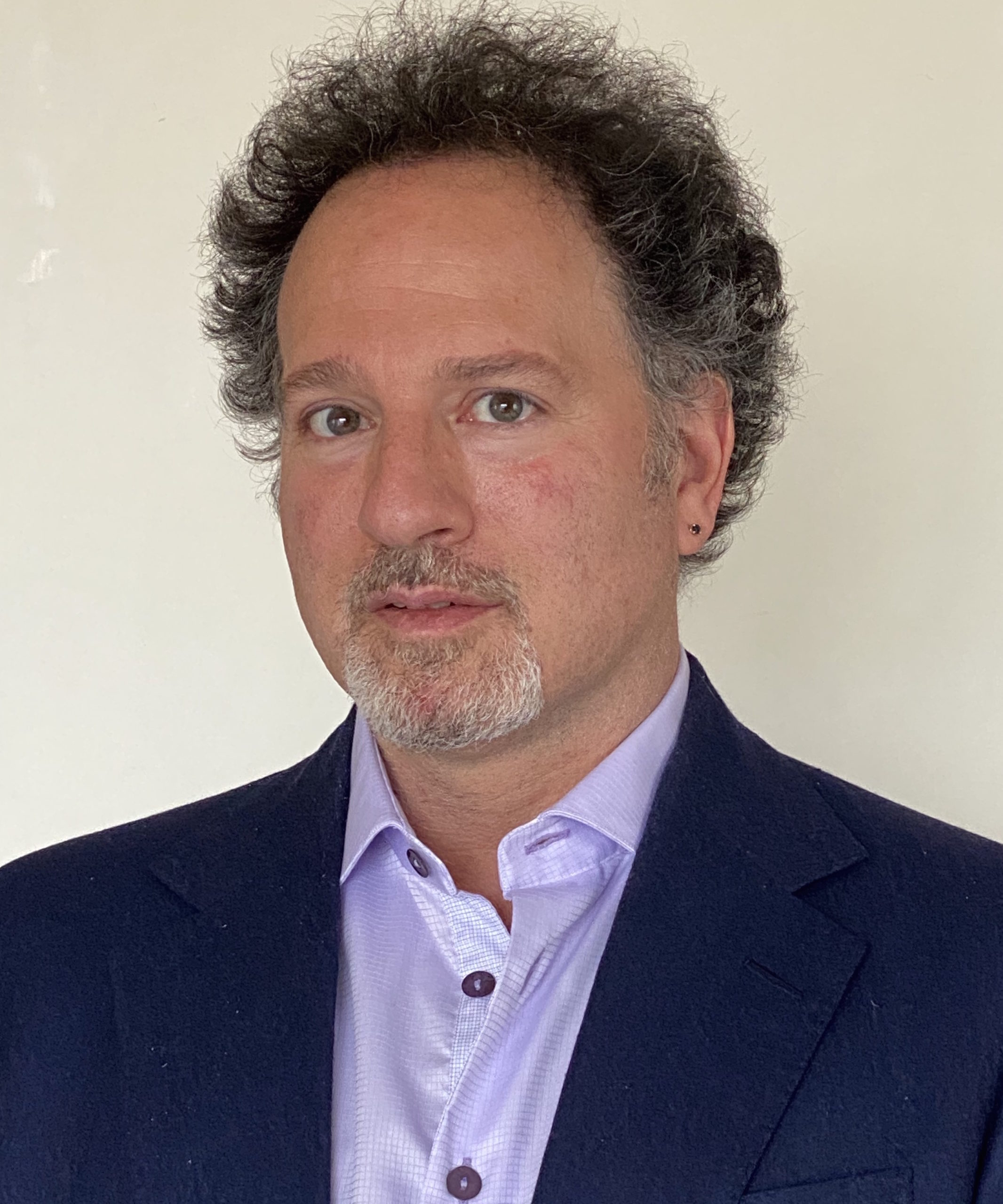
Zachary Karabell

Emma Varvaloucas