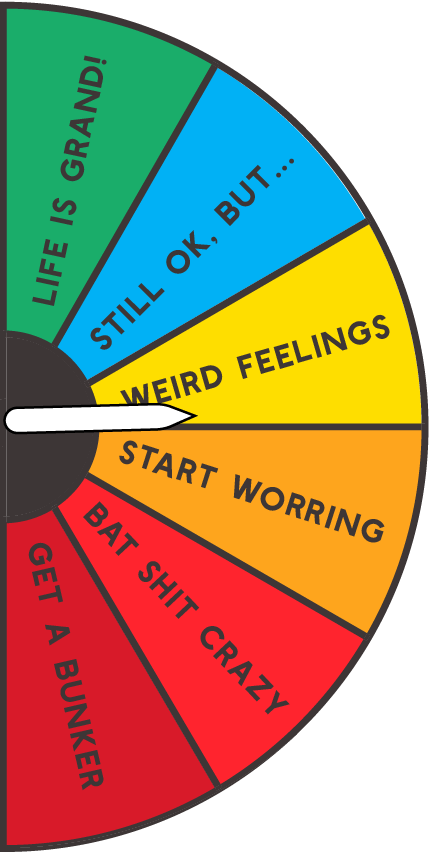
Volcanoes are erupting in The Philippines, but on-fire Australia received some welcome rain. The Iran war cries have been called off and The Donald’s military powers are about to be hamstrung by the Senate. Meanwhile, his impeachment trial is starting, and we’re all on Twitter for a front-row seat.


Democracy’s Next Chapter: Hope or Decline?
Featuring Brink Lindsey
What really went wrong with global politics? Emma welcomes Brink Lindsey, Senior VP at the Niskanen Center and author of The Captured Economy: How the Powerful Enrich Themselves, Slow Down Growth, and Increase Inequality. Lindsey traces how politics, culture, and economics became unstable, from the development of liberal capitalism since the 1990s to the resulting rise of right-wing populism. He explores the contradictory ways this crisis manifests in society and culture, and how individuals and societies might chart a way out.


Prefer to read? Check out the Audio Transcript
Although the transcription is largely accurate, in some cases it may be incomplete or inaccurate due to inaudible passages or transcription software errors.
Emma Varvaloucas: If you could wave a magic wand and instill one new mindset across open democratic societies, what would it be?
Brink Lindsey: Civic equality. That every, all citizens are civically equal, that we respect each other even when we disagree with each other.
Emma Varvaloucas: Welcome to What Could Go Right? This is Emma Varvaloucas. I’m the Executive Director of The Progress Network, and I’m usually here with my co-host, Zachary Karabell, who is the founder of The Progress Network, but he is not available today, so it’s just going to be me and our esteemed guest today. We are going to be talking to Brink Lindsey, who is a political economist and author, and a senior vice president at the Niskanen Center.
So he has a new book coming out that’s called The Permanent Problem. It’s not gonna be out until January, but mark it in your calendars because it’s sort of like a grand, unified theory of what has gone wrong between the time in which we all thought that. The world would just continue moving forward, that we would get richer, that we would get more tolerant, that we would get healthier, that we would get happier.
All of those things seem to be going through a crisis period right now. So if you’re looking around at the world and things kind of seem like a mess from the crisis of liberal democracy to Americans struggling to get by or feel included in economic gain, or just a feeling of ennui, depression and anxiety, certainly that Gen Z and Gen Alpha are telling us that they’re experiencing.
If you’re looking around, wondering if there’s anyone in theory that combines all of these things, and most importantly for us at What Could Go Right?, how we can fix that, Brink Lindsey is the one who has got it. In this new book that’s coming out. So we are going to be talking about The Permanent Problem today, and I can’t say there’s any permanent solution, but we are also gonna talk about some solutions at hand. So let’s go talk to Brink.
Brink welcome to What Could Go Right? Thank you so much for being here with us today. All the way from Thailand.
Brink Lindsey: Great to be here. Nice to be with you.
Emma Varvaloucas: So it’s funny, you know, I was thinking as I was prepping for this interview that this podcast is called What Could Go Right? and that the work that you’re currently doing is kind of like looking at what has gone wrong so that we can get back on track for, for what could go right.
So this idea that you were very much part of in the early millennium that was so popular, which is kind of like the long arc of history, bends toward progress, right? Like Steven Pinker or Barack Obama, Brink Lindsey. It was kind of this assumption that we were just gonna get more democratic, more open, more tolerance, more rich, just better, better, better, forever and ever, as far as I can see.
And there’s this questioning now, right around whether that’s going to continue to be the case or whether that was ever really true. So why don’t you tell us a little bit about how you got to that viewpoint and what prompted this kind of investigation into what has gone wrong?
Brink Lindsey: You could sort of divide my life’s outlook on the world in three phases. I was born way back in 1962, the year of the Cuban Missile Crisis, so I’m a Cold War baby. Born in the long twilight struggle with communism, which I figured would go on my whole life and wasn’t sure I was on the winning side of. I emerged into, you know, political awareness in that context, a strong Cold War hawk who was worried about our ability to sustain freedom, faced with that challenge, and then 1989, the Berlin Wall fell.
A couple of years later, the Soviet Union ceased to exist, so this enormous threat just vanished, poof, without barely a shot being fired. Then we went into the nineties and we had the glorious nineties boom. And the internet came online and it seemed to suggest all kinds of fantastic new possibilities of having all the world’s information at your fingertips and stitching everybody together across the globe, fermenting a new productivity boom.
So the end of history was very much, you know, uh, conventional wisdom back then, that we are on the glide path towards, as you said, a richer, freer, healthier, happier world, and sure there will be trouble in the provinces. Yeah. Sometimes it’ll be two steps forward, one step back. But I was confident from, say, 1989 to say 2016, that the path of least resistance was towards a much better world.
Donald Trump getting nominated by a major party and then actually winning convinced me that the, what I could see were pretty serious dysfunctions in American politics were much deeper than I had imagined. You just don’t elect somebody like that unless there is a collapse in trust in established institutions and governing elites.
It wasn’t just happening in America, it was happening all over the world. You saw this kind of right wing populism that fed off of conspiracy theories and delusions and bigotry was not very committed to the integrity of liberal democratic institutions. This was happening everywhere. So I had a big sea change in my thinking and came to see that the path of least resistance now, uh, is to things getting worse, and at least in very important domains.
There’s a lot getting better at the same time. But for the first time, it seemed to me that the negative news was outweighing the positive news. And so in my day job at the Niskanen Center, a think tank I was working on sort of sensible, moderate, bold, but still incremental reforms. I sensed that the real action was real, was much deeper.
That the convulsions that were going on, they’re making, doing that kind of sensible, moderate policy, wonky seemed, you know, badly mistimed. So I, I, I’ve sensed that there were deeper forces at play. And so I did a lot of reading and a lot of thinking about it. And I started a blog or a Substack, we call them now, called the Permanent Problem to delve into these problems.
And then that turned into a book, which will be coming out in January called The Permanent Problem. And that is a diagnosis of what’s gone wrong in recent decades and suggestions for how to find a way out.
Emma Varvaloucas: Let’s talk about the diagnosis of this condition, right? Because I think a lot of people will definitely relate to the feeling of the world’s just in a weird place, right? Like, it just feels like something is off and we’re we’re, I dunno about hurdling, but we’re moving towards something. That I think a lot of us are nervous about, like we don’t know what the destination is, but it feels bad. So yeah, let’s give us the diagnosis. I mean, how did we get to this point?
Brink Lindsey: Yeah, so this sense that things have gone badly wrong is widely shared and there’s a lot of different formulations for it, and there’s a gajillion data points and you can connect them in different ways. And here’s how I’ve done it. So the way I see it, capitalism has taken over the whole world. We have one system now that is basically the operating system for the planet, and it’s a market economy that’s loaded up with technology and organization.
It’s motivated by consumerism and the pursuit of comfort, convenience, and entertainment. It’s regulated by a modern, bureaucratic state. That operating system is the one now that has many different variations, but that is the one system now that is dominant all over the planet. And so in one sense, we’re living in this sort of time of capitalist triumph.
But at the same time, the countries at the forefront of economic development. The, the, the countries that have been capitalists longest, the advanced democracies of Western Europe and North America and Japan. They’re in a funk. They’ve been in a funk throughout the 21st century. To put emphasis on it and to suggest that things can either get much better or much worse, I call this a crisis a triple crisis of capitalism.
So on the one hand, we have a crisis of inclusion, of capitalism’s ability to provide opportunity for a good life as widely as possible. We have a breakdown in the connection between economic growth and, and advances in personal wellbeing. So we’re richer than ever, and that’s still happening. The pace of growth may have slowed down, but we’re still getting steadily richer.
But at the same time, we’re getting fatter. 40% of Americans are obese. We’re getting stupider. Our raw IQ scores are falling. And even elite colleges, professors are complaining that their students can’t follow long texts anymore. Personality tests show that conscientiousness and self-discipline are in retreat.
Mental and emotional health problems are on the rise, especially among the young. That’s a lot of red flags that suggest that even as the economy is continuing to push in the right direction, it’s not pushing us in the direction we want to go. Meanwhile, capitalism’s ability to keep producing technological innovation and economic growth is sputtering.
So hasn’t gone into reverse, but the United States is really the only advanced economy with any productivity growth to speak of since the Great Recession, more or less stagnation has been the rule in Western Europe since that time, as well as in Japan, we’re victims of our own success.
That by getting rich we have induced cultural changes that have made us generally as a society, much more risk averse. Basically, when you have a lot of stuff, you focus on not losing your stuff even more than on gains, and that’s an, you know, a well established psychological fact. There’s different kinds of names for it, but we see that play out all over the board, even in the United States, which is the most innovation friendly economy amongst the advanced economies.
So that over recent decades we’ve. Turned away from the kind of progress that involves moving matter around at scale. So progress in the world of atoms, you know, we’ve had it and that’s produced revolutionary changes. We’re still very interested in advances in healthcare, but that mastery over nature.
We kind of stopped that in the 1970s. Around the same time, the environmental movement really kicked in. We went to the moon, we stopped going. We learned how to build nuclear power plants. We stopped building anymore. We developed supersonic transport, we discontinued it. So we just kind of stopped going bigger, faster, stronger, and in particular.
Energy consumption per capita, which had been rising smartly for nearly 200 years, plateaued in the 1970s and has been stable ever since. And, energy is really the ultimate general purpose technology. And, and so I think that stagnation in energy resources has fed into a broader kind of slow down in technological change.
The slowdown in growth, I call a crisis of dynamism. So finally, we have a crisis in politics. How do we deal with these other crises? Politics is the way that we solve collective problems, but our politics isn’t upstream. Of all the changes that have been messing around with inclusion and dynamism, it’s downstream of them as well, so it’s caught up in them.
Politics has become increasingly dysfunctional beyond our worries that liberal democracy is in peril. What is clear is that we don’t have a politics that’s serious and capable of dealing with the big looming challenges that face us right now. So, a lot is going wrong. The way to think about things to look for, hopeful signs first off is there’s such widespread recognition right now that things are going wrong.
So we’re not complacently stumbling towards the cliff. People are starting to freak out and realize mistakes have been made and wrong. Turns have been made and, and there’s a lot of exploration now about how to get back on the right path. So we can talk about that later, about hopeful signs. But right now, the dominant forces these days, I think, are pushing us in unfortunate directions.
Emma Varvaloucas: So this is a lot to chew on, right? Like the triple crisis of capitalism, like that covers a lot of ground. Maybe let’s choose one to zoom in on. Maybe we can start with inclusion and the, the kind of underlying premises of all this, right, is like, we’re richer than ever. And it’s certainly true that the United States is. Richer than you know, any other country. And yet, if you’re gonna talk about, and I think you put it for instance, as like the dark side of mass affluence. There are a lot of people in the states that would look around and be like, affluence, who, affluence where? You know, like I, that’s not relatable to me. I don’t know who you’re talking about.
So how does this fit into your theory?
Brink Lindsey: One way out of our problems is to get a lot richer than we are right now. I think we got complacent about how rich we are. We started calling ourselves developed. Countries as if we’re done and poor countries need to catch up with us, but we’re, we’re at the frontier, everything’s fine. But in fact, I think we’re not nearly rich enough.
And so yes, by world and historical standards we’re crazy rich. The percentage of Americans, even with a pretty porous safety net. The percentage of Americans who suffer, you know, serious material deprivation is, is tiny. So poverty in America is more about social exclusion, exclusion from being a productive member of society and, and fitting into the networks that enable you to belong and to produce and to contribute than it is about.
Worrying where your next meal is coming from. Of course there’s some food insecurity in the United States. I don’t want to minimize that, but, in historical context, our problems are much more sort of spiritual than they are material.
Emma Varvaloucas: It’s interesting to me that this is framed as an issue of capitalism because it’s not like capitalism was ever meant to solve your spiritual crisis of, of meanings. Right? So what are your fixes for that? Right? Like I think that there’s certainly people are feeling the, with the receding of, of religion with the receding of marriage rates, community, all the trends about teens being on their phones and not having any friends, right? These seem to me like cultural issues that it would be silly to ask capitalism to be the answer to those anyway no?
Brink Lindsey: But I think they’re tied up with our basic social institutions and how we live today. It’s a particular way of life. It’s an exotic way of life that humans didn’t use to live like this. In many ways, it’s a profoundly unnatural way of life that is very different from how we’ve lived, were evolutionarily wired to live and how we were culturally adapted over 10,000 years of agrarian life to live. But in the transition from poverty to mass affluence, there was a very tight connection between capitalist economic growth and improving personal wellbeing that improved material wellbeing, the reduction in suffering, the reduction in drudgery.
Those were seen as liberation. Those were felt as liberation by the people going through them, so that even though their lives were much harder than ours, and even though people worked in much dirtier and more dangerous environments than people do today, they had this feeling of progress that they were escaping poverty.
Elimination of deficits, that chasing away of material scarcity, red downed into personal wellbeing in clear and salient ways. Then once you get to mass plenty, I won’t say that everybody’s comfortable, but our problems are not, that there isn’t enough to go around that we just, that we’re just too poor for everybody to have a decent life.
The problem is some people, we don’t know how to fit them into the cooperative schemes that give everybody a good life. But at this point, economic growth, what it does is it produces sort of the bells and whistles for a well-lived life, right? It produces additional comforts, additional conveniences, amazingly stimulating and absorbing entertainment.
Distracting and addicting entertainment, but it doesn’t supply. The core elements of human flourishing and indeed those bells and whistles start to become distractions from those core elements of, of personal wellbeing. And at the very core of human wellbeing is other humans and our relationships with other people.
There’s a whole bunch of social science on this, but it is just documenting sort of the obvious. We are a hyper social species. Babies, if they’re not around people. They’ll fail to thrive and they’ll even die. If you put adults in solitary confinement too long, they go crazy. We need other people. We desperately need other people.
We need to feel like we belong to a community that we’re a productive member of. So all of that is vital to our sense of wellbeing and our modern mass affluence, consumerist lifestyle. Is in many ways hostile to those needs, or it has led us to ignore those needs to our detriment. It’s getting easier and easier and easier to while away the time all by yourself, staring at a screen.
So that’s great. Nothing wrong with entertainment, it’s awesome, but always it’s the dose that makes the poison. I’m afraid these days we’re overdosing on distractions that lead us away from those vital relationships, which are at the core of satisfaction and wellbeing and happiness.
Emma Varvaloucas: It’s the, like the dopamine addict argument, right? Like instead of filling our time with where the endeavors we’re like online shopping and online gambling and like watching porn and all.
Brink Lindsey: You know, I mentioned obesity and that’s, maybe Ozempic will cure this. So, and that’s often the case, that technology causes problems. And then technology comes to the rescue. But here we are at a time when healthy, nutritious food has never been more available at cheaper prices or in greater variety. And instead, we collectively gorge out on junk food and 40% of us are obese.
Likewise, now thanks to the internet and AI, all the world’s information is right there at your fingertips. Instead, we consume intellectual junk food to the point now where even elite Ivy League college students can’t do the reading assignments that were normal back in, way back in my day. I don’t think we’re doomed on these fronts.
These are alarming trend lines. They have cashed out now and a lot of dissatisfaction, but I think there’s a growing awareness of them all, and we’ve seen overshoots like this in the past where we’ve gone and corrected. You know, they say predictions are hard, especially about the future, but the surefire way to make a fool of yourself when predicting the future is to take current trend lines and just straight line extrapolate them out in the future.
And so the fact that so many of those straight line extrapolations right now are pointing in very bad directions, suggest to me that, that maybe we’re, we’re right around the corner from some, you know, from some big curves.
Emma Varvaloucas: How do you avoid talking about this, where it’s like, I can imagine this being off-putting to some people listening in the sense of, it’s like you’ve been given the world, you go on vacation, you have leisure time with your family, you have the, like you said, information at your fingertips, entertainment at your fingertips. Why aren’t you happy? Or like, why are you so fat? Or why, you know what I mean? It can come off as like a, a really, like a blame kind of thing, and I don’t think that you mean it like that.
Brink Lindsey: One sort of pathway way to describe our dysfunction. In the US today is we have a bad case of work life imbalance, and we all know about that. Uh, the requirements of work and the requirements of life are not the same, and they’re in conflict with each other, at least at the margin. And, sometimes we need to prioritize family and personal wellbeing over the demands of the office.
That’s all familiar enough. But these days that’s, that’s presented as and conceived of as a purely individual balancing act that it’s up to you to, to strike that balance when everything in the system is pushing. The system itself is out of balance and we’re part of the system, we’re caught up in it. We can’t escape the incentive structures that it imposes.
So you wanna make a stand. You think smartphones for kids is crazy. All the other kids have phones and your kid is excluded from connections and friendships because he is not online. So it’s very difficult for one person to make a stand against the whole system when the system is oriented in a particular direction.
So no, this is not about blaming individuals at all. It’s about diagnosing ways in which our institutions are pushing us in the wrong direction and figuring out institutional changes that can be more consonant with wellbeing.
Emma Varvaloucas: I’m curious to ask about one more thing before we get into fixes, which is the relationship and we, you mentioned this in the beginning about this sort of crisis of liberal democracy that we’re going through. It seems to me like. You also mentioned that you were a Cold War baby, that at that time there was this very like uniting sense in the US.
It’s like we are not communists, right. And we are anti-communist. It was part of people’s identity, right? They were very interested in defending against this quote unquote menace. And these days it feels like there’s definitely a new setup between the strands of authoritarianism. Both inside of currently democratic societies and, you know, in the very large authoritarian based societies like China or Russia, and we seem to have lost interest in defending ourselves against that.
Like, like we, or rather, we seem to have lost interest in defending the concept of a, a democratic society. Like we’ve lost our faith in it completely.
Brink Lindsey: During the Cold War, American politics was unusually sort of buttoned down and mannerly, of course, there were big convulsions in the country, but there wasn’t partisan hatred between Democrats and Republicans like there is now, not at all. Whereas before the Cold War. And since we’ve reverted to type American, democracy has usually been an uproarious affair, with lots of screaming and going right up to the edge of things falling apart again and again.
But it took, you know, the specter of 10,000 nuclear warheads aimed at us to get us to get along with each other. And as soon as that was released, I think it’s no coincidence that the last President elected who the other side completely con, you know, conceded, okay he’s the clear, legitimate winner was George H.W. Bush, the last Cold War president.
So Bill Clinton elected the year after the Soviet Union fell. And it was Whitewater and it was a three-way race and he, there was an urge to impeach him from the get-go and the Republicans never thought of him as their legitimate president. Then George W. Bush came in under the 2000 election mess, and so Democrats thought that the Supreme Court rigged things to give him the White House.
Then Obama was elected and we had the whole, you know, birth certificate mess, birtherism. Then Trump. And of course, you know, he was installed by Russians and then Biden won and, and the Republicans said, no he didn’t. The election was stolen and now we’re right back again. And yes, we have completely lost the constraints on political competition, on self-restraint.
You need to have a functioning democracy is not to push everything to the nth degree that you have to think about okay what goes around comes around. And if I do this to him when I’m in power and he’s in opposition, then when the roles are reversed, that’s gonna be bad for me. And so that kind of thinking tends to discipline people.
But that kind of thinking is gone. Right now everybody’s thinking the next election may be the last election in American history, and it’s the most important critical election of all time. And so all bets are off. We have to do anything to win. So that kind of extremism has taken hold, and it’s very dangerous.
Emma Varvaloucas: There’s plenty of self-inflicted wounds, right, that the United States has placed on itself, but also, you know, since 2010, 2012, like we have been living in immediate environment when there is like a direct line from authoritarian countries into our immediate environment in a way that there’s never been before in history.
And I feel like in some ways we have underestimated the extent of that propaganda, that the fact that there are people on the left that can’t differentiate between Chinese society and American society, or people on the right that can’t differentiate between Russian society and American society. It doesn’t seem like an accident to me.
Brink Lindsey: I agree social media is a mess and misinformation maybe from geopolitical adversaries is an issue, but I think it’s an overstated issue. I think the problem isn’t a nefarious supply of goofy ideas. It’s a, it’s a demand for goofy ideas. When Fox News, after, you know, called the election for Biden, there was uproar and immediate jump of viewership over to OAN, which was, you know, going full bore with, you know, conspiracy theories.
And Fox had to kind of backtrack. So we see now that the id of political delusion and, and catastrophizing the other side is out of the bottle. And it’s not gonna be too easy to put out the, you know, back in the tube. Even if we eliminate social media, which isn’t going to happen, we’ll still be in a pickle.
Emma Varvaloucas: Yeah, that doesn’t give us a very good segue into fixes, but presumably you have some, so I don’t even know where to start actually, because we’ve covered so much ground about what’s going wrong. I mean, in your mind, where, where’s the place to start vis-a-vis fixing this triple crisis?
Brink Lindsey: We haven’t talked much about the kinda slow down in economic growth and the difficulty of innovation and the problems we’ve had. We’ve seen a rolling crisis of housing affordability in big cities across America. In recent years, we saw a, a movement against that YIMBYism, which has started to roll up real victories, and that has now kind of been folded into a larger conception of a, a so-called abundance movement of, uh, of this idea that over recent decades we have deprioritized supply side growth.
That doesn’t necessarily mean laissez faire or free markets. It could have a big role for government, but the idea of, you know, accomplishing big things in the world of atoms and doing that to raise the material standard of living and making that a priority. Increasing supply across the board for all the kinds of things that people want.
Making that a priority rather than on the progressive side, just redistributing whatever we’ve got now. But that’s an important, interesting movement. I think it’s hopeful. It’s got a lot of internal opposition within, within the Democratic party. The Republican Party’s got a lot of, you know, it’s, it’s often its own kind of la la land under right now, at least larger, large segments of it.
That’s a hopeful sign, but I think the ultimate problem right now is a lot of us are miserable and feel like we don’t fit in because of this, this kind of crisis of disconnection looking for, for avenues that can push us back together again. That’s the most important and most fundamental area of concern.
And, and there’s a number of, of hopeful things. So first. We’re very credulous about information technology and, and that we saw it had wonderful upsides, but we just imagined, ooh, it only has upsides, right? Whereas tools are tools. Tools give you power, which means tools in the hands of good people give you power to do good, and in the hands of bad people or misguided people give you power to do bad.
The internet’s a very powerful tool, and it’s been used for good and for real. Smartphones are a powerful tool, and they’ve been used for good and for real. And now we’re seeing that putting smartphones in the hands of developing minds and having them hooked up to a global popularity contest where their natural self-consciousness is put under a microscope and everything they do is subject to either getting a lot of likes or not getting a lot of likes.
I think technology is more designed to freak out young people and drive them off the deep end than what we put in their hands. But at the very same time that we got really crazy and risk averse about the offline world. Stranger danger in this insane overestimate of the idea that if you leave your kids alone for five minutes, somebody’s gonna kidnap them at the same time.
We were very overprotective on that front. We got very under protective on life online, and that now I think is reversed and we’re seeing school systems banning phones during school time. I think that’s an important development. We’re seeing a general. Move towards much more critical thinking about kids online and about the role of tech in childhood and in education.
I’m hoping that that will then be married to a sense of, okay, we have to sort of loosen the leash then on the offline world some, and let kids be kids again. So that’s a, that’s a hopeful score. On the adult side, I think even though digital technologies are causing a lot of, you know, things that are cause for concern these days, it’s an immensely liberatory and and powerful technology for good as well.
And one thing that it has done is it has enabled more and more people to work from home. Once upon a time, the workplace was the home, right when most of us were farmers. This juncture between work and, and life is a relatively recent thing in a larger historical context, and there’s no reason to think it’s necessarily gonna go on forever.
And so I think it was around 1980 is when the percentage of people who worked from home reached its lowest point in the United States. It was just like 2 or 3%, very, very small. And it’s been climbing since then due to either growth in home-based businesses, but mostly now in digitally enabled remote work.
So now about 20% of people can work from home. And then we have a larger hybrid workforce that works from home sometimes. So that’s relaxing constraints and enabling better work-life balance just directly. Right? It means an hour less, two hours, less commuting time a day or you know, or something like that.
That’s a possibility. That’s, that’s worth encouraging. And if we have more and more people working from home, that means they can live anywhere they want to, which means they can live with family and friends. Uh, and then once people are living in kind of blocks of people that they’re, you know, that they’re connected to.
All the kind of spontaneous possibilities for communal self-help just rise to the surface of, you know, of homeschooling micro pods like we saw during COVID childcare for little kids, making that a lot less onerous than it is today when we’re all sealed up in our one family bubbles. Taking care of grandparents instead of warehousing them in nursing homes.
All of that becomes much more possible if our workplace is home and we’re living with neighbors that are connected with us and that help us out. So I think there’s a possibility of social life reconnecting communities enabled through digital progress, and that’s something we should be pushing very hard because that’s a very positive development towards sort of social reintegration at the face-to-face level.
Emma Varvaloucas: It’s so interesting to hear you talk about remote work as a cure rather than a problem. Because I work remotely and most of the expat community that I see here in Greece also work remotely and generally when we talk about it, it’s the difficulties of it, right?
Brink Lindsey: Right now in present context, it’s just one more thing that’s disconnecting us, right? So once upon a, at least we had five days, nine to five in an office where you had office pals and, and just the comradery of that. And if you’re cut off from that, then yes, your life can really feel like you’re in solitary confinement.
So, in its present day, incarnation, yes, it’s, it’s part of the, it can be part of the problem, but I think it opens up really important and exciting possibilities that, so that’s again and again, when you look at history, you see great things causing problems like the end of the Cold War, causing our politics to fall apart.
But then things that look bad can then produce possibilities that then can be seized. So I think work from home is one of those ones that right now maybe feels like it’s pulling us all apart, but it’s something that can help reconnect us over the longer term.
Emma Varvaloucas: It’s interesting to me because my friends are like, okay, I, I need to go back to hybrid. At least hybrid work, right? Which is, is kind of a solution. And I do have at least one friend that moved to like an intentional remote work community, and that has provided her with a lot of solace, I think sometimes I think to myself, like, oh, you’re just gonna sound like a really weird, like hippie for, like, have you thought about moving to, into an intentional community? Right? It sounds odd.
Brink Lindsey: So that kind of thing is now they call it co-housing. All right? Like it’s a big deal in Germany. Something like 15% of the housing market is groups of people getting together with builders and planning a community. For themselves and it’s, you know, mostly single family houses, but with some common areas as well.
So that’s, it’s taking off in places around the world. There’s now these kinds of co-housing, apartment complexes or condos, garden apartment communities or town home communities. They’re starting to sprout up in cities around the United States. It’s something that got really off the ground in the Bay Area.
Just because of hacker culture and young people living in hacker houses and, and so that idea of living with non-relatives is something that just sort of grew out of the work environment there. But then people are saying, hey, you know, this is kind of great, right? So most of us, you know, we look back with a lot of nostalgia at our college days as some of the happiest times in our life because we lived, you know, in walkable communities where we just ran into people we knew all the time, right?
So we were, we were face-to-face connected with people in a way you didn’t have to plan. It was just spontaneous. And so the more we can have institutions that push us towards that kind of life, again, I think the, the better off we’ll be.
Emma Varvaloucas: I’m glad you mentioned Germany too, because I did wanna ask how many of these things you think are particular to the United States and how many that are truly global particularly because you’re in Thailand, I’m in Greece. Right. Some of these problems that you mentioned, right, this like that we’re feeling right now, like some of that was solved for me just simply moving outta the United States and realizing that there are worse places to be. I’m curious how you look at this from the Asian perspective and also just the global perspective?
Brink Lindsey: The crisis of dynamism is more acute in Europe than it is in the United States. It’s real in the United States, but it’s worse in Europe. I would say a lot of these problems of social breakdown in social disintegration are worse in the United States. We actually had falling life expectancy due to, you know, opioid addiction for several years in a row.
That’s maybe worse in the United States than it is in other places. The politics, who’s worse, you know, depends on what year you’re talking about, but that fluctuates. I’m trying to tell a kind of a global story about the rich democracies, but there’s a lot of variation within that story.
Emma Varvaloucas: You know, we’ve mentioned a couple of times that it’s hard to see the future, and you know, we don’t wanna make a mistake about just assuming the trend lines are going to go in a particular direction, but from where you stand right now, are you hopeful? Are you worried? Do you think that we have the tools at our disposal to solve this crisis and that we will solve it, or how’s it looking to you?
Brink Lindsey: I’m hopeful and worried. Yes…
Emma Varvaloucas: Yes and!
Brink Lindsey: Yes. I think optimism and pessimism are like empirical judgements right now. I’m kind of pessimistic, at least for the foreseeable future. Hope, I believe, is a moral obligation. At all times in all places, the world is filled with wonders and horrors. It’s filled with light and dark.
It’s our obligation to seek out the light and move toward it. And there’s plenty of things to be hopeful about these days. And so even though we’ve had a kind of technological slowdown in recent decades, there’s all kinds of amazing hard tech, not just that that is now booming. We’ve had this amazing development in clean energy with plummeting costs of solar and wind that make a clean energy revolution actually imaginable.
We’ve got a whole bunch of new interest in nuclear power and novel designs and in breakthroughs in fusion, and that could be of revolutionary importance, but just, you know, actually having for the first time energy sources that are cheaper than fossil fuels, which solar can be. That’s new and that’s opening up all kinds of important possibilities.
Of course, we have continuing, you know, miracles going on in healthcare, mRNA vaccines, which were miraculously intervened on COVID, despite the craziness in America where we have, you know, anti-vaccine sentiment right now. They look like they could have application on a whole bunch of other kinds of fronts, maybe different cancers and so forth.
So that’s great. AI already, we can see some downsides to it, but the upsides are obvious and the possibility of turbocharging scientific and technological progress are clear. We could get a lot richer. Then if we get a lot richer that means a lot of us, more of us could be independently wealthy than we are today.
We’ve had an ongoing trend of declining lifetime, working years since the forties it’s taken. Uh, at first it took the form of a decline in the working week, you know, from 60 or 70 hours to down to 40 hours a week. But now we are, we’re shrinking the working life as later entry into the workforce and longer retirements.
But if we get a lot richer than we are today, we could. Push towards much shorter working hours than we have today, which relaxes a lot of these work-life balance problems. Makes it a lot easier to have that work and life fused in the way that I’m talking about where a significant fraction of the people maybe just work, you know, part-time or work in their twenties or early thirties and then retire early or work intermittently over the course of their life.
So you could have this wall between work and life. Become increasingly permeable, the richer we get, and that will relax a whole lot of these, these social disintegration problems. So yes, I think there is a human nature at the core of it is that we’re social animals who need each other. That’s not going away.
So I think there’s a pull towards the call of nature and we’re feeling it right now. We’re feeling disconnected and freaked out and like we, that something’s wrong. And so that’s pulling us towards the light. Culturally, we’re, we’re seeing those, you know, the seeds of possible renewal and technologically economically we’re.
We see all kinds of dazzling possibilities that could, that could help facilitate that cultural renewal. So yes, there’s plenty of grounds for hope.
Emma Varvaloucas: Yeah, and most importantly, as you say, the alarm bells are ringing, but we are responding to alarm bells. It’s not like the alarm bells are ringing and everyone, well, sometimes it does seem this way, but I like that you’re pointing out that in fact, we are trying to listen to them.
Brink Lindsey: I think so. The widespread, you know, sense that things have gone wrong is what you would expect in the early going of a turnaround.
Emma Varvaloucas: I love that as an ending note. So Brink, thank you so much for, for coming on and speaking with us and just a reminder to everyone that the book is coming out in January and it’s called The Permanent Problem. So keep that in mind, everyone.
Brink Lindsey: Thanks so much.
Emma Varvaloucas: So that was a great conversation with Brink. Usually what we would have here is some kind of reflection between myself and Zachary, but rather than just talk to myself about my own thoughts, since Zachary isn’t with us this week, we’re not gonna have a Progress Report on Friday as we usually do. So I’m gonna give you just a really quick hit of a couple of things that I found this week that are bringing me some, some hope, and then it will be back to our normal schedule soon.
So what do we have for you this week? We have leukemia, which is the most common cancer in children, is actually waning. There’s a new study that came out that between 1990 and 2021, both the total number of cases of leukemia and the number of deaths decreased, as well as the rate of incidents. The mortality rates and the likelihood of causing lifelong disability across all age groups, basically by whatever metric that you wanna measure. Leukemia, all of those things are declining, which is fantastic. Really, really fantastic.
Next thing, despite what RFK Jr. and the vaccine panel has to say about it more American teens in particular are actually getting vaccinated, so more of them got vaccinated against measles bumps and rubella, tetanus, diphtheria, pertussis, and meningitis in 2024 than in 2023. The only vaccine or common vaccine, shall we say, that hasn’t seen a big uptake but has remained steady is the HPV vaccine. And I’ll, I’ll use this time here just to tout the HPV vaccine a little bit, which is, if you haven’t gotten it, you really should if you’re a woman in particular because. It might be the thing that wipes out cervical cancer from this earth. So just gonna throw that out there and you can do with it what you will. That being said, I’m not a doctor.
Last but not least, uh, for the first time ever, a woman in Africa may be cured of HIV. If you are following, how many people in the world are cured of HIV, which you most likely are not. Um, there’s about 10, but most of these people worldwide got cured through very expensive stem cell treatments, and they’re all out of Africa, which. It’s not that helpful since a lot of people that have HIV are located inside of Africa. I think it’s over 60% of people with HIV in the world, uh, are in Africa. So all of the data that would come out of how to cure HIV even through this very expensive and unusual treatment is not always gonna be applicable, uh, to people that are, are in Africa.
So this is the first time that somebody in Africa has been cured, and it’s not through the normal quote unquote normal stem cell way. It’s actually through a clinical trial that was using a drug that aims to flush HIV out of hiding. So you may not know about HIV, that part of the difficulty in treating it is that it hides and the body literally can’t find where it is to kill it.
So this drug flushes it out, hiding, and then it neutralizes it. She has been HIV free and off antiretrovirals for two years now. There were 16 women in the trial. Four of them actually went off of antiretrovirals at the end of the trial because the trial had done what it was supposed to do, meaning that their body, uh, mounted an immune response against the virus.
But three out of those four women elected to go back on antiretrovirals. For various reasons. One, because she got pregnant and she was worried about transmission to her child. Another because, uh, she was starting a job and again, she wanted to make sure she was on antiretrovirals. But the one woman that did stop taking them completely now for two years is still HIV free.
And of course we don’t know about the other two, I’m sorry, of the four, there was one where the HIV did resurge, so there was three of them where it could have been possible that they remained HIV free. Two of them, like I said, went back on antiretrovirals, so we cannot be sure, but their one remains, HIV, free of antiretrovirals. And of course, scientists are going to be looking at the data now between her, the rest of the 16 women in the trial and seeing what the difference are between her immune system and her body and theirs, so they can kind of figure out a way forward from here. So, very interesting stuff and good for her.
I feel so happy about this woman’s life, right? I mean, what a, what a dramatic change in circumstances.
So that’s what I have for you today. Hopefully, I don’t know if it’ll completely scratch your Progress Report itch, but hopefully it did just a little bit. So thank you for the Podglomerate for producing this podcast. As per usual, thank you to everybody for giving us a listen. And we will be welcoming Zachary back with open arms whenever he returns to us. So in the meantime, I hope everyone’s having a great start to their September and their autumn, their school year, whatever it is that you are going through now.
LOAD MORE
Meet the Hosts
Zachary Karabell

Emma Varvaloucas