
Volcanoes are erupting in The Philippines, but on-fire Australia received some welcome rain. The Iran war cries have been called off and The Donald’s military powers are about to be hamstrung by the Senate. Meanwhile, his impeachment trial is starting, and we’re all on Twitter for a front-row seat.


Do we need a NEW America?
Featuring Anne-Marie Slaughter
What do we do when our systems stop working? Anne-Marie Slaughter, the CEO of New America, former Director of Policy Planning at the U.S. State Department under Secretary Hillary Clinton, and one of the most influential voices in American foreign policy joins Zachary Karabell to reckon with a country in the middle of a massive realignment.


Prefer to read? Check out the Audio Transcript
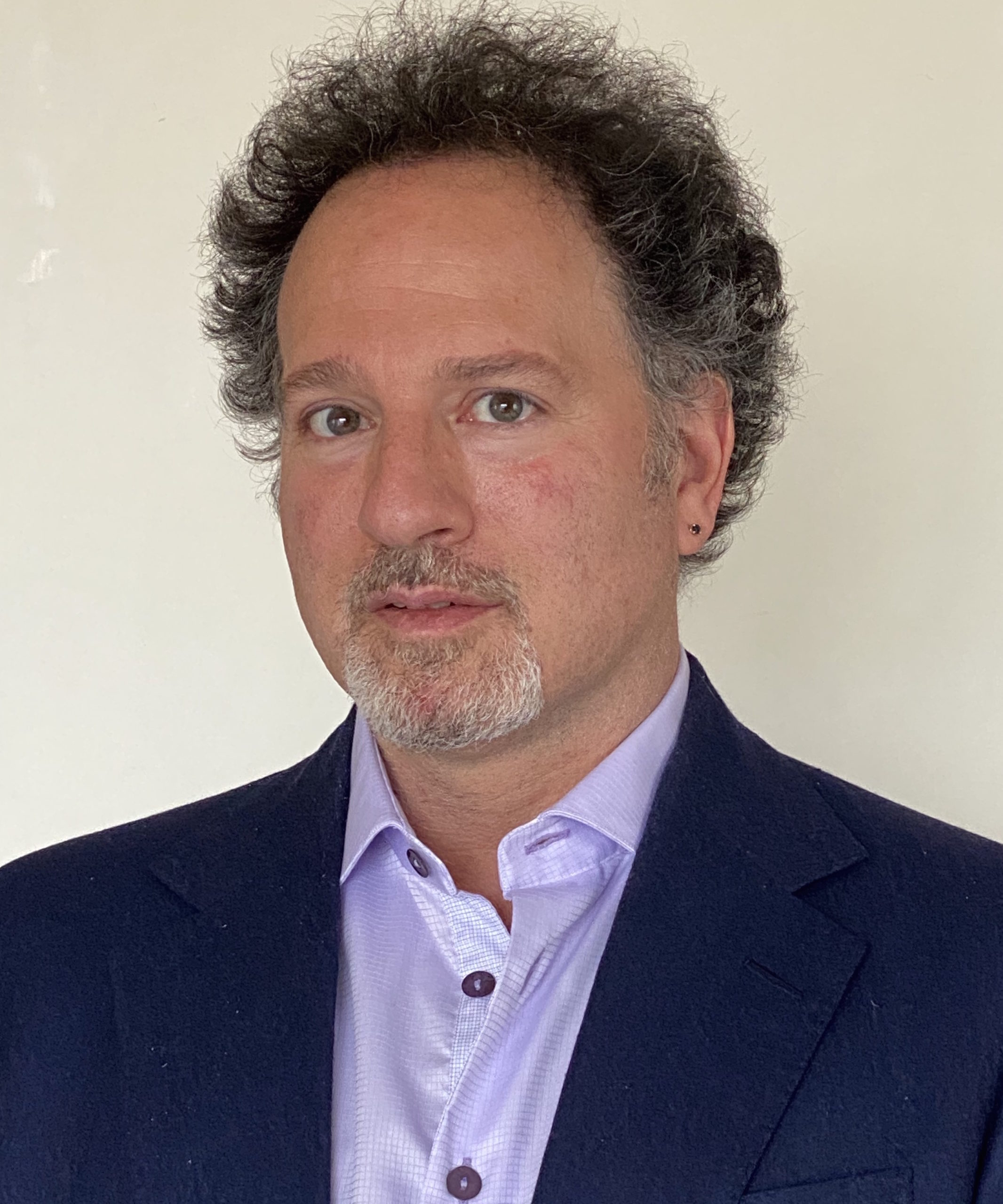
Zachary Karabell: I’m Zachary Karabell, the founder of The Progress Network and the host of What Could Go Right?, which is my weekly podcast that has had several seasons — and we’re doing this slightly differently this year as you’ll discover. So the general proposition, or at least one that I’ve got, and I’m sticking with it, is that the United States is in the midst of a substantial, significant, maybe even massive realignment.
The question of course is, is there anything new about that? Have we always been in the midst of a realignment? In which case the present isn’t so different than the past and the future won’t be so different than the present. Or is there something actually substantially different about what is going on now?
It certainly feels that way, palpably, to people. That is exactly what everyone is always saying. Oh my God, look at the times we’re living in. Can you, can you believe it? And it is clearly true that whatever formula was working and powerful and potent, even as it was contested over the past 80 years since the end of World War II, is, at both an international and domestic level, beginning to break down. Whatever that system was in the post-Cold War Era that the United States organized is beginning to break down. Whatever consensus there was in the United States between Democrats and Republicans about what the nature of American democracy should be is beginning to break down. And whether or not Americans really feel the system is working for them is clearly breaking down.
The problem as always, but particularly today, is that we are engaging in all these questions against the backdrop of a past that can’t fully guide us, a present that we can’t fully understand, and a future that we can’t fully know. And we are left trying to read the tea leaves in a really, really noisy time. And today we’re gonna try to read some of those tea leaves with one of my favorite humans in our fluctuating nation, and that’s Anne-Marie Slaughter, who is the CEO of New America, but has also been a professor of law, a professor of international relations, a longtime scholar at Princeton,
I think today. To begin, Emory, you have an initiative underway at New America about, the United States entering its 250th birthday year.
Anne-Marie Slaughter: We do.
Zachary Karabell: And while Donald Trump may have big plans for big things to be built on the mall, New America has plans for big ideas. Are we in a celebratory mood about American 250? Are we in a pensive mood? Are we in a reflective mood? Are we in a depressed mood? Are we in some combination of all the above?
Anne-Marie Slaughter: All of the above. But New America’s approach is three things: We should be proud. We should also be prepared to reckon with a lot of the things that we are not proud of. And through pride and reckoning, we should come together in aspiration for the next 250 years, which are going to be radically different in ways we can imagine and, of course, ways we can’t.
Zachary Karabell: So where does that lead you in specific. You’re sort of preparing a, a big idea, smorgasbord. What are the big ideas that we should be thinking about reflecting upon, hoping for, thinking about ahead?
Anne-Marie Slaughter: So I’ll, I’ll give you a couple. The first is we need to overhaul our political system so that we are in fact a representative democracy.
I think our founders, of course, thought they were creating a democracy when really they were only allowing white men of property to vote. Even so, at the time in 1776, that was pretty radical, that even white men of property got to vote when you were coming from a hereditary monarchy in aristocracy, as in, in Britain, basically run by nobles and the king.
But we are not a representative democracy today. Overwhelmingly, we have 70% of Americans who support Roe v. Wade, or who support gun safety or who really, really hate the polarization and paralysis we are in. And yet that 70%, sometimes it’s higher than that, [00:04:00] cannot actually translate those sentiments into congressional or even executive actions.
So there’s a whole menu of things we need to do to be actually representative, not just a two-party system where if you’re first passed the post you win, even if you might have only gotten 35 or 40% of the vote, that you must get a majority of the vote. And that if you have three parties or even four parties, that’s fine, as each one of them can get a percentage of the vote, which would allow many of us who would like to have more than the two parties we have or different parties to do that.
Zachary Karabell: So totally with you on like revamping parties. My older son who’s really passionate about politics, I think there’s like a lot of 20-somethings right now in that he doesn’t feel like he has anywhere to go politically, meaning there’s a lot about the Democrats he profoundly dislikes. There’s a lot about the Republicans and the current administration that he passionately dislikes, and you’re left with like, okay, [00:05:00] where do I go? And neither of these parties are the big tents that they were at some point in the 20th century where you had kind of diversity of views within the parties. You don’t have that anymore.
Anne-Marie Slaughter: I’ll give you two more with just the headlines. We need to overhaul our education system soup to nuts. It is a disgrace, and it is harming our values, our competitiveness, our reputation in the world, our ability to operate in the world.
And then the last thing I’ll say: We need dramatic reforms in how we support and regulate technology, so that technology is serving democracy rather than undermining it. And so that it is enabling our humanity, our prosperity, our equality, all of our values.
Zachary Karabell: So, I have to say, look, as you know, I am congenitally positive about the arc of humanity and the arc of the country. That being said, I also start getting slightly unable to envision some of the big changes that you talk [00:06:00] about.
Now it’s one thing to lay down an idea marker and to say, here’s the real world that we’re in, and here’s the ideal world that we aspire to. And that’s more than incredibly important. It’s a vital aspect of how human beings make change. You know, we, we set an ideal that we recognize we may fall short of, but that’s the lodestar, that’s the touchstone that we’re trying to achieve.
But when it comes to things like political reform, I mean, you know Danielle Allen’s work better than anyone about let’s have a thousand people in Congress and let’s expand the representation and let’s change things. Or Ted Johnson, who’s been doing a lot of work at New America, really articulating visions of how politics can be different.
I have a very hard time seeing the way in which those ideas become realities within the current context of our world. I’m just wondering, like, do you see that as a, as something that is feasible without greater collapse? You know, collapse is awful, but at least it leads to people kind of going, okay, that didn’t work.
I don’t quite know where these changes come from within a system that seems just resilient enough to resist anything dramatic and just [00:07:00] dysfunctional enough to not do anything constructive.
Anne-Marie Slaughter: I think your reference to your son is exactly the place we need to look. Most young people feel that way. They are extremely negative about our current politics; so are lots of older people.
But as you say, we’ve muddled through in lots of different ways, and I think older people are also typically more scared of change. And I was born in 1958 at the height of the baby boom, so I am really at the bulge where it’s going through, but we are, we are aging and the movement is coming from the state level, and it is really accelerating. Even 13 years ago when I talked about rank-choice voting or fusion voting or even proportional representation, I was met with blank stares and, well, why would we wanna do that? Now. it’s very easy to convince people [00:08:00] that we need other parties.
There’s tremendous frustration and you just see that with the numbers, right? The Democrats are like 26% of the population, and the Republicans are maybe 28%. And even within that, there are a lot of disaffected people, Independents are the largest single group. But you also see things in surprising places like Kansas, with a Unite Kansas party that is a third party that is essentially people who don’t like either of the current two. And we are pursuing with other organizations a lawsuit to have fusion voting to, for me to create a party and then say my party members are gonna vote with your party members, so we’re gonna fuse our vote, which avoids the problem of being a spoiler.
In most states, that’s now illegal or unconstitutional. But there are lawsuits to overturn that part of the state constitution or [00:09:00] legislation. That’s just one example of where people are really starting to push. Another is: Why can’t you split your congressional representation according to the proportional representation?
So instead of district by district where you get first pass the post without a majority, you say, okay, 45% of this state voted Democrat and 55 voted Republican — we’re gonna split our congressional delegation along those lines. That already happens in Maine, and other states are starting to look at it.
Maine and Nebraska both have ranked choice voting, and we’ve already seen some of the implications of that in terms of a more moderate Alaskan delegation. So I think if you look back to the end of the 19th century where you also had a Gilded Age where you had all sorts of things, you had patronage, politics, you know, the big machines, we still elected our senators from the senior house of state legislatures. [00:10:00] We changed all that within 20 years. I think the dissatisfaction you see now and the beginnings or maybe the end of the beginning of these waves were reform in the beginning of the sort of more mass participation and support. I think that’s coming, and I think young people will be absolutely essential.
Zachary Karabell: You’ve written recently a little bit about the misalignment between the United States and Europe and the European powers, and it occurs to me as you’re talking, I mean a lot of the same issues that you’re talking about — disillusion with the current party system; incredibly low favorability for incumbent parties, certainly in the UK, certainly in France, certainly in Germany … it’s not ubiquitous through, let’s say Spain and other places, but there is a pretty strong level of western world disenchantment with established parties, right? It’s why you have both labor and the Tories in the UK kind of as much in disfavor as Republicans and Democrats in the US and you know, you have this third somewhat of an alternative in reform.[00:11:00]
So clearly there’s something going on that transcends a pure American question mark, right? But you have written about it even so, there’s a different lens on the world, so there may be similar levels of disenchantment with the status quo or the post-1945 status quo, that’s begun to break down.
Talk a little bit about that, particularly in light of, you know, we’re having this conversation, around week four of the US-Israeli bombing campaign in Iran that apparently we’re not supposed to call “war” because somehow doing so would change the realities on the ground. But talk a little bit about the differing lens here between the United States and what is still a real NATO alliance.
Anne-Marie Slaughter: Well, that’s a bunch of questions. Let me just start by noting that both Republican and Democratic administrations have colluded in calling war anything but, to [00:12:00] avoid trying, having to trigger the war powers Resolution passed after the Vietnam War in the 1970s. So that’s a bipartisan distortion of constitutional government on Europe.
On the one hand, absolutely the kind of populism we are seeing, and when I say populism, I mean sort of popular uprisings that says look, this is just not working. We need much more radical measures. It can come from the left or from the right. Right now, it’s mostly coming from the right, and you are certainly seeing it across Europe and the US.
You’re seeing it in Canada. There’s parts in Australia. And even some in Asia too; I would say there’s populous movements in Korea. A lot of that is coming from the basic perception. The system is not working and it is not for many reasons. Some of that is technological change and globalization, where you suddenly have much more [00:13:00] competition.
Some of that is the dramatic technological change as we enter the digital world. And of course now AI. Some of it is, I think, revenue that we can’t afford. Even the Europeans cannot afford their social welfare states, and some of that is problems with tax systems and some of it is we need different revenue models. We don’t tax data. There are a lot of ways in which one could actually generate new revenue. But mass dissatisfaction across the board.
What’s striking in Europe, though, is that the places where that has really made a difference are Hungary, which is essentially a competitive authoritarian state and Britain, where it caused Brexit, and now really is fueling a serious challenge on the right — although the reform party is I think less radical than the parties that pushed Brexit, and the US. These are [00:14:00] three states that have first passed the post. They all have that same electoral defect, whereas in France and Germany and Italy and the Netherlands, you’ve got a rising right, but thus far you have a system that is flexible enough either to keep it out of government or in Italy to seriously moderate it. Europe, though, more generally, has suffered the most from the last two World Wars and seen the horrors of Fascism and National Socialist dictatorship, and they are holding to what I would say have been traditional American values of the rule of law of liberalism in the sense of a liberal market economy, even when you have a social market economy. Sovereignty and respect from sovereignty with other nations. When I heard Secretary of [00:15:00] State Rubio address the Munich Security Conference this year, he sounded much better than Vice President Vance did last year.
He did not tell the Europeans that they should be allowing fascist parties to be full participants in their political systems. But fundamentally, Rubio still advanced a white Christian nationalist view of Western civilization.
Unknown: We are part of one civilization, Western civilization. We are bound to one another by the deepest bonds that nations could share, forged by centuries of shared history, Christian faith, culture, heritage language, ancestry, and the sacrifices our forefathers made together for the common civilization to which we have fallen heir.
Anne-Marie Slaughter: He said, you know, we have a common heritage and that common heritage is Christian, it’s white, and it’s nationalist, — meaning he didn’t want any part of [00:16:00] the EU. And all the EU governments bar Hungary, all the EU governments right now are still standing up for that set of values in the world.
Thank God they are because I hope that they can hold the fort while the United States returns to sanity. And that’s very important globally because you also heard Prime Minister of Canada, Mark Carney, say at Davos that there’s a fundamental rupture in the international order and it cannot be repaired. And it’s time for middle powers to build a new order that is actually less hypocritical — there will always be some hypocriticals, says what it means. stands for and acts on the values it upholds. And the Europeans are gonna be an essential part of that order. While at this point — hard to believe given the world you and I grew up in — the United States and China and Russia are seen almost as equal disruptors.
Zachary Karabell: I [00:17:00] mean, there is this question that I feel like we’re not supposed to address because it’s so politically laden, but I wanna address it anyway.
You know, there is a line from the Trump administration about the current Iran conflict, which is the United States came to the aid of NATO because it was in Western and Central Europe’s interest to contest Russia’s aggression in Ukraine. But now that it’s the United States and Israel doing the same with Iran, NATO is nowhere to be seen.
You know, as well as anyone, obviously, that NATO has defensive alliance clauses, not offensive, right? There’s no affirmative agreement in the NATO treaty to come to the aid of a NATO member who attacks another country. And that’s probably all for the best. Meaning it was meant as a defensive alliance, not as an offensive cohort, but, you know, there is this sort of discomforting question of NATO wasn’t attacked in the Ukraine situation, right? Ukraine wasn’t a member of NATO, but this was very much in NATO’s interest to [00:18:00] defend against, and you do have this complaint coming from the United States now of, you know, we are there when you needed us, and you’re not there when we need you.
Is there any validity to that? And again, I understand that one of the reasons this question is hard to address is because of who’s making the complaint and who’s asking the question. But you know, particularly given, you know, what you’ve just articulated about the kind of differing perspectives of the United States and Europe, it seems appropriate.
Anne-Marie Slaughter: Yeah, well, you put your finger on the biggest argument when the United States was attacked on 9/11 and when we responded in Afghanistan and indeed in Iraq, somewhat illogically, NATO was right there with us. In fact, they invoked Article Five. One of the reasons the Danes are so angry at this administration for suggesting it might take over Greenland is that the Danes fought side by side with us in Afghanistan and suffered quite a number of casualties. So [00:19:00] NATO has been there with us when we’ve been attacked, and as you say, it’s a defensive alliance. There’s nothing in NATO that says if you choose to start bombing a country, we’ll come help you.
But there are deeper reasons too. When Russia invaded Ukraine in 2022, and really even before in 2014, but in 2022, the Biden administration did not respond with arms and money because it was helping Europe. The Biden administration thought that is a direct assault on US interests. If we live in a world in which Russia can invade Ukraine just like Saddam Hussein and Iraq invaded Kuwait back in 1991, that is not a world that is good for the United States. So it was a collective NATO response, not a European members of NATO saying, “Hey, we need help,” and the US came to their aid. This administration did not agree and has actually only really been supporting [00:20:00] Europe in Ukraine when the Europeans agreed to buy the weapons that we had been supporting on our own accord.
So this administration turned what had been a collective commitment to stand up for the values of the UN charter, basically sovereignty, that you can’t just use force except in self-defense, into a transactional deal. Where the US is making money by selling arms, and Europe is taking by far the biggest share of the burden to defend Ukraine, which it should.
It’s in Europe’s interest, I would argue it’s still in ours as well. So from that point of view, I’m gonna call it a war, the war in Iran is essentially the equivalent. I mean, suddenly we’re not invading, Israel’s not invading Iran to take over territory, but it is determined to destroy the existing regime in [00:21:00] Iran, which was after all Putin’s original idea for Ukraine.
He would just knock out the government and then move in. So from a European point of view, from a NATO point of view, a Canadian, Japanese, South Korea, India. Australia — these are all NATO’s partners — this is the kind of action that NATO was set up to defend against not to suddenly aid a rogue nation.
Zachary Karabell: So let me segue that a little bit into things you’ve written about network worlds and that we’re entering a world of networked foreign policy or networked connections. These moments, of course, can feel very antediluvian, right? They can feel very much like great power politics, more like the 19th century, including Russia’s invasion of Ukraine, which in spite of the fact that it’s become a test ground for kind of AI drone, autonomous warfare still has a lot of the makings of, you know, World War I trench warfare and not what we think of when we think about [00:22:00] autonomous drone, 21st century warfare.
Anne-Marie Slaughter: Yes.
Zachary Karabell: So these are moments where everybody basically says all these great ideas are wrong. But, of course, that’s just the heat of the moment, right? The aperture of the moment.
But it does bear the kind of reflection on what does this do to the networked world idea when you have this sort of naked moment of force. Now, maybe we’ll have to see how this naked moment of force plays out. It’s I think we both would say highly unlikely to be an Iraq war scenario, right? Aas we speak, there are maybe 7,000 troops on the way or in place who could be on the ground, which is a far cry from the nearly 500,000 troops sent, including support and Navy for Iraq, and they’re probably less than a hundred thousand now, total 70 or something. So there’s no scenario in which you’re kind of repeating that or at least — and whoever’s listening four weeks from now, that is not gonna have radically changed; [00:23:00] it takes even at the best of circumstance, right?, four or five months to get anywhere near what we had in Iraq in 2003. But I’m just wondering, you know, like in that constant self-reflection of a thesis, and then the present. is it an antithesis? Is there a new synthesis? Is it still a much more networked world than we think, but these moments obscure that reality?
Anne-Marie Slaughter: So I wrote a book in 2017 called The Chessboard and the Web, and I still teach it. And what I’m saying is. We still have a chess board and in 2017, that seemed like more of an old-fashioned claim than it seems right now.
The world of geopolitics is unquestionably very much present, and as you said, we’re really returning to the world of 1815 or 1870 where states were invading one another without any restraint. I mean, people forget that aggressive [00:24:00] war was outlawed in 1928 with the Kellogg Briand pact, and that was completely ineffective.
It’s only since 1945 and the UN charter and the UN charter backed by a group of states, the US and others, sometimes the Soviet Union/Russia, and often with the support obviously of France and Germany and sometimes China, that world’s very much present and we live in a world in which Starlink and Microsoft played as important roles in defending Ukraine as most of the world’s states did.
I mean, Microsoft uploaded all of the key government documents in Kyiv — very quickly before Russian electronic warfare could block them and jam them, destroy them. And of course, Starlink has been providing all sorts of support to the Ukrainian government more broadly. You [00:25:00] know, if you look at the top tech companies in the world, they are vastly more powerful than most of the world states. S much so that our friend, yours and my friend Ian Bremmer, you know, openly talks about having tech companies at the table in the global order, and then in many, many other ways if you are looking at who’s receiving refugees. And that’s been huge in Ukraine, but it, it will soon be in Iran. And one of the great dangers as we saw with Syria of this kind of activity in the Middle East is the Middle Easterners don’t tend to stay there. They tend to move toward countries where they can be safe. So there again, they’re countless networks. Some licit, some illicit, thinking about also the oil companies. Those are global concerns.
But also think about what is really hurting the UAE or Qatar. These are countries that are positioning themselves as [00:26:00] global hubs for air travel, for universities, for education, for culture, for business. And what is Iran doing? It’s attacking those soft targets. So my view is these are both operating.
If you don’t think geopolitics matters, you’re crazy. But if at the outset of any conflict, you are not mapping global networks of shipping, of food distribution, of technology, of, you know, faith groups who are working to help refugees, you’re equally not taking account of major forces in global politics.
Zachary Karabell: Yeah, I mean, it will be fascinating and I say this not dispassionately because obviously what’s going on right now is hugely problematic, and it’s harming a lot of people’s lives, even if it’s not killing a lot of people, in the sense of energy prices and the whole bottleneck that this is creating, I think it’s almost certain that you will see one result of this [00:27:00] conflict will be all these states searching — I mean, you’ve written a lot about these things too — for more resilience going forward. That the sheer vulnerability of this choke point at the Strait of Hormuz is something I would bet good money on you will see tens of billions, hundreds of billions of dollars of spending by the Gulf countries to diversify their distribution networks, mostly via pipelines, becauae that’s really the only alternative.
But that you’re gonna get this much more resilient world going forward, where countries will do their best to avoid this kind of vulnerability going forward, and that will be for the best, right? We learned from COVID about supply chain vulnerabilities that have become, I think, actually more resilient in the past few years as people recognized the weak spots, which you kind of are aware of intellectually on a drawing board beforehand. But it’s moments like these where people, you know, have the visceral moment and I totally agree that this networked world thing can get obscured by [00:28:00] geopolitics in these moments. Even so every one of the top four tech companies in the United States — Microsoft Meta, Apple, Amazon — will spend more in R&D individually this year than the entire National Science Foundation. Will spend more than the NHS will. I mean it’s astonishing how, I mean, we’re talking hundreds of billions of dollars per company in some of these cases relative to maybe a hundred billion dollars in aggregate in the US government, which is mind boggling, right? I mean, that’s GDP level of most countries’ R&D spending by these individual tech companies.
And again, I know you know all this. I wanna keep jumping around a little bit because you’re, someone who’s had this incredibly eclectic, fascinating career. And so I wanna go back again, just like we went back to the chess board and the web to you were head of policy planning at the State Department when Hillary Clinton was Secretary of State and Obama was president.
You were, I think, the first woman who was the head of policy [00:29:00] planning.
Anne-Marie Slaughter: Yep.
Zachary Karabell: I know we aspire to live in a world where saying the first woman is no longer a thing, but it’s still a thing. And you then also wrote a massively influential article for The Atlantic about not being able to have it all. That then became a book about not being able to have it all.
And I’m just wondering, as you look back at that and the way the world has gone since then, could you write the same article? Have things sort of, underneath the surface of a legitimate amount of concern and people talking about the insecurity of jobs and the lack of childcare — you know, one of the things Zoran Mamdani campaigned on in New York City was extending universal pre-K to early childhood childcare in New York City, and I think we’ll probably see some steps in that direction. New Mexico is already there taking some steps on that as well. I mean, they have some energy, money that they can use to that effect. But is this two steps forward, one step back? Is it sideways? Have [00:30:00] things gone a lot better, but we don’t recognize it.
I mean, how do you reflect on that, on your own legacy, where you were then, what you would think now if you were in a similar position?
Anne-Marie Slaughter: Well, I have to start by saying last night I was in Washington at the Johns Hopkins School, the Bloomberg Center, at a joint conference that New America hosted with the Hopkins Business School.
And the subject was managing the mental load, meaning the mental load of care, which has overwhelmingly been allocated to women, but increasingly, men are encountering. But the point was there was an entire room of social scientists — sociologists, data scientists, psychologists, business professors — all focused on how can we address the mental load that makes it so difficult for [00:31:00] parents — again, mothers mostly, but parents increasingly — to be able to work effectively and care effectively. This is a huge economic issue. The number of women who, if we had good childcare, would go back into the workforce — women that we need — is an issue, but also simply burnout and exhaustion and mental health issues.
That was inconceivable when I wrote my Atlantic article in 2012, that just could not have happened. We didn’t even have the term mental load; we had the classic way of understanding it is, again, typically a mother saying, “My husband is super helpful, and I’m just so exhausted all the time.”
It’s the work of figuring out what has to happen and somebody helping is great, is better than they’re not helping, but it’s not at all the same as they’re simply taking it on now. All of [00:32:00] that, over those 10 years, there’s been a tremendous amount of writing and research and then tech, startups and other efforts to actually help address a lot of these issues.
So what I would say is, I could still write my article today. I could still write an article that says, Look, what I was really saying is it isn’t just about ambition and organization and time management. You can be as ambitious as I am. You can have money, you can have a supportive husband, and life is gonna happen to you in ways that you don’t expect.
You know, a parent can die, a kid can go off the rails, a divorce, any number of ways, and when that happens, our workplaces and our arcs of career and our social norms still mean that it is impossible for women to have the same career prospects that men do and have families. I can still write that because that’s still true in most workplaces.
[00:33:00] At the same time, there is now a care movement, because that’s the difference between the article I wrote in 2012 and the book I published in 2015, Unfinished Business, which was my book. I said, Look, we’re never gonna get to gender equality until we value women’s traditional work of care — not just childcare; care for elders, care for anyone who needs it. We need to value that work as much as we value the traditional man’s work of breadwinning. And now we have a national care movement and now we are seeing not just a push for childcare, but elder care disability, as something that needs to be an infrastructure just as we have ports and roads and electronic infrastructure.
So we are making progress. And the last thing I’ll say is in the younger generation there are just as many men pushing for that. Maybe not just as many, but a huge growing number of young men who say, I wanna [00:34:00] be a parent and a fully engaged parent just as much, also economically. A lot of those men, it’s not a question of their wives need to go to work, it’s often they may not be the lead earner of the couple.
Zachary Karabell: I mean, I do think there is clearly some degree of ingrained feeling amongst a wide swath of Americans, Europeans, increasingly amongst middle class worldwide, that in affluent societies, no one should be without a home, a job, a doctor, and a child. And I mean that even in a depopulation sense, meaning the ability to have a child as a non-crushing economic event. And that those basics, those four basics should be providable in an affluent society and one of my takes has been that some of the middle class anger around the world, the positive pat on it, is the expectation that those things are human rights. And that governments and [00:35:00] systems that fail to deliver that are failing.
Anne-Marie Slaughter: Yeah.
Zachary Karabell: Which is a positive in its negative. Meaning it is an expectation of something positive, even though it manifests as anger and discontent and roiling. I do wanna circle back to the European compact part because even in Scandinavia, which is held up, legitimately so, as the apex of a lot of what you’re talking about, that we have yet to achieve.
It’s not as if that 30 million people in those five countries I think it is are sitting around going, Hey, things are great, right? The Swedes turned to the right because they also — when I say they, I mean whatever portion of the electorate voted for a more conservative right-wing party that was anti-immigrant. A few days before we’re recording this interview, the Danes had an election and the current center left government performed poorly. It’s not clear what will happen to the Prime Minister and the Greenland anger didn’t translate into support for the Prime Minister, because the Danes too are, they have their [00:36:00] own bread and butter issues of the government failing or not adequately meeting its social compact.
I mean, it just strikes me, no matter where you look, even in places that we thought were doing well on this, there’s a good degree of public discontent even in those places that look from our vantage point like they’ve got it all. I mean, how do you explain all that?
Anne-Marie Slaughter: Yeah. Well, at first, I just have to say, Zachary, I think your point about a home, an education, a doctor, and a child, I think that’s exactly right. Exactly right. And it’s very well put. I often think, if AI could simply lower the cost of housing, education, and healthcare to make them affordable, then we don’t need to make so much money because in the US those things are unattainable increasingly, even for upper middle class people. So what I’d say about Europe are two things:
One, they may be unhappy at home. They are horrified when they come to the United States. They are [00:37:00] horrified. They can’t … I spent a lot of time in Italy and you know, Italy is not the best functioning of the European states, but I have never heard anyone express any concern about healthcare. And they’re obviously a deeply aging society and they can’t believe what we have to pay.
Or that you simply could grow old and not, I mean, with Medicare, yes, but that, you know, you could lose your house for medical debt. And all the things that we’re accustomed to. And similarly with education, our best universities are better than most of the European universities, but we have an awful lot of bad ones.
And the same thing with housing. You do not see homeless people on the streets in Europe the way you do here. I mean, probably more in Bulgaria, Romania, and the poorer states. But I’ve been all over. I’ve never seen anything like what we take for granted. So I think they’re unhappy. But none of them would change places here, bar [00:38:00] young entrepreneurial types and we benefit from that.
The other thing, though, I’d say is that discontent across the board is almost always tied to immigration, and that’s the same issue we see here because you have countries that, uh, are tightening their belts in various ways, but also countries, particularly in Europe, that are really homogeneous. When you look at the Nordic countries, you know, those are really to be a Dane, to be a German, to be a Swede, we all call them the Nordics.
They don’t see themselves that way. They’re huge differences, and suddenly they have an influx of Syrians, of Somalis, of other groups from Africa and the Middle East, and that is deeply unsettling. So I would say across the board, and I include this country, we have got to find a way of enabling the immigration that the countries need and can [00:39:00] absorb while also addressing perfectly legitimate fear and anxiety that my culture is changing. My country is changing. I don’t recognize what I grew up with. Those are very human feelings. I am deeply pro-immigration. I also know that I don’t actually pay the costs of immigration in the sense of crowded schools or not being able to get access to jobs that I once could.
So I would say that’s what’s driving so much of that dissatisfaction in many of those countries.
Zachary Karabell: Yeah, no, I think that’s a really important answer that, you know, there are these exogenous factors that are roiling or troubling or unsettling in ways that reflect themselves, obviously politically.
So in our remaining time, I want to talk a little kind of really 21st century big picture, but I do wanna bring in China for a minute, not as a US policy around China. As the United States now, and the work that New America [00:40:00] does, some of the work that both of us are trying to do reflects this existential question about the nature of American democracy, about the nature of liberalism and freedom.
You know, one thing that I say to people is I’m more sanguine about the American present in the future, because I’m actually much more negative about the American past. So there’s a degree to which I think we have rose tinted our past that precludes us from recognizing our ugliness in a way that makes it hard for us to digest it in the present.
And that’s obviously a, you know, veiled or not so veiled commentary about where we are politically and where the administration is. But for me at least, I am less essentially agitated about the ugliness of the present because I think it is simply the worst version of a lot of stuff that we’ve done in the past.
You know, there was a great TikTok running around a few weeks ago about one of the problems of paralleling ICE to the Gestapo is that it otherizes it, as opposed to, we should really talk about it as the slave-catching groups after the fugitive slave [00:41:00] law in the 1850s, because that centers it in something in our own past.
Unknown: The reason nobody wants to say that out loud is because slave patrols aren’t foreign. They’re not exotic, they’re not evil elsewhere. They’re American. Homegrown. Slave patrols were legal, state funded, community supported. Their job was simple: Stop people, demand proof and decide on site who belonged and who didn’t.
Zachary Karabell: And the reason why I am, actually tying this to the China question is: a lot of people who’ve gone to China post-COVID have said the following — or at least a lot of people I know, so I’m just gonna call it a lot of people as if it is — and said it is an unbelievably surveillance heavy AI guided surveillance, heavy authoritarian society that is simultaneously doing absolutely extraordinary things at the material lived level societally. Whether that’s, you know, food delivery literal to your door or just delivery from the countryside, [00:42:00] whether it’s making sure to some degree that everybody does have that doctor, that job, that child and that home. And, you know, it’s hard to escape both realities in China that they are excelling at some of the things that we are clearly not, while also excelling at many of the things that we absolutely hope we don’t. But it is a challenge to this notion of: We had a formula. We had a formula that worked. We had a formula that the world envied. That we triumphed, that we occasionally faltered. But we thought this is, this is the formula to prosperity and strength.
This thing we called American democracy and liberalism and freedom. And then you have this other country that clearly has a radically different formula that may collapse utterly in a fog of chaos post-Xi Jinping. But we don’t know, right?
I think there’s a degree to which we don’t really hope for that. But you know, we kind of hope that it’s a failed human model, right? We don’t hope for [00:43:00] chaos because if it’s a successful human model, it really raises a lot of questions about our model. And I know I’m rambling a bit, but I’m rambling in the spirit of like, what do you make of all this? Because I certainly don’t have an answer to it.
Anne-Marie Slaughter: Yeah. And again, I think you’ve put it very well. So what I’m gonna say is openly based as much on conviction as prediction. In other words, I think actually what we’ve learned is liberal democracy — and I would include a strong role for markets in liberal democracy in the sense of liberalism, meaning choice, but choice where you actually have the means to choose.
To some extent, I think what we learned is that we actually do. To have a baseline of prosperity, you know, until your basic needs are met. And not just having enough [00:44:00] food on the table, but really a basic needs and an ability to see a path forward and a path of opportunity. Until you have that, democracy does not work. And we have definitely seen that. We’ve seen lots of formal democracies collapse very quickly. Right now, I think so many people are angry, as you said. We’re not meeting that baseline and our political system isn’t working. China is meeting that baseline. Its political system is working to that extent, but it is then also suppressing what for Americans and Western Europeans and other countries is a deep conviction about universal human nature.
That in the end, we need to govern ourselves, that in the end we have a baseline of equality, life, liberty, and the pursuit of happiness, however you wanna frame it. And that[00:45:00] will out at some point and it can take a very long time. That demand will rise. And I think of Sam Huntington, who was no liberal, no liberal in the American political sense. And he wrote a book about the clash of civilizations and predicted a certain degree of what’s happening now. But he wrote a book called The Third Wave about the democracies, the tremendous wave of democracy we saw in the 1990s. And he said, through history there have been these waves.
And then like as a wave does, it retreats, right? It ebbs, and we are certainly seeing the ebbing of that third wave, but he says in the end, the net gain is there. And I think we’re gonna need a new set of arrangements for how we, how capitalism operates, whether it’s called capitalism or not, but still with a real role for markets and choice, how our political systems [00:46:00] work, how we manage technology.
But I still fundamentally believe that the human spirit is best served by a form of self-government that is fair and equal and representative, and I have not seen anything in the past or the present to convince me otherwise.
Zachary Karabell: That was beautifully put and passionately, and I totally agree and I hope for the same.
Anne-Marie Slaughter: I know you do.
Zachary Karabell: You know, back to Sam Huntington, right? I was a grad student. He helped fund my graduate work and I radically disagreed with him. And I told him that in my very, intemperate 20-something fashion, just how much I disagreed with him in ways that I probably would not appreciate if young me did that to me now. But he was completely willing to entertain and embrace the difference and the debate and the argument. And back to the China example no, right? I would take, as you would, and you know, we’re in similar cohorts, the complete collapse of New York in the mid 1970s, [00:47:00] over like Shanghai today.
Anne-Marie Slaughter: Yep.
Zachary Karabell: I mean, as much as it’s cool in a kind of a science fiction way, I would rather a completely dysfunctional, nearly collapsing America to a completely functional, really high-tech China. Purely from that vantage point of just talking about what Sam Huntington said, which is that idea of freedom, the ability to dream, speak, hope, articulate as the locus of both human creativity and a better society.
I just, you know, I wonder at times now is that quaint, an archaic view, or is it, as you’ve just passionately articulated, the only way forward? We’re just having a much more complicated contestation of that. With a huge portion of the planet. I mean, just statistically, right? If China’s 1.5 billion over 8 billion, it’s a large portion of the planet having a very different mantra that is at the moment succeeding within its own internal [00:48:00] logic.
And look, I think we need to keep asking this question because it’s like a legitimate question in the spirit of keeping that conversation going in exactly the passionate way that you articulate it. I really wanna thank you for joining me today.
Anne-Marie Slaughter: Well, Zachary, it’s always a pleasure and conversations with you are wide ranging and stimulating and provocative and optimistic, and that for me is a pretty fabulous combination.
Zachary Karabell: So I love where we ended that conversation on an elegiac note of no one can know whether or not the conviction that this messy system of freedom and democracy and liberalism will in fact be the foundation of a rebirth, a new birth, a new nation in a really constructive way in the 21st century, or whether or not we’re seeing the unraveling that as all societies have tended to unravel in the past. The idea that we are immune from such historical [00:49:00] forces would be arrogant to say the least.
But potentially we’re also in the midst of a renewal, even though it can look like a digression or a decline in the present. And that conviction, given that we don’t know what the future is — and one of the reasons that I created The Progress Network in the first place was the conviction that our willingness to entertain the possibility that we can solve our problems is a necessary ingredient to solving those problems.
That when you lose that conviction and give way to a fatalistic despair, you’ve made it much more difficult to get out of your own way and to solve your problems. Because again, in order to solve those problems, you kind of have to believe that you can. And if you really believe that you can’t, why would you even try?
And so Anne Marie’s belief and stated belief that this is a system that speaks to the human spirit, that it will out even if it is facing both competitive pressures and internal fissures is the only way forward in [00:50:00] a world that is messy and can feel hopeless, which is to double down on what you believe to be your fundamental nature and your fundamental strengths, and not to give into the hobgoblins of despair that are so easy to feel are dominant in a world of noise.
That’s not the world that we need to inhabit at all times.
Thank you so much for listening today and I look forward to continuing the conversation. Feedback is always welcome. You can do that at The Progress Network.org site where there’s a tab to do that, or you can subscribe to my Edgy Optimist column and send me feedback that way, or you can shout into the void and I’ll probably hear it somehow.
So thanks very much.
LOAD MORE
Meet the Hosts
Zachary Karabell