
Volcanoes are erupting in The Philippines, but on-fire Australia received some welcome rain. The Iran war cries have been called off and The Donald’s military powers are about to be hamstrung by the Senate. Meanwhile, his impeachment trial is starting, and we’re all on Twitter for a front-row seat.


Does the Deficit Even Matter?
Featuring Stephanie Kelton
Is everything you know about government spending upside down? Zachary and Emma welcome trailblazing economist and author Stephanie Kelton, champion of Modern Monetary Theory (MMT), to challenge the way we think about deficits, inflation, and what really matters for America’s financial future. Stephanie warns about the real dangers behind rising wealth inequality, explores the impact of Trump’s One Big Beautiful Bill, and highlights countries that have rewritten their economic playbooks.


Prefer to read? Check out the Audio Transcript
Although the transcription is largely accurate, in some cases it may be incomplete or inaccurate due to inaudible passages or transcription software errors.
Zachary Karabell: Stephanie, can the government actually run out of money?
Stephanie Kelton: No it can’t. That’s a little bit like asking if the carpenter can run out of inches. US government is what I would call the issuer of the currency. Can’t run out of money, but it could run out of things to buy. So it’s not as if there’s an open-ended free lunch. There are constraints and limits, and the one you have to pay really close attention to is inflation.
Zachary Karabell: What Could Go Right? I’m Zachary Karabell, the founder of The Progress Network, joined as always by my co-host, Emma Varvaloucas, the executive director of The Progress Network, and this is What Could Go Right? which I just said, and I’m now repeating, which is our weekly podcast where we talk to many different folks around the world, around the country, about whatever topic we happen to find interesting at any given moment, topics which are in the news, some of which are less in the news, but all of which are vital to shaping our lives, shaping our present, understanding our past and crafting our future, and all from the perspective of the better we understand our present, the better we grapple with our problems with an eye toward, hey, there are solutions out there that may not be obvious and there are pathways forward that may not be evident that can actually ameliorate some of the worst of our fears and some of the worst of our sense that things are getting inevitably worse.
So we don’t shy away from all the problems that we have. That would be foolish, naive, Panglossian, ostrich-like, head in the sands. But we do look at those questions from a perspective of what can we do to shape what we’re doing in the present to create a better future, a future of our hopes and dreams and not of our fears.
And one of the things that is much on people’s minds these days is, is the United States losing its economic strength? Its advantages? Are the policies of the present leading us down a garden path of economic disaster or doom, or just decline relative to the past hundred years of American economic life?
And there is certainly a lot of concern on all sides of the political spectrum that indeed we are at a precipice, if, if not already headed down that precipice away from our economic glory and toward our economic decline. And unfortunately, economics is one of these things that most people roll their eyes about or tune out. It is often expressed in arcane, wonky, extremely jargony terms that makes it very difficult for anyone not steeped in it to understand what the hell is being said. It is called the dismal science for all sorts of reasons, and that’s just yet another one.
But today we’re going to, particularly in light of the One Big, Beautiful Bill that recently passed in Congress and all the debates over whether or not that sows the seeds of future American effluorescence, or if it is in fact one step forward toward American decline, it is a good time to talk about money and budgets and government spending and to do so from a less orthodox perspective.
So who are we going to talk to today?
Emma Varvaloucas: Today we are gonna talk to Stephanie Kelton. She is a professor of economics and public policy at Stony Brook University, but for the purposes of this conversation, what you need to know is that she’s a leading expert on modern monetary theory, MMT for short. She was a former chief economist on the US Senate Budget Committee, and if you are a Bernie bro or whatever the female equivalent of a Bernie bro is, she was also a senior economic advisor to Bernie Sanders’ presidential campaigns.
So we’re gonna talk to her today about MMT, a concept that she unpacked in her book, which is called The Deficit Myth. And. What she has to say about what’s important when it comes to public spending is probably different from what you’re used to hearing.
So let’s go talk to Stephanie.
Zachary Karabell: Absolutely. And in case that gives some listeners pause, she certainly was an advisor to Senator Sanders, but she was not, she was not an acolyte of Senator Sanders and he often disagreed pretty vehemently with her input as I think you’ll find in this conversation. So let’s talk all things economic and deficits, their myths, the consequences of lots of government spending both during COVID and in the present and whether or not we should think of those things with the same kind of alarm and concern that so many clearly do.
Stephanie Kelton, it is a real pleasure to have you on the show. I’ve admired your work for years. You are one of the real proponents of an aspect of Modern Monetary Theory, kind of a, a different way of looking at government spending and how we assess government spending and how we assess currency and money and all of it.
So assuming that some people don’t really know what that entails or what those theories entail. Give us a like a 90 second, two minute, quick and dirty this is what this is.
Stephanie Kelton: Well, if I had to do it maybe in a single sentence and then I’m, I could elaborate just a little bit. I would say at its core, MMT is about replacing an artificial, a phony, a fake imaginary budget constraint. At the federal level, it’s about replacing that with a real resource constraint, with an inflation constraint.
And the reason it matters is that it changes the entire conversation, the whole debate that we have about what governments can afford to do, whether it’s funding wars or social security, or this new Big, Beautiful Bill that we’re hearing so much about. We need to have a different kind of conversation, a different understanding of the spending capacities of a country like the United States, which issues its own sovereign currency. It’s not something it can run out of. The rules of the game are different from those that apply to a household or a private business. The federal government isn’t revenue constrained. It is resource constrained. So inflation is always the thing you have to run, that you have to watch out for.
You’re not gonna run out of money. You can spend badly, you can spend inefficiently, you can spend immorally. Those are personal judgements, not really economic judgements when you get to that level. But MMT really does shift our attention away from this idea that governments have to find money and that deficits are inherently problematic to the real resources and what we can actually afford to do as a country.
Emma Varvaloucas: Why is it not true that government needs to find a way to pay for the things that they want to pay for through how they usually do it, right, which is taxes? Certainly, we hear all the time about runaway deficit spending used to be coming from the Republicans, now it tends to come from the Democrats. Why is that not, why shouldn’t that be a major concern?
Stephanie Kelton: Well because of the monetary system that we have today. I mean, the truth is, and a lot of people just find it kind of unnerving. It’s a little uncomfortable to wrap your head around what it means to have a a fiat currency. Okay. We’re not on a gold standard. When somebody says, how will you pay for it? Where will you find the money? It almost conjuress into the mind this idea that somebody’s gotta go dig in a hole in the ground and try to find gold or something like that in order to quote, find the money to pay for things. It’s not the monetary system that we have today. We haven’t had the US dollar tied to gold for many, many decades, and so we have to reckon with what it means to operate under a monetary system that gives the federal government a degree of freedom that it wouldn’t have under a gold standard, where today, if the government wants to spend money, all it’s gotta do is find enough votes to authorize the spending and then the money automatically goes out.
So you could imagine lawmakers in the house and the Senate getting together and at the start of COVID. There was a willingness to kick out a piece of legislation called the CARES Act, which committed $2.2 trillion to help support families and businesses. As the economy was, you know, shutting, large parts of it were shutting down because of COVID. And lawmakers got together and collected enough votes to pass this bill called the CARES Act, and that said to the government’s bank, the Federal Reserve, get ready. We just ordered $2.2 trillion.
And where the money comes from is the votes and the government’s bank, its fiscal agent is the central bank in the US. That’s the Federal Reserve. And the Federal Reserve’s job is in part to carry out the payments that have been authorized by Congress on behalf of the US Treasury.
Now ask, how does it do that? It uses a computer keyboard to change the numbers in the appropriate bank accounts. It types them in, and that’s where the money comes from. I mean, I know that it makes people feel a little bit uncomfortable to hear that, but that’s the strength of MMT is that we’re willing to have that honest conversation so that we don’t talk to people as if they’re children. We don’t dumb it down and pretend as if the government has to go out and find money and collect it from rich people or other taxpayers, or borrow it from savers. They create the money in the act of spending.
And that’s just how it works.
Zachary Karabell: You began with the constraint is not the presence or absence of actual money, it’s the, presumably the presence or absence of actual inflation, meaning the, the consequences of the money, not the existence thereof. And certainly the critique of the CARES Act was you created all this money, you pumped it into people’s pockets at a time when they weren’t spending as much. And then suddenly everyone, sometime around the end of 20, 2021, and the beginning of 2022, decided that COVID or the worst of COVID had passed and therefore they could spend, but the supply chains in the world wasn’t ready for this intense burst of spending. So you had inflation.
So in your rubric, right, it was the resulting inflation that was either the political or economic problem, but not the creation of the $2 trillion of money.
Stephanie Kelton: Yeah. I mean, look, we, and it didn’t stop with the CARES Act either. There were major pieces of legislation after that one that put more and more.
Zachary Karabell: Right? There was the Inflation Reduction Act, which was one of the most ludicrously named bills before the Big, Beautiful Bill.
Stephanie Kelton: There was the CARES Act. That was in March of 2020, so right as COVID was bearing down on us. I mean, we were just beginning to understand what we were up against. And so really, in a moment of panic, Congress passed this behemoth bill and provided income support and the rest of it. Right?
And then at the end of the year, in December of 2020, this is after the election, but before the inauguration of Joe Biden lawmakers came together and did a $900 billion package and sent another $600 check to most families. So that was the second stimulus check.
And then in March of 2021, now we’ve got vaccines. The economy is starting to reopen. The Democrats came in and this is where the really contentious bill came, and that was passed only with support from Democrats, right? And signed by President Biden. That was the $1.9 trillion American Rescue Plan Act. And that sent the final check, which was $1,400.
And so you’re quite right. It was the money bazooka that kinda came out and just sprayed money all over the economy at a time when you know the pandemic was still with us in different parts of the world, different parts of the economy were shutting and reopening supply chains had been broken. So you had people who, for a lot of 2020, couldn’t spend on services only goods, and they tried cramming a lot of that money in the goods pipeline and that clogged up supply chains and led to some inflationary pressures.
And then you heard about maybe revenge spending as the economy reopened and people were sitting on a lot of cash, and they came out and said, we wanna get back out. We wanna take a vacation. We wanna do some of the things that we couldn’t do, right, in 2020.
So yes, there was a collision of demand against the backdrop of recovering supply chains and the rest of it, and the result was a bout of inflation that stuck around for, you know, the better part of a year and a half or so until things settled down, and then the war in Ukraine and energy and food prices coming in with additional supply shocks. So it did get very messy.
Emma Varvaloucas: I mean, according to Modern Monetary Theory, is there a lesson from that like, or is it like, yeah, the government was totally fine to spray the money bazooka, and it was just these other conditions were at play.
Stephanie Kelton: Well, I think the lesson is, we told you so on the first part, which is that if the votes are there, the money will always go out. You can’t run out of money. Even the 2017 tax cuts that the Republicans did, lots of Democrats at the time were saying, oh, this is the worst thing in the world. The Republicans are spending all the money. There won’t be anything left. If we ever have a crisis, if we have a recession, a war, we need to build up the military because of the Trump tax cuts in 2017, we won’t be able to do anything.
Well, that was clearly wrong, and we all said it was wrong at the time. And how do we know it was wrong? Because COVID came and there was no dearth of firepower. When Congress wanted to spend more money, the money was there, so we told you so. You’re not gonna run out of money. The other thing we told you is you can run out of things to buy and inflation is the punishment for if you like, overspending, not bankruptcy. Not a lot of the other things that you often hear people say, you know, we’re gonna bankrupt the country and all that.
No, you’re not gonna bankrupt the country. You can put too much money into too many hands. And it was an, especially, I would say, unfortunate way to, to sort of demonstrate the insights of MMT was against the backdrop of a pandemic, so I think it helped to reveal lots of important things.
Zachary Karabell: What about the argument that modern monetary theory works for the United States ’cause of the global primacy of the dollar, and the fact that you have had, at least until now, a relatively significant global appetite for US debt, meaning when the government spends more money than it takes in in tax dollars, it issues debt in order to fund that difference.
And there has been a pretty healthy global market for that debt. It’s been exaggerated. I mean, there’s a lot of that debt that the US government just buys for itself and kind of writes itself an IOU. There’s a lot of that debt that American institutions and individuals buy. So it’s not like we’re dependent on foreign debt the way some critics say, but we certainly do, You know, we have that latitude in a way that Argentina or South Africa or you know, pick a country, doesn’t have the latitude of the world kind of funding itself. And then yes, you have in the United States in the past six months, a, a currency that’s losing some value. Also, a classic indication of maybe a little less appetite for US dollar assets.
But just that general question of does it apply to the United States in a way that it does not apply to, again, South Africa or Botswana, or pick a country?
Stephanie Kelton: So the MMT lens or it’s a framework for analysis, okay? That’s what MMT is. It’s a macroeconomic framework for analysis. I can apply the MMT lens or make use of that framework to understand the spending capacities of the South African government, the Argentinian government, countries that gave up their sovereign currencies in order to use the Euro, I can apply it to gold standard. The lens or the framework is applicable universally. So it’s not something that’s only quote unquote useful or works for the United States.
What MMT is reminding us is that a country can afford to buy whatever is available and for sale in the domestic unit of account, so the Argentinian government can afford to buy whatever is available and for sale in pesos. US government can afford to buy whatever is available and for sale in US dollars and so forth. With Japan, the yen with the UK, the pound, it doesn’t mean that you have free reign and you can have the entire world’s GDP. Somebody has to want to hold your currency. In exchange for whatever it is that they’re willing to sell to you, right? So that is a limit when it comes to international trade and what other countries would be willing to give up in order to get your currency.
It is true that the US by virtue of the fact that basically the entire world has been happy to accumulate the US dollar, that affords us, you know, the whole global marketplace. We can afford to buy whatever the rest of the world is willing to produce and sell to us in exchange for our currency. There’s no question, but that that is an enormous benefit to the United States.
Emma Varvaloucas: The thing about economic theories, right, is that you need to explain them to the lay public. And I think what comes to mind for me immediately when we talk about like government can spend the money that they decide to spend is Greece where I live, not understanding like, really the details of what happened. Most people have this idea of the government spend a bunch of money that they didn’t really have, and then there was a crisis.
So maybe you can explain the difference between what you are saying and what the situation that actually happened was in Greece.
Stephanie Kelton: It’s a Greek tragedy in so many ways, right? Because, because, you know, look, I was a graduate student at the moment in the mid 1990s when there was, you know, intense debate about the launching of this new currency called the Euro. It was something that, you know, the wheels were in motion. It was pretty clear that a number of countries were gonna move forward on this front.
I was a student at Cambridge University at the time, and the Brits were being pressured to join other European countries in the first round and embrace this, give up the pound sterling, adopt the Euro. And the debates were really intense when I was over there and I had the good fortune of studying, having someone named Wynne Godley, who was, had been an economist at Cambridge University, a British man who was then working at the Levy Economics Institute, a think tank in upstate New York, and he was one of my advisors when I was working on my PhD dissertation.
And Wynne could see, in a sense he could see the future. He understood the flaws with this new arrangement and he said, Man, this has never been tried before. These countries are talking about, you know, a single monetary union where you get one central bank, this European Central Bank that will conduct monetary policy for all the countries that join, but you’re leaving fiscal policy that is taxing and spending policy as the responsibility of each individual member country.
In the US, we don’t have that. We have a monetary union, the dollar for all 50 states and territories, one central bank for everyone. But we also have a fiscal union and Wynne thought that this was gonna lead to real problems, the way that Europeans were moving ahead with this project. And he detailed this, in paper after paper. And I had the good fortune of, you know, benefiting from his insights. And so I also wrote a lot about this in the early part of my career.
And so when the debt crisis unfolded in Europe, it shocked a lot of people, but it didn’t shock those of us that were operating with the MMT lens or that framework, because what we saw were a lot of countries and, and Greece joined in 2001. Other countries launched the Euro together, 11 countries in 1999, but it didn’t take very long for what Wynne predicted, which is a real crisis to unfold. So what did the Greeks do? They gave up the drachman and they decided, which was a currency that they issued, and they decided to use the Euro. They turned themselves into a currency user, a country that now is dependent upon tax revenue or borrowing. You gotta go to the capital markets. You have to convince lenders to lend you a currency that you don’t issue and might not be able to pay back.
So when the real estate, the subprime crisis hit, and the global economy began to melt down and deficits started to explode everywhere, the Greeks, like other countries, Spain and Italy and so forth, had to go to capital markets. They said, my deficits are exploding. I have to borrow to cover the deficit. And financial markets said, okay, well, we’ll lend to you, but we have serious concerns about your ability to repay the loans because you’re borrowing in a currency you no longer issue.
And so something called a risk premium, a default risk premium credit risk became a really significant factor and financial markets said to compensate me for the risk of lending to you, I’m gonna need higher and higher and higher interest rates. And that led to a spiraling into a debt crisis that would not have happened if the Greek government had continued to issue debt denominated in its own sovereign currency, remember the debt to GDP ratio in Greece before it moved to the Euro was something like 140%. So there was no debt crisis at 140% debt to GDP. The debt crisis came when all that debt was suddenly denominated in a currency that the government could no longer issue.
Zachary Karabell: What about the fear of in the United States, which Emma was certainly right, I mean, there’s this constant, the party out of power is always railing about deficits and the party in power is always spending money, and that’s true in the United States, but it’s true in almost every country where there is at least opposition parties.
So now you have the Democrats, you know, warning of incredibly dire fiscal inflationary responses to the Big Beautiful Bill over time. But it seems from your read of 2017, the first time the this round of tax cuts went into place that those fears are misplaced, at least in terms of the deficit side of the equation.
Now, whether or not they’re misplaced in terms of the inflation side or the global dynamic, or the weakening of the US dollar, I mean, I suppose that’s a, a legitimate question of how is the world gonna respond to the United States going forward? How much is the world gonna denominate its commerce and dollars?
But it seems like you would not buy into the, oh my God hysteria of this is gonna lead to like double digit inflation and a debt crisis.
Stephanie Kelton: I love the question and so much to unpack there. So I wish, I’ll start by saying, I wish that what Democrats were complaining about with respect to this so-called Big Beautiful Bill was the potential inflation risk associated with it. I haven’t heard Democrats harping on that. What I’ve heard them harping on is just the budgetary impacts. Oh my God, it blows a hole in the deficit and it piles 4 trillion in debt onto future generation, all that garbage. That’s what I’m hearing Democrats say, and I heard a lot of that in 2017 as well. They were very against the Republican tax cuts in 2017. So was I. I didn’t like ’em.
I wouldn’t have structured a tax bill the way that they did because, you know, the windfall went overwhelmingly to people in the very top of the income distribution. There are estimates that in 2017, some 83% of the benefits went to people in the top 1% of the income distribution. Yeah. Those aren’t the people who need the help, so I didn’t like that bill. I thought it would exacerbate income and wealth and equality, but I didn’t think that it was likely to spur inflation, even though unemployment rates were pretty low.
A lot of Democrats and economists in the Democratic party were complaining, why would we do fiscal stimulus at a time when the economy is at full employment? This is unnecessary and it’s gonna blow a hole in the budget and it’s gonna drive up interest rates and all this kind of stuff. And I said, no.
You know, if you give a bunch of money to people who already have a bunch of money, they’re not gonna spend a lot. And if they don’t spend a lot, where is the inflation risk? Okay. I didn’t like it for other reasons, but I didn’t see inflation risk.
So now we have, you know, this so-called Big Beautiful Bill, which is not just tax cuts. Yes, it extends the 2017 tax cuts, but it also adds some new stuff, like no tax on tips, no tax on overtime, you can deduct the interest on your car loan and so forth. Those are temporary and they’re front loaded, so you extend what we had in place, add a little bit of stimulus some tax incentives for businesses to have full depreciation of investments and so forth.
So there is, I think, inflation risk in this bill that is more troublesome that people aren’t really talking about because the tax cuts are front loaded, the, and it comes with more spending, immigration and border and that stuff. So you get tax cuts and more spending front loaded. And then the cuts to Medicaid and food stamps are phased in, you know, in the out years.
So if anything, you know, this bill I think has real inflation risk embedded in it. And because of cuts, you know, clawing back a lot of the tax incentives under the Inflation Reduction Act, energy costs are gonna go up, healthcare costs are gonna go up ’cause we’re gonna throw millions of people off of their healthcare insurance.
And so you start seeing rising healthcare premiums, out of pocket costs, energy costs, that’s inflationary too. So, no, I’m not worried about, you know, default and that sort of stuff, but I am always on the lookout for inflation.
Zachary Karabell: Lemme push back a little on that. Just in terms of the inflationary risks in that, it seems to me in terms of the overall size of the tax cuts versus the stimulative part, you know, the no tax on tips, which if you kind of go into the fine print, isn’t quite as much of a no tax on tips as it’s being promised.
I mean, the political promise is, hey, I fulfilled my campaign promise and no tax on tips, but it’s like a $25,000 limit and you have to apply for it and it’s, it is kind of arcane. The auto loans, absolutely true. Yes. The, I mean, we could certainly object to the morality of throwing 11 million people who can, ill afford it off of Medicaid over time, and it could be 17, it could be 10, but it’s still a lot of people and someone’s gonna pay those costs ’cause Americans, no matter what you cut, are not like some other countries and do not particularly like people dying, at least optically. I mean, I’m saying that somewhat cynically, but it’s actually true, meaning you throw these people off of Medicaid, someone’s still gonna pay for their healthcare, or at least a lot of it, and it’s gonna be expensive.
But that will fall on states in a really sort of checkerboard sort of fashion. Inflationary effects will be there, but it could also be muted. I guess I’m wondering, it seems to me those inflationary effects that you talk about are there, but they’re not like, we’re gonna go from 2.5% inflation to 5% inflation. It’s more like we could go from two point half percent inflation to 3% inflation. Or do you think it’s actually more extreme than that?
Stephanie Kelton: I think that this is the most difficult thing to try to assess right now in large part because of the enormous question mark that hangs over the entire conversation with respect to tariffs, we don’t know from one day to the next, what the tariff regime is ultimately going to look like this year and going to next year and so forth.
That’s huge amount of uncertainty that honestly, it could swing inflation another couple of percentage points. I mean, I just don’t know.
Immigration? How many people are we gonna rip outta this country and deport? That’s another huge factor. So against this backdrop of the so-called Big Beautiful Bill, you have this other stuff that has, you know, significant implications for where inflation ultimately goes.
And I don’t know, I just know that the impulse is bigger this time than it was in 2017.
Emma Varvaloucas: I’m thinking back on some, some people from the leftist side of the aisle on the podcast that have these kind of like, big, bold policy ideas for healthcare or jobs or, you know, any, any of the, like the big projects that are kind of classic on the left. And we definitely ask the, like, how are you gonna pay for it question?
So should we have asked instead, like, what are the risks of inflation? And expect people with policy as to answer those well?
Stephanie Kelton: Yes, you should replace that question. I love that you asked this, replace that question. Never ask it again. Please challenge them with something that’s far harder and much more important. Ask them how they’re gonna resource it. So somebody comes along and tells you they want free college at all public colleges and universities across the country, or they want Medicare for all. You say, how are you gonna resource it?
Let’s suppose we do Medicare for all and you know, I worked for Senator Sanders. Bernie Sanders, who of course a huge champion of Medicare for all. And not only did he want to lower the eligibility age from 65 to zero so that it covers the entire population, he wanted to beef it up so that it, it covers things like long-term care, dental care, vision, hearing, all that stuff, right?
So a beefed up Medicare for all that everybody in the country gets. Ask not, how will you pay for it? Ask how will you resource it? Imagine if you, you know, woke up tomorrow morning and Congress had passed this legislation and every single person in this country was told you now have Medicare for all that includes all these other bells and whistles. And people said, this is fantastic. I need my, I need to see an optometrist. I need to see a dentist. I haven’t been in decades. I need this. I need that.
How are you gonna resource it? Where are the healthcare professionals? Where are the nurses and the doctors, and the long-term care facilities, and the specialists, and then the, you know, where, where are people going to get the actual care that’s being promised?
If it was free college, same problem. You know, where are the faculty, where are the GTAs, where are the classrooms and the, the parking lots, and the dorms, and the laboratories, everything that you need to resource those things. Finding the money is the easiest part of the whole equation. All you have to do is collect enough votes and the money will be there.
Resourcing it is the hard part, and so that’s a much better question to challenge somebody with.
Zachary Karabell: So it seems one implication of what you just said is that some form of universal basic income is actually the cleanest, simplest answer to a lot of these problems because it doesn’t demand the Resourcing It answer. And in some sense, I guess we experimented with a little bit of a universal basic income without even calling it that, between those three stimulus bills from March of 2020 into 2021.
Right? We called it COVID Relief, but in some sense it was a its own mini me form of a universal basic income idea. We just send people checks and the advantage of just sending people checks is it leaves that resourcing question to then certain things will go up in price and may maybe that all have its own demand destruction, meaning people will take their income and then they won’t spend it on certain things or they will spend it on other things.
But does that follow or am I overly am extrapolating here?
Stephanie Kelton: Well, you just made me awfully nervous, because the problem with the universal basic income, and this is one of those things that I’m always reluctant to say anything until I get the other party to tell me exactly what their vision of a UBI is. Because some people will point to Alaska and say, well, Alaska has a UBI.
I say, no, they don’t. Alaska has a dividend that’s sort of like a Christmas bonus at the end of the year, you get a check. Maybe it’s 1700, 21, 2200. That’s not a basic income. Nobody can live on that. So it’s a surprise, it’s a little, Hey, here’s a bit of money. You know? Isn’t that nice?
Basic income, as I understand it from proponents, is that it’s supposed to be a sum of money sufficient to cover one’s basic needs for the year. Now we’re talking about a bigger check, right? A much, much bigger check. So if you wanna start thinking about what would happen if we and, and the U in universal means everybody gets it. So now we’re talking about sending checks to, I don’t know, sometimes people wanna include children. Is it 330 million? I don’t know. Is it 30,000 a year? I don’t know. All I know is that you’ve got my inflation radar going berserk right now. Not you, but people who, who imagine things like that because we’re not increasing the supply side. We’re not adding to output. We’re just feeding people the capacity to go out there and chase goods and surfaces, right?
Aggregate demand goes up, but where is the supply coming from? So I struggle, and you’re right to say we, we sort of did a little bit of that with, you know, universal checks or near universal. Wasn’t a very good example of what would happen if we went larger scale, because one, you know, they were small and three off. But also we did it against the backdrop of broken supply chain.
So it’s, you get the checks big enough and they go out to enough people. You’re gonna get a, you’re gonna get an inflationary problem.
Emma Varvaloucas: Somebody, this is a non-economic question, but I’m curious that.
Zachary Karabell: Oh my God.
Emma Varvaloucas: I know, I’m moving away from the economics. I’ve reached my limit. On the one hand you were advisor to a presidential candidate. You had a New York Times bestseller. MMT is a thing that, you know, people know about to a certain extent.
On the other, it’s certainly not like it’s replaced the political conversation about how we should spend money, right? So how possible is it really to change a discourse to such a large extent?
Stephanie Kelton: You know, I think it was Nixon, right, who famously equipped that we’re all Keynesians now. Well, you get a crisis, it usually takes a crisis of a significant magnitude to force a rethink to force a change, a paradigm shift, if you like. And I think you saw that with the Keynesian revolution and the ideas that John Maynard Keynes introduced winning the day and for many decades, you know, being the, the sort of dominant paradigm in economics.
MMT is not altogether a departure from Keynesian economics. It’s just that there are some additions and deeper insights and I think in places and some updating and whatnot. Look, I think COVID did that. I have a collection somewhere at home of articles that were published during 2020, 2021, where the headlines all had some version of We’re All MMTers now. I have stacks of those.
So for a while, a lot of people were writing and you know, the discourse was changing in ways that led a lot of people to say MMT actually was winning the conversation and that there was a paradigm shift. It’s just that we started to backslide and I think with inflation, which ironically was the thing we always emphasized that that was the area of concern and where we ought to be focusing. Too many people took from MMT the wrong lesson or half of a lesson, which was the government can’t run out of money. And they went whoopie, let’s send a bunch of checks to people. And MMT told us that this is all okay.
No. The other side of the, the lesson, the, the rest of the sentence was, you can’t run outta money but you can run outta things to buy. Inflation is the thing to watch out for. And unfortunately the way that legislation is analyzed, when Congress writes a bill and you send it to the congressional budget office, which is the so-called nonpartisan scorekeeper, and they look at the bill, what they’re mostly focused on is what will it do to the deficit? How will it impact the debt over time?
And what MMT says is, this is not the thing that you really need to help lawmakers understand. What you need to help them understand is, will this bill help accomplish the things you think it will help to accomplish, alleviate poverty, you know, rebuild infrastructure, cover more people with healthcare, whatever, and can you do it in a way that doesn’t create unwanted inflationary pressures? Can you help lawmakers analyze the inflation risk that’s associated with the tax or spending bill that they’re considering? We didn’t do that. And that’s what I wrote about in my book, that we need to change the way that we evaluate legislation before we authorize it, before we charge headlong into let’s go spend trillions of dollars on infrastructure, healthcare, whatever. Let’s make sure we’ve done rigorous analysis on the resource side to make sure that we’re not, you know, sparking an inflation problem, ’cause we don’t wanna do that. People hate it. It will make whatever you’re trying to do politically unpopular.
We got a lot of the way there, but not all the way there.
Zachary Karabell: This is a source of a wonky, but really important conversation about the Congressional Budget office and the, the whole framework, which is only 40, 45 years old and Gramm-Rudman bills. I mean, the way we score these things goes back to the seventies, but it’s a weird framework, right? Because it’s asking us to extrapolate certain things that we can’t, and certain assumptions that our woman is always not true and they don’t look at, I don’t know, the deflationary effects of AI, how would you factor that in? We know there might, we, we know they’re likely coming. We just don’t entirely know how to calculate them, and so they’re sort of left out of the equation, just like the productivity enhancements of the 1990s were.
So you’re, you know, it’s treated as, because it’s non-partisan as a kind of a gospel when it’s really more of a guesstimate. I do wanna follow up a little bit on this acade, the question of orthodoxies in academia. Obviously universities are much in the spotlight these days for reasons that have something to do with the sense of orthodoxies politically. But you know, my experience of academia, I didn’t get a PhD in economics. I got one in history and then left. Then I became a Wall Street economist, which even though Emma calls me one, it feels more like I’m not an economist, but I play one on tv.
Certainly academia is deeply resistant to new ideas of any sort. So whatever the orthodoxy is of the moment, kind of self-replicates, so how have you found that you were able to navigate your way through that, come up with ideas that challenged a lot of the macroeconomic orthodoxy that presumably you were taught and that you got your PhD in. And yet, you have had some ability to advance your career within that framework, which is totally separate than the being part of the political process as an expert, or having a book that sells well.
Stephanie Kelton: Well, it’s complicated and if I had chosen a different, and I guess safer path, my career would probably have advanced in ways that it hasn’t as a result of doing my PhD where I did it, leaning into economic ideas that are outside the mainstream. You know, you’re just cutting yourself off from being welcome at certain cocktail parties.
You can’t publish in certain journals. You’re not gonna get tenure track or tenured positions in certain universities. And so a lot of doors are just closed to you and you have to be okay with that and persevere and you know, try to make the most of the academic career that you have. This is very tribal. There’s no question. The mainstream defends its turf and they are not welcoming of heretics. They view people like me as heterodox outsiders, barely an economist, really. And so that, that’s just the reality.
You know, you and Emma probably are, are well aware of this. I don’t know to what extent this is on the radar of your listeners, but not so many years ago, there was a female economist, young untenured, working at the University of Massachusetts in Amherst. Her name is Isabella Weber, and she had the audacity to write an op-ed and publish it in the Guardian newspaper. And she suggested that perhaps some of the inflation that we were seeing in the wake of COVID was a result, not just of supply chain problems and other, you know, the wars and other pressures, but of companies that were actually taking advantage of the inflationary environment to I’ll say gouge their customers to raise prices in excess of their own rising costs, and she called it sellers inflation.
And she suggested that we might want to consider the possible use of some strategic price controls. Well, I’m sorry, but if you use the words price controls in polite circles in economics with a mainstream economist, you know, you are the skunk at the garden party and they will come after you with, you know, scalpels and, and worse.
So they, they went after her. And it was an example of, I think, the kind of thing that you’re asking about, you know, how do you navigate in a profession as an economist when your ideas are, are outside the mainstream and you’ve gotta swim against the tide and try to pierce that bubble and get people to take you seriously.
Well, they practically, you know, hung her on Twitter back then, the big name economists, former treasury secretary, Nobel Prize winning economist and called her names and hurled insults at her and questioned her seriousness as an economist and all the rest of it, and it was really quite ugly. And I watched it unfolding and I knew what it felt like because I’d been on the receiving end from some of the same people of the same sort of thing. So, you know, as a result, she and I became good friends and I tried to do what I could to help, you know, boost her spirits and then, you know, she’s gone on to win the day. I think there’s almost no one at this point who questions, in fact, the CEOs get on their earnings calls and tell you exactly what they’re doing, and it sounds precisely like what she was talking about.
But there are things that you’re not supposed to say like that deficits aren’t gonna reconcile and the national debt isn’t crippling future generations. And anybody who, who dares to upset the apple cart in those ways and challenge the big names, is gonna find themselves somewhat isolated.
Zachary Karabell: You and she are now hosting your own garden party.
Stephanie Kelton: We actually did start having happy hour Zooms is what we would do Friday. Friday, happy hour Zooms, and we would just sit down together with one other economist, also a, a female, also someone who had experienced some of this and the three of us would just sort of get together and laugh and lift one another’s spirits.
Emma Varvaloucas: Yeah, maybe not a coincidence that you’re all women either, but I’m sure it’s an unpleasant experience personally, but I’m also thinking about it’s really unfortunate for the lay public too, because like for those of us that haven’t studied economics, like we’re trying to sort through like what’s a good idea? What’s a bad idea? Is the government doing good? Are they doing bad?
And it’s difficult when you have, you can’t really sort out, right? Like if someone’s getting dog piled and they actually have something smart to say versus like, oh no, they’re like saying something really crazy. Surprisingly, this whole conversation, except for a little bit in the beginning, we haven’t touched very much about on inequality.
I mean, we talked a little bit about the Big Beautiful Bill and how that will increase inequality, but I’m curious what you think of, ’cause you mentioned before that, you know, MMT kind of benefited from the pandemic as a crisis point, as a way to bring new ideas in. Do you see inequality as like coming to such a crisis point where that might actually push ideas like this forward in a way that populism can actually be of use?
In this instance, you see people like Mamdani in New York maybe trying out some new ideas, or do you think that, as you say, they’ve only kind of taken in half of the lesson of MMT and that’s, it’s not gonna be the way that MMT comes into the mainstream?
Stephanie Kelton: Well, if you mean they being the Republicans who, right, just passed this bill with no support from Democrats at all. And you know everyone from the Congressional Budget Office to Penn Wharton with their budget model to the Yale Budget Lab. Like everybody who has analyzed this bill has reached the same broad conclusion, which is that this is a massive transfer of resources from people at the bottom to people at the very top, at a time when income and wealth inequality is already about at historical highs that you know, voters were promised, I think, that somehow the Republican party had reinvented itself, that they were now the party of the working class. You know, we are the guys who care about people who take their shower at the end of the day, not the people who take their shower at the beginning of the day. Remember all that sort of conversation.
And this is going to unfold over the next, let’s say, five years because of the way the bill is structured, I think, in ways that make it impossible to reach any conclusion other than that Republicans came in and threw working class people to the wolves to enrich the people at the very top. So if the question is, what changes as more and more people become more aware and impacted by the stretching of income and wealth and equality. Do you get more populist figures on the left, like Zohran Mamdani?
I think that’s a reasonable thing to expect and, and I think that, you know, wealthy people understand that that’s the consequence of pursuing ergonomic policy that has these results. You get a guy like Ray Dalio, right? Billionaire hedge fund guy who for years has been warning, the pitchforks are coming. That’s what he would say. The pitchforks are coming, there’s too much inequality. And he’s been saying, if we don’t do something, at some point the powder keg will blow.
And I think it, it was a warning then for the elite, you know, policymakers and elites that was just disregarded. And we went in the other direction. So.
Zachary Karabell: Populous are rarely populous once they’re in power. There are some examples around the world, but you know, more than not, it ends up being that very few people accrue most of the benefits of whatever the economy is. And then there’s a certain amount of transfer payments to make sure that people have at least enough to eat that they don’t rebel actively. But we’re ways from that, hopefully, at least. I think we’re ways from that. I guess we’ll find out.
I wanna thank you for your work and your time and your thoughtfulness and for being a maverick. I think you called it a heretic, which we love as a term, not for the sake of being heretical, but for the sake of saying, look, no orthodoxy knows nearly as much about reality and the truth as it self proclaims and that we should all question orthodoxy.
Part of the point of The Progress Network is to question what we feel is a unspoken orthodoxy of armageddon or an unspoken orthodoxy that we all know that things are bad and getting worse. We may know that they’re bad, but we certainly don’t know whether or not this is a, an apex or a nadir, and a lot of that depends on what we do in the present.
So I wanna celebrate that. It’s not an easy place to be in. It can often be a lonely place to be in, but it’s often a very satisfying place to be in. I think you’ve done a great service in jumping up and down and saying, Hey, wait a minute, all these assumptions that we have about how things work, particularly in the world of economics, which is if one steps back, simply a made up system that humans beings created, and then try to figure out how to implement, it’s not like gravity. You know? It’s not a law of nature. It’s just a law of economics.
I hope everyone goes out, reads your books, reads your work, follows your ideas.
Stephanie Kelton: Thanks for having me.
Emma Varvaloucas: Thank you, Stephanie.
Zachary Karabell: In layperson terms, did you find that conversation satisfying or did it veer into inevitable stultifying wonkiness?
Emma Varvaloucas: Listen, the economics conversations are always challenging for me because my knowledge about economics is basic, but I think it’s helpful in some cases.
Zachary Karabell: Actually, your knowledge about economics is, it’s certainly above average, so maybe basic, but it is. I think this is the problem, the way economists talk about the economy is that it really, only a very few people are ever gonna understand what the hell they’re talking about. I mean, it’s like, you know, you talk to someone in physics and they’re like, no, no, let me explain it to you in lay terms.
And like 90 seconds later, you’re just completely lost.
Emma Varvaloucas: For me, a conversation about economics would go with something like this. Like they say something and I say, but why? And then they continue and I say, but why? And then we just go on for as long as it takes until I completely understand what they’re saying. But no, I think that by and large, Stephanie, as an economist is, is pretty straightforward.
Definitely understand the overall concept of you don’t need to worry about the deficit, you do need to worry about inflation. I would love to have someone on here to have given a robust defense of like, why you do need to worry about the deficit, like we need Paul Krugman or something. But people can go to his columns if they want.
Zachary Karabell: I think a lot of them would say, I mean, there’s a convergence at the end of the day where they do say it’s because at some point people won’t buy the debt and therefore the cost of servicing that debt will go up, which is it itself a form of inflation of interest. Rates keep going up. I mean, you can have stagflation obviously, meaning you can have a situation where interest rates go up a lot, and then demand goes down a lot, so you don’t really have inflation. You have kind of the worst of all worlds, which was the 1970s, although eventually that becomes inflationary in some way. The cost of living goes up basically, so most of ’em converge around a that is the end game fear.
Or if you’re a country like Argentina, it’s that you actually will go bankrupt, meaning people won’t buy your debt and you actually won’t have enough money.
Emma Varvaloucas: Let’s say they’re right. Let’s say you get to the point where people no longer want to buy your debt. Obviously it’s a crappy situation, but it’s not like you can’t get out of it. No?
You would have to basically like hyper charge another doge, essentially raise taxes. It’s not, not a situation anyone’s happy about, but.
Zachary Karabell: Or you print money.
Emma Varvaloucas: Or you print money. Well.
Zachary Karabell: I mean, that becomes inflationary, but you can do it.
Emma Varvaloucas: That, that makes me think about Zimbabwe and things like that, is yeah, not ideal.
Zachary Karabell: Or Argentina, or, you know, you name a country.
Emma Varvaloucas: Right.
Zachary Karabell: Greece. Greece did it with the drachma, in the earlier pre Euro time.
Emma Varvaloucas: How many red flags do you have on the way to, nobody wants to buy your debt anymore?
Zachary Karabell: That’s a really good question. And in the end, you know. It gets more and more costly. Interest rates go up. You do a treasury auction. A treasury auction is when we basically sell our debt to whoever’s gonna buy it, and it, it’s not fully subscribed, you know, meaning you offer a hundred million dollars of debt and you only sell 70, and then that happens over and over and over again.
It’s a pretty good indication that people don’t have the appetite for what you’re selling. You’d have those red flags along the way.
Emma Varvaloucas: And have we reached anything like that?
Zachary Karabell: No, not even close.
Emma Varvaloucas: Okay. See this is helpful. I wish people would say, like for what you just said in that last round, I wish people would say, Hey, we’re gonna have an auction where we try to sell a bunch of debt and people bought 70 out of 100, rather than saying it wasn’t fully subscribed, it’s like, I know what you’re, I get what you’re saying, but like, can we just say it in normal language, please.
Zachary Karabell: Can we just speak English please?
Emma Varvaloucas: Yes.
Zachary Karabell: Anyway, we will keep trying to speak English. We will keep trying to focus on things economic, even though many people’s eyes glaze over and tune out. I mean, this is the unfortunate thing about economics and money and spending, is that it is amongst the most vital aspects of our lives that is amongst the least understood and which people tune out the most and are the least interested in.
I don’t know. There’s gotta be a way to solve that particular problem. Maybe listening to this episode will have helped. Maybe not. We won’t do too many pure economic episodes, we promise in case you’re still listening and you’re rolling your eyes.
Thank you all for listening. As usual, please sign up for the What Could Go Right? newsletter at theprogressnetwork.org. Send us your thoughts, your complaints, ask for more, ask for less at hello@theprogressnetwork.org.
Thank you, Emma, for co-hosting. Thank you to the Podglomerate for producing, we will be back with you next week.
LOAD MORE
Meet the Hosts
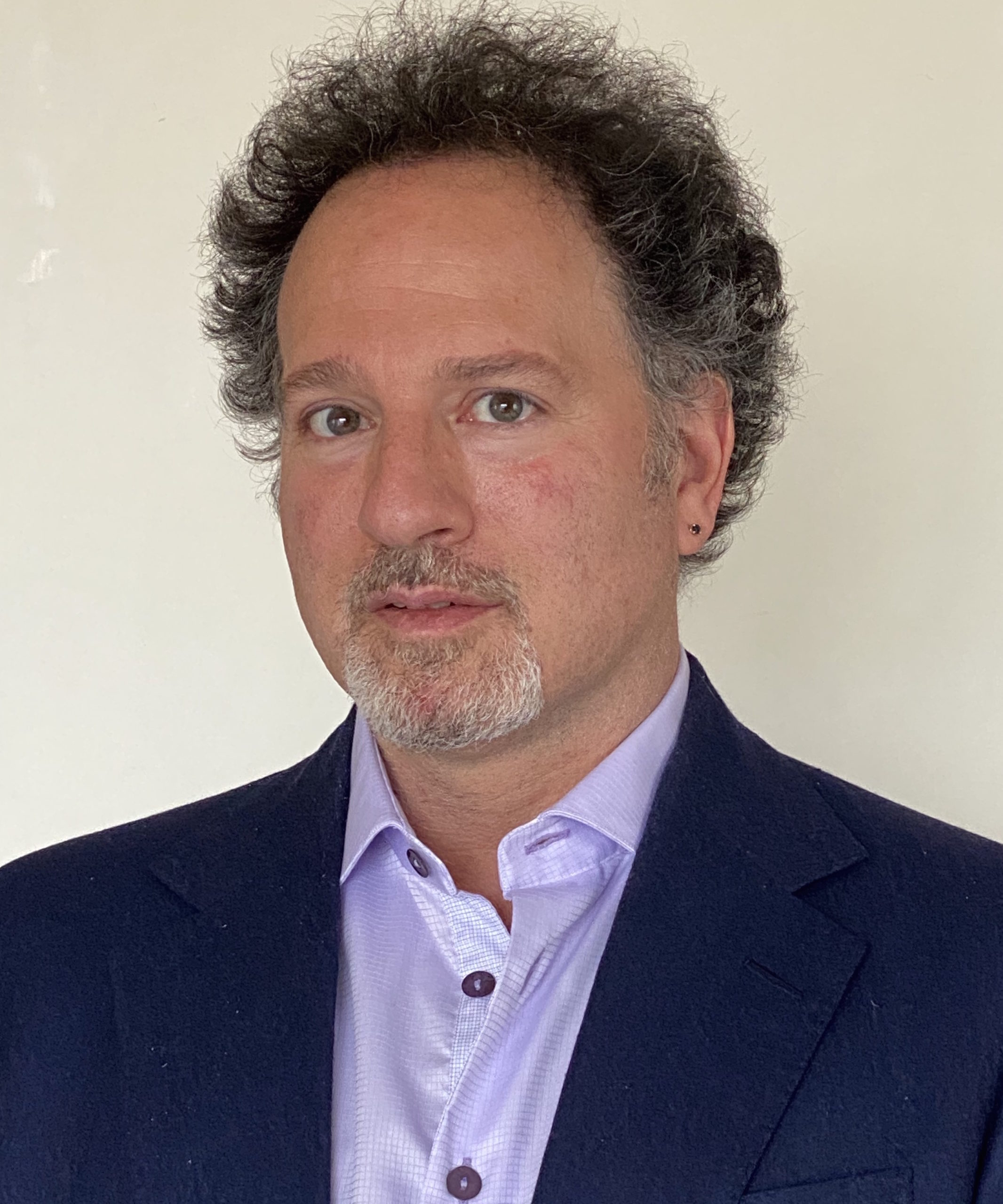
Zachary Karabell

Emma Varvaloucas