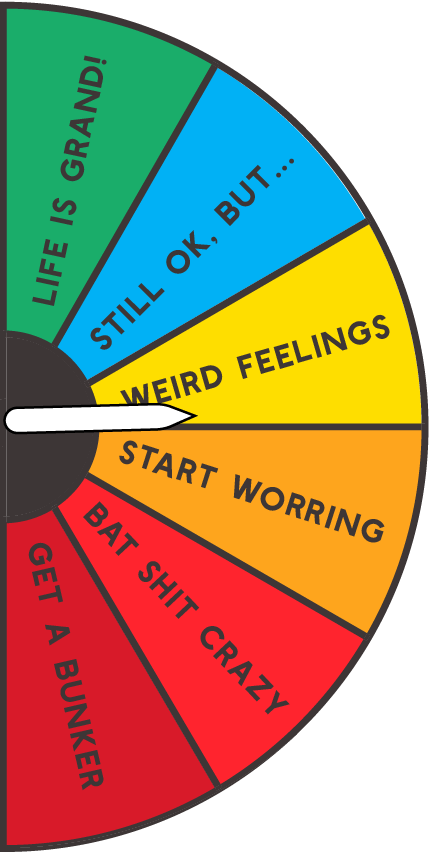
Volcanoes are erupting in The Philippines, but on-fire Australia received some welcome rain. The Iran war cries have been called off and The Donald’s military powers are about to be hamstrung by the Senate. Meanwhile, his impeachment trial is starting, and we’re all on Twitter for a front-row seat.
Education Where the Internet Can’t Reach
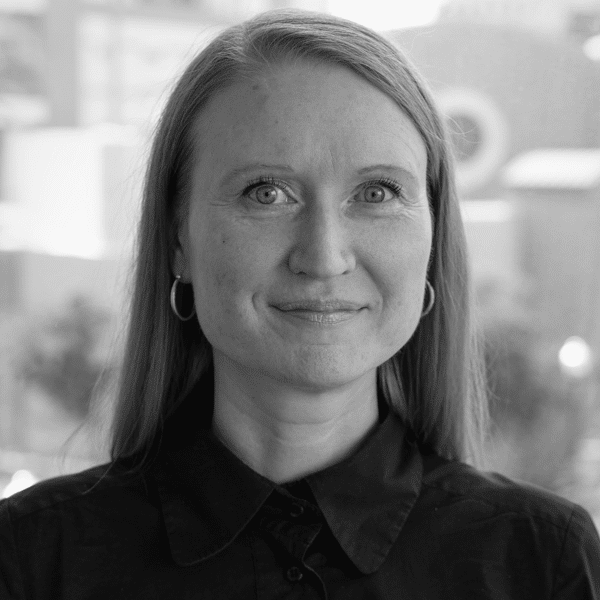
Featuring Laura Hosman
Zachary Karabell and Emma Varvaloucas shine a light on a powerful form of providing education. This week, they’re joined by Laura Hosman of Arizona State University, creator of SolarSPELL, an offline, solar-powered digital library making education possible where internet access doesn’t exist. Discover how SolarSPELL is transforming classrooms from remote Pacific islands to refugee camps in Syria, empowering teachers, and closing the digital divide with nothing but sunlight and ingenuity. They discuss bridging educational gaps, building digital literacy, and proving that when it comes to global progress, there’s plenty that can still go right.


Prefer to read? Check out the Audio Transcript
Although the transcription is largely accurate, in some cases it may be incomplete or inaccurate due to inaudible passages or transcription software errors.
Laura Hosman: The SolarSPELL library was designed to work offline and off grid, so no internet, no electricity necessary. It broadcasts its own wifi hotspot.
Zachary Karabell: What Could Go Right? I’m Zachary Karabell, the Founder of The Progress Network, joined as always by Emma Varvaloucas, the Executive Director of The Progress Network. And What Could Go Right? is our weekly podcast where we talk to scintillating individuals, often thinkers who are thinking. Big important thoughts about big, important issues from a perspective of – how do we create a future of our dreams and our hopes rather than the future of our fears? How do we stop doom scrolling relentlessly, and how do we stop collectively talking ourselves into a vortex of decline? A problem that I think is ubiquitous and we see it all the time, it’s not that we think that the problems aren’t real.
It’s not that we are blind to the risks that surround us daily. We know all of those, but we do think we are under emphasizing, under focusing on and undervaluing the potential that we are creating a better future, even though we don’t think that we are. And one thing that we probably don’t do enough on the podcast is also talk to people who are more primarily doers and thinkers.
And we made this decision a long time ago and that if you just open the aperture to people who are just doing stuff. It’s almost too big an aperture, but there is a nexus of people who are rooted in an ideal world rooted in universities or programs, or have a thought. Who are then primarily in the business of, not necessarily the for-profit business, but just in the business of implementing those ideas on a daily basis.
And so today we’re going to talk to someone who is at a university. We do have this partnership with Arizona State University, who is a longtime supporter of The Progress Network for which we thank them bountifully and, and daily genuflect in the direction of a ASU and Michael Crow, who’s done an amazing job creating a unique ecosystem there and we’re gonna talk to someone today who is very much in the the doer part of the idea doing Nexus and who is like every day just in the trenches of how do we create a better world by spreading ideas and literacy and libraries and reading, and all the things that all of us know intuitively are vital and important.
So Emma, tell us a bit more about said mystery human.
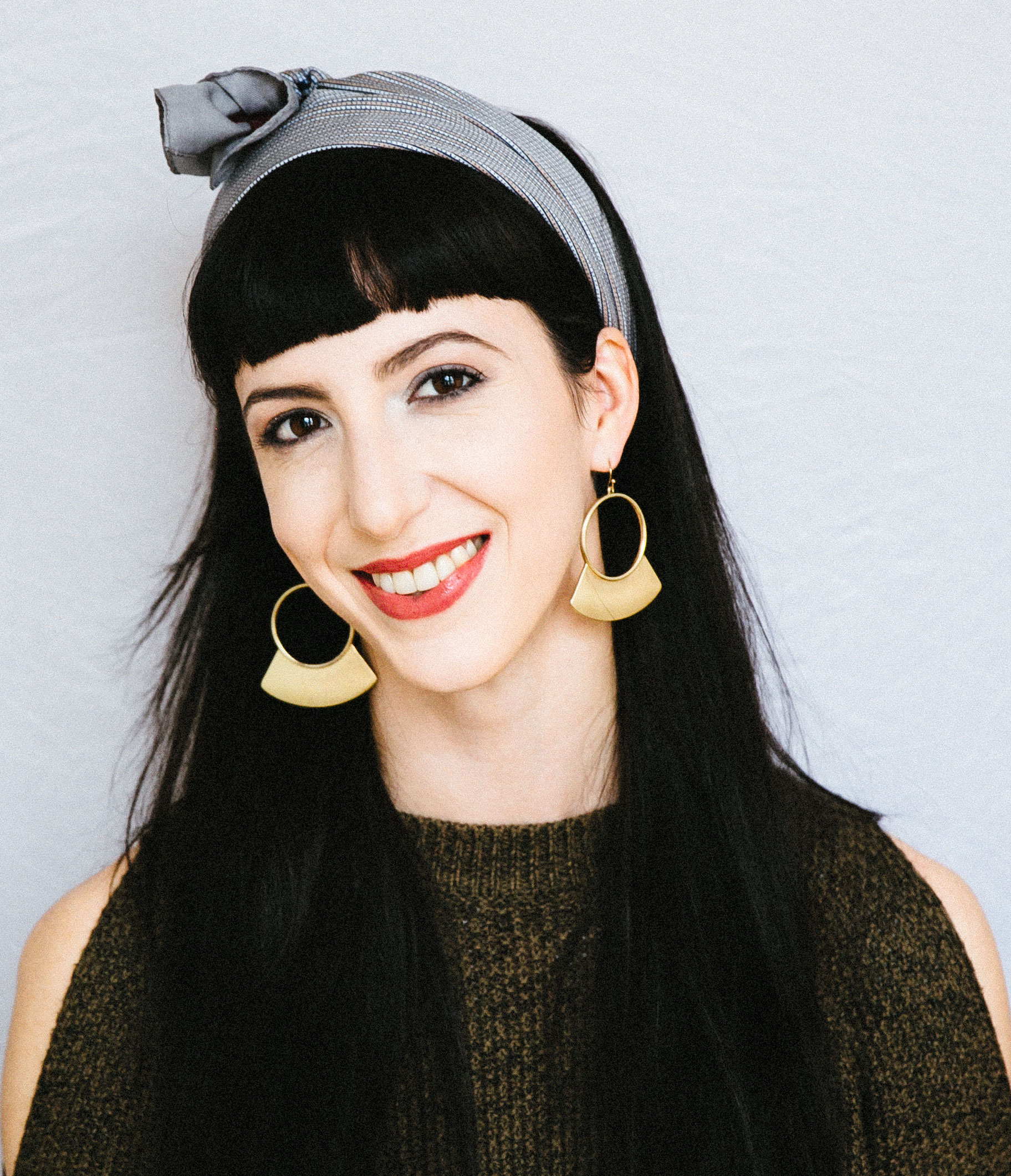
Emma Varvaloucas: Mystery Human is named Laura Hosman. She’s an associate professor at Arizona State University where she has joint appointments in the school for the fellowship of innovation in society. How cool is that? That is a school that exists there and also the Polytechnic School. And we’re gonna talk to her today about an initiative that she co-found and co-directs called SolarSPELL, which is essentially a solar powered offline digital library that they bring to remote and underserved communities.
And if you’re not totally sure what that is and how that works, we’re going to talk about it right now. So are we ready for Laura?
Zachary Karabell: We are ready.
Emma Varvaloucas: All right.
Zachary Karabell: Laura Hosman, it is such a pleasure to have you on our show today. We were saying in the introduction that we, you know, we spend a lot of time on What Could Go Right? talking to idea people, and while you are definitely an idea person and that you had an idea and you are then implementing it.
We probably don’t talk quite enough to people who are translating those ideas into action and SolarSPELL and the work that you’ve done is the ultimate translating of an idea into action. So just because I think most people are unaware of the work that you do, that’s no knock on the work you do. It’s just I think that in many ways this goes underneath the collective radar, as does a lot of work and projects that are doing a lot of good in a lot of parts of the world.
Because it’s doing a lot of good in a lot of parts of the world quietly. It just never really is news, right? So no one ever kind of makes it news because you’re not gonna look at the front page of a newspaper and go, wow, SolarSPELL brings libraries to refugee camps. I mean, that’d be great if that were the front page, but it just doesn’t, it isn’t the way we think about news, right?
So tell us for a moment, give us the 90 second, here’s what you do. And also if you would. Tell us how you came to do what you do.
Laura Hosman: So my, my partner in this, Bruce and I had been bringing internet to some of the hardest to reach places around the world. And once we would bring the internet, we realized that without digital literacy, information literacy, people were using social media only and not going past that. And we were hearing from the people that we were working with, we have a new disease in town.
It’s called Facebook. Because people don’t have the, you know, decades of skills that those of us who have had the internet for decades built up that let them know that A, there’s more out there than social media and b you know, social media as a for-profit business, that they are the, that they’re experiencing, that they, they don’t think of it that way.
Zachary Karabell: Let me interrupt you for a sec. You said you were, you were bringing the interne?. What?
Laura Hosman: Yes, bringing internet connectivity, building out the infrastructure of the internet, for example, island nations across the Pacific in Haiti, et cetera. And it turns out that. The internet is a lot of infrastructure. There’s a lot to maintain. There’s not just the hardware, but the ongoing monthly subscription costs, et cetera, and then not realizing everything that was out there.
The internet is not only expensive for a lot of people around the world, but the resources that are on it may not be in a language that you speak if you don’t happen to speak one of the major languages in the world. And then there’s all of these. Traps and pitfalls and things that people who have been on the internet for years before you have figured out how to use in their favor to either keep you online or to scam you, et cetera.
When you’re connecting to the internet, whether it’s via cables underground, under sea, et cetera, or via a wifi signal that goes to a tower, that eventually also connects to those cables that are underground under sea. Those are eventually connecting to servers because all of the information of the internet lives on those servers.
So keep that in mind. We’ll return to that with how SolarSPELL works. So what was happening when we were bringing internet connectivity to places is that you are basically plugging into the existing internet infrastructure. So it’s, and it’s still happening half the, the world still can’t meaningfully connect to the internet.
But the, the longer story short of that is that once we were bringing internet connectivity, we were both observing that people were really, truly just using it for social media. Facebook was the very first thing that they were connecting to, and there was, they were not using it for anything else. And it can be a lifeline.
If you have relatives around the world, you wanna find out about your. A niece having a baby, or your cousin getting married or asking for money to be sent. But social media as, as most of us know, can also be used for very nefarious purposes, selling kids into sexual slavery. Things we really don’t like to talk about.
It’s the number one method for doing those kind of things as well. So technology always just amplifying what humans. We’re doing before it came. So there’s always good and there’s always bad to, to technology, but we de, we were looking at these projects that we were doing, and we decided that maybe we could bring the best of what was on the internet to places and do it offline.
Emma Varvaloucas: So tell us what SolarSPELL is and and how it works.
Laura Hosman: So that was much more than a ninety second introduction of the how and of the yes, the how and the why. But SolarSPELL is an offline solar powered digital library as well as a skill building initiative. So at the same time that we’re bringing libraries around the world that are localized and curated for the people who are using them, we’re also building skill sets of digital literacy and information literacy.
Among people who haven’t had access to the internet before or had access to libraries before.
Emma Varvaloucas: And how does it work that they work offline?
Laura Hosman: Great. So thank you. We use an offline wifi hotspot that the library itself generates. So most of the world uses the term wifi to mean internet, but it isn’t actually the same thing. What wifi is, is wireless radio waves that devices use to communicate to each other.
So if you’ve ever connected to a Wi-Fi signal and whoops, there was no internet. You know what I mean? And so your cell phone, for example, uses radio waves to communicate. With other devices. In this case, our library is generating and a wifi hotspot, but it’s generating its own wifi hotspot. It’s got a server inside.
So you’ll remember that I was talking about these huge servers or server farms that. Are around the world when you’re connecting to the internet and you’re getting your information from those servers somewhere around the world. In the case of the SolarSPELL library, it has a server inside and that the content on that server is the library’s content, and that’s the only thing that’s being broadcast over the the wifi signal.
Emma Varvaloucas: I feel like with any new idea, there’s a difficult part about it. Right. And it seems like maybe you would assume that the tech is the hard part about this, and maybe it is, I don’t know, you can correct me if I’m wrong, but it kind of seems to me like the content is like the real thorny question about like how do you choose what’s going on it?
How do you actually create a library from scratch? And what is in these libraries? Is it like you try to hit the same. Content across different national contexts and languages or, or give us a little bit of an idea about how you make those decisions.
Laura Hosman: Absolutely. So everywhere we work, we’re working very closely. With our partners, and they’re the ones who are telling us for the most part, what needs to go on their library. Now, having said that, if they’ve never had a library before, if they’ve never connected to the internet, it’s important that we’re giving them something that I call version one, right?
So in that case, we’re having our university students curate as much content that seems logical for them to want in a library. In the case of our education libraries. Those are topics that you’ll expect to see in primary and secondary schools, and no matter what country we’re talking about, those topics, the language is a different subject.
Right? But the topics seem to be the same if you’re in primary or secondary school. And the health library that we have actually. Most health concerns are pretty global around the world. And of course the human body is pretty similar around the world. And then our agriculture libraries or collections, that will depend on what crops are grown, what the environment is like.
So there’s definitely localization, certainly based on language, but we have tried to regionalize all of the libraries so that there’s as much. Content in common when we’re working in neighboring locations. But at the end of the day, it’s our partners who are telling us what content they want on the library.
And it’s always in a back and forth process because it’s not until you start using the library that it makes sense, and then you can say, oh, but I wish I had this. And then we can go and find that and add it.
Zachary Karabell: And what about Chat GPT or other large language models?
Laura Hosman: We are using Chat GPT in three different ways. So the first is in our content curation. So everything on our library is tagged metadata tagged so that it can be searched. I will admit to you that it was two years into SolarSPELLs existence when I ask one of my computer science majors to come up with a search engine for the library and he said, alright, great, where’s the metadata?
And I said. What’s metadata? So now I know and we try to educate everyone who works with SolarSPELL what metadata is, but basically that’s the information about the resources that makes it searchable that, that even Google uses to search any resource on the library. And so we have truly an army of students every semester, every week of the year working on metadata, tagging the content so that it can be.
Found by our users, by our library users, because if it can’t be found, it’s basically may as well not be on the library. So chat GPT is actually helping us come up with more accurate metadata more quickly. It does a fabulous job with descriptions. It does a zero job with copyright, and so there’s still, humans have to check the work that Chad is doing.
But the second way that we’re using it, which I’m tremendously excited about is in the aim of using offline AI, but to make offline AI a possibility, you have to do the work online. And so we’re using our own library and we’ve started off with the health library to train the AI model. On all of the content on that library.
So I guess picture this, if you are a, a clinician, a, a doctor, a nurse in a remote rural clinic somewhere, and you don’t have access to the internet, but if you had access to this entire library worth of content, could you just ask it? I have a patient who walked in with a, you know, a terrible skin disease and it looks like this and there’s.
Yellow and there’s green and what should I do? And instead of finding an article or a video, it would look far more like the response you’re getting now online with AI telling you this is what it may be. This is, you know, with highest probability. However, here are three resources that you can check on the library to do further research.
So we’re working on creating offline AI or edge AI to be able to do that using our libraries as the database instead of. You know the entire internet and then, yeah, there are other ways we’re using it to, this is an extension of our agriculture library, but solar powered smart soil sensors. We’ve been working with our engineering students for a number of years, and so to be able to not just have a soil sensor in the soil and give the farmer the reading on.
His or her smartphone of what their soil is doing, but actually actionable results as well as connecting to the library and saying, if you’d like further information about what you should do with your soil, here’s three resources for you.
Emma Varvaloucas: Well, it’s a breath of fresh air to talk to someone really excited about AI’s potential for doing good ’cause you don’t usually hear or read about that.
Laura Hosman: Well, you know, I feel like, again, technology amplifies what human beings are already doing, and so if we’re doing good work, AI can be harnessed to make that work even better and more impactful and effective.
Emma Varvaloucas: Right. So I’m wondering if you can tell us some stories. I mean, my understanding is you’ve traveled to a lot of these places to bring the libraries there, and I’m wondering if you could just make this, give us some faces, give us some stories, give us something to make this feel like we understand the impact that the work is having.
Laura Hosman: Yes, I’d be very happy to. So our health libraries in Sub-Saharan Africa. We used to call them our nursing and midwifery library. So you get an idea of who the audience is for these libraries. And we were working with nursing students who the first half of the semester, they take their classes on campus in the capital city and they have access to a beautiful library and internet connectivity because they’re in the capital.
And then the second half of the semester, they’re sent out to the rural remote hospitals with no internet, with no libraries. And they’re not only expected to be nurses, even while they’re nursing students, but they still have their assignments, you know, weekly. Assignments as nursing students. And so it’s a, it’s a difficult situation for them to be in on a couple of fronts.
And so they were telling us how game changing, life changing these libraries were for them because, you know, they didn’t have access to the internet. So of course they’re looking at these libraries on a daily basis when they’re seeing patients. And they also were telling us, okay, we never had the opportunity to make a patient.
Plan of action. And so a lot of patients were being diagnosed with diabetes, with hypertension. All they can do is make recommendations and send them home, but with the library they have, they can download videos to people’s phones. They can download an actual patient care plan to their phone that they can follow once they get home.
Other examples from. From that usage, you know, oh, I had never inserted a catheter before, but I was able to watch a video on how to insert a catheter and then I did it perfectly the first time. So think of that patient who, you know, therefore didn’t have a lot of pain or, or fear because their provider knew how to do it.
Zachary Karabell: I’m not a doctor but I play one on the internet-
Laura Hosman: Or in the library and, and even despite the fact that these were nursing students who were sort of given these libraries to use among the team, when they brought them out to the remote rural hospitals, also the doctors who were already there and all of the other nurses and nursing students were using the library.
So they’re meant to be shared information should be free. And so that’s definitely what we heard, that they were using it for. I’m tremendously excited about our library because I feel like it can actually save lives. And so those are some stories from the health library, from our education library. Yeah.
So many stories about students who came alive once. They had different ways of learning. So a lot of schools around the world, you know, do memorization and regurgitation, and you write it on a chalkboard. We don’t all learn that way. There’s so many different learning styles out there, and so having access to videos, having access to audio files, being able to bring home digital content and, and reading it to your grandmother, teaching her how to read, these are all anecdotes that are coming from real stories from the field.
Yeah. The and, and the beautiful thing is the impact of the libraries remain right. They, it’s, we don’t always get to come back to a place and do an update every six months, which is our ideal. But we know that these libraries are being used even from the very first libraries that we ever brought out to the field in 2015 to Vanuatu and, and Mic the federated states of Micronesia.
Those libraries are still being used, and so I wish we could update them, you know, in real time. But we, we hear from the people who are using them that they’re still being used. So that’s incredibly uplifting. I guess I would say. Our agriculture libraries too, they’re being used in Rwanda and South Sudan, and we’re working very closely with both of those partners.
But in South Sudan, I can say the, the interns who are being trained up to teach farmers. On conservation agriculture approaches are consulting the libraries daily to figure out, they had a, a worm infestation on their beans and realized, okay, we need to pick the worms off, but then they were going to throw them in the dirt and they found on the library what they should be doing instead was putting them on the roof and baking them in the sun. of putting them back in the dirt and then the, the birds came by and had a feast. And so that actually, of course, then leads to more fertilizer in the soil. So having access to information is, is life changing? Yeah.
Emma Varvaloucas: Game changer. Yeah.
Zachary Karabell: I was gonna ask about the kind of the upkeep and the ongoing maintenance factor. Who pays for that? I mean, if a solar cell goes bad, I don’t know how exactly how long these last, if a server goes bad in one of these places, do you have sort of ongoing budget to maintain or is that just one of the challenges of this program?
And also like what is the overall budget of solar cell and who pays for it?
Laura Hosman: So those were a lot of questions right there. I’m gonna hold up the library here. So this is the SolarSPELL offline digital library. Here’s the solar panel on the back. If I were to turn it on, you would start seeing a wifi signal on your phone when you would scroll down to settings and you would connect to that wifi signal.
Once you’re connected, you would open a web browser and type in 10 point 10 point 10 point 10. The idea being no passwords to remember, you can get connected in a minute or less if you’ve ever used a smartphone before and. What is on the inside is a raspberry pi microcomputer for those who have heard of that technology before.
It’s actually the second most widely used, fully functioning computer around the world named after fruit in the fine tradition like apple. But the raspberry pie can be programmed. It’s basically the the favorite computer of tinkerers makers, doers around the world because it can, it’s open access.
People post online what they do it for, what they do with it, so it can be used for a million different things. We’re using it as a server that broadcasts an offline wifi hotspot. They have a very low failure rate, and in fact, so does everything in this library because it was designed to be as rugged as possible.
There are no moving parts, no fans. It never overheats. We designed it for that. Nonetheless, we always leave at least two extra with a partner wherever we’re going. You’re probably imagining that means we don’t have like one school being our partner somewhere, so we’re trying to work with a ministry of education or our largest partner actually is Peace Corps.
We’ve worked with the UN High Commission for Refugees and Refugee Camps. We’re working with the Department of Education in numerous places, so they have some spares, but they’re also the ones who are in charge of the updates. And so the updates involve sending SD cards that go inside the library. They are plugged into that micro server that I was describing, depending on whether it’s a significant update, which is getting more and more rare because the better our libraries get.
The more it’s sort of adding the new textbooks when those come out or the new curriculum or et cetera, we can do an over the air update, which is using the same offline wifi technology to just give that update. Or we can send a new SD card and they replace the old one and put that in. So that is the, the, I guess, physical process of updating it.
But on our side. Back at home in Arizona, we are constantly updating the content on the library so that all of our partners around the world are getting the best of the content that we’re adding to any given library.
Zachary Karabell: What’s your overall annual budget?
Laura Hosman: Between 800,000 and a million dollars to keep our doors open per year. We have staff here at ASU and we have about 150 university students who work with us every year on all of the things that I’ve been mentioning throughout this episode. And. The vast majority of our funding to date has been private, and I will even say patient philanthropy that has understood that building out libraries takes time.
And you know, we also, building partnerships can take time. So in the case of our Arabic and Kurdish library, that took about two and a half years to build version one of that library, and we are still continually working. Every week we meet with our partners there to talk about more content and et cetera. So it takes time and it’s ongoing.
Emma Varvaloucas: This is on my mind particularly because we’re gonna have someone on the podcast soon. A Dutch historian, Rutger Bregman that wrote a book recently called Moral Ambition, where he sort of laments about how there’s not enough people in the world with moral ambition, but you are someone that has devoted, you know, a good chunk of their life and their career towards contributing positively to society.
Is that just something that you’ve always had an interest in? Did you kind of fall into that by accident? Like sort of how did you develop your moral ambition?
Laura Hosman: I would say my parents. Without a doubt, I feel that they also 100% live their, their faith, their morals, and even though I may not aspire to live out my faith and my morals in the same way that they do, doing so has always been something that I, I guess it’s at the base of who I am and knowing that I wanted to do that.
And so even when I. I feel like I fell into being a professor, to be honest, because school was always my happy place, and so I just decided to stay in school my entire life and I’m still here at university. But having said that, I knew even when I. Became like the first year of becoming a professor and teaching in my classrooms.
I wanted more than that because I wanted to have a bigger impact. There’s satisfaction from reaching people on a micro level as well for sure, but I, my heart has sort of always been called to the macro level, if you will, and so trying to figure out how to do that in a teaching situation, that I guess is why it came to.
Having the idea and making it a reality and figuring out what does it take to bring, you know, not just libraries, but the understanding of information literacy and, and why we need it, and why we need digital literacy, and why information can be so transformational to people. You have to make that case in order to make the case for this.
SolarSPELL initiative that’s going around the world as well. And so that’s a really great question that I don’t know that I’ve thought about too much before and then being able to take my students on this journey with me. And so half of what we do, I would say is creating a community here at SolarSPELL within Arizona State University.
And so. This amazing team of full-time staff that we have, that we work so closely and so well together, that we actually spend time outside of work together. It’s a pleasure to see everyone and want to come into work and see them every day, and that absolutely spreads that feeling and that sentiment spreads and the students feel it too, and they wanna be part of something that.
Feels like this and that’s bigger than themselves and that they’re contributing to, and they know they’re contributing to. And so I guess I feel like I’ve kind of been able to translate that micro to the macro level here at the university, but even, you know, far more than that in the world. And of course it takes that many of us contributing to.
Making a difference around the world, and it’s gonna take so many more. And so I’m always grateful, grateful for the opportunity to talk about this because yes, we need as many people contributing to the good in the world as we possibly can.
Zachary Karabell: That’s a great, I, I mean, I love that that’s a wonderful linkage of your own personal story to the work that you’re doing and the outcome that it has. And by the way, it also plays to one of the strengths of universities, given that universities are kind of in general under pressure right now in the United States.
One absolute advantage of universities is you have this pool of incredibly talented. Eager, passionate, optimistic students who you don’t have to pay a lot. I mean it like for legitimate reasons, they’re students. There’s kind of an internship quality, so you have this kind of pool of labor that is cheap but not cheap in an exploitative way, cheap in a.
This is part of the educational experience way and the more that you know, universities could use this. ’cause again, you use hundreds of as U students use. I’m not, I’m not saying that pejoratively, I’m saying it more just factually, but again, for less money than you would if you were to do this as a for-profit company and try to hire 150 people in the workforce.
And this is just something universities provide that I think we’re kind of chronically not appreciating as a resource, as a collective resource.
Laura Hosman: The vast majority of our students join us for credit. We don’t actually pay any of our students. And so that is one of the things that keeps our costs down. But on the other hand, I wanna point out that we believe that libraries are public goods. And so we operate within a public university that, you know, whose ethos aligns with ours. So it, it defines itself by whom it includes and how they succeed.
Zachary Karabell: One last question before we go. There must be areas of the world where you put in SolarSPELL resources. Particularly in conflict zones where some parties to those conflicts are antagonistic toward the free spread of particularly Western knowledge. Right. Uh, so I’m just wondering whether or not these, some of these schools and some of these libraries have become targets, maybe not directly or aggressively, but peripherally for whether it’s groups like Boko Haram in West Africa or other parts of the world where some of the motive of these groups is to do the opposite of what you’re doing.
Laura Hosman: We have not run into that yet, and I think that that has everything to do with the partners that we’re working with. So in the case of when we were working in Ethiopia, in the refugee camps there, we were working very closely with the UN High Commissioner for Refugees. And with them they were working with the Department of Education.
In a manner of speaking, libraries will always be controversial because someone chooses the content that goes in them. However, by working very closely with trusted partners around the world, we’re doing our very best to make sure that the content is what our partners want. I can predict right now we won’t be working with Boko Haram, for example.
So we have not actually faced that yet, and in fact, our libraries are so, the demand for them is, is incredibly high. You’re not gonna hear stories from me. I’m also gonna predict that, you know, this library led to bad things happening. We’re really hearing stories about the libraries leading to good things happening.
When you think of all of the negative things that are available on the internet. Compare that with a library that’s been curated with only good intentions in mind and the good intentions of both our local partners as well as from this whole group of university students. There are good things that are coming out of the library instead of, you know, all of the negativity and, and potential bad things that we’re seeing on the internet.
Emma Varvaloucas: Final question would be, where are you trying to go? Maybe give us a relative proportion of how many places you’ve been able to bring the libraries to versus how many there is left to go. And if you’re like trying to go for a hundred percent coverage,
Laura Hosman: I love that question. So SolarSPELL libraries are being used in 15 countries. At present. My goal is to at least triple that and reach millions of people. To date, we’ve reached 420,000. Our libraries, and that’s direct usage. And I would really love to reach at least 10 million people. And that may be just in the next 10 years because there will always be people who are not connected to the internet.
It’s, and there will always be people for whom it’s a safer situation to be unconnected from the internet. Let’s think of kids in school and not just for the nefarious things on the internet, but for distraction wise, et cetera. And so there’s no end of potential users of libraries around the world.
And so my goal is to bring this library across the Middle East, across Southeast Asia, across far more of Sub-Saharan Africa and. Absolutely across the remaining Pacific Islands where we haven’t been working. So I am, and right here in the United States, we actually finally have two projects right here in Arizona.
And so I know that the need and the want for these libraries is great around the world. My goal is to meet that no matter where people are around the world, and no matter what language they speak.
Zachary Karabell: Well, Laura, I wanna thank you for your time today and for the work. You do. I think everyone should check out SolarSPELL. You can go to the ASU website or just type in SolarSPELL into any browser. If you want more information about the work that’s being done and the places that they do it, and some more stories.
And again, this sort of merger of yeah, we can do something constructive to bring knowledge to the world, to spread open societies, that that can be done for remarkably little amounts of money for remarkably large amounts of effect that we didn’t really get into. You know, this kind of work, it doesn’t replace, but it certainly is ongoing in spite of the draconian cuts to things like USAID and other American government foreign assistance programs.
Just kind of a reminder that there’s a lot that goes on that you’re doing and other people are doing that. It does not depend primarily on federal funding and that’s a good thing.
Laura Hosman: Yes.
Zachary Karabell: We are feeling some of the effects of it peripherally, but in general, no. And that kind of optimism of, look, you know, there’s things that we can do to, to build a more constructive future that you’re doing and other people are doing all the time, that don’t get the kind of attention that all the people and places and things that are trying to destroy, or prevent or stand in the way of that future.
So I wanna celebrate the work that you’ve done and encourage people to look at it. And thank you for your time.
Laura Hosman: Thank you so much for having me. I really appreciate this opportunity.
Emma Varvaloucas: Thank you too, Laura. Thank you.
So it’s nice to talk to a doer. Uh, it’s a change of pace and I’m sure people appreciate hearing concretely about how people’s lives are changing, especially people’s lives in far flung places where we don’t have a good idea of, um, what kind of conditions they’re living under. Or maybe we have an idea, but that’s not what we’re experiencing ourselves.
I am curious about your take on what it’s like for you to actually speak to someone like that in person. I have this. Cynical. I dunno if it’s cynical, but it’s, when I read about those stories in the news, um, when it’s brought up in books for some reason it never hits me quite like, okay, well we get that.
There’s this wonderful initiative doing this wonderful thing. But, but I don’t wanna say, so what, it’s, it, it is a game changer as she’s saying, but for some reason when I actually talk to the people in person, you can hear the tremendous excitement in their voice. You can really hear about the people they’re affecting it. It does hit me a little bit differently.
Zachary Karabell: Yeah, I mean, I would agree it’s, we, one of the challenges we’ve always had, and certainly I’ve always had about talking about better news, and you face this when you write the newsletter, is, uh, like good news stories just sound naive or they sound simplistic or they sound. Do good or ish. It’s not as bad as the fireman saves cat and tree, but it has that quality of it just doesn’t sound quite as mfy.
Right. And I think that’s kind of a narrative problem as much as anything else we have. Often quoted, or at least I’ve often quoted the famous Tolstoy, Anna Karen line, that there are no novels about a happy family because every happy family is the same, but every unhappy family is unhappy in its own particular way.
And that gets at this human. And that was, you know, he’s writing in the 1890s or turn of the 20th century. That gets to this very human dilemma of. We look for tension and drama and, and something I guess inherently negative and dark or, or, or problematic in our stories. And when we tell stories that are just like, Hey, someone went and did something good, it doesn’t like resonate at the same way that either tragedy or crisis does.
And we’ve also joked that even a Shakespeare, even comedy, right, Shakespeare and comedy, a great comedy. Differs from a great tragedy. Only in at the end people get married rather than die. But in the middle there is a crisis. There is something disruptive, something bad happens, and then people have to figure out a way to rectify what’s bad.
And that’s your thing of any great movie comedy. It’s predicated on some really dramatic negative thing. Happening or something that seems positive and then it, you know, becomes negative. Like someone wins a million dollars and has to spend it to get 10 million and it’s a problem. Um, that’s a very long-winded way of saying it’s hard to tell good stories in a way that has the effect that you wanna have, rather than the effect that you have, which is like, eh, come on man, really?
But when you listen to a human being who’s passionate, who’s an individual who’s telling them it does resonate differently or can.
Emma Varvaloucas: It does. Yeah. Well, for me it did anyway. I mean, yeah, the negativity bias. Is real, right? I mean, your brain is much more prime to pay attention to negative things as a evolutionary adaptive mechanism. You don’t wanna live a life in which you’re not paying attention to negative things because you don’t grow.
And in the like, really severe cases, the people that don’t respond to negative stimuli like pain or have guilt or something, they tend to die prematurely. I mean, this is in the scientific literature. I’m not just saying that as a, as a joke. And, uh, the other thing that the scientific literature says about this.
Spending a lot of time swimming in these waters recently is that good, can overcome bad through sheer force of numbers. So you actually need to be like, inundated with a bunch of positive stories for you to get over your, your negative framing or your your brain’s natural attraction to the negative. And then the other thing is that, um, you can be attracted by positive news stories, but they need to be either novel.
Or they need to spark your, your curiosity and as you say, the, the sparking of the interest and the curiosity goes back to like the general bones of what a good story is. And you need tension and crisis and all that stuff to make a good story. So maybe we should have started with the, like imagine a place with no internet and you know, people are putting worms in the soil and they’re, you know, eating their beans and kind of started with that kind of setup.
Zachary Karabell: We should have built up our podcast with better narrative tension,
Emma Varvaloucas: Yes. Basically, yeah.
Zachary Karabell: But you know, that would require a very different set of mantras than we currently have, which is just, we wanna highlight good, good stories and good people, uh, which we just did. You know, good stories, good people, good things.
And it’s interesting to me. I was intrigued that for the moment in all the 400 or so places that SolarSPELL has gone into in the world, it has not generated any particular backlash in conflict. And that may represent my own negativity bias of, oh, you know, somewhere, some refugee camp, something, someone’s gonna come in and smash the SolarSPELL units because I don’t want, I don’t know, access to X, y, and Z knowledge because it goes against whatever current creed. And she hasn’t, they haven’t experienced that. Or at least Laura said that solar spill has yet to experience that. And that may be that we’re over emphasizing even in conflict zones, the amount of people who are in any way actually antithetical to people learning more knowledge, more literacy, more.
How do we like to do whatever we need to do, essentially better.
Emma Varvaloucas: Yeah, I think there’s so much focus on like vaccine skepticism and, and how to reach people that don’t trust the, the medical community in these, these hard to reach places. And we kind of forget. There’s probably also a bunch of people that are like hungry for knowledge and like very excited to be reading Wikipedia. So good reminder.
Zachary Karabell: Absolutely. Anyway, thank you all for listening to this. What Could Go Right? episode. We will be back with you next week. We want to thank Arizona State University, which has been a supporter of The Progress Network and is, and you know, the, this was also indicative of the kind of work that public universities and universities in general can do that is immensely constructive.
That in many ways goes unheralded or at least not heralded the way. All the critiques of universities are absolutely in the news, but this kind of thing doesn’t seem to percolate up as a, Hey, wait a minute. Look at some of the just unequivocally constructive work that’s being done in Arizona State is ground ground zero for good work.
Right. It is, it is. There’s a lot of it going on, uh, all the time there and the SolarSPELL initiative and Laura Hosman’s work is just one of many things that ASU does on a regular basis. So thank them as well, and we will be back with you next week.
Emma Varvaloucas: And What Could Go Right? Listeners, just a heads up that there will be no Progress Report this week on Friday as per usual, but we will be back with both the main interview and a progress report the following week. So we’ll see you then.
LOAD MORE
Meet the Hosts
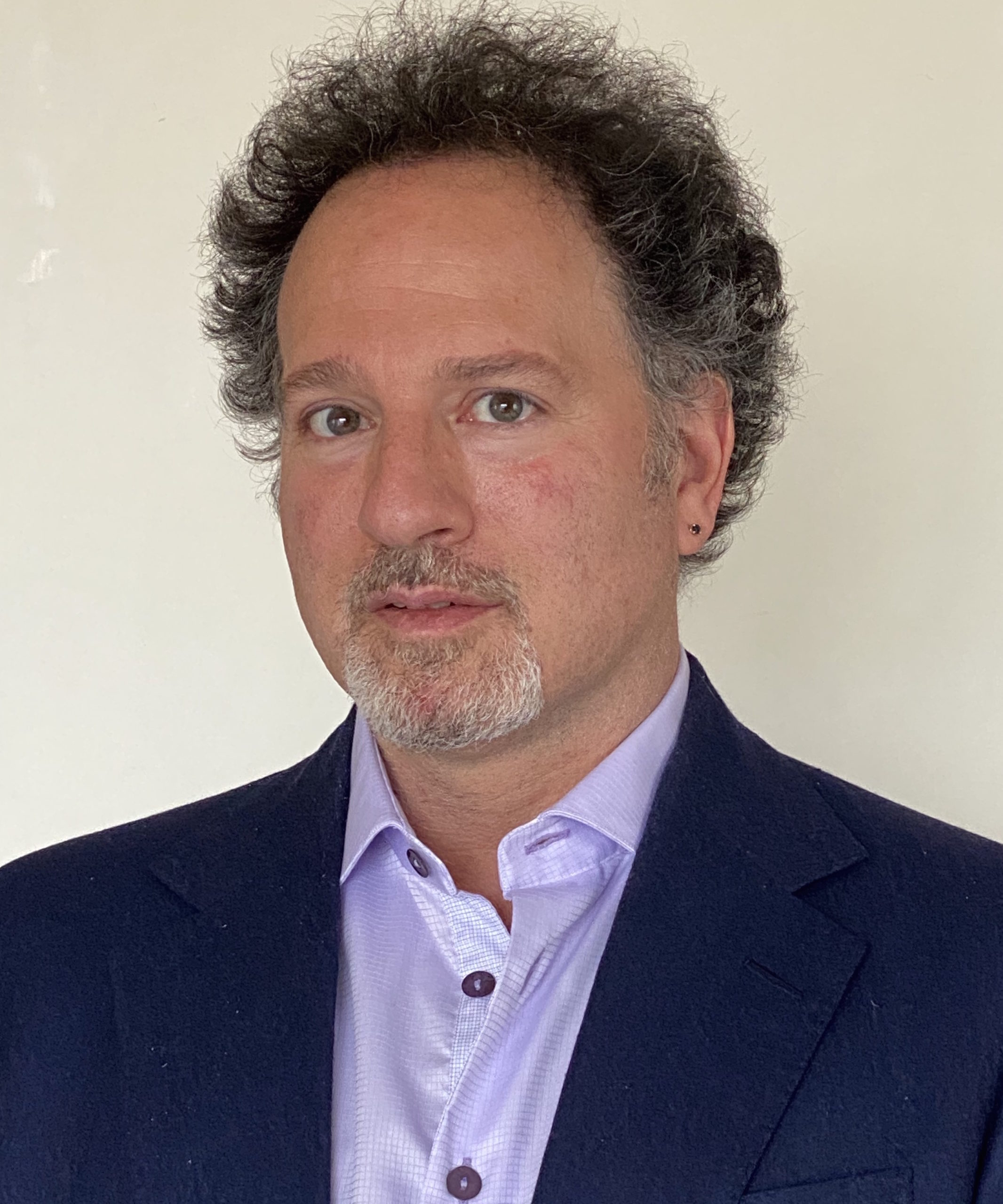
Zachary Karabell
Emma Varvaloucas