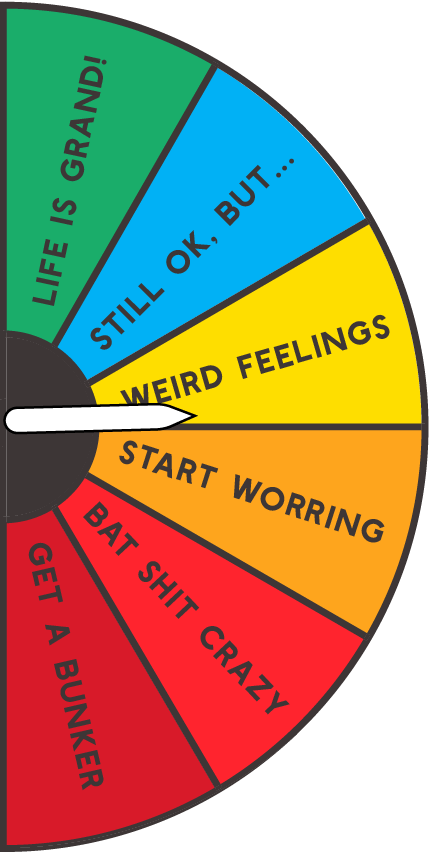
Volcanoes are erupting in The Philippines, but on-fire Australia received some welcome rain. The Iran war cries have been called off and The Donald’s military powers are about to be hamstrung by the Senate. Meanwhile, his impeachment trial is starting, and we’re all on Twitter for a front-row seat.

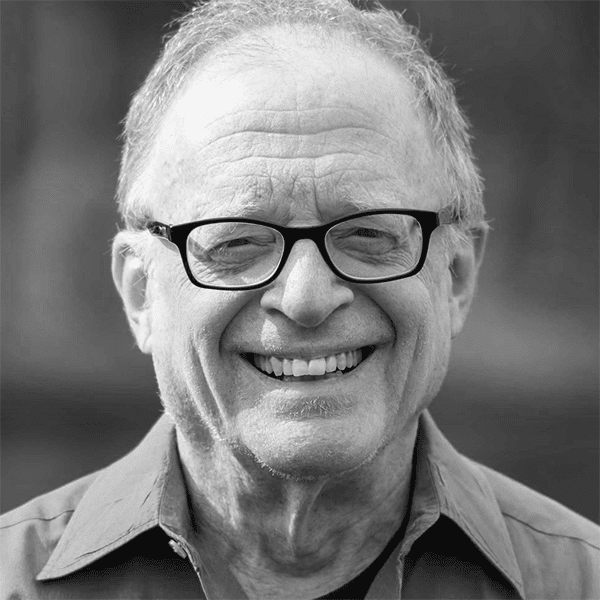
Godfather of the New Right
Featuring Sam Tanenhaus
What can we learn from the history of the American Right? Zachary and Emma welcome Sam Tanenhaus, historian and author, whose most recent work is his biography Buckley: The Life and Revolution That Changed America. Sam shares insights from his deep dive into the career of conservative icon William F. Buckley Jr., the country’s “first intellectual entertainer.” He discusses how Buckley’s blend of intellect and charisma set the stage for the modern conservative movement, the influence of media in shaping political discourse, and the ways in which Buckley’s legacy continues to shape the Right.


Prefer to read? Check out the Audio Transcript
Although the transcription is largely accurate, in some cases it may be incomplete or inaccurate due to inaudible passages or transcription software errors.
Zachary Karabell: As an historian and a biographer, what gives you hope about the future of American democracy?
Sam Tanenhaus: That it changes all the time. We have, I think, too fixed an idea of what democracy is in America.
Zachary Karabell: What Could Go Right? I’m Zachary Karabell, the founder of The Progress Network, joined as always by my co-host, Emma Varvaloucas, the Executive Director of The Progress Network. And What Could Go Right? is our weekly podcast where we interview people who we think are scintillating, fascinating, deep, profound, you name it, who are engaged in the core ideas that are animating our age, and we try. To have these conversations with an eye toward yes, What Could Go Right? which also means looking head on at what is going wrong. It means confronting our issues, but with a bent toward what can we do about them that is constructive rather than wallow in the destructiveness. That seems to surround us, and it is certainly true that not all of our guests share that sensibility, so we try to nudge them towards it, sometimes successfully and sometimes less so. And one of the animating questions of our age is the intellectual aperture, the intellectual foundations of the current wave of. What was called conservatism, although it is unclear whether the second season of the Trump show is conservative in the traditional notion of that word, it is certainly adamant about a vision of America that stands in contrast to the New Deal, great society, liberal university driven ideas of how government should function within an American democracy. And that has antecedents. It has an intellectual framework that predates it. It’s not as if this administration just emerges like Athena fully formed from the head of Zeus. There is a background here and it’s important to understand some of that background, which entails looking back at some of the voices and individuals who shaped it.
So we’re gonna talk today to the biographer of one of the seminal intellectual figures of the mid to late 20th century who in many ways is the godfather of and the progenitor of many of the ideas that are now front and center during the second season of the Trump Show. So Emma, who are we going to talk to today?
Emma Varvaloucas: We are gonna talk to Sam Tanenhaus, who is a historian, journalist, and biographer, as you have said. He was also the editor of The New York Times Book Review from 2004 to 2013, if it interests anybody. And he has authored a lot of big major works, a biography of Whittaker Chambers, another book called The Death of Conservatism.
And as Zachary mentioned today, we’re gonna talk to him about his book, which is called Buckley, the Life and the Revolution That Changed America. And it is about William F. Buckley, who. He’s kind of a godfather of the new, right? Let’s say he was the founder of the National Review and a key architect of modern American conservatism.
So if you don’t know who he is, you think about him as kind of a precursor to Charlie Kirk or J Vance, or any number of the big right media figures and politicians that we all know and love today.
Zachary Karabell: So let us talk to about Buckley. Sam Tanenhaus. It’s so good to have you on our podcast. You’ve had an eclectic man of letters, career from a man of letters, a public intellectual. I don’t think we use that phrase anymore, even though it’s viable. You edited the New York Times book review. You’ve wrote a masterful biography of Whittaker Chambers, and you’ve now written a masterful biography of William Buckley, a very long, a masterful biography of William Buckley. I feel the need to say that just to alert people to its compendium quality, which is impressive and incredible, and I think you spent, you could tell us it. It seems like you spent. Many, many, many, many years writing this book. And then it is the product of a lot of gestation and a lot of thought and a lot of observations, some of which you live through, some of which you are reflecting upon.
I do think the book and, and the work is really a history of a time. The epitome of a great biography is it tells the story of a person, but it also tells the narrative of an age. So William Manchester writing about Churchill and Robert Carroll writing about and I suppose to some degree Taylor Branch writing about Martin Luther King, like these are all books that tell you a lot about a person, but they tell, they shine a light on a a period of time. And I guess the question today is, do you feel that the United States itself at its epitome of its best in Buckley’s time, or that he was the beginning of a derailment that we’re living with now?
Sam Tanenhaus: That’s the question, isn’t it? Thanks for that warm introduction, Zachary, and I’m reminded that the late great Christopher Hitchens, when I interviewed him for the podcast, I did one of the very first books for the, at the New York Times book review. I asked him about being a public intellectual and he said, well, what’s a private intellectual?
You know, what does it mean exactly? Yes. I think with Buckley you really are looking at the intersection of a person and a time, and that was the challenge in writing it. And I want readers to know, don’t take my word for it. You can read a number of review words, who will tell you, the book actually reads very easily and quickly.
Because that’s how Buckley lived his life. He lived it on the run and on the move. And my best counselor in all this, my wife who is kinda my co-researcher, said, you’ve got to keep it moving. It has to feel like Buckley himself kind of moving through things. So it’s, it means not to be a ponderous book, but the question you ask Zachary about Buckley representing the apex, the kind of zenith of our politics or flourishing in a time when they were out there Zenith, or whether he began something, I think your word is derailment.
That’s the key one. I don’t have a good answer to that. He was so protean a figure. Buckley, there’s so many faces and sides to him that you can look at almost anything he said and did and connect it with, with what’s going on now, or see its total opposite and that’s why he was fascinating to write about, but difficult.
I’ll bring in a few things though. The genius of Buckley was that he discovered very early. He’s a kind of intellectual prodigy, which is a rare thing. We have math prodigies, we have chess prodigies, and musical prodigies. We don’t have a lot of intellectual prodigies. People who at a young age think in mature ways, and Buckley was one, partly because he was raised to do that by his remarkable father. But what Buckley saw was that culture and politics were the same thing. Other people didn’t see that. So you can go back to the conservatism. Buckley was raised in, he was born in 1925. He turns 100 and we’ll have a postage stamp commemorating it in November, but he grew up in the thirties and forties came of age.
Then in political movements, we know a lot about opposition to the New Deal under Franklin Roosevelt, opposition to World War II under Franklin Roosevelt. Buckley was a teenage America Firster. Take that Donald Trump. But what he saw was that the terms in which politics were being discussed when he was growing up, economics, foreign policy, ideology actually probably mattered less than the way you talked and wrote about them. It was a kind of public entertainment. He got that early on just the way some others did. Richard Hofstetter wrote about this, politics is mass entertainment. The first figure who emerged to really galvanize the right in the post-war era was Joe McCarthy, and Buckley was very close to him. He liked Joe McCarthy.
He changed his mind about a lot of things, but never about Joe McCarthy. Why not? Because he thought. McCarthy was a brilliant and inspiring figure, but because Joe McCarthy really riled up, the liberals and the liberals seem to be in charge of things. Just as MAGA people will say to this day, they are, doesn’t matter.
The conservatives dominate the Supreme Court. They dominate. Right? The the House and the Senate, they obviously dominate the presidency. No, the liberals are in the editorial page in the New York Times and they’re still calling the shots. That’s the view you will find today on the right, and it was really the view that Buckley originated. Look at the top, the apex of the culture. Look who’s running the universities. Buckley’s first book is an attack on his alma mater that makes exactly the arguments the anti woke crowd makes today that they’re leftists, they’re atheists. They don’t respect traditional American values, and you can cut them off by drying up the funding and firing professors you don’t like.
Buckley wrote that in 1951 when he was 25 years old, so he was out in front that way. Zachary seeing how politics was merging into culture, so that meant Buckley himself wanted to be, and he was a genius at this, an entertaining, flamboyant personality. You’re a much younger guy than I am, but I’m still gonna suspect that you remember the public Buckley and there was nothing like him.
No one or anything like him. Not before, not since, not in his own time. So that’s also what sets him apart. From where we are now is just his singularity as a person. Viewers and listeners just go on YouTube and see Bill Buckley debating Muhammad Ali on Elijah Muhammad, where Buckley is defending Malcolm X, and Muhammad Ali is defending Elijah Muhammad, and you know you’re living in a different world, right?
That’s from 1968. So all those complicating factors work in.
Emma Varvaloucas: This is one of the, the podcasts where it is, it’s not the first time this has happened with me and Zachary, but where we have a topic of discussion where I’m like, who is this person? It is, it sort of predates me. It was very, very interesting doing. On this and, and learning about it. So I, I’m kind of curious, I know you just said he was a, he was singular, and so maybe this, this question is not completely the right one, but is there anyone in the new right cohort of influencers and politics, entertainers that you feel is closest to, to what Buckley was as a, as a politics and intellectual entertainer?
Sam Tanenhaus: Great question, Emma. I would point to a few who have pieces of Buckley. Okay. Not the totality, but aspects of it. I think probably the best intellectual entrepreneur on the right right now, and others can correct me is Barry Weiss. What does she do? She creates an empire out of her declaration of war on liberals.
That’s pretty close to what Buckle did. Emma, if you did, you know some of the research, you know, he wrote a widely syndicated column back in the days when new’s paper columns were how you reached people. He was syndicated in 360 plus papers. He had a TV debate program that did not have huge market share, but was seen in a hundred cities and watched by the people who mattered.
Back then. He founded a magazine that’s still in print. He published 50 books. He was operating on all fronts. So when I look at someone like Barry Weiss, I think, look, she’s not Buckley. We get this. But she has his instinct for finding where the battles are and for making unusual alliances, which Buckley also did.
That’s number one. Another person I’d look at Emma is Chris Ruff. I am not the biggest fan of Christopher Ruffo. I don’t agree with him, but he’s an extremely clever polemical writer. I think, and if you look at the book he did on colleges on higher education, it comes out of that same strain that Buckley started where you don’t make it so much about the virtues of your point of view as the sins being committed by the other side. Naming names and going after them. Chris Ruffo, whom I’ve never met, and I’ve read about. Is bringing down university professors and I think it’s an even larger impact maybe than, than we accept. I see Zachary’s kind of taking all this in. We’ll see what he has to say about it. The third person I would say, who reminds me of him a bit, this will sound unusual, maybe, is JD Vance.
Why He’s the guy who comes through Yale. He learns everything Yale is to teach him, and he turns on a dime, declares war on him, and finds his allegiance with the heartland, which is also what Buckley did. So I would say JD Van, who’s a brilliant guy and a strategic operator that reminds you of Buckley too.
So those are pieces of, of Bill Buckley that I see. Now, I’m told that Sam Alito was a huge Buckley fan that he read him and, and National Review back in the eighties. I don’t know this for sure. I think probably a lot of the members of the court, they’re really conservative. Majority know Buckley, read him, but, but I can’t, I, I don’t see parallels there.
Maybe somebody else would, but those public figures strike me as being kind of Buckley, like Zachary, you want to add anybody? Does somebody occur to you?
Zachary Karabell: again, none of these are parallels, right? They’re each slices. So you have people like Lex Friedman and Ben Shapiro, obviously Joe Rogan, who have their own kind of populist massive following, but they don’t write books and they’re not, you wouldn’t put them in the same all-encompassing cultural category, and I’m not sure we live in a culture. like easily amenable to a Buckley. I mean, that’s another one of these questions of there was this mid-century moment, right, where convergence of elite intellectuals who came out of elite universities, which were the same universities that most business people and many people in government came out of.
Not all, but there was a cohort there where you suddenly had media TV as a means of mass communication, but with a very, with a much smaller number of people vying for attention, relatively right. and as you just said, you could be syndicated in 300 newspapers and everybody read the newspapers. It was kind of a, that was the way in which you found your information. I don’t know that you could really have a William Buckley again, you can have famous people. Absolutely. And you can have famous people who are famous for their ideas. But I don’t think you can have someone who is culturally in the place of what William Buckley was in the place of, let’s say from the mid sixties to the mid eighties.
Sam Tanenhaus: Yeah, I think that’s really true. I left out, by the way, Emma, when you’re asking for some names, is Tucker Carlson, who has some of the Buckley flair. I would say he’s very good at undercutting one’s own arguments. Somebody who looked by the way as if he was going to be Buckley’s heir was Dinesh Dusa back in the eighties.
Buckley even hinted at this himself when Dinesh first came out of Dartmouth, and he was writing quite clever essays for the Heritage Foundation’s Magazine, public Policy or something. I forget the name of it. He wrote would write clever takedowns of, oh, Mike Kinsley and The New Republic, and they would have a little bit of kind of Buckley edge. What Buckley brought to it though was a kind of generosity and warmth and an embracing quality. You’re home, you’re at home everywhere, and I do think that’s different, Zachary. In retrospect, that moment, those years looked so big. I’m gonna drop another name here. Fareed Zakaria, who was one of a thousand Buckley proteges came through.
Yale told me once I saw him at an event and he said, you know, Buckley and, and Irving Kristol. Right. Or another great figure from that period. He said they always assumed liberals would win the elections because they’re the only ones who know how to do government. And the Republicans will be out there criticizing, but we don’t want them anywhere near power.
Daniel Patrick Moynihan basically said the same thing because. The Democratic Party and what we now call the left, though it was really kind of a centrist politics, believed in the power and virtue of government. So he got those extraordinary bills that were passed in the sixties, the the Civil Rights Act, and the Voting Rights Act.
The only regret Buckley ever expressed about his political position, by the way, was his opposition to those two civil rights bills. And near the end of his life, he said, I thought we didn’t need them. I was wrong. Those three words we seldom hear today. I was wrong. Not that he uttered them often, but he knew he was wrong on race and came around and and saw that, and it was because he could feel comfortable in the world.
The historian Beverly Gage wrote a very interesting biography on J. Edgar Hoover, who’s a professor at Yale, told me that what she finds interesting about Buckley was that he was an inside outside kind of guy. Like he’s attacking Yale, but he’s the last man tapped for skull and bones. Emma, does that phrase mean anything to you?
Emma Varvaloucas: My sister went to Yale, so.
Sam Tanenhaus: And do you know about the last person tapped? Why? That’s the big thing.
Emma Varvaloucas: Not, no.
Sam Tanenhaus: Yeah, I assume people understood it because, gee, I thought everybody read Stover at Yale published in 1911. No, the reason the last man, it was all guys back then, right? No women were admitted till 1969. Interesting year in our history. Same year that the Black Panther set up a, a chapter in New Haven and killed somebody is, it was a public ceremony. It was a public ritual and hazing ceremony in those days to be chosen or tapped, literally tapped on the shoulder to join the Honor Society as they called them. So that was Yale’s weird idea of democracy in that older era, is that if you brought a bunch of white guys together, and most of them are rich and some of them aren’t as rich and a smattering, or Catholics and a smattering or Jews, and you can count the people of color on both hands, you know, well, maybe if they’re Django Reinhardt, you can count them on both hands and it’s a very small number, but the rest of them are gonna compete.
Right for prizes. So you get them out there in the very public ritual, the Branford courtyard, for those of you who know Yale and the people, the guys who feel they’re eligible to be tapped for, these senior societies are out in an open courtyard and the members, the senior upperclassmen who are choosing them, go around and tap them on the shoulder.
So the number of people keep shrinking. And you have the first guy tapped for bones. That’s a big deal. And there a total of 15. So the last person tapped the, the stakes are highest. Either he’s in or he’s not, and that makes you the king. It’s like when we do a top 10 list, we always start with number 10.
Like I was just looking at, you know, what are the top 10 Michael Jackson songs? I’m dating myself so badly, or Van Morrison. I mean, let’s just go for it. And you start with number 10 and you work up to number one. Number one comes last. So being the last man tapped for bones was being really, I call in the book the un crowned king of the campus. And so for Buckley to have all of that and then turn around and call them all his professors, communists and atheists and his fellow students dupes, who are being taken in by them, gave a kind of free song to the argument that’s a little hard to feel today. You know, we, we can read Barry or or Chris Ruffo or all these others who are writing for the Free Press or some of Yasha Monk’s stuff, and we say, well, they’re being a little daring and some of the things they say, but. They’re not really surprising anybody, right? They’re not coming in from it in a place we’re not used to. Buckley did because he sounded and looked like Mr. Ivy League, right? Elite privileged guy. And instead he writes this book, that’s a kind of Ivy League confidential. Guess what’s really going on? You know, in the un chased towers of the Ivy League.
So it gave it a kind of sexiness it does not have today. And Buckley grasped that very early. And that became the basis for the, for the life he led. Not the only thing he did. He was totally devout Catholic. He was shocked to hear the atheism of his religion professors. All of that is heartfelt, you know, he really meant it.
Andrew Sullivan when I talked to him about this book, who’s also a Catholic right from England, Irish Catholic, really, who went to Harvard in the eighties, told me he was shocked by how the Bible was discussed at Harvard when he was a student there. It was never discussed as revealed truth only as a work of literature. So when Buckley says this in 1950, it’s not news to his classmates, it’s not news to his professors, but it’s news to the alumni. The donors, the culture at large. So again, he’s seeing what’s out there to find his place in. And I think you’re right Zachary, I just don’t think you can do that today. Having said that, I will add, if there had been Twitter or TikTok or Instagram in Buckley’s day, he would’ve been all over it. He was super quick. He liked to jump into every argument. In fact, one of the complications is he seldom is able to pull back and make the bigger argument. And that’s why his reputation kind of diminished over time. As the big book never came, the big ground establishing foundational argument never got made.
It was more living in the moment. And that makes it very much like our, our ideologues today.
Zachary Karabell: It’s interesting, you know, for those who don’t know, they no longer do the tap ceremony at Yale publicly, which stopped in the, I guess in the seventies because as things turned against the elitism that Buckley represented, of the things that was objectional about the publicness of the ceremony at Yale was that it, it was potentially humiliating to people who were.
Not tapped.
Sam Tanenhaus: Sure.
Zachary Karabell: We don’t wanna shame anyone that’s too elite, like in the bastion of elitism, that’s too elitist.
Sam Tanenhaus: Yeah. Yeah.
Zachary Karabell: A private tapping and not a public tapping, which is how it remained and how it remains. And I always found that kind of an interesting cultural shift, right?
Which is sort of elitism rather than the public elitism. I’ve always thought American elites never want to think of themselves as elites, right? American billionaires or you know, multi-millionaires just wanna act like they’re just like everybody else as opposed to European aristocracy or Asian, who are not only perfectly comfortable with not acting like everyone else, but wanna be known that they’re not like everybody else.
Sam Tanenhaus: Yeah, there you hit on this idea of how democracy goes through all these transformations in our time, and I’ll toss out this idea ’cause it’s been kicking around in my mind for years now, all through the Trump period, and I wonder what the two of you think about it is what we’re looking at. The politics of the moment being connected with autocracy, foreign dictatorship, what I call the political science analysis, also feels to me, or instead feels to me like the latest or at least the momentary expression of how our democracy works, which is it is a kind of free for all.
It’s a competition for entertainment, for dominating, you know, people’s head space, and all the rest. It does have to do with these effects of style. And you know, somebody told me years ago, very smart guy, we’re talking about Trump, right around the time he got elected, and this is a brilliant scholar, came through Harvard and Yale, professor of English, but it came from working class background. And he said, people are getting Trump all wrong. They don’t understand how Trump can be fooling them because he’s not a working class guy at all. What makes voters think he’s gonna give them the policies they want? And he said no, but they’re getting wrong is that, it’s not that Trump likes them, it’s that they like him, they wanna be like him and a guy who, you know, has all that money and, and gets in his rolls or his limo and, and gets the Big Mac with the fries on the side. I mean, that is a lot of people’s idea of what a rich guy would do. You know? So I think that is true. That’s something Buckley was never really comfortable with. Not because he disliked ordinary folk. In fact, he knew that’s where his constituency was when he himself ran for mayor. Probably the single most important thing he did, which introduced entertainment into the heart of politics, not just entertainment on the part of commentators and observers, but Buckley ran for office, you know, ran for what was then called the second hardest job in America, mayor of New York.
We’re seeing it happen right now in a kind of parallel case of several candidates involved, each with his own constituency and appealing to different people that the rules were being changed as we watched, and that’s what Buckley did. He discovered that his support, the people who identified him were not the people who were going to the Buckley Meison on 73rd Street.
You know, the duplex at the base of the building where Brooke Aster lived in the penthouse. They’re not going off to his place in Switzerland where he went six weeks to write his books, and he’s not inviting them out to Stanford where he has his estate on the Long Island sound. That’s not who he’s socializing with, but that’s who he’s connecting with. Right. And I do think that gets you back, Zachary, to this idea what’s done privately and what’s done publicly. You know, you make a very interesting case. It occurs to me if you’re gonna go humiliate people and there will be all the wannabe standing on the sidelines, or this one sitting in the balcony of the dorms watching the proceedings because they don’t even want to enter the fray to see who’s tapped.
Do it in public. Let everybody see it. Let everybody see it. Instead of, I think Zachary, what do they do now? I think they go to your dorm room and they, yeah, and they pound on the door and they said, you wanna join?
Zachary Karabell: Ended in the 1950s, which is a little earlier than this term, but it was sort of a harbinger of the things that we’re talking about.
Sam Tanenhaus: Yeah. Back in the day when Buckley was tapped for Bones, the oth, he and the 14 others names were printed in the New York Times. And there’s another interesting thing about that since we’ve gotten onto this topic. There was one member we know of, one prospective member of S Skull and Bones who turned them down, which would sometimes happen, I dunno if either of you’re familiar with the journalist Jake Weissberg, but he turned down Skull and Bones when he was Yale in the eighties. Somebody else who did was the greatest athlete ’cause they would choose the best at everything. Buckley was the editor of the newspaper. That’s why they chose him and involved in the political union. Very, it’s, they’re public honors, they’re, they’re not done for private connections except in a few cases.
It’s really a public honor. If the guy who turned it down was the star of the football team who was a great running back named Levi Jackson, a black guy from New Haven, and you can’t put this in a book, and I’m even a little nervous saying it on a podcast that lots of people will listen to, but I’m gonna say it anyway because why not? I have a feeling if Levi Jackson had accepted and Bill Buckley would’ve been seeing him regularly and dining with him, and he went on, by the way, to have an exceptional career, and I think it was Ford Motors and then the Ford Foundation, bill Buckley might have had different views of race because he, like most of us, made his decisions on the basis of personal encounters.
That’s why he grew as a person. You know, he’s got Muhammad Ali and Jesse Jackson. Buckley was crazy about Jesse Jackson ’cause he was so smart. He has him on firing line and he would tell everybody, oh, you gotta meet this guy. Right? So if that had happened back in 1949 when they were tapping people and Levi Jackson had been part of the group, luckily might have thought twice before he was supporting Jim Crow segregation in the south.
You know, well here’s the guy I’m gonna see, at least they’ve gotta make a better argument than the one I’m making now. And so that was a loss I feel. But that’s where the public thing also was really important because that was a state. For Levi Jackson. It was a big deal At the top. He joined another secret society and said, he said, I’m not gonna do it.
In fact, he made a funny joke. Zachary would get a kick out of this. He said, if my name were Jackson Levi, they never would’ve tapped me. In fact, they did tap a Jewish guy, one of Buckley’s best friends, Tom Ginsburg, later publisher of the Viking Press.
Emma Varvaloucas: I’m thinking they should bring this back, make it public, turn it into a reality TV show and see.
Sam Tanenhaus: What a great idea. Tap day. Yeah. Yeah.
Emma Varvaloucas: there’s so many possibilities. Since you brought up, the civil rights discussion, though, I’m curious what it’s like for you as a liberal to write and know somebody and go so deep on somebody’s life where they’re, you might have found some of their politics distasteful. Right?
Even if it’s the case that however many years later he said, okay, I think I was on the wrong side of history on that one. I mean, how do you think about that?
Sam Tanenhaus: At the risk of total self aggrandizement from a storytelling perspective. It’s just really fascinating to do. Like we may have brought up Bob Caro’s name, Robert Caro’s name at one point in this conversation, and I look at what he did with Lyndon Johnson and also with Robert Moses. I mean, in some ways that’s the great, the classic that Carol wrote that was able to get into one volume.
It’s these darker, more hidden sides. That stimulate me as a writer. I want, I wanna tell the story like, so when I was doing that part of Buckley’s life, his family, you know, he was raised in Connecticut, raised in very privileged circumstances of what’s called the northwest corner of Connecticut, right near the Berkshires and across the state line from Duchess County.
So a brief aside here, I tell people when Young Buckley and his nine siblings were being taught to denounce Franklin Roosevelt, he was their neighbor who lived 30 miles away and whom they saw at the horse show in Ride Beck, right? Different political world. But they also had a second life in Camden, South Carolina, kind of mid South Carolina, where they had a beautiful antebellum mansion that had been owned by the Great Civil War diaries.
Mary Borkin Chesnut and the Buckley spent their winters there and they were extremely close. To the black help, and that was the term everybody used, just like that movie that come out. However many years ago, the help I interviewed someone who, as a child had worked for the Buckley’s. He was now 80 years old and he was the one remaining member of the family, the Allen family, and he and I remain friends to this day.
He said, look, the Buckley’s for the best people in the south to work for best people in South Carolina, the only ones who paid decent wages when the winter season ended. Colony as they called them, went back. North Buckley Sr. Would either find jobs for the, with other families or he would actually bring them up north with him and have them work in Connecticut. And so Edward Allen, my friend, is, had a walk by the Buckley’s house every day and I say, thank God for that. So that was the progressive bourbon southern side of Buckley. Then of course, as you say, Emma, you have the brown decision and it blows everything up. And what do I discover in the archives down there?
Buckley is an archive at Yale, which is the size of a presidential archive. It’s a thousand boxes. It’s a size of like a Nixon or Reagan library. And you go down to South Carolina and his son, the great writer Christopher Buckley, advised me, he said, well go look at the papers in South Carolina, and what do I find is they’re subsidizing this. White Citizens Council newspaper and the White Citizens Council with the Klansman, who didn’t wear hoods, but had jackets and ties instead because they, you know, they wouldn’t flog you or lynch you, but they’d say, oh, bad news. The bank just got off your money. You’re not gonna be able to pay your mortgage because we heard that you went to an NAACP event.
You know that. That’s right. That’s the higher racism of the south. They’re friends of Strom Thurmond, who himself had an interracial right relationship, all this stuff. So all this stuff is kicking around for me as, again, I’ll use that term storyteller. Those were like the richest pages for me. It opened up a lot of stuff.
So it made me realize, for instance, Emma, ’cause here’s one thing I’ll say is when we look at these topics, we know where we come out at the end. Racism, bad segregation, bad, awful. We wish we’d never had it. But how do we arrive at those opinions? We don’t necessarily believe them from the beginning. We have to achieve these points of view or attain them.
And what I saw, it was news to me, maybe it shouldn’t have been, was that the arguments in support of segregation in the South did not begin as constitutional arguments at all. They had to do with race mixing. That’s what the issue was because there was such a history of it in the South that went the other way.
Right. We know about these black slave owners assaulting women that worked for them. That’s the basis of all, the different skin tones we’re seeing. Right. Some of the great observers at the time, like the novelist Robert Penn Warren saw this, and I describe it when he went, he was from the south and he went back south, back to the south to interview people black and white, to see what they made of the onset of integration.
And a lot of the people he talks to are mixed race people. And the great historian and his colleague, C. Vann Woodward had written a book, strange career of Jim Crow that made the same argument. It was an argument written in defense of the Brown decision that why are we talking about keeping the races separate when they’ve never been separate in this country? That was the secret of the south, the secret story of the South and Buckley was raised in it. I don’t know if either of you saw the letter Bill Buckley wrote when he was the editor of the Yale Daily News that I have in the book where he said he would not as the editor of the paper sponsor or support an interracial mixer, a dance at Yale involving men and women from Howard University, men from Yale, and women from Smith. He said, we will not support that because it violates the sanctions.
Emma Varvaloucas: That does throw into question the Levi Jackson theory, I have to.
Sam Tanenhaus: It does. Yeah, that’s a really good point. That’s one reason I kept it out. Yeah, it does. So in that, that into question, Bill was always trying to set men up with his sisters. I don’t think he would’ve said, Levi, I’ve got a couple sisters back home.
You’ve just got to meet. That was gonna.
Zachary Karabell: There’s an interesting question, and maybe it, it’s not actually true, but it seems like conservative intellectuals have had an outsized footprint on the arc of US politics and culture over the past 40 years. I guess culture is arguable, right? ’cause most conservative intellectuals and critics believe that they’ve essentially lost the cultural argument that Hollywood’s won the cultural argument or that the universities won the cultural argument. Although now you’re seeing a massive pseudo McCarthyite pushback under the first eight months of the current administration against the things that Buckley, as you said, was railing about in the 1950s, the, the, the liberal communist, anti-American leanings of American academia. But if you’re gonna think about like massive footprints, it’s certainly been true for a while that it appears that conservatives are the right, or whatever one’s gonna call it.
And you just wrote a really interesting piece for Vanity Fair, I think rightly emphasizing that Donald Trump really isn’t a conservative or even of the right, I mean, he is more of a populous mob boss, or at least that’s what you described him as. I’m sure there are people who would object to that framing of his character, but it’s hard to find a liberal slash. Left equivalent of some of these either intellectual movements, whether it’s Buckley or the Heritage Foundation or the National Review. You know, the Nation Magazine might have been the counterpoint for the seventies and eighties into the nineties, but it never seemed to have the counterpoint weight politically or culturally that the National Review or the other places did. And I’m wondering if it is, is that actually an accurate thing? Is it a thing at all? I mean, if you think about when Buckley was at his prime, you had people like John Rawles and then you had, you know, very sort of left-leaning, almost socialist, communist left intellectuals, but you’re not gonna write a huge biography of them’cause they didn’t have that place in the firmament. Or at least it didn’t feel like they did. I mean, maybe Noam Chomsky does or did in his way. I mean, is there a, there, there, or am I just kind of making stuff up?
Sam Tanenhaus: I think that’s true. I mean, if I were to think of a figure who was on the left and had a big public presence, it would be Buckley’s quite good friend, Norman Mailer, right? Really great writer. Very much on the left, but Norman Mailer’s not getting anywhere near the White House, you know, and he doesn’t command that kind of popular following that Buckley did when?
When I was at the New York Times, you know, on staff there and working on this book. And I would talk to people and I’d say, you know, if Saul Bellow walked down the street here, how many people would recognize him? Maybe two out of 10, I’m gonna guess male, or four out of 10. Joan did, and maybe four out of him, if Buckley came by, everybody would know him.
Why? Because he was on TV. I think there was something very strategic the right did, and again, we go back to Buckley’s idea of what an intellectual might be, and I’m a little, what should I say? Not disappointed. I feel a little bad that some readers on the right think I am denigrating Buckley when I say, well, he wasn’t really an intellectual.
He played an intellectual on TV.. I mean, he would’ve told you the same thing. That’s what he did. And he saw the power, as we’ve talked about, of the media, the mass media. So what does that mean? Well, Buckley could go on television and use this gold plated vocabulary that most people could barely follow, and he did it partly to throw his debating adversary off stride.
What did he just say? What does that word mean? But it also brought a kind of comedy to it, right? I mean comedy, C-O-M-E-D-Y, in addition to C-O-M-I-T-Y, it made it humorous. And conservatives were really good at that at the time, maybe when liberals weren’t someone who was often. Presented or, or perceived or described as the liberal sort of symmetrical figure.
The counter Buckley was someone who later also became a friend, though, not at first. Arthur Schlesinger and Schlesinger just is a brilliant guy, a major historian, a great chronicler of his times, an excellent writer and journalist. He just didn’t have the personal flare. And I think what those other figures on the right saw was that you, that it helped to do that? It helped to be out there in a public way where ordinary people could see what you were doing and put yourself on the line. Look, it, it, it takes some chuts, but a run for mayor of New York, you know, the way Buckley did, you’re opening yourself up to a lot of abuse and ridicule, you know, and he was willing to do it.
So there’s kind of courage in that. The other thing was, Zachary, they were super connectors. They’re always connecting people, bringing people together. Oh, this one’s gotta meet that one. And I’ll give you an example of it too. ’cause I experienced that in my own much smaller life when I was first writing about Whittaker Chambers writing that book. Introduced me to this world of, of conservatives, and that was, I winced to say it, you know, 35 years ago. And I was nobody from nowhere. I like to say in, in the intervening 35 years, I’ve widened the swath of my anonymity, but at that point I was really nobody. I was nobody from nowhere. And I thought, wow, I’ve got this contract.
In the biography of Whittaker Chambers, Chambers was very much a debated figure. Emma, if you think Buckley comes outta nowhere, chambers goes back much further to the obscure mist of controversy in American public life. But when I was starting this in 1989, 1990, the debates about the Alger, his case and communism were a pretty big deal.
So, well, here I am, I’ve got a contract from Random House mainstream publisher gonna do this biography of Chambers. Anybody can look at my resume, which was blank, and see that I’m not a product of the of the right wing, you know, machine. I’m not a, there are any of their think tanks. I’m coming out as this independent, which is to say barely published writer, but the only people who were interested in it were the conservatives. I wrote a letter to Buckley. He said, well, come on, let’s talk about it. I, you think, I didn’t write letters to Robert Silvers of the New York Review Books and Leon Wieseltier at the New Republic, or were these very big names and I admired them so much. No, they were waiting, you know, if the book came out and passed muster and it eventually did well, then I would get the invitations to write for them, but not until then.
Whereas the conservative said, what you’re writing about Chambers, let’s do it. How can we help? And they didn’t know where I was gonna come out on this thing. They had that kind of confidence that it was a story worth telling. Now that’s not the, to say they feel the same way about the new book, but that was the feeling back then.
And so there as a securous way of, of answering your question, Zachary, I think there was a kind of openness they had and also a political openness. So when a guy like Joe McCarthy came along, they would say, alright, like maybe he’s not the best choice to lead this crusade, but he sure seems to be connecting with people.
And he’s putting liberals on the run, or before him, Charles Lindbergh, Barry Goldwater, and then Reagan. And they hit gold with Reagan and then again with Trump. And they say, okay, we wish he would clean up his Truth Social feed a little bit, but he’s going after the liberals and that’s good enough for us. You know?
So in that sense, there’s a kind of strategic, or you could call it cynical willingness to follow the leader. And here’s the thing I’ll add to that. We think, well the, the intellectuals like to think they’re leading the parade, but actually they’re not. What they’re doing is acting as great publicists once the figure comes along. I really saw this when I wrote about a great little book by a historian I really admire. Mark Illa wrote a little book called The Shipwrecked Mind about intellectuals who’d been important in the early years of the 20th century, and they’d kind of undergone ideological conversions and it’s really reactionaries he’s interested in.
They go from being people on the left to people on the right and, and what happens to them. Often they find somebody who excites them the way that these leaders excite anybody. Another book I’m looking at now I’m gonna write about is Molly Worthen’s book, Spellbound. I don’t know if either of you’ve seen it.It’s a big longitudinal look at charisma. You know, Worthen writes about evangelicals a lot, quite brilliantly. I think now she’s looking at the whole history of charisma in American politics, and what she’s saying is basically there are people who don’t follow the rules and excite a lot of people. She does Marcus Garvey, on the one hand, she does Trump on the other, you know, Angela Davis over here. What are they doing? Is they’re reaching people in different ways and the right is more comfortable with that. I think that than the left is the left, there’s still this kind of hierarchy of sympathy. Who came up with that phrase? Somebody? Hierarchy of sympathy. The people it’s okay to like, versus the ones that’s, it’s not okay to, like, they don’t have that so much because they are looking at the goalpost. Who’s gonna get you there? Irving Kristol back in the day, and you know, I keep dating myself. I mean, this is Bill Kristol’s dad, right, who was probably Buckley’s rival for being an intellectual networker in that era in the seventies and eighties. He was saying, look, let’s let this Irving Kristol, you know, the Jew, let’s connect with the evangelicals because they’re going after the liberals just as we are. It’s useful. It’s a, it’s a, right. So I’ll add one more piece to that. Zachary, I have a feeling who’s not as old as I am, but has been around for a while, knows there’s something in common.
Buckley will set aside. He comes out of the Old American, right? But what do people like Irving Kristol and Norman Podhoretz and Pat Moynahan and, and Mitch Decker and all these other people, Lionel Trilling, all these names you can come up. What do they have in common? They all started off in the left and they went to the right. Whittaker Chambers. James Burnham, all Buckley’s mentors were ex-communist because they’re the ones who think in super strategic, tactical terms.
Zachary Karabell: I was at an event once with Irving Kristol and someone asked him, you know, you started as a socialist Marxist in the thirties, and then you became a liberal internationalist in the forties, and then you became a neo neoliberal in the sixties and then you became a conservative and a neoconservative. How do you explain these intellectual peregrinations or this massive shift over time?
And he shrugged and he went, nah, I was right then. I’m right now.
Sam Tanenhaus: Yeah, that’s it. And I was at the Times, had a little piece on Daniel Bell who had just died. And of course he had been Irving’s great kind of colleague. And sometimes, you know, adversary, they did the public interest magazine together, started in the sixties. And I realized in some ways, although Bell remained more on the left to the end, I think still called himself a socialist. Irving was the radical. Irving was a radical because he was always looking for the new position and to go after the establishment to blow it up all the time. Now, Buckley called himself a radical conservative, and I thought, that is a very odd phrase. Someone who is kind of an intellectual guidepost to me. I think he’s, I, I think he’s one of the three or four geniuses I’ve met. I don’t know if he’s been on your show, is Mike Lind. Michael Lind, who is Buckley’s last apostate. You know, this book follows among other things. All the people who came into Buckley’s spell and then moved away. Gary Wills, Joan Didion, John Leonard, my predecessor at the Times Book Review, and Mike Lind was the last one because all loved Buckley personally.
He was totally charming and ingratiating and generous and kind, and all these things. Mike Lind told me, he said, you can’t be a radical conservative because conservatives want to preserve. So how can you call yourself a radical? And the answer is, if you think the enemy is so entrenched, they’re destroying all the things you believe in that only radical solutions right, will work.
You have to dig them up by the roots. Somebody I interviewed before he decided I was a villain and cut me off for reason, had nothing to do with politics, but but surely his own paranoia. I’m not afraid to say Henry Kissinger when I interviewed him, ’cause he was very close to Buckley. He referred to him very casually as a radical conservative, he said, while the radical conservatives back then in the fifties.
And I realized that was a term a lot of people used and Buckley did too. And at one point, when he started his column, which was in 1962, right at the time, Buckley and company were pushing the true fringe figures, the John Robert Welch and the John Birch Society off the reservation. At first they were gonna call his column radical. And then Buckley said, he said something like, I don’t wanna introduce myself with a Roman candle sticking out of my mouth. You know, let’s try to calm it down a little bit. But that was the common term back then, right wingers were thought naturally to be radicals ’cause that was the position they occupied.
I think we would help ourselves a lot today trying to make sense of things. And I don’t pretend to understand it. And Zachary, you mentioned that piece I did on, on Trump and the, and the Mafia and the mop. A lot of people are saying that, I mean, I certainly did not invent that formulation. You can see where many are saying it, many others are saying it.
But I think if we saw Trump more as not an extreme right winger, I think that kind of misses the point. I don’t think he’s that ideological, but as a kind of radical, who is, who’s willing to blow up the system and a revolutionary in that sense, I think the crowd around him really are revolutionaries. Another term Buckley used was Counter revolution. Mike Wallace, the famous TV interviewer, said, well, what do you mean by that? And this is in the late fifties. Buckley said this. He said, well, I think a real counter revolution means overturning the new deal view of society. Notice how he doesn’t say government or politics.
He says, society. It’s culture war, cultural gorillas. Like I think of a guy, he’s a cultural gorilla. You know, he’s like Fidel, you know, in those, those mountains down there, the Sierra Madre, whatever they were called, you know, gathering the troops around. And something that’s been fulfilled that Buckley did not envision and was actually a little uncomfortable with was this alternative media that began with cable back in the day when Buckley was still alive.
The big guy was Bill O’Reilly, if anybody remembers him on Fox.
Emma Varvaloucas: That one I do know.
Sam Tanenhaus: Yeah. And I said, what do you think? And he said, he’s a bully. I thought, well that’s interesting Bill. That’s what they used to say about you back in the day, you know? But he’d mellowed and aged and also seen that liberals would give him cover.
You know, when Buckley got flirting with real trouble, I think in the Watergate years, he knew far more than he wanted to about what really happened in Watergate, and he was very nervous about it. It was a liberal journalist who gave him cover then because he was one of them and they liked him. And Carl Bernstein and Bob Woodward went on Buckley’s show, firing a lot to make jokes, made jokes about how Buckley’s good friend was he, Howard Hunt, the leading Watergate felon, you know, it was all joking manner back then.
Doesn’t feel quite so funny now. But then if you were part of the club, Emma, and you can guess who’s in that club, or rather who’s not in that club, right? Buckley’s lunch group was called The Boys Club.
Emma Varvaloucas: Let’s talk about saying the quiet part out loud.
Sam Tanenhaus: Yeah, it was Bill Buckley, Irving Kristol, Abe Rosenthal at the New York Times. Powerful, powerful figures in journalism.
They’re putting out all the big magazines. They’re, they’re, you know, meeting with presidents. They all get together once a month. The boys club.
Emma Varvaloucas: I’m thinking a little bit about like what, what hasn’t changed since Buckley’s time and, and what has changed. Right. One thing I have in my mind is, again, while I was doing research for this, I learned about the big Buckley versus Baldwin debate at Cambridge. You know, the Cambridge did like a commemoration video on YouTube.
Like I felt kind of struck by it. Like, wow, this is, this is kind of beautiful. I mean, James Baldwin is very charismatic and luckily I hear is, was very charismatic as well, but it also seemed like, okay, two intellectual giants. And I was thinking like, does that exist today? Fortuitously, there was a debate with Charlie Kirk at Cambridge that went viral on social media a couple of months ago, but I can’t say that I felt like I was like watching like intellectual giants.
I felt like it was dumb.
Sam Tanenhaus: Who was he debating? Emma. Who was he? Who was the other debater?
Emma Varvaloucas: So it was, it wasn’t a one-on-one, it’s not an exact comparison. And there was one student that, like on the liberal algorithm anyway, like smacked him down and you know, blah, blah, blah, and that became a whole thing on liberal media and like conservative media attacked her, whatever.
So maybe she’s the modern day equivalent of James Baldwin, although I wouldn’t go that far. But I’m curious if you think that like the quality of intellectual exchange, particularly between people on opposing sides, if that has deteriorated since Buckley’s time, or if we just think that because we’re not far away enough from the present moment to kind of look back on it with nostalgia, the way that I might be looking at, you know, Baldwin versus Buckley.
Sam Tanenhaus: Yeah, it’s an interesting question because I think a lot of the attraction is just a mastery of language. I did an interesting interview on point NPR with a great interviewer and she played, she had lots of audio and she played a tape of Buckley speaking in Boston, I think in the early sixties, around the time JFK was elected.
And she said, just listen to how beautifully he speaks and how he articulates all this. And I said, yeah, and close your eyes. What’s he really saying? He hates social security. He hates Medicare. He doesn’t want the government to help anybody. Only he makes it sound like a peace poem when he says it. So I think, well, is that good or is that bad?
And what I kind of came around to thinking is that the antipathy to that, to those government programs is always gonna be there. If there’s a guy who can state it with that kind of finesse and style, what’s that gonna make me do on the other side? It’s gonna make me speak better. One thing Buckley did was in that debate, which he lost to James Baldwin, was to help give the platform for Baldwin really to make in a very public forum, one of the first great statements of what systemic and cultural or structural racism really meant.
Those were pretty new ideas at the time when Baldwin talks about, you know, he does it in the first person, almost like a Walt Whitman or Langston Hughes kind of poem. Right, right. I grew the cotton, right. I, you know, I I,, I offloaded it onto the boats. I worked in the factories. He’s actually giving you a history lesson on how capitalism worked in America, but all that was kind of radically new to stay state in the public way.
Malcolm X was saying some of it, but Malcolm X was not, you know, he’d just been assassinated, but the autobiography was just coming out. Those ideas had not reached much of the public. Buckley is there now. We think of them as the foil for that. And you think. Well, that’s not the worst place to be. The foil for somebody else’s argument that’s better than yours.
What’s probably Buckley’s best book? The one I’d most encourage readers to have a look at, and I’m not alone in thinking, this is his memoir, Cruising Speed, which was published in 1971. It’s about one week in his life. That’s how busy a life. I mean, he was so active that he could write that book. Cruising Speed. 10 years later, write another version of it, overdrive about another week in his life, and keep you entertained the entire time. And three quarters of it gets serialized in The New Yorker. The process is that good? Well, when Buckley remembers that debate, ’cause a lot of the, it’s a memoir, so a lot of it’s reminiscence.
He said, I remember thinking when Baldwin got up to speak, he said, boy, this is gonna be a tough night for me. And it’s that candor. You wish it, it had come from him sooner, but he is more mature at this point. And he says, what was the basis of that debate is probably the most influential polemic written in the modern era.
Was Baldwin’s a fire next time. So they’re already starting at a very high place in the culture. So I would ask the two of you in turn, can we think of a text set aside the left and right and and who debates whom and, and who occupies all the headspace in airspace? Who’s writing at that level now that we can all read and learn from?
At the time, it looked like Ta-Nehisi Coates might be doing it right? That he was kind of writing in a way that was getting to some of these same places. I mean, are there other people? If there are, I want to read them. But I think that’s where you get the public moving in a bigger way is what does it have to do with, it has to do in part with finding the common basis of argument. I was looking at Buckley in a later period of his life, the late seventies when the populists are really taking over the conservative movement, Pat Buchanan and such, and Buckley’s uncomfortable with them. He knows them. He kind of likes them, but he knows they’re different from him and they’re attacking him a lot.
One of the terms that was used by one of the organizers, Paul Weyrich, was the Blue Bloods versus the blue collar conservatives. What I realized is when Buckley was denouncing Yale, that book is dedicated to Yale. He thought he was saving Yale. If you came to him and said, we’re not gonna have Yale anymore, he would say. Where’s my son supposed to go to college, right? Christopher Buckley was raised to get into Yale. He is written about this. So the comparison I found myself making was between Gorilla Warfare as one of the leading thinkers on the far right, and that populist right. Kevin Phillips and other genius called, he called it Guerilla Warfare.
Guerilla Politics versus the old trench warfare, Buckley and the cons and the liberals of his time are still fighting over that same little turf. Who controls Yale? No one questions that we want Yale. We want Yale to be the great university, the great citadel of learning and education. Not to mention creating new generations of leaders.
We want that to be in place. We’re fighting about who controls it. So an interesting question for me as I look at this moment is, alright, as Trump and his allies key pushing these elite institutions, and that’s all we’re talking about really, you know, we’re not talking about colleges like the one I went to Grinnell College in Iowa.
We’re talking about elite institutions that attract the privileged classes and are producing the new privilege to leave. That’s where the battle’s taking place. Do they really want a great Harvard or Yale or don’t they? Do they want Columbia to be a flourishing university or not? And I think that’s where you could see a difference between where Buckley was and where the newer group is now.
And what does that derive from this idea that Bill Buckley and Jimmy Baldwin, as he called them, just the way everybody else did, they’re gonna fight about the same big issues. They’re, they’re both gonna acknowledge what the, the, the question is at least, and I don’t even know that that goes on today. It feels more like parallel and counter narratives rather than debates about, you know, the core, core issues.
And, and Buckley gets some of the credit slash blame for that too, because he helped invent this idea, what I call, of the conspiracy of silence. What are they not telling you over there? The Breitbart approach to journalism.
Zachary Karabell: As we wrap up, Sam, maybe some thoughts about where we are now and where we are headed. You alluded earlier to I think your skepticism of the arguments that were at the precipice of like authoritarianism or the end of democracy. And I think some of the history you write about points out that money of the fissures that we are experiencing today have parallels and echoes. And while they may be more intense in our current moment, and there may be a more naked exercise of political power in the service of a set of ideas or a set of goals. Or a set of grievances depending on how you perceive this. I think a lot of what you’ve written about suggests that it’s more different in magnitude or amplitude than it is in sort of basic American history slash fissures.
Right. And if I’m characterizing that wrong, correct me, but I’m just wondering where you feel sitting now looking back. ’cause one of the questions we ask a lot on this podcast, certainly a lot of what I focus on in my own work is what does the past tell us about the present? What does the present indicate about the future? Does anybody know anything? I mean, we’re all guessing anyway, but I’m wondering what you feel sort of at this current moment, having looked back and of course being a human being alive, you are just like all of us wondering about the future.
Sam Tanenhaus: What I’m looking at. I think the genie that’s out of the bottle now, it’s always been there. Again, that’s why it’s a genie in the bottle, is violence. I really worry about violence of all kinds. I’m gonna look at that in my next much smaller book. I’m gonna go back to a specific moment there. Really early 1970s.
There is an indulgence of an even appetite for violence that’s always been at the basis of us as a people. If you go back to the early writers, I recommend to anyone who has not been reading Nathaniel Hawthorne to do it. You know, the descendant of witch hunters, I mean, quite literally, you know, his ancestors led some of the trials, you know, in Salem and he saw right away. Early on, that’s one of the part of the genius of his work, that democracy has a strain of violence and democracy gets you to mob-ocracy pretty quickly. What we think is democracy is really the rule of law. What we’re talking about is democracy is really the rule of law. The rules that everyone will obey, the systems and structure that are in place, all those terms that became very big in Trump, won democratic norms and traditions and values, and we’ve seen how easily Trump has blown through them because the holes are there.
The Supreme Court is backing in time and again, because in some narrow way you can do it. You, you, you can justify it because you have this imperfect fit between the structure of our governance and the popular will or appetite. And so what I see now, what I’m hoping is that the violence doesn’t get out of control. When I look for instance at Trump in his 30 days of occupying Washington. Very different from the Occupy Wall Street of what now? 14 years ago. I’m reminded of the period in the mid to late 1960s when policing in our big cities actually drew on the weaponry and tactics of the Vietnam War, right? That’s how we got SWAT teams.
That was to stop uprising slash riots in the big cities. Started in California, Watson 65, then Detroit Newark in 67, and you can read headlines in the New York Times on Detroit Riot, the summer of 67 that says rioters route police. So they have to be in the National Guard. Trump is doing all that when there is no. There is no riot. There is no uprising. It’s just, yeah, there’s some crime and we don’t like crime, and crime is bad and we want it to go away. But local law enforcement handles that. And if you read the reports, I think it’s not the Kerner Commission report on the two Americas, the two nations that came out and I think 68, but the prior one from 66 or seven on Crime Solution and Justice.
They talk about how to weigh the National Guard against local law enforcement. How do you do these things there? The fear was that violence was rampant, and that’s what I worry about. Now what we’re seeing is new. Forms of violence. I think what’s going on in Texas that’s on the verge of a form of violence.
You’re gonna lock people up, you’re gonna threaten them, you’re gonna intimidate them. Trump is doing this all the time. People are afraid. They’re genuinely afraid. Uh, maybe not us, we’re nobodies, no offense, but, you know, we can do a many harm. But if you are a bigger person, you can. And that feels like there’s a kind of thirst for blood, a blood thirstiness.
And that’s what worries me. You know, I’m a, I’m a Jew. I was very fortunate that my parents immigrated here. My grandparents immigrated here. So that’s what you worry about. That’s what I worry about. The other thing, those feel like they can come and go. The transactional thing, I, I don’t worry about that so much.
Zachary Karabell: On that less than uplifting note, I wanna thank you for the book and the time and the insight and the perspective on the past, the perspective on some of the intellectual exoskeleton of where we find ourselves today, which easy to forget, easy to lose sight of, and as Emma said, much of it’s already been forgotten anyway.
So for a lot of people, this will be a, not just a reminder, but a fresh new take on a past that has faded. I mean, all pasts fade. Some feel more palpable than others. What you’ve done is try to bring that to the fore to give a sense of we are part of a continuum, whether we are conscious of it or not.
You know, there is a through line of both ideas and culture that changes and ebbs and flows, but is not completely disconnected, if most people, most of the time are not consciously connected to it. And you know, that alone is worthwhile and worthy and in many ways, in imperative, whether or not it points you in any particular direction or tells you anything about where the present is gonna go, remains.
I guess the open question that it always is, and presumably always will be, and keep writing and keep churning and keep thinking and we will keep listening and keep reading.
Sam Tanenhaus: Thanks so much. It was great talking to you both.
Zachary Karabell: Emma, given that all this was sort of new to you, and I think new to many of our listeners, again, the fascinating thing about fame and prominence at one time does not in any way ensure fame and prominence at another. You know, we’re all from your Buddhist training. We all live, we all die, and the footprint almost inevitably softer than some people would like, and, uh, probably louder than some people would like as well.
But it’s just a, it is a good reminder of sort of the fleetingness of culture or the changeability of culture. I’m wondering if you found all of this quaint but not relevant or quaint, but relevant or not at all, quaint and very relevant, whichever part of the quadrant.
Emma Varvaloucas: No, I didn’t, I didn’t think it was quaint. I mean, I also, I have an interest in media generally, and I think we did a pretty good job, or Sam, not we, but, or all three of us. I don’t know, with some combination thereof, did a get a good job kind of connecting the through line from Buckley to the, the influencers and the, the right media and the kind of cultural gorillas of today.
So I wouldn’t say quaint. I think also what’s neat about it is that yes, like my Buddhist background. I would know people that other people wouldn’t know, but they do tend to show up randomly. Like I did learn that Buckley was also friends with Timothy Leary, which again is like an odd friendship or acquaintanceship.
That is not odd if you’re looking through the lens of the current. Conservative politics. Like that sounds weird when you’re thinking about conservative politics from the nineties, but it sounds totally in line, right? With conservative politics, um, in 2025. So it’s interesting. I think there’s a lot of, like what has changed?
What has stayed the same, being conservative as like a ambition strategy is another thing. And I think it’s like a definite through line between Buckley and, and JD Vance, for instance, as we were talking about. So I, I would’ve liked a little bit more on like how, how through is a through line, like how solid is that line?
’cause some people say like Buckley was the, like progenitor of all of the, the populous demons that have since reared their heads. And I’m curious like what Sam would’ve said about that, about is that really a fair portrayal or not?
Zachary Karabell: And then we did touch on this briefly. It is certainly true that the next wave of conservatives, Pat Buchanan in the 1990s, which another person who was extraordinarily prominent is probably unfamiliar to a lot of people today, but is very much the kind of godfather of a lot of the contemporary world.
We’re already sort of rejecting Buckley as a quaint paleo, you know, doesn’t really get it too elitist, to too out of touch. there’s that dynamic as well, meaning he may be the progenitor of a lot of stuff, but he was also rejected much in his lifetime by that next wave that he may have helped create.
And maybe that’s no different than children turning on their parents or the way in which that’s just the dialectic of human history. Anyway, for those who want to go read the book, you should go. It really is a window onto a time as much as it is about this person, and that has great value, I believe, and certainly Sam believes, and certainly we believe we’ll be back with you next week.
As always, please tune into our Progress Report, our shorter form. Just look at some of the good news that you likely would’ve missed that all of us tend to miss in the sea of negative news. I wanna thank the Podglomerate for producing and Emma and her team at The Progress Network for providing the background and foundation and to all of you for listening, we value your time.
We value your attention. We do not take it lightly. We hope you are having somewhat of a restful summer in a restless time, and we will talk to you all soon.
LOAD MORE
Meet the Hosts
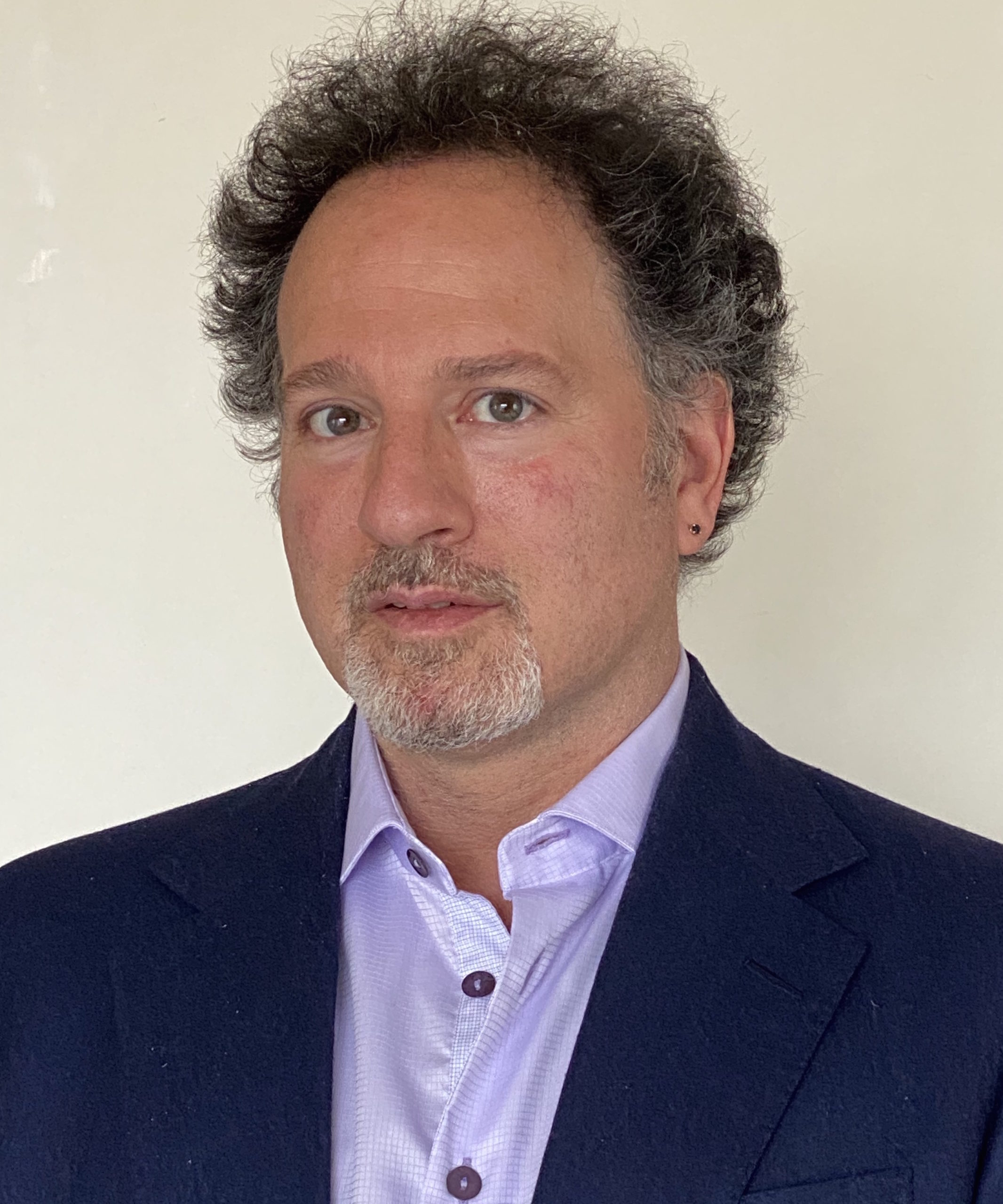
Zachary Karabell

Emma Varvaloucas