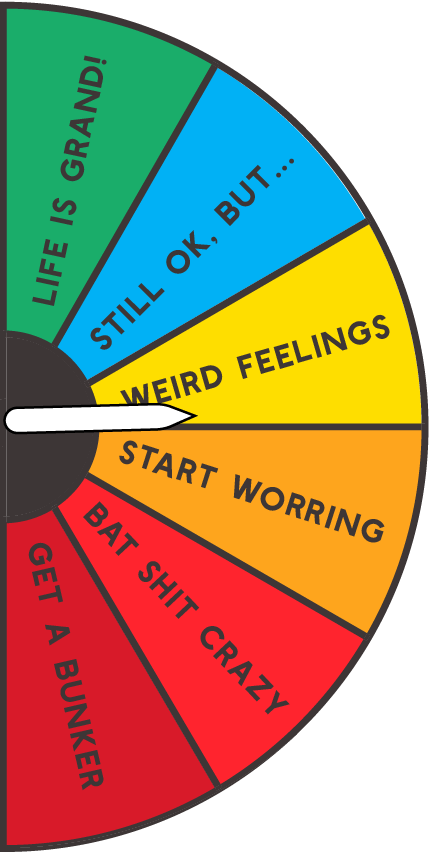
Volcanoes are erupting in The Philippines, but on-fire Australia received some welcome rain. The Iran war cries have been called off and The Donald’s military powers are about to be hamstrung by the Senate. Meanwhile, his impeachment trial is starting, and we’re all on Twitter for a front-row seat.


The Guardian of Public Lands
Featuring Josh Jackson
How do we protect America’s wild open spaces while meeting the demands of conservation, recreation, and development? Zachary welcomes Josh Jackson, author of The Enduring Wild: A Journey Into California’s Public Lands. Founder of the Forgotten Lands Project, Josh aims to connect people with these landscapes through immersive storytelling and experiences. He explores the Bureau of Land Management’s role in sustaining the health of 245 million acres across the western U.S. and Alaska, uncovers the history of these vast landscapes including rebellions and land sales, and advocates for public engagement with BLM lands to foster conservation efforts.


Prefer to read? Check out the Audio Transcript
Although the transcription is largely accurate, in some cases it may be incomplete or inaccurate due to inaudible passages or transcription software errors.
Josh Jackson: The key though, from everything I’ve studied over these last 10 years of how these decisions are made, the absolute key is that the best bills and policies take a long time to figure out.
Zachary Karabell: What Could Go Right? I’m Zachary Karabell, the founder of The Progress Network, and this is our weekly podcast, which I am doing solo this week without Emma Varvaloucas, who is my usual cohost. This is our attempt to look at what is going on in the world through a different lens, not through the lens of dyspeptic, dystopian armageddon, despair, not through the doom scrolling feed that all of us are susceptible to, but instead through a lens of what are we doing that is working?
How are the human beings who are dedicated to solving the problems of the present, solving those problems, and what is going on in the world beneath the cacophony of negative screaming, chaotic news, what is going on in the world that does not attract attention, but shapes our lives profoundly, nonetheless, and often, I believe, we believe The Progress Network is dedicated to making clear, often pointing toward a much more constructive present than we tend to think.
And of course, augering a much more constructive future than we tend to fear. So on that note today, we’re gonna look at something that we just have not looked at, I think in the entire time we’ve been doing the show. And that’s the great lands of the American West and how we manage them and how the federal government manages ’em, particularly through one of the larger unknown federal agencies. Not necessarily large in terms of people, but large in terms of impact, and that’s the Bureau of Land Management, which oversees just a vast amount of territory in the United States in ways that I think most of us don’t know unless you live in Montana, Nevada, Utah, parts of California, Colorado.
There you are more aware of certainly Alaska, but for most of the east coast, west coast, southern Midwestern inhabitants of the United States. This is all not just theoretical, but mostly unknown, and yet it impacts a lot of the geography of the United States and is not a simple case of good government, bad government, government good, government bad.
There is a, has a complicated history, a complicated present, and as we’ll discover in this conversation, often a place where partisan labels disappear and odd alliances or unexpected alliances, and often quite constructive alliances form. So today I’m going to speak with Josh Jackson, who’s a writer and a photographer, a speaker whose work champions the wild beauty and the overlooked value of America’s public lands that are managed by the Bureau of Land Management.
And he’s the author of a 2025 book called The Enduring Wild of essays and photographs that explore California’s Bureau of Land Management Lands. It’s published by Heyday Books and full disclosure, I’m on the board of Heyday Books, which is a nonprofit, California based publisher that publishes a fair number of books about nature and the wild, primarily in California and the west.
Josh is also the founder of the Forgotten Lands Project, which we’ll talk about a bit in the interview in which he’ll explain, and he is dedicated to using storytelling and visual narratives to highlight and spotlight the least. Protected and most misunderstood places in the American West in Alaska that are in fact part of the hundreds of millions of acres at the Bureau of Land Management overseas.
We’re gonna have this conversation, and I’m really delighted that we’re gonna have a conversation that is much unlike other conversations we had, and probably we should have been having more of these eclectic, not just politics at all. Again, we too focus on the news as it comes to us and not just the news as we wish to make it. So with that, please join me for this, what I hope will be illuminating, enlightening, and moving conversation about the American West.
Josh Jackson, it’s such a pleasure to have you with me today on What Could Go Right? This is a conversation, not like a lot of conversations we have. We spend probably too much time talking about politics.
We spend a lot of time talking about economics and global affairs. We do try to broaden the spectrum a little bit, and this is a broaden the spectrum conversation, at least from the perspective of this particular podcast. That being said, I want to begin with something that is a little more political, because it’s a good entree into some of the work you’re doing and it’s something at least people might have been a little more aware of.
I mean, when it comes to the interior department and the Bureau of Land Management and how the United States government, the federal government in particular, has managed or not managed or mismanaged or brilliantly managed, depending on your perspective. Millions upon millions upon millions of acres for more than a century, really since the quote unquote closing of the frontier in the 1890s, there’s been this massive government intervention in or oversight of lots of land, primarily in the mountain west, a little bit into California.
Not so much in the Northeast, although it is in the Northeast too, we just don’t notice it as much. If you’re a New Yorker, the chances that you actually came up against the Bureau of Land Management, or even for that matter, the Department of the Interior, other than hearing that there was such a thing like you, you know, our interaction with it, if you’re an urbanite, is limited.
Right? And you’ve made a life of really looking into this, but there was this moment during the negotiations in Washington over the Big Beautiful Bill in the spring of 2025 where there were two sets of proposals about, I think, and again, I’m, I’m a neophyte here, so, and I think many of our listeners would be as well.
There was a proposal to auction off a huge amount of federal lands and, and, and again, maybe you could go into this, it’s not as if there haven’t been auctions of federal lands. It’s not as if this is a perfectly static system where you have conservation on the one hand and commercial use in the other.
Right. There’s a really sort of complicated, often messy melange of all of it, so, alright. I’ve yapped enough about the prelude here, but maybe talk a little about what happened and your thoughts about what happened and what that says. In the broader context about how we are constantly navigating this conservation, federal government commercial use, three dimensional chessboard.
Josh Jackson: Yeah. Well, thanks so much for having me. It’s a pleasure to be here. Yeah. I, the Bureau of Land Management astonishingly manages 245 million across the western states in Alaska, so it’s this. You know, it’s triple the amount of acreage we have in our national park system, more than our national forest and wildlife refuges.
So since their inception, really in 1946, the BLM lands have been under threat starting in the late 1940s, you know, within a few years of these lands. Being part of the Bureau of Land Management, Bernard DeVoto famously in the late 1940s and fifties, wrote about the land grab where they were trying to privatize those 245 million acres across the west.
And ever since then, these lands have sort of been under threat in various ways and in different, different movements from, you know, the 1980s Sagebrush Rebellion to land sell off attempts and privatization attempts, but. Yeah. I’m glad you brought up the 2025 attempts because in on May 6th, the House Resources Natural Committee was meeting in DC.
And two representatives, one from Nevada and one from Utah. Celeste Maloy and Mark Amodei proposed to sell off around 600,000 acres of BLM land in Nevada and Utah. It was a late edition, an amendment that was like literally at the 11th hour. Passed in that that vote and that meeting and the natural resources meeting and essentially it proposed to sell off a lot of land in, in Nevada, in a couple of areas in Northern Nevada and around Las Vegas.
And then some, a lesser land sell off around St. George in Utah. And you know, these lands are really spectacular places that have been in the federal domain since the 1946 BLM inception. And you know, my first reaction when I heard about the land sell off was everybody was talking about the amount of acres to be sold off, which was pretty staggering at the time, but.
No one was talking about what the actual landscapes looked like, and so a videographer and I got in the car with our cameras and video gear and we headed up to Pershing County. Those were, that was the most amount of acres kind of centralized to Pershing County in Northern Nevada. And so we went to document some of what these landscapes actually looked like, and it was more beautiful and spectacular than I could have imagined these are.
The Humboldt River flows through that landscape. One of, you know, there’s not very many waterways and watersheds that are really critical in Nevada, but that’s one of them. You know, in May there were 10,000 foot peaks that still had snow on top of ’em. We saw herds of pronghorn antelope. We saw badgers, mule deer in incredible wild flowers.
These aren’t kind of the leftover lands that people assume are on BLM lands. They’re maybe lifeless or arid or whatever. These were lands that they were trying to sell off that were. Incredibly biodiverse and full of lots of scenic, natural and recreational access.
Zachary Karabell: So talk for a minute about the creation of the BLM and what came out of that. Because that’s rather late in the conservation movement in the sense of, you know, national parks really 1890s, Teddy Roosevelt, you know, 1900s. And then you have a much more of the Progressive Era land reform or land conservation. What happens with the BLM? Why is it created?
Josh Jackson: So the BLM was formed in 1946. It was emerging of the General Land Office, which until that point with the General Land Office was in charge of kind of encouraging westward expansion by giving away large tracts of land. And so you have the General Land office, then you have the grazing service, which was in charge of all grazing across the Western us.
We overgrazed those lands to death. You know, the famous 1930s Dust Bowl was a big result of that overgrazing. And so they were trying to pull together these two different agencies and they formed the BLM in 1946. These were largely historians refer to BLM Lands as the leftover lands or the lands nobody wanted, which I think is a pretty hilarious description.
You know, these were lands that weren’t. Beautiful or scenic enough for the National Park Service. They were too lifeless for Fish and Wildlife and they weren’t forested enough for the National Forest Service, and so. These lands were also not purchased by land barrens, railroads, developers. I mean, these were lands that weren’t even suitable for all those homesteaders that were moving west during the westward expansion when the government was essentially giving away lands, 640 acres, 320 acre tracks of land for almost nothing.
These weren’t even lands that were picked up by homesteaders. So you can see why it’s somewhat of an apt description from historians that these were kind of the leftover acres that weren’t purchased, bought up, transferred to other federal agencies or given to the states. And so that’s kind of, I think what hurts these landscapes all through their inception in 46, is that they’re considered leftover, arid, lifeless, not really worth anything.
And so what does it matter if there’s grazing or extraction or development on these lands because they’re not really worth anything anyway.
Zachary Karabell: And then how did you get into this? I mean, just by way of, so people know, just the sheer amount. I mean, you say something like 250 million acres that’s greater than the combined size of Great Britain and France.
Josh Jackson: Yeah, it’s an astonishing number. I’m originally from Michigan, moved out west to Los Angeles 20 years ago. I’ve spent the last 20 years traversing California. I’ve always been a camper, hiker, avid outdoor enthusiast, and it wasn’t until 2015 that I even learned about what BLM lands were.
As you alluded earlier, if you grew up in the Midwest or the East coast, the odds of you running across the Bureau of Land Management is almost zero because there’s no BLM lands out there. And you know, for that matter, not a lot of, I mean, you’re upstate New York, you’ve got some great national forest and there are other places out east that have that. But yeah, the BLM is mostly unknown by a large amount of people, including myself.
And so in 2015, I was looking for a place to camp. Everything around Los Angeles was booked solid. You know, all the national and state parks that I was accustomed to going to. A friend told me about this magical place out in the desert called BLM land where you didn’t need reservations for camping.
And then I loaded up my Honda Element with my two older kids who at the time were five and two years old, and we headed out to the Mojave to a place called the Trona Pinnacles. And we had this wonderful weekend camping and hiking around these other worldly ethereal landscape with these tufa spires that reached 250 feet off the ground.
My kids referred to them as looking like drip sandcastles that they would make at the beach, and that was really my first introduction to BLM land, and it started this obsession. Of learning what they were about, the history, what kind of landscapes they contained, and because I, at the time I had my, those two children, plus we had a newborn at home, you know, with three young kids under the age of six.
I didn’t have a lot of time to get out to these BLM lands, so I just started reading every book I could, pouring this foundation of understanding. And eventually in 2020 as my furniture business kind of slowed down with the pandemic and I had some free time in my schedule and I started to go out and actually see some of these landscapes focusing all of my efforts on California.
Just in California, we have 15 million acres of BLM land, and I wanted to get out there and see these during that five years of research and learning about these places. I also learned about the threats that they face, including in 2017 when Trump ordered the review of national monuments and then greatly reduced the size of Bears Ears and Grand Escalante in Utah.
And so that was the first time I knew these public lands that we all kind of collectively own together were under threat. I thought, how are we gonna protect these places that no one knows about? And, you know, all our best storytellers, photographers, videographers from Ken Burns to, you know, some of our best writers, they’re all flocking to the national parks and like the most, you know, scenic beauty they can find around the world.
And yet our BLM lands are also beautiful and they have their own story to tell it so. To sort of fill that story gap, I went out onto these lands with my camera and started writing about them and documenting them to showcase their beauty.
Zachary Karabell: What do you make of this history of conservation in conjunction, particularly in the West with commercial use so that it’s never been this binary, simple. It has been for national parks, a binary simple, this is a park, it will be a park. Full stop. But you know, once you get into national forests and you get into Fisher, I mean, there’s a whole complicated history.
Take the Olympia Peninsula in, in Washington of the Forest Service, auctioning off part of the forest using the proceeds from the auction where you can harvest the trees to support the rest of the forest. It hasn’t always been a simple case of Congress allocating sufficient money or even wanting to allocate sufficient money.
And there have been people who feel like that’s an acceptable trade off, right? Everything costs something. So using some balance between commercial usage and public lands or conservation lands. I don’t have a point to this question per se. It’s more of like, what have you thought about this? And I do think it’s important for anyone who’s passionate about preservation to also be realistic about like, what does that entail? Who pays? How do you pay? What have your thoughts been as you’ve gotten more into this?
Josh Jackson: It’s a really good question. The BLM, you know, like you said, the Park Service is really primarily managed for scenic, beauty and recreation. There’s no hunting, there’s no, there’s very little grazing, very little mining. It’s mostly kind of nature for the average person to go out there and camp and hike and see these places.
As opposed to the BLM, which is under a multiple use mandate that Congress gave them in 1976 with the passage of the Federal Land and Management Policy Act. So the BLM has this impossible task where they have to balance conservation and recreation with grazing and extraction and development, and the way that plays out is really fascinating.
You know, in the, in my book, the Enduring Wild, I talk a lot a lot about this idea of the radical center, which goes back to a book by Randall Wilson, who talks about the radical center and how things get done and the reality of how things get done. He defines it as the idea that compromise represents an audacious but critical approach to problem solving in the age of zero sum politics.
Zachary Karabell: It’s a good line and it’s good that you memorized it too, because it’s not like the most, you know, simple line.
Josh Jackson: Yeah. Yeah. It’s this, it’s, I keep coming back to it. You know, some of our most environmentally stringent policies were passed in the sixties and seventies. You know, the Clean Air Act? The Clean Water Act, the Wilderness Act in 1964.
Zachary Karabell: Endangered species.
Josh Jackson: There’s so many, and a lot of these, you know, were signed into law by President Nixon of all people.
He has this great line in one of his speeches before the House where he calls public lands the breathing space of our nation. So you have this… and like the, there’s this great line of when they were trying to pass the Clean Water Act, it was passed by torturous agreements. And so you have this Clean Water Act that took 11 months to get passed all these agreements that happened along the way.
And it’s really how things get done. And so in terms of balancing conservation with development on BLM lands, it is a difficult mandate that they have to do, but. Over and over and over again. We’ve seen these trade-offs that allow for both things to happen. So a couple of great examples, and going back to our earlier, the thing that led off this discussion with the land sell off, which ultimately didn’t make it into the reconciliation package, and then Mike Lee from Utah brought it back on a much larger scale.
It ended up being potentially 1.5 million acres of BLM lands sold off across the west. And he, it was all under this guise of, uh, affordable housing, even though there’s nothing about affordable housing actually in it. But in terms of a good example of of lands that were traded off as the 1998 Southern Nevada Public Land Management Act, which sort of took all these BLM lands around Las Vegas and opened them up for housing and development, and as a result of that, some of those lands were traded off.
For more scenic areas of critical environmental concern up around private lands in Tahoe. So you have these trade-offs that were happening so that Las Vegas continues to grow. And then other environmentally sensitive lands in Northern Nevada were then managed primarily for conservation. Also 90% of the sales of those BLM lands are all in Las Vegas, stayed in the state of Utah.
So you go to Las Vegas today, you can actually go to parks that were developed using money from those BLM land sales. So you have these really interesting trade offs that are happening. And in fact, you know when, when they were trying to sell these lands off for, for housing. That 1998, part of that Southern Nevada Management Act still has around 30,000 acres of land right around Las Vegas that can be sold off for housing.
And so that’s one good example of, of the trade off. Another one that I’ll mention really quickly is the DRECP here in California, the Desert Renewable Energy Conservation Plan. That was a multi-year effort from lots of different land agencies across California, including the BLM, to figure out which BLM lands would be suitable for solar development.
It was this long approach, multi agencies looking for the most land that could be used for solar development. Sort of the areas that were the least critical for biodiversity and habitat. They ended up coming up with around 350,000 acres that were developed for, suitable for solar development. They traded those for about 4 million acres of desert land that would now be managed for conservation.
So there are these really good examples of this radical center approach on BLM lands. It’s not always perfect and it’s not. It’s not gonna make everyone happy at every turn of the policy front, but it’s the way things get done and the way things that, the way moving forward that we can make inroads to, you know, to the left and to the right.
Zachary Karabell: And what about this western? Really less California, but definitely this powerful strain in Montana, Wyoming, a little bit of Idaho, some Colorado of the libertarian West, right? And everybody who watched Yellowstone, the show that made such a splash. You know, one of the undercurrents of that was this kind of continual disdain, animus, tension with the federal government as having any role in any of this that you know, the idea of like all those suits in Washington trying to tell us what to do. And yes, underneath that you have another cynical layer, which is, let’s use Washington to exploit as much resources for as little cost as possible, right?
So it’s not a simple binary, feds get, get out. You had the whole, again, very resonant. If you’re in the west issue of Ruby Ridge a bunch of years ago, which if you were a New Yorker or someone living in Los Angeles seemed kind of this weird fight in distant lands between people fighting about things you didn’t really understand.
But it is part of that tension of the federal government is an illegitimate interlocutor in what should be our land, the people’s land, the, the free west. And the BLM also sits in a weird relationship to that. So like talk about that a little on that tension.
Josh Jackson: Yeah. I think that brings to mind a couple of things. One is, yes, the Department of the Interior and the BLM kind of their headquarters is in DC, but. As someone who’s traveled across the west interviewing BLM employees and land managers and rangers and recreation planners at the BLM, these are actually people that live in the West.
You know, like they’re, the headquarters might be in DC but the people actually making land management decisions and resource management plans that affect us all in terms of recreation and access, these are people that live in these communities in the West, whether it’s Nevada, Idaho, Montana, California.
I think that argument that DC should kind of stay out of our lands doesn’t make any sense when you actually think about the people that are actually making all these decisions. Because almost uniformly, they’re the ones that actually live in these places. And so for the folks that wish that these lands would be perhaps privatized, they wanna buy some of these lands or they want, you know, there’s a big push to transfer the BLM lands that are in each state.
Two, the actual states themselves, because they think the states can manage the lands better than the federal government. Again, the argument there doesn’t hold up just because the people that are making those decisions actually live in the states, even though they work for the federal government. And two, as we’ve seen historically, lands that are given to the states are inevitably sold off as soon as those states have come up with a budget crisis, I think in Nevada is a, is a, is an extreme example of this, but I think 97% of the Nevada state lands that were given to the state by the federal government on statehood have been sold off.
And so for people that think, oh, let’s transform the estate, the state can manage it better. They know these lands better. I mean it temporarily they might, it might make sense, but long term, as soon as these states face budget deficits, they sell them off. And then those lands are not in any of our hands. You know, these are shared collectively by all of us. And now they’re owned by railroads, land barons, developers, people that can afford to buy large chunks of land at the West.
And so, yeah, I’ve never really understood those arguments of, of keep DC out of the West because the people that are making the decisions don’t live in DC. They, they, they primarily live here.
Zachary Karabell: I think the argument stems from a more deep rooted kind of Western frontier libertarianism than it stems from anything in particular. I mean, it, that sentiment sort of runs deep, you know, like we, we settled these lands, not Washington, and like, who are you to tell us what to do? Which is a very different aspect of sort of MAGA coalition or Trump coalition than the Southern one. You know, it’s a, it, it has aspects that rhyme, but it draws from a, from a deeper set of currents of there is something inherently wrong with federal power. At most it should be leaving us alone and protecting our borders, that kind of thing.
Josh Jackson: I think that sentiment was really strong previous to 1976 when FLPMA was passed because you basically had these ranchers and miners who had unfettered access across the west to BLM lands that they kind of considered their land, like you could kind of do. I mean, Bundy’s a great example, just running cattle all over the place, out west like this land is my land…
Zachary Karabell: Not your land!
Josh Jackson: Not your land. It’s just my land that has the cows. Yeah. They had this unfettered access to the, to extraction and grazing, and then in 1976 when FLPMA passed, it was like, oh no, we have to think about conservation still.
Zachary Karabell: Explain what FLPMA to people who don’t know what that is.
Josh Jackson: Yeah, the Federal Land and Policy Management Act was the first time Congress designated and mandated the BLM to consider recreation and conservation on equal footing with grazing extraction.
You know, all that was sort of around the same time that the BLM was heading out to these, these potential wilderness areas where, you know, once a wilderness was designated, you couldn’t have any mining extraction grazing on it. And so suddenly this unfettered access that grazing ranchers and miners had was being curtailed just a little bit.
And then we can get into that a little bit later. That like, oh wait, these lands are now off limits to grazing or, or mining. And that’s, you know, that was passed in 1976. It makes sense why the Sagebrush Rebellion was coming into fruition, right at the same exact time. Like, wait, these lands are my lands. How can you tell me that I can’t graze on these lands anymore? And so that led to, you know, Reagan, you know, famously saying, count me in as a Sagebrush rebel.
Zachary Karabell: So again, for people who may not be familiar with that, explain what the Sagebrush Rebellion.
Josh Jackson: So it kind of has roots in, in eastern Nevada and then coming into Utah and it’s, it’s essentially exactly what you’re talking about of this deep, guttural historical feeling that we own these lands and there are lands to do whatever we want with them. Stay out of DC, like we’re against federal oversight and overreach.
Get the feds off my property. And so they formed this coalition. Essentially they would block off access for BLM employees to access different areas. They were really big into OHV [off-highway vehicles]. They still are sort of asking the federal government to give us back, give the states their lands and to step off, step out.
And the rebellion was sort of quelled by the fact that President Reagan was elected in 1980 and had a, a pretty long run. And so the Secretary of the Interior at the time, I can’t remember, I think it was…
Zachary Karabell: James Watt.
Josh Jackson: Yeah, James Watt, one of the notorious Secretary of the Interior over the years, I think because less conservation focus was happening, like the Sagebrush Rebellion kind of fizzled out over those years only to be resurrected, you know, in the nineties when Grand Escalante was being designated as a national monument.
So yeah, I think that unfettered extraction and, and grazing that they were able to have suddenly in 1976 was being curtailed and it really pissed a lot of people off.
Zachary Karabell: Where do these things stand today? When you travel around, what’s your finger in the wind temperature?
Josh Jackson: You know, I would say still today, even though 50 years ago, they’re mandated to have conservation and extraction grazing on equal footing. Today, only 15% or 38 million acres of BLM lands are primarily managed for conservation and recreation. So we still have 85% of BLM. That are open to grazing, extraction development, and so that the imbalance that existed in 1976.
Still exists today, even though we’ve, you know, we’ve designated now 38 million acres of, of land, and I, I’ll say as a side note, even national monuments that have been designated that kind of fall into that 15% existing mining and grazing rights are still allowed in those national monuments. So if you go to the Carrizo Plain, which was designated 25 years ago, you still see cows out there if you’re in the King Range National Conservation Area on the Lost Coast of California, you still see cows roaming along the beach. Those were ranchers that had existing rights. So even on those lands, they’re not fully protected. But that imbalance still exists today, which is, you know, I, I never understand these people that are against new national monuments protecting lands because that imbalance, we, we we’re supposed to be 50-50 and we’re not even close to that.
Zachary Karabell: And then talk a little bit about mining, which is another whole, and there’s also a Bureau of Mines, which is a separate government agency that oversees things, but obviously BLM intersects with that a lot, or overlaps or has its own issues with mineral rights and mineral extraction. There’s a huge amount of BLM land in Alaska and there, of course, the challenge is even if it’s not conservation land and is technically open for commercial use, there may not be any economic drivers of it being used commercially.
So it’s more of a theoretical open for commercial use than it is actually being used commercially. So, you know, even there, it’s not quite the binary that it can seem. I mean, I understand we’re trying to simplify and have a conversation saying 15% is for conservation, and 85% is still for commercial use, but of that 85%, there’s a huge amount that isn’t used commercially, nor does it have any immediate, immediate commercial use. Right?
Josh Jackson: Yeah, and you think of places like Nevada, which is 67% BLM land, which is kind of astonishing, 46 million acres, a lot of that land is so remote and so arid, it takes so much money to build roads into a mountainside that you could potentially do mining on. So yeah, while 85% of the land is, is open for that, you’re right, there’s, it’s not all being utilized for you know, grazing, development, extraction, I would say in the West, outside of Alaska, a lot of that is being grazed. I mean, I’ve been shocked and my travels around Utah, Nevada, and California to these areas that I would guess very little wildlife can even live there. And you still see cow dung everywhere.
It’s wild how vast the grazing domain is in the West. But yeah, there are certainly some places where that 85%, it’d be impossible for anything to happen on those landscapes.
Zachary Karabell: So you’ve done a lot of on the ground sort of travel and, and talk with. As you said, the, the local people who work for the BLM and some of your work in the book reminds me a little of what Michael Lewis, you know, wrote about this sort of deep, embedded anonymous knowledge of people who work for the government, who are really involved in things that have decades of accumulated knowledge and lore that we don’t really talk about and focus on. I imagine the same is true for a lot of the people who work for the BLM?
Josh Jackson: I mean these, you have people that not only have grown up in these landscapes and lived here their whole lives, but they have a deep connection to these landscapes and want to see the best thing happening to them, even if it means there’s compromises that are made with mining and ranching and, and conservation.
I mean, the BLM also has like a robust team of scientists. You have ecologists, geologists, biologists, who are out on these landscapes looking to find the best. Action to be taken in terms of policy to manage these lands to the best of their ability. You also have the BLM comes into lots of different partnerships with local nonprofits, conservation nonprofits, other land agencies from CAL FIRE here in California, to state wildlife management agencies that are all kind of pooling their resources together, their knowledge. I mean, these are, you know, multi-agency management plans for different areas in the Western US that are managed by the BLM. So yeah, there’s a lot happening. There’s a lot of experts coming together, coming to the table to figure out the best way forward in terms of how to manage these lands in the best possible way.
Zachary Karabell: Before we talk about the Forgotten Lands Project, which I want you to explain. How do you interact with people who are much more dogmatic, particularly on the progressive side about this commercial versus conservation? I mean, I, I, I think it’s fair to say that a lot of progressives are knee jerk opposed to any commercial use of any of this.
And their instinctive reaction is, it’s exploitative, it’s harmful. It’s just a bunch of people, very few people getting inordinately wealthy while despoiling the landscape and ruining the land. And that is a perspective, but it is only a perspective and somewhat goes against the line you quoted before about the, you know, the reality of conservation in a complicated society is compromised and pragmatism as opposed to dogmatism, but so then how do you interact with that dogmatism? We talked a little bit about the libertarian dogmatism, which is, you know, stay off my land. Let us do whatever the hell we want. But there’s an equal dogmatism on the left of pristine nature, good capitalism, extractive industries, grazing all of it. Bad climate change. We’ve ruined the planet. Any compromise with that is not acceptable in the face of these kinds of existential climate challenges on the one hand and moral framework on the other.
Josh Jackson: It’s a great question. I’m glad you asked it. I’ve, I’ve experienced a lot over the last 10 years with the, the, what I call the radical left, who I think would, would turn every single acre of BLM land into, into a wilderness area, the most stringent protection we have for landscapes. And then I’ve, I’ve been on the other side talking to people on the far radical right, who wanna sell off every acre of land.
So I’ve, I’ve, I’ve seen the spectrum even in my book, you know, I go out with a couple of hunters who are not radical right, but right of center, who believe in these public lands, but also have a different perspective maybe than I do, who is more center left. So I’ve kind of bridged that, tried to bridge that gap.
It’s a tough one. Honestly, for me, it comes back to that Randall Wilson idea of the radical center, the audaciousness of compromise. I just don’t think we’re gonna get anything done If we adhere to the radical right of selling off every acre of BLM land to privatization. I think that’s gonna go down this road. That’s, you know, obviously we’re, we’re losing our collective shared lands, and I also don’t subscribe to people that want to turn every acre of BLM land into wilderness. It’s just not a reality in terms of a growing population. It’s not a reality in terms of the minerals, the essential minerals that we do need to provide batteries to, to hybrid vehicles and electric vehicles, for example. That’s the easiest example I can think of, or solar and wind development.
The thing I just keep coming back to is this idea of the radical center. We have to figure out a way. Forward and it’s not gonna be as a result of the right radical right or left, it’s gonna be somewhere in that middle ground.
I gave a couple examples earlier. The key though, from everything I’ve studied over these last 10 years of how these decisions are made, the absolute key is that the best bills and policies take a long time to figure out, like you can’t have the DRECP where they’ve designated this, you know, 300,000 acres plus for solar and traded those for conservation lands. You can’t have that in a few weeks or a year. These decisions take a lot of time to figure out with, even with the 1998 Nevada, the land cell around Las Vegas, that took years and years of ironing out even like national monuments. I talk about Berryessa Snow Mountain up in Northern California, that was a 10-year process of getting as many voices to the table as they possibly could.
So you have ranchers that were in the pro-monument [movement], you had OHV groups that were pro-monument, you had equestrian users, groups of recreationists that are typically outside of, of the pro-monument movement that took 10 years to iron out. So I think some of our best policies, going back again to the sixties and seventies, these things take time.
You know, there were 66 drafts of the Wilderness Letter before it was passed, the Clean Water Act required, you know, torturous agreements over almost a year. And so for me it just comes back to we need everybody to sit at the table and we need to figure out the best way forward. You know, Gifford Pinchot: the greatest good for the greatest amount of number of people like that.
For me, that’s what I keep coming back to like, yes, we need some lands for development. Yes, we need some lands for minerals. Yes, we need some lands for conservation. Let’s figure out the best way forward. And in terms of, of, you know, What Could Go Right? This public lands might be the last bastion of bipartisanship we have in this country.
You know, we have the right. Hunters and anglers, especially who love public lands, OHV users that love public lands. We also have bird watchers and hikers and campers who also love public lands. And you saw it this may, the reconciliation package of, of selling off these lands. The first one was thwarted.
Mike Lee brings it back on a much larger scale, and again, it’s thwarted by an insane movement of recreationists from hunters and anglers to bird watchers and hikers. You know, Republican politicians in Idaho and Montana who said, we’re not gonna sign this into law if you keep the land sell off in this package.
And so that brings me a lot of hope. And a friend of mine, Hal Herring, always talks about public lands being like this mansion that we all own together. Now we can argue all day long about what rooms in the mansion we do with, you know, what we do with those rooms within the mansion. But selling chunks of that mansion off to privatization is never the right move.
And so for me, it’s trying to find that radical center. Moving forward with that and bringing as many voices to the table as possible. I mean, you have the Snow Mountain National Monument I write about in the book, but the pictures from the, the, the ceremony where they declare this a monument, officially, there’s 900 people there in this tiny little community.
You have Sally Jewell, the Interior Secretary, riding on the back of like a crazy OHV off-road rig. You have groups of equestrian users with their horses. You have ranchers there all celebrating this, this monument that historically has not been celebrated by both sides of the party. To me, that’s what brings me hope.
This idea that so many people love our public lands. You know, we don’t have these. Ancient cathedrals and castles that Europe has. We don’t have the Great Barrier Reef. We don’t have the Great Wall of China. Some of these places around the world that have these incredible treasures. What makes our country to me so unique and powerful is the fact that we’ve in a country that loves owning private land as much as we do.
We’ve come together to say like, let’s protect 30% of and keep these pub lands public for all of us to share. That is our common ground. That’s our greatest inheritance, and I hope that the amount of people that have relationship with these landscapes will continue to fight to protect them.
Zachary Karabell: Very well said. So as we wrap up, tell us about the Forgotten Lands Project that you started. Clearly it embodies what you’ve just said, but it’s a specific project with specific goals.
Josh Jackson: So the goal of the Forgotten Lands Project is twofold. You know, for me. I want to get as many people out onto these BLM landscapes as possible. If we’re going to protect these lands far into the future from privatization, from, you know, overgrazing and too much extraction and development, we’re gonna need more people in the present who actually experience them and have a relationship with these landscapes, and then are more likely to protect them.
You know, I always come back to 1968, Baba Dioum, the Senegalese Forester presented this paper at this conference, and he said, famously now, in the end, we will conserve only what we love. And for me, that drives the whole Forgotten Lands projects. We are not gonna conserve or fight to protect or send letters to Congress or make phone calls or lead protest if we don’t actually have a love and relationship with these landscapes.
And so the Forgotten Lands Project really is about immersive storytelling visually and. Orally about the importance and beauty of these landscapes and the hopes that more people will experience them for themselves and then want to protect them. So we do a lot of immersive storytelling across the West.
We do it through, you know, my first book,The Enduring Wild, which focuses on BLM Land in California. My next book will be on BLM Lands in Utah. We start that project in the next couple weeks, and then I’m incorporating a lot of different storytellers from around the west. I wish I could get to all these places, these 245 million acres alone, but I can’t.
And so I’m hiring other writers and photographers and storytellers to help bring in more voices to more places across the west that people can get out to. So it’s this immersive project. I also try to be practical and give practical ways for people to actually engage with these landscapes through camping and hiking and hunting.
Hopefully that comes out in my book. And so a big part of that is that the Forgotten Lands Newsletter on Substack, where we talk about these places across the West and highlight them, tell the deep story of these lands indigenous stories, and in the hopes that more people can experience them for themselves.
Zachary Karabell: That’s great, and it’s, this is set up as a nonprofit?
Josh Jackson: It is not set up as a nonprofit, but it also doesn’t make a profit, so you know, you can go back and forth on that.
Zachary Karabell: It’s a de facto nonprofit.
Josh Jackson: Yeah, it’s a de facto nonprofit. I also lead trips. Two BLM lands almost every month through a corporation here, a small, you know, brand in, in Los Angeles called the Usal Project. And their mission is twofold to sort of bring urbanites together in connection in this, this world where everybody’s so disconnected. And then two, to introduce urbanites to the great outdoors. And so they hired me as a guide. So almost every month I take a trip out to BLM Lands. And introduce people to these landscapes for themselves in an immersive camping experience. You know, I take hundreds of people out to these landscapes every year, and hopefully that’ll just continue to grow and, you know, to really showcase the beauty of these places.
Also, half of these 20 to 30 year olds that come with me have never even been camping, so just introducing them to that is a powerful tool to introduce, you know, the gateway to seeing these public lands is learning just how to camp.
Zachary Karabell: How long are these trips?
Josh Jackson: Yeah, there are three days and we provide tents, sleeping bags, sleeping pads and camp chairs. Kind of like the base necessities that you need because you know, camping can be a pretty, the barrier to entry with how much it costs to get all that gear is pretty high. And so we kind of provide the essentials so that people can just bring their food and water and have an immersive experience without having to spend a ton of money.
Zachary Karabell: Very cool. I wanna thank you for your time today and for your work. As I mentioned at the beginning for the intro into this, I’m also on the Board of Heyday Books, so there’s a degree of self-promotion here, but one that I think is totally merited. You know, these are, these are things, again, for a lot of our listeners, which we know demographically, which are similar to my own background of being more urban, kinda university educated, a lot of this is unknown or only vaguely understood, and yet it’s a powerful aspect of the American West. It’s a powerful aspect of American history and it remains a powerful aspect of how we manage a large segment of the geography of the United States and these relationships between local and federal and state and federal and local and state and all of that.
We didn’t get into as much just the sheer beauty of it all, which I guess is underneath it. One of the elegiac realities here that, of course you do speak to and you do write about, but that’s harder to do in a podcast format rather than a visual format, which you. Spent a lot of time bringing out the visuals of as well.
So I wanna, again, thank you for your, your work, your passion, your, your dedication, and this idea of the radical center, which is very much in the What Could Go Right? mold, rather than giving into the ease of ideologically pure frameworks that really only enhance conflict and really don’t lead us toward managing this resource and this heritage.
Josh Jackson: Yeah. Thank you so much for having me and for the work that you’re doing to promote that idea of hope and good news and things like the radical center, and obviously for the work you do with Heyday Books. They’re my favorite publisher.
Zachary Karabell: I hope you’ve enjoyed ours through the great West of the United States and the lands that we sometimes drive through, or parks that you may have visited, but the whole complicated lattice of this vast amount of lands that’s under the purview of the Bureau of Land Management is not something I think most of us think about, and yet is a pretty profound part of both the American landscape and the American government.
So I wanted to really draw attention to that and also the ways in which, as Josh pointed out, these don’t easily follow or don’t often follow simple left right divides. I mean there is a clear, far left here, progressive radical call what you will, and there’s a clear far right, but there’s also a lot of muddle in between where these political sides become less important than what people are passionately trying to do, which is preserve the landscape.
Some of that clearly is for hunting and fishing. Some of that is just purely for preserving nature, but there’s a lot of concord or a lot of people who meet across a political divide around this as a common good, and I think that’s something we, we don’t pay as much attention to. Certainly urban news organizations are just not as interested in these issues.
It’s just not, it’s not where they live. It’s not where we live. It’s not what we look at. And yet it is very much a part of the country we all inhabit. We will be back next week with Emma and another interview. We are beginning to wind down our season, of course, but we still hope that you listen until not the bitter end, just the temporary end before the next season, and wanna thank you for your time. Please sign up for the What Could Go Right? newsletter at theprogressnetork.org and send us your comments, your thoughts, thanks to the Podglomerate for producing and of course to the team at The Progress Network for all of their support.
LOAD MORE
Meet the Hosts
Zachary Karabell

Emma Varvaloucas