
Volcanoes are erupting in The Philippines, but on-fire Australia received some welcome rain. The Iran war cries have been called off and The Donald’s military powers are about to be hamstrung by the Senate. Meanwhile, his impeachment trial is starting, and we’re all on Twitter for a front-row seat.


The Progress Report: China’s Climate Change Commitment
Featuring Emma Varvaloucas
Get ready for a Progress Report season finale packed with good news as Emma shares some life-changing breakthroughs! The Gates Foundation is funding a game-changing GBS vaccine, while a cutting-edge AI stroke diagnosis system in England is significantly improving recovery rates. Plus, China steps up with a bold pledge to slash greenhouse gas emissions while NASA’s James Webb Space Telescope just uncovered an astonishing 6,000 new planets.


Prefer to read? Check out the Audio Transcript
Although the transcription is largely accurate, in some cases it may be incomplete or inaccurate due to inaudible passages or transcription software errors.
Emma Varvaloucas: Hey everyone, it’s Emma Varvaloucas, executive director of The Progress Network, and for today, your grand poobah of the Progress Report, because I am once again on my own, Zachary is not with us today that immediately makes me wanna break into song, that Les Mis song On My Own, if you’re a fan.
But I imagine that’s not what you’re here for, so I will not torture you and your eardrums with singing any of Les Mis. And instead we’re gonna talk about our good news roundup for the week, starting strong in spooky season. I don’t actually have any real spooky news for you, as per usual I only have good news. I was gonna say maybe later in the month, but actually we are currently recording and you are currently listening to our final Progress Report episode of this season. We’re gonna have one more interview episode for you this coming Wednesday, and then after that we’re gonna be taking a break until likely 2026. So we’ll see you on the other side. I don’t know if that colors this episode or makes this episode shine anymore for you or resonate more, or makes you wanna hold it close. Hopefully.
And with further ado, let’s get into our last bit of progress news before 2026. So we’re gonna start out with a positive AI story. I’m very well aware that AI is exasperating challenges in education, information, national security, mental health. We’re running the gamut with AI challenges, but it really is doing some very cool things, particularly in the medical field. And I wanted to talk about this story that I’ve found coverage in, in this very random article in The Guardian that was about a cardiology conference in Madrid.
So in some ways it’s a little bit old because some of this stuff happened over a year ago, but certainly news to me. I imagine it’s probably in the news to people who live in the country that it’s about, which is England and it’s not Spain, as you might have guessed from the Madrid reference and certainly new to most of you listening, I would imagine, unless you’re, you’re working in this particular field.
So what is going on in England? England, as far as I can tell, is the first to reach nationwide coverage of this particular AI system that helps doctors take the next steps in regard to stroke patients. There are three main types of strokes. They all require different treatments, lighter ones, you kind of take blood thinners and it sort of heals by yourself and you’re out. The more severe ones you might need to have emergency surgery. And with a stroke, time is really of the essence In the most common type of stroke, which is from blood clots, you lose something like almost 2 million neurons for every minute that a stroke is left untreated.
So again, we are working against a clock here when a patient comes into a hospital and needs to get treated for a stroke, I like how I said we, like I’m a doctor. Anyway the doctors, the care team is working against time there. The way that they discern what kind of stroke a patient is suffering from is through CT scans, and then traditionally those CT scans kind of progress through each team member of the care team, so emergency care physician, you know, to a radiologist, to a neurologist and so on and so forth, and that takes time.
In 2019, the NHS as the National Health Service in England, they started piloting this AI boosted system that essentially takes all of the CT scans once they come outta the machine and produces what’s called a profusion map, essentially a map that are showing the clinicians what areas of the brain are receiving little to no blood, the assisted diagnosis of what kind of stroke it is and what they need to do. The AI produces these reports in under a minute, which is crazy. And then that report goes immediately to all of the members of the care team simultaneously.
So instead of doing this, you know, in stage progression, all the members of the care team have all this information at the same time, they can communicate with one another and make a decision about what to do. So in England anyway, the addition of this AI system when they did the pilots back in 2019, cut down the time between when a stroke patient arrives at the hospital and when they get, you know, sent in for surgery or, you know, onward towards treatment, whatever that treatment may be, by a full hour.
And again, I just repeating that stat from before, you’re losing 2 million neurons for every minute a stroke is left untreated. So an hour is a huge deal. And they found, again, through their analysis of the pilots that they did that this actually tripled the proportion of stroke patients in England that reached full recovery, which they define as functional independence, is essentially no disability or very slight disability after the stroke. It used to be 16% of stroke patients recovered to that benchmark. Now it’s nearly 50%. Like these are wild numbers. Again, the numbers might shift a little bit now that they have like sort of rolled it out nationwide, but it’s, it’s really, really impressive anyway.
And so obviously seeing those kinds of numbers, NHS took the decision to roll all of this out to all of their stroke centers in England. There’s 107 of them, if anyone’s curious, if that ever comes up in a trivia night at the pub or the bar. Basically, they’ve rolled it out to all the centers by summer 2024. It’s kind of just being re announced recently, which is why it’s being covered in The Guardian, how I saw this information. So that’s why I say it’s a little bit old, but I, I kind of doubt that it’s a, that it’s something that was dominating your attention in the summer of 2024 or ever. So I felt like, yeah, let’s, let’s talk about it anyway. So in case you’re curious, of course, it’s not just England that is rolling these AI systems out. Although, like I said, from what I can tell, they’re the first to reach nationwide coverage, but the systems are in hospitals, in various countries in Europe as well as in the United States.
Again, it’s very hard to tell. There’s not great data right now about how many hospitals in the United States, there’s general data about how many hospitals have used AI in the past year. It’s something like two thirds, but again, like this very specific stroke system, it might not be the exact system that they’re using in England, but the same kind of general tech is being rolled out.
Curious to hear from many of our listeners, if you’ve encountered this in the wild, this happens to us all the time on social media. We’ll make a post about something and then somebody will, will say, oh my gosh, that was me with this random, you know, experience or disease or this, that and the other thing. And it’s, it’s so interesting to hear from people that have firsthand knowledge.
We posted about, by the way, if you listen to our last Progress Report episode, and we talked about the mosquito factory in Brazil, that is breeding kind of dengue fever, transmitting free mosquitoes. So it’s mosquitoes that don’t transmit dengue fever.
We got someone on our social media that posted like, oh hey, like that’s my job. So that’s why I’m just saying, you know, if you’ve had any experiences with this AI system in England, in the US, elsewhere in Europe, or somewhere else that I’m not mentioning right now, please let us know. We would love to hear about it.
So let’s move on to one kind of a complex story and then I’ll, I’ll give you something fun at the end, like I normally do.
There was a magnificent story published in Science, I really suggest if you’re into this kind of thing, going and reading the full things. I’m not gonna be able to go into all the detail that it goes into an article. It’s called A Shot at Survival, and it’s about a GBS vaccine. Basically back in the early 1970s, there was this absolute OG named Carol Baker. And Carol Baker said, Hey, I think this bacterium, it’s Group B streptococcus, which is why it’s called GBS, which at the time was not known to be a human pathogen. It actually caused utter infections in cows.
She was saying, Hey, I think that this bacterium is actually causing babies to develop sepsis or meningitis and die. When she came out and said that in the early 1970s, microbiologists were like, Hmm, I don’t know what you’re talking about. She had just graduated from med school, one of the only women in her med school class, and people were hashtag not impressed.
Spoiler, she was correct, and she spent the next 20 years or so along with some other colleagues developing a vaccine against the bacterium, which they had come to a, a fairly workable version of that by 1996, so about 20 years later. They went over to Big Pharma. Big Pharma was like, eh, I just don’t think that this is gonna make us any money because it was a single dose vaccine and it was also a maternal vaccine, So one that you’re giving to pregnant women, which was pretty controversial at the time, remains fairly controversial. I mean, it’s, that’s something that has just started up in the modern era, like the RSV vaccine for instance. The flu vaccine, the COVID vaccine. It’s, it’s just, just kind of recently that we started giving vaccines to pregnant women, testing them in clinical trials and feeling rather safe about it.
So big pharma was like, eh. Also, we’re not still completely convinced that this bacterium is the one that is killing all these babies. After 1996, more research came out, particularly in, I believe, South Africa. People started to get a better understanding of that it was this bacterium. It was causing, in fact, over 90,000 babies to die each year and sicken over 400,000 of them. And as the research came out that was like, Hey, like it really is this bacterium and we really do need to do something about it, Carol Baker was involved in some of of the other things that were working as interventions, antibiotics, and testing. But some of the problems that the bacteria was causing was not being reached by the interventions that that were already in play which, which, which had worked to, to a decent extent, right? Like rates of babies dying from this bacterium had gone down significantly, particularly in the, in the developed world.
But again, there was this, this subsection that wasn’t getting reached by those interventions that were already in play, and those interventions were very, there was very poor access to them in, in low and middle income countries. So there was still a need for a vaccine. The research was coming out saying, Hey, it really is this bacterium and it really is connected to these baby’s deaths. Does anyone wanna put together this vaccine? Apparently big pharma again was like, yeah, not, not super interested, but who stepped in? But Mr. Bill Gates and Mrs. Melinda Gates, who’s no longer Mrs. Melinda Gates, so, um, I shouldn’t call her that, but basically, I’m trying to say, the Gates Foundation said, Hey, we’ll, we’ll pay for the, the development of this vaccine.
And Gavi, the Vaccine Alliance said, Hey, we’ll buy a bunch of these vaccines to distribute to poor, poor countries if you make it. So Pfizer signed on. Hooray for Pfizer. And there’s also a Danish company that’s also in the process of making the vaccine. So they started, Pfizer started phase three trials. I believe it was in September. It might have been late August. Full clinical results are due in 2029. So if you can imagine, this process has taken from the early seventies to 2029, and by the time, let’s say it’s efficacious, and let’s say it starts going around all over the world, it’s gonna be the 2030s obviously.
Incredible, and it’s quite sad. However, still a win a win is a win in our book. We’re really hoping that those results come out well, and that there’s going to be a GBS vaccine when there was never one prior. And, and just to add to my social media comments, by the way that we hear from people, we also posted about this on social media recently, and somebody said, Hey, me and my baby who had meningitis, we found our corner of the internet. So I’m, I’m just saying we love hearing from you guys. We love hearing from people that have truly been affected by the scientific research and the scientific progress. So keep it coming. Keep it coming.
Let’s do one more serious one, sorry. And then I’ll give you kind of a fun one. We have to inform everyone that, big deal in the climate change world, China has pledged for the very first time, and I remind everyone at this point, as I always do that China is the world’s largest emitter. They have pledged for the very first time to cut its greenhouse gas emissions from latest peaks.
So they have never promised that they’re just going to cut them absolutely. It was always like, oh, well, like depends on economic growth, blah, blah, blah. This is no, hey, we’re gonna cut them. They didn’t specify when the peak was gonna be, so that remains to be seen, but they did say the general target is seven to 10% reduction by 2035. That’s their target.
A lot of people in the climate space are less than impressed with that. Well, first of all, it’s important for China to do much more than that to keep ourselves in line with the Paris Agreement, but they also think that a lot more is feasible. I’ve seen, you know, people say, Hey, they could really do up to 30% by then. This is not what we need.
However, that being said, there are other people that are pointing out the historical pattern of China under promising and over-delivering. For instance, with their renewable energy targets, they had a certain renewable energy target that they wanted to hit by 2030. They actually hit it by 2024.
So it’s very possible that China’s gonna put out this target and then completely surpass it. But we’ll see. I mean, a lot, a lot depends on what happens with their coal industry there, which we’ve talked about in a previous episode of the Progress Report. If you wanna go back and, and listen to that.
I think I saw somebody say it is both underwhelming and transformative. It is a huge deal because again, like China has never committed to cut, its its greenhouse gas emissions in this way before. And, and what China does, a lot of people are gonna follow. It shows that they’re really being serious about the clean energy transition, and they are ready to start joining the slew of developed nations that have been cutting their emissions now for, let’s say, one to two decades.
Last but not least, a fun little space story as I promised. James Webb Telescope continues to deliver. It’s finding like the oldest galaxies that we’ve ever found before, and the latest one that I saw is that NASA has confirmed the existence of 6,000 planets outside of our solar system. Super fun. More than we had confirmed before and we were somewhere in the 5,000s and our rates of identifying planets outside of solar system has greatly sped up. And then the James Webb Telescope is speeding that up even further, and we’ve got 8,000 more in the confirmation. Lime. So lots of new planets are, are becoming known to us.
I loved the description. This is from Wired. About these planets, most of the ones that they have found are rocky. Some of them have two stars. If you’ve read the Three-Body Problem, that should be a fun one to chew on. Some of them have lava fields, and then they had this line that I just thought was so, it was so visual. I I, I love imagining this as others are surrounded by clouds of precious stones. Star Wars, we, we need a visualization of that ASAP ’cause I just think it’s so cool.
So I think that’s what we have for you today. Hopefully it was a well-rounded, interesting, and diverting tour of the good stuff that has happened in the world this week. And there is so much more where that came from. Honestly, I have a hard time choosing, you know, a handful of good news pieces every week. I could really go on for 45 minutes probably.
But if you are interested in more and you don’t mind a bit of reading, you can always sign up for our newsletter. It’s also called What Could Go Right? And you can find the signup for that on our website, which is theprogressnetwork.org. It’s totally free. It comes out once a week, and if you really wanna be completely on top of all the good news, that’s where you can find it.
So, as our final Progress Report episode, of course, I need to thank everyone so much for listening. Particularly you’ve been listening throughout this entire season, and particularly, particularly if you’ve been listening for the past seven seasons of What Could Go Right? We so appreciate you being here. We hope that it’s an inspiring listening experience for you and we really hope to see you back here with us in 2026 when we will be embarking on what I believe is season 8. I can’t believe it.
So until then, please enjoy your autumn and your holiday time and if you again need a something to tide you over in between now and 2026, we do have the newsletter and you can go get your good news fixed there.
So thank you again for listening. Thanks to Zachary who unfortunately can’t be here with us today and our podcast team over at The Podglomerate, which is always making sure that we don’t sound stupid or look stupid or you know, anything like that embarrassing ourselves on the internet.
So thanks for everyone involved in this and we will see you in, at, on the Progress Report in just a few months.
LOAD MORE
Meet the Hosts
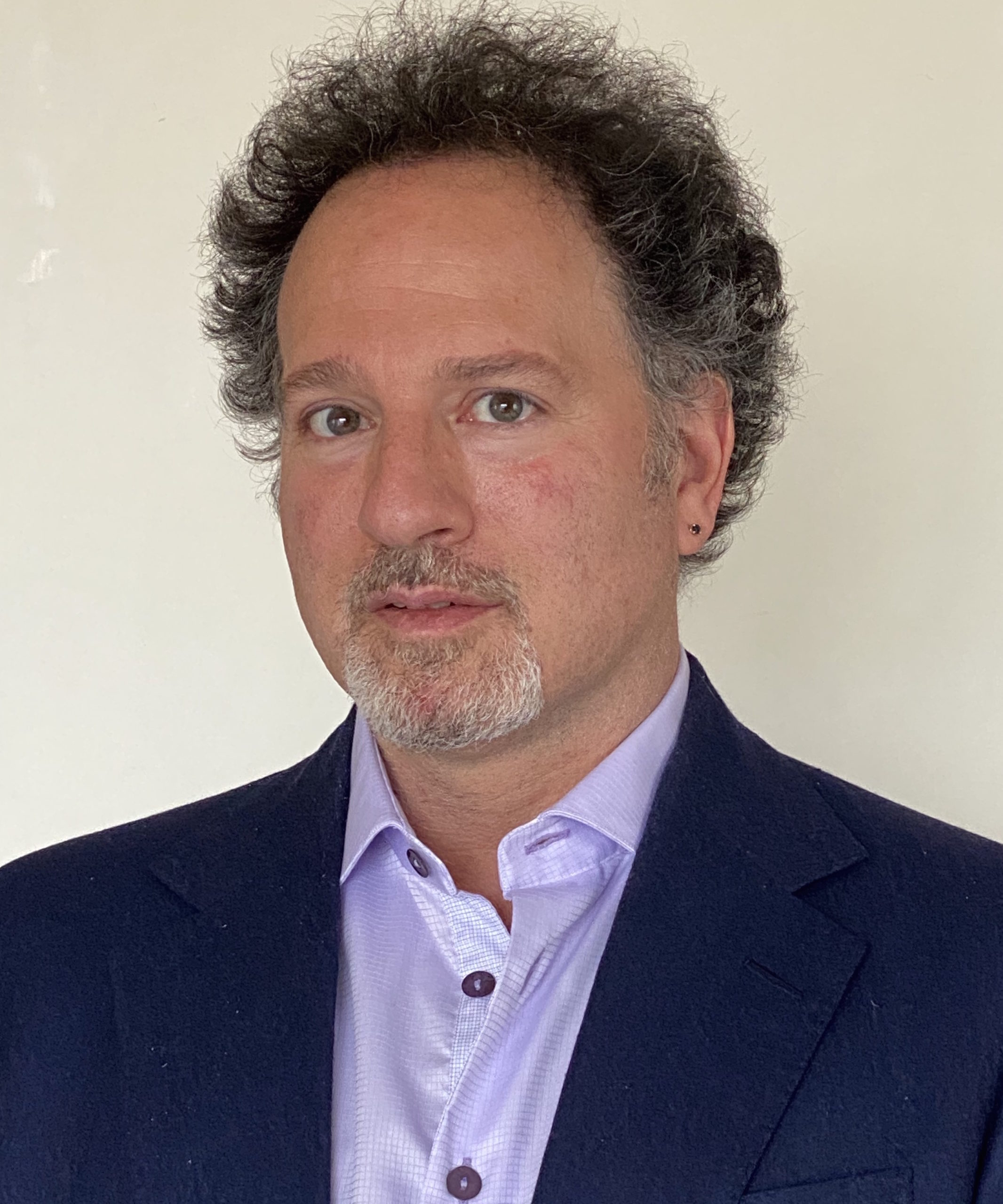
Zachary Karabell

Emma Varvaloucas