
Volcanoes are erupting in The Philippines, but on-fire Australia received some welcome rain. The Iran war cries have been called off and The Donald’s military powers are about to be hamstrung by the Senate. Meanwhile, his impeachment trial is starting, and we’re all on Twitter for a front-row seat.

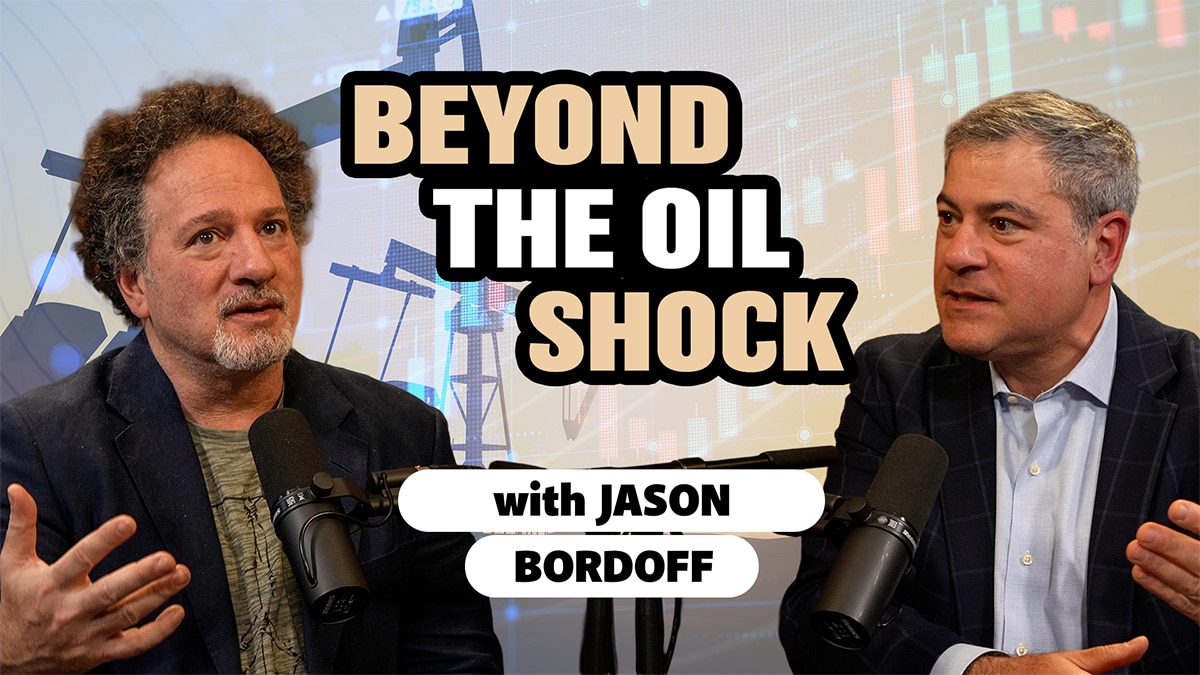
Why $6 Gas Isn’t the End of the World
Featuring Jason Bordoff
What happens when the global energy supply faces its greatest disruption since the 1970s? Jason Bordoff, a leading energy expert and former advisor in the Obama White House, joins host Zachary Karabell to navigate a world where the Strait of Hormuz is closed and gasoline prices are soaring.


Prefer to read? Check out the Audio Transcript
Zachary Karabell: What could go right? Where we look at, yeah, what could go right? Because we’re living in a world where everybody’s looking at what could go wrong. And right now, prices at the pump are soaring. Gasoline is above $5 a gallon in most parts of the country, $6 if you’re in California. It can feel like both the economy and inflation are spinning out of control because of this.
The question is: What does this mean about energy? And today I’m going to talk to Jason Bordoff, who is probably currently the world’s leading expert on all of this. He has a remarkable background. He was in the Obama White House for four years on the National Security Council dealing with these issues. And one of the reasons I wanted to have this conversation with Jason is he’s been around the conversations about what is government supposed to do in the face of these problems, and he has a degree of acumen and awareness about what’s going to happen with renewables, what’s going to happen with innovation, what’s going to happen outside the Western world, where you still have billions of people who are moving into the middle class and all that that entails.
But he’s also thought really deeply about, how do we think through these? There are solutions, or there are alternatives, that may change the arc of what we think. Jason is absolutely the perfect person to talk to.
Jason, it’s such a pleasure to talk to you today. The Strait of Hormuz is closed at this recording. It’s been closed for almost two months, and yes, it’s the greatest supply disruption since the 1970s. So I’m going to ask, if things are so bad, why aren’t they worse?
Jason Bordoff: They’re pretty bad in the rest of the world, but I appreciate the question coming from an optimist with an optimistic take on things. The energy market was pretty well supplied before this all happened. We were projected to have oil production this year that exceeded demand by something like two, three, four million barrels a day. We were in a looser place for a disruption to occur, and the United States is in a totally different position today than was true when I served in the Obama White House, you know, 13, 14 years ago.
I remember when Prime Minister Netanyahu came to the White House, as he apparently, according to reporting, just did a few months ago, to try to push the Obama administration to take much tougher action against Iran. Back then, the question was not military action, but economic sanctions. And the challenge, among others, that I was involved in helping with was, how do you take two and a half million barrels a day of Iranian oil exports off the market and not crater the U.S. economy in the process?
We’re now taking 14 or 15 million barrels a day off the global market. To be clear, to your question, that is causing real, severe economic pain, particularly in Asia, Southeast Asia, middle-income, lower-income countries, where they’re closing schools, reducing work weeks, rationing fuels, closing restaurants.
The United States is more insulated from that because of the physical reality of the Shale Revolution, where it now takes, evidently, two, three, four months for the pain in the rest of the world to make its way over here. It will. It will make its way over here. But we’ve seen this dynamic where the, quote, paper price of oil, the traded price everyone sees every day, is quite disconnected from the physical price of getting a barrel of oil tomorrow if you need it.
But that’s showing up first in other parts of the world and then making its way over here. We also use a lot less oil as a share of the global economy than we did several decades ago, and we should remember that using less energy in the first place is kind of Job One if you’re trying to make a more resilient economy, and we shouldn’t lose sight of that moving forward.
And the other thing to say, to our point about who’s feeling more pain and less, at some point the physical reality of losing 14 or 15 million barrels a day has to catch up. Prices have to rise high enough to destroy that much demand. In the 1970s, again, in past energy crises, the biggest consumers were large OECD countries. Today, the demand destruction is going to happen in lower-income countries before it happens here.
Zachary Karabell: We’re going to ask kind of a weird hypothetical here. So you were in the Obama White House, 2010, 2011. There was a brief crisis around Syria. There was Deepwater Horizon. You were in the room where these discussions happened.
If you were in a normal White House now, what — and I feel the need to caveat it with that, it’s a different process in the Trump White House, in the second season of the Trump show — what kind of conversations would you be having right now? If somebody were to say to you, “Hey, what’s the big deal? The world seems fine. I get that there are all these problems,” what would you be saying right now? Would you be saying anything internally different than what you currently say as a pundit in these things, as an analyst?
Jason Bordoff: I think, obviously, there’d be a bunch of conversations that I might be exposed to but would not be directly involved in with regard to military strategy and all the rest. But particularly from an energy dimension, first you would have — I don’t know if Trump did this, it doesn’t seem like it happened — you would have wanted to have conversations about energy impacts before striking Iran, anticipating that they would try to close the Strait of Hormuz in retaliation.
You can do things like quietly try to position tankers, which can be used as floating storage, outside the strait. You know how we had all those tankers stuck inside the strait? You’d kind of want to make sure, without signaling what was coming, to try to make sure as many as possible were on the other side of the Strait of Hormuz, as many as possible were filled with oil, you would try to have built inventories and resilience in advance of this by working with allies, not going it alone and striking it without consulting with allies, and maybe not even consulting with your own energy team. Again, I’m not exactly sure what happened. So those would be the conversations you’d have before.
The conversations afterward, a lot of those are taking place. It’s releasing strategic stocks, et cetera, but it should really be working more closely with allies. The thing about oil shocks throughout history, it’s not just this administration, is that politically, politicians have to do something, right? The problem is the options to deal with an oil supply shock range from ineffective to harmful. There’s not that many things that are super helpful and make sense to do.
You can release strategic stockpiles. Some of them are symbolic, like waiving environmental standards for summer gasoline blends and things like that. And then you put options on the table like whether we should restrict exports, or things that start to have significant downside effects, if they have some upside effects also.
Zachary Karabell: I thought we were doing a little bit of the reverse. Aren’t we now exporting more? I mean, some of these tankers are now showing up and —
Jason Bordoff: Well, basically market forces are determining that, so it’s not a government decision. But when you have shortages elsewhere in the world, there’s something like 100 tankers that are on their way to the Gulf Coast of the United States from Asia getting ready to fill up. And that’s why I said those physical shortages in Asia, we’re going to start to feel them more and more, because we’re part of an interconnected global market.
So that’s why it’s led some people to call for restricting oil exports, which is possible in the case of a national security emergency. The president can declare that. That might, in the near term, lower gasoline prices, but then you would cause U.S. producers to stop producing because the price would be low. You’d cause refiners to stop refining because they wouldn’t capture the same margins. It would be really disruptive beyond the immediate effect.
Zachary Karabell: You’ve talked a lot over the years about this sort of will-o’-the-wisp of not just energy independence as a concept, but also alternatives and a post-carbon, post-oil future. One of the things that you hear, of course, during an oil shock is a lot of people saying, “Oh, this is why we should move toward renewables. This is why we should lessen global dependence on fossil fuels because of these issues.” What do you say to those claims of, this is the proof statement for less oil?
Jason Bordoff: I think there’s a lot of truth to that, but it looks very different depending on where you are. Are you a large importer, or are you a large exporter? I mean, the Trump administration has a view, which I don’t think is entirely correct, but if you’re a huge petrostate and you’re the largest oil and gas producer in the world, what are we buying all this clean energy technology from China for, and becoming dependent on China for solar panels and batteries? We can produce all the oil and gas we need. I think there are reasons that is wrong, climate change being one of them, but not the only one.
By the way, this is the strategy China has pursued, right? China has a much greater share, something like a third relative to 20% globally, of its energy system that is electrified. Half of its new cars sold are electric cars. More so for energy security reasons than for environmental and climate change reasons, although there’s some of both, because they are deeply concerned about energy insecurity and being import-dependent for oil and gas, which they are. So their strategy has been to electrify as much of the economy as possible and then get that electricity from domestic sources. For them, that mostly means renewables and coal. So we should be clear, it doesn’t all move in a clean direction. Coal can be cheap and domestic and provide energy security if you’re in Indonesia or certain Southeast Asian countries like that.
If you’re in Europe right now, you had the shock of 2022 where you lost Russian gas. Now you’re like, maybe Qatari LNG is not as secure as it was. We’re a little bit worried about even the United States, because Trump is threatening Greenland, and are they going to be a reliable partner? And you’re feeling an oil shock. It would make a lot of sense for Europe to move quickly on energy efficiency and then to electrify the economy where it’s possible, like passenger cars and heating in the home.
It takes time. It takes capital. It doesn’t happen overnight, so it doesn’t help in this shock, but it helps prepare you for the next one. And then for Europe, that would mean more renewables, probably rethinking nuclear power and trying to get that electricity from domestic sources.
But if Europe goes in that direction, what do you need to do to electrify your economy in a continent like Europe? You need a lot of solar panels, a lot of batteries, a lot of critical minerals, a lot of electric vehicles. And so what’s interesting is to think in relative terms about energy security risk. People were deeply concerned in places like the U.S. and Europe about the fact that China dominates everything I just mentioned.
Zachary Karabell: Right.
Jason Bordoff: And the question is, how do we think about energy security risk of supply chains with products that produce electricity, not the daily flow of electricity from a place like China, and how does that compare to importing oil and gas through the Strait of Hormuz?
Zachary Karabell: So how did you get into all this? Were you, like, in eighth grade, and you said, “Oh my God, the thing I wanna do with my life is be the world’s foremost expert on all things energy?” I mean, there’s a pathway here, I just don’t exactly know what it is.
Jason Bordoff: Yeah, I don’t know if we’ve talked about that before. Maybe it was in the blood to some extent. My grandfather owned a gas station in Brooklyn, New York. My dad owned a gas station in Brooklyn, New York.
Zachary Karabell: Did you pump as a kid?
Jason Bordoff: I mean, they would let me do that sometimes. But I have memories of going after school to the station and the repair shop that my dad owned, and heard his stories about people showing up with weapons in the 1970s to make sure that they could refill. I didn’t see that directly, but heard a little of those growing up.
I think most directly it probably came from my mom, more than anything else, to the extent there was a family dynamic. She was an immigrant and refugee to the U.S. from the Middle East. And I was deeply interested in that part of my background and her story.
Zachary Karabell: From where?
Jason Bordoff: From Egypt. So my master’s degree is in Middle East studies, and I think you can’t study the history of the Middle East without understanding the role energy plays, that’s why The Prize by Dan Yergin is so fascinating. And for me, if you’re sort of like, can’t decide what you’re interested in, you’re interested in everything from foreign policy to national security to economics to the environment, energy is all of those things in a way that almost nothing else is.
Zachary Karabell: It’s funny, I did the Middle East studies master’s degree as well, but I got really interested in religion and politics, and not at all interested in energy, weirdly enough. It never even occurred to me as a thing. So clearly, there’s a bit of an eye-of-the-beholder thing there.
How did you end up in the Obama White House? What was the pathway there?
Jason Bordoff: I always knew public policy was super interesting and had a passion for it. And honestly, that does come, I think, from sort of seeing, with my own family story and my mom coming to this country and my grandparents having to rebuild their lives after their savings being taken from them, the importance that charity played, but also public policy played, and public education, and how they came to this country, immigration policy, how they rebuilt their lives.
So I could just sort of feel viscerally growing up that good public policy made people’s lives better, and sort of always had an interest in serving in government as a result.
Zachary Karabell: And what surprised you going into government? Everybody has these visions of public service, which are important and, in many ways, legitimately noble. But then there’s also the reality of how government works. Capitol Hill is, I think, a much more messy experience than working in a White House, although today, who knows? What was a moment of, the reality of this is different from my image of this?
Jason Bordoff: I loved the four years I spent in the White House, and I’ve been lucky, as you know, to work with some pretty smart people at places like Brookings or McKinsey or Columbia University. But I’ve just never worked with such an exceptional group of people who cared as much about what they were doing and had the ability to work on something interesting every single day.
I think I was not naive, but there is definitely a lot of, maybe like in any company, internal political maneuvering, and who gets to be in the room for which meeting, to try to position oneself as the leader of an effort.
Zachary Karabell: You were shocked there was gambling in Casablanca?
Jason Bordoff: I’m not saying I was shocked, but I hadn’t sort of seen it up front. But mostly, that was the exception. I think mostly people were really trying to do good work on behalf of the American people, cared about what they were doing, cared deeply about problems like climate change.
The hard thing is how it gets worse and worse every year, it seems, but how difficult it is to get things done, right? I mean, we have a pretty dysfunctional political system in Washington. That’s more true today, but it was true then. But when you can get something done, like Obamacare, or the Inflation Reduction Act, or pick your example, the impact you can have on people’s lives is unmatched by almost anything.
Zachary Karabell: So devil’s advocate question to that. You have a period of time in the Obama White House. It’s an administration that is focused both technocratically and in vision about moving toward a more diversified energy future. You have a whole Department of Energy. You have a loan program that people like Jigar Shah led that was supposed to invest in a kind of post-carbon future. And as you said, you had a lot of really smart people dealing with this. Why was there such a backlash against so many of those policies?
Jason Bordoff: It’s a good question. I’m sort of reflecting on it in real time. We’ve obviously seen the political pendulum swing more sharply in both directions. I was working in government when you had Senator McCain and Senator Graham leading efforts to put climate change policy in place, like a cap-and-trade program. And you had an Obama administration that I think cared deeply about climate change and put the Paris Agreement in place, and recognized that it was probably a good thing on balance for the United States, rather than a bad thing, if we were a huge producer of the reality of today’s energy system. We might want it to be different in the future, but for a while it’s still going to be very heavily dependent on oil and gas. And if we’re producing that domestically, and maybe even exporting to allies, that’s better than if we’re importing huge amounts. And somehow you could hold both thoughts in your head at the same time. Two things could both be true at the same time. There’s a reality to the system today, and there’s a multi-decade process you wanna bring about to change it.
And I feel like both sides have gotten more in their camps and extreme. The environmental movement on one side, to sort of block every single oil and gas project, no matter where it is. I’m caricaturing a little bit. And on the other side, the Republican Party and parts of the oil and gas industry — and I don’t wanna paint with a broad brush, there are exceptions — have kind of moved away from the idea that climate change is a serious threat and we all need to acknowledge it and think about a long-term transition to address it.
Zachary Karabell: I wonder if part of it is — because if you look at the stats, oil production kept reaching new highs, domestic American oil production under Obama and Biden —
Jason Bordoff: You can’t tell which political party was in office if you look at oil production.
Zachary Karabell: But it’s almost as if, between the second term of the Obama administration and the one term of the Biden administration, domestic politics meant that Democrats were never going to trumpet that, right? They were never going to get on the campaign trail and say, “Look how much under my administration —”
Jason Bordoff: And from a political — I mean, it’s not my strong suit, I tend to focus on policy more than politics. But you might say, well, there was no upside, right? It wasn’t like you were going to win any votes in Midland, Texas, if I’m a Democrat and I wanted to say something nice about oil and gas. And maybe the reverse was true with where the Democratic Party and activists and the environmental movement were. So there may be a political explanation for what you’re talking about, but I think you’re right.
Zachary Karabell: Did you watch Landman?
Jason Bordoff: I did. It was great.
Zachary Karabell: Billy Bob Thornton playing the Texas Midland reminds me of this. If you haven’t watched Landman, I’m sorry, you’re just going to have to go with this, or just pause the episode and go watch Landman. But as a description of what that ecosystem and culture is.
Jason Bordoff: Well, look, you’re asking a Jewish kid who grew up in Brooklyn about what life is like in Midland, Texas.
Zachary Karabell: Yeah, but you’ve spent some time.
Jason Bordoff: I have spent time there. I think there’s a sense of reality to it in terms of the swashbuckling nature of it, the risk-taking nature of it, the landscape of it, how it feels to sort of be at the club, maybe, in Midland.
I think it is a safety-obsessed industry, so the idea that a wellhead is going to explode because somebody takes a wrench and starts smacking something and it blows up — I mean, if you’re not holding the railing as you’re going down the steps in an oil and gas company, someone’s going to tell you to be really careful. So notwithstanding accidents that surely have happened, it’s a pretty safety-obsessed thing. Not everything is accurate.
Zachary Karabell: I mean, one of the reasons it touches such a nerve is it evokes this very American idea: we’re going to take risks, we’re going to be self-sufficient, we’re not going to be beholden to stupid bureaucracies and rules that don’t make sense, that aren’t rational, right?
Jason Bordoff: Well, that’s the nature of Texas, too, not just the energy industry. And I do think there’s a sense among many people in the industry — and it’s hard to paint with a broad brush, and some may be climate deniers, I know a lot of people in the oil and gas industry who take climate seriously — but a sense that, for the world as it is today, which still is using 80% fossil fuels globally, and you want energy prices to be lower, not higher, you want to produce, not be dependent on imports, a sense that this is a product that delivers benefits to people.
When Chris Wright, our energy secretary, writes in The Economist or talks about how there are billions of poor people in the world, and you need large amounts of energy, not small amounts of energy, massive amounts of energy — and we could put some numbers on that if you’re interested — to bring people out of poverty and give them meaningful levels of prosperity, even a fraction of what we take for granted, he is right.
The problem is, in my view, he doesn’t go to the next sentence and say, but there is a reality to the limit of how much CO₂ we can put in the atmosphere. And that is a problem, too. And by the way, some of those poor people are going to be the worst affected if we don’t deal with that, and we gotta deal with both of those problems at the same time. But I say that because I think a lot of people who work in this industry feel like they’re doing something that brings benefit to the world and to the U.S. economy.
Zachary Karabell: And we talked about this a little bit during the Biden administration, where there was a brief period in 2021 and 2022 where John Kerry, as kind of climate envoy, was going around to sub-Saharan African nations and other parts of the world saying, “If you don’t move toward a commitment to a decarbonized future by 2030, we’re not going to fund your loans.” And these countries were going, “Okay, how am I supposed to turn the lights on? We don’t have enough money to build our own wind turbines.”
Obviously, a lot of them turned to China because China was going, “Hey, if you need infrastructure for energy, here we are with zero-interest loans that come due at some point.” How does —
Jason Bordoff: And they were looking at a U.S. economy that still has 15% of our electricity coming from coal.
Zachary Karabell: So this is not a five-minute answer in a 45-minute podcast, but how do you square that circle? What is the answer to these conundrums? They don’t have the capital. If you’re Pakistan, they’re basically going to say, “Well, we got a lot of coal. Until there’s a cheaper or more available resource that we can use, we’re going to use the resource we’ve got.”
Jason Bordoff: Yeah, Pakistan’s a really interesting example because initially they had made a strategy to double down on liquefied natural gas, and then discovered that was pretty expensive and pricing was quite volatile. And then the government did what you just said, which is say, coal can be pretty cheap and a source of affordable, domestic, secure energy. So they went to China and asked China to build a lot of coal infrastructure, indebted, and then had to pay China back for those coal plants.
And what happened? It turns out that they’re having trouble paying that back because Chinese solar panels are so cheap in Pakistan that, not a government decision, but just businesses and consumers and households are saying, “The cheapest thing I can do is put solar panels up.” And so clean energy is growing really fast there because it makes a lot of sense.
Having said that, you are right that I think there’s sometimes too much happy talk or optimism, not to push back on that in an Edgy Optimist podcast, that you can pull billions of people out of poverty and do it all with solar and wind alone. Renewables will and should play an enormous role. In many places, they are the cheapest form of electricity. Let’s remember it’s electricity, and only 20% of the global energy system is electrified, so there are a lot of things that don’t take electricity.
But one of my favorite people is a friend of mine, Sunita Narain, who’s a leading environmentalist in India and cares a lot about local air pollution in India as well as climate change. She’s the first to say, of course India has to use natural gas as part of a multi-decade transition. It’s not the end state, but this is going to take time. And to a wealthy nation like the U.S. or European countries, she’s like, if we have a global carbon budget and we gotta hit a certain target and we want to limit emissions, maybe if net zero by 2050 means 2070 for us, then it means 2035 for you, because you caused this problem.
Now, that’s a hard reality, because no one really wants to accept that. But that is the kind of sense of hypocrisy and resentment that you increasingly hear from emerging markets around the world, which need a lot of energy to grow.
We often hear the statistic that there are 750 million people around the world who have no access to electricity. We gotta solve that problem, and we do. How much energy does that take? Electricity in those models of universal electricity access is typically defined by an amount of energy roughly equivalent to charging a few cell phones and turning on a few light bulbs.
If you wanna mechanize agriculture, move people from two-wheeled vehicles to four-wheeled vehicles, have refrigeration, have air conditioning, to have the prosperity level one-fifth that of Malaysia, it’ll be 10 to 20 times those kind of estimates of what it means to have universal electricity access. And again, that’s just electricity, nevertheless all the things we still need molecules for.
Zachary Karabell: It’s funny, I don’t view these issues as necessarily leading toward pessimism. I think it’s a question of calling, to be very cliched about it, a spade a spade, acknowledging what is real in the face of ideals without cleaving to those ideals so much that you’re violating reality as we know it.
And in that sense, recognizing things like, we’ve had this multi-decade, multilateral process, Paris, Kyoto, about emissions and accords, and they have done some good in highlighting the need for being attentive to the long-term consequences of how we use energy and how we extract it. But you’d also have to say, as a series of decade-long processes, they have at best had marginal utility in changing the arc of what would otherwise have been happening anyway.
And acknowledging that doesn’t mean you’re going, “Oh my God, it’s hopeless.” Acknowledging that goes, “Okay, that didn’t really work. It didn’t work to do whatever it said it’s going to do.”
Jason Bordoff: And it doesn’t help anyone to pretend this problem’s easier to solve than it is.
Zachary Karabell: And doubling down on it isn’t going to make it work better. So in the face of that, okay, what do we do? I mean, one of the things that’s emerging in the kind of unilateral hegemony of the Trump administration is these things ought not to be done because multilateral institutions create rules that nobody follows anyway. They ought to be done because different states have a different self-interest in doing them. India and Pakistan have an interest in having less pollution. The pollution in northern India affects 500 million people. It impinges on economic growth, blah, blah, blah. These are things that are more pragmatic and present. It’s not because a conference of 180 nations sits around for four weeks every three years and comes up with rules. So what does one actually do, given that people are, I think, interested in solving problems? They’re interested in technology, they’re interested in innovation, they’re interested in change.
Jason Bordoff: Well, there are no easy or obvious answers to that, or someone would have done it already. And actually, at the Center on Global Energy Policy, we just launched a major effort with The Rockefeller Foundation, which came out of conversations I had with Raj Shah just like this. And it was a high-level panel of former ministers, heads of states, on what we’ve called universal energy abundance. And the idea was to move beyond a discussion of electricity access —
Zachary Karabell: See, that’s very optimistic. Universal energy abundance. That’s great marketing.
Jason Bordoff: And the idea was, and Raj’s view as well, is if you really wanna meaningfully make a dent in global economic development and really improve the prosperity of billions of people around the world, energy is a massive piece of that. We should use energy efficiently for sure, but you’re talking about a lot more energy.
And not to elide the hard questions, which are, there’s a tension there between the fact that we gotta decarbonize as fast as possible. Solar panels can do a lot of that work, but probably not all of that work. And how do we grapple with that?
One of the things I’m interested in, that this panel will get into, is the frontier of new technology. Solar panels have come down 90-plus percent in cost, and they can play a big role now. What’s next on the frontier, whether that’s advanced geothermal, or advanced nuclear power, or battery storage —
Zachary Karabell: Fusion.
Jason Bordoff: I mean, fusion seems like it might actually be a thing. You wanna be sensitive to what you said a moment ago about people who’ve caused this problem in wealthier countries in the West coming to lower-income countries and saying, “Don’t worry, you’ll be fine because we’ll have fusion one day.” That’s not going to land well either. But I do think the innovation frontier is a really interesting piece to bring into this conversation.
I wouldn’t have spent 13 years of my life building an institute with the word “policy” in its name if I didn’t think policy was really important, and I still believe that’s true. Multilateral cooperation is still important. And we’re going to have to figure out how to overcome all the well-known barriers to finance that we all know about, currency exchange risk and political risk and other things, because there’s a lot of opportunity to invest in infrastructure, as is happening all around the world now.
Zachary Karabell: So why shouldn’t people, if they’re trying to figure out, “Okay, what do I do about this?” What would be wrong with placing your faith in techno-optimism? What would be wrong with saying, “You know, net-net, people have had these issues for the past 100 years, and something has kind of come along at each juncture on the way.” Maybe just as the tailspin, right at the very last minute, or just as you thought things were going to get worse. To some degree, there was a fear in the 1970s of peak oil. We’re having this conversation about, I don’t know, six weeks ago, Paul Ehrlich died, who had been famous for his prediction in the ‘70s that too many people were going to lead to global population collapse, that the carrying capacity of the Earth —
Jason Bordoff: Great book, The Wizard and the Prophet, that sort of helps people understand —
Zachary Karabell: Which Charles Mann wrote, sort of comparing that to Norman Borlaug and the Green Revolution. The story of the past 40 or 50 years has been a series of fears that we are reaching a sort of peak that is going to be followed by a collapse of energy, of food, and that hasn’t happened.
And then to some degree, it’s worth asking whether the reality of climate change, notwithstanding the fears about what it augurs, may be similar to those. I don’t know. Or that we’re able to solve for it technologically more than we had anticipated, because you can’t really factor into your models — if you’re the White House and you just said, our 10-year forecast assumes a radical technological breakthrough in year six, you’d be laughed out of the room because people are like, “Well, maybe,” but there’s no way to factor that in. And must see a lot of this where you are.
Jason Bordoff: It’s the Shale Revolution, too. You wouldn’t have built that in, right? So I would say, again, this kind of trying to hold two thoughts in your head at the same time, which often in these conversations about energy and climate people have trouble doing, it’s like both-and. I think too often the conversation about techno-optimism as the solution doesn’t fully appreciate how much we can do with the tools we have now, which is a lot. Renewable energy today, getting even existing, current day nuclear technology up and running, storage is improving dramatically, electrifying more of the economy. Just build. Build, baby, build, rather than drill, baby, drill. You can do a lot today.
I don’t think that gets you all the way there. Some people will disagree with that and model a 100% renewable global economy. And to your point, there are a lot of exciting innovations that are around the corner. Some seem very close today, whereas they would’ve been wishful thinking 10 or 15 years ago. And now you’re talking about space-based solar or things that seem a little pie-in-the-sky today, but if you’re going to pull another few billion people out of poverty, you’re going to double or maybe increase 50% global energy use by mid-century, and you’re going to get to net-zero emissions, I think my best guess of what that world looks like is a lot of the tools we have today, but also some innovations that come that maybe we’re not anticipating, for sure.
Zachary Karabell: And what about the unsexy ones?
Jason Bordoff: And you don’t wanna bet on those things because it kind of takes the pressure off to do a lot of what we should do today. By the way, part of the answer to your question, too, which I think is also a dangerous thing to bet on, but we should obviously be thinking about because we’re probably already past one and a half degrees warming, is the way technology copes with the impacts of climate change, adaptation and geoengineering. We don’t wanna put all our eggs in that basket, but some of that is almost inevitable at this point.
Zachary Karabell: For years, within the environmental world, adaptation was a really negative word because people thought by focusing on adaptation —
Jason Bordoff: There’s like a moral hazard problem.
Zachary Karabell: Right, you were giving up. And of course now adaptation has become the absolute byword.
What about just efficiencies? Using the same stuff, but using less of it. So you’re using fossil fuels, but you’re using it more efficiently.
Jason Bordoff: I mean, Job One, as I think I said earlier, but if I didn’t, I should have, for decades, has been the low-hanging fruit. It’s hard to write — I spend a lot of time writing foreign affairs articles, and I hope some last, but the one that has maybe lasted in my field better than any other is Amory Lovins, 50 years ago, in Foreign Affairs after the Arab oil embargo, talking about the hard path and the soft path after the Arab oil embargo.
And we knew we had to do something about dependence on the Middle East for oil. There was a hard path, which was to figure out how to build massive engineering projects and break rocks all over the place and crush the Earth to pull more resources out of the ground. But there was a soft path, which is, people don’t really care how much energy they use. They care if their beer is cold and their showers are hot, and you can deliver a lot of that by using less energy inputs in the first place.
Electrification does a lot of that. Electricity is a much more efficient use of energy. That’s why electric cars in total use less energy. And the U.S. economy today has increased fourfold since the Arab oil embargo —
Zachary Karabell: And it’s energy efficient, right? Its energy intensivity is way, way less.
Jason Bordoff: Right. Energy as a share of the economy is much lower, so we’re in a better position to deal with the shock today.
Zachary Karabell: Andrew McAfee has written a lot about this. The more advanced the economy gets, the less energy-intensive it becomes.
By the way, great story about Amory Lovins, who started the Rocky Mountain Institute, if people don’t know, and was kind of an icon in the environmental world. I was at the first Clinton Global Initiative in 2004. It was very buzzy, probably in ways that a lot of people hate, and Amory Lovins was giving a talk about all of the things we could be doing, and Brad Pitt and Angelina Jolie were there.
And I was sitting next to Brad Pitt at a table, and everybody’s talking. And at the end of this session, this group of people rushes from the back of the room, and Brad Pitt stands up, and he thinks they’re all rushing up to him to get his autograph, and they blow past him to get in line to get an autograph from Amory Lovins. And just in terms of the context of fame, because in that room Brad was just an actor, and Amory Lovins was the rock star.
Jason Bordoff: He was also opposed to nuclear power, so I don’t agree with him on everything. But there was a lot of wisdom in some of what he did.
Zachary Karabell: But he was one of the first people to really talk about adaptivity or the ways in which big companies — and you work with big companies all the time now, in ways in which the real orthodox of the environmental movement probably question, right? They’re like, “Well, why are you working for big companies?” How do you answer those criticisms, like you’re working with oil companies and you’re working with energy companies?
Jason Bordoff: Well, first, to be clear, the work of the Center on Global Energy Policy is completely independent of sources of funding, and there are tons of guardrails in place to make sure that is the case.
I think if you wanna build common ground where it’s possible and you wanna move collectively toward the kind of future where energy is affordable, where energy is secure, and energy is much lower-carbon and sustainable, you gotta find as much common ground as possible and bring diverse sectors together.
So we work a lot with the environmental activist community, and with environmental foundations, and with NGOs, and with energy companies, and with tech companies, and with utility companies, and with policymakers. If you just talk to any one of those groups, it’s hard to make progress because you kind of need them all working together to figure out how we’re going to move forward.
And a lot of those companies should be criticized when they do things that obstruct progress in the right direction. But it’s also where a lot of the engineering expertise is, a lot of the capital is. And when that can be mobilized, it can actually move things in a good direction.
Zachary Karabell: Well, Jason, I wanna thank you so much for your time today, for your work. Everyone should go check out — what’s the website?
Jason Bordoff: The Center on Global Energy Policy. You can just Google that, but it’s energypolicy.columbia.edu.
Zachary Karabell: Now you can OpenAI it, you can ChatGPT it. You can Claude it, you can Opus it, you can Sonata it, you can Perplexity it, you can DeepMind it. You can do all these other things other than Google it now. So I wanna thank you for your time.
Jason Bordoff: By the way, that’ll take a lot more energy if you do it that way.
Zachary Karabell: Yeah, because then you’ll — we didn’t even get into the whole data center thing. You’re just leaving that. Pay attention to the center’s work, and then you can get into the whole problem of data centers. And meanwhile, use the AI stuff. I don’t care what he says. It doesn’t matter. It’s being built anyway. It’s not going to matter whether you use it.
I want to thank the people at Kaleidoscope for producing these episodes, the team at The Progress Network for supporting everything, and of course you for listening. Be back with you next week.
LOAD MORE
Meet the Hosts
Zachary Karabell