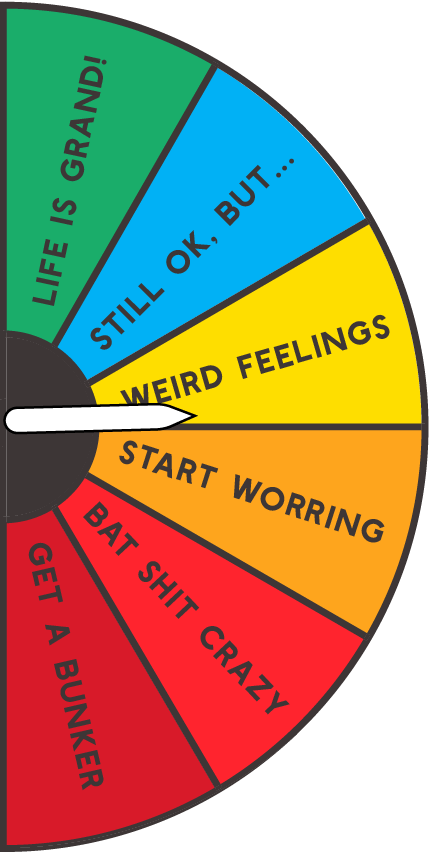
Volcanoes are erupting in The Philippines, but on-fire Australia received some welcome rain. The Iran war cries have been called off and The Donald’s military powers are about to be hamstrung by the Senate. Meanwhile, his impeachment trial is starting, and we’re all on Twitter for a front-row seat.

What Could Go Right? Tobacco Endgame
What’s the best way to move toward a smoke-free world?

Emma Varvaloucas
This is our weekly newsletter, What Could Go Right? Sign up here to receive it in your inbox every Thursday at 5am ET. You can read past issues here.
Tobacco Endgame
New Zealand considered, then dropped the idea and the United Kingdom might soon run with it, but as of this week the Maldives beat them both to the punch. The island nation just became the first in the world to institute a generational tobacco ban, which prohibits young people born on or after January 1, 2007, from smoking, buying, or selling tobacco.
It’s the latest development in a two-decade global push toward a “tobacco endgame” meant to disappear the product entirely.
A smoke-free world would certainly be a much healthier version of the one we live in now. If you had to choose a single public health concern that affects the most people, you’d be right to focus on tobacco. Only air pollution and high blood pressure kill more:

The latest data on this front from the World Health Organization (WHO) is encouraging. There are 120 million fewer smokers worldwide today than there were in 2010—a drop of 27%—and the WHO expects that trend to continue. Southeast Asia in particular has seen dramatic progress around tobacco use. At the turn of the century, one in two adults (ages 15 and up) there were users. By 2030, the WHO expects that fewer than 1 in 5 will be. Europe has now overtaken the region as the world’s smokiest:

Tobacco endgame advocates acknowledge this progress, but they want to speed it up. In recent years, governments have started to engage in discussions around bans of varying degrees. Opponents argue that blanket bans like the Maldives’ will simply drive smoking underground into an unregulated, untaxable black market. They also point out that the Maldives’ situation creates some short-term peculiarities. As columnist Fraser Nelson pointed out when the British government was considering a similar law in 2023, until the Maldivian population “ages out” of smoking, if you fast forward 50 years, a 69-year-old will be able to smoke his merry heart out as he watches his 68-year-old friend get carded at the convenience store.
There might be other trade-offs, too. When the European Union (EU) recommended that its member states ban smoking in outdoor areas, for instance, Greece balked, citing concerns over the impact on tourism and business. (I live here, and it’s extremely common to smoke outside at restaurants and bars.) Like Greece, the Maldives is heavily dependent on tourism, and the new ban applies to tourists, too.
At that time, Greece’s government essentially told the EU to show them that the intervention worked—a fair request given that global smoking declines thus far have been achieved mainly through pricing controls, advertising regulations, and public awareness campaigns.
Then there is the civil liberties issue. Some argue that tobacco bans actually increase personal freedom, because they free addicted smokers from disease and premature death while removing a significant expenditure that predominantly harms low-income families. Skeptics respond that any ban raises questions around enforcement of the inevitable black market. If War on Tobacco-type talk gets going, what will the net effect on social freedom truly be?
In the end, those trade-offs might be worth it if a ban really works. Personally, I’m somewhat skeptical that it will, although I’d like to hear our readers’ thoughts—as per usual, feel free to write in. Either way, the Maldives’ ban will be valuable as a test case. And in the meantime, plenty of other ideas remain on the table for governments to try in pursuit of the tobacco endgame.
By the Numbers
31: States that have enacted laws to lower prescription drug costs in 2025
36: States that limit cellphones in schools, now that Wisconsin has joined the ranks
41%: Decline in global maternal mortality, 2000–2023
90%: Share of children enrolled in primary school worldwide
Quick Hits
🌎 The United Nations is forecasting a drop in global emissions for the first time: 10% by 2035, compared to 1990 levels. Scientists say a 60% cut is needed by 2035 to limit warming to around 1.5℃ by the end of the century.
👏 Gunmaker Glock plans to stop producing pistols that can be easily converted to an automatic weapon. Its new “V series,” which has an internal design that prevents “switch conversions,” will replace most of its commercial lineup.
🐢 The green sea turtle has been reclassified as a “species of least concern,” after being close to extinction since the 1980s.
🐸 Over the past 500 years, extinction rates have slowed rather than accelerated across many plant and animal groups, a new study has found. Some rates have even declined as a result of intense conservation efforts. Previous studies used extinction rates from centuries past, when threats were different, and extrapolated them into the future.
⚖️ France has adopted a consent-based definition of rape. Since 2017, 20 other European countries have done the same, often, like France, after high-profile media cases.
📉 Moldova has fewer than 1,000 children living in orphanages, a dramatic drop from 17,000 pre-millennium. The goal is zero by 2027.
🔬 Scientists have found a powerful antibiotic hidden in a soil bacterium that also produces another well-known drug, methylenomycin A. The new antibiotic is 100x stronger, requiring only tiny doses to kill superbugs.
🌀 AI-assisted hurricane forecasts used this year for the first time accurately predicted Hurricane Melissa’s northeast turn, giving people across Jamaica, Cuba, and the eastern Bahamas extra time to evacuate.
🐘 In other AI innovations: a system that detects falls before they happen in high-end senior care facilities and another that listens in on elephant herds and shoos them away from human habitat using noises such as buzzing bees.
👀 What we’re watching: Iraq is more stable and optimistic than it has been in years. Will the vibes translate into voter turnout for its upcoming parliamentary elections, or does disillusionment run too deep?
💡 Editor’s pick: The future is battery recycling (WaPo $).
TPN Member Originals
(Who are our Members? Get to know them.)
- Why you should keep an open mind on the divine | The Atlantic ($) | Arthur C. Brooks
- The world’s response to America’s Revolution | GZERO | Ian Bremmer
- As ICE roils Chicago, the city is getting the last laugh | WaPo ($) | Theodore R. Johnson
- Hey, lefties! Trump has stolen your game. | NYT ($) | David Brooks
- The next Enlightenment | The Preamble | Sharon McMahon
- I now mispronounce you the likely next mayor of New York City | NYT ($) | John McWhorter
- We all live in a village now | Yascha Mounk | Yascha Mounk
- Wall Street’s AI obsession makes perfect sense | The Free Press ($) | Tyler Cowen
- NYT’s dangerous distortion of the Trump-XI summit | NonZero | Robert Wright
- Trump’s China trade policy is a hot mess | NYT ($) | Thomas L. Friedman
- Getting AI policy right with economist Samuel Hammond | Faster, Please! | James Pethokoukis
- Zero LICs by 2040: A call for G20 action | CGD | Charles Kenny