
Volcanoes are erupting in The Philippines, but on-fire Australia received some welcome rain. The Iran war cries have been called off and The Donald’s military powers are about to be hamstrung by the Senate. Meanwhile, his impeachment trial is starting, and we’re all on Twitter for a front-row seat.

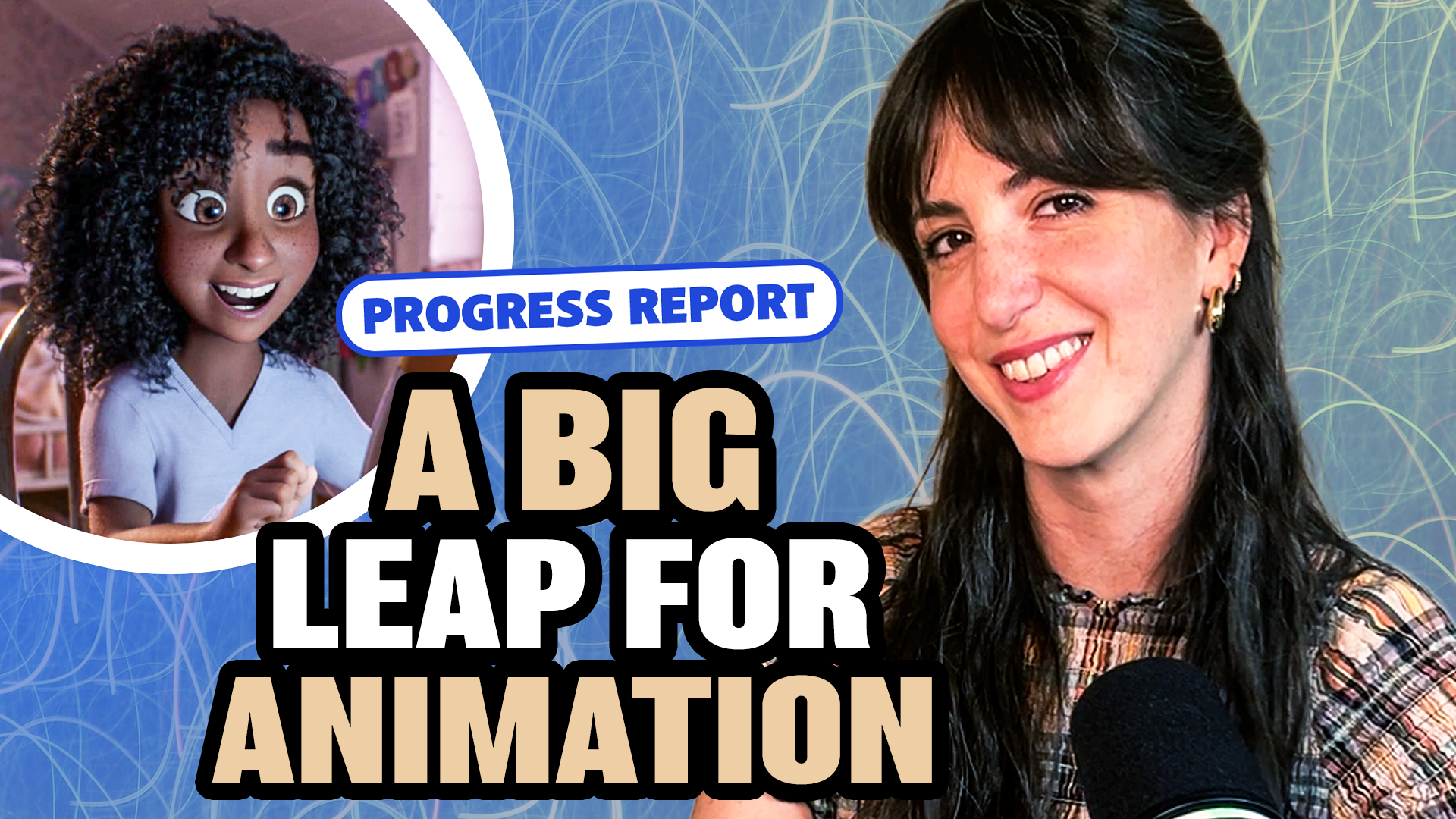
The 30-Year Animation Problem Pixar Just Solved
Featuring Emma Varvaloucas
This week’s progress report highlights a tiny detail in Toy Story 5 that is a game changer for representation and the future of animation. We’re also celebrating a major win for the LGBTQ community in Budapest that comes just in time for the end of Pride month. Plus, there is good news in the growing industry of accessible travel and an AI-created vaccine that could change how we protect ourselves from future pandemics.


Prefer to read? Check out the Audio Transcript
Although the transcription is largely accurate, in some cases it may be incomplete or inaccurate due to inaudible passages or transcription software errors.
Emma Varvaloucas: A tiny detail in an upcoming movie could make animated film and TV more diverse, and it’s been 30 years in the making. Also this week, accessible travel options are booming for people with disabilities. It looks like a Pride parade is returning to a country we’ve been talking a lot about recently. And a new medical breakthrough thanks to AI might change the way that we fight viruses.
Welcome to the What Could Go Right? Progress Report, where we dive into all the good news that you probably missed because it was buried under the barrage of bad news. Hey, if you’re new here, I’m Emma Varvaloucas, and I’m the executive director of The Progress Network. Let’s get into it.
First up, a leap forward for representation in animation. Hey, that rhymes.
About 30 years ago, a small computer graphic studio in Richmond, California was struggling. They’d been forced to sell off the company’s hardware division. More than half of its employees had been sacked, and its owner, a tech entrepreneur busy with other projects, was trying to find somebody to buy the company off of him.
Then came a film that would stun audiences and transform the industry forever: Toy Story, the world’s first CGI animated feature. You guessed it, the company was Pixar, and their Hollywood hit forced owner Steve Jobs—yes, that one—to reconsider his decision to sell. Since then, a lot has changed in the animation world, even as Pixar has continued to ride . . . and ride . . . and ride the Toy Story franchise.
The company is set to release the fifth installment of Toy Story this week. And putting aside the debate over whether Pixar is what it used to be, the studio does continue to reliably push industry boundaries.
Side note: in case you are getting sick of safe bets on recycled IP, Pixar also recently announced a new movie called Gato, which comes out in 2027 and will mark a complete reinvention of the studio’s signature visual style. The teaser for Gato has this beautiful, illustrated, almost watercolor look to it. It’s more textured.
And speaking of texture, that’s one of the key aspects of CG animation that has come a long way in 30 years. If you were a kid when the first Toy Story came out, you know that at the time it was visually groundbreaking.
But if you’ve seen it again any time recently, you might have noticed that it looks a bit dated. Take, for instance, hair. Hair is really hard to animate. To understand the problem, think of each individual strand as a tiny independent object that needs to interact naturally with the countless other strands on our head, not to mention with body movement, clothing, the elements and so on.
It also takes a ton of computing power. In 1995, Toy Story was an enormous technological leap forward, but if you Google what the human characters’ hair looks like, it suddenly makes a lot of sense why the story was centered around toys.
But if you go see the latest Toy Story, pay special attention to a new character, Blaze.
She’s a half Black, half Armenian eight-year-old with long, curly, extraordinarily detailed hair that has already brought the internet to tears. And I must say, it is nice to see the internet crying tears of joy rather than grown men complaining about what a mermaid is supposed to look like. The difficulty of animating hair is a big reason why Tangled, Disney’s 2010 retelling of Rapunzel, was at the time the most expensive animated film ever made. And Rapunzel’s hair was pretty darn straight.
Curly hair is another beast entirely. Pixar first tackled it in 2012’s Brave. The process of developing the fiery red curls of its spirited Scottish princess, Merida, took three to four years. It also included bringing real curly haired people into the studio so animators could study their hair close up.
The result was fantastic, but it required a lot of hand animation. Merida’s mop was made up of more than 1,500 individually sculpted curls. The cool thing is, as curly hair technology evolved, room opened up for people of color to take center stage. After Tangled, in 2016, Disney took on the waves of a Polynesian chieftain’s daughter, Moana, then the bouncy bob of a Colombian girl named Mirabel Madrigal in 2021’s Encanto. Moana was actually the first Disney movie to ever feature curly dark hair, and Encanto was the first with all 12 hair types, from the pin straight 1A to the dense coils of 4C. But- From Merida to Mirabel, the curls of these main characters have been relatively loose.
Blaze’s curls are the much tighter type four. They were made possible by a newly built system that uses a physics simulator to model hair’s natural movement. Rather than the hair itself being animated, just the character’s head is, and the hair responds. As Pixar VFX supervisor Thomas Jordan explained, “Each curve or curl knows about one another so that they can bounce and collide off of each other.”
This development also means that Pixar is setting themselves up to include a greater variety of high-quality hairstyles in the future, opening up avenues for storytelling, and perhaps finally reflecting the country’s—and the world’s—full diversity. Judging by the comments on the tech presentation video that was leaked online, plenty of curly-haired people are already quite moved by the thought of seeing their tresses represented with such sophistication on the big screen.
And by the way, they won’t be the only ones that will see their hair situation depicted for the first time in Pixar’s most famous franchise. Woody, I regret to announce, has a bald spot.
Before we get into our shorter stories, here are some numbers that will make you smile. 16%, that’s the decrease in deaths of despair in the US between 2021 and 2024. And if you don’t know what deaths of despair means, it encompasses deaths caused by suicide, drug and alcohol related overdoses, and alcohol related liver diseases. So a 16% decrease is a very good thing.
16.9 gigawatts of solar panels that Pakistan imported in 2025, effectively making it the world’s number one solar importer that year. That is wild. Seven in 10, the share of American cancer patients that now survive for at least five years, up from less than half in the 1970s. 260,000, the estimated number of premature deaths from pollution prevented by EV adoption in China. And one, number of fluorescent blue spiders recently discovered in an expedition to Angola, along with a bunch of other new species. The fun thing is scientists don’t know why this spider looks the way it does, but talk about a glow up, huh?
And here are our quick hits for today.
It’s boom times for accessible adventure travel as opportunities for people with disabilities expand. A report from the Open Doors organization, which is an accessible travel nonprofit, says that Americans with disabilities spent around $50 billion on travel in 2022 and 2023.
And we’re not just talking about lounging around on a beach with one of those super cool wheelchairs with the big inflatable wheels that work on the sand, although just to be very clear, those are super cool. A handful of disability focused travel companies are now finding innovative ways to make adventure travel more accessible.
People with disabilities can now book kayaking trips in Florida, hike a volcano in Maui, or surf in Costa Rica. They can go off-roading, mountain biking, white water rafting, paragliding, hike the Grand Canyon, traverse the Great Wall of China, and even climb giant trees. One of those companies, Wheel the World, said that in 2023, about 3,000 people booked trips through them. But in 2025, it was 9,000. They tripled bookings in just two years.
Next up, a Pride Month win for LGBTQ people living under oppressive regimes. Okay, I admit that it’s starting to seem like I am obsessed with Hungary and their totally average, not at all good looking new prime minister, but I kid you not, we have more good news out of the Paris of the East, and I promise after this, I’m gonna leave Hungary alone for a little while.
Hungarian police have approved Budapest’s Pride March this year. This is a major reversal of the country’s crackdown on LGBTQ rights that was going on when former Prime Minister Viktor Orbán was in charge. I feel like you need some kind of evil villain music cue. We’ll work on that.
Anyway, prosecutors in the country have also dropped charges against the mayor of Budapest, who went ahead with last year’s Pride march despite the fact that Orbán’s government had made it illegal. Talk about an ally. What had happened was Orbán’s party had effectively banned Pride events, mind you, not only through a law, but also with a constitutional amendment.
But Budapest held their parade anyway, and a record-breaking 200,000 people showed up. The mayor said, quote, “Neither freedom nor love can be banned in Budapest.” However, prosecutors didn’t see it the same way, and in early 2026 they brought charges against him for organizing the parade. Then in April, and this is right around the time that Orbán got voted out of office, the European Court of Justice issued a landmark ruling saying that Hungary’s crackdown on the LGBTQ community violates EU law, which prohibits discrimination based on sexual orientation.
And just last week, Hungarian prosecutors officially dropped the charges against Budapest’s mayor. Now, if you’re frantically pulling up Google Flights because this year’s Pride Parade is obviously going to be off the chain, you better hurry. It’s scheduled for June 27th.
And finally, two pieces of tech that everyone loves to hate are joining forces to create something that might just save us all.
Okay. Everyone take a deep breath because I’m about to say two words in the same sentence that get people really worked up: AI and vaccines. Okay, just, just wait, wait. Hear me out, okay? An AI-designed vaccine was just trialed in humans for the first time. I feel like that didn’t really help my case. Okay, I promise that is a really good thing.
If you’ve ever gotten a flu vaccine, you know that one of the frustrating parts is the idea that it might not work that year. Why is that? Well, viruses are extremely good at evolving, possibly with the sole intention of making vaccinologists pull out their hair. And every virus mutates, not just the flu.
Remember all the strain this and strain that discussion around COVID? So that’s why every flu season researchers have to line up all the variants like it’s the starting line of the Kentucky Derby and make their bets about who will be the front runners, or, I mean, the dominant strains the following year.
Sometimes that works out really well, and sometimes we aren’t as protected as we would like to be. This is where AI comes in, and it’s pretty cool. One reason scientists are so excited about the promise of AI in medicine is that it can evaluate extremely large data sets at a pace that is hard for the human mind to even comprehend.
A team at the University of Cambridge wanted to put that ability to use and see if AI could help them develop an umbrella vaccine for coronaviruses. What they did is feed AI a bunch of genetic codes from different coronaviruses gathered via a disease surveillance program, and it spit out a super antigen.
The idea is that it would work against the entire corona family, not just one strain or another, rendering the virus roulette researchers play every time a new strain comes to town unnecessary. If the super antigen works, we’d be prepped for anything coronavirus sends our way. Now, as the cast of Love Island UK would say, it’s early days.
The groundbreaking trial had only 39 participants, and they were just testing to see whether the vaccine was safe. So far, nobody looks like that Angolan fluorescent spider, so seems positive. Professor Jonathan Heeney, the lead researcher from the team at the University of Cambridge, had this to say about what this development means for the field: “This is a fundamental shift in how we prepare for pandemics.”
Next steps are a larger phase two trial that will see how robust of an immune response the vaccine can trigger. So it will be some time before this technology comes to a CVS near you.
And that’s all for this week’s Progress Report. I hope that these stories remind you that there’s so much good going on in the world, so it’s important to shift our focus away from all the bad.
If you got some value from this episode, send it to someone who could really use some positive news, like that “friend” you just made at Pride. And make sure to like and subscribe to our YouTube channel, follow us on your preferred podcast platform, and leave us a review. If you’d like even more of these stories delivered right to your inbox, sign up for our newsletter.
The link is in the description. Got a good news story we should cover next week? Let us know in the comments. Thanks for watching, and see you next week on the Progress Report.
LOAD MORE
Meet the Hosts

Emma Varvaloucas