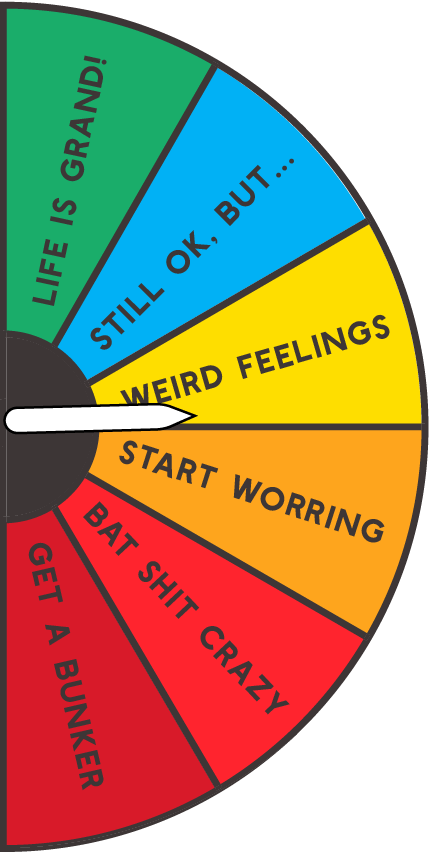
Volcanoes are erupting in The Philippines, but on-fire Australia received some welcome rain. The Iran war cries have been called off and The Donald’s military powers are about to be hamstrung by the Senate. Meanwhile, his impeachment trial is starting, and we’re all on Twitter for a front-row seat.

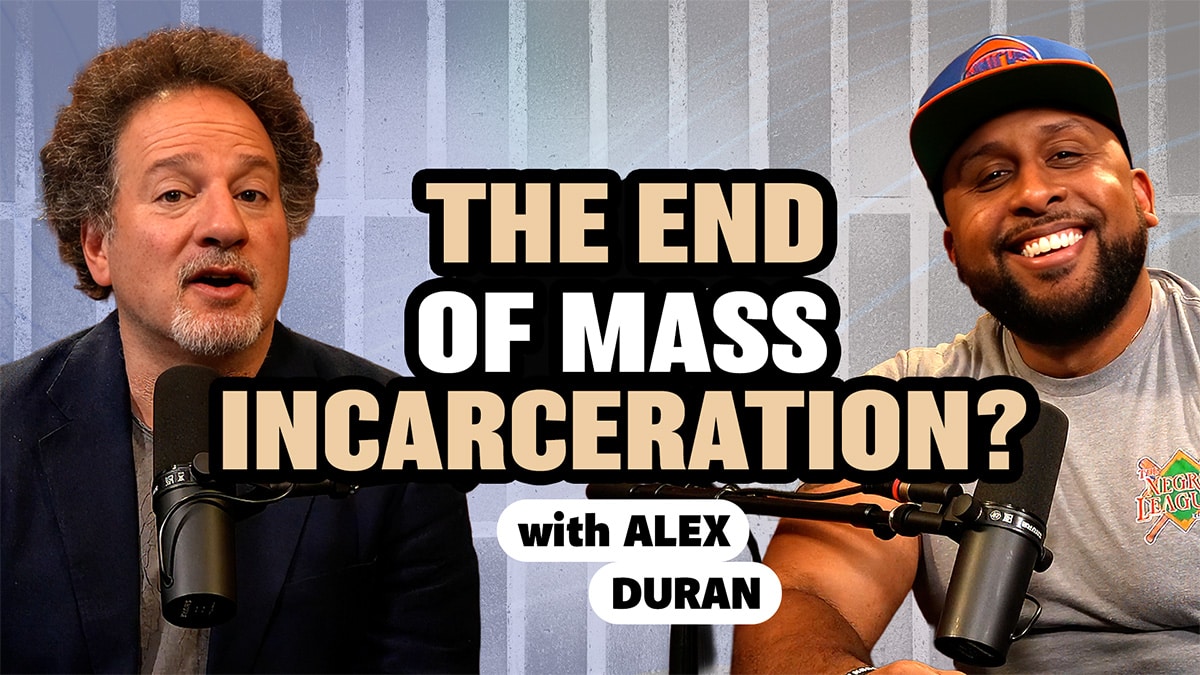
The Era of Mass Incarceration May Actually Be Ending
Featuring Alex Duran
Alex Duran spent 12 years in New York maximum security prisons before earning a liberal arts degree through the Bard College Prison Initiative. Today, he leads the criminal justice portfolio at Galaxy Gives. He joins host Zachary Karabell to discuss his surreal personal journey from Rikers Island to the world of high level philanthropy.


Prefer to read? Check out the Audio Transcript
Although the transcription is largely accurate, in some cases it may be incomplete or inaccurate due to inaudible passages or transcription software errors.
Zachary Karabell: [00:00:00] What could go right? I’m Zachary Karabell, the founder of The Progress Network, and this is What Could Go Right?, where we ask that question, given how much we ask what could go wrong. And if there is one area, at least in my lifetime, of American society that seems to have gone almost completely and totally wrong, it’s criminal justice and the mass incarceration of an inordinate number of Americans starting in the ‘70s, probably starting in the ‘60s, and continuing today, although as we’ll get into in this conversation, maybe not continuing quite as severely as [00:00:30] we think.
Yeah, I grew up in New York in the 1970s, where it was this moment of intense crime, white flight, as was true in a lot of urban areas in the United States, and that just seemed to be the backdrop. And that was followed by a real crackdown on crime over the next 20 and 30 years, on drugs, on, on behavior, on anything that was seen to endanger public safety.
And it’s true, in most American cities starting in the 1990s, crime started coming down and everybody started feeling safer. And against that backdrop, we also were [00:01:00] imprisoning millions of people, and more than any other industrialized society or, or contemporary society. So it can feel like our criminal justice system, our prison system, is unfixable, intractable.
It’s just a structural problem or just a structural reality. So it is, so it ever shall be. The reality is most of us have no transparency into what it’s like to be in a prison, and we’re gonna talk today to somebody who has one of the more unusual angles on this in that he has both been in the criminal justice system and now is [00:01:30] working to reform it at kind of the apex of philanthropic giving.
There’s a lot of people involved very passionately in improving the system, making it work, making us safer, and Alex Duran is one of the people at the forefront of that. So Alex Duran, it’s great to have you. Do this, uh, podcast with me. And we’re gonna start with either the ultimate curveball or the ultimate softball question, which is tell us about something that went unexpectedly right for you in your life.
Alex Duran: Definitely [00:02:00] curveball.
Zachary Karabell: Good curveball, bad curveball? Good
Alex Duran: curveball.
Zachary Karabell: You swing, you miss? Yeah.
Alex Duran: I’m gonna try to get a single at least.
Zachary Karabell: Okay, that’s fair.
Alex Duran: I served 12 years in prison in New York State in eight different maximum security facilities, and the thing that was really unexpected is that I got a world-class liberal arts education while in prison and completed it.
And you gotta understand, while I was in the classroom and I was learning how to think critically, write persuasively, communicate effectively, learning about anthropology, [00:02:30] philosophy, history, there were stabbings and cuttings going on right outside of the classroom. So dealing with the cacophony, just the chaos of prison life, many of us don’t get to make it to get a bachelor’s degree while in prison, and to me that was unexpected.
If you would’ve looked at my trajectory from when I was in Rikers Island being a gang leader and getting into fights over the phone or food or just crazy stuff, years later you would’ve not thought you would’ve [00:03:00] seen me debating some of the most elite universities in the United States.
Zachary Karabell: And you did this through the Bard Prison-
Alex Duran: Through the Bard College Prison Initiative, that’s correct.
Zachary Karabell: Right. Let’s back up for a minute. For people who don’t know and- Given the introduction, give the three-minute version of your life, your story.
Alex Duran: So I was born in Harlem, raised in the West Side of the Bronx in University Heights. That neighborhood gets its name from the fact that New York University had its main campus there for, like, eight decades until they pulled out in 1973, which actually devastated that community.
Uh, and I moved [00:03:30] there as a toddler, and this was the height of the crack epidemic in New York City, the years that we were regularly having over 1,800 homicides in New York City. It’s actually really crazy that we’re now, like, having less homicides than the city of Chicago. But, um, at the age of 20, I was arrested for a homicide.
I was part of a crew that got into a shootout. I wasn’t a shooter, but I was there. I knew something was gonna happen, and I got charged with [00:04:00] acting in concert. And because I didn’t testify against my codefendant, um, and I was living by streets principles at the time, I ended up getting the same time as he did, which is 14 years in prison, and I served a 12-year sentence.
And I came home at the age of Jesus Christ, 33 , um, in 2016, three weeks after the 2016 election. But while I was in prison, like I said, I got the opportunity to get a great education through the Bard College Prison Initiative. I was part of the debate team that beat Harvard. I wasn’t on the stage when we beat Harvard, but I was part of [00:04:30] the debate team.
That team who beat Harvard actually lost 11 times in the classroom to us- … and then went up to the stage and demolished Harvard, so it was really funny. But yeah, I spent three years on Rikers Island waiting for my case to be adjudicated, and then another nine years in eight different maximum security prisons and It’s kind of been a surreal journey.
A year before I came home, I met Darren Walker, who at the time in 2015 was leading the Ford Foundation, and he came in and did a, um, a site visit and sat down with me and a few other men [00:05:00] who were students of the Bard College President Initiative. And when Ford came in, I thought that they did research and development for cars.
I didn’t know they were, uh, this big. I mean,
Zachary Karabell: fair enough. It does come from the same money.
Alex Duran: Yeah. Like, well, it does come from the same money but- Yeah … but a- a- actually speaks to the, to the huge gulf that’s between institutions like Ford and the community that I grew up in the Bronx. Right. That we, we just never ha- have access- Right
to those kinds of institutions, and he loved the program. And one of the things that I explained to him is that this, even though we’re getting this fantastic liberal arts degree, it’s not gonna [00:05:30] be a panacea, that we were still gonna face many hurdles upon being released, and I asked him, would he hire formerly incarcerated people to work at Ford, which is exactly what he did and why I’m sitting in front of you today.
Zachary Karabell: And then how did you make your way from Ford to where you are now?
Alex Duran: After a year at Ford, I went to work for George Soros at the Open Society Foundations, and that’s really where I cut my teeth in grant making and strategy and really understanding philanthropy deeply. And then from there, Mike Novogratz was starting his [00:06:00] foundation, Galaxy Gives, which I lead the criminal justice portfolio at.
And he was really intentional, and I give him a lot of credit for this, of hiring someone with lived experience to lead the criminal justice portfolio. So I came there for just that, and it’s been incredible over the last, you know, five years, moved, like, over 100 million to work that has been focused on transforming our nation’s criminal justice system.
So it’s been really incredible.
Zachary Karabell: All right. So here’s a cultural whiplash, right, in your life. What’s that like? I mean, it, it, you [00:06:30] didn’t move to another country, but de facto, you, you just as well could have with a different language and a whole other framework. I mean, I grew up in New York City the same time you did, and I grew up on the Upper West Side in a one-bedroom apartment, so not in any way comparable, but at least I have some sense of, like, what New York was in the ‘70s and definitely made me question why everyone was getting so hysterical during COVID because I’m like, man, I don’t care how bad it is now.
I mean, it is so not as bad as it was then that it’s hard to even talk about it in the same universe. But you go from, like, this [00:07:00] background on the one hand to where you are now, kinda like from the ‘70s South Bronx to crypto billionaire philanthropic. Like, what’s that like?
Alex Duran: Yeah, I mean, it’s still surreal.
I actually never had-
Zachary Karabell: Not, not that you’re a crypto billionaire, just so everybody understands. Yeah.
Alex Duran: Don’t come hitting me up for money. You’ve been privileged enough to have a taste of, like, both New Yorks. Yeah. I didn’t have a taste of the other New York City until I came home from prison. I’m a Black Dominican kid from the Bronx who never ate sushi [00:07:30] before.
Like, it’s, it’s actually really incredible when you think about it. But I think all of that was made possible b- for the kind of education that I got while I was in prison and how much I pour into myself and in reading. I always say reading saved my life. And to do this work is the honor of my life, and the motivational fuel is my lived experience.
Zachary Karabell: Okay, but what about the question of, there’s the old cliché of like, “Well, people are people. Doesn’t matter what class, doesn’t matter what color, doesn’t matter what nationality.” Are they? Is that true?
Alex Duran: Say more about that.
Zachary Karabell: Well, people have [00:08:00] this belief that we’re all kind of the same, doesn’t matter about our backgrounds.
Environment shapes things, but people are people.
Alex Duran: Mm-hmm.
Zachary Karabell: So I’m just kind of asking you, having been in radically different environments with radically different backgrounds, is that actually true?
Alex Duran: I think this, the system that we live in is very racialized, and the potential that I had… Like, I remember being 18, 17, and in the street.
I remember when the, when the Iraq War started, and I was in front of the block, and I was picking up The New York Times and [00:08:30] reading about… I had this weird fascination with Dick Cheney. You know, I read about it. I was like, “Oh, man, he used to work at Halliburton, and they got a no-bid contract, and he used to be the vice president, and then…
Or he was the vice president. He used to be the secretary of defense and, um, chief of staff during Gerald Ford’s days.” And I was just like, “This guy’s the real gangster- … ‘cause he’s doing it in front of us.” And I remember my friends telling me like, “Dude, what are you talking about?” [00:09:00] Like, “Why are we having this conversation?”
And I was always interested in that, and there wasn’t a vehicle or an opportunity anywhere around to engage my curiosity, and I think that’s by design.
Zachary Karabell: I love that, by the way, that, you know, Dick Cheney’s the real gangster. Everybody else is just-
Alex Duran: I wrote a paper called Dick Cheney’s the Real Gangster later on, too.
Zachary Karabell: That’s good.
Alex Duran: Yeah.
Zachary Karabell: No, that’s a good one. I’m, I’m gonna steal that. ‘Cause you do wonder about these questions, nature, nurture, environment. We clearly live in a contemporary world, probably [00:09:30] since you and I have been alive, that when it comes to criminal justice, when it comes to the criminal justice system, has trended much more toward punishment and much less toward rehabilitation, right?
These things have oscillated over the past couple hundred years in both European and American culture, right? Is, is the point of prison to punish people for having done bad things? Which it is, no matter what, but is the, is the only point to punish, or is it to punish and then rehabilitate? Which is a weird phrase, right?
‘Cause it [00:10:00] assumes that you need rehabilitation, but we can get in… I mean, that’s a whole other question. We definitely are at a period of time where the, the cultural trend has been much more vengeful or much more punitive and much less about the, the other qualities. Because it assumes that everybody’s the same, you’re responsible for your actions, full stop.
I mean, is that accurate?
Alex Duran: One of the things that I find most striking, we’re approaching the 250-year anniversary of our country, is that when we decided to distinguish ourselves from not sending people to the gallows anymore, that’s when the [00:10:30] prison was introduced. The prison itself was the reform, right?
It came from rich philanthropist, right, most notably the Quakers, but others as well, and that was really developed really in Pennsylvania and New York. The Auburn prison model was the one that kinda took root in the East Coast and then the West, and then after slavery, in the South. And one of the things that I find most striking is that since the very beginning of this country, there have existed criminal justice reformers who have looked at that system and said, “Oh, my God, this [00:11:00] is a failure- Hmm
and we need to reform it.” Every single generation have said that this is a failure again, and again, and again, and again, up to now. And I think that the only difference now is that there’s a movement that are being led by those most directly impacted, like myself, who are calling for something radically different in a, in a system that’s actually abolishing that punitive model and creating systems that are focused on healing and real rehabilitation and things that are actually keeping us safe.
I mean, I co-produced a [00:11:30] film called The Alabama Solution.
Zachary Karabell: Which got nominated for an Academy Award.
Alex Duran: Well, thank you. Yes. And It was… I mean, Zach, I spent 12 years, just to put a fine point on what I’m about to say, spent 12 years in New York incarcerated, not one time did I see or, or hear about somebody being raped.
In Alabama, there are mass rapes happening. It is just brutal, and we were able to do this film really because of the brilliance and the bravery of men who are incarcerated who were sending us videos that they [00:12:00] were taking with smuggled cell phones that the, that the guards were selling to them. It’s the first film that has been completely done without the, um, the sanction of the authorities.
You know, if the audience has- haven’t watched it, I, I recommend that they do, ‘cause it, it gives a real picture of mass incarceration in the United States.
Zachary Karabell: So we were in a period of, I guess, some degree of reform. You talked about having worked for Soros, and one thing I try to remind people is the one great act of criminal justice reform, and maybe the only thing that came out of the [00:12:30] first Trump administration that was, like, bipartisan years of work was groups like Soros and Ford working with the Koch organizations- Yeah
to advocate for criminal justice reform at a federal level, but also n- nationally at state levels. That bill was signed in December of 2018 right before Christmas with almost no publicity because too many people were worried on all sides that they were gonna get attacked for it. The left was worried that it gave too much to the right in terms of enforcement of [00:13:00] penalties.
The right was worried they were gonna get attacked for being soft on crime. And then COVID happened People started freaking out about crime in cities and a sense of lawlessness and toothpaste behind plexiglass at CVS, and everybody suddenly is… I mean, they may not be chanting, “Lock them up,” but there’s a certain, a spree of lock me up.
Is there any sign that that wave is, has crested, is changing?
Alex Duran: Yeah, I mean, I think we were all quarantining when we saw George Floyd [00:13:30] be murdered on national TV, and I think that the call from the movement was right. The messaging might have not been perfect with a bumper sticker, but I think now we have shifted consciousness in this country.
Think a lot of Americans now think that, well, maybe we shouldn’t send the police to go solve someone being in a, in a mental health struggle, or maybe we shouldn’t send the police to a range of different things that we can actually [00:14:00] have civilians do. That was a result a- as the call for defunding the police came, like we should move resources to different stakeholders to actually address different social issues.
But the right and the fear-mongering has worked a- as a attention superconductor, and a lot of people were, were rightly afraid. And what you pointed out earlier, Zach, actually doesn’t make people safer for you to say, “No, there aren’t 2,000 homicides a year in New York City. There’s only, like, [00:14:30] 300. You’re much safer.”
And they’re like, “Yeah, but I just saw someone get pushed in the subway,” right? It, it… Data alone didn’t help make our case. And I think that folks from the movement were like, were leading with that rather than leading with, “I think, yeah, you’re right. You deserve to be safe, and this is how we’re gonna do it, ‘cause the police actually haven’t kept us safe since time immemorial.
They actually been the purveyors of violence.” We just needed to make the case to the American people. But I think you’ve written about this and [00:15:00] the optimism that’s in the air around criminal justice reform. Right now, we are at 1975 levels of arrest rates, which means that as the older cohort ages out of prison, they’re not gonna be replaced at the same rate.
And Sean Bushram at the University of Albany wrote this great paper called, um, Running Out of Inmates: The Approaching End of Mass Incarceration. I’ve read it five times already. I think it’s a paper that everybody should read, um, to update their analysis on this work. But the thing that [00:15:30] we still haven’t solved for is that as we have 400,000 people In our prisons, in our jails over the last 10 years, yet our budgets have increased tremendously.
And until we don’t come after those budgets, it’s gonna be even harder to reduce mass incarceration.
Zachary Karabell: So let me push you on something that a lot of people would find debatable and some people would find objectionable, the, the role of cracking down on crime in the 1980s and 1990s. You know, both in terms of urban [00:16:00] areas dealing with the crisis of the ‘70s by radically increasing arrest rates, leading, you know, in the ‘90s and the 2000s, certainly in New York and other cities, to what was called broken windows, right?
You, you address little crime, ‘cause little crime if it let, if you let it go, turnstile jumping in New York Subways or Chicago- Right … more stop and frisking More incarceration, right? So there are a lot of people say, “Well, the reason why crime went down is ‘cause more people who commit crimes got arrested.”
Alex Duran: Yeah. Look, we never fixed a broken window. What we w- [00:16:30] did was, was disappear people from those communities. I’m all about investing in communities. I get my… One of my spiritual practices to pick up trash, going around with a garbage grabber. You’d think I’m a weirdo, but I, I do that because I get my political philosophy from the Young Lords, who were the Puerto Rican counterpart of the Black Panther Party, and who led the Garbage Offensive Campaign in Harlem, because they thought they were gonna be revolutionaries.
Yeah. And then when they polled in the community, eight out of 10 residents were saying, “Actually, the number one problem is the garbage.” [00:17:00] And they were like, “Damn, I don’t really wanna pick up garbage, but if that’s the number one problem, I guess I gotta address it.” And they went to the sanitation department, which at the time was run by the mob, and they were giving them a hard time, like they didn’t really wanna address that problem.
And they took it upon themselves and burned a bunch of garbage in the middle of East Harlem. They called it a Garbage Offensive Campaign- Yeah … to get the city to improve garbage pickup services. I joke that if you give the police garbage grabbers instead of guns, that would do more to solve crimes more than [00:17:30] anything else, rather than have them standing on the corner playing with their phones.
I think we need to massively invest in communities. We took a stance of trying to solve every single social problem by sending the police, and the police didn’t even sign up to that. There’s tons of evidence that it shows that when you clean communities, when you plant trees, when there’s more lighting in blocks, that creates more safety.
We need to be investing in a sort of like whole of government approach rather than just on the police, ‘cause that actually has not kept us [00:18:00] safe. And we’ve seen with the deaths of so many young Black kids that that actually contributes to more violence.
Zachary Karabell: Yeah, I mean, I thought about this a lot, raising two privileged young white men in Manhattan, that if they did something dumb, dumb meaning like lit up a joint in front of a cop, which under no circumstances when weed was illegal would’ve been a good idea.
Alex Duran: Right.
Zachary Karabell: Maybe they would be arrested, maybe. Even that’s an if, given when there was enforcement or not in most communities. And that they would likely benefit [00:18:30] from a good lawyer, someone saying, “Hey, this person has no prior offenses.” All the, all the things that would’ve mitigated against that being a life-changing action, right?
And I certainly knew that if I was raising two Black kids three miles north, the consequences of like dumb teenage behavior of that ilk-
Alex Duran: Yeah …
Zachary Karabell: were likely gonna be severe if not life altering, and that that’s pure circumstance, right? On violent crime, I mean, I’m a little less malleable, right? In that all the circumstances in the world [00:19:00] that, that lead to that, I don’t know obviate the personal responsibility that comes with that.
Alex Duran: I mean, I’m big on individual agency and holding people accountable. But the system that we currently have, even here in New York Ci- in New York State, it’s not keeping people safe. If you’re perpetuating the same violence that you’re inflicting on people, then that’s not gonna lead to more safety. That’s just gonna lead to the continuation of violence.
When I come home, if I’m not healed, that’s why we have such a big recidivism rate, because people are going [00:19:30] back out into the communities spiritually broken and not having gotten the support necessary to heal from the trauma that led them to commit harm in the first place. The Europeans have figured out a way to actually check that.
Zachary Karabell: But isn’t, isn’t part of that an issue of how we enforce parole as well?
Alex Duran: Yeah. I mean, when I came home and I was going to my parole officer, I bought a condo in Stamford three years after I was out, and I told my parole officer in the Bronx, “Hey, I’m moving ‘cause I [00:20:00] bought this place.” She’s like, “You bought a place?”
It was nerve-wracking to her that… She asked me if I was selling drugs, if, like, how did I get the money for that? Like, she couldn’t even picture that ‘cause she’s just only used to seeing failure.
Zachary Karabell: Right.
Alex Duran: And she has a whole cabinet for how to deal with failure. She doesn’t know how to deal with success. Mm.
Our systems of parole just don’t even, they don’t even respond to success. It actually, uh, it’s almost as if they’re mad at you for being successful, and that’s part of the punitive aspects of our [00:20:30] criminal legal system.
Zachary Karabell: Yeah, so one more thing on that. You wrote in something that, uh, our, our system codifies abandonment as public safety.
What, what did you mean by that?
Alex Duran: Yeah, I mean, when you look at some of the communities that we come from, I carry a picture all around which I save of a desolate flower bed in the community that I grew up, and then one in the Upper East Side. Like, it’s night and day. The signs that communities are telegraphing to you that you don’t matter are there as soon as you come [00:21:00] out of your house.
If you see a dilapidated lot full, full of syringes and condoms when you come out of your home, and you see fentanyl syringes, what the build environment is telegraphing to you and what that does to you over time, that’s abandonment.
Zachary Karabell: Yeah.
Alex Duran: Right? And that same dynamic does not e-exist in every neighborhood in New York City, right?
You go- Or, or
Zachary Karabell: any other city, right? And we’re just using this ‘cause we happen to
Alex Duran: be here, so. Yeah. Yeah, yeah. It exists in predominantly Black and brown- Or poor white communities, [00:21:30] right? And until we change the way that we invest in prisons and police and investing in the kinds of things that we, that there’s so much, tons of evidence that keep us safe, like good healthcare, like investing in the built environment and affordable housing and parks and beautiful, c- clean communities, then it’s gonna be hard to end mass incarceration if we’re not invested in people and their success.
Zachary Karabell: So you work with a lot of people who have deep pockets and are philanthropically inclined [00:22:00] who want to do something about this issue.
Alex Duran: Yeah.
Zachary Karabell: This is a delicate question. I’m not asking you to, like, throw anyone under the bus, but in that world of people who have a lot of money and are inclined to do something about a problem that they identify as a, as a major social problem, what are their blind spots about the system?
Alex Duran: Yeah. That’s a great question. I mean, I’ve sat down with folks who literally have asked me, “What is mass incarceration again?” And you have to have a lot of grace to be like, “Well, let me explain to you,” you know? And, you know, I’ve come to learn that you’re [00:22:30] shaped by your world, right? I think that if there’s a better way to actually bring in folks who are wealthy, and a part of it is gaining political power and changing the tax bracket, for sure, um, and I think there’s, like, some movement towards that.
Like, why do we have a trillionaire? That’s insane. But also- I think it’s important not to create caricatures of people and really get to learn w- what motivates folks and why, what got them to where they, they’re at. [00:23:00] Like, I think we should be more curious about that.
Zachary Karabell: Although I do wonder on the trillionaire, I mean, the, the questions that we have about wealth accumulation at the very top are also framed by these questions, meaning if there was investment in communities, if everyone felt like they were sort of bought in and had a pathway to whatever constitutes the American dream of a home and working hard and having a good life and had stable healthcare and access to good education and [00:23:30] support systems for their young kids, I don’t know that anyone would particularly care about whether or not there were billionaires and trillionaires, because it would be somewhat incidental to us basically taking care of collective needs in a adequate, if not decent fashion, no?
I
Alex Duran: mean, 100%, but in that system, there would be less capacity for trillionaires ‘cause they would be paying their fair share.
Zachary Karabell: Maybe, or maybe there would be even more capacity because ev- so many more people w- would be actively engaged in the system [00:24:00] where they were able to pursue their dreams, passions, hobbies, you name it, and then the pie would get even bigger.
I mean, you could… I’m just saying, I could forecast a, a world where these issues would be non-issues because the underlying issues that we’re all particularly agitated by would be taken care of collectively. I don’t- Yeah … I, I am, I’m 100% sure that if you, like, took all the money from Elon Musk and Mark Zuckerberg, that unless you change some of the basic frameworks you’re talking about, you’d still be in the same place.
No, 100%. You’d spend more money, you’d waste more money.
Alex Duran: And there are some people who are, [00:24:30] like, I work for one of the most wealthiest families on earth, and they would agree that we actually, that they need to be paying more.
Zachary Karabell: Right.
Alex Duran: And their class needs to be paying more to have more fairness at, at, at a base level.
Zachary Karabell: So on prisons themselves, like, what do prisons get right? They don’t get everything wrong, do they?
Alex Duran: Well, I think I took, um, our board up to Maine, where the head of the Department of Corrections there, this guy named Randy Liberty-
Zachary Karabell: That’s… You can’t make that up.
Alex Duran: Yeah, yeah. That’s, [00:25:00] that’s crazy. His dad used to be incarcerated at the same prison, Maine State Prison, where he was the warden and who’s, he’s now overseeing all of the prisons I guess it was an
Zachary Karabell: aspirational name for the father and a, and a- I, I don’t know.
I don’t know … I don’t know, a faded name for the son. Did he go by Warden Liberty?
Alex Duran: Yes.
Zachary Karabell: Oh. I mean, seriously, man.
Alex Duran: So I, I go up there to, to Maine and I meet people doing life in prison, working remotely, making $150,000 a year, [00:25:30] paying mortgages, sending money to their families. You have a computer in your cell.
That just showed me that we can make different decisions. And Randy actually, who, you know, used to be a sheriff back in the day, he tells you this tough on crime stuff does not work.
Zachary Karabell: Mm.
Alex Duran: That, that actually is not keeping us safe. And I was here when it used to be really bad in the ‘90s, and I came in with my team, made a set of decisions that now it’s much safer.
So there are places in this country that are [00:26:00] making different decisions. And you have, you, you have the TRUE Unit in Connecticut, you have Little Scandinavia in Pennsylvania. You have correctional leaders m- with their, their team that are making different choices. So there are examples that we can point to.
My question is, why is that not the default? Right. Why is that, why you’re not coming in and rather than having to wait five, 10, 15 years to get into the honor block, why are you not coming in and going into the honor block in the first place? And if you mess up, then you can [00:26:30] go to the unit where that’s violent or whatever.
Um, but that’s how it is now. And but I, I, I think there’s a crop of, of, of leaders who are trying to make different decisions. And they will actually tell you it is harder to move the needle because they’re not the governor. They don’t have the purse and, and, and they’re also battling the narrative. I have met with wardens all across this nation, and officers really, right?
That’s why I’m big on not demonizing [00:27:00] anybody, that have told me, “I can point to you Dozens of people who I, if I had the power, I would release right now, ‘cause I know they’re not coming back.
Zachary Karabell: Right.
Alex Duran: We’re incarcerating people for so long when we don’t really need to. You go to any prison in the United States, and you go to certain cell blocks, and you speak to officers, and they will tell you themselves that we shouldn’t be incarcerating people so much.
Zachary Karabell: Hmm.
Alex Duran: And if we were to care about creating a system that is actually keeping people safe, we would care about [00:27:30] the wellness of the officers themselves. They have one of the lowest life expectancy rates in the country.
Zachary Karabell: Wow.
Alex Duran: They’re committing suicide at a har- at a high rate. A lot of people don’t even want those jobs.
They’re suffering from alcoholism.
Zachary Karabell: And by officers, you mean corrections officers.
Alex Duran: Correct. And doing this film in Alabama and talking to so many officers who are in the film too, they will tell you, like, “We’re dealing with vicarious trauma and bringing that home.” So we’re actually not only keeping the incarcerated people safe, but we’re not keeping the officers [00:28:00] safe as well.
Zachary Karabell: Does that argument find purchase politically ever?
Alex Duran: I think with some people. I, I haven’t seen too many people actually caring about the people who work there, who are actually suffering as well.
Zachary Karabell: So you’ve dealt with a lot of people. You had a lot of people you were in prison with. You interact with a lot of inmates now.
What s- separates people who, I guess, have your pathway from people who get really stuck in the system? And that’s not about whether it’s, it’s a ju- injust or just, right? It’s, “Here’s a reality I’m, I’m dealt with or I’m faced with.” What has [00:28:30] distinguished… Like, what has led to people being able to move through that system, I suppose, constructively versus destructively?
Alex Duran: It’s a, that’s a really hard question. I’ve could’ve shoved somebody the wrong way in a hallway, and it could’ve completely derailed my journey, and probably I wouldn’t be sitting here with you. There were, like, just so many twists and turns to your incarceration. That’s why when you asked me the first question, like, that was really unexpected that I would get a bachelor’s degree in liberal arts while I was in prison [00:29:00] because just the uncertainness of prison.
I felt the most safest when my gate was locked, and I had a book in my hand.
Zachary Karabell: Hmm.
Alex Duran: And I knew that until the next morning, at least I was safe.
Zachary Karabell: Hmm. ‘
Alex Duran: Cause you never know when you’re coming out of your cell what’s gonna happen. I made it out of there in spite of everything that was happening.
Zachary Karabell: Hmm.
Alex Duran: And it was, like, organizations like the Ford Foundations and the Open Society Foundations that funded the Bard College Prison Initiative that I’m here today for.
Zachary Karabell: Who does this well in the world? And I don’t mean 20 [00:29:30] million somewhat ethnically homogenous Scandinavians who have their own approach toward nobody gets more than 25 years. They have a more redemptive system. Who in a complicated, multiracial, multiethnic democracy gets this at all right. Meaning, what do you do about crime?
What do you do about public safety issues and people who you perceive rightly or wrongly to be violating it? I mean, yes, the United States locks up people. That is clear. Yeah. It is also clear, United States has always been a somewhat more violent society.
Alex Duran: Yeah. [00:30:00]
Zachary Karabell: Not just white on Black, you know, white on white- Yeah.
Correct … Black on Black. I mean, we have a legacy of violence in the United States.
Alex Duran: Just to put a finer point on your question, ‘cause I, I think that a lot of people mistakenly think that Black people have a monopoly on incarceration or on being killed by the police. That is not true. Disproportionately, yes, uh, Black people, as a share of the population, they do go into prison, they do get killed by the police at a larger rate, but white people are the majority of people incarcerated.
Yeah. White people make up the largest share of people who get killed by the police. So this is something that is [00:30:30] impacting us all, and as a matter of fact, most of the gains that we’ve made have been in progressive cities because we’ve elected progressive prosecutors, we passed… We don’t have stop and frisk anymore in New York City, for example, and where there’s less change are in conservative Republican-dominated areas where the majority are white, right?
Midsize cities and counties, and that’s why the majority of people, like say New York State, for example, are not coming from New York [00:31:00] City- Mm … are coming from upstate-
Zachary Karabell: Mm …
Alex Duran: areas, and that’s why the racial gap has closed, but much more white people are going into prison. And if Republicans care about DEI, they should do something about that.
Zachary Karabell: But again, who gets this right? Other countries. Anybody?
Alex Duran: Brazil has this program that for every book that you read and you write a report on, they’ll decrease a certain number of days. I think that’s beautiful. I don’t know of too many prison systems outside of Western [00:31:30] Europe that are, that are doing things right.
But I think there, there’s pockets. I mean, my family immigrated from the Dominican Republic, and when I go there, I hear of folks having cell phones, and if you have money, you can have prostitutes come to your, you know. So depending on how you’re evaluating Depending on how you’re evaluating things,
Zachary Karabell: right?
Yeah. So- That’s
Alex Duran: it, yeah. You have to-
Zachary Karabell: I’m not sure that’s gonna apply as a reform thing in the United States. Just saying. I
Alex Duran: mean, New York has conjugal visits- Yes … so it’s not that bad, right? But yeah, no, the, there’s not too many other systems that you could point out that [00:32:00] are, quote-unquote, more humane.
Zachary Karabell: Hm. I mean, ‘cause there is a human issue of, like, crime and punishment, right?
This is part of how we grapple… And, and safety. I mean, one of the things that makes autocratic societies at times appealing is that people believe, rightly or wrongly, that safety is the reward and the price is autocracy. And look, I grew up in a period of time, as did you, where people were kind of despairing of the American experiment because in the absence of what they felt was safety, none of it mattered, right?
[00:32:30] Most people will give away an unbelievable lot and, and pay a lot for safety.
Alex Duran: Yeah.
Zachary Karabell: Purely, right?
Alex Duran: I think that’s right. Like I said, my parents immigrated from the Dominican Republic, and there was a dictatorship in the Dominican Republic- Trujillo … um, Rafael Leonidas Trujillo, like, for three decades, right?
He was, uh, assassinated, um, I believe in 1961. To this day, there are people, they’re usually elders, but there are some young folks who would just wax [00:33:00] poetically and say, “In the times of Trujillo, you could’ve slept with a $100 bill on your forehead- Yeah … and nobody would steal it.”
Zachary Karabell: Yeah.
Alex Duran: Like, this guy was, like, going into your house and raping your daughter.
Are you serious? Yeah. But I think that to your point, people give up a whole lot just to feel modicum of safety
Zachary Karabell: Yeah, you can, you can be in a public square in Beijing, leave your computer, your wallet and your keys, come back an hour later and your computer, your wallet and your keys are still gonna be there because between the amount of [00:33:30] surveillance cameras and the legitimate fear of, like, what happens if you get caught taking those- Getting
Alex Duran: your hand chopped off
Zachary Karabell: Well, they won’t do that now, but they’ll just put you away.
Alex Duran: Yeah.
Zachary Karabell: It’s incredibly safe, but safety comes with a price.
Alex Duran: Right.
Zachary Karabell: All right, so we have all this evidence, whether it’s the Bard Prison College Program, whether it’s giving people more access to technology, more privileges, yes, contingent on behavior, but still jobs, an environment that encourages both education and [00:34:00] vocation.
If we know all this and it’s evident that this leads to better post-prison outcomes, less recidivism, why don’t we just do this more?
Alex Duran: Why didn’t we just end slavery in 1861?
Zachary Karabell: Okay, come on. That’s not a… Okay, ‘cause there was an economic system that was embedded for generations where you couldn’t uncouple that easily.
Wait a minute, we’re not… Okay.
Alex Duran: Well, I think
Zachary Karabell: that the same- I appreciate the historical analogy … premise
Alex Duran: holds.
Zachary Karabell: Yeah.
Alex Duran: Take for instance, the state of Alabama making $450 million [00:34:30] a year of incarcerated labor. One of the most immoral stats That I discover in, in, in working on The Alabama Solution documentary is that those who are deemed most safest to be released get released at a lesser rate than the next rung of the security ladder.
Zachary Karabell: Huh.
Alex Duran: Because they’re trying to hold your labor for as long as possible.
Zachary Karabell: Okay, that’s a fair point that I, I, I stand set corrected. Is that true in every state?
Alex Duran: Look, is… [00:35:00] Well, it, it operates differently in every state. Take New York, for example. Incarcerated people in New York State make the furniture for every state government.
That’s like the SUNY system, et cetera, license plates, you name it. There are a lot of benefits to incarcerating so many people for corporations. Securus, Tom Gores, the owner of the Detroit Pistons, is making a lot of money charging families for a simple phone [00:35:30] call. There’s a lot of money to be made here, and it might sound crazy to say that we still have a system of slavery, but we actually do.
Just look at our 13th Amendment. It’s literally codified there. So it’s not hyperbole when I say that we still have a system of slavery, and that’s the thing that we’re trying to abolish right now.
Zachary Karabell: But as you’ve talked about, it’s not a racialized system. It’s a, it’s an inmate system.
Alex Duran: Yeah, I mean, we had indentured servitude at one point, and- True
this is impacting poor whites as well.
Zachary Karabell: So I guess my final [00:36:00] questions, thoughts are how are you feeling now? I mean, the thing you, you mentioned before of maybe everything is changing and people don’t realize it, right? Population is plateauing. There are gonna be fewer young people- Demographics, yeah … less immigration.
I mean, I love the title of that paper you referenced of, you know, running out of prisoners, which somewhat means that we’re funding and fighting and assuming this future that looks like the past-
Alex Duran: Right …
Zachary Karabell: when maybe we’re gonna turn around and realize that it doesn’t look like the past at all. [00:36:30] Because one thing that’s true in every society, young people commit more violent crimes.
They just do, and young men do, everywhere in the world. Every society in the world has always had to deal with what do you do about young men? Do you, do you put them in the army? Do you put them to work?
Alex Duran: They’re not committing as much violence now, though.
Zachary Karabell: No, I just mean- Yeah,
Alex Duran: yeah. In general, yes.
Zachary Karabell: Like for the Middle East for years, what do we do about the Shabab, the young men?
Just a thing, ‘cause, like, they’ve got all this energy. They’re not married. They, they may not yet have a job. What do you do with their energy? If there are gonna be a lot fewer young people and a lot fewer people in general, maybe a lot of these issues [00:37:00] self-improve, or is that too optimistic?
Alex Duran: I don’t think-
Zachary Karabell: And you can look for another career.
Alex Duran: Yeah, uh, I mean, I, I wanna go off to the sunset and maybe write a memoir or, or something. I don’t know. Yes, we’re We were making progress, but demographics is not destiny. Like, these systems are not gonna shrink on their own. Hmm. And we still haven’t definitively won the narrative around justice. And also, it, it, it extends to the immigration space as well, the way that we treat our [00:37:30] people in immigrant detention centers.
There’s a huge fight happening right now in that space, and I think that the lessons that we learn in the criminal justice reform space could be applied in closing detention camps as well. We’re gonna be looking back at this era in history and, and be ashamed of ourselves and what happens in this moment.
It’s very hard to see yourself in, in a moment in history, but, like, just a couple of weeks ago, I never thought the Knicks was gonna win the championship and-
Zachary Karabell: So there you go, man. Everything changes- … in a heartbeat, on a [00:38:00] dime. And I would say we’re gonna look back at this period and realize we built a lot of empty detention centers.
Alex Duran: 100%.
Zachary Karabell: Um- 100% … that made a bunch of contractors wealthy and weren’t used.
Alex Duran: Yeah.
Zachary Karabell: Which is also gonna be a weird way to look back on it. Like, separate from whether these were good or bad environments, they’re essentially gonna be empty environments. Alex, thank you so much- Thank you for having me … um, for the work you do at Galaxy Gives.
People can look that up, can look up Alex Duran. See if you wanna get involved. That’s my one, one plug for Alex right now, but, uh, you have an amazing story, and you’re living an incredible life.
Alex Duran: Thank you, [00:38:30] Zach. Appreciate you having me on the show.
Zachary Karabell: You know, that is, uh, in the best of ways, a conversation that speaks for itself and should.
You know, this is, as I said at the beginning, one of these issues that is deeply enmeshed in American society that we just don’t pay enough attention to. We, we have at moments paid attention to it, but as a general rule, I think a lot of people just feel like this is one of these things. There’s not much to be done about it, and it is, I, I find very heartening to see that there are a lot of people who have [00:39:00] made this their issue, um, out of a really passionate commitment to creating a better society for all of us.
I wanna thank, uh, Kaleidoscope for producing. I wanna thank my s- team at the Progress Network for all the support and the weekly work they do. Please sign up for our newsletter on Substack or the Edgy Optimist or both. They are both free. Uh, I will be back with you next week, and thank you so much for your time.
LOAD MORE
Meet the Hosts
Zachary Karabell