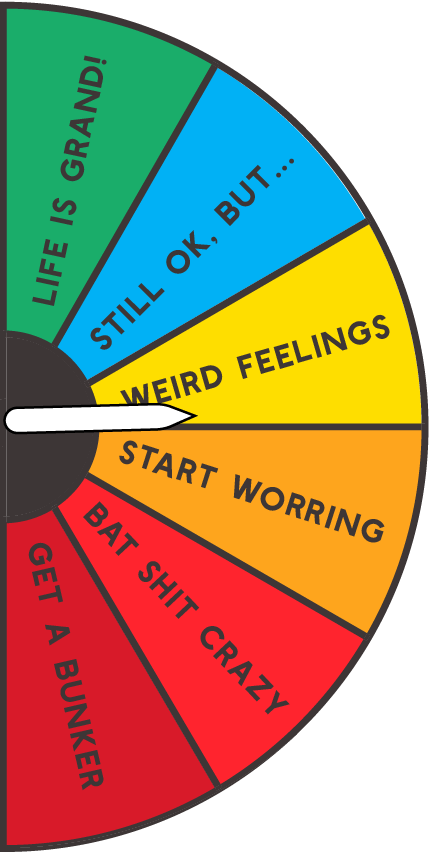
Volcanoes are erupting in The Philippines, but on-fire Australia received some welcome rain. The Iran war cries have been called off and The Donald’s military powers are about to be hamstrung by the Senate. Meanwhile, his impeachment trial is starting, and we’re all on Twitter for a front-row seat.

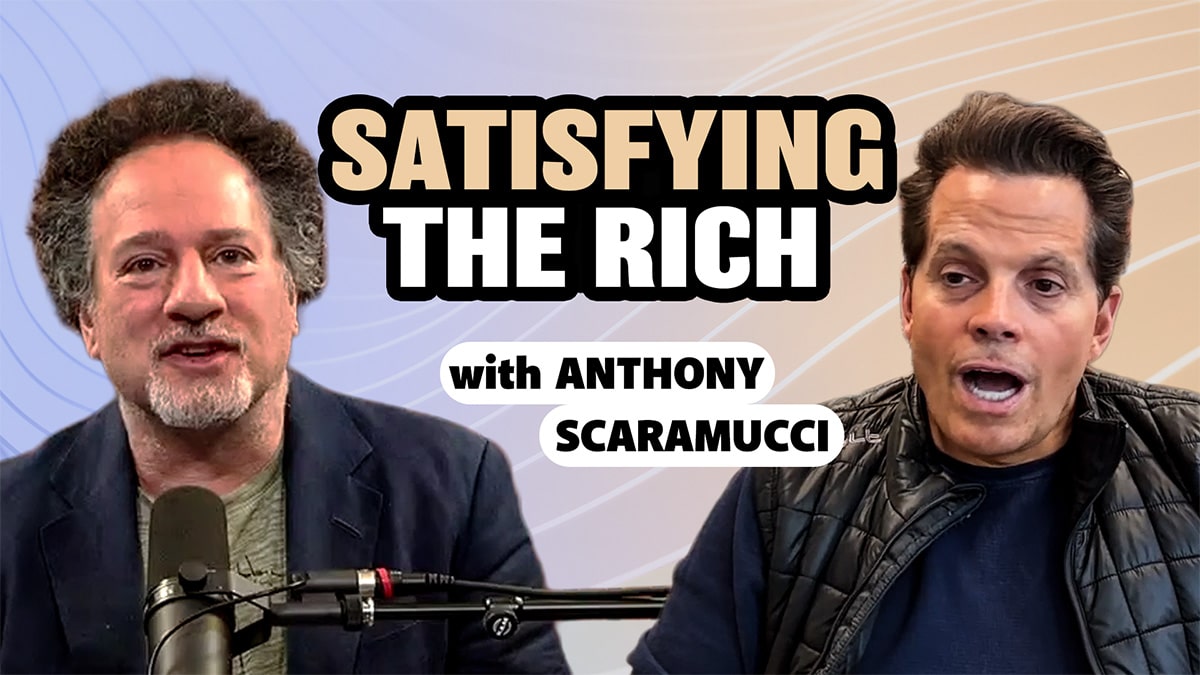
Surviving the 80-Year Cycle of American Crises
Featuring Anthony Scaramucci
Famous for his turbulent eleven-day stint in the Trump White House, Anthony Scaramucci joins Zachary to ask the big questions: Are we just trapped in a predictable 80-year cycle of national crisis? And if so, how do we push through the chaos to reach an era of renewal? Moving past the usual partisan talking points, the two discuss the future of the Republican party, the heavily debated utility of cryptocurrency, and the responsibility of the wealthy.


Prefer to read? Check out the Audio Transcript
Zachary Karabell: What could go right? I’m Zachary Karabell, the founder of The Progress Network, and today we’re going to talk to one of my favorite humans, for whom a lot has gone wrong and who has continued to look at what could go right. That is Anthony Scaramucci, whose recent fame was spending eleven days as communications director for the first Trump administration, a role he has both talked about a lot and come to regret. Not regret in the sense that he’s questioning his sanity, but regret in the sense that he is no longer on the same team.
He is a fascinating individual. He is deeply engaged in the warp and woof of our political life, and he’s somebody who’s thought about what does it mean to be an engaged citizen. What does it mean to have ambitions? What does it mean to fail, given that he has both succeeded well beyond what most people dream of, and failed far more than most people would like?
And he’s thought about crypto, which is and continues to be a controversial thing, and controversial in part because of its current indelible association with Trumplandia.
He has thought about what does it mean to be an engaged citizen without a party, given that he’s a lifelong Republican who no longer associates with the Republican Party as it is, and what do you do about that? And how can we heal our wounds as a country? Wounds that are real, but wounds that he and I and others keep saying are deep and are far deeper than this moment. They transcend our current political malaise and go back really till our founding. And what do we do about that?
These are important questions, and it’s really a joy to be able to have this conversation with someone who kind of lives it. Whether you like Scaramucci or not — and he is a firebrand in his own way — he is somebody who really is alive to these questions, and I’m looking forward to having them with him.
All right, Anthony, I’ve known you for 17 years, give or take a day or two. Your joke when we met was that you were a hairbreadth away from SkyBridge going under, and then it didn’t. And I feel like over the past 17 years, your kind of death-defying trapeze act of things almost going wrong and then going right, I was kind of amused, you’re doing this podcast with Novogratz, who I also know, and I feel like the two of you have parallel lives in things almost go wrong and then they go spectacularly right.
Anthony Scaramucci: He’s a lot smarter than me, which is why the podcast is so good. But you’re going to make a point, Zach. Go ahead.
Zachary Karabell: It’s more of a question. People come to you and they’re like, oh man, tell me what I should be doing with my life, or tell me about the world. It seems to me like career advice of, almost fail spectacularly before you succeed spectacularly. Would you give that career advice?
Anthony Scaramucci: I think the problem for me is that I’m a risk-taker. And the problem for me is that I wanted three things out of my career, and none of them were coming without any potential trapdoors.
I wanted some political engagement. Well, guess what happens in politics? You get your ass kicked. I didn’t think I was going to get my ass kicked after 11 days, but you do get your ass kicked. Most people get fired from politics or walk out of politics, whether it’s the Tony Blairs of the world or you pick the people.
The second thing I wanted in my career, I wanted my own business on Wall Street, but I have no legacy. My parents were blue collar. So how do you do that? And then how do you survive the risk-taking associated with that?
And then the third thing, which is how we sort of met, is I always wanted to be in a convening space. So I started the SALT conference 17 years ago, which is how we met, frankly, in 2009.
Those three things came with risk and came with reward, no question. But you get the doctrine of unexpected consequences. You, better than anybody, know that anything you think cannot happen on Wall Street, happens on Wall Street, right?
Zachary Karabell: Yeah.
Anthony Scaramucci: Or, as Lloyd Blankfein said to me, I interviewed him for his new book — “The 1,00-year flood happens every five years on Wall Street.”
So yeah, I have failed upward. And I’m still failing, and I’m still a work in progress. But at least I’m failing humbly. At least I’m smart enough to know that I’m not that smart.
Zachary Karabell: You know, it’s funny. One of the pretexts of this whole podcast, and kind of the work that I’m trying to do about, maybe we are, in Wall Street terms, over-indexing for Armageddon and under-indexing for utopia, is that not just humility about one’s own career, but humility about what we think we know, particularly about the future, which none of us know, right?
Everybody’s guesstimating about the future, which has endless pathways, and we’re all trying to figure out which one it has. So I kind of salute the humility of, take a deep breath. None of us are that special.
Anthony Scaramucci: Some of it’s luck, Zach. Listen, I made an Anthropic investment. I didn’t know if Anthropic was going to win or not. I didn’t know if it had the right — you know, again, I’m not bragging. By the way, I’ve lost, I have zeros. I have a phone book of zeros. But I was in the right place at the right time. I made an Anthropic investment. It went 60 to 1. Okay, so am I a genius because I made the Anthropic investment? No. Right place, right time, series of investments, many of which failed. I have one nugget that did okay. My point is, you have to stay in the game. I think the biggest message, someone came to see me, and I said, wow, if I got fired from the White House and left the field on the day that I got fired, different career arc. If I had this setback in the 2008 financial crisis, and somebody came into — not this office, because I was upstairs on 16 — but a similar office to this in March of 2009, and Zach Karabell, you will remember the Dow was at, like, 6,000? Some crazy number. The S&P was at 666. I remember that because that was like the movie The Omen. It was horrific. And a former Goldman Sachs colleague of mine said I should shut the business down. By the way, that was really good advice. He was really smart, and he was a really good guy, and he didn’t mean me poorly. He said, it’s time to get out of the business. And I started the SALT conference and bought Citibank’s business, their fund of funds, and merged it into the business. It made all the difference, but it was a good idea to shut the business down, but I didn’t. So my whole thing with people is, get up, dust yourself off. Look, I’ve got some crumbs on me from lunch. You see that? There was a crumb there.
Zachary Karabell: Yeah, I see it.
Anthony Scaramucci: You dust it off, and you move on.
Zachary Karabell: There have been three major financial crises in our professional lifetime: 2000, 2008–2009 and 2020. And other than 2008–2009, those didn’t have the same kind of shockwaves of a generation. You’re totally right about the Wall Street thing. Brilliant people do badly, stupid people do well. It’s one of the only professions I’ve ever encountered where you can get the big picture right and get the investing thesis completely wrong, and you can get the investing completely right and the big picture completely wrong, which is kind of a mindfuck.
But I wonder, in the financial world and the political world, we are sort of primed for things to go wrong. The entire financial world is predicated — I mean, yeah, you could say CNBC, which we used to both be on, tends to be more bullish because it sells. But in general, the financial world is always looking for the next shoe to drop. And I think we do the same thing in the political world.
I wonder, for you, you are legitimately, based on your own experience and your own read, negative about Trump. But you’re not a particularly negative person, right? You don’t sit there going, oh my God, we’re on the precipice of some sort of cultural implosion. How do you square that?
Anthony Scaramucci: No, no, no. Listen, he represents something that’s always been in the country. There’s been a feeling of nativism. There’s a feeling of isolationism. There’s some levels of racism and white supremacy.
There’s a story that could have gotten told — you’ve talked about arcs of history and different timelines. There’s a story that could have been told in the 1930s. Charles Lindbergh was the progenitor of the first America First movement. Had that movement caught political fire at that time, you could have had a very different outcome to the Second World War.
Zachary Karabell: I am so glad you said that, by the way. He is an iteration of currents that have been there. He’s just a very pure distillation of them in one person.
Anthony Scaramucci: Yes, but he’s also a manifestation of an establishment crisis that happened at the end of the Berlin Wall.
So my thesis — hear me out for a second — the Berlin Wall comes down. We’ve beaten the Soviets. We now have this “end of history,” Francis Fukuyama said. But of course history didn’t end, and we started making decisions based on democratic-style capitalism is going to rule the Earth.
So we let the Chinese into the World Trade Organization, thinking that would help them but would also modify their system. That didn’t happen. We then went to war in the Middle East, which we’re still fighting, frankly, 25 years of war. We did that without tax increases, the first time we went to war without a tax increase in U.S. history.
And then, since you mentioned the financial crisis, we had a bailout concomitant with that crisis. Most of that money went to the banks, if not all of the money — banks and insurance companies. None of it went to the little guy. So you had Occupy Wall Street and the Tea Party movement. And frankly, you’ve got a lot of people in this country who are very angry with the establishment, very angry with the social contract. And so where a Charles Lindbergh would have represented them in the 1930s, there just wasn’t enough of them.
You’ve now gotten to the 45, 49 percent threshold number where there’s now enough people that feel disaffected. And by the way, I say this about Trump, he saw this, we have to accept that he has good political instincts. He saw that the people I grew up with, who were economically aspirational, 35 short years later, that very same group of people were economically “desperational.” So that’s happened in life. We have to accept it, and now it’s up to us to figure out whether or not we want to fix it. Because if we don’t fix it, what’s going to happen is, you’ll be fine, I’ll be fine, we’ll just be in these little barbed-wire security-compound McMansions while our fellow neighbors are suffering, and I think that would be a horrific state to be in.
I’m watching a lot of feeling-less, apathetic billionaires march their way to a trillion dollars, and they’ve lost sight of the noblesse oblige, or they’ve lost sight of the savoir faire necessary to help their fellow current travelers on Earth.
We can fix it, and we can make it better. And I think Trump is providing us, frankly, an opportunity to do that.
So, you’re a historian, so let me posit something to you. This country is very young. It’s only 250 years old. It’s based on an idea. There’s not a lineage. It’s not Russia. It’s not France. It’s not the United Kingdom or Britain. It’s not Italy. This is an idea, and we all came here. It’s a melting pot of people. And so we don’t have the generational, cultural memory. So every 80 years we go into the tar pits. We had a revolution. Eighty years later, Civil War. Eighty years later, the Great Depression. The Great Depression led to the Second World War. Eighty years out from the Second World War, we’re in the pits again.
So now it’s up to us. Are we going to pull ourselves out of this and be the neurally plastic country that we’ve been known to be? We’ve had other crises, in my opinion, that are worse than this one, and we pulled ourselves out of those. So now the question is: can we pull ourselves out of this one? And I believe that we can.
Zachary Karabell: And that is the really, we’re beginning to face this question of, is this sort of Trump 10-year period — and it’ll be 12 years by the time ‘28 rolls around — is it an interregnum? Is it a new normal? Where are we going to go from here? It’s not clear.
Anthony Scaramucci: Yeah.
Zachary Karabell: It is certainly clear that there is nobody who’s going to inherit Trump as Trump, right? He is a unique figure.
Anthony Scaramucci: The cult of personality will die, or will be extinguished along with his political relevancy. Will there be populist elements that stay with the next wave of the movement? We’ll have to wait and see. But I would submit to you, this is the great irony, is that a 60-year-old Joe Biden would have had his shit together better. Because if you look at the Biden policies, they were actually trying to heal that divide in the country between the haves and the have-nots. Unfortunately, he was sundowning. It became self-evident. So he dropped out of the race, and it cleared the way.
Remember, Trump’s political survival is directly tied to the misfiring of two Democratic political candidates: Hillary Clinton, unfortunately, and Vice President Harris. They were weak candidates. Again, people can be mad at me for saying that, but just think about this: Joe Biden, who I would say is a mediocre presidential candidate, beat a sitting president, Zach.
Zachary Karabell: Yeah.
Anthony Scaramucci: Okay? So all you had to have was a mediocre candidate. This guy is not well liked. He’s got a 34% approval rating. The independents, forget it. It’s an 80/20 split with the independents. He’s got 90-plus or 100% of the Republicans, but Republicans are going down in terms of their voter registration every year. They’re the lowest registration. Independents are No. 1, Democrats are No. 2. So yes, his base is shrinking. He has his base. There’s a big opportunity there for somebody normal to say, okay, listen, this is our moment again. Lots of great technology. You write beautifully about all the things that are going on in the world that we can take advantage of and all the abundance that’s out there. We just need the political leadership that can join that bright future.
Zachary Karabell: So on that note of things that people don’t like to look at, there are these things that are going on in the Trump administration quietly, because you don’t trumpet them, that I think a lot of people would agree are probably a good thing, even though Trump is doing them, or his administration is doing them. There’s a more creative approach toward innovation and technology and maybe nuclear fuel, not nuclear weapons, but nuclear fuel. Other than his bizarre animus about wind power, a more diverse approach toward innovations, even in the energy space.
And I kind of worry that because everything now that Trump touches is going to be perceived by an entire class and generation as inherently sullied, that some of this stuff is going to be easily rejected just because it’s him. Even some of the stuff around crypto, right? The fact that he’s become incredibly kleptocratic about crypto doesn’t mean that some of the regulatory framework around this, which even the big banks, as you know, like JPMorgan and all these others, are embracing — I wonder if there’s a way to preserve some of this, if you could detach the policies from the Trump.
Anthony Scaramucci: I appreciate your comments related to my analysis because there are some things that he does, I call it the good Trump and the bad Trump. You’re mentioning some of them on the energy side, or trying to get some propitious crypto regulation or whatever it might be. But the aura is bad. If you’re shooting people in Minneapolis, if you’re tweeting out that you’re going to end a civilization, which, just so everybody knows, it’s a war crime to threaten a war crime. I think everybody should know that. So you have the leader of the free world, the president of the United States, saying he’s going to end a civilization.
That to me, on the scales, you could say, well, he’s got really good energy policy, he’s got good banking policy, he’s got good crypto policy, but he wants to end a civilization. I don’t know. It outweighs it.
Zachary Karabell: I’m not suggesting for one minute that these things balance each other out. I’m suggesting that the political dynamic will be, if the Democrats take Congress in the fall of ‘26, if a Democrat takes the White House, there’s going to be — we’ve been in these kinds of violent oscillations.
Anthony Scaramucci: Yeah, they could unwind it. The big opportunity — there’s a great new book coming out called The American Patriarch. It’s written by H.W. Brands, and it’s about George Washington. Remember, Washington hated political parties.
Zachary Karabell: Yeah.
Anthony Scaramucci: Part of his farewell address was that if you get into a political party, you’re going to have entrenched self-interest around the party, and then you’re going to have a partisan divide. He preferred there to be more of an amorphous body politic as opposed to political parties.
If you just step back for a second, we’re going to need a post-partisan leadership. We’re going to need something more transformative than we currently have.
It would have to be, at this moment, at least, a Democrat, because if a Democrat replaces a Republican, they could take Trump’s playbook and say, okay, I’m now going to punish the Republicans the way they just tried to punish us. And then, to your point, we could oscillate back and forth between this insanity.
Or you could get a Mandela-like figure who says, okay, we’re not going to do that. We have to transform the country for the betterment of everybody. It takes a very big person to do that, Zach.
Zachary Karabell: I was always amazed that there was this brief opportunity in 2017 where, if Trump had been — and you had been a more persuasive figure for more than 11 days — had he been politically astute, you could have assembled this kind of bipartisan coalition. You could have embraced the Sherrod Browns and Bernie Sanders in a pro-working class, anti-globalist, even somewhat more tariff, anti-China. You could have broken both parties up and created this whole new domestic coalition. Now, maybe that wouldn’t have been the right thing economically, and we could debate, but the opportunity was clearly there. It’s gone now.
Anthony Scaramucci: One hundred percent. I’ll say it a little bit differently. You can’t put into somebody what God left out. He had that opportunity, but he just didn’t have it in him. But you can’t put into somebody what God left out.
There was an opportunity there, Lincolnesque opportunity. People don’t remember this now because we’re in this woke culture and we’re taking down statues and renaming things, but Robert E. Lee’s portrait was actually in the Oval Office during Dwight Eisenhower’s administration. If you Google it, you’ll see there was a portrait of Robert E. Lee over the fireplace. When Eisenhower was asked about it, they saw Robert E. Lee as a patriotic American. They saw him differently, and primarily because Lincoln pardoned everybody. And if you really remember your constitutional history, they had the right to secede. It got abrogated or repealed in 1869 by the Brown vs. Texas Supreme Court case. But the thought was, okay, they had the right. Lincoln overruled that right. He abolished habeas corpus. He got the country to stay together. But we revise the way we think about these things.
But Lincoln was a post-partisan, even though he was our first Republican president, he was really working on national healing and national unity. And of course, his premature death altered that timeline. I think things would probably have gone slightly better in the Reconstruction process with Lincoln’s gravitas and his leadership.
Zachary Karabell: That raises a question of, should Biden have pardoned Trump in ‘21? Should whoever succeeds Trump in ‘29 —
Anthony Scaramucci: I thought he should have. Let me give you some historical context there. In September of 1974, Gerald Ford pardoned Richard Nixon.
Zachary Karabell: Yep.
Anthony Scaramucci: Teddy Kennedy went ballistic. He excoriated Jerry Ford. Thirty-five years later, in 2009, Kennedy was dying of brain cancer. He said that he made a mistake. He said that Ford saw that by pardoning a man, he was preserving the institution —
Zachary Karabell: Exactly.
Anthony Scaramucci: And preserving the bipartisan culture, and he didn’t create a banana republic where we were building jail cells for each other depending on which party we were from. You want to avoid that.
Trump has done some things that I think are pretty suspect — you know, for his family businesses, other things — but he’s one guy. I would be very careful setting this thing up in a way where we’re eviscerating each other’s adversaries in politics.
Zachary Karabell: So this also raises this question of, where does one go politically? You were a lifelong, and I think still are, a lifelong Republican, but the Republican Party has been completely, or almost completely, hijacked by a personality cult. You’ve got a few people like Thom Tillis and maybe Thune on a good day, and Massie —
Anthony Scaramucci: Not Thune. No, I think Thune’s a coward.
Zachary Karabell: Massie and some of these others. So where do you go, basically? Where does anybody go? You’ve got these two parties. Democrats are still absolutely a much bigger tent currently. You’ve got the Elissa Slotkins on the one hand, you’ve got AOCs on the other, and they are very different humans and represent very different strains of a party. But particularly if you’re a Republican, where do you go? And if you’re a pro-business centrist Democrat or a social conservative Democrat, where do you go? What do you tell people? I’m sure people ask you this as well.
Anthony Scaramucci: I have no party, and that’s why I now sit with all these independents — 40-plus percent… I mean, I’m still registered as a Republican. I think there’s only one group of people doing worse than the Republicans. Those are the New York Mets. That’s the only group I can think of. I’m a fifty-five-year Mets fan. You don’t give up.
Zachary Karabell: You tried to buy these sports teams. This could have been you, man.
Anthony Scaramucci: Well, who the hell knows? Maybe I would’ve done worse. That’s the other thing. Steve Cohen is a brilliant guy, and Steve Cohen has a tremendous amount of money. He said that one of the public goods he wants to have is to make this team win. And I’m sure they’re trying super hard, but man, they have a 33% winning percentage. That’s okay for a batting average, but it’s the worst — they’ve had the worst start. They have the second-highest payroll in Major League Baseball, and they have the worst start of any team since the expansion era in 1962. But I’m still a Mets fan, so I’m still a Republican. I’m hoping that my team, which has moved away from my core philosophy and the philosophy of many…I had lunch last week with Mitt Romney, who I’m sure you remember.
Zachary Karabell: Mm.
Anthony Scaramucci: He’s 79 now. He looks great. But Mitt Romney was my kind of Republican. He was telling me about the 20th anniversary of Romneycare in Massachusetts, where he helped to set up a healthcare system and frankly lowered the cost of medicine in the state because of Romneycare.
Because what do you know, Zach, what I know, good policy in medicine is about prevention. Waiting until someone’s got to go to the emergency room is not the most efficient way to price out their healthcare.
Could we ever get it back? I don’t know. But I’m a believer that things go in cycles. Here’s what I know: whatever you think is today, we both know that it’s going to change. We both know that. The same way it’s changed from the 1950s, ‘60s, ‘70s and ‘80s, the 2020s are going to be very different from the 2030s or the 2040s. Could be worse. I’m not saying it’s going to get better. But I’d like to believe it will be, because it’s America.
Zachary Karabell: So let’s turn to crypto, which you’ve been deeply involved in the past years. Look, a lot of people — particularly now with the Trump involvement in it — have seen crypto as essentially this place where people can break the law, circumvent government accountability, self-enrich, self-deal. It’s the ultimate Ponzi scheme because there’s no underlying blah there. What do you say to people whose view of this is that? And now it’s kind of had the cherry on top is, if somebody like Trump endorses it, it must be bad.
Anthony Scaramucci: Well, it was very bad under the Biden administration. They had Operation Choke Point 2.0. They were de-banking people. They were trying to prevent the ETFs from happening. You had to have a lawsuit with the SEC, that the SEC actually lost, in order to get the Bitcoin ETF together, and then they did all kinds of shenanigans —
Zachary Karabell: No, no, I know. But these are people who — and I talked to Gensler, who was there at the time, they really felt that crypto was immoral, destructive of the sovereign right of states to issue currency. One of the things states like to do is control their money and control their defense. There’s a lot of people who just think this is wrong, full stop. Morally wrong, politically wrong, economically wrong.
Anthony Scaramucci: Alright. But there were probably people who thought the horseless carriage was wrong. It was creating some level of pollution, and why would we want that when we got all these beautiful horses that we can ride around town with? So yes, I understand that. But if technology is better, and I would submit to you that if you had a tokenized structure — let’s just go to the NASDAQ for a second. They’ve signed with Kraken. They’re going to tokenize stocks, and they’re going to do 24/7 trading. They hope to unveil that before the end of the year. So it’s a better platform. The blockchain can create permissionless traffic very efficiently and very securely. So I would just submit to you, yes, I understand that there are people who are against it and think it’s morally wrong, but if you have better technology, generally better technology gets adopted.
Uber, nobody wanted Uber. The taxi commissions didn’t want it, the mayors didn’t want it, no business city official wanted it. You and I, unfortunately, are old enough to remember Bloomberg’s fight over smoking. Nobody wanted no smoking in restaurants. All the restaurant owners and bartenders said, that’ll be a disaster for our business. Turned out it was better for the businesses.
Zachary Karabell: I owned a bar in the East Village when that happened. We had a funeral ceremony the night the ban went into place. We all smoked past midnight, played a dirge. It was very sad.
Anthony Scaramucci: But it turned out it was good for your restaurant, right?
Zachary Karabell: Yeah, it was fine. I’m just saying we thought it was going to be miserable.
Anthony Scaramucci: That’s my point. I think all that stuff is overblown. But I do like the technology long term. I think it’s going to be with us, and we have to get the regulation right. Trump, in ways, has been better, and in ways he’s been way worse. I said this, I was in Davos with Brian Armstrong, sitting on a panel together. I said, he launched this meme coin a couple of hours before he got re-inaugurated. It’s going to be bad for us, because his opposition, the Genslers of the world, are going to say, ah, you see? Low-life grifters. President-in-chief, low-life grifter. And let’s stop this. I think that’s the main reason why the CLARITY Act — I would have thought the CLARITY Act would’ve gotten passed last year. We’re already heading into May and we have no CLARITY Act.
So, Zach, this is a problem. This tribalism, this left-and-right-ism as opposed to right-or-wrong-ism, this is a problem. And it’s going to persist until somebody says, time out. We have to break the fever. Even if it hurts my party short term, it’ll help the country in the long term. I don’t know who’s going to do that, but I predict that it will happen.
Zachary Karabell: One more thing on crypto. What about the utopian version of crypto that was out there for a long time of, we’re in this world where states have reasserted their primacy. That’s certainly true of the United States as a national state. There’s a theory of the case around the Trump people of this should be a world of competing nation-states, not of global institutions like the UN or multilateral institutions like NATO. China is certainly asserting itself as a state. Iran is asserting itself as a state.
There was a vision, a utopian vision of Bitcoin as a way in which human beings could, across the world, transact peer-to-peer without states interfering, without them tithing, taxing, knowing, in a way that would liberate human beings, liberate their energy. That seems to have fallen a bit by the wayside. But I’m not sure it should have completely fallen by the wayside as a vision.
Anthony Scaramucci: That’s been clouded, frankly, by the overpromise culture. Our generation — I think I’m older than you, Zach, but I’m in the Baby Boomer generation, so I’m born ‘46 to ‘64 — this Baby Boomer generation has failed the country. So I think everything you’re saying, yes, but it’s been clouded by the overpromising, under-taxation wreckage, going from George Washington to George W. Bush. When Bush left office, we went from George Washington to George W. Bush, $7 trillion, and we’ve gone from Obama, Trump, Biden, Trump, in that short period of time, it’s staggering, you know, $34 trillion. I mean, come on, guys, what are we doing? You know, Donald Trump first term, $8.2 trillion, $1.2 trillion more than George Washington to George Bush. I mean, come on, guys. It’s not sustainable. So everything you’re saying, yes, but it’s being overshadowed and clouded by this disequilibrium.
Zachary Karabell: As we wrap up, what do you think of this idea? That, you’re active on social media. You play the game. That there are more people clamoring for their voices to be heard than ever before, that are discontent, that are angry, that are roiling. That’s on the left, on the right, in the center. No matter where you look, people are pissed off. They want their voice heard. They don’t feel that the institutions that serve them actually serve them, whether it’s a hospital, whether it’s a court, whether it’s the Mets, whether it’s Washington.
The upside of that anger and that roiling and your engagement, is, hey, we can do better. We should be doing better. We’re not just going to settle. You used the word “apathy” earlier. The one thing that makes me, if not hopeful, then feel like there’s a different story than we’re telling going on here, is that there seems to be a complete dearth of apathy, and that’s a good thing. People are not apathetic.
Anthony Scaramucci: Yeah. We just have to make some adjustments. Listen, this kid James Talarico that’s running for the Senate in Texas, he had a great line, so I have to give him credit for the line. I’d love to steal it from him, but I have to give him credit for the line. He said that we have policies that can satisfy the poor. We do. The problem is we have no policies to satisfy the rich. And I just want you to think about that. He’s right, because the rich want to get richer. And so what do they want? They want certain benefits to help enrich them. Enough is never enough, and that’s the struggle.
When we were at our best, and you know this as an economist, generally, Linda Datcher Loury before she passed away, she was a labor economics professor at Tufts. She had great research on this. If you have economic rent associated with businesses and GDP overall, if the allocation is 50% toward capital, that’s shareholders and owners, and 50% toward labor, she could show you historically the country usually does very, very well. You have high living standards in the middle class, sort of from 1944 to 1971. When that starts to shift and capital is taking more of the excess, or taking more of the economic rent for themselves — and right now we’re at 53/47 — guess what happens? People get angry.
Zachary Karabell: Yeah.
Anthony Scaramucci: They get dissatisfied. The great irony is, Zach, if you have 50% going to 1% of the people and the other 50% goes to the other 99% of the people, you have happy campers. But we have to go to 53%. What Talarico is saying is something I really believe, it’s hard to satisfy the rich. So we’ve got to get somebody in office — Roosevelt understood this, Teddy Roosevelt. He’s like, all right, guys, I’ve got to bust up somebody’s trust. You have to knock it off, because you can’t have one or two guys worth 2.5%, 3% of the GDP of the country.
Zachary Karabell: Well, we’re certainly going to have that opportunity, because we’re probably going to have the first trillionaire in the next few years, and it’ll probably be Elon.
Anthony Scaramucci: Listen, I don’t want to make it overly political. I think the mayor is actually doing an okay job, Mamdani. Seems like he’s pretty practical. I don’t want socialism or communism to creep in. I would like us to get back to some standard where we have democratic-style capitalism with some levels of liberalism and individuality, protection of people for their religious freedoms or their ethnic origins, or whatever it might be. But let’s pay people a little bit more so that they don’t have an affordability crisis.
Zachary Karabell: And to some degree, you’ve mentioned this before, of some consciousness amongst people who have a lot that they have a responsibility to people who have less.
Anthony Scaramucci: I certainly believe that. I’m working on a few things. You and I should get together, because I’m working on a few things you would like which I think addresses some of this stuff.
Zachary Karabell: Yeah. All right, Anthony, it’s such a pleasure to talk to you today.
Anthony Scaramucci: Great to be on with you.
Zachary Karabell: I want to thank you for listening, for watching. As always, it is an honor to spend some time with you. I know you all have a choice in how you spend it, and the fact that you’re spending it with me and with these conversations is not something I will ever take for granted.
I would welcome the feedback. Go to theprogressnetwork.org. Go to info@rivertwice.com. You can send carrier pigeons, smoke signals, anything to register your questions, contrary or positive.
I want to thank the people at Kaleidoscope for producing, and the people at The Progress Network for supporting, and all of you for being part of these discussions. And we’ll be back with you next week.
LOAD MORE
Meet the Hosts
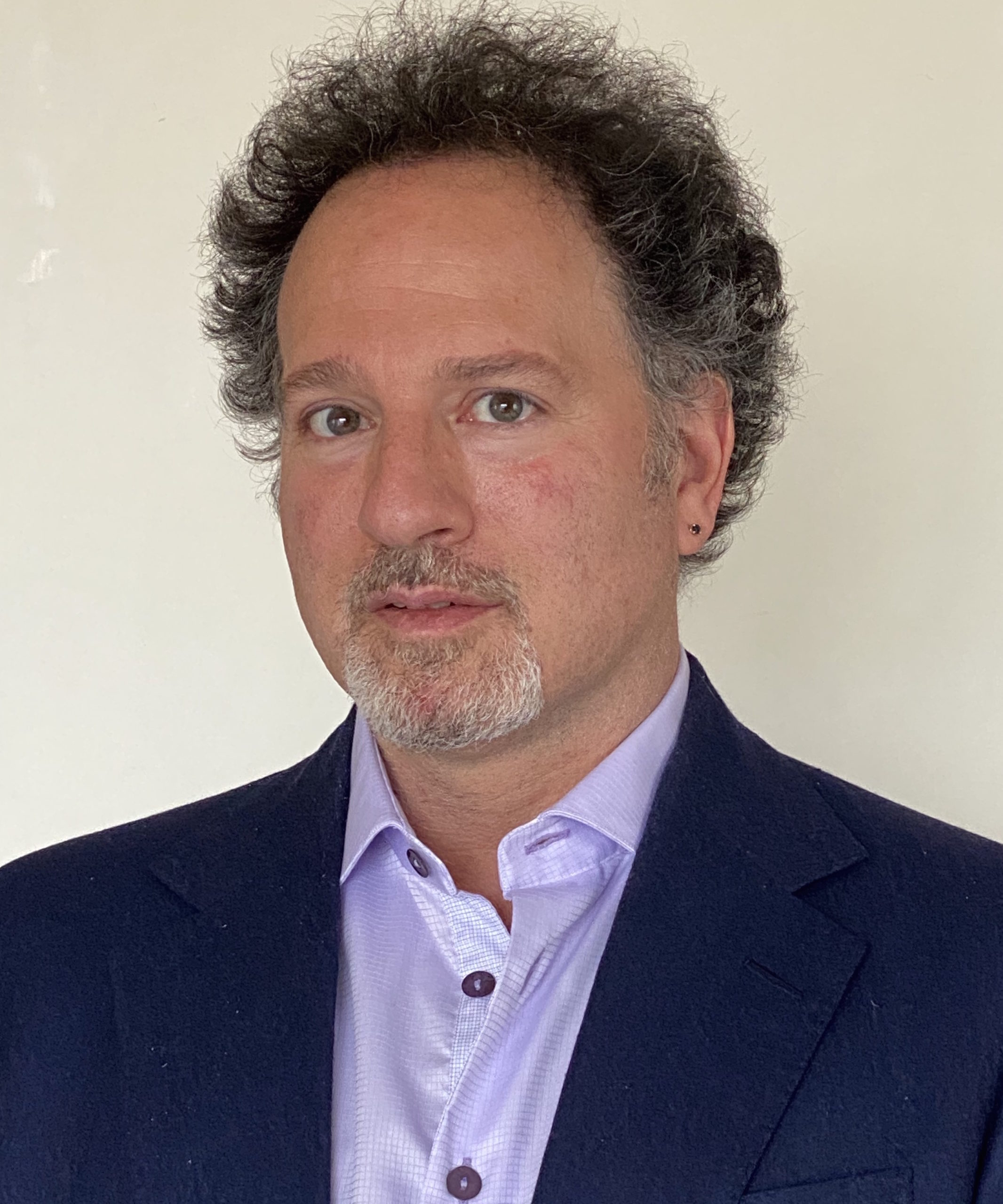
Zachary Karabell