
Volcanoes are erupting in The Philippines, but on-fire Australia received some welcome rain. The Iran war cries have been called off and The Donald’s military powers are about to be hamstrung by the Senate. Meanwhile, his impeachment trial is starting, and we’re all on Twitter for a front-row seat.


The Progress Report: Techie to Trekkie: AirPods That Translate!
Featuring Zachary Karabell and Emma Varvaloucas
Get ready for another uplifting Progress Report! This week, Zachary and Emma bring you inspiring stories of innovation and hope from across the globe. Trekkies rejoice as Apple’s new AirPods push tech into sci-fi territory with real-time language translation, Europe is seeing fewer flood fatalities and less damage thanks to cutting-edge warning systems and disaster response improvements, and France just made history by launching the world’s first commercial plant capable of recycling polycotton.


Prefer to read? Check out the Audio Transcript
Although the transcription is largely accurate, in some cases it may be incomplete or inaccurate due to inaudible passages or transcription software errors.
Zachary Karabell: What Could Go Right? I’m Zachary Karabell, the founder of The Progress Network, joined, well, usually as always, but the past few weeks it’s not been, as always, it’s been as often by Emma Varvaloucas, the executive director of The Progress Network, and this is our weekly Progress Report where we look at some of the news of the week that almost all of us would have missed buried under the tsunami of bad news.
Some of the good news of the week, some of the stories of uplift, things going well, things going right, people doing good things, people solving meaningful problems in good ways, all of which is always going around the world all the time, we just don’t pay sufficient attention to it because we’re too busy paying attention to all that is going wrong, and for sure, there’s a lot that’s going wrong.
None of this is meant to be a denial of the many, a manifold problems in the world, or an abrogation of our collective responsibility to pay attention to those problems. But if we pay too much attention to those problems in an imbalanced way that allies all the good things that are going on, we create a picture of humanity, the human race, the globe today that we at least believe is distorted to the downside and denies some of the upside.
So Emma Varvaloucas and the team at The Progress Network spend their waking days scouring the planet, virtually and otherwise, for good stories. And remarkably they find many, which we highlight in our What Could Go Right? weekly newsletter, which you can get at theprogressnetwork.org. And today we’re gonna go over a few of those.
So Emma, what have you for us in your bag of good tricks or your mysterious hat that has Pandora at the bottom. I know it was a box, but you get the analogy.
Emma Varvaloucas: Now I’m thinking about like the, the sorting hat. I’m thinking Harry Potter and all over the place.
Zachary Karabell: Pandora’s sorting hat. Yeah. Beneath.
Emma Varvaloucas: Like, it chooses advice for you.
Zachary Karabell: Beneath Hufflepuff and Slitherin. You didn’t know that there was hope, did you?
Emma Varvaloucas: I wasn’t that Gryffindor.
Zachary Karabell: Yeah, no below that was hope. At the bottom of the sorting hat was hope.
Emma Varvaloucas: Was hope. And that was a retelling of Harry Potter and the Sorcerer’s Stone. All right. Let’s get into the good stuff. The world’s first commercial plant for poly cotton recycling is opening in France. I’m not sure how much excitement that like sparks in people when they hear that sentence, but the reason why you should feel excited about it, polyester cotton blends are the most commonly produced textile. They’re also notoriously difficult to recycle because they’re a blend.
But a company has figured out a way to do it at scale. Basically requires hot water, a handful of non-harmful chemicals, and they’ve got a, a rate of in the nineties for recovery of both the polyester and the cotton. And then they resell it at prices that, because again, this technology is, is being used at scale.
It’s pretty close to the prices that people would pay for the virgin fibers. So that is going to be opening up in France and 70,000 metric tons per year. And the article where I took this from saying that’s equivalent to 1750 fully loaded 18 wheeler trucks. I liked that visual.
Zachary Karabell: That’s a lot of stuff.
I always wonder about this, whether the net energy used to do that however, is commensurate with the gain. I, I mean, I know that’s throwing cold water on, on wet cotton, but that is a, it just is always a question of what is the energy consumption or amount of energy per cloth relative to dot dot dot.
Emma Varvaloucas: I can tell you because.
Zachary Karabell: Oh, you can?
Emma Varvaloucas: Yes, ’cause nicely this article has a section called Sustainability Impact, so I can tell you for sure this process. By the way, the company’s called Circ, for obvious reasons. They use 80% less water, lower emissions by 60% and 50% less. Energy involves significantly less chemicals and drastly lowers land use, all of that in comparison to what you would do to produce like polyester or cotton fibers from scratch.
So that’s what they say.
Zachary Karabell: There, we have the answer to my question. Isn’t that convenient.
Emma Varvaloucas: Next. I love talking about climate adaptation ’cause I feel like not a lot of people talk about it very much and I just think that like early warning systems and disaster preparedness is a super, super exciting topic, but it’s really hard to find studies on that. Like exactly how much has these kinds of evolving adaptation measures changed our lives, and especially given that climate change is now making a lot of these disaster trends worse.
So I was really intrigued to find this study. Carbon Brief posted a little article on it. They essentially analyzed floods over 70 year period. This is from 1950 to 2020, and they did indeed find that they didn’t prove it, but they basically are saying it’s. Pretty sure it’s adaptation, like disaster response and early warning systems, accounting for climate change worsening flooding in parts of Europe, but actually improving flooding in other parts of Europe because it’s gotten so dry ironically. Fatalities have dropped by 75% and direct economic damage is down to, if you’re comparing what would’ve happened in 1950.
So like the actual dollar amount of the economic damage is higher because things are more expensive these days and so on. But they’re saying like, if the same flood hit us in 1950, let’s say it would’ve caused a much greater economic hit, relatively speaking.
Zachary Karabell: Huh. And who’s developing this per se?
Emma Varvaloucas: Let me tell you. They’re, they are postdoctoral researchers at the Potsdam Institute for Climate Impact and Research. At the University of, forgive me, I don’t know how to say this name. It looks Polish,
Zachary Karabell: The University of.
Emma Varvaloucas: The University of.
Zachary Karabell: Vivi Veg Bow.
Emma Varvaloucas: Kinski?
Zachary Karabell: Yeah. All, all it, it, it, it, it may look,
Emma Varvaloucas: Kin.
Zachary Karabell: Polish is notoriously difficult to.
Emma Varvaloucas: I apologize.
Zachary Karabell: When it is lots of consonants and an astonishing few number of vowels evident.
Emma Varvaloucas: Yeah.
Zachary Karabell: But we digress into a linguistic complaint. So yeah, there is more going on in terms of how human beings are adapting to mitigating moving with climate change in constructive ways.
That is not a complete binary, that our capacity to adapt to negative circumstances in positive ways. While it may not be the optimal reality, we would’ve liked, IE, wouldn’t it have been better not to have to adapt to negative realities in positive ways and just not created the negative things in the first place, but that would’ve made the human race a, a radically different, more foresighted collective than it has evidently been.
So, you know, mitigating what we do wrong. We talk about this a lot, a lot of human history is a process of human beings solving for problems that humans have created. IE not just natural problems or. Problems of the environment and that will remain true. It, it may be unfortunate, it may be a certain amount of unnecessary work, but it is the work that people do, and it’s a whole lot better to respond constructively, even if the thing that was destructive was created by humans in the first place.
Emma Varvaloucas: Yeah, I have to say that we’re much, much better at responding to disasters than we used to be. I think like deaths overall across all disasters globally has gone down by, I think three. Don’t quote me on that. I haven’t looked at that stat recently, but it’s, it’s quite a lot to.
Zachary Karabell: Oh, I’m gonna.
Emma Varvaloucas: The population is yeah, please.
Zachary Karabell: I’m gonna quote.
Emma Varvaloucas: Me. Issue a.
Zachary Karabell: Definitely gonna, I am totally gonna quote you on that unattributed and act with authority when I say it.
Emma Varvaloucas: And one last little fun one since a little birdie told me recently that apparently there’s a Trekkie on this podcast and it, and it ain’t me so.
I thought this was cute. Somebody wrote an article about the new AirPods Pro 3, which I do not have. I don’t have any AirPods at all, but apparently because of ai, the new AirPods Pro three can live translate foreign languages into your ear. They said it’s like a real version of Star Trek’s universal translator.
I’m really intrigued. I want someone to try that out. How is it? Do you have ’em? Does anyone, do?
Zachary Karabell: I do not at the AirPods 3, I have the, the earlier version of the AirPods, I’ve certainly been noticing between ChatGPT, and Google translate that the translating function in the past couple of years is clearly approaching that level. And you can do that a little bit with ChatGPT Now you can, you can ask ChatGPT saying, I’m gonna speak English.
I’d like you to translate that into Hindi and it will then do so and it will read it out. So the AirPods 3 is, is a version of that even more rapid and. This is another one of these things where there’s gonna be a huge amount gained. You’ll be able to go anywhere and kind of converse, but it’s also gonna be a huge disincentive to people learning different languages, which in and of itself was a wonderful thing if you did it.
And it reminds me a little of, you know, there’s. A joke, I don’t, I’m not even sure whether I made this joke up or just stole it from somebody else. The wonders of non-attributable plagiarism, like Google Maps means that nobody ever gets lost and no one knows where they are. And I feel the, the net effective Google Translate is we’re all gonna be able to communicate, but it’s not clear that any of us are gonna be able to understand.
Emma Varvaloucas: It’s possible. I, I actually, I, I’m not sure that there’s gonna be so much of a disincentive, even with like the live translating over Google Translate and other online platforms and other AI chatbots, which for instance like that was around when I was actively learning Greek. I did use some AI language practice stuff and it worked fine, but it was really no substitute for talking to somebody or my teacher or other people around me.
And same thing, I was traveling recently and we were communicating a little bit with some people who didn’t speak English over Google translate, like voice stuff. And it’s not the same. It actually made me wanna learn the language more, like it made me more interested. So you might be right, but I wonder still if there’s like that human touch that is gonna remain around, the same way like everyone thought, right, that the internet was gonna an eBooks, were gonna kill the print book. But it like turned out that people wanted that “je ne sais quoi” of having a physical book might be the same thing here.
Zachary Karabell: It might be the same thing. That’s a, that’s a What Could Go Right? way of looking at it.
Emma Varvaloucas: Yeah.
Zachary Karabell: So we want to thank you for your time today. Please tune into our longer form, What Could Go Right podcast. We’re winding down this particular 2025 season in a few weeks, but it will be a pause, not an end, and send us your comments and your thoughts to hello@theprogressnetwork.org we will highlight your stories if they are highlightable.
So we’ll talk to you soon. Thanks much.
LOAD MORE
Meet the Hosts
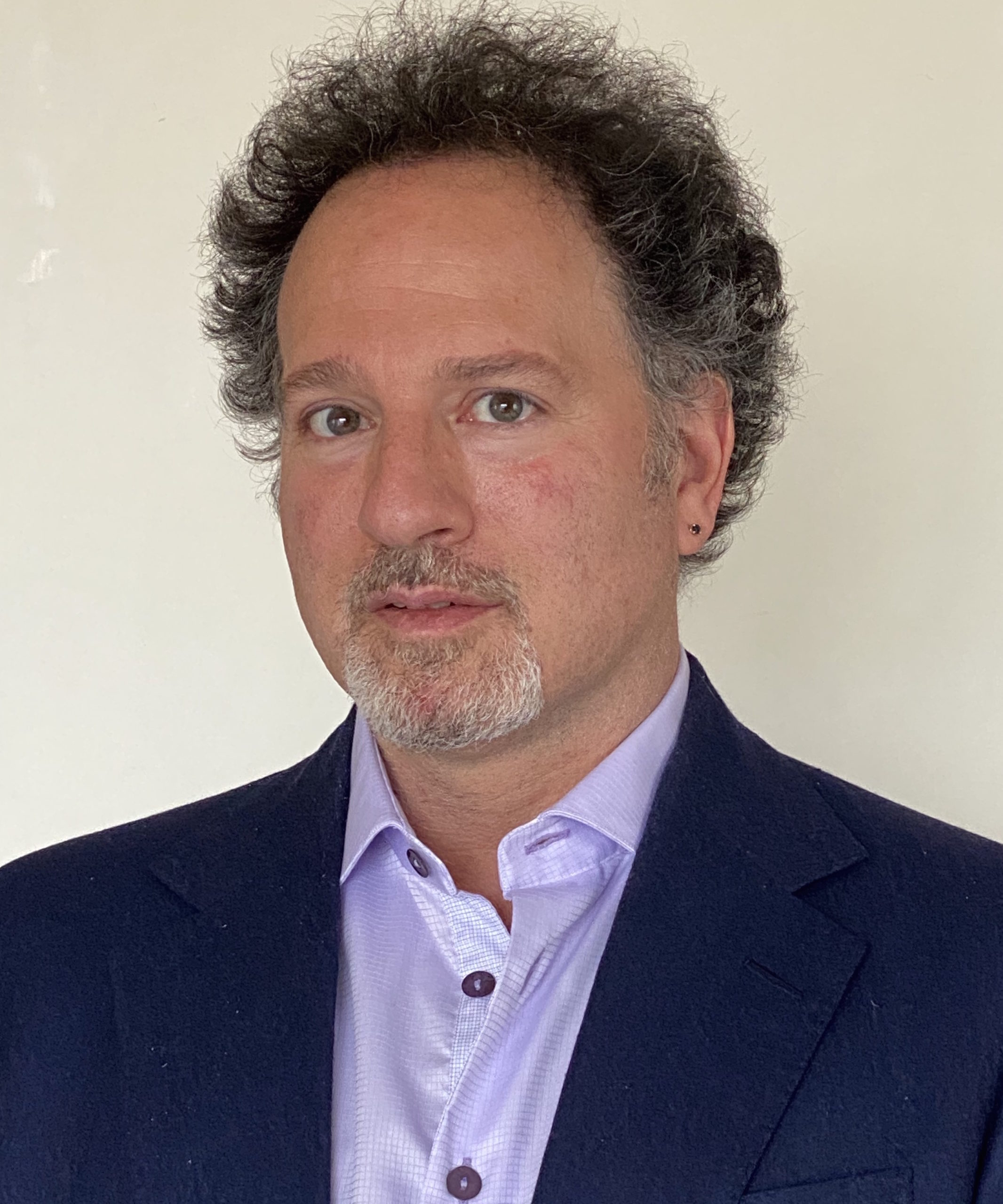
Zachary Karabell

Emma Varvaloucas