Volcanoes are erupting in The Philippines, but on-fire Australia received some welcome rain. The Iran war cries have been called off and The Donald’s military powers are about to be hamstrung by the Senate. Meanwhile, his impeachment trial is starting, and we’re all on Twitter for a front-row seat.

Are We Becoming Too Afraid to Take Risks?
Featuring Allison Schrager
As modern society grows wealthier and more technologically advanced, our increasing obsession with safety is quietly stalling human progress. Economist and author Allison Schrager joins host Zachary Karabell to break down the hidden costs of our increasingly risk-averse culture and explain why embracing uncertainty is essential for both personal fulfillment and economic innovation.


Prefer to read? Check out the Audio Transcript
Although the transcription is largely accurate, in some cases it may be incomplete or inaccurate due to inaudible passages or transcription software errors.
Zachary Karabell: When was the last time you did something that was truly risky? When was the last time that you self-consciously and purposely said, “I’m gonna take a risk”? And given that we all perceive that we’re living in a world that is in rapid flux and constant change, it’s understandable that many of us don’t particularly like the idea of taking a risk because it seems, well, too risky.
But is that really the most constructive way to live? Is our disinclination to take risks more risky than taking risks? I’m Zachary Karabell, the host of this podcast, What Could Go Right, which is an attempt to look at, yes, what could go right, but it’s also an attempt to see and probe about what we should do to make the future a better place.
And this whole question about are we taking the risks we ought to be taking is pretty central to whether or not we’re building the world that we ought to be building. This whole concept is what we’re gonna talk about today with one of my favorite economists and one of my favorite thinkers and public policy people, Allison Schrager, who is a fellow at the Manhattan Institute, who is a columnist for Bloomberg, speaks, consults widely with people in both the financial industry and corporate America.
She’s the author of a previous book called An Economist Walks Into a Brothel, and of her current book, which is called Worth the Risk: The Seven Myths That Keep Us From Taking the Chances We Need to Take. I plan to discuss all the things, the risks that she highlights that we’re not taking, the myths about risk-taking, and we will also talk about, like, what is the psychology behind this individually, and also what is, I guess, the psychology around this collectively.
So I’m looking forward to the conversation. Allison Schrager, my favorite economist, which kind of feels like it should be an oxymoron, but in this case is true. I mean, you’re always eclectic-
Allison Schrager: Mm.
Zachary Karabell: Never dull. Mm. Sometimes right, and- Sometimes … sometimes. Mm-hmm. I mean, let’s not overdo it- Mm-hmm … in the, uh-
Allison Schrager: No one’s right all the time.
Zachary Karabell: No one’s right all the time. And I’m not sure you would wanna be right all the time. So do you think of yourself as a risk-taker?
Allison Schrager: No. I mean, I have definitely had, uh, sort of quirky choices that I have made. But like I won’t ski, like, or like ride a bike in the city, and everyone else seems perfectly comfortable with that.
Zachary Karabell: But that’s a, that’s different than I’m a risk-taker. No- presumably no one who’s a risk-taker takes all the risks. We are all selective about what risks we’re gonna take.
Allison Schrager: Yeah, like I, I feel like other people write books and they talk about, like, there’s risk-averse people and there’s risk-takers and certain g- you know, women are less r- take, risk-takers than men and all this stuff.
And I don’t really, I’ve come to the conclusion with the two books now that that’s just not true, that, you know, I’ve met all these people who are like quirky risk-takers and, you know, like in the first book, big wave surfers. In this book, a tightrope walker or a bounty hunter or a mob hit man. And like my takeaway is that we all have some domain where we take risks and feel comfortable with it.
Like the tightrope walker, Nik Wallenda, you know, he’s walked across Niagara Falls on a tightrope, or he walked across the Grand Canyon. But he was telling me he’s, like, afraid of running out of money. He’s afraid of investing, which, you know, I don’t think anything of, but then again, I’ve had training in that.
I’m comfortable with that. He’s comfortable tightrope walking ‘cause he’s been doing this since he could walk. And, you know, the W- the Wallendas are a longtime tightrope walkers.
Zachary Karabell: Yeah, we r- remember the Great Wallendas.
Allison Schrager: Yeah. Well, this is their latest generation, and, you know, his mother ti- wa- walked the wire with him in utero.
I mean, so to him, th- this is a risk he understands. He can manage it. He has all these different ways of protecting himself and dealing with the uncertainty around being on the wire, but the stock market’s overwhelming to him. So I think, like, we all have some area of our lives we feel comfortable in, and others we don’t.
Zachary Karabell: I mean, it reminds me of, uh, Alex Honnold and Free Solo- Yeah … you know, climbing up without anything, right? Yeah. And any false step, and we’re all looking at that. He also recently scaled a building in Taiwan.
Allison Schrager: Yeah.
Zachary Karabell: And, you know, we look at that and we go, “That’s just inconceivable levels of risk.” But you’re right, people-
Allison Schrager: He has a lot of social anxiety, though.
Zachary Karabell: Yeah. And, and, and, you know, probably is not trading options on-
Allison Schrager: Yeah …
Zachary Karabell: whatever app, on Robinhood or Calshi.
Allison Schrager: Mm.
Zachary Karabell: So it is a sort of, it’s like where you take your risk. If there was a person who was a risk-taker about everything-
Allison Schrager: Yeah …
Zachary Karabell: they’d probably die.
Allison Schrager: Yeah.
Zachary Karabell: Early.
Allison Schrager: Or, I mean, I’m, the point of the book is that you should expand your risk-taking.
Right. But one of the reasons people are comfortable in this domain is they know how to manage that risk. They understand it. They’re able to assess it. They’re able to, like, make good choices, hope most of the time, not always, and also, like, limit downside. And even with Free Solo, like, he’s just talking about it, you see the risk strategy-
Zachary Karabell: Right
Allison Schrager: he’s employing. Again, probably day trading options, not so good.
Zachary Karabell: So, uh, someone comes to you with two options that they’re considering, they’re trying to weigh.
Allison Schrager: Mm.
Zachary Karabell: Which they wanna do. What’s your template for them?
Allison Schrager: Well, the most important thing is I think where most people go wrong with risk-taking is, as I said, like, this idea of safety, ‘cause safety defines risk.
So when you’re clear on what safety means to you, you also are clear on your goals. I think a lot of people just sort of take risks, they want change, but not really thinking, “What is the long-term goal? Where do I really wanna end up being?” So I think if you’re weighing two different risks, you one, wanna see, you know, how risky is one relative to the other, but also which one gets me closer to where I wanna be?
Zachary Karabell: Hmm. I mean, you, you know, you lay out seven different myths in the book.
Allison Schrager: Mm-hmm.
Zachary Karabell: And notably, ‘cause you just mentioned it, did you consider talking more about the kind of either cliche or public perception of gender differences around risk? ‘Cause that is a, a trope, right? That women take fewer risks, men take more.
You know, I think Scott Galloway has said things like, you know, you want, you want men to be ground troops- Mm-hmm … and you want women to be officers because, you know, they’re more likely to leap on the grenade- Mm-hmm … and a woman officer is more likely to see the big picture- Mm … and the risk matrix. I guess that’s true, or may- is it true?
I don’t know.
Allison Schrager: I mean, there’s evide- I mean, I think it’s just like how do you define what’s a risk-taker? I mean, I think there’s some, you know, evolutionary psychologists would argue that young men probably are wired to take more risk. It’s how they attract mates. You know, I think Scott Galloway would probably argue the fact that we’re cutting men off from meaningful risk is one of the reasons they’re having, sh- they’re struggling right now.
I think there’s a lot of truth to that. But, like, I hated, right after the financial crisis, when everyone was like, “We need more women in the room.” “Men take too many risks. We need women in the boardroom to pull them back.” I’m like, “That’s a terrible position to put women in.” Like, first of all, as you know, in finance, the goal is to make money and take risks, and you can’t, like, say, “It’s the women’s job to hold them back,” to say, “No, actually, we shouldn’t make money.”
Zachary Karabell: Right.
Allison Schrager: Like, that’s not good for their careers. It’s not good for the perception of women.
Zachary Karabell: Right. It’s like we need more schoolmarms or something- Yeah … you know? And, uh, to, to rein everyone in is the thing, as opposed to everyone having some degree of, like, internalized guardrail.
Allison Schrager: I mean- And also, women make bad decisions, too.
Zachary Karabell: Really?
Allison Schrager: Yeah.
Zachary Karabell: I had no idea. You know, and I was reading the book, I was struck by the question of risks that you know you’re taking that are risks- Mm-hmm … versus things you do without some sort of self-conscious deliberation- Mm … about whether or not this con- constitutes a risk.
Allison Schrager: Mm-hmm.
Zachary Karabell: I mean, so where do you, where does that enter into?
‘Cause a lot of, you know, a lot of what you write about and, and posit is the self-conscious awareness- Mm … around this thing we call risk.
Allison Schrager: Mm-hmm.
Zachary Karabell: And then human psychology and behavior in the face of it.
Allison Schrager: Mm.
Zachary Karabell: Which is distinct from- You are taking a, you are taking something that others would consider to be a risk within that framework.
Allison Schrager: Mm.
Zachary Karabell: But your own individual experience of that decision is not that, “I’m taking a risk.”
Allison Schrager: Well, there’s both. I think, you know, if you’re taking risk in life, there’s probably some of both. There’s some things you, like deliberative decision that you’re thinking through, it’s a risk, it brings me out of my comfort zone, you think it through, and then there’s things you just do instinctively, and, you know, they’re both important.
I mean, you don’t wanna … I mean, overly impulsive people, like if you’re committing crime, probably not good risks to take. Right. But that doesn’t mean you don’t have the sort of risk-taking muscle where you instinctively take risks and that’s bad either. In fact, I mean, uh, I discovered in the book with the research this is one of the problems, is that because teenagers aren’t taking stupid risks anymore, they’re not drinking, they’re not hanging out with their friends, they’re not having sex and driving and all the things you do, this is actually a very important developmental stage where your brain learns to take risks on the fly and know a good one and a bad one to take, and that might be one reason why we’re seeing on the one hand so many young people are super risk-averse, but also, like, blowing all their money on sports betting.
Zachary Karabell: All right. Let me, let me go big picture for a second. What about pre-modern versus modern or Western versus non-Western- Mm … or pre-capitalist versus capitalist? Mm-hmm. Like, how much of what you’re talking about is, like, a particular evolutionary developmental moment in Western societies unfolding under the conditions of capitalism?
Mm-hmm. ‘Cause, like, you know, I think about, like, most people from time immemorial were likely not even … Like, this framework would’ve been totally alien. Mm-hmm. The idea of, what do you mean taking a risk? Mm. I was born in, you know, let’s say you were born into a caste- Mm-hmm … in whatever we now call India- Mm
1,200 years ago. What … I, I don’t know even if the idea of risk as an optionality would’ve occurred to one. Now, you could say, like, the evolution of religions, you know- Mm-hmm … a messiah- Mm-hmm … or someone who claims a messiah, like that’s a, that’s taking a risk. Mm-hmm. I, I see a revelation- Mm … that you don’t.
But I mean, again, do you
Allison Schrager: think about this- Well, also it gives, it gives order and, you know, the idea that there’s a r- like, this higher power. It makes the world feel less risky, right? There’s a plan.
Zachary Karabell: So how much of this is a mo- uh, how much of risk is a modern phenomenon?
Allison Schrager: It’s very modern, and you, you can see it even in the evolution of the word because, you know, if you were in a caste in India 1,200 years ago or even a European or anyone, the world was incredibly risky.
You know, really all you were doing was trying to avoid severe downside risk.
Zachary Karabell: Right.
Allison Schrager: It was really in the start of moder- of exploration, that era where people started to see upside with risk. Like, you could do something and it would improve your fortunes, and that just developed more with modern capitalism, was that now that you’re not constantly worried about starving to death or constant having disease or war on your doorstep, you could actually start thinking about taking risks in an upside way.
And you see that in the etymology of the word. You know, for starting with ancient Greeks, some version of risk always existed as a word, but always meant bad things.
Zachary Karabell: Yeah.
Allison Schrager: But you see around the time, like literature around financing exploration, people starting to use it as, “Oh, you might make money, too.”
Zachary Karabell: I’m gonna contradict my own question. There’s clearly something in the human spirit that is true from time immemorial. Mm-hmm. I mean, a Maori, like, getting on a boat to nowhere because they thought there was something out there- Mm-hmm … I would think for myself, I mean Mm-hmm … if, if you got me in a dugout canoe-
Allison Schrager: Mm-hmm
Zachary Karabell: and said, “Just go- Mm-hmm … and try to find an island,” I, that to me would be rather risky, right?
Allison Schrager: Yeah.
Zachary Karabell: And probably ill-advised. Yeah. I mean, maybe with a GPS. But, you know, that’s what they did, right? They just got on- Well,
Allison Schrager: they had no choice.
Zachary Karabell: Did they? I mean, could, they could’ve just stayed where they were.
Allison Schrager: They could, but, you know, there were problems with that, too, and it wasn’t that great.
I mean, one of the things I explore is that, you know, before when we were poorer, it’s like people had no choice. It’s a very modern, weird thing that we feel like lower income people should be shielded from risk, ‘cause they used to be the ones who really bore the brunt of it.
Zachary Karabell: They were the… Right, they were the ones on the, the, the tip of the spear of risk.
Allison Schrager: Yeah. Like, I talk about this guy in the opening chapter who, you know, got the last homestead patent, and, you know, I mean, granted, he grew up in a middle class family in the 20th century. He certainly didn’t need to do this. It was his thing. But, you know, you think homesteading initially were people who had absolutely nothing.
So they were like, “Well, if I move to America, you know, I can live on the prairie, and maybe we’ll all die, or maybe this will be our one shot.”
Zachary Karabell: So how much of this, when you’re thinking about contem- and a lot of this is contemporary United States- Mm-hmm … but a lot of it could apply to Europe as well in terms of-
Allison Schrager: Mm-hmm
Zachary Karabell: highly sort of settled affluent societies. Mm-hmm. Not that everybody in them is affluent- Mm-hmm … but they are net-net affluent. So there was a medieval historian philosopher in the, in the Muslim world named Ibn Khaldun, and he talked about civilizations have this, like, cadence. They, they start, and his whole thing was like they start with tribal groups in the desert- Mm-hmm
who are passionate and, a- and coherent- Mm-hmm … and then they conquer a civilization. Mm-hmm. Then they become a civilization- Mm-hmm … and then they become weak and complacent, and then the civilization disintegrates.
Allison Schrager: Mm-hmm.
Zachary Karabell: So at the risk of being contrary to the what could go right question- Mm-hmm … like, how much of what you’re observing is either, like, the decadence of late stage capitalism- Mm-hmm
or just an inevitable product of the more settled we become-
Allison Schrager: Mm-hmm …
Zachary Karabell: the more risk adverse We become
Allison Schrager: I think that’s definitely it. Like, I think there are two things that set your relationship with risk, or really more what you think the minimum safety standards are right for you, and it’s changes in wealth and technology.
As you get richer, you do tend to get more risk-averse, in a- certainly as a society. And there’s all these theories as well, you’re, you’re worried about losing more. Although weirdly, in the economy we have now, it’s only the sort of upper income people who are taking risks. And also technology, like, ‘cause technology induces change, it makes you feel insecure.
On the other hand, technology makes you safer, by and large. Like, most technology, we come into existence to make our lives more predictable and more consistent. So part of it is that, and that means as we get more advanced as a society, where we become richer, and as we gain more technology, ‘cause that is advancement, you are gonna become more risk-averse.
The problem is we’re getting kind of… Um, and maybe this is why societies ultimately fall apart. It’s destabilizing. Like, humans are meant to take risks. I think it’s one of the reasons we’re so unhappy. It’s one of the reasons people feel like capitalism isn’t working, ‘cause they feel like they should be getting ahead more than they are.
And you know, it’s a very natural thing. And also the risk-taking is what pushes innovation forward. We’re lucky in America that we still do, although I would like everyone to have the option of that top 5% taking huge risks, like the Elon Musks, the Jeff Bezos, ‘cause they actually are still pushing that frontier forward in terms of technology.
But without them, we really would, American economy would probably be in a lot of trouble.
Zachary Karabell: And what about the pushback where a lot of people hear the names, you know, Elon Musk and Jeff Bezos- Mm-hmm … and think they’re not risk-takers, they’ve gamed the system effectively for their own self-enrichment?
Allison Schrager: Well, they took risks and they got rich doing it.
I mean, I think they definitely… You know, if you look at their bios, I mean, now they’re so rich it’s hard to imagine them losing anything.
Zachary Karabell: Right.
Allison Schrager: But certainly as they were coming up, you know, they took some big swings.
Zachary Karabell: But why, why do people, you think then, perceive that as not as risk-taking, but as some sort of, you know, inside dealing?
Allison Schrager: Well, I think people, first of all, I think they’re rightly resentful that we’ve sort of constructed an economy where it’s a lot easier and more feasible to take risk if you’re rich And, you know, we’ve made risk-taking not only, I guess, more of a social stigma, but actually a lot more economically difficult to do if you’re on the lower end.
So I could see why they would say, “They get to take these swings, I don’t,” and that feels wrong to them, and they’re right about that. It’s also, I think, a lack of understanding. It’s like I see this a lot with the sort of the tax debate right now of, you know, this whole concept of wealth taxes or taxing unrealized gains, not realizing, you know, why economists don’t think these are good ideas is because, you know, they don’t understand that people earn more from taking more risk.
That’s just how it works. Otherwise, you know, it’s not sustainable or it is corruption. And so when you sort of put taxes on upside, you, you don’t really quite understand… They don’t really have an answer for what you do when they realize downside risks at all.
Zachary Karabell: Yeah, and there’s also… I mean, I think, you know, some of the challenge around taxation policy- Mm
which you know a lot about, is it’s, it’s hard to tax your way to collective prosperity.
Allison Schrager: Yeah.
Zachary Karabell: I mean, at some point, you kind of run out of money-
Allison Schrager: Mm …
Zachary Karabell: in your taxation-
Allison Schrager: Mm …
Zachary Karabell: without then having sufficient means to do whatever it is you were generating taxes to, to do.
Allison Schrager: Yeah. And I, I, I feel like that’s a lot of the appeal right now.
We see both parties, so I’m not kick- picking on one or the other, promising more in benefits. Right. And that is actually safety, right? Like, we will make you safer. But I think what people aren’t reckoning with is as we’ve grow- Like, I’m nothing against the welfare state. I think we should definitely have one.
I mean, you see its evolution in the 20th century. I think of it as one of the best things we did. You know, as the economy changed, we moved to cities, we started living, you know, working in factories instead of farming, risk became much more systematic. Like, now you have a recession that impacts everyone at the same time, as opposed to before, maybe you just had a bad harvest, you could rely on your neighbor.
And when risk is systematic like that, you need some insurer to step in, and the private sector honestly can’t always be in that role. Yeah. So the government has this very important role, which it started filling in the 20th century, of being if you lose your job, we’ll still give you money. You know, if you lose everything, you can still have health insurance through Medicaid, all these sorts of th- forms of insurance.
But the problem was is the way we thought about benefits is they sort of started to evolve in the latter half of the 20th century, and now we’re really in overdrive, of it’s not just we’re gonna take care of you if something bad happens, but we’re just gonna take risk off the table from the outset.
Zachary Karabell: So I wonder, though, about cultures- Mm
and these attitudes. So- You know, Americans, certainly liberal Americans, are forever idolizing Scandinavian countries-
Allison Schrager: Mm-hmm …
Zachary Karabell: with this kind of balance of taxation, social safety nets- Mm … less inequality. But it’s certainly true that if you are in one of those countries, there is a huge cultural, not prohibition, but definitely a disapproval of the kind of risk-taking that you write about.
Mm-hmm. A- and that’s inculcated from a very young age. And, you know, Japan, too, like the tallest reed- Mm … metaphor of- Yeah … you’re not supposed to stand out. You’re not supposed to- Mm … move outside the consensus. And it seems to me that for all the faults of the United States, of which there are many a manifold, we still are, at least culturally or vestigially, a risk-taking culture.
There’s a lot of gambling. Mm. There’s a lot of get-rich-quick schemes and hopes, and there still is a certain amount of collective ambition- Mm … to change the world and make a better future. Although I, I guess to some degree, you’re more skeptical of that amongst-
Allison Schrager: Well, no. I mean, I think we’re becoming more risk-averse as a society, but I think we’re still much bigger risk-takers than other countries.
So, I mean, I think we’re moving more in their direction, and certainly I think the way people look at Scandinavia or Europe s- welfare state in general shows that we aspire to it. I don’t know if we’ll get there ‘cause I think, and I honestly don’t think we’ll ever really get there ‘cause I think Americans still like to think of themselves as risk-takers.
Right. And I think we admire it in a way they don’t in Europe. It’s certainly, like you do have that sort of skepticism. Like in Germany, they’re cer- they’re talking a lot about, oh, you know, we need … W- we’re sort of falling behind. We need more entrepreneurship. Well, there’s a huge stigma to starting a business and failing in Germany.
In Silicon Valley, that’s like a rite of passage. It’s, you know- Right … something to be proud of. But, you know, they don’t have the bankruptcy laws we do. And certainly, like the way they tax income, it’s really hard to become incredibly rich. Like, that’s one of the reasons we have, you know, more inequality, but we also, if you look at the Forbes whatever top 10, even top 400, so many in the top 10 are self-made.
You don’t see that in Europe nearly as much. Right.
Zachary Karabell: It’s almost all inherited or familial in Europe.
Allison Schrager: Yeah, because if you tax income that much, it’s really hard to build a fortune.
Zachary Karabell: Right.
Allison Schrager: So you end up with these more familial d- dynasties. I’m not sure if, if that’s a sign of progress or not.
Zachary Karabell: You know, it does feel to me like the United States kind of maintains the patina of a risk-taking culture.
Mm. Even as you note a lot in the book that the- Certainly generational. I mean, if you listen to millennials, you listen to Gen Zs, the, the proclivity for that seems to be decreasing. But do you ever wonder it’s like, you know, talking to someone when they’re 22 about w- the way they think the world is gonna be- Mm
may or may not be predictive of how they actually behave 15 years later.
Allison Schrager: Yeah. Someone asked me how we can, like, help youn- like, people in their 20s learn how to take risks, and if they’re gonna change their mind. And someone asked me, I think, if they’re, when they get money from their parents, but I don’t think that will do it, ‘cause I don’t think the amount of wealth you have makes that big a difference.
I think life will eventually hand them some risks that don’t go their way, even if they’re trying to avoid risk. It’s just gonna happen, ‘cause that’s life. And I’m optimistic that will help, because then you experience a risk, maybe it doesn’t go the way you want, and you realize, “Okay, that wasn’t so bad,” and you get more comfortable with taking others.
Zachary Karabell: So when you sat down to, to write this, I mean, you, you had a great earlier book called When an Economist Walks Into a Bar or Something. Mm-hmm. And there, I guess, what, you were animated by just wanting to show how the dismal science actually functions and works, but in a different, less dismal way.
Allison Schrager: The first one?
Zachary Karabell: Yeah.
Allison Schrager: Yeah. At that point, I’d worked a lot with financial economists, and I really, I w- I was, you know … My PhD is in macro, and then I started working with financial economists. I’m like, “This is awesome. I really feel like this is a better way to understand the economy.” So my goal with the first book was I wanted to do, like, Freakonomics, but for finance.
Zachary Karabell: Mm-hmm. ‘
Allison Schrager: Cause it’s also personal finance is a huge thing people don’t really have good training in. So that was the goal was, like, recast these sort of well-nor- known things from the financial markets or financial science and tell them in a new, fun way. But this one more was sort of advancing an argument of, like, or my prescription of what’s wrong with the economy.
Zachary Karabell: But w- how did you come to that? I mean, had you been sitting around for the past few years going, “Wow, it seems to me dot, dot, dot”?
Allison Schrager: Well, I guess I fully have internalized what we know about financial markets. Mm-hmm. And sort of the most fundamental truth in finance is that, and this undergirds, like, everything, is that there’s no extra reward without risking loss.
That’s just true, and if someone tells you different, they’re selling you something or scamming you. And so the other thing was during the pandemic, people kept saying safe a lot. And I started thinking, wow, we really… Safety has a very strong resonance with me, certainly from finance, particularly studying retirement economics, ‘cause one, you know, safety defines risk.
We don’t really define risk well. As I said, it sort of is, uh, its meaning’s changed over years. But there’s one definition that’s unifying, and that is, you know, risk is what safe isn’t. And if you think about any financial asset pricing formula, there’s always the risk-free rate in it. It literally defines what risk is.
And safety also has a very idiosyncratic meaning to each individual, particularly in finance, based on what their goals are, their investment horizon. E- we tend to just assume there’s one risk-free asset, but it’s r- you know, different for everyone. Not everyone, but, like, you really… And it’s not the same for everyone.
So, uh, the thing was during the pandemic, and I kept hearing the word safe all the time, and they’re like, “We have to do this to stay safe.” And it’s like, well, safe to you, safe to me are different.
Zachary Karabell: Right.
Allison Schrager: Like, you know, for some people, losing their job or their business, you know, made them feel less safe. For others, getting exposed to the virus was just, that was it.
And for others, having their kids not go to school was it. So we all had different things of safety, and I mean, you could argue that we all impact each other. And so I was like, wow, you know, we’ve really changed our definition of safe in a way. We’d have never done this in any other era in history. And it’s like we’ve all pushed one idea of safety on everyone, and we’ve certainly upped our standards for what’s safe.
And, you know, I guess ‘cause I’m a financial economist, I was thinking that also sort of really could explain a lot about financial markets and really sort of everything.
Zachary Karabell: I mean, you’re so right about the pandemic safety as a mantra. It was very striking when you’d have Governor Cuomo in New York State saying, you know, “Even one death is too many.”
Mm-hmm. “Everyone has to be safe.” And yet it took millions of people working, delivering food- Mm … in hospitals. It took a lot of people being unsafe- So that a, a larger group of people could be safe.
Allison Schrager: Well, also, I mean, a lot of people developed severe mental health issues- Right … being so isolated and died of drug overdoses.
Right. Like,
Zachary Karabell: does that not count? And that, and that, I mean, at the time, those of us who were saying, “Hey, these could be long-term issues.” Mm. The problem is short-term harms are easily measured. Long-term harms, because they’re multi-variant- Mm … are much more difficult to measure, and that was always gonna be a problem, ‘cause you could prove short-term-
Allison Schrager: Mm
Zachary Karabell: you know, death or no death-
Allison Schrager: Mm …
Zachary Karabell: virus or no virus. You couldn’t prove long-term harms.
Allison Schrager: Yeah.
Zachary Karabell: At least you couldn’t prove long-term harms in real
Allison Schrager: time. Well, politicians are accountable in the, for the short term- Right … risks more. Although even, I remember when him saying, “One death is too many,” and I’m just like, you know, this is really insane.
Yeah. That, that this is where policy makers are, and I’m not blaming him ‘cause I think that’s just where we’d evolved as a society.
Zachary Karabell: Yeah.
Allison Schrager: Where, and it, I think it was very telling.
Zachary Karabell: And by the way, for those who might be knee-jerking right now, I think, but neither of us are saying that one death is fine.
It’s just that as public policy in the face of challenge, it, it, it’s so in la-la land, and it leads to very distorted choices that actually cause more harm than they are designed for them. There’s always
Allison Schrager: trade-offs. Right. And, like, maybe you, you know, certainly you save one person, yes, you’re harming others.
Zachary Karabell: Right. And I think the safety mantra is an interesting one, but I still wonder about, you know, you, you’ve worked your whole life. Let’s say you are what we call … I mean, the, the middle class in the United States is a very fuzzy category. Although the preponderance of Americans will, if asked, define themselves as middle class.
Mm-hmm. Including people who are extraordinarily wealthy.
Allison Schrager: Everyone thinks they’re middle class and working class.
Zachary Karabell: Yes. It’s a very strange thing. Yeah. And the American upper class and elite, uh, like to be seen as if they’re just like everyone else- Mm … and therefore middle class, which is also a bizarre aspect of our culture.
Mm. As opposed to other cultures where the people have, like, a lot of money like to be perceived as having a lot of money. Yeah. So you’ve worked very hard. You’ve had, I guess in our terms, a not so easy or safe life- Mm … in a way that you, people idealize 100 years ago, you know, somewhere between 1940 and 1970 where it’s like it seemed as if you could get a job, work a job- Mm
retire with the same job, be secure, support your family, and that was never a majority of the country- Mm … but it has become a, an imaginary majority. But so let’s say you’ve, like, you’ve worked your whole life. Mm. You’ve, you’ve scrapped together a bunch of stuff. Things that economists, financial economists, one of the things that financial economists tend to hate-
Allison Schrager: Mm
Zachary Karabell: is annuities.
Allison Schrager: Mm.
Zachary Karabell: Right? They feel it’s a total waste of money. It’s an ineffective use
Allison Schrager: of- But, oh, economists love annuities.
Zachary Karabell: Well, really?
Allison Schrager: They do? I love, I, I love annuities.
Zachary Karabell: Okay.
Allison Schrager: People who work on Wall Street who do retirement planning hate annuities, but, like- You know, retirement economists, like we’re, we’re, we’re their biggest fans, us and actuaries
Zachary Karabell: But I mean, isn’t that the ultimate safety, right?
You pay a set amount, and barring the world collapsing, you’re pretty assured of receiving a set amount.
Allison Schrager: Not only that, like I said, the sort of fundamental truth in finance is there’s no reward without taking more risk. But annuities are actually more efficient because y- well, you know, if you have to finance your own retirement, you don’t know how long you’re gonna live, so you have to have all this…
You essentially die with a lot of money to make sure that you didn’t spend too little. With annuities, you pool everyone’s, uh, longevity risk together so you can spend more and not take the risk.
Zachary Karabell: But isn’t that the ultimate safety?
Allison Schrager: It is.
Zachary Karabell: Annuities?
Allison Schrager: Yeah, we love annuities.
Zachary Karabell: Okay, that’s interesting.
Allison Schrager: Yeah. I mean, it’s like we, we actually have something in retirement finance called the annuity puzzle.
Why does no one like them except for us?
Zachary Karabell: And why is that?
Allison Schrager: Uh, liquidity risk. I think people are-
Zachary Karabell: Explain that to people.
Allison Schrager: Well, like you, you, you’ve… And I see this psychologically. Honestly, I love them in theory, but I’m not sure I would do it either. You save your whole life, and then you hand over your life savings to an insurance company, and your bank balance goes from whatever to zero.
I think that’s hard for people. They also maybe wanna leave money to their kids. I think they also feel like they need that money because, you know, healthcare in retirement or long-term care are very serious expenses, and they wanna make sure they have money for that. Generally, what we find is people retire, and they don’t spend much until they have a health event.
So I th- I think that’s something. The other thing that’s interesting, I always had all these ideas. Social Security also pays a decent income, so that might be enough of a security for people, is I always had all these ideas, but the other thing that’s changed, annuity demand has gone way up in the last couple of years.
Partially, I think boomers retiring. This is the first generation with defined contribution assets. So, you know, before people either didn’t have anything or maybe they had a defined benefit plan, so we have the first generation. Just the interest rates are so much higher, means annuities-
Zachary Karabell: And, uh, just for those who don’t know, defined benefit plan was like if you worked at GE-
Allison Schrager: Yeah
Zachary Karabell: you had a retirement plan. They invested it for you, and then, you know, you retired at 62 or 65- Yeah … and they paid you whatever a predictable amount they had said they were gonna pay you- Like an annuity … till you die. Like an annuity.
Allison Schrager: Yeah.
Zachary Karabell: Yeah.
Allison Schrager: And people loved that. They didn’t… So but interest rates going higher means annuities are cheaper, and so I think that might be explaining a lot of the uptick in annuity.
Like in the UK, they used to force people to buy annuities in the 2010s, and they were extremely expensive ‘cause gilts were like zero. So it just cost a fortune for that guarantee. And now, you know, interest rates are higher, so annuities are a lot cheaper, so demand is going back.
Zachary Karabell: Then maybe the, the conundrum that you point out in some of the myths, and you talk about young people versus old people, rich vers- people versus- Mm-hmm
people with less assets, and that there tends to be a, you know, the more you have, the more willing you are to risk it, which is, again, there’s evidence to the contrary too. Mm-hmm. But I think at the very top level, clearly, you know, you’re not that worried about losing everything. I
Allison Schrager: don’t know if it’s you’re willing.
I think we’ve constructed a society where risk-taking is very expensive, and it’s more like they can afford it.
Zachary Karabell: So they can, they can deal with the loss. I think it’s, you know, the issue
Allison Schrager: is- Well, not that they can deal with the loss. It’s just like, you know, maybe you’re working a job. You have good health insurance for it.
You have a family. You’d like to start your own business. You’d like to move. And it’s just really expensive to do these things. You give up health insurance for your family. Maybe you wanna move, but the cost of housing in this new place is really expensive, and you’ve locked into a cheap mortgage where you are.
So this just makes taking risks very difficult and expensive, as opposed to, you know, Elon Musk can afford to do this.
Zachary Karabell: So would you describe China since 2001- Mm-hmm … as a risk-taking society?
Allison Schrager: You know, they’ve definitely … I, I came in very skeptical they could ever be a risk-taking society. I don’t think their government is particularly risk-loving.
They certainly wanna control the economy and don’t seem willing to rec- real- realize any downside. I think we’ve learned from the experience in Japan or actually anywhere that if you attempt to have upside and no downside, eventually it blows up on you, and it might be blowing up on them. But you do see in some ways them taking big risks, like they’re going full-on with AI.
I think that is in part because of their own confidence that they can manage downside risk. I’m not sure if they can. And you’re also seeing young people really wanting to move to cities and take on that risk. Anyway, I’ve traditionally seen them as very risk-averse. So I, I think that it … I kind of assumed for a lot of years that they didn’t have risk-taking, you know, in the culture or were open to it.
But I, I think I’m being proved wrong on that, but we’ll see.
Zachary Karabell: Yeah, it’s an interesting question of whatever the disconnect or disjuncture is between what government policy is and what individual behavior is ‘cause clearly the government in China, much more than, let’s say, the American government- Mm … or the Japanese in the ‘80s and ‘90s, is willing to have millions o- of individual Chinese citizens- Mm
suffer vertiginous economic harm.
Allison Schrager: Mm-hmm.
Zachary Karabell: Like buying a condo that goes bankrupt- Mm … that never gets built, and their life savings literally go from, you know, whatever they were to zero-
Allison Schrager: Mm …
Zachary Karabell: with no recompense.
Allison Schrager: Mm-hmm.
Zachary Karabell: We, we would not be as comfortable with that.
Allison Schrager: They also don’t have much of a safety net.
Zachary Karabell: And they don’t
Right.
Allison Schrager: Like, I mean, like, one of the reasons Chinese households save so much is they don’t really have a state pension.
Zachary Karabell: And they don’t have a … Or until recently they’ve had a very erratic, uh, public healthcare system.
Allison Schrager: Yeah.
Zachary Karabell: So, you know, there’s a rational behavior in that. I don’t think we would allow nearly as many people to have their entire life savings wiped out than, you know, than the Chinese are.
So they’re, they’re, like, less … They’re, they’re, they’re kind of risk-averse at a government level, but they’re not at all risk-averse
Allison Schrager: Well, because they bear the brunt of it.
Zachary Karabell: Right.
Allison Schrager: You know, it’s the opposite here. Like, if the government did anything close to that, they’d be out of office. Right. As oppo- So I mean, and we have this sort of stronger safety net.
So it’s … The, the other thing that I find interesting about Chinese consumers is one of the things I think it makes America exceptionally good at risk is it’s not just the people who are like entrepreneur culture, all that stuff. It’s that consumers are very risk open. Like, we’re willing to try new products.
We’re willing to sort of be open to new things, and I think you’re seeing that a lot in Chinese consumers too.
Zachary Karabell: So in America, you know, you do note a lot in the book, and we’ve talked about now this kind of- Risk adverseness amongst the youth. Mm-hmm. Uh, and I, you know, you talk about not as much driving, not as much drinking- Mm
partying, moving.
Allison Schrager: Mm.
Zachary Karabell: Different levels of expectation of work. Mm. You know, wanting more, I guess, focus on a comforting work environment- Mm … than a challenging work environment. I’m never entirely sure how much of these things are anecdotal- Mm … and sort of framed by the TikTok universe rather than actual lived experience.
Allison Schrager: Mm-hmm.
Zachary Karabell: But you think that’s really a thing?
Allison Schrager: Well, you see it in statistics, broad statistics. You see it in surveys. I mean, granted, surveys you can take with a grain of salt. But you certainly see more people living at home, less likely to move, sort of not changing jobs as frequently. So I th- I think you do see that showing up, for sure, and also more time spent alone, you know, less likely to partner off.
I mean, I think you do see this in statistics. I mean, you always wanna be careful ‘cause, you know, each generation enters the labor force, and everyone’s convinced they’re the worst generation ever. Like, they say that about every generation as they enter the labor force, that they’re not prepared to work.
Right. And I think that’s always true. I think, I think we always minimize the transition to adulthood and how hard it actually is, and that… Like, I always tell, like, young people, like, “Your 20s are really hard. You don’t really have any skills, and you’re not really worth anything, so, like, gaining skills is actually a very uncomfortable experience.”
You al- you’re always reading articles that like, oh, this generation had it so much easier, and I think we often consume hard with harder. So I, I te- I write a lot about… I’m really interested in how different generations approach finances. And I mean, and I said young people do take some strange risks now, like sports gambling, and that is, I think, partially because of the way they were raised on risk, and it is becoming an outlet ‘cause they’re not taking risks in other ways.
But it’s also just technology has opened up the door to new things for them that we didn’t have.
Zachary Karabell: Yeah, I mean, this is a really challenging one in that- A lot of people certainly graduate college and find that it’s hard to get the job that they thought they were gonna get. Mm. Or, or expect to get, or wanna get, in a way that it is probably true that certainly from elite colleges 30 years ago- Mm
40 years ago, you know, if you wanted to go into finance and you went to an Ivy League school in 1980, you were much more likely to be courted by JP Morgan-
Allison Schrager: Yeah …
Zachary Karabell: and not need to, you know-
Allison Schrager: But that was also, like, know people. Right. It was very, very few people.
Zachary Karabell: Right. And that, I think that’s part of the, you know, we’ve, we’ve conflated kind of an elite conduit- Mm
with a societal trend. And so you now have a societal trend where so many people are going to college- Mm … and they graduate, and the jobs aren’t just, like, there, or the jobs that they want aren’t there, and so they move home. And the interesting thing about moving home, like, I’ve always wondered about the flip side of that.
Mm. One is, a lot of cultures like the fact that- Mm … your 20-somethings are at home until they’re married. Mm. It’s valued culturally- Mm … in Italy or Brazil- Mm … or, you know, lots of the world where they’re like, “Families should be- Mm … together until people get married, and then they should be close,” like across the street close.
Yeah. We seem to have lost that in the Unit- I mean, maybe lost isn’t the right word. We certainly have not developed a contemporary culture that values that as a thing. And yet, one of the reasons why people are living at home is because there’s a furnished basement to live in. Mm. You know, if, if you grew up in a Levittown in 1947- You didn’t move home because you, there was no room.
Allison Schrager: Mm.
Zachary Karabell: Like, there was, I mean, so to some degree, I mean, aren’t people moving home because it’s cheaper and easier, and half the time the parents kind of like it?
Allison Schrager: Yeah, but like, when I was young, like, it would be like a great source of shame.
Zachary Karabell: Yeah.
Allison Schrager: Like, something to be embarrassed about.
Zachary Karabell: True.
Allison Schrager: Like, my parents had room for me, but like, I was, like working with an editor on the book, and we were talking about how hard graduate school was, and I always thought I was gonna about to fail out, and she’s like, “Well, what was your backup plan, moving in with your parents?”
I’m like, “No. I was an adult.” Yeah. Even at like 24, I saw myself of, if this doesn’t work, I find a job, I ma- I make this work. I think it’s a big changing social norm. And I, I think we’ve honestly set this generation up to feel like betrayed, because we kind of sold them this lie that if they do everything right- Right
they do the right schools-
Zachary Karabell: Then everything will just kind of unfold.
Allison Schrager: Yeah, when really you get ahead from risk-taking. So, and, and I think even worse, part of it is this idea that everything’s being recorded, but also this other, I certainly see this in New York a lot with affluent kids, feeling like the path to success is this very narrow one, and if you stray from it at all, it’s like you will never get that job at McKinsey or whatever the goal is.
Right. You know, if you said if you don’t have the right school at this age, if you don’t have the right internship at this age, and it leaves no room for, I think honestly, a lot of people don’t wanna work at McKinsey, but they feel like they’re supposed to.
Zachary Karabell: Well, I mean, to be fair, a lot of those companies have also narrowed the path that they even consider, right?
Mm. ‘Cause they’re getting inundated by online resumes- Mm … that just kind of come in the filter, and they’ve basically decided, well, w- we have to set a set of filters- Mm … otherwise we won’t be able to figure this out. And their filters end up being very narrow, too. Yeah.
Allison Schrager: Although, to be honest, like, everyone I know who has a good job didn’t, like get it applying online anonymously.
Yeah, yeah. And so there’s always a lot of serendipity-
Zachary Karabell: Yeah …
Allison Schrager: to that first job, and that has always, always been true.
Zachary Karabell: I am definitely struck by some of those that you, you know, that you talk about of kind of the expectations. You know, I have two college-aged sons- Mm … and the way in which these expectations have sort of been unconsciously cultivated.
Mm-hmm. And to me, it’s sort of an, it is an expectation of life will sort of unfold well. Mm. As long as you work, I mean, there’s not an expectation that things will be fine no matter what. Mm-hmm. But there’s a limit to how far that work mantra goes- Yeah … with, and, and struggle. Like, I don’t know how much struggle and risk are twined or two sides of the same coin, like willingness to struggle, willingness to take risks.
Allison Schrager: I think they’re different. ‘Cause you know, I think a lot of young people are quite willing to work quite hard. Yeah. Like these people who feel this very narrow path, a lot of very hard workers. But again, they’re just afraid to sort of go off the path at all.
Zachary Karabell: It’s funny, when you mentioned graduate school and someone asked, “Well, what if it doesn’t work out?”
And I was thinking to myself, like, what did I think at age 25- Mm … if, ‘cause I was at graduate school then- I, like I didn’t have a plan B. I, I didn’t, I d- I mean, I, I-
Allison Schrager: Well, that’s one of the reasons I stuck out grad school- I, I w- … I didn’t have a plan B …
Zachary Karabell: I was deeply terrified of all the negative contingencies of the future.
Mm. But I had no plan B.
Allison Schrager: Yeah, I think that’s why I stuck it out, to be honest. Yeah. Looking back, it was a very unpleasant experience, but I had no what else to do. I didn’t know what else to do because moving in with my parents and dropping out was an unacceptable option.
Zachary Karabell: Yeah, no, that definitely was nothing that ever occurred to me.
I mean, a, a one-bedroom apartment in Manhattan that had w- within a year of me leaving college was no longer a bedroom for me. Mm. And yeah, no, that, like, was never, that never felt like an option.
Allison Schrager: Yeah, even if they had room. Yeah. It was like, that would be a sad thing. It would’ve been a big mark on the dating market.
Yeah. I mean, it would’ve been,
Zachary Karabell: yeah. No, you’re, no, you’re totally right. I’m just thinking, like, there is some upsides of people connecting to family in their 20s. I mean, look, one of the weird things in COVID land- Mm … was a lot of people do look back at that, particularly that sort of, you know, spring of 2020- Mm
into the fall of 2020 as a period of familial closeness. Forced, admittedly, because there was not a lot- Mm … of optionality in that. But people are a bit wistful that their, like, generations came back together, people came back to home. It
Allison Schrager: was nice. I think we have to sort of separate failure to launch-
Zachary Karabell: Yeah
Allison Schrager: from, you know, just familiar closeness, and a lot of it has to do with culture. I don’t know if our culture is really cut up to having generations of people staying at home.
Zachary Karabell: That cl- clearly has not, otherwise you wouldn’t have the expression failure to launch. I mean, in other cultures, failure to launch is just like, you know, Vinnie’s home.
Allison Schrager: Yeah, and I’m not sure we wanna emulate the Italian economy.
Zachary Karabell: I, I don’t know, though. This is an under- another question about the, what’s the arc of the 21st century gonna be? ‘Cause like one of my cliche tropes over the past 10 years has been, you know, if Italy and Japan are your, are your negative scenarios- Mm
for future outcomes, like relative to the entire warp of human history-
Allison Schrager: Mm …
Zachary Karabell: that’s pretty effing amazing.
Allison Schrager: Mm.
Zachary Karabell: If like South Sudan is your terminal point- Mm … then you should definitely be in a world of panic.
Allison Schrager: Yeah.
Zachary Karabell: So I don’t know. Like, is there something wrong with us? It’s, and that’s kind of back to the whole risk-taking question.
Like, you do not think of Italian culture even today- Mm … as particularly risk-taking. Mm. You think of it as valuing beauty and quality of life, and a huge premium on quality of life. They
Allison Schrager: do like debt, though.
Zachary Karabell: They do like?
Allison Schrager: Debt.
Zachary Karabell: They do like debt, ‘cause debt allows them to maintain their quality of life-
until the debt runs out, and it hasn’t. I mean, actually Italy’s one of the better performing. Italy has- Very quietly emerges an island of stability- Yeah … in an otherwise troubled time.
Allison Schrager: All the periphery countries are lecturing Germany on how to fix their economy
Zachary Karabell: now. Which, which is pretty amusing. Yeah. If you’d, if you’d like thought 15 years ago that everyone was gonna be telling Germany- Mm-hmm
how messed up they were. A- a- and that’s an example of like totally inadequate risk-taking. Mm-hmm. No debt. Yeah. I mean, isn’t debt a form of risk-taking, I guess?
Allison Schrager: Well, it depends how you use it. Are you, uh, are you using it as leverage, or are you using it as a saving vehicle?
Zachary Karabell: I mean, just the taking on of debt is an expectation that you will have future means to pay for it.
Allison Schrager: Yeah, I mean, it’s leverage. It, leverage heightens your risk.
Zachary Karabell: Right.
Allison Schrager: Right? So it just makes you in a more risky position.
Zachary Karabell: So may- maybe we’re a much more risk-taking society than we think, ‘cause we’re taking on immense amounts of corporate debt, of public debt. We are taking on somewhat less individual debt- Mm-hmm
which probably makes sense- Mm-hmm … given what we’re taking
Allison Schrager: on.
Zachary Karabell: And see, that’s like, again, my, my confusion about some of American culture is we’re certainly behaving as if tomorrow’s gonna be better than today, ‘cause we’re still launching more bus- We may be launching fewer businesses than we did, but we’re launching more businesses than most cultures.
We’re certainly taking on a lot of debt. And the
Allison Schrager: businesses we are launching tend to be-
Zachary Karabell: Right …
Allison Schrager: h- I mean, there, there’s fewer businesses launched, but that’s also because the, the economy shifted where sort of like you have to be a big player. So the businesses that do launch tend to be … You don’t have mom-and-pop, like, hardware stores popping up like you used to.
Zachary Karabell: Yeah, but you have mom-and-pop online hardware stores-
Allison Schrager: Yeah …
Zachary Karabell: that-
Allison Schrager: That work through Amazon- Yeah … and, like, ship everywhere.
Zachary Karabell: Or Etsy- Yeah … or, you know, you name it, right? Or Shopify.
Allison Schrager: Mm-hmm.
Zachary Karabell: You, you also write a little about sort of the, the myth of, uh, older people not being, uh, being more risk-averse- Mm-hmm … and that they’re not.
Allison Schrager: No.
Zachary Karabell: So it’s when … No.
Allison Schrager: Well, particularly ‘cause of the generational issues. Now it’s
Zachary Karabell: even more- But we always think of that, like, young people take risks, and old people will be like, “No, no, no, no.”
Allison Schrager: Well, that’s the natural order of things, but I mean, actually not even when you look at it more carefully. You know, there’s different domains of risk you have in your life, and the older people should not be BASE jumping, clearly.
Like, they tend to pull away from physical risks. What about
Zachary Karabell: if it’s a much lower- … BASE?
Allison Schrager: Well, you know.
Zachary Karabell: Yeah.
Allison Schrager: Okay. But you do you. Okay. But older people tend to be older about taking social risk. You know? They’re much more open. You know, they’re l- they care less about what people think. And I mean, if you look at things like the World Series of Poker, there’s no real correlation between age and being a champion.
It depends. As you get older, you know, if you’re faced with a new risk and you have to make a decision on the spot, you tend not to be as good, but if you’re taking a risk, say, based on, like, you know, pre- preexisting knowledge, older people tend to make better decisions.
Zachary Karabell: I mean, but is there a time where younger people took more risks than they are today?
Yeah. Do you think this is a-
Allison Schrager: For sure.
Zachary Karabell: And w- where are you in the, uh, anxious generation? Jonathan Haidt, it’s all social media and phones that have, that have m-
Allison Schrager: I’m not as mono-causal as him. Mm. I think it’s absolutely a factor, and, you know, there’s no doubt about that, but he seems to think … I don’t know.
It’s, I mean, he’s a, a very nice, smart man, but, like, he seems to think it’s, like, everything. And granted, you know, it’s a big thing, so it’s worthy of our attention and thinking more carefully about. But I, as I point out in the book, this is a long-running trend that predates phones that’s been going on for a long time.
Zachary Karabell: Since?
Allison Schrager: I would say since the post-war era, arguably
Zachary Karabell: before. So interesting. So, like, the, the period of, like, peak American prosperity as measured by- Rising incomes at a certain velocity- Mm … and less inequality, right? Mm-hmm. Kind of, sort of couch these things- Mm-hmm … because we have this notion of, I mean, it’s certainly true the United States was globally economically dominant for a 20-year period- Yeah
in a way that it never had been before- Mm … and never will be again.
Allison Schrager: Mm.
Zachary Karabell: But you think at the, at the apex of that was the beginning of this?
Allison Schrager: Well, we were s- we’re so much more prosperous now. I think it’s hard to say that. And even as you were saying, when we look back in the ‘50s and ‘60s and we’re like, well, a l- so like you could graduate high school, get a union job, and, like, get this gold-plated pension, but that was really not most people.
Right. Women were barely in the labor force. It was mostly white men. Right. So i- it’s sort of like for some people that was true, and we also had this huge dividend coming from the fact that Europe had, was still destroyed by the war. So, I mean, people were taking more risks, so in some ways that was better.
I think the golden age for risk-taking was probably the end of the 19th century, early 20th century, but, you know, lifestyle was much worse. I would say prosperity was lower.
Zachary Karabell: So what do you hope people, you know, they read the book or they hear this, what do you hope people do or get out of it or think or f- any, any and all of the above?
Allison Schrager: I hope they see risk differently. I hope that they are, you know, m- realize, more open to having it in their life in different domains and feel more comfortable with it
Zachary Karabell: And how does this now affect … ‘Cause you do a lot of, you know, you write a column, you consult- Mm-hmm … you think about public policy- Mm-hmm
you think about tax policy, fiscal policy, spending. You’re a contrarian. You know, you’ve, you- Am
Allison Schrager: I?
Zachary Karabell: Well, you’re a contrarian in that you’re often pointing out to people that whatever their assumptions about X are, are either incorrect- I feel
Allison Schrager: like all, I feel like economists just do that. That’s why people don’t like us.
Zachary Karabell: You think economists are contrarian?
Allison Schrager: Well, no, we’re not contrarian, but we always tell people they’re thinking about things wrong.
Zachary Karabell: Oh, yeah. I mean, that may be why- Mm-hmm … it, people don’t like economists.
Allison Schrager: Yeah.
Zachary Karabell: Yeah.
Allison Schrager: It’s annoying.
Zachary Karabell: But how will this play into your own work?
Allison Schrager: Oh, um, may- maybe … I said, like, I’m, I’m risk-averse in a variety of ways myself.
Like, you know, I think I’ve taken a lot of risks in my career re- for a retirement economist, for sure. But for me, it was never a choice. It was just always what I had to do. Like, I was telling someone who’s looking for a job, I spent, like, seven months trying to become an insurance executive, ‘cause I had a friend who was CEO of a big insurance company, and he wanted to give me a job.
I needed a job. But I just, like, kept meeting people, and I f- love insurance. I find it fascinating. I love actuaries. So I loved going through all the models with them.
Zachary Karabell: You may be the first person I’ve ever spoken to who has said, “I love actuaries.”
Allison Schrager: Well, I mean, they’re, like, with lo- like-
Zachary Karabell: I mean, I mean, and, and that may be a, a deficit on my part.
I’m just noting it.
Allison Schrager: Oh, I mean, ‘cause, you know, we’re cousins, financial economists and actuaries. Oh. We like measuring risk. Oh. We like sort of getting our, doing financial modeling.
Zachary Karabell: What about forensic accountants? Is that a whole s-
Allison Schrager: That’s a different-
Zachary Karabell: That’s a
Allison Schrager: different thing … I think, ‘cause, yeah. I mean, we’re projecting forward.
Zachary Karabell: Okay.
Allison Schrager: You know, they’re looking at the
Zachary Karabell: past. Oh, they’re looking back. Yeah, fair enough.
Allison Schrager: But I found the work so interesting, but just, like, couldn’t do that day-to-day grind of working in a big corporation, particularly with doing insurance. And I guess that would’ve been a risk. It would’ve been a much safer thing for me to do than pursue what I did, which is, like, I guess, like, writing and speaking and, like, do all that stuff, which is a lot less certainty.
But it just … I showed up every, for, I, I interviewed there for, like, seven months, and we kept finding, tr- looking for something for me to do there. And everyone liked me. I liked them. But we just were like, “This is just not a fit.” ‘Cause it’s just, I’m just not insurance executive material.
Zachary Karabell: I mean, I, I, I think that’s probably true.
Allison Schrager: Yeah.
Zachary Karabell: And you certainly wouldn’t have done any of what you then did.
Allison Schrager: Exactly. I mean, I don’t know, maybe things would’ve been better. But I think in some ways I am this risk-taker, and maybe I can apply it to other things.
Zachary Karabell: Do you wanna keep taking risks?
Allison Schrager: Everyone should. I mean, that was the point of the book, you should do it, you never age out of it.
Zachary Karabell: So what’s a risk that you think you should take?
Allison Schrager: I don’t know. That’s a good question. I should probably, I could, sort of, I could push myself more in a, in a variety of ways.
Zachary Karabell: That’s a total dodge.
Allison Schrager: I have to think about it.
Zachary Karabell: Would you take professional risks? Like, would you… So let me think about, think about it this way.
Are there things that you would now think about writing that you wouldn’t have written five years ago, seven years ago, ‘cause you would’ve been concerned about the reaction?
Allison Schrager: Yes. And, you know, I think the political climate has changed, where I’m taking more risks. I think also my job has evolved. You know, I, on the one hand, work for a center-right think tank, but write for a fairly left-wing publication, and I think I’m taking much more risks as a writer now than I was before because I have those two, like opposed things.
Zachary Karabell: And does that ever create tension on one part or the other?
Allison Schrager: No.
Zachary Karabell: Interesting.
Allison Schrager: You’d think so, and I think people would be afraid. I look at my writing even from the 2010s, and I’m saying things I knew, I don’t think I believed them then, but I felt like I had to say it to placate who I was writing for at the time.
And now I think I’m, maybe it’s part of getting older and ha- less social risk fear, or maybe it’s the, okay, I have this foundation of the think tank that thinks things one way and that I write for someone who thinks things another way. I mean, not that the opinion page at Bloomberg is that ideological, but still, it’s probably more left-wing than I am.
Or certainly more than Manhattan Institute. I, I think it’s m- maybe realizing that really Bloomberg is very supportive of my opinions, and that’s why they hired me, and I’m not afraid to sort of put them out there.
Zachary Karabell: I think on that note of semi self-reflection- Mm-hmm … and only semi-
Allison Schrager: Mm-hmm …
Zachary Karabell: but, uh, with more self-reflection to come, we will leave it as encouraging people to think about their own risk matrix.
Allison Schrager: Mm-hmm.
Zachary Karabell: Encouraging them to consider what they are losing by w- what they’re trying to avoid.
Allison Schrager: Mm.
Zachary Karabell: Right? Which is a lot of what you write about. Mm-hmm. And to go read Worth the Risk, and An Economist Walks Into a Brothel, and your Substack- Mm … which is called?
Allison Schrager: Known unknowns.
Zachary Karabell: Known unknowns. Mm. Thank you so much, Alison.
Allison Schrager: Thank you for having me.
Zachary Karabell: It was certainly an illuminating conversation about risk. What do we even mean by that, and are we, are we conscious of it? I think that safety risk matrix is the, probably the most important one as we all reflect on these kind of conversations about what is driving us, you know, fear, opportunity, hope, or despair.
And clearly, part of the point of What Could Go Right is to encourage the risk-taking insofar as it’s encouraging our capacity to change our circumstances or shape the world, presumably for the better, but to shape our own circumstances that way as well. I wanna thank Kaleidoscope for producing. I wanna thank my team at the Progress Network for being my team at the Progress Network, and scouring the known universe on a weekly basis for stories of good and uplift.
And I wanna thank you all for your time. As always, it is an hour of your finite days, and finite weeks, and finite months, and I do not take that for granted. Please sign up for the What Could Go Right newsletter on Substack from the Progress Network, and or the Edgy Optimist, that is my Substack. They are free, though you are welcome to contribute, and all of that contribution will go to supporting all of this work.
And please send us comments. Let us know what you think. Uh, Substack is best, but you can also do it at theprogressnetwork.org. And I’ll be back with you. Thanks.
LOAD MORE
Meet the Hosts
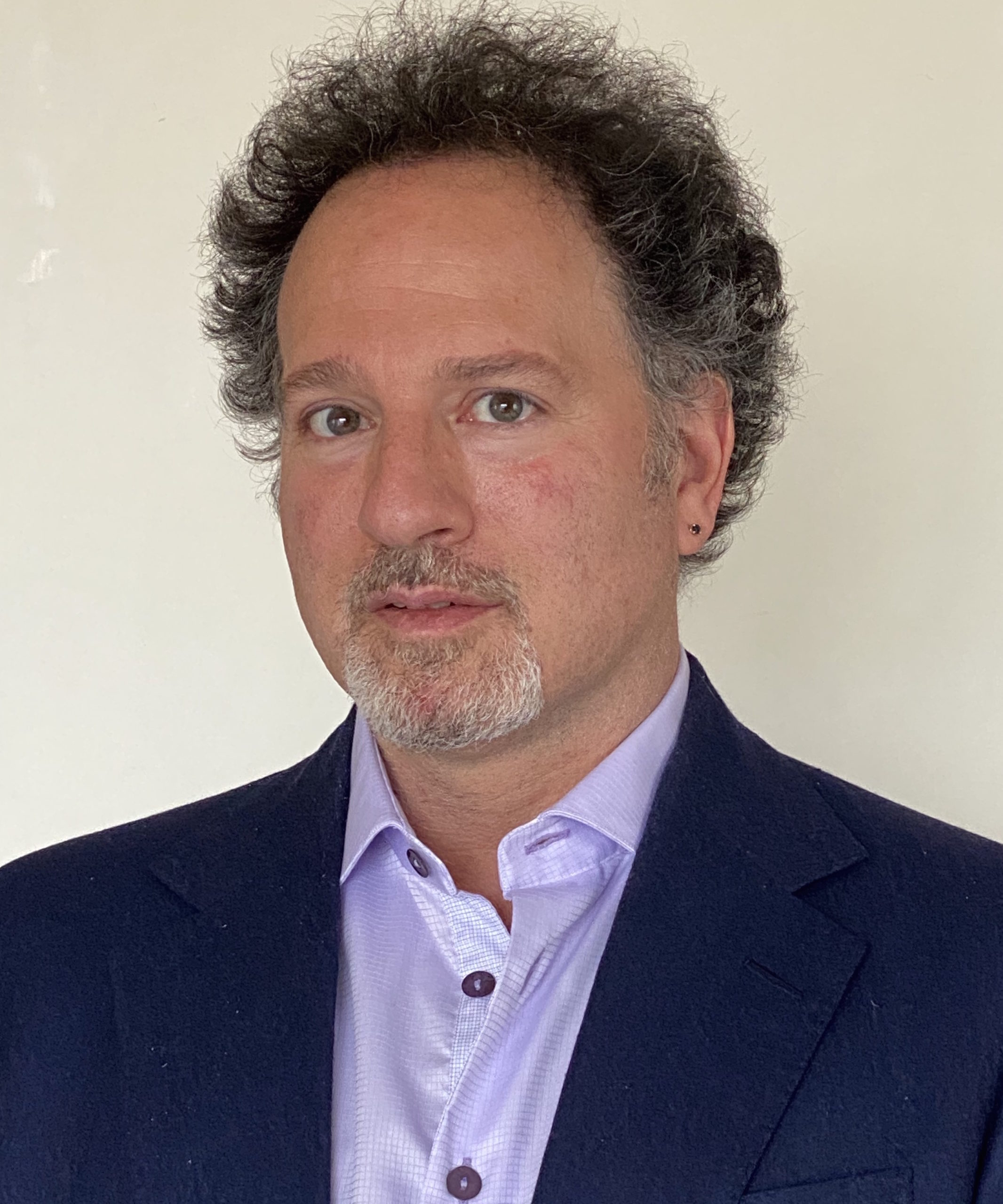
Zachary Karabell