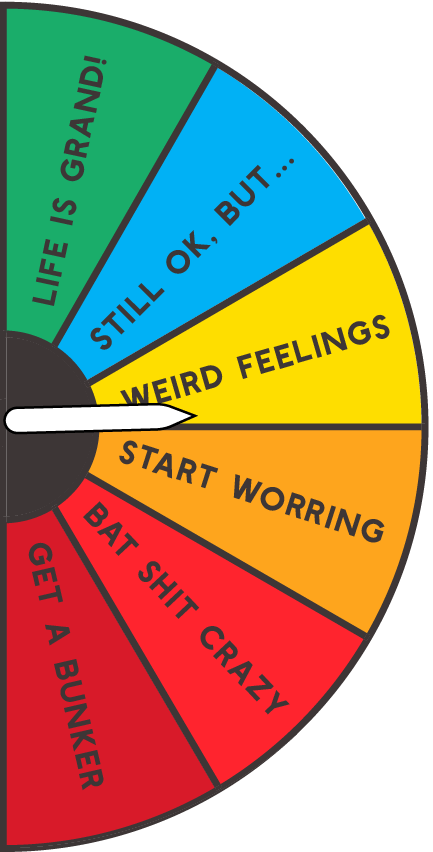
Volcanoes are erupting in The Philippines, but on-fire Australia received some welcome rain. The Iran war cries have been called off and The Donald’s military powers are about to be hamstrung by the Senate. Meanwhile, his impeachment trial is starting, and we’re all on Twitter for a front-row seat.

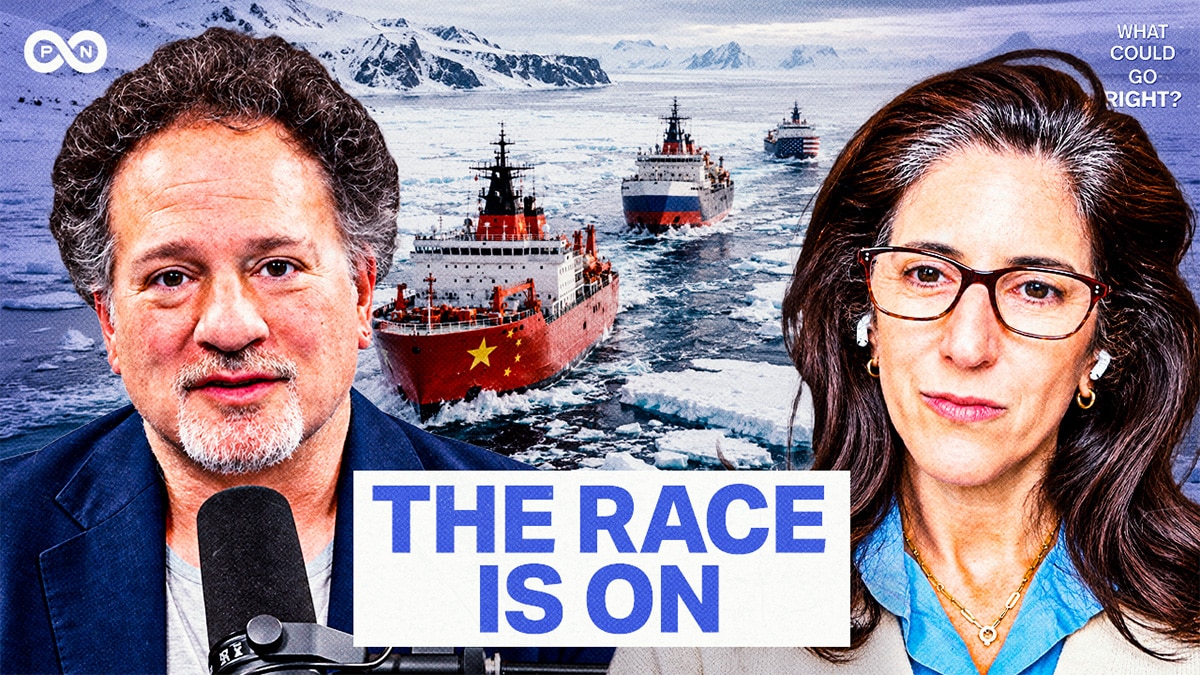
The Race for the Arctic Has Already Begun. Is America Ready?
Featuring Rana Foroohar
There was a time in American history when everything was about ships. For centuries, power on the seas was necessary for economic success, but US maritime power isn’t what it used to be. That change has never been more important than in the growing territorial tension in the Arctic Circle. Author, columnist, and economic analyst Rana Foroohar joins host Zachary Karabell to talk about her new book Sea Change: America’s New Great Game in the Arctic. They discuss how sea lanes opening across the North Pole as a result of climate change could reshape trade, security, and geopolitics, and make the Arctic one of the most important economic and political zones in the world.


Prefer to read? Check out the Audio Transcript
Although the transcription is largely accurate, in some cases it may be incomplete or inaccurate due to inaudible passages or transcription software errors.
Zachary Karabell: Should the United States seize Greenland? No, but seriously, what is going on with this newfound attention to the North, and in this case, the North Pole? We’re living in a world today where the Arctic suddenly looms large as a new frontier of competition and potentially conflict. This is my podcast, What Could Go Right?
I’m gonna speak today with someone who has written a really, really interesting book about this new emerging great game in the Arctic. Rana Foroohar is a columnist at The Financial Times, and she’s the author of a new book called Sea Change: America’s New Great Game in the Arctic Circle, and it is a look at what this part of the world has been, what it is becoming, and what it may become in the future.
Are we heading for a new world of great power conflict in the icy north, or will this be a revival of a global trading system that has been wounded but is by no means on its last legs? Will this be a place of discovery where nations come together to preserve the last pristine places on Earth, or will we, will we exploit it the way we have exploited large swaths of the planet to date?
Really, really stimulating, interesting conversation to come.
Rana Foroohar, it is such a pleasure to have you today on What Could Go Right? Really interested in this whole topic of your recent book, Sea Change.
Rana Foroohar: Sea Change is about America’s new great game in the Arctic, spheres of influence, US-China. You know, the Arctic is one of the last frontiers. But it’s also really, I mean, it, it’s about industrial strategy, and it’s about the idea that we need to build stuff again and that we need resiliency.
And so I got interested during the Biden administration in, in ships. But it goes back even further than that because in Trump 1, Trump got really interested in ships. His weird limbic, you know, animal brain realized that, “Oh, gosh, China and Russia together have nearly 50 icebreakers. We have one. If I wanna protect, you know, in the Monroe Doctrine way, the, the Northern and Western Hemisphere, maybe we need to think about ships.”
So to your point, what could go right, it’s actually a bipartisan industrial strategy that’s been building since Trump 1, got legs during Biden, and now, because Trump is who he is and he likes bright, shiny things, and we need more ships, has legs in, in Trump too. So it’s a cool story in a lot of ways.
Sometimes it’s a story of conflict, but actually it’s also a story about cooperation because both the right and the left wanna build ships again.
Zachary Karabell: So you spent, what, three weeks on the USS Healy, four weeks, something like that?
Rana Foroohar: I was on the boat for 10 days, but I was, the prep and the kind of getting to Alaska, doing all the things was about three weeks, yeah.
Zachary Karabell: So this is for people obviously who, who haven’t read the book, which at this juncture in time is probably everybody.
Rana Foroohar: But everybody will
Zachary Karabell: be reading it Everybody will read the book because- Yes … of this interview. So you do this in the fall of 2024, so it’s like the, the tail end- Yeah … of the Biden administration.
Right. And you have a lot of access to a major Coast Guard vessel, which does some classified work. And other than naval shipyards, where we still zealously guard our capacity, we don’t build ships anymore, and we were fine with that until suddenly we weren’t. But do you think, even though you say this is legit bipartisan, would the Trump administration have let you be on that ship for 10 days?
I mean, I… You’ll never know. I’m just curious what you think.
Rana Foroohar: You know, it’s a really interesting question. I think Trump won, yes, I, I, I think for sure. And in, in, in part because, frankly, there were higher quality people, and people that were, I think, more concerned about real issues, more of them working in Trump one.
But actually, I’m gonna, I’m gonna actually pull back a little further. The military cares about this topic deeply, and the military is, you know, no matter how they vote, they really do show up and, and do the bidding of the president no matter who he is. And that’s… I come from a military family, by the way.
My, my father was in the Turkish military. His father was. My brother was in the Navy. So I have a lot of respect for service people, and I’ve for years, decades even, been talking to folks in the security community, the defense community, about this issue of resiliency. And, you know, actually, a lot of my work for the last 30 years has been, do we really wanna have an economy that is totally financialized, where we’re making nothing but software and, you know, trading stuff, or do we actually need to build some stuff too?
And the defense folks have been always at the forefront of that conversation because their whole jam is preparedness, and they get very worried when they think about the idea that, “Oh gosh, for the last 20 years, China has actually been rin- ring-fencing the global maritime industry as a strategic priority that fits into a larger One Belt, One Road global mercantilist priority.”
That worries them, and so that’s bipartisan. And so I would say yes. Now, come to Trump two, it was very interesting because even though this book is in some ways right along the lines of what the administration would say it wants around ships- I got a lot of pushback. I mean, when I tried to go back in and get some follow-up Coast Guard interviews when Trump II had begun, they wanted me to sign all kinds of documents saying I would show them the entire book and blah, blah, blah.
And I’m like, “No, you know, you can trust me. You can talk to people like Peter Navarro who thinks this is a good idea , or, or Jerry Hendrix, who’s the ship czar, and, you know, is, I think, a conservative probably from Indiana.” And they’ll say, “Yeah, I respect her work, and you should talk to her.” But they were just being very careful.
They were just tiptoeing, and it was really clear that nobody wanted to talk, and everybody was terrified of what the president would or wouldn’t do.
Zachary Karabell: Yeah, and for those that don’t– I mean, Rana, you, you wrote an earlier book called Homecoming, which really was about the industrial policy or, or about just the general question of what should we make?
Where should we make it? What the balance should be between national industry on your own territory versus globalized industry that everybody ta- taps into. So in some ways, you know, there’s a dotted line from some of that earlier stuff. Your own tradecraft for a minute, ‘cause this is sort of fascinating.
How does one convince the Defense Department and the Coast Guard that they should let you spend 10 days on a ship?
Rana Foroohar: The path was kinda interesting, and I think it’s actually worth– I think readers would be interested. So I’m– I always consider myself to be a labor left Democrat. I was never into identity politics.
I was always into jobs, unions. You know, listen, I grew up in the Rust Belt, like lived– My dad ran factories. I lived through the hollowing out of the Midwest, so I was not surprised to see Trump rise, nor was I surprised to see Bernie rise. So I have very tight connections with unions, and I knew that when Biden came in, and I had a lot of friends in the administration like Heather Boushey, who was at the Council of Economic Advisors, people that I knew were gonna think deeply about industrial strategy.
And so I started talking to them. Um, one of my friends and longtime sources is a guy named Mike Wessel, who was a key source in this book. He’s a, a lawyer now in DC, represents the steelworkers, but started as a politico under Dick Gephardt, you know, ages ago and was one of the Democrats that I think never lost the plot about you gotta keep working people on your side.
And so I started talking to him, and he and others in the union movement had known Biden’s gonna do industrial strategy. We got one shot, maybe two shots, to get something big that’s gonna send a strong demand signal across many labor unions. What should that thing be? And they thought about ships, in part because it connects to jobs, it connects to resiliency, supply chains, national security, but also steel sends a really, really strong demand signal for building, and it creates capacity that then funnels through into other things, machine tools, electricians trades.
So there was this kind of cohesion from a political point of view and a jobs point of view. So Wessel really drove that strategy, and he, as a China hawk, as I am, I mean, I love China, super respectful of China, have always thought that we were smoking something to think China was gonna come seamlessly into the Bretton Woods construct.
He started driving this policy in a very bipartisan way, and I was fascinated by that because it, it made me think maybe there is a way to get more balance in the economy and build things again that’s sustainable. So I start, you know, I start looking into ships, but, but then I was like, “All right. I can’t do another ideas book that doesn’t have color and a strong narrative through line.”
And I’m like, you know, “Can I get on a ship?” And then Jake Sullivan cut a deal on the sidelines of NATO during the Biden administration to build icebreakers. It was a memorandum of understanding to build icebreakers with Finland and Canada. And when I looked at it, it got almost no press. But I was like, “Oh my God, this is this-” incredible gem of what a new trade and economic security paradigm could look like, where you’re doing friendshoring with allies who have vested interests in the same place.
You can share supply chains. It’s not America alone. It’s not, we’re gonna do everything at home. It’s, we’re actually gonna figure out how to build resiliency in a crucial area and strengthen security alliances at the same time. So I called up Jake and the team, and I was like… I actually spoke to Daleep Singh, his, his number two at the time on international economics, and we had a great conversation about icebreakers and, you know, how they had seen Trump’s interest, and then they came in and were like, “Wait, this is really interesting.”
Jake was obsessed with icebreakers. He thinks ships are the new chips. So I call him and I’m like, “Can I get on a boat?” And they’re like, “Really? Do you wanna go on a boat?” I’m like, “I 100% want to go on a boat.” And so that’s how it happened.
Zachary Karabell: And that leads me to this question of kind of the industrial policy.
All right, so let me push back a little ‘cause I’m more of a, we shouldn’t care as much about China over the past 15 years, and we should’ve cared more about ourselves, which, I mean, I think you and I converge a little bit more on that one, meaning, like, China’s gonna do what China’s gonna do, so we, we should do everything we can to make ourselves resilient and strong and- Yeah, for sure
not, and, and not expend unnecessary energy trying to prevent China- Exactly … from becoming China. All that that’s done is convince them that we’re determined to prevent them from rising while simultaneously doing very little to prevent them from rising. I mean, delaying it, making it more painful and more costly for a couple of years here and there, but not fundamentally changing the trajectory.
One of the things I said for years, and, and no one really listened, was if we try to compete with China On their strengths. Top down, closed society, no short term political pressures. Not none, but less. That we were likely to fall short because that’s what they’re good at. If we- Yeah … focused on our openness, our, you know, bringing in the talent of the world and, and, and essentially the neoliberal construct that went awry, we were more likely to compete successfully.
Now you could say arguably- Mm … we, we went from one extreme, which is we were- Yeah … 50% of the world’s manufacturing when you and I were born, and then we went to the other extreme, which is, like, we outsourced everything, and maybe that was- Yeah … the pendulum went too far. But I still wonder whether or not the, the urge to like now we’re gonna build stuff, cost and skills and population, like is that really the way to go?
Is-
Rana Foroohar: Well, for starters, I agree with you that it’s been going from one extreme to the other. You know, we went from, and this is what I’ve always been critical of, you know, we’re one big happy world. The world is flat. China’s gonna, you know, become freer as it gets richer. It’s every, they’re gonna do what we do.
It’s all gonna be great. I mean, frankly, the first time I landed in China, I don’t know, 30 years ago, I was like amazed, wowed, enchanted, but I was also like, “Who thinks this country is gonna do what the US wants it to do?” That is crazy bill. And I think I actually liked Bob Lighthizer, the former USTR under Trump One.
I liked the fact that he just pulled the scrim up on that and said, “Look, come on, cut the shit. You know, this is, this is a country that has a very different approach.” Unfortunately, I think there wasn’t that balance in the Tr- in Trump One, and certainly not in Trump Two of just as you say, well, you’re not gonna beat China on its own terms, so you’ve gotta find something in between that works well, and that’s why I was so interested in the icebreaker deal because to me, it really represented the beginnings of what I think the Biden administration was trying to do, and frankly, I think USTR Katherine Tai did not get enough credit for, which is come up with what she would’ve called a post-colonial trade model, something that’s like doesn’t have to be winner take all, doesn’t have to be extractive, doesn’t have to be mercantilist.
We are, we are moving to a world, as Jake said in his important speech during the Biden administration, it’s a post-Washington consensus world. The US is not the only game in town anymore. We have to work with allies. And I think that is important, and it’s important not just in really big, you know, big muscle things like ships, but it’s important because we need more resiliency in the world, right?
There’s all kinds of supply chain disruptions for all kinds of reasons. It could be geopolitical conflict, it could be climate, which is, it’s gonna, there’s gonna be more and more of that. It could be a virus. I’ve always thought it would be good to have kind of what my friend Barry Lynn, who runs the Open Markets Institutes, calls a rule of four, where if there’s something really important like transport vessels or PPE or biopharmaceuticals or semiconductors, maybe make them in, like, four places in the world instead of, you know, in the case- One
of semiconductors, one highly contentious island. So that’s, that’s the paradigm that I’m, I’m advocating for.
Zachary Karabell: I mean, it’s interesting. So, you know, the idea of the Arctic now because of climate change, what had been an icy expanse that was pretty much non-navigable is becoming navigable. There’s only a handful of countries that, that border on the Arctic, and then there’s kind of Arctic FOMO and Arctic wannabes.
But Russia is clearly the big country here. Essentially, you know, I would’ve felt like until what happened with Iran in the past six months, and there is a link here- Mm … that worrying too much about Russia was probably not the point. You know, being concerned about the- Yeah … about China was. But one of the things that Hormuz has shown is that even essentially weaker countries with any kind of military capacity can, just because of drones and technology, wreak undue havoc.
Which kind of makes me- Yeah … think, like, Russia is likely to be a major issue for a, as long as it has a government that Is in the same ilk of Putin because they don’t need to be a particularly powerful country in the, in the league rank of GDP or productivity. They just have to have access and will.
Rana Foroohar: You’re hitting on something really important, which is actually an intellectual core of the book, which is that we are headed back to a great game style paradigm. So 19th century, Russian Empire, British Empire duke it out over, you know, 100 years. In that conflict, there, it was not a one and done thing.
You had a lot of middle, uh, you know, what might have been called middle powers if we were speaking about it today, that were coming in and out of alliance. You know, Afghanistan, Iran, Germany, France, and they weren’t on the same sides all the time. They were influencing things in important ways. They weren’t maybe the key player.
I think that’s where we are now. I think these middle powers, I don’t know if you’d call Russia a middle power, but Russia is an important vassal state to China. There are other countries, Canada, uh, Denmark, France, Japan, South Korea, that are ca- starting to care about what’s happening in the Arctic because they can see, okay, this is a new sphere of influence.
It’s actually gonna be a very important supply chain, to go back to your point about Hormuz. It’s no accident, it’s total long-term strategy that the Chinese are the first to now start a weekly transpolar shipping route using Russian territorial waters, which is an alternative choke point, and that’s one of the reasons the Arctic’s so important.
I wanna ask you a question though, because I, you know, you may have stronger feelings about Russia. I think about it as a vassal state to China. Do you think about it the same way? Or it, it, what’s
Zachary Karabell: your- Not, not, I mean, not as much as China would like. The question is, like, what’s Russia gonna be post-Putin?
‘Cause Putin has a uniquely powerful hold and, and the nature of his powerful hold is to not plan for a succession. The North Korean dynasty, which at least had dynastic ambitions, right? It went from father to son, and it might now- Yeah, yeah … go to his daughter, right? Or- Daughter, yeah … yeah, so there’s a- Yeah, daughter.
There’s no, there’s no, like, Putin… There’s no, you know, Putin’s kids are not being groomed for power, at least if they are, it’s being done really, really, really quietly. So I think that is the question of Putin doesn’t see himself as a vassal. I mean, whether, whether Xi Jinping sees Putin as a vassal is a whole other question, but it is absolutely clear that Putin’s self-conception is of a, an ally of convenience.
Do you have to think you’re a vassal to be a vassal? Can you be a vassal but think that you’re an independent power? My God. Is that like a
Rana Foroohar: tree falling in a forest?
Zachary Karabell: It is. And like- It’s like that old Far Side cartoon where the tree is going, “Help.” It’s like, “I’m firewood for sure.” Um- So I, I think structurally it’s heading that way, but I wouldn’t call Russia a China vassal state right now.
Rana Foroohar: Okay. And so, and then what do you think actually about my great game analogy? Because
Zachary Karabell: I think it’s three- That I think is correct. Yeah. But I think it’s, I think it’s the United States and China’s, right, great game.
Rana Foroohar: Yeah.
Zachary Karabell: I still, you know, it’s an interesting thing. We’re recording this before Xi Jinping goes to Washington, which is unlikely to result in anything other than fairly anodyne, you know, headlines and some warm feelings expressed without any specificity.
But it is intriguing over the past 18 months, when you went on the ship and then till now- Mm-hmm … it is the least explicitly tense time between China and the United States since the Xi Jinping visit. Xi Jinping and Obama I think met in 2014. It’s not been a good 12 years for US-China relations. Yeah.
Maybe because of Iran, maybe because of just Trump’s tariff around the world. Right now it seems like we should be more worried about Canada seizing Arctic routes than we are worried about China seizing Arctic-
Rana Foroohar: Okay. So that’s interesting. I have two thoughts. I think Mark Carney is a badass. I mean, I, I thought he was gonna be a badass.
He is. He is like, he’s like the, the thinking man’s Trump in the sense of he is just not backing down, taking no prisoners, but he means it. We all looked at his speech from Davos last year, uh, which, you know, basically didn’t say anything that people like me on the labor left wouldn’t have been saying for the last 20 years, but the fact that he said it in a suit in Davos was a big deal, that, you know, the world is different and we have to be more self-interested, and we also have to work with allies.
The way that the chessboard has now been thrown up and the fact that you have, going back to the point you made earlier, these middle powers, these countries that it’s not US-China, but boy, they can affect a lot of change, and they can play really pivotal roles. I mean, think about what if maybe the idea of a new coalition of the willing, a new coalition of values around trade and f- and security is formed not by the US- Right
but by the Canadians. That’s super interesting, and I love, I love that, and frankly, I’m kind of hoping that being friendly with certain Canadians, like maybe I can get a passport someday. I don’t know. The other point that I would say, though, it’s, uh I’m gonna be watching at the Xi-Trump summit. Trump is just…
I mean, I feel like the Chinese, ever since Trump too, they’ve just been laughing quietly- Yeah. Totally … to themselves because honestly, I think you’re gonna see a lot of posturing in the next few weeks and months around ships, but you may not see that much action because China does not want Trump to do anything that compromises maritime security.
And China has 5,500 ocean-going vessels. The US has 187. If China wanted to blockade global supply chains at any point, they could. Trump is actually fundamentally doing nothing to change that. Right. He’s talking a lot about it, but he’s not changing it.
Zachary Karabell: It’s like a different type of great game analogy, or maybe it’s actually very similar to the great game because for those who don’t know, and you write in your book, the, the thing about the great game in the 19th century was it was a vast amount of territory with relatively few people actually contesting anything.
I think that what’s interesting about what’s going on in the, in the Arctic in terms of the United States is it is similar a little bit to what the British started experiencing as the empire became much more- Mm … attenuated and stretched- Mm. Yeah, yeah … is that-
Rana Foroohar: Yep …
Zachary Karabell: you know, they didn’t have enough ships, and they didn’t have enough people to really control the territory that they thought they were in control of.
Murrow’s is fascinating in that Nothing about how that’s gone has been surprising. If you had said to me intellectually eight months ago, you know, smaller powers with drones have disproportionate power, but to just see it play out is still startling. And it’s clearly, I mean, if you’re China, you’re probably going, “Huh, maybe we’re in a lot better shape than we thought we were in.”
You know? Than-
Rana Foroohar: Yeah. Yeah. There’s very few, I think, Western observers that have any kind of a real sense of, of what’s seriously happening in Beijing and, and what the industrial strategy and planning has been like, but boy, I think the last 20 years have been an amazing example of long-term thinking. Yeah.
Because when I look at maritime, I mean, China comes into WTO in 2001. In 2005, it starts talking about dominating maritime. It also launches One Belt One Road by the 2010s. It has a polar Silk Route strategy. In order to care about all that stuff, you have to be thinking, “Oh, we’ll be in a world in which supply chains will be weaponized.
B, we’ll be in a world in which choke points around energy centers will become crucial. C, we’re in a world in which climate change is real and the Arctic is melting, and we’re gonna get up there because that’s gonna be important. D, we’re going to connect tech resources, clean tech, and maritime all together.”
I mean, wow, that’s pretty amazing. But, um, I also wanna say something about the British analogy. It’s funny, I hadn’t thought as much about it as, as you just did in a way, but I think that’s right, that the Arctic is a huge place. It’s kind of funny. When I was on the boat, by the way, all the maps look from the north to south, and you get this totally different world.
But, like, Russia is enormous. Yeah. And you’re just like, “Ah.” So for sure we have w- well, we now have three, but at the time I was on the ship, we had one ship in the Arctic, so if you wanna try and meet presence with presence, well, that’s a little, little difficult. So for sure, it’s very much a British 19th century paradigm.
Zachary Karabell: But what about this question of forward technology? And I, I think-
Rana Foroohar: Mm …
Zachary Karabell: we’re just beginning to all grapple with autonomous unmanned vehicles, AKA drones, but it could be land vehicles as well. As a tectonic shift in how we conceive of surveillance and war and all these things, does that maybe alter some of your view?
Drones are surveillance and, and weapons, but they’re not… They, they can’t replace a container ship. But I, I just wonder, does that shift any of- Yeah … how you’ve been thinking?
Rana Foroohar: No, it’s a really good question. So just to kind of put, put meat on those bones, I think what you’re talking about is do we want to build giant multi-million dollar pieces of steel in the water at a time when an $800, you know, Turkish drone can take out a piece of equipment?
During warfare, you have to think more carefully about that. But I would say it only strengthens my theory of the case, which is that the Chinese are- have from the get-go in maritime been building what’s called dual use vehicles. So very cheap, nimble, used for both military and commercial, things that can be retrofitted and, and changed depending on the need.
And yes, you do need them because a drone still can’t carry, you know, your cargo freight from point A to point B. And by the way, in wartime, 90% of freight is carried by commercial vessels. So the Chinese have been thinking about this in completely the right way. Meanwhile The US, thanks to the peace dividend, outsourced a lot of the defense space.
That actually had the perverse implication of strengthening and concentrating power in a few very large bureaucratic contractors that have a really dysfunctional way of getting procurement from the federal government. We separated commercial shipping, so we lost commercial shipping. You lose the economies of scale.
You have like three giant companies that are spending way too much building pieces of steel that are out of date. So again, the Chinese model is the one that works. You do need ships, but you also need things to integrate. And, uh, you know, one fascinating thing, there’s a guy named Willy Shih at the Harvard Business School who I’ve been speaking to for years about in- industrial policy.
He was one of the first folks like me. I think you have to be an immigrant who had some time in the Midwest to actually, like, care about building stuff, but we’ve been talking about this for decades. And when I started talking to him about ships, he’s like, “Oh my God, you know, you’re making me think about a factory that I went to visit in Chongqing decades ago, and after the Berlin Wall fell, it stopped making munitions and just started making bicycles, and then it started making motorcycles, and then it started making cars.”
That’s the model that you want- Right … and it’s not what we have.
Zachary Karabell: But I wonder, is it a model that we really could have? You know, you alluded to this before, the Biden administration’s push, which began with Trump one, incidentally, with some domestic semiconductor chip manufacturing.
Rana Foroohar: Mm-hmm.
Zachary Karabell: So you have the CHIPS Act, and again, this has been a bipartisan thing, uh, although I think briefly Trump spoke against it just ‘cause it was Biden, but it, it is still largely a bipartisan thing.
Yeah, yeah. There’s some evidence between Micron and Taiwan Semiconductor and Intel, which the US government took a stake in, that there is gonna be some domestic US chip manufacturing, particularly very high-end chip manufacturing, not really the memory chip world, right? Yeah. But you wouldn’t exactly say that we’ve become radically more resilient or are going to be in the next five years relative to Taiwan and TSMC.
Rana Foroohar: Well, I, I would say ye- yes and no. Here’s where no. At scale, no. But yes, in the sense that I, I think that effort around semiconductors was a wild success and actually pushes back against all the critics that said you could never bring back an old line industry like semiconductor production. In 18 months, we got fabs that were working at a high level as quickly and efficiently as the ones in Taiwan.
It’s a hop, skip, and a jump from there. It’s, it’s, it’s just basically a wartime effort if you wanted to, just as you did in World War II, have victory ships. You could have victory semiconductor fabs and build those out. To me, and this connects to the highest level of argument in the book, it’s about concentration of power.
This isn’t, this book isn’t anti-China. This book isn’t necessarily, like, pro, you know, make everything in America. It’s about- We gotta get rid of concentrated power. We have had a system that has been very lopsided for the last 50 years, where you get a highly financialized debt and consumer-driven economy like the US, a highly over capacity export-led economy like China that creates global imbalances, that creates tension.
At the same time, in almost every industrial sector, not to mention the tech sector, you have a handful of companies owning all the wealth. That doesn’t really work. You’ve gotta get to something more balanced, and that then goes back even to the, the Bretton Woods system, where, of course, Keynes would’ve argued.
I mean, the Americans got their way. They sort of realized the exorbitant burden, exord- exorbitant privilege of the dollar and the dollar-based system and said, “Yeah, we’ll take that.” But some, like Keynes, would’ve argued, “No, we need a more multilateral system. We need something where trade, currency, power is shared more equally.”
I think that’s where we need to go. Now, how bumpy it is getting there is another question. Can I ask you a question?
Zachary Karabell: Yeah.
Rana Foroohar: Um, so you’re the optimist.
Zachary Karabell: Sure.
Rana Foroohar: When I… Ha-ha. That’s your brand- Yeah … dude. Yeah. Don’t step away from it now. Okay. Sorry. Um- Just- Had a moment … okay. Yeah. So, so when I look at today, I’m always thinking about 1914 to the 1940s, like, where are we in that?
Zachary Karabell: Yeah.
Rana Foroohar: When you think about today, what are the historical analogies you use, and is there an optimistic one here?
Zachary Karabell: First of all, the high-level optimistic one is I, I don’t think we’re in a 1914 to 1940s interregnum. One, because I think history is, at best, illustrative of possibilities, but, but not meaningful in terms of probabilities or patterns.
So, you know, nothing repeats in, in that particular way. Thematically, things obviously repeat constantly, and human nature is a constant. So I don’t think the past is particularly predicate in this sense. I also think that if you were to take away the Trump factor, like, there were things that were gonna happen without Trump, no matter who was president- Mm
over the past 10 years, even with the Biden interregnum, which is the world was gonna become more multilateral. The, the bilateral US-Russia world was already breaking down. In the ‘90s, the US he- hegemon role was breaking down as countries got more successful and powerful in a way that was very quite good.
I mean, I’ve often said- Hmm … if the, if the Bretton Woods crowd had looked at the world net in 2025, they would have found that world pretty much the most successful version of what they would’ve hoped for in 1945, in terms of dozens of countries having r- r- become independent, having political cultures and economic standards of living inconceivably greater than, you know, kinda what was the case in the ‘50s.
And that a lot of that would’ve happened, meaning the US becoming less powerful, countries independently doing their thing. So on your point about the, the, the need for more domestic production to offset the neoliberal offshoring- If Trump weren’t burning bridges that had been really- … really carefully constructed, a lot of that model is quite resilient, meaning the idea that- Mm.
Mm … Swedish partners and Finnish partners would help us build ships along with South Koreans, that we would have- Yeah … intelligence sharing in the quad with the Australians and the Japanese as a way of dealing with the South Pacific, that we would have, you know, relations that were both economic and cultural with various South American and Latin American countries.
Like- Mm … that is an augmentation of power that, that China basically can’t do, won’t do, and is probably never gonna do. If we weren’t burning our own bridges, I wouldn’t say there was such a need for doing some of what you’re doing, but I don’t think that burning of those bridges was inevitable or will be inevitable yet in the future.
Rana Foroohar: So I think that’s, that’s a really sharp point, and actually it’s… I haven’t heard anybody kind of articulate it quite like that, that the Bretton Woods system is, is in some ways its own solution to the Bretton Woods system, which is, is interesting. I, I would just amplify and say, I mean, one of the things that so bummed me out in Trump too was the, this absurd Canadian trade war.
It’s like, okay, if you care about the Arctic and you care about ships, and China’s now shipping acr- a transpolar through Russian, let’s not piss off the, the partner through which your, uh, territory you’re gonna have to sail for your own route. I mean, it’s just, it’s absurd and depressing. I guess one question I have, and I don’t know the answer to this, is where do we reset?
And I’m a little more familiar with the European part of this conversation. Well, at the beginning of Trump too, I think there was still a chance that the Eu- the Europeans were confused and terrified and, you know, I work for a British publication, I would sit in editorial board meetings where there was just like, “This is Trump specific, and we’re just gonna wait for this to be over, and then we’re gonna reset to something that is different but not radically different, and it’ll be okay, and the Democrats will save us.”
Now, that is not the conversation. Sure. Now it is, “We can never trust America in the same way again.” Right. And I, I really worry that something has been just fundamentally damaged in a way that is gonna be super-duper disruptive.
Zachary Karabell: Yeah, and so my, my… And this is generally an optimistic pushback to that, is- Mm
that may absolutely be the case. You know, this trust, trust is hard to, to build and easy to destroy. That’s an observable truth of human nature. That being said, the mercurial nature of both national interest and international relations, in addition to just the mercurial nature of human beings, also suggests that, you know, you just never know.
The, the constant analogy is There were tens of thousands of students and millions of people in Russia in July of 1989. There were tens of thousands of students at Moscow State University eagerly studying Marxist Leninist thought. Even if cynically they thought the system was screwed and, and they didn’t believe any of it, they essentially believed that they were gonna be in that system and wanted to maximize their potential to function.
And you know, six months later, none of it matters. So- Yeah … the rapidity with which things can change-
Rana Foroohar: Mm …
Zachary Karabell: is breathtaking. Which does not mean- Yeah … as you said, that this is the rupture. I think structurally it’s the rupture in that never again will the world perceive the United States as an unmitigated hegemon in the way in which it did, and I think, look, that will likely be painful for the United States, but good for the world.
Good for the world in all the ways that you write about, meaning more resilience for them, less dependency on us. And I respect the degree to which it could just be different in a good way. That happens.
Rana Foroohar: It, it do- well, I mean, God, yeah. And I like to think of myself as a contrarian, and being an optimist is actually the contrarian position right now, so I, you know, I just i- in terms of what could happen that would be breathtakingly different, I mean, one thing we haven’t talked about, and we’re now the only podcast that is not talking about AI in this podcast right now, so I’m gonna bring it up.
Zachary Karabell: Well, there, there we go. There goes that.
Rana Foroohar: I mean, the fact that you’ve got the Chinese intelligence agency saying, “Ack,” you know, “We’re worried,” and you’ve got Steve Bannon and Bernie Sanders d- saying, “Ack, we’re worried,” that’s kind of, you know, th- there are these other huge vectors out there right now that have nothing to do with this that could, as you say, throw a spammer for, for ill or for good into everything.
Zachary Karabell: Yeah, and then, then, you know, the, the AI challenges, like people freaked out from the late 1930s well past the Cuban Missile Crisis- Mm … about the palpable risks of nuclear Armageddon. And they were real. Like, there was a risk of nuclear Armageddon. Yeah. Those fears were not just irrational. Yeah. They were rational extensions of a possible trajectory, which I think is true of AI today.
Which again, it doesn’t mean that those risks aren’t real, but if someone gets up and says there’s a 10% risk this is gonna kill everybody, it is equal to that there’s a 90% chance that it won’t. Now, people do this with medical decisions all the time. They do this with their own calculations about what risk is an acceptable risk.
Rana Foroohar: Mm-hmm.
Zachary Karabell: Uh, and by the way, a 10% risk, like it’s a bullshit number. Like, nobody knows what the risk- Yeah, yeah Like the-
Rana Foroohar: We’re terrible at calculating risk, by the way Right Like that, that is a psychological thing that we do not do well.
Zachary Karabell: And also, it’s impossible to do for future unknowns that have no past correlate.
Like, you can’t … There’s no number you can affix to the risk of AI.
Rana Foroohar: I wanna ask you just on the optimistic front, and I’m gonna d- I’m gonna thread … Here’s my needle. I’m gonna thread something so elegantly, or maybe not, you can tell me. I’m gonna bring this back to my book, but also pose a challenge that I think is actually maybe one of the existential challenges.
So when I was up in the Arctic, it was really beautiful. It was effing cold, but it was really beautiful, and it was away. And I spent, and I spent a lot of time looking at the northern lights and just being in nature in a way that I’m not usually living in Brooklyn. I was super creative. W- I was journaling all the time.
I came up with a bunch of ideas. I was away from the world of work and high-speed data and capitalis- high-speed capitalism as we know it. One of the things I’m thinking about is how do we get to a place where people are going to be able to live in a different way when work is fundamentally different, as I think it will be with the world of AI, and to embrace the wonder of things, embrace the curiosity, and maybe embrace their better selves?
So to end on an optimistic note on an optimistic podcast, you know, things, things, uh, go right. I mean, where, how do we get there?
Zachary Karabell: So I did a podcast a couple weeks ago with a man named Ari Wallach, who is a futurist, and he brought up the, the one major entertainment franchise that has been and always has been inherently optimistic, and that was Star Trek Ha,
Rana Foroohar: love that.
I, obsessive
Zachary Karabell: watcher So Star Trek is kind of the answer to your, like, what’s the scenario, the optimistic scenario question- Mm … right? Because there are all these moments in Star Trek where character A or character B, like there’s, there’s, you know, both the old and the new one where Captain Kirk goes back to his hometown-
where his brother is still- Through, through
Rana Foroohar: that giant mirror.
Zachary Karabell: Yeah. Right. But I mean, they’re, like he’s still making wine and in, in- Yeah, yeah … in the French countryside. And there are, there are drones around monitoring, you know, moisture levels, and there are all the tools of that 300 years in the future, but there’s also still people journaling and living and, and then there’s just the human condition, which, uh, is unlikely to shift radically in X number of years.
And so I don’t know the answer to what these things look like. I just take a certain amount of human history, including our present, including everything you wrote about at the Arctic and the great game, is like this neck-and-neck race between our unbelievable capacity to create and our extraordinary capacity to destroy.
And the fact that we are- Mm … sitting here having the debate about the present and the future suggests provisionally that as of now, our capacity to create has narrowly won out over our ability to destroy, otherwise there’d be no conversation. And, you know, do you believe that’s gonna continue to be true or not is a faith statement, not a proof statement.
You wrote a book about, like, literally a brave new world. You know, this like it is, it is the final frontier, if we’re gonna use the Star Trek analogy. It’s like one of the last parts of the world that is uncharted or it has as yet been untouched and untrammeled by the same currents that have created the modern world.
And, you know, maybe it’ll be a great game of rivalry, maybe it’ll be a place of interconnectivity, maybe… I’m sure it’ll be both.
Rana Foroohar: I like both as a, as an optimistic hedge. I also like Star Trek. And, uh, that’s, I don’t know. That’s a good place to end, I guess.
Zachary Karabell: Everyone should read the book ‘cause it’s also a really interesting description of kind of a, a fascinating ship.
I mean- Yeah … you, you know, meaning as just a piece of hardware Oh my God, so interesting … as well as the people on it. That filled me with a certain amount of hope, just the way you write about the crew- Yeah … of, the Coast Guard crew of that, of that ship.
Rana Foroohar: Well, I, you know, I have to say, again, coming from a military family and, and a service background, my mother was a teacher, you know, I have so much time for people that are fascinated by a world beyond, you know, sort of grasping and, and money.
And these guy- they’re mostly guys, some women as well, but the captain was a woman interestingly, and the new one is too. They’re out there for adventure, they’re out there for service, they’re out there for all kinds of reasons that are really optimistic, and I dedicate this effort to them. They are phenomenal people, and yeah, it was, it was a privilege to be with them.
Zachary Karabell: And, and I was really struck by that as well, so thank you, Rana, for a stimulating conversation.
Rana Foroohar: Thank you, Zach, as always.
Zachary Karabell: So that brave new world, it’s a different pathway for global commerce, it’s a different place for global rivalry. It remains relatively untouched compared to most parts of the world, and I suppose there’s a degree of loss in that.
But again, in that cup half full, cup half way, there’s also a good deal of gain. I wanna thank Kaleidoscope for producing these episodes. I wanna thank my team at the Progress Network for being my team at the Progress Network and scouring the known universe for stories of good and uplift in a world filled with dystopian despair.
Please sign up for our What Could Go Right newsletter on Substack, or you can get it directly through the Progress Network website, and you can also get my weekly Edgy Optimist column. And thank you for your time. We live in a 24/7 world individually, where every hour is precious, and I thank you for giving me that precious hour.
I’ll be back with you next week.
LOAD MORE
Meet the Hosts
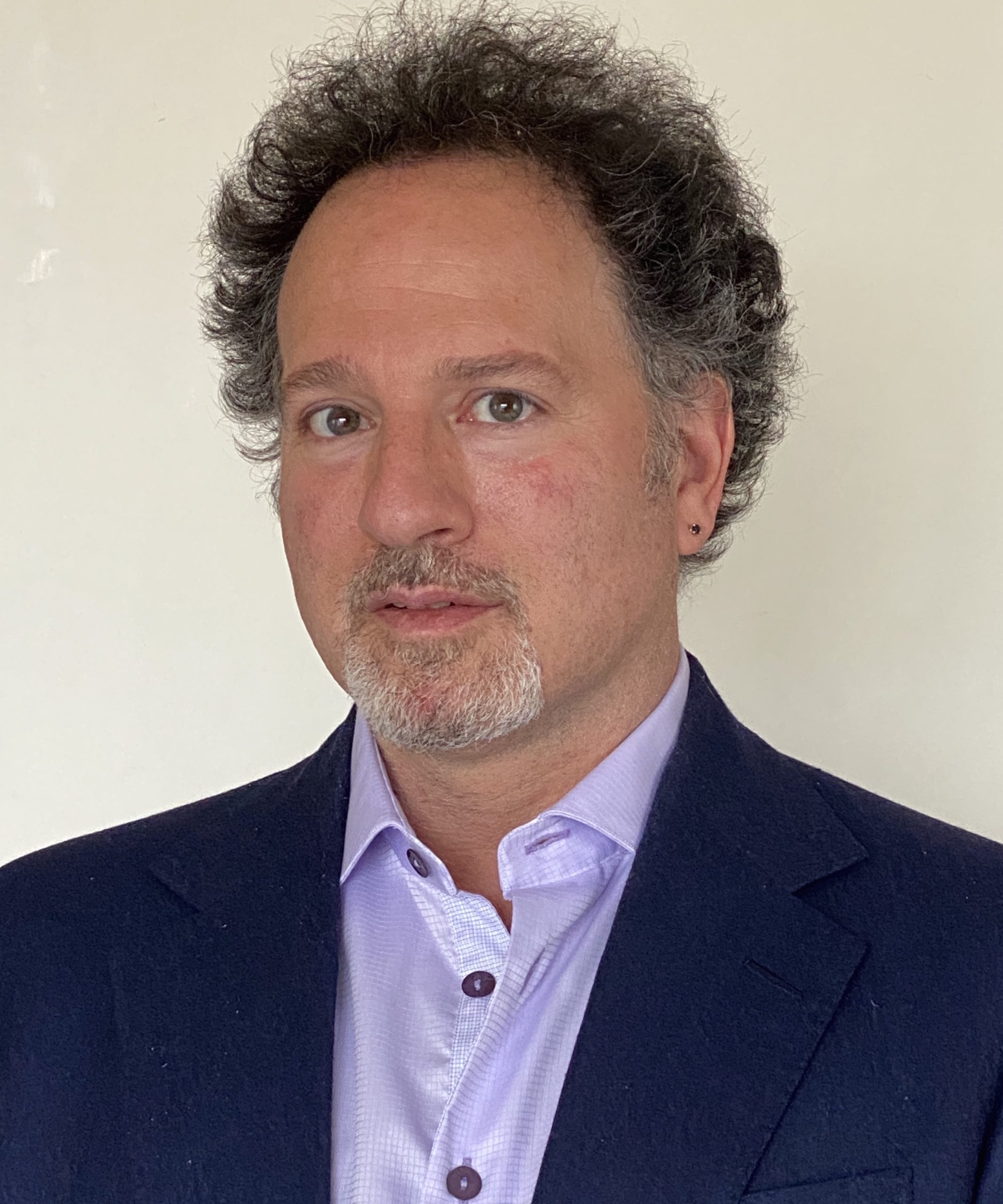
Zachary Karabell