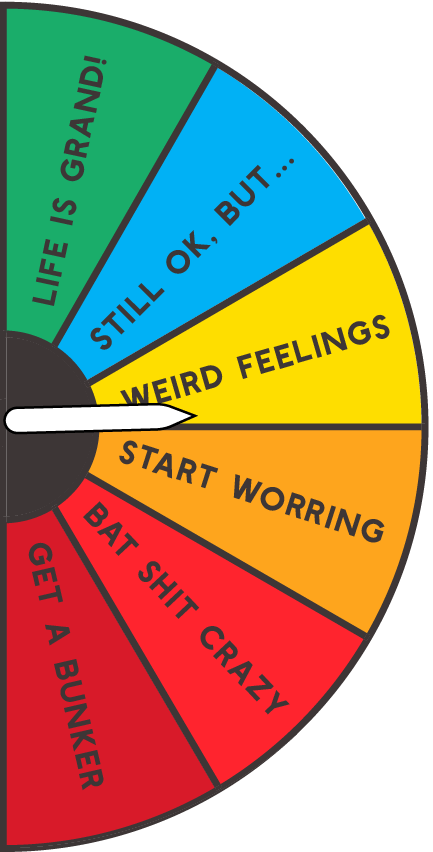
Volcanoes are erupting in The Philippines, but on-fire Australia received some welcome rain. The Iran war cries have been called off and The Donald’s military powers are about to be hamstrung by the Senate. Meanwhile, his impeachment trial is starting, and we’re all on Twitter for a front-row seat.

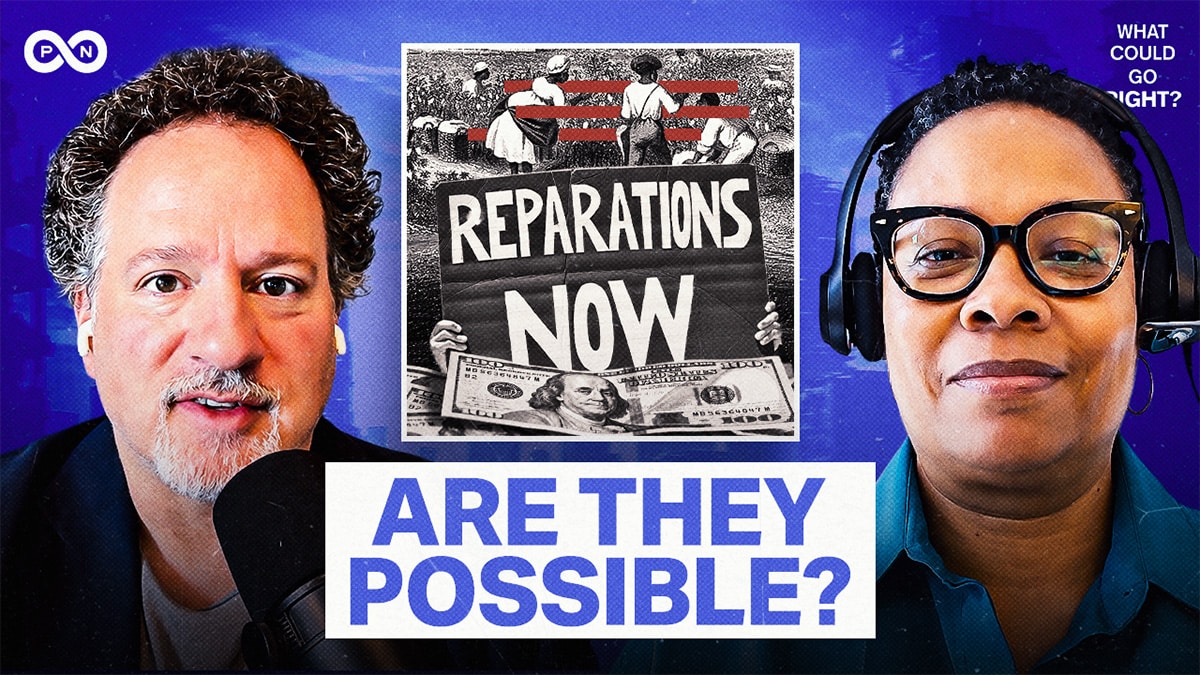
Could Reparations Actually Happen in America?
Featuring Prof. Dorothy Brown
In the United States, we have constant debates about long-standing systemic issues like classism, racism, and economic inequality, and we speak about these issues as if they are complicated and impossible to address. But what if history tells us that we already have the solutions to some of our biggest and oldest problems? What if there is a bold path that looks to the past to redirect our economic future? Georgetown Law Professor Dorothy Brown joins host Zachary Karabell to talk about her book Getting to Reparations: How Building a Different America Requires a Reckoning with Our Past. They discuss whether reparations are practical and actually possible in the near future.


Prefer to read? Check out the Audio Transcript
Although the transcription is largely accurate, in some cases it may be incomplete or inaccurate due to inaudible passages or transcription software errors.
One of the goals of The Progress Network and of this podcast is to imagine better futures, to forecast a future that is manifestly better than our present, and doing so requires often bold thinking. How do we get there? Well, that’s part of the point of this conversation. Reparations. That is a loaded word, and the debate over whether or not the United States government should pay reparations to the descendants of African American enslaved people, whether or not the federal government should be paying out hundreds of billions, if not trillions of dollars of money, either in the form of tax breaks or direct payments to remediate those harms, has been one of the debates over the past decades that continues.
But there are those who believe that that is the pathway to future healing, and it’s a worthy debate to have, even though it is a third rail debate for many people. But it’s not a third rail for my podcast, What Could Go Right, of which I am the host, which is part of The Progress Network. And we are gonna talk today with Professor Dorothy Brown of Georgetown Law.
She began her career as a tax professor and has become, over time, one of the main proponents of and leading voices for reparations. And she has charted out how to do it, why to do it, when to do it, and who should be doing it. And we’re gonna have a conversation today About this loaded topic. Professor Dorothy Brown, it is a pleasure to have you on What Could Go Right?
I am gonna ask a provocative question, which is, you’ve written about reparations, Ta-Nehisi Coates has written about reparations, lots of people have been talking about reparations for the descendants of those who were formerly enslaved, and I’m gonna just plunge in with the, what to me is the most important question here, which is even if it’s right, is it feasible?
And even if we should at a moral level, should we at a practical level, given all the worms of the proverbial can that that would stir up? Oh, so that’s a great question, and I come to the reparations project as a skeptic. So I came to this project… Well, I came to the idea of reparations thinking, “Oh, it’s never gonna happen.
I don’t even need to think about it.” When I finished writing my book, The Whiteness of Wealth, that looked at how the tax code systematically disadvantaged Black Americans and the role that the tax code played in making the racial wealth gap worse, I said to myself, “Well, what could fix the racial wealth gap?”
And there’s no perfect tax policy that would ever fix the racial wealth gap, even if tax policy could stop making things worse. And I decided the only thing that would fix it would be reparations. And my skepticism met my optimism, and I said to myself, “Okay, if I’m gonna write a book about reparations, it has to be practical,” because I am a practical tax law professor.
There’s, to me, there’s nothing more practical than that. And I I asked myself, “Well, how am I gonna write a practical book when I’m skeptical?” And as it happened, a friend of mine was visiting at my house on Martha’s Vineyard. She was a professor at Emory University, and I was at Emory Law at the time, and she teaches foreign relations, and she told me the story of how when she teaches her students that the United States government paid reparations to Italy on behalf of Italians lynched in New Orleans, she said her students were surprised.
And I said, “I’m surprised. What the– What are you talking about? We paid reparations for Italians lynched, but not for Black Americans?” She said, “Yep.” And then the conversation moved on to what it was we were gonna have for lunch. But I never moved on. I said to myself, “Wait a minute. We, we, the United States government, paid reparations for Italians lynched, but not the majority of people who were lynched, which was Black Americans.”
And then I asked myself, “What else don’t I know? I don’t know that. What else don’t I know?” And then my s– Then I found other examples, and my skepticism fell away. Fast-forward to my job talk at Georgetown. So I was at Emory, but I was interviewing at Georgetown, and the law faculty at Georgetown is known for being very left.
And I said to myself, “Well, this is gonna be interesting. I’m gonna talk about reparations to a crowd that should be supportive and should be my kind of audience.” And they were supportive of the project, but they pushed back fiercely on the idea of talking about reparations. “Could you call it something else?
Could you use a different word?” Because they were worried about the backlash that the R-word, as I would call it, receives. After that, I realized that I also had a messaging problem. I didn’t just have a skepticism problem; I had a messaging problem. How do you talk about reparations to people who are skeptical?
And it caused me to hire a political strategist, a political strategy firm, to focus group test messaging. And at the end of that process, we figured out there’s a way to talk about reparations to skeptics and others to convince them to either wind up going from opposition to support or opposition to sig- significantly less opposition.
So there’s one prime example in recent memory in, in, in many people’s lived lives of reparations in the United States toward a ethnic community that w- was on the receiving end of sort of government violence that the collective belief was unjust, unfair, immoral, and that’s the internment of Japanese Americans during World War II.
And in the mid-1980s, partly spearheaded by the senator from Hawaii, Daniel Inouye, but obviously there was a huge movement for this. There was a reparations bill to, uh, pay the descendants or, and survivors of the Japanese internment about $20,000 each, uh, which I think at the time amounted to about a billion and a half dollars.
So in today’s terms, I don’t know, maybe that would be three billion, three and a half billion dollars. Let’s say somewhere between 13% and 17% of the American population is either African American or identifies as such, right? Is that about the right- Correct. So- 50 to 60 million, 40… You know, something in that range.
I mean, obviously there if, if, if comparable figures were applied, right, you’d be talking about several hundred billion dollars or more, right? We, we have a hard enough time doing anything except for, like, paying for defense and deportation at this point. It’s one thing to hold out a mark and say we should do this, but what makes you think in any way that we are collectively at this political moment in time prepared to do so?
So in order for this to happen, you’d actually need leadership on the reparations movement that would begin with conversations. It would gin– it would begin with history. It would begin with informing people. It would begin with an understanding that when you talk about billions of dollars and how expensive it is, nobody talks about the billions of dollars stripped from Black Americans.
Nobody talks about the wealth that was stripped from Black people by the federal government, either through slavery or lynching or a 13th, 14th, and 15th amendment that the Supreme Court consciously chose not to use to protect the very Black Americans it was designed to protect. We, we can talk about the redlining, we can talk about Jim Crow, we can talk about the GI Bill that never enabled Black Americans to get the same benefits white returning vets did.
So we always talk about how much things cost. We don’t really talk about how much the war on Iran costs. They just keep giving them more and more billions of dollars. We don’t talk about that, right? But somehow when we’re talking about fairness and equity and taking care or compensating or reparative justice for Black Americans intentionally harmed by the government, suddenly we wanna talk about a price tag.
And believe me, I get it. It’s gonna cost something, and we need to talk about it, and we need to talk about how to pay for it, and I have a plan for all of that. But fundamentally, we should ask ourselves why it’s okay for the government to compensate white enslavers, Italy, the tribal nations, and Japanese Americans for things that have happened to Black people but we never compensate Black people for.
And the minute you start talking about it, people say, “Oh, we can’t do it. It’s impossible.” This country has done impossible things before. We can do it again. And I honestly believe there’s no time better than the present when we see how much race divides this country, when we see foreign governments exploiting racism in America, that it is not just a domestic problem, it is a national security problem as well.
So again, I, I kinda wanna push you on the, the, the idealistic versus the pragmatic In that, like I feel there’s a lot of things I could say that I think we should do, you know? Or, or things that I think we should be be- better at, you know? I think we should have a, a better healthcare system. I thi- I think no- nobody in the United States as a prosperous 21st century country should be concerned about losing their home or a job- Or living in poverty
uh, because of a medical problem, right? So I, I think all these things are shoulds that are moral, are unequivocal, and are there. But my should and your should, while they may establish markers of things that we aspire to, don’t mean that they will happen, can happen, or are about to happen, right? Meaning the, the reality of injustice does not lead to the reality of r- it, ameliorating that injustice.
It might. There was a very quickly post 1945, uh, or post the kinda mid-’60s, a kind of a consensus of like, “Oops. Probably shouldn’t have rounded up several hundred thousand Japanese Americans on the West Coast out of a yellow scare in the middle of World War II. Probably shouldn’t have done that and, and, and made them sell their property or give up their property.”
So that was a, a moment in time where those sentiments of moral justice coalesced into political consensus and action. I don’t think so. Honestly, I, I, I don’t think if you were to ask the American public they would say that, right? So I’ve looked at polling. There isn’t a lot of polling out there. What you saw were people who were in the internment camps elected to Congress.
And on the outside you had a civil liberties movement that followed Behind what Black Americans got in the ’60s and said, “We, Japanese Americans, need to piggyback off of that and force a conversation.” So there were those in the Japanese American community who thought reparations was the way to go. There were others in the Japanese American community who thought litigation was the way to go, and you had this lawsuit that was actually hanging over Congress’s head when they enacted the Civil Liberties Act.
And part of the Civil Liberties Act was if you took payment under the Civil Liberties Act, you could no longer be part of or benefit from any lawsuit. So honestly, I don’t think there was any widespread support for Japanese Americans to get reparations, yet they got it. I don’t think anybody n- cared or knew about Italy getting reparations.
When the DC Emancipation Act of 1862 was passed and white enslavers got payment, the District of Columbia enslavers were opposed to it. So we got legislation when people were actually opposed to it. Congress does what Congress wants to do, and in the DC Emancipation Act, what they wanted to do was pay white enslavers for the end of slavery in the District of Columbia.
So there’s an argument to be made that requiring the American public to get on board is another example of Black exceptionalism. Like for all these other people, we don’t require people to get on board, but for Black people, we gotta have a kumbaya moment. So in the book, I talk about how easy it would be to get this process set up, right?
So we’ve had H.R.40 in Congress that was first introduced in 1989. It’s never gone far. Why 1989? It was a year after the Civil Liberties Act of 1988. Japanese Americans got their reparations, and Black Americans said, “Let’s have a commission to study.” Just studying it can’t get support of Congress, and I think part of that is the public opposition that would occur if you were to put this commission together.
So my solution, ’cause I am practical, is the next Democrat who’s elected president, on day one signs an executive order creating the commission, and it is the commission’s job to not only study and come up with policies and proposals and recommendations, but also use the commission as a tool to build public support to, to, to tamp down the violent anti-reparations rhetoric that we hear the minute the word is introduced.
So the question is, why are we treating this differently than all the other examples where we didn’t have to have the American public on board? Well, I, I think there too, like there is historical context. So 1862, the middle of the Civil War, there’s a pragmatic component of the North. Lincoln was constantly trying to toggle between keeping the, the, the border states, you know, Kentucky, District of Columbia is kind of in the same weird mix, Maryland.
So s- a lot of the emancipation dialogue debate was, do you wanna use this as a tool to fight the South, but you don’t wanna declare emancipation on the border states, right? I mean, you know this whole history. There’s a whole- Actually, what Lincoln was trying to do was to see if he could buy His way out of a, a prolonged civil war, right?
If we could convince white enslavers that if they take the money- Right … and we can move on, right? That was the experiment. It didn’t work, but that was the experiment, right? So absolutely, but again, I think you can, you know, go through history at each of the times, and I could give you a counter-narrative which would say that’s just another example of Black exceptionalism.
That’s just another example of Black people being treated differently in every historical moment you could pull out. So what about the pushback that you get from other sort of cohesive minority groups, right? So Hispanics come and, and, and part of the response then is, “Well, what about migrant labor?” What about ICE?
Right. I would say, and I think I wrote this in one of my Substack posts, that what we’re seeing with ICE is going to be cause for reparations for immigrants in the future. I absolutely believe that. But that is not to say we can’t get this done first. For, for once, can we take care of harms to Black Americans before talking about everybody else?
And what I find interesting when I have conversations about reparations is people do that. They bring up other things. They… In fact, during my job talk at Georgetown, one of my colleagues said, “Well, Dorothy, I can’t get on board with you because you don’t have a solution for poor whites in Appalachia.” And I said to him, “That sounds like a you issue, and you should be pushing for reparations there.”
I’m talking about governmental discrimination on the basis of race, and there is no governmental discrimination on the basis of race against whites in Appalachia, right? There’s discrimination against poor people, which transcends race, but that’s not what this harm is. When the Bruces in California had their land, their hotel, taken away by eminent domain, it was because they were Black.
When Black people who tried to vote were lynched, it was because they were Black. When a Black farmer disagreed with a white merchant over the price of his crops and he was murdered for that, that was because he was Black. So let’s, let’s stay focused on the harms that happened to Black Americans, which it is so hard for many white Americans to do because it’s so uncomfortable, and comfortable in the sense that they’re not used to it.
I teach critical race theory. I teach, I teach lots of race in the law courses, and my– some of my white students have had difficulty Holding a conversation around just talking about harms to Black people. It’s something you have to learn how to do as a white American because the first rea- reaction is, “But I don’t have white privilege because blah, blah, blah.”
Except when a white person gets in a car, they’re not afraid of the cops pulling them over and winding up dead the way that Black Americans are. It’s, it… So what about is always the distractive tool that tries to shift the conversation away from focusing on Black harm and Black wealth destruction. I mean, this is, if you really believe in the American dream, and that’s what the focus group testing showed us.
When you told people about the 20th century history of race in America, the Jim Crow, the redlining, why do we need the Civil Rights Act of ’64, Voting Rights Act of ’65, or Fair Housing Act of ’68 when we had the 13th and 14th and 15th Amendments? Because the Supreme Court said Jim Crow separate but equal is constitutional.
What? So when people hear how Black Americans were targeted by this government, when they learn the history and learn that we actually paid cash compensation to these other groups, just not to Black people, they actually get outraged and say things like, “We’ve gotta fix this today.” I was surprised and heartened by the focus group testing data that we uncovered.
Yeah, I mean, I guess for me, the what about is not just like a white American what about, it is a Hispanic American what about, it’s a Chinese American what about, it’s any group that, that identifies parallel discriminatory harms over generations. And while n- not w- not any of
those experiences are in fact the same But we never have that same outburst when we’re talking about compensating white Americans. Let’s talk about the Trump Anti-Weaponization Fund, which was really about compensating white Americans, uh, who stormed the Capitol- Well, it did get stopped. I mean, I mean, it did.
I mean, there was outrage about that … on January sixth. It, it hasn’t been stopped. It’s been put on hold. It has not been stopped. But here’s the key point. Ask yourself what was the conversation around that? Nobody said, “But what about Hispanics? What about Chinese Americans? What about Bl-” Nobody said that.
There was no such pushback. They were like, “Oh, uh, we, we want a guarantee that it won’t go to J6 terrorists,” which meant if they had gotten a guarantee that it went to other white people, they wouldn’t had a problem with it. So all I’m saying is the reaction that other non-Black racial groups opposed it isn’t an example of it’s not just white people.
I would say that’s an example of how white supremacy plays out in, in this country, that white people will often point to what Asian Americans, Hispanic Americans think and therefore it can’t be racist, but that’s different than being anti-Black. So my point is there’s an anti-Black discrimination that underlines the conversation that prevents us from even having the conversation because honestly, people don’t go as off the chain when we talk about raising the minimum wage, for example, right?
People don’t… There are certain policy disagreements we can have and be agreeable as we disagree, but there’s a certain segment… ‘Cause I’m telling you, my focus group testing tells me that it isn’t, that, that we had white Americans who started in opposition to reparations who came fully around to let’s get it done tomorrow.
We had Black Americans who started opposed who wound up being in favor. We had Hispanic Americans, Asian Americans. So we had a multiracial, multiethnic group across the country that may have started skeptical or even opposed that when they learned the history of race in America, because they were in a room getting information, they were locked in on the information that was being provided.
It was about What happened to Black people in America? And they would often say, “Yeah, but you know, there are poor white people.” All the arguments that you’re articulating, and I’ve heard others articulate, w- was articulated in that room, and they came on their own. They weren’t pushed into it. Because what the focus group testing does is just ask questions and here’s their response, right?
What they came to their decision of being supportive was that’s just wrong. You know, if you believe in equality of opportunity, there is nothing less opportunistic than a government targeting you solely because of the race, solely because of your race or the color of your skin. Most Americans believe in equality of opportunity, and what Black people in this country have really not had is an equality of opportunity.
And what reparative justice would look like would be creating a new country where everyone had equality of opportunity. So what’s your perspective on… You know, there was a period of time after the Civil Rights Act and after the Voting Rights Act, and I, I did a whole book on the making of the Civil Rights Act, where people believed for several generations at least that, you know, the arc of history was indeed bending toward justice, that things were improving, that a lot of the sort of hidden and not so hidden, well, in the South, not hidden at all, uh, legal barriers to equality of opportunity were falling away to some degree.
Clearly, some of the sentiment began to turn with, uh, b- busing in the 1970s in northern cities, which was not particularly popular for any racial group, or at least not the way it was done. I mean, you’d be hard-pressed to find anybody, you know, white, Black, and other who, who, who felt that busing was, was well done in the ’70s in places like Boston, New York, and elsewhere.
And I think today many people believe, at least if you look at polling, that things are not much better, even while certainly in a material statistical sense, they, they clearly are better, but not necessarily at a social and/or, uh, collective sense. What- Economic, really. Well, it, it is economically better than it was in the 1960s.
Yes, but… Go ahead. I’m gonna let you… Yeah. Absolutely. No, no, no. I’m not, I’m not, I’m not, um- I’m just saying, what’s, what’s your, what’s your, what’s your perspective on the kind of the arc here post the 1960s- So- … reforms? So I would take us back to the Obama years, and I would take us back to the election of the first Black president and how many white Americans predominantly talked about how post-racial we were.
And I, I think President Obama might have leaned into the post-racialness of his election as president But what I think people missed was how white supremacy just went underground, and the backlash came with Trump won. So I, I, I would absolutely agree that Black Americans are better off today than we were during Jim Crow However, we’re not free.
However, we still have wealth stripped from us. So the fact that we’ve made progress is great. I would say yes, and, right? We’ve made progress, and we have way more progress to go. So it, it’s really important to acknowledge the progress that we’ve made. It’s really important to acknowledge the abolitionists that fought to end slavery as to why I think we can get reparations today.
It’s like we had… Slavery had a hold on this country unlike nothing else, and we, we fought a war and eliminated it, but we eliminated chattel slavery. My book argues that it just shape-shifted into something else. But we did eliminate chattel slavery, and the question is, had we had a real reconstruction, or as I like to say, if white people just left us alone after slavery ended, we Black people would be in a much better place.
But they couldn’t because it bothered them that Black people would suddenly have rights equal to them. It didn’t bother all white Americans, but it bothered many white Americans, which is why we got a new deal that didn’t advantage Black recipients the way it advantaged white recipients. It’s why we got a GI Bill that excluded Black returning veterans at the state and local level, right?
So we’ve never done hand-to-hand combat with white supremacy. We’ve never done hand-to-hand combat with anti-Blackness in this country. So we’re having to do today what our ancestors should have fixed a hundred or so years ago, a couple hundred years ago. So to me, and why I write in the book why I think the Trump administration is gonna make it easier for Black Americans to get reparations, is because it’s a lot harder for white Americans who have been in the middle, i.e.,
you know, “I think things are, are better. I don’t know why Black people are still complaining. Slavery ended a long time ago.” It’s hard for people in the middle to see what’s going on today in this administration and not come away thinking race, anti-Blackness has something to do with it. So I think the Trump administration going so overboard with the anti-Blackness is going to help wake up not just white Americans, you know, Black Americans, Hispanic Americans, tribal nation members, Asian Americans to, to see How race a- and racism is part of our culture that needs to be wiped out.
You know, I did a piece, I don’t know, six or seven months ago for my, uh, Edgy Optimist Substack about how treating ICE as kind of a aspect of fascism kind of misses the core American reality of, you know, ICE is much more like the slave catchers of the 1850s and the Fugitive Slave Law than it is like some version of Nazi Germany, and that, you know, constantly talking about fascism is a way of, I guess, in the academic jargon world, otherizing something that’s us or should be us-ized.
Oh, in fact, if more people listened to those talking about the problems of policing after George Floyd was murdered, we wouldn’t have the ICE problem that we do. Yeah. So Black Americans have been saying police are overreaching, and before there was video, we were told we were making it up. Then there was video, and it’s like, “Oh, that’s just a one a- off.
That’s just a few bad apples.” No, it’s not a few bad apples. It’s police officers doing bad things and their fellow officers not stopping them, right? So we could have fixed policing after the George Floyd murder, but what we got was a demonization of defund the police. We then got a fight over a slogan when, honest to God, defund the police was always about funding social services, funding K through 12, funding other institutions so that the police were less needed on minor calls and Black people wound up dead.
So because it was affecting disproportionately Black Americans, ’cause let’s be clear, when I’ve looked at statistics, there are more white Americans murdered by police than Black Americans, right? Sheer number, because of the percentage of the population that’s white versus percentage of the population that’s Black.
If you’d listened to Black people, we could have had a healthy conversation about what we needed to do with police reforms. I, I, I think slogans matter. You know, I think we’re the left, and I’m more of the left than the right, but, you know, a lot of people on the left would think I’m on the right, and most people on the right think I’m on the left.
The… Slogans matter, right? Defund the police was a, was a shitty slogan, ’cause it confused what you just said. I don’t agree. You coulda c- I, I do, ’cause you coulda come up with something better that said, “We don’t want police doing traffic stops. We don’t want police doing, you know, noise complaints. We don’t want police doing all these things that lead to, you know, kind of overly militarized police,” which is a 9/11 thing, in part.
I mean, there was issues before, but the, the, the, the paramilitary aspect of police is, is partly a product of all this funding going to anti-terrorism in the wake of 9/11. Um, and also a lot of vets coming back and going into the police force. Yeah. Um- And I would say whatever slogan you came up with, we would’ve had a fight over it.
That’s all I’m saying. Maybe. Maybe. That’s all I’m saying. I think, though, the left has chronically… So look, I, I push back, and I push back against you about white supremacy as a term, because the reality is, as you’ve pointed out with poverty, governments are abusive. Governments have a monopoly on power, and it is a rare society.
In fact, one of the clear passionate visions of the founders, and I’m not gonna, we’re not gonna go into founder romanticization 101, but there was an awareness of be really careful to whom you cede the monopoly of force and what powers you give government, because human beings will perforce abuse that, or they will use it.
Yeah. And use is often abuse. So, you know, we have year by year ceded the federal government with a level of power and a level of, of force that is disturbing. Now, some of that force was used for good in the ’60s, ’cause it was sort of federal power Overturning abusive state power. I, I mean, that’s a lot of what the Civil Rights Acts were, and a lot of- Sure
what the Kennedy and Johnson administrations do. They sort of break up Jim Crow ’cause it had to be done by force, ’cause it wasn’t gonna happen organically. While surveilling ML King and trying to destroy the movement from within. Sure. Right? So the federal government But, you know, Hoover, Hoover su- s- surveilled anybody and everybody who he thought he could have power over.
I mean, I… We’re gonna get into Hoover. I mean, he, he was an equal opportunity- No, I’m just- … abuser of power. What I’m saying is, at the same time y- you’re extolling, you know, the government good, good things, I’m just pointing out it wasn’t a universal good. Totally. And if the government really was gonna do good things, we would’ve seen reparations.
So- Yeah … so yeah, I hear you. And there was some talk of that in the late ’60s. There was some- Yeah … memory of 40 acres and a mule- Yeah … and the, and what- Yeah … what happened post-Civil War in that brief moment of what w- was later labeled Radical Reconstruction, right? But I think, you know, as, as political slogans, things like defund the police and white supremacy, I, like I get there’s a whole academic world that you’re, uh- Oh
immersed in, that I was once as well- Uh, which, which is why I often- … of intersectionality, and that, that there’s- … I use white supremacy and anti-Blackness interchangeably, right? Right. So, and, uh- But I’m saying poverty, treating people, treating those with less power badly seems to be a hallmark of many governments, the United States government included, because it is often captured by those with more power, who turn government to serve their needs.
Now, that’s a critique of capitalism. It’s a critique of government. It’s the perfect kind of… Yeah. We don’t have equal poverty rates. We have different- No … poverty rates across- We don’t … race, and there’s a reason for that. It’s not because the government treats all poor people the same. They don’t, because if you don’t put race in it, you really don’t understand what’s going on, in my opinion, right?
So that’s, so th- that’s, you know, the pushback that I got from my colleague that said, “You know, Dorothy, I’m not on board with this reparations, because you don’t have a plan for fixing poor people in white Appalachia.” And I’m like, “No, that’s not my project. My project is reparative justice for a government that targeted Black people solely because of the color of their skin.”
That’s- Yeah … that’s my project. But, and you also have kind of a weird, weird meaning, an unexpected development over the past 30 to 40 years, which is that, you know, Black women have become better educated and done better than Black men economically And were more fired from the federal government than the Trump administration In the past, in the past four years, ab- or past two years, absolutely.
So, so yeah I mean, that, you know, of the 270,000 or so federal employees who’ve been eliminated since January of 2025, a disproportionately high number of those have been African American women. Absolutely true. Right. The question that you’re asking is wh- you know, why were all of these Black women working in the federal government?
The federal government was one of the institutions that would hire Black Americans, women and men, and provide them with what we would call good jobs. It came with tax-free benefits of healthcare, retirement accounts, right? So the federal government, when private industry wouldn’t do it, the federal government was a great employer, and the Trump administration came in and said, “Hold my beer, I’m gonna fix this,” right?
So absolutely, you, you know, you can… A- and it goes back to acknowledging the progress that we have in fact made in this country with respect to Black Americans. But there’s just so much more to be done, and having that conversation is the difficult one. Let’s talk about the so much more to be done at the pragmatic level.
So part of where I come from is we are in the political moment that we are in, not the political moment that we wanna be in, and there has to be a degree of pragmatism that recognizes that if you go too far outside the political moment you’re in with both the idealism of something and the, the, the belief that it’s true, y- you’re not gonna gain political power because that’s just not where enough of the public is.
Now, I, I get that the pushback that you would provide is first you have to articulate it, then you have to show it, then you have to work for it, and that might be the example of what happened with the Japanese American reparations, is that these are… You know, political change doesn’t happen unless a group of people who believe passionately in it act and force it through, full stop.
Um- Actually, my pushback would be a little different than that. My pushback would be you are making an accurate statement when we talk about, for example, the Democratic pundits or the Democratic, uh, uh, folks running the Democratic elections, because they’re talking about people who show up to vote, and they’re not necessarily gonna push the envelope But I would say there are a lot of people who are disaffected who don’t vote, who you would, with, with community organizers work to get to vote, who would be very supportive of these policies.
So I also think that you do need vision, and the moment we’re in is a perfect moment to organize on what comes next. So unless you believe we will never get a Democrat elected president again, then I’m being very pragmatic. And what I’m saying is the next Democrat that’s elected president on day one signs an executive order.
Here’s a th- thing that the Trump administration has done that everybody now understands. You can actually get a lot done with executive orders. So this idea that, “Oh, we can’t do it, it’s…” No, no, no, no. What the Trump administration told us is you can break anything you want with an executive order. So an executive order that creates a commission to study is easily done day one when a Democrat gets elected president.
So I think that’s as pragmatic as it gets. It’s not waiting for Congress to pass H.R.40, it’s only waiting for the next Democrat that’s elected president. I, I’m talking pragmatic in terms of electability, right? What, like, the classic wedge issues that people play on that work even if they’re morally wrong.
Ra- race is one of those wedge issues, except some DSA candidates are winning, and some, like the mayor of New York City, is actually governing and doing stuff. So, so all I’m saying is- Right, but they, they’re winning, they’re winning in, in, in educated pr- uh, urban areas, which, which are in- I said some. I said some
an increasing part of the country, yes. But not enough- I said some … of the country to, to… Yeah, no, no. I’m just saying I, I, I don’t think the success of the DSA in Manhattan and, and Brooklyn and parts of, you know, Milwaukee and Greater Denver is indicative of a national… I mean, th- they would argue this is how you build a movement, this is what MAGA did.
You know, it, it starts locally, it builds to state level, and then it builds to a federal level, which is absolutely true. You know, it is cohesive, active, passionate people who have a vision for something that are, are the most powerful in a political system where most people are either on the fence or, you know, just relatively uninterested.
You know, not everybody cares about any of this at, at a daily level. In fact, most people don’t care about this. Is this a winning issue? I mean, I know what you’re saying, like, yeah, you could do a commission and maybe that’s all for the best, but is it a winning issue? So here’s the, here’s the thing There are abs- absolutely, there are ways…
Drew Westen is a former Emory colleague, and he wrote a book called The Political Brain, and it’s a brilliant book, and it talks about how the right is really good at messaging and the left is really bad at messaging. The right will come up with a slogan, and the left will come up with a 10-point plan.
And one of the things that Drew and I ta- have talked about a lot is how to talk about race to white people And most white politicians do not know how to talk about race. As a result, when a wedge issue, because race is always used by the Republican Party as a r- wedge issue, when it comes up, their instinct is often to ignore it and hope it goes away, and it never does, as opposed to relying on messaging that shows how you respond to those attacks.
So you, you need more people who understand how to talk about race. And the, the– one of the first things you learn in how to talk about race to white Americans is to acknowledge that progress has been made, right? We’ve made progress in when, when we’re talking about civil rights of Black Americans. The other thing is to talk about the history of race in America.
You know, y-you can say something like, “I want my children to learn history the same way they learn about math,” right? I don’t– “I want them to, to be taught to the best of the teacher’s ability and not have a thumb on the scale.” So there are people who do this for a living, that have done messaging for a living, and they’ve been largely ignored.
So given that we’re seeing this wedge issue more and more, I, I think we’re gonna see more white politicians getting better at it. When I think about politicians today who are good at that, I think of Senator Ossoff in Georgia, who was a mentee of Congressman John Lewis. And I don’t think it’s an accident that Senator Ossoff is comfortable talking about race, because he was mentored by a Black politician, and he has a constituency that has a significant Black population, right?
So I, I think if you know the other side is gonna use race or transgender or any of those other issues, then your job is to figure out how to diffuse it. It’s not to ignore it hoping it goes away. Because what, you know, what I’ve seen as a backlash to the twenty twenty-four presidential election is we need to get away from identity politics, when really, the right plays identity politics consistently and expertly.
So if the Democrats get away from identity politics, you’re ceding the field to the other side when you have winning arguments to make. Yeah, I guess I view it a little differently in that because of the nature of the Electoral College and the way the map lines up, the Republicans can win on a identity politics to a degree that the Democrats just can’t because of those structural realities.
And I just think, of course, the Democrats can. They just need to think about their voters or who their potential voters could be and go get them, right? So, you know, President Obama brought people to vote who never voted before. People forget that about his election. So the question is, how do we get that back?
How do we give people who’ve never voted before? I mean, I, I’ll never forget, I was in line early voting, and someone in front of me and in back of me said, “I’ve never voted before.” And they’ve like grown adults. Yeah. And I’m like, “Oh, God, help us.” So it’s about getting people who are disaffected, giving them something to fight for.
It is clear structurally in the United States when you talk about race and you talk about American politics that, you know, American politics still has a North-South problem, right? The North- And to some degree, you know, the North as an urban, educated, affluent, has a Southern problem, and the South has a Northern problem.
I mean, like, those- Explain, please … that particular fissure. The same, the, the same divisions that have been going on since the, you know, 19th century have essentially ossified into the, the, the, the cultural and political fissure of our day. And while the Republican Party is perfectly strong in the West, and it’s definitely strong in, in other areas of the country, the flavor of the Republican Party that is most MAGA is, is most centered on the states of the former Confederacy and the border states.
You know, the, the libertarian parts of the Republican Party, and we can talk too, there is a libertarian pushback to all of this, which is government should have, shouldn’t have been discriminating, and it shouldn’t be remediating, right? Like, that’s the libertarian pushback. It shouldn’t have done all the things it should’ve done.
It should’ve just, as you kind of put it before, it should’ve left everybody alone, right? And that’s kind of- Yeah … an interesting argument, which is w- if, if we had a libertarian sitting here in this debate, they would be pushing back against both of us and saying, “You know, you all are just…” Like, the, the whole point is we should’ve done what Dorothy said before, which is the, the, the role of government should be to leave people alone.
And the answer is, but now that they haven’t left us alone, and now that they’ve targeted us, us, to throw up our hands isn’t r- I, I would say isn’t really true libertarianism. Honestly, I lean towards a leave us the blank alone. I lean towards that, right? I’ve seen the harm that the federal government has inflicted on Black Americans.
I’ve seen the harm that state and local governments have inflicted on Black Americans. Leave us the blank alone. But before you leave us a- alone, you better give us some reparative justice for the harm that you inflicted upon us for hundreds of years. So yeah. But I, you know, I, I think the political moment that we’re in is really interesting, and it’s one that the Democratic Party is fighting over.
What we’re in is a fight for the soul of the Democratic Party, and we have one faction that’s saying we need to get away from identity politics, and we have another faction, which is Black Americans, who are the base of the party that says, “We show up, and we vote for the lesser of two evils,” which tend to be Democratic candidates year after year after year, and you’re telling us we have to accept in our party folks who are anti-Black?
We need to be comfortable welcoming in MAGA? Uh, hell no. We’re not doing it. So this is the fight that’s going on, and I’m like, “Yeah, we need to have that fight,” because at the end of the day, we’re not gonna make progress on racial equality without that fight. We’re not gonna make progress by appeasing MAGA folks, ’cause there are white Americans who are just as annoyed at the thought of asking Black Americans to accept MAGAs into the fold when they haven’t renounced their anti-Blackness.
Although interestingly, you know, Black Americans In most of these races that DSA candidates have won have voted for the candidate that… Not for the DSA candidate They voted for the Democrat, right? The Democratic- Right … candidate, right? Yeah. Um, and the question is, because, and I said before, it’s too soon to tell, we need to follow it, will that change when these candidates come up for re-election, right?
So when Mayor Mamdani runs again, if he runs again, to be re-elected for the May of New York, will his percentage of Black vote increase, right? Because, uh, in the, uh, when he was elected, it wasn’t… In the primary, it wasn’t high, uh, the Black voters for him, and then he went out into Black churches and other areas where Black Americans were, and he got his Black support numbers up.
Still not as high as he would like, right? So the question is- Yeah, like a lot of Black- Will- A lot of Black New Yorkers voted for Cuomo, who was a atrociously bad candidate. Yeah, absolutely. As someone who grew up in New York, how I attributed that, it was for daddy. It was for, it was for his f- it was for Mario, right?
The Cuom- Mario Cuomo is legendary in New York and legendary amongst Black Americans. So I will be curious to see what the percentage of the Black population that votes for Mamdani if he comes up for re-election, and w- you know, who, who, what their other choices are. So yeah, that doesn’t bother me, to be honest with you.
I would wanna continue to study it. You know, another thing that is often brought up is, like, the high percentage of Black men who voted for Trump, when it ignores the fact that 77% of Black men voted for Harris, and at 77%, that was the highest percentage of men across racial lines who voted for Biden. So you, people are trying to drive a wedge between Black men and Black women when the majority, overwhelming majority of Black Americans, male and female, voted for Harris.
It’s like, “Oh, but all these Black people voted for Trump.” You know who voted more for Trump? White men, Hispanic men, Asian American men, and nobody talks about that. They just like… Because Republicans are really good at wedge issues. Oh, they, they, they do talk about the Hispanic one, and a lot of the Republican redistricting in, in Texas and Florida ha- w- was predicated on an assumption that same proportion of Hispanics would vote for the Republican candidate in the midterms, which, look, we’ll, we’ll all know the answer to this in November, but I think it’s gonna prove to have been a completely misguided gamble, meaning that- I will defy you to find any national story that talks about Black men voting for Trump that talked about the majority of Hispanic, white, and Asian American voting for Trump, but the majority of Black voting for Harris.
I will take that defiant challenge and email you accordingly. Good. Good. So Two, uh, final, final question. You sound almost, I mean, optimistic about the nadir of Trump auguring a something more constructive on the other side, maybe just because of the sheer nakedness of whatever Trump represents. And, you know, like something I’ve been saying on this program and I’ve said in a lot of my writings, you know, I, I just think Trump is like America’s id manifest.
I mean, he’s uniquely Trump, but there’s a lot of, there’s a lot of what’s going on that’s kind of been in the shadows. We kind of have to grapple with who we are, and I suppose if you’re MAGA, we have to celebrate it. But either way, you know, a- as, as much as people react with this kind of shocked, “Oh my God, there’s gambling in Casablanca,” I mean, he is simply the iteration of a lot of, a lot of who we’ve been.
But you seem to s- feel like because it’s so now, I don’t know, what? Out there? Unequivocal? So I will s- I will say that a lot of White people don’t engage with Black Americans and are really clueless about racism in America. They live in a White bubble. They don’t see this. What they may see, if they watch Fox News, is just Black people always complaining, and now suddenly what they see is craziness.
So I’ll hear White Americans, I’ll see them on social media say, “This is not our country.” It’s like, “No, no, no, this is our country. You just weren’t aware of it.” So the reason for my optimism are the White Americans who have sat this discussion out because they’ve been privileged i- in the sense that they’ve never had to engage it.
And now suddenly they see the country treated in a light that doesn’t reflect them. Or when we think about what happened in M- Minneapolis, when we saw people protesting ICE, and we saw White Americans protesting ICE, and I saw it on TV, somebody said, “I’ve never done this, but this is just wrong.” I, I think we are in a moment where people who sat this race issue out think they have skin in the game.
So m- the reason for my optimism is people who didn’t see the issues can now see the issues and see we have to grapple with them. Not that I think a majority of White Americans would support reparations, but we don’t need a majority. So to me- Hmm … you know, we get a third, I think we got it, and I think we’re in a moment where we actually could get a third.
Well, I wanna thank you for A compelling conversation, whether we agreed or disagreed, I think it was a compelling conversation Thank you for having me. You, you’ve done a public service in continuing and forcing a conversation that many people don’t wanna have. And I’ll say the book is Getting to Reparations How Building a Different America Requires a Reckoning With Our Past.
Thank you so much, Professor Dorothy Brown. Thank you. So as I anticipated, that was a provocative conversation, and I can’t say that I’m persuaded about the utility of reparations as a political movement in a time when I don’t see that as a coalition that is either building or can be built. But I respect that, in fact, the way political movements tend to work is somebody or some group is passionate, sees a pathway, and builds that coalition, not because the stars magically align, and we all suddenly see the light, come together, and do something.
So, you know, there’s a, a kind of false romanticism of how politics work versus the reality of how politics work, and it usually works because a group of people believe something passionately strongly. They work for it. They do community activism. They do local work. They do national work. And they build a political movement.
As, as Dorothy said at the end, um, you don’t need a majority. You probably only need a third, and you probably don’t need that much to effectively create something. I just continue to wonder whether or not the result of a cohesive, uh, non-majority political movement forcing through something that dramatic would simply create its own backlash.
But I guess we’ll find out, or I guess we won’t find out, depending on whether or not this ever in fact happens. But it’s worth thinking about given the whole legacy, and I do think unequivocally we have to honor the reality that racial justice in the United States has hardly been a hallmark of our culture and remains an unrequited hope and not a fulfilled reality.
I want to thank you all for listening. I wanna thank Kaleidoscope for producing. I wanna thank the team at the Progress Network for being my team at the Progress Network. Please sign up for our What Could Go Right newsletter, which you can find on Substack, as well as my Edgy Optimist, also on Substack, both of which are free and both of which you are free to contribute to.
I welcome your comments, your criticisms. Send it via email on Substack. Send it to the progressnetwork.org website. Send a carrier pigeon. Shout out your window. We will hear and listen to all of it, and I know for all of you living in a twenty-four/seven reality, that this hour of your time is precious, and I wanna thank you for giving it to me and to us, and we’ll be back with you next week.
LOAD MORE
Meet the Hosts
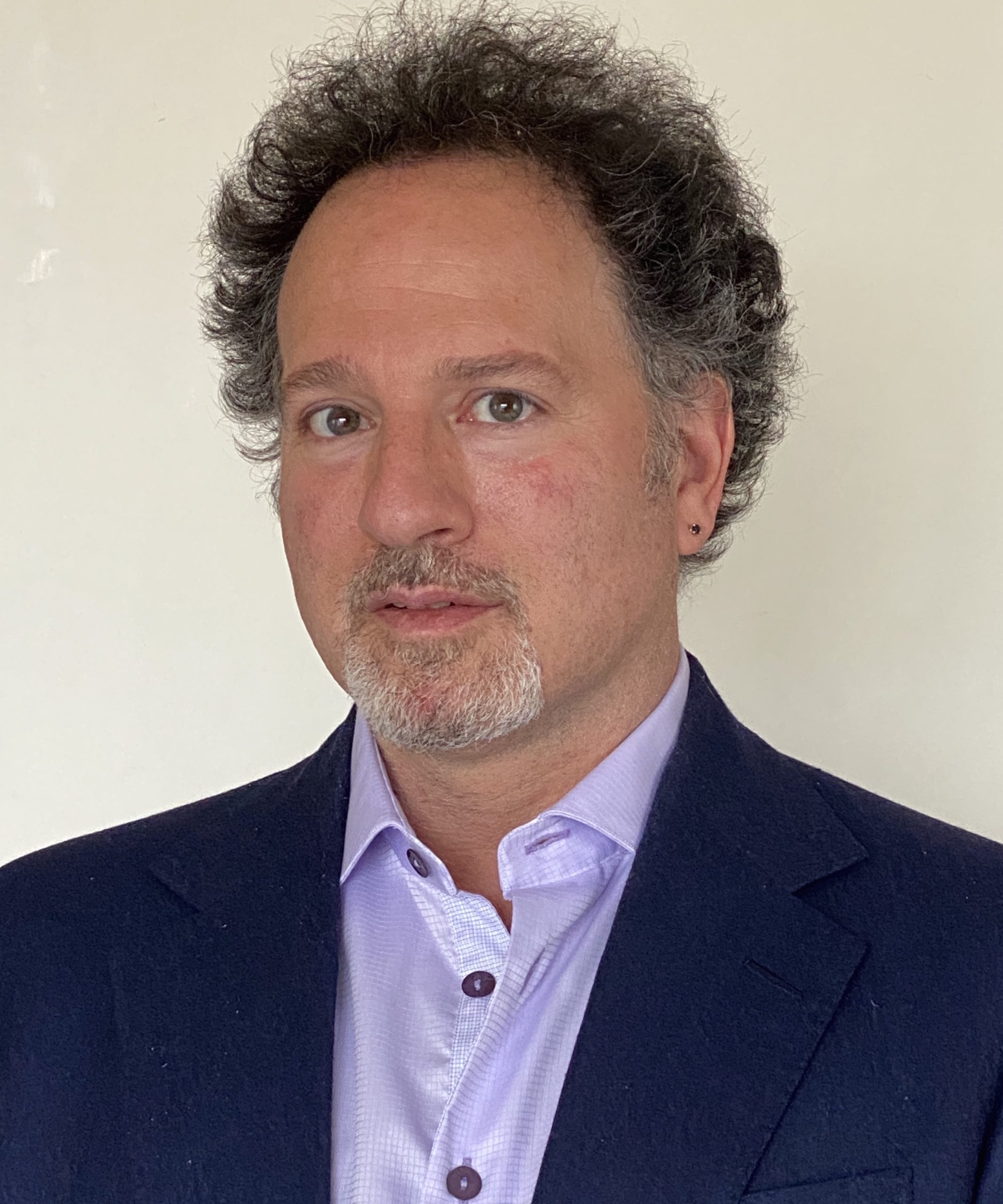
Zachary Karabell