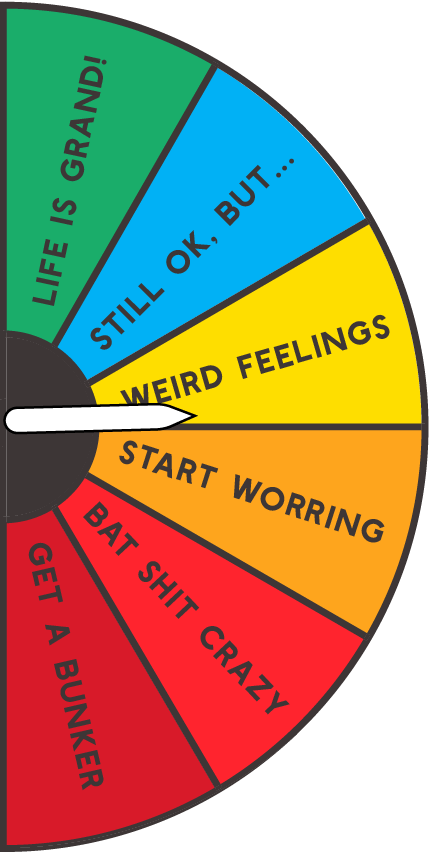
Volcanoes are erupting in The Philippines, but on-fire Australia received some welcome rain. The Iran war cries have been called off and The Donald’s military powers are about to be hamstrung by the Senate. Meanwhile, his impeachment trial is starting, and we’re all on Twitter for a front-row seat.

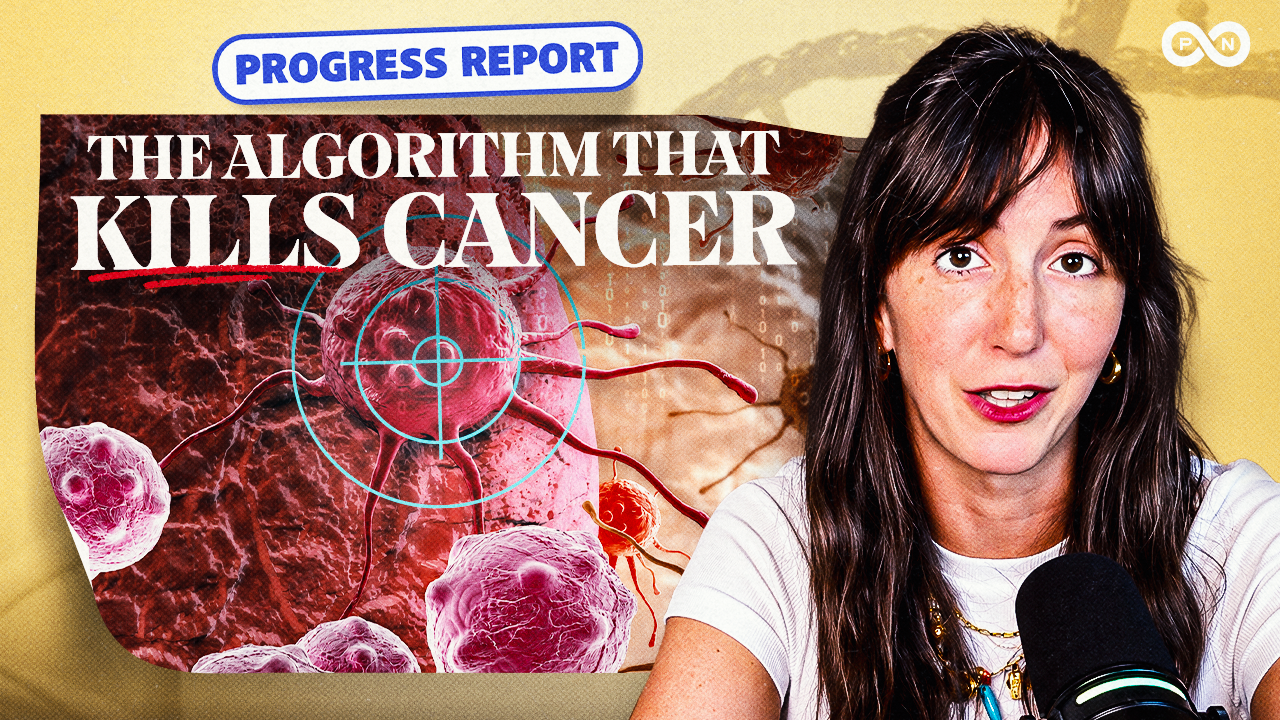
AI Designed a Cancer Therapy
Featuring Emma Varvaloucas
What if you never have to wear a pink ribbon again? For years, experts called the medical dream of a personalized cancer vaccine impossible. Now, a new therapy written by an algorithm is making it happen. We’re also talking about how Australian cyborg cockroaches could come to the rescue at natural disasters, and we get into the alliance that brought a California farming empire to its knees and created a historic labor movement.


Prefer to read? Check out the Audio Transcript
Although the transcription is largely accurate, in some cases it may be incomplete or inaccurate due to inaudible passages or transcription software errors.
Emma Varvaloucas: What if you never had to wear a pink ribbon ever again? For years, experts called this medical dream impossible. Now, a therapy written by an algorithm is making it happen. That’s our main topic on today’s What Could Go Right?
Progress Report. And stick around, because we’re also talking about why you
might actually pray to see a cyborg insect in an emergency, and the unlikely
alliance that brought a ruthless California farming empire to its knees.
What if you never had to wear a pink ribbon ever again? For years, experts called this medical dream impossible. Now, a therapy written by an algorithm is making it happen. That’s our main topic on today’s What Could Go Right? Progress Report. And stick around, because we’re also talking about why you might actually pray to see a cyborg insect in an emergency, and the unlikely alliance that brought a ruthless California farming empire to its knees.
Hey, if you’re new here, I’m Emma Varvaloucas, and I’m the executive director of the Progress Network. Let’s get into it.
When you think about medical breakthroughs that change everything, things like anesthesia, X-rays, antibiotics may come to mind, and there’s something they all have in common. They represent a total shift in approach.
They were paradigm shifts. Anesthesia represents the shift from speed to precision. Antibiotics moved us from treating the symptoms to the cause. And X-rays moved us from looking on the outside to the inside. Well, when it comes to cancer treatment, it looks like we might be standing in the middle of another great paradigm shift.
Pharma companies Moderna and Merck have announced groundbreaking positive results in a late-stage trial for their personalized cancer vaccine, intismeran. It significantly cut down the risk of cancer recurrence and death in patients with a type of skin cancer called melanoma.
Personalized? Cancer vaccine?
Yeah, we will explain all of that, but the point at the moment is this shit works. It’s such a big deal that biotech reporter Adam Feuerstein posted on X that, quote, “2026 will go down as one of the most consequential years in cancer treatment ever.” Bold statement, Adam, but- What has he got to back that up?
Well, this is such a big deal because to start, it’s kind of a surprise. Scientists have been trying to make this particular vaccine dream a reality for at least 60 years. Moderna specifically has been at it for a decade, and very few people, even 10 years ago, thought that they’d actually succeed, at least this fast.
So yeah, this is a big deal accomplishment. But this is more than a science finally succeeds story. Adam got his socks knocked off because this is the first customized cancer vaccine. Every patient gets his or her own version of it, and the first mRNA-based cancer therapy to pass a phase III trial. And if it’s eventually approved by the FDA, it would be the first ever approved medicine to have its genetic instructions written by an algorithm.
I know. What the heck does this all mean? Basically, this thing is more than just another vaccine. It’s an entirely new approach to fighting cancer that scientists think might work not just for melanoma, but across a variety of cancer types. Historically, we’ve taken the nail of cancer, and instead of hitting it with an appropriately sized tool, we’ve basically whacked the entire area with a sledgehammer.
Think of radiation or chemotherapy that work to destroy cancer, but also come with a host of harmful physical side effects. This vaccine is different. It actually enlists the body’s natural immune system to fight off the cancer itself, and because it’s personalized, it does it in the way that works best for you/your cancer in particular.
This is how it works. Scientists have figured out a three-step process for treatment. First, patients have their tumors removed, and scientists sequence and identify the cancerous mutations in each tumor’s DNA. Then, an algorithm written specifically for this process gets cracking. It shows which of the mutated cancer-causing genes create antigens, and we’ll get to why that matters in a minute, but first, it’s important to note that the algorithm is really coming in clutch here because without it, scientists would have to analyze a tumor’s mutations by hand to find the ones with antigen-producing capabilities.
The amount of time that would take is astronomical, and it would have made this vaccine nearly impossible. Anyway, the reason antigens matter is that they are molecules found on cell surfaces that serve as a kind of cellular ID card. Think of it like a guest list at the club. The shape of antigens tells the immune system, the bouncer, whether something belongs in the body or not, and the cancer antigens are unique to each person.
This is the secret sauce behind the vaccine and where the customization comes in. So then the vaccine gets made with each person’s individual antigens. It’s like on the guest list, it literally says, “Not invited: Emma’s skin cancer.” Then, using mRNA technology, the vaccine instructs the body to temporarily produce cells with these cancer signaling antigens.
This alerts the body essentially that Emma’s skin cancer got past the velvet rope into the club. Call motherfucking security. But instead of a burly dude, the security is your immune system. Having received the security call, the immune system sends out a type of white blood cell called T cells. They brawl with the cancer and send it packing.
What’s cool is that this process trains the body to keep recognizing these cancer antigens. So if in the future the cancer comes back, the body already has security on deck to give it the boot. All of this happens with the patient also taking the standard treatment for melanoma, which is an immunotherapy drug called Keytruda.
If you’re wondering why this trial tested the vaccine alongside another medication, it’s because they weren’t sure if it would work, and that’s really important when patients are fighting for their lives. The FDA wanted to combine the vaccine and the drug so every patient at least received Keytruda and wouldn’t experience additional harm from agreeing to participate in a study.
The trial also shows that the vaccine and the drug together significantly improve the outcomes for patients. That means this is much better than the standard of care we’re offering patients right now. As I mentioned, this is not an overnight success story. Even 10 years ago, this whole thing was seen as a little bit pie in the sky.
But a few things changed in the world that allowed the scientific stars to align. First, the dollars required for DNA sequencing dropped significantly. Additionally, there were advancements in mRNA technology during the pandemic—shoutout to the COVID vaccines—and big steps in artificial intelligence to power things like that algorithm we were talking about.
The studies of this type of vaccine against other kinds of cancers are still in early stages. However, Moderna CEO Stéphane Bancel believes in the dream. He says that from a scientific standpoint, there’s no reason it should only work for melanoma and not other types of cancer. He called it, “transformational.”
One thing’s for sure, it definitely transformed Moderna’s stock prices. They doubled after the August announcement, and the company had its largest single day gain ever. I know. I didn’t invest in Moderna when I should have either. You’re not alone.
Time will tell if this cancer vaccine is approved, but if it is, it could herald an entirely new era in the fight against cancer.
Next, here are some numbers to make you smile. 165, the number of countries with universal voting rights for men and women in legitimate elections. That’s up from 47 in 1950. 35, the percentage of coral cover in the Northern Great Barrier Reef this year, up from 30% last year, a demonstration of recovery after recent mass bleaching events. And 500,000 plus, the number of HDTVs needed to display the full panorama of space captured by NASA’s newest telescope.
And now it’s time for some good news that may make your skin crawl. Before we get to the good part, we have to start from a dark place. Imagine that there was an earthquake. Fortunately, you are alive, but unfortunately, you’re trapped inside the rubble of your own home.
You can hear the people trying to rescue you as they move the debris. It’s gonna be a while, but they’re sending you some emergency medicine to hold you over, and that’s when you hear the scurrying. It sounds like a small animal? What is that? Suddenly, a determined giant burrowing cockroach emerges with a syringe on its back.
The roaches are here to save you. This may be the one time you’re happy to see cockroaches in your house. As anyone who has ever lived in a college dorm can tell you, cockroaches are incredibly resilient. They survived the dinosaur-killing asteroid that hit Earth millions of years ago, and they would probably outlive most humans after a nuclear blast, squeezing into any tight hiding place they could find.
If you’ve seen the series Fallout, you know how that could turn into a nightmare. Finally, scientists are trying to put the weird, fast, flat little bodies of cockroaches to good use. Biorobotics and biomedical engineers in Australia are making giant Queensland burrowing cockroaches into real-life cyborgs with cameras, microchips for tracking, and mini-injectors for emergency medicine.
Cyborgs are typically found in science fiction, but they loosely refer to a living thing with half organic and half robotic parts. Think The Terminator or the DC character actually called Cyborg from DC’s Justice League. A quick note. If you’re worried about whether transitioning to a cyborg harms the cockroaches, first of all, you are an angel, but secondly, scientists say that it doesn’t.
The bugs are anesthetized during their electrode and microchip fitting and live for as long as other cockroaches. So don’t call cockroach PETA on anyone, okay? Anyway, this may be the first time that you’ve heard of these insect robots, but cyborg roaches aren’t completely new. Last year, a 7.7 catastrophic earthquake rocked Myanmar with the epicenter close to the country’s second-largest city.
In the aftermath, Singapore deployed a team of 10 cyborg cockroaches with infrared cameras and sensors to look for survivors. This was the first time insects were used in a humanitarian mission and the first time insect hybrids were deployed in the field. So what makes these Aussie roaches so special?
These could be the first insects that could find you and then actually help you. In disasters like earthquakes, heavy rubble can put huge amounts of pressure on survivors’ bodies for long periods of time. It’s actually called crush syndrome. Even after they’re freed from the debris, the damage from being crushed can cause cardiac failure, kidney dysfunction, shock, and infections that are deadly.
Immediate treatment with fluids before releasing the crushed body parts can improve chances of survival when the pressure is released. That’s where the cockroaches could be very useful. When these cockroaches navigate to a trapped person, they position themselves close and remain still. The auto-injection is then initiated remotely.
Seems terrifying to be trapped, snuggled by a cockroach, and then injected with something without any context on cyborg bugs. But At least it would help you stay alive, right? So could the bug rescue team actually work, or is this a science fiction pipe dream? In trials, the cyborg cockroaches were able to find their target and successfully set up the injection 72% of the time.
That’s pretty good. Researchers hope that in five to 10 years, swarms of specialized cyborg insect rescue teams will be deployed during disasters to help trapped survivors until humans can get to them. You may not like the sight of a gang of huge cockroaches and their six legs rushing towards you, but if you’re stuck It could save your life.
And now let’s take a look at a positive news story from the past. For this week in history, we bring you a David and Goliath story about agriculture instead of more depressing news about lettuce, parasites, and food-borne illnesses. Yay. On September 8th, 1965, hundreds of Filipino farm workers in California were tired, underpaid, and pissed off.
They were so over being exploited by the grape growers in the hot, dry climate of Delano, California, and they needed better working conditions immediately. They bravely voted to go on strike, a decision that would change the course of American history. But let’s back up. Why were they so upset? Grape workers in 1965 weren’t given bathrooms or clean water, and their housing consisted of unheated metal shacks without plumbing or stoves.
They were also infested with mosquitoes. Despite conditions that make Fyre Fest look like the Taj Mahal, room and board was deducted from their pay at high rates, keeping them in a cycle of poverty. 80% of farm worker families had an annual income below the poverty line of $3,100. Additionally, discriminatory immigration laws from the ‘20s and ‘30s banned Filipino farm workers from owning land or marrying outside of their race.
And since Filipino men outnumbered women at that time, the workers had a hard time building a life. All things considered, it’s no wonder that the average lifespan of a farm worker in 1965 was the ripe old age of 46, more than 20 years below the national average. So in September of 1965, there were a lot of fed up single farm workers with nothing to lose.
And thankfully, they were in a union. The Agricultural Workers Organizing Committee, or AWOC, had recently organized a strike in Coachella, California. Yes, that Coachella. Same location, very different vibe. And they wanted to continue the momentum. The AWOC organized a meeting in Delano on September 8th where they voted to go on strike.
The strike was meant to last until workers received the federal minimum wage of $1.25 an hour. Fun fact, adjusted for inflation, that would be $13.27 an hour in 2026. However, the current federal minimum wage is still only $7.25. But that’s a story for another segment. Anyway, the next morning, 1,500 Filipino farm workers left the grapes on the ground and walked out of the vineyard.
For eight days, the workers faced violence and evictions from labor camps. Realizing they needed more backup, the AWOC asked the National Farm Workers Association, AKA the NFWA, man, this story has a lot of acronyms, primarily made up of Mexican American workers, to join them. And they did. The NFWA added to the demands, asking for union contracts and laws that allowed farm workers the right to unionize and use collective bargaining.
The two organizations also agreed that the Filipino and Mexican American workers would pledge an oath of non-violence, and share picket lines with each other instead of breaking them. The Solidarity Agreement was a big deal. For a long time, growers used the time-honored American strategy of racial division to pit one race against the other.
If one group was on strike, they would hire a different racial group as scabs to cross the picket line and work in their place. The agreement between the AWOC and the NFWA was the first time Mexican American farm workers did not break a Filipino strike, and joined them on the picket lines instead. And that’s how one of the most important relationships in labor history started.
In 1966, one year into the strike, they decided to put a ring on it. The AWOC and NFWA formed the United Farm Workers, together marking the beginning of the farm worker movement. Over the next five years, this collective action grew into a nationwide boycott of California grape growers that included more strikes, boycotts, and a 300-mile march.
In 1970, United Farm Workers reached an agreement with the growers that helped 70,000 farm workers receive higher pay and better working conditions. The decision by Filipino and Mexican American farm workers to unite and fight, rather than be divided and conquered, forever changed the course of the farm worker labor movement in the United States.
So, on September 8th, pour out some wine for the little guys of history. I hope these stories remind you that there’s so much good going on in the world, so it’s important to shift our focus away from all of the bad. Send this episode to your friend who has seen Nine to Five and Steel Magnolias way too many times.
And make sure to subscribe to our YouTube channel. We release 60-second good news stories daily. See you next week.
LOAD MORE
Meet the Hosts
Emma Varvaloucas