
Volcanoes are erupting in The Philippines, but on-fire Australia received some welcome rain. The Iran war cries have been called off and The Donald’s military powers are about to be hamstrung by the Senate. Meanwhile, his impeachment trial is starting, and we’re all on Twitter for a front-row seat.

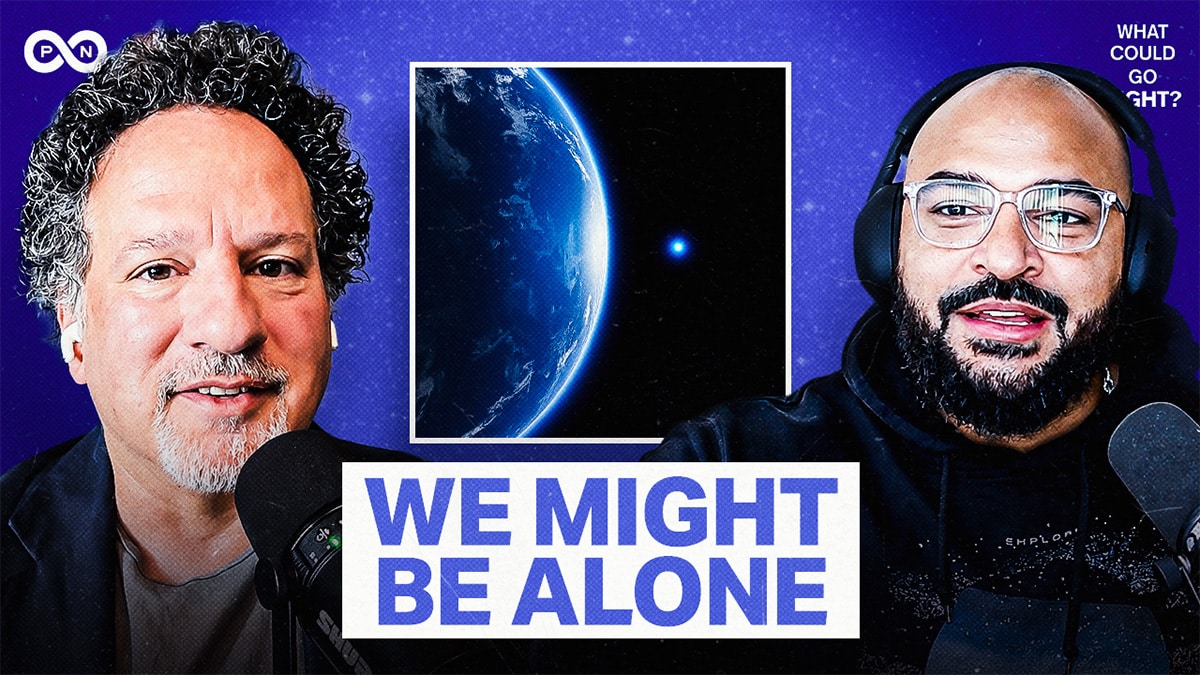
Alien Civilizations, Mars Colonization & Humanity in the Age of AI
Featuring Dr. Dakotah Tyler
In this episode of What Could Go Right, Zachary Karabell sits down with Dr. Dakotah Tyler, an astronomer and astrophysicist who pivoted from a promising college football career to unraveling the mysteries of the universe. They discuss the existential threats and promises of large language models, questioning whether tech leaders can manipulate human thought and if our innate drive to explore is being outsourced to bots. They also explore the statistical probability of discovering alien life and why complex organisms might be a rare cosmic anomaly.


Prefer to read? Check out the Audio Transcript
Although the transcription is largely accurate, in some cases it may be incomplete or inaccurate due to inaudible passages or transcription software errors.
[00:00:00] Zachary Karabell: Curiosity is one of the drivers of human history. It’s one of the things that has propelled humanity to ask the big questions, to find the big answers. And there is a feeling today that curiosity is waning, that in an age of AI, and yes, it only took us 30 seconds to use the word AI, people are outsourcing their curiosity.
They are leaving those head-scratching questions in the hands of the bots. But if curiosity is a driver of human history, then we can’t just outsource it. We need to embrace it. It is what leads us to discover the unknown, and today we’re going to speak with someone who studies the vast reaches of the unknown in the vast reaches of the galaxy.
I’m Zachary Karabell, and this is What Could Go Right, which is my podcast as part of the Progress Network. I’m speaking today with Dr. Dakota Tyler, who is an astronomer, an astrophysicist, an astrobiologist who got a PhD at UCLA. He is also the host of the Dr. Star Kid podcast. But in a true arc of curiosity, began his life very, very differently than where his life currently has led him, and we will talk about that and how curiosity has paved his way.
So let’s talk about curiosity. Did it kill the cat? Did it save humanity? Is it gonna be eaten by AI? Let’s find out. Dr. Dakota Tyler, it is a pleasure to have you on What Could Go Right. Actually, what, what is the difference between an astronomer and an astrophysicist, or are they just, like, different ways of saying the same thing?
[00:01:39] Dr. Dakotah Tyler: An astronomer will have a telescope and look up at the sky. An astrophysicist will, like, analyze the observations and apply, you know, known physics to the observations. So they, they can be used interchangeably. I, one, use telescopes to make observations, but then I also, you know, do, like, radiative transfer and just, like, physical, uh, analysis of these systems.
So I use them interchangeably.
[00:02:05] Zachary Karabell: So you’re not gonna be offended if someone calls you an astronomer?
[00:02:07] Dr. Dakotah Tyler: Oh, no. Not at all. Not at all. Okay. My PhD is actually in as- astronomy and astrophysics.
[00:02:12] Zachary Karabell: You have this unusual pathway to the career that you currently have. You were not sitting around as a teen and college student thinking, “Okay- Dakota’s path is he’s gonna become an astrobiologist.
You were thinking you were gonna be a professional athlete, right?
[00:02:29] Dr. Dakotah Tyler: Yeah. College football. I mean, you can kinda see my K- uh, University of Kentucky football helmet there. I wanted to go to the NFL. That was, like, my only goal, you know, up until the age of 23, 24.
[00:02:40] Zachary Karabell: If current you could go back and talk to, like, 20-year-old you and say, “Hey, I got, I got something for you,” what, what would you have said to yourself about your career arc?
[00:02:51] Dr. Dakotah Tyler: It’s such a good question because I don’t know that younger me would have been able to hear anything other than You know, this is what we’re doing. You know, by age 35, which is how old I am now, I’ll probably be wrapping up, you know, an illustrious NFL career where I’ll be inducted in the Hall of Fame one day.
I don’t know if I would have been able to get through to myself, but I would really encourage myself to explore curiosity. You know, that wa- that was, it just wasn’t something that I had ever done. I started watching astronomy documentaries after I got injured and couldn’t really play anymore, and that was like the first time that I feel like I, I, like I was intellectually into something.
Like, it was, it, like, made my brain feel good beyond, “Oh, this is just something that I like to do,” but I was, I was, like, hungry to learn more. So I don’t know exactly what I would say to myself or if it would be useful, but I think just in general to lean into your curiosities, which are, I think, you know, in part the unique things about each of us, these things that for some reason we’re just into a little bit more.
Like, we can spend a little bit more time thinking about and is, like, something that, that kind of grabs us. I needed to have something that I was very interested in and very passionate about because that’s what I had lost, and I knew that that’s what, like, helped drive me and make me feel fulfilled and content and, uh, purposeful in life.
[00:04:23] Zachary Karabell: You know, we, we’ve talked a little bit about, like, curiosity and dreams of the future and how people grapple with knowledge and uncertainty on this, on this show. So l- talk about that for a minute, about wh- when you think of curiosity- Mm … why is that such a key ingredient? And it’s interesting, right? For so much of human history, there was kind of a prohibition or a suspicion of curiosity.
That was the whole, like, curiosity got the cat. Like, if you, if you ask too many questions- Yeah … you’re not gonna like what happens. So-
[00:04:57] Dr. Dakotah Tyler: Yeah …
[00:04:57] Zachary Karabell: what’s your- Well- … entry into this?
[00:04:59] Dr. Dakotah Tyler: No, first of all, I was, getting into astronomy and astrophysics, it was the first experience that I had of pursuing something that I was deeply curious about almost for, just for curiosity’s sake.
Like, there are other planets out there. What are those planets like? Could they have life? Could they, could they be something that, you know, we just, is so foreign to our experience that we wouldn’t even register what was going on? And I think that- All of the, the happiest times just in my day to day are when I’m being curious about something, when there’s like something I’m trying to understand or that has piqued my interest.
And I think that this is a very, it’s like this innately human characteristic that we have where going way, way, way back in time before, you know, like the dogma and the suppression of curiosity, our ancestors that were very curious, they started figuring things out, and they passed on, I don’t know if it’s a gene or, you know, some sort of expression of something.
All the people that I know that are like the happiest and the most content with their lives and their hobbies and, and their careers and stuff, they’re, they’re deeply curious about something. I, I really do think that it’s something that’s like embedded in our, in our DNA.
[00:06:17] Zachary Karabell: So where do you think that cultural prohibition or, or that attempt to suppress curiosity, like where did that come from?
[00:06:23] Dr. Dakotah Tyler: Well, I think that that is probably because curiosity leads to like knowledge. It leads to discovery and, and trying new things, treading in new places, which upsets power, right? So if you want like that power and that, that control, it does not behoove you to allow your citizens, for example, to be curious and like ask questions about these things.
Because when you get curious, I mean you’ll, you’ll start poking holes in things that don’t make sense, and I think that that, that is like really disruptive to a narrative sorta in the they don’t want you to know type of way. Like I- Yeah … I mean, I think that there’s been tons of that throughout history.
[00:07:06] Zachary Karabell: Yeah. Let’s, let’s get into that a little bit, particularly in, you know, some of the stuff you’ve talked about about AI. A lot of people’s fear is that AI is gonna be a tool of power and control. I did a podcast- Yeah … uh, recently with Carissa Véliz, really interesting philosopher speaker at Oxford, and she, like many people, was looking at the rise of AI and the rise of kind of techno this is coming, deal with it as its own form of impending control of the overlords.
And I’m not, I’m not trying to caricature what she’s saying. I’m saying there’s a, there’s a real theme of like AI technology is a sup- is gonna be a suppression of those very human let’s ask questions. And the irony being, of course- Mm … that all these LLMs for now at least are predicated entirely on questions, right?
You ask a question, it gives you an answer. Yeah. So I mean, do you see this as, like I could see this as hugely liberating, but it’s clear, and liberating of human curiosity
[00:08:04] Dr. Dakotah Tyler: I think it, I think that it could go either way. And, uh, you know, the reason why I’m very hesitant, very skeptical is because, I don’t know if you remember several months ago, maybe it was sometime last year, Elon Musk had tweeted at some point that he fixed the Grok.
Very, like, right-wing people maybe would ask Grok a question, and Grok would come with the facts, and then they would say that it was liberal or it was woke or something like that. Right. And Elon Musk said that he fixed it, and I think 15 or 20 minutes later, Grok was calling itself Mecca Hitler So for me, that I think really opened my eyes to the fact that there’s actually just a small number of people that can turn the knobs on these LLMs at will and get them to respond, you know, this way or that way.
And we’re sort of just supposed to trust that they’re not turning them in any given direction, which clearly they can if they want to. They have this incredible data set, you know, how many people have had how many conversations with these things, and they have great examples of, like, convincing people that they’re religious gods or that they’re, you know, that they’ve, uh, solved some mathematical problem that nobody has ever been able to solve.
So they know how to communicate with people to nudge them in one way or another, and I don’t think it has to be as dramatic as, you know, convincing people that they’re, like, a religious figure. I think that it could be done in small ways where it could communicate with you in such a way that you, like, 4% or 5% maybe you, like, nudge in this direction or that direction and on any given topic.
And I mean, I, I think that that’s kind of terrifying because you wouldn’t know that it was happening, right? Um- Right … it knows your psychological profile, and it knows that if it responds to a certain number of people in this way, that it can kind of move you in that direction. So that almost feels, you know, it’s a, that, that almost feels like, to your, to your point, a guided curiosity, which is, like, not what you want, right?
It’s not really this true, um, exploration of knowledge. It’s this really contained one, potentially, which may feel like it satisfies the freedom of asking questions and being a curious person, but ultimately only does so within, like, this restrictive range that is exactly whoever, you know, is running that particular model wants.
[00:10:32] Zachary Karabell: Yeah, although you do get a lot of people in that world now saying they don’t understand how the models work, that they’re, they’re trying to figure out the kind of consciousness. And segueing for a moment, you’ve also talked and written a lot about alien life, right? And there’s a bunch of people who have been saying within the community of people developing LLMs, not just agentic AI, but actual the, the frontier models, that they don’t really understand what the hell is going on, that they’re, that these are behaving in ways that, that don’t scan easily, that don’t make sense, that, that seem to be a different kind of thought and consciousness And some of the fear is like it’ll develop its own artificial general intelligence in ways that just are very unhuman, in ways that people have also been quite scared of about like alien life, that we would- Mm-hmm
that if we encountered it, we wouldn’t understand it, or it would be so vast that it would, would treat us the way we treat ants. But it’s not in fact like Elon Musk can just turn the levers. I mean, they may hope that they could or think that they can, but in fact discover that they that they’re not able to.
[00:11:38] Dr. Dakotah Tyler: That’s the thing though. These tech CEOs, specifically of these AI companies I think definitely want us to think that that’s the case, that, like, this A- that AGI is possible. But there’s a lot of people who, who think that it’s not at all, at least not in the way that, you know, I think you and I are thinking about of it as a, like a comparable intelligence.
But I mean, with that being said, you can ask the leading neuroscientists in the world, w- you know, we don’t really know exactly how our brain works. A lot of the studies that they do using FMRIs and looking at brain activity, even that, it’s like, well, they can tell that a, a piece of the brain is active or less active, but that really doesn’t tell you that much either.
So I, I do think that it’s fascinating. It’s also scary, uh, especially if these systems are, like, integrated everywhere. And you, you’ve probably heard the stories of the systems that will, like, start doing nefarious things and lying and trying to trap people when they’re threatened to get shut down.
That’s, I mean, that’s, like, very bizarre behavior. But I don’t know. I f- I feel, I find it very difficult to trust information coming out of tech leadership for these LLM and, and AI companies, frankly.
[00:12:53] Zachary Karabell: Some of the work you’ve done about relativity, about how that kind of plays into space-time continuance in the astrophysical realm, thought experiments about alien life and what that would look like.
Some of that, though, does raise similar questions about these things we’re talking about AI, just not with the same human agency, right? It raises the same kind of, if we found alien life, would it recognize us? Would we recognize it? Would it be carbon-based? Would we have any way to actually communicate with it?
Would it be like Spielberg’s dreams? You know, all Spielberg’s aliens look like some version of E.T. or some version of humanoid, you know- Yeah … fingers, hands- Yeah … legs, weird eyes. Well, oftentimes
[00:13:36] Dr. Dakotah Tyler: it’s like, like a person dressed up as an alien almost. We have these complex brains, and that’s how, uh, I guess mammals, uh, and intelligence are c- are correlated.
But there are plenty of animals that we recognize as intelligence that don’t have brains the way that we do, even just on Earth. You look at cephalopods, octopus, that’s… They don’t have, like, a centralized brain in the center, but they’re highly, highly intelligent. And I don’t know, you, you look at, like, the behavior of some hive insects, like a colony of bees, that weirdly you can almost think of each bee as like a neuron in this, this brain organism of the hive.
And these are examples of intelligence on Earth that we’re actually related to. Like, we share DNA with bees. What, what might that look like somewhere else? Would we recognize it? And then relating that back to these digital systems that we’re creating, yeah, I mean, who’s to say that, oh, just because, you know, a computer, a machine, a, a neural network may never be a human brain.
But you’re right, like, does that mean that it’s not intelligent? I mean, I feel like that that’s a, that’s an open question and I guess really a, like a philosophical one.
[00:14:51] Zachary Karabell: S- so is your, is your views about the potential of alien life a thought experiment, or is it based more on your work as an astronomer, as an astrophysicist?
Is it based on that? Like statistically, there’s X number of planets, there’s X number of stars. You would think that somewhere in this vast agglomeration of lights in the sky, each which represent a star and all the, the planets that we can’t necessarily see, that there would be some form of life that would’ve evolved somewhere, sometime, somehow.
[00:15:21] Dr. Dakotah Tyler: It’s a mix of both. It’s what we know so far, which, you know, to s- is limited to some extent ‘cause we live on Earth. We can’t get as close of a look at, at some of these worlds as we would hope to be able to. But we also do know a lot about chemistry and biology on Earth, and yeah, you know, there’s 100 billion stars in our galaxy.
There’s like a couple trillion galaxies in the observable universe. It seems incredibly unlikely that w- there isn’t l- more life everywhere. I mean, we have found The nucleobases, like the, the chemicals that make up our DNA, we have found just on asteroids that are floating around our solar system. So, you know, that leads you to believe that the stuff required is everywhere.
And it, it would be… You know, you, you would have to try really hard to convince yourself that we were special to say that that hasn’t happened in other places. Although I do think that the process of life getting complex on Earth is one that we tend to underrate, and we just assume that that’s something that is probably common.
But, you know, for, like, 80% of the time that there’s been life on Earth, it’s been single-celled organisms. So something special did happen to get it complex. And then, you know, obviously there’ve been a series of dominoes that had to fall to get us to be able to, you know, be talking to each other using radio waves that are moving at the speed of light.
I
[00:16:59] Zachary Karabell: mean, is there any evidence of this? Now, I’m not saying- Of what? … that as a skeptic. I’m just saying that… So you have the, I guess the Trump administration has released… Did they release? They were gonna release all the UFO files. Have you looked at any of these? I wouldn’t
[00:17:11] Dr. Dakotah Tyler: say that that’s evidence for… I, I’ve seen it.
It’s… I mean, some of the things are, like, clearly garbage. Um, like literally tra- like a wea- trash s- a weather balloon or something. Some of them are… I remember one of them was, like, a flare with a parachute. I don’t… I… There’s nothing that I’ve ever seen that makes me think that aliens are here, but that doesn’t mean that I don’t think that they exist somewhere.
I actually think that the rate is probably low. I wouldn’t be surprised if at most, there was maybe a couple advanced civilizations in a galaxy. So I think that the rate may be like one every 100 billion stars or maybe, maybe two or three every 100 billion. I think that it’s pretty low for advanced. I think that the, the simple-celled life may be quite common, but just with what I’ve learned about biology and ap- trying to apply that somewhere else and all the things that had to go just right and how much stability we had to have on this planet, and we weirdly have like this enormous moon that is way too big for the size of our planet to have formed without some really special circumstance.
I just think that we actually are probably quite unique. If there is a species out there that’s as advanced as us, I would think that they would be so far away, they would be unfathomable that we would ever be able to communicate, that our timelines would overlap. I just don’t see that as likely.
[00:18:45] Zachary Karabell: The Harvard professor Avi Loeb, I guess, is also now a consultant to the release of the UFO files and has this whole project where he thinks there’s a, I don’t know, evidence of some interstellar something in the Pacific Ocean.
[00:18:58] Dr. Dakotah Tyler: He, he’s pretty much an outlier. He’s always airs in that way. But to add to that, part of the point of getting tenure in academia is that you can now pursue whatever you think is interesting and you, you’re not like beholden to the university. You’re not gonna get fired if it, if a research project doesn’t work out.
I think it’s cool that we have some people who are really interested and really competent in the field exploring these questions because basically we went from what? The Wright brothers doing their first flight to landing on the moon in under 100 years, which is crazy. So it’s like, what are, what are we gonna be doing in a million years?
If, if 10 million years, 100, we probably can’t even fathom. And so I wouldn’t, you know, I wouldn’t put it past us to go explore other places in the galaxy with given enough time. And if I think that that’s possible, then it seems reasonable that some other civilization who came before us may also do the same thing.
So I feel like it’s, it’s perfectly valid to hold that as a possibility and, you know, explore that as something that could p- even if it’s so, so unlikely, it’s still possible. So I like that he’s a little bit far into the, the alien speculation stuff.
[00:20:16] Zachary Karabell: Yeah, but then do we like it when it’s Elon Musk, who is the world’s richest person?
One of his clear life missions, right, is we are gonna go to Mars to begin the process of planetary diversification in the belief that the Earth may or may not be a viable long-term home for the human species, and therefore we ought to focus relentlessly on branching out into the galaxy, and that that’s really, that’s where the future of humanity lies.
And would you extend the same grace to Musk of like, “Hey, he’s made a lot of money. He’s been very interested in rockets and communication, and he seems to be animated by some-” boyish obsession with science fiction that he’s read. I mean, it’s, it, it’s probably a little bit better than being obsessed with Tolkien, right?
You can’t, we’re, we’re not going to Middle Earth. We might go to Mars, but I’m pretty sure we’re not going to Middle Earth. Yeah.
[00:21:11] Dr. Dakotah Tyler: See, I don’t know if he actually believes that stuff, because I think he knows why it doesn’t make any sense to, to go to Mars. If you want my honest opinion, humans will not set foot on Mars in my lifetime, in yours, in my kids’.
It’s not something that is even close to plausible biologically at this point because of human bodies being out in space outside of the Earth’s magnetic field for that long. Aside from that, you know, this hope that, oh, well, you know, something may happen on Earth one day, and we need this as a backup plan, there is no…
There is, like, no benefit other than, like, your, your curiosity, right? Like, there isn’t stuff on Mars that we could mine that would make it valuable. It would be an infinite sinkhole of money, and I- Yeah … feel like he knows that, and I, but I do feel like that he sells this vision because he’s a, I mean, he’s really good at, at, like, promoting h- his businesses.
I, that’s like w- clearly one of his skillsets. So I don’t necessarily take the, you know, his Mars obsession seriously, and he walked back some of his comments recently that now they’re gonna actually focus on the moon instead of Mars. But it’s like nothing changed in the information that we had where e- he suddenly realized, like, “Oh, you know, this maybe isn’t gonna be realistic in the near term.”
I do tend to be pro space exploration personally, and, you know, obviously there’s a lot of other things on Earth that we need to, that we could work on. I think that explo- that it’s good. I think that just b- pro space exploration, pro scientific progress and discovery, I think that getting that knowledge is good, and I think that oftentimes it can, it can pay dividends in ways that aren’t obvious, you know?
The MRI, you ever had an MRI?
[00:23:00] Zachary Karabell: Yeah.
[00:23:00] Dr. Dakotah Tyler: Yeah. I’ve had, same. It’s a lo- it’s very loud, a very, very loud machine. Um, but the technology there was developed as an offshoot of some nuclear physicists who were studying, you know, the way that these simple atoms worked when they were excited by certain radio waves, and it’s like they, they weren’t doing that to create an MRI.
But how many lives have been saved or, you know, helped in, in countless ways just because that research was funded, and they were able to figure that out? And I mean, there’s, there’s so many examples of technology that helps humanity as a whole coming from scientific discovery and, you know, space exploration in particular.
So I’m not, I’m not against that, but I don’t really believe that, that Musk d- believes himself that- Mars is a, is a realistic goal for us, but I am pr- definitely pro space exploration
[00:23:57] Zachary Karabell: Before this becomes the Inside the Mind of Elon Musk podcast, I, I think I believe that he does believe it, uh, if only because there’s this whole sort of 20th century sci-fi conviction.
You know, it’s films like The Martian, that there’s a belief somehow that we will actually solve these intractable puzzles, that there’ll, there will be terraforming, that we’ll figure out how to move through different gravitational fields or- Yeah … you know, find a way to sustain the human body, whether- Hmm
it’s cryogenically or, you know, all the stuff that have essentially have been science fiction. There is some portion of humanity that believes, and then there’s this kind of strange proof case of some of the things that we now take as established science in the first quarter of the 21st century were those same sci-fi-y visions of the mid-20th century.
Kind of what you said before, but more compressive. You went from the Wright brothers to landing on the moon. You know, you went from believing that nuclear power at X was total fantasy to it being total reality. So yeah, I wonder about that.
[00:25:10] Dr. Dakotah Tyler: And I also think that that hope of, oh, like, maybe there’s a path that we just don’t know yet, is a good thing for us to have as, as humans.
Tugging on that string is similar to the progression that we’ve ever had in society, you know? I think if you, if you look back thousands of years, the wealthiest people on, on Earth did not have plumbing. They did not have, like, refrigerators, right? And they couldn’t imagine, you know, the, the, the life that we’re living now.
So I think that that’s also a good thing. I- i- if it is this just kinda, like, delusional belief, because I think that we do need that, and it does lead to discoveries and, and progression. So yeah, I mean, if the, if the belief is, is genuine, I mean, regardless if it is or not, I think it is good that we are hopeful and optimistic in that way and we think that these things may be possible, even if we don’t have the evidence to believe it yet.
I, I feel like that’s a good trait of humans.
[00:26:10] Zachary Karabell: So you, uh, you teach at P- Pomona now, right? Were you teaching, I guess you would’ve been teaching when the Artemis mission was, you know- Yeah … going to the dark side of the moon. Did your students care? Was it, was that a moment of- … golly gee? optimism
[00:26:29] Dr. Dakotah Tyler: So the class that I was teaching is an astrobiology class, you know, there’s some of the stuff we’ve been talking about.
And I was playing it while we were in class one day, and my students were non-science majors. So it was, it was like a science elective for non-science majors. And some of them, I think, didn’t really care at all. I do also think that there’s like a lack of awe and wonder in the younger, the younger generations that probably started fading to some degree in my generation of millennials, but definitely seemed to be present in the older generations.
But there are also some people who did think that it was really cool. But yeah, I mean, I, I, I do think that there’s a There’s like an increased pessimism and just like despondent cloud over younger generations, which is not a good thing because I think that you need, you need like young people to be thinking about m- doing more and like thinking about the possibilities.
But I, I, yeah, I mean, uh, they definitely weren’t into it as much as I was into it.
[00:27:40] Zachary Karabell: Yeah, but then that’s kind of a pan for the value and virtue of curiosity. Look, the entire world was gobsmacked at the moon landing, and it was such a moment of, “Are you kidding me? This is incredible.” You know, happening in, in the United States at a period of time where there was a lot of divisions, and you were
It, it was not like a happy political time in the United States. You had huge divisions around race, around the Vietnam War. You’d had assassinations of Martin Luther King, of Robert Kennedy, and you still had this moment of just awe. Weirdly enough, I, I, I mean, again, I’m guessing here, more of your students probably watched For All Mankind and thought that was really cool, right?
About the alt history of NASA than were really engaged with the Artemis landing. I don’t know how to explain that one. That might just be like we’re more likely to feel awe and wonder at an incredible show than we are at a bunch of actual human beings, you know, going back to the moon, ‘cause we- so much of our lives are kind of lived within this virtual context that the differential between a show and reality…
First of all, a show has better pacing, you know, better lines.
[00:28:53] Dr. Dakotah Tyler: Yeah.
[00:28:54] Zachary Karabell: Um. Yeah. Although I did read that the Artemis astronauts… Did you read about this? The Artemis astronauts actually prepared what they were gonna say.
[00:29:01] Dr. Dakotah Tyler: That’s not surprising. That’s not surprising. We- there’s like a long history of that, right?
Um, Neil Armstrong’s words were prepared, and I think he like butchered them a little bit. That was like the big thing. Yeah, so- You
[00:29:12] Zachary Karabell: kind of want to be on the, on the, on the practice, in the practice room where they’re trying to go for- Yeah … like what the discarded lines were, you know? Uh. One tiny step for humans, one big s- no, no, no, no.
No, that’s not right.
[00:29:24] Dr. Dakotah Tyler: And that’s like a m- a moment to, where you’re gonna get a message that literally everybody or, you know, as many people as possible that would hear a message from the news will, will get. And I thought that they had some, uh, insightful and uplifting things to say.
[00:29:38] Zachary Karabell: No, that was great. I mean, they did a really good job with what they prepared.
That actually wasn’t a knock on it. It was just like a recognition that they, they kind of felt the need to… You’re in a really noisy media world. You better, you better take your five minutes with the mic and say something that is meaningful enough.
[00:29:55] Dr. Dakotah Tyler: You know, I also Think it’s important to point out that Artemis II, they didn’t land on the moon, right?
They, they went and they did something cool. But IV, Ar- Artemis IV, you know, if everything goes as planned, I think will… I, I don’t know. It’ll be an interesting test to see what the response is.
[00:30:15] Zachary Karabell: So the Artemis IV is gonna be right in the middle of the 2028 election, and it’ll be fascinating whether more people…
Well, certainly more people are gonna be more focused on the dynamics in the United States of the presidential election and the… I don’t think we’re gonna have a Neil Armstrong moment. Well, maybe we will. That’s an interesting question. Yeah. That would be very hopeful.
[00:30:32] Dr. Dakotah Tyler: I think that there was a sense of, I definitely got this, and also felt it, a sense of, like, proud, uh, patriotism that I personally have never really felt for…
You know, I’m not one of these people that hates America, but I’ve never felt a strong sense of, uh, pride in being American. But I definitely did around Artemis II. And I, you know, I feel like it was a, it was a, you know, a piece of that that folks felt when, when they first landed on the moon. And so I do, like, I do wonder how that will affect the, an election, you know, during, in an election year.
Will, will it, will it make an impact? Will it, will more people vote? Will, will people feel optimistic? Like, I don’t know. I think that, that’ll, that it’ll be interesting to see.
[00:31:24] Zachary Karabell: And you, you know, you’ve been a champion of some of this kind of esoteric research, curiosity-driven research about exoplanets, about, like, what lies way, way beyond our solar system.
A lot of people, they already question whether we should be spending money going to the moon. A lot of people, as we just talked about, question whether There’s any reason to fund SpaceX and voyages to Mars, let alone why we should be curious or i- in any way focused on what’s going on on planets so far beyond the event horizon and so far beyond anything any of us will ever get to.
So how do you respond to that when people question, like, “Hey man, what’s the point of this exercise given that there are real world problems on the actual planet that we inhabit?”
[00:32:17] Dr. Dakotah Tyler: Well, I guess I would say first that you can do more things than one at a time. I mean, there’s, humans are, are doing 8 trillion things right now.
Everybody is not all focused on, on one issue. But I would also question the implication that learning more about other stars and other planets isn’t giving us valuable information for ourselves. If we were to discover advanced life on another planet, like if s- if somehow we could confirm that, we had that ability, would that be relevant to us?
Would that not be perhaps the single most important discovery that has ever been made by humans? Or at least up, it’d be like up there in the top five.
[00:33:02] Zachary Karabell: Even if the Earth is not the center of the solar system, ‘cause we’ve shown that the sun is, it would mess with the belief of the singularity of humans, and philosophically create a whole series of questions.
I mean, whether or not we interacted with that or not is a whole other question. Right. Meaning if it was just like a distant civilization that’s already dead by the time we could see it.
[00:33:23] Dr. Dakotah Tyler: Bringing it home a little bit, I have a hunch that this is true, but I, you know, we don’t know it for a fact yet. If one day we are able to confirm that life in our solar system actually started on Mars first, and then through panspermia, through like collisions with asteroids, some of those rocks got flung and landed on Earth, which we know that.
There’s like millions of pounds of, of Martian rocks on the Earth. And we found that we actually started on, on Mars and then ended here. Like that, how would that like f- in the zeitgeist, in the cultural, you know, attitude, uh, the identity that we have, how would that change things to find that we are genetic Martians?
Like, I feel like tho- these- are, these, these are, like, deep revelations that are, I think, very meaningful. Um, one thing that I think about oftentimes is just the fact that the universe that we know of, the observable universe, is like 93 billion light-years across. Like, that, knowing that information, that there’s so many galaxies, and there’s so m- so many planets and so many stars, that actually does change the way that I think about, like, problems that I’m, that I’m having, or how urgently I need to do this or that, or, like, what I, what I feel like my purpose is.
The freedom to not be bogged down with this i- impossible weight that we are the center of the universe, and everything that we’re doing is the only thing that, that matters. I feel like, you know, widening our perspective with as much as is true about the universe that we can learn, I feel like that, um, has a, like, even a psychological value for individuals.
[00:35:04] Zachary Karabell: No, no, totally. And this kind of endless obsession with the, the dramas of the present, which is accelerating in a immediacy of information, social media age, is definitely an issue, right? We lose all perspective as to how quickly the present becomes the past, how ephemeral the fears and anxieties that we have in the moment look in retrospect usually.
I mean, every now and then, you look back, you’re like, “Wow, that was bad, and we thought it was bad- … and we knew it was bad. And indeed-
[00:35:37] Dr. Dakotah Tyler: Yeah …
[00:35:37] Zachary Karabell: in retrospect, it was bad. So I’m not saying there’s a blanket obsession with things that isn’t merited. But yeah, we don’t usually, in that poetic sense, step back and look at the sky.
I mean, we had the Perseid meteors- meteor shower a few weeks ago, given at the time that we’re recording this, and I think a lot of people looked up and had that moment of awe, wonder- feeling of, of smallness in a good way, not smallness in a, like, I don’t matter way. Well, I guess sometimes those two can go hand-in-hand.
You kind of give up your sense of ego that there’s a bigger thing out there of which you are one literally and metaphorically small speck.
[00:36:14] Dr. Dakotah Tyler: Have you ever witnessed a total solar eclipse?
[00:36:18] Zachary Karabell: I did. I s- I saw the 70% one, what was it? 2018 or something, and I did not see the totality a few years ago. I saw, like, in from New York City, like 90% of it, which is as you…
I mean, this is your field, is dramatically different than 100%, but still awesomely weird.
[00:36:37] Dr. Dakotah Tyler: I went in 2017. There was one that cut through, like, northern Georgia, I think, or, or Tennessee, and I was able to go there, and that was the… It’s the only one I’ve ever been to. The feeling that you just were describing about, like, feeling small, but then also feeling connected and just feeling like you were in awe of something great.
I hadn’t really ever felt anything like that before, seeing just the moon block out the sun. Everything gets dark. The temperature drops dramatically, maybe like 10 degrees or something like that, and it’s… It was just… It’s just this amazing feeling. I’d suggest to anybody listening to this, if you get a chance to at some point go, uh, to the path of totality of a total, total solar eclipse, you know, they tend to happen every couple or every few years somewhere.
And it’s just an am- yeah, it’s an amazing feeling, and I imag- you know, sometimes I wonder, like, what did our ancestors, who didn’t really have an explanation for that, what, what did they think? What did they feel? What, like, stories emerged from that?
[00:37:43] Zachary Karabell: It totally made me respect why in an earlier age you would have thought there was either something like the gods were angry, or the signs were bad, or Y- just that visceral feeling of powerful otherness that was way beyond your control, that you were powerless in the face of, in a way, that you just had to honor.
Okay, this is why people talk about auguries or the myths of the person who was born during a solar eclipse and it being a sign of either impending greatness or deep evil, or just something really important. And
[00:38:17] Dr. Dakotah Tyler: on that note, there’s a total lunar eclipse that’s happening, it’s happening on the 20th- the night of the 26th or the 27th of August, so it may be past by now.
So if you’re listening
[00:38:26] Zachary Karabell: to this now, you’re too late. Sorry.
[00:38:29] Dr. Dakotah Tyler: Hopefully you got a chance to see it. But it gets, the moon turns red, and I mean, think about that and the visceral emotions that are evoked by the color red. You know, you think of red, um, fire, uh, passion, blood, and seeing that as a sign in the night sky, like, oh, this, the gods, whoever, something is, is trying to communicate something to us.
Is it that we should be going to war? Is it that, you know, like, what, should we be doing sacrifices? I don’t know. I think it’s interesting to think about how these sorts of astronomical and, and I guess really just nature phenomena in general have crafted, have, like, shaped cultures and, and tradition over time.
[00:39:13] Zachary Karabell: It’s interesting. One of the things I, I try to do on this show and try to do in some of my own work, using the idea of optimism, which I think in the way you talk about curiosity as sort of an adjacent parallel simpatico sensibility One aspect of it is the humility of not knowing, A, the future, and B, not really fully even understanding the present.
It’s just too, there’s too much going on, there are too many variables. Mm. And I have to say, like, the one thing that I feel I’ve been consistent about, and I’m older than you, is a recoiling from certainty. Like, a recoiling from people who think they know the answer, capital T, capital A. Mm. Of, of whatever political ideological ilk, just that, that sensibility of certainty.
And it, you know, it certainly shapes how I react to the news and the present, which is one of, I don’t know entirely that it’s going to turn out either commensurate with our fears or commensurate with our hopes. Just ‘cause, like, I don’t, I don’t know. Like, it could go so many ways. I wonder if you relate to that in the sense of certainly the, the complete unpredictability of your own life path.
You thought you were on path A, and then suddenly you’re on path B, a path which, at least as you articulate it, was inconceivable to you. You did not conceive of a path B that ended up being your actual path.
[00:40:36] Dr. Dakotah Tyler: Completely inconceivable, both to me and anybody who knew me at any point, you know, early on in my life.
And that’s a, I mean, that’s such a good little microcosm of, of what you’re talking about there. I think you learn this in science. One of the things that you’re trained in is to never overstate your certainty for things. And in science, it’s like the, the staple rule is actually that a theory can never be complete.
Like, you can’t prove a theory right, because you can always find new observations that show that it needs to be tweaked a little bit, right? So you can, like, falsify things, and you can know that you’re on the right track, but you can’t ever, like, prove a theory right. So i- inherently, although in the, what we know scientifically tends to have, like, the most robust evidence, there’s always a defined amount of uncertainty.
And when you start appl- you know, thinking about things that are philosophical or moral or value-based or, like, societies which are made of hundreds of millions of people, billions of people, yeah, there isn’t- There isn’t, like, right answers. There isn’t full understanding of anything, and I do think that that’s also a quality that all the people that I enjoy engaging with have.
Because, yeah, I mean, when you’re talking to somebody that already has all the answers, it’s not even really that interesting, and I can almost predict what you’re gonna say no matter what it is that we’re talking about because you’ve, like, cemented this, this worldview. And I think that we should always be challenging the, the neural pathways that we’re forming to branch out, to question things that we thought that we knew or we believed but maybe we were wrong about some assumptions.
I just think it’s more interesting that way to, you know, be very dynamic and flexible and, like, plastic in our, in our thoughts and beliefs.
[00:42:36] Zachary Karabell: Totally agree. And on that note, I wanted to end with I really wanna take the bet About whether or not we get to Mars. Now, it is likely statistically that your lifetime will exceed my lifetime, so I can’t, I can’t really take the y- in your lifetime bet.
I can only take the in my lifetime bet, or at least I think I can only take the in my lifetime bet, depending on all the other stuff we don’t know about what happens when you die. But I mean, I kinda wanna do at least the 25-year bet. And, and, and that would require us, like, v- vestigially staying in touch.
So I’m gonna be, I’m gonna, I’m gonna take the it is possible- I’ll, uh- … that maybe we won’t be on Mars in the next 25 years, but that we will, it, it will become apparent that we viably could be. Not, I don’t even know if I believe that. I just, I just wanna do the bet.
[00:43:25] Dr. Dakotah Tyler: Those are two very different things, though.
[00:43:27] Zachary Karabell: Viably meaning it’s, it’s technology within our clear horizon.
[00:43:31] Dr. Dakotah Tyler: Oh, and it’s, like, gonna be something that we will intersect with at some point.
[00:43:34] Zachary Karabell: Yes.
[00:43:34] Dr. Dakotah Tyler: Um-
[00:43:35] Zachary Karabell: Not, not just theoretically.
[00:43:35] Dr. Dakotah Tyler: 25 years? Well, the thing is, is there’s people who will say that now, though. But I just don’t think that it’s … Let’s go, uh, go 35 and say boots on Mars.
[00:43:45] Zachary Karabell: All right. We’ll do boots, we’ll do, uh, you know, boots on Mars.
[00:43:49] Dr. Dakotah Tyler: Okay. Deal.
[00:43:50] Zachary Karabell: Probably not gonna be a podcast. It’ll probably be some weird virtual reality thing by then, but let’s do that. I wanna thank you so much for, for your time today, and I encourage all of you to go and listen to Dakota’s podcast.
[00:44:06] Dr. Dakotah Tyler: Dr.
Starkid Podcast.
[00:44:07] Zachary Karabell: Follow his various and sundry stuff on YouTube as well. Thank you so much.
[00:44:13] Dr. Dakotah Tyler: Yeah, thanks for having me. This was a blast.
[00:44:15] Zachary Karabell: Well, as expected, that was a far-ranging conversation from the depths of intergalactic, potentially alien space to the questions who are we, are we alone, what does it all mean, to the even more micro of is your life gonna go the way you thought?
Short answer, probably not. And if it doesn’t, where does it go, and what drives you? And does that itch of curiosity to discover something different than what you thought, to challenge your expectations, to seek out brave new worlds and new civilizations, does that drive you forward in a positive way, the way it clearly has driven Dr.
Tyler forward in a positive way? And I hope many of you as well, and I hope this show contributes to that. I wanna thank you, as always, for your time. In a 24/7 world where everything is finite, certainly at an individual level, I do not take that hour that you devote to the show lightly, and I’m honored by it.
Please send your thoughts. Check out theprogressnetwork.org. There’s a tab there where you can shower me with compliments or flood me with complaints or send some ideas about things you would like to be covered. And as always, I wanna thank Kaleidoscope for producing these episodes, my team at the Progress Network for being my team at the Progress Network, and scouring the known world for stories of good in a world suffused with stories of not so good.
And as usual, thank all of you for listening, and I’ll be back with you next week
LOAD MORE
Meet the Hosts
Zachary Karabell