
Volcanoes are erupting in The Philippines, but on-fire Australia received some welcome rain. The Iran war cries have been called off and The Donald’s military powers are about to be hamstrung by the Senate. Meanwhile, his impeachment trial is starting, and we’re all on Twitter for a front-row seat.

What Could Go Right? 911, Minus the Police
Once a fringe hippie experiment, alternative first response now operates in nearly 100 American cities.

Emma Varvaloucas
This is our weekly newsletter, What Could Go Right? Sign up here to receive it in your inbox every Thursday at 5am ET. You can read past issues here.
911, Minus the Police
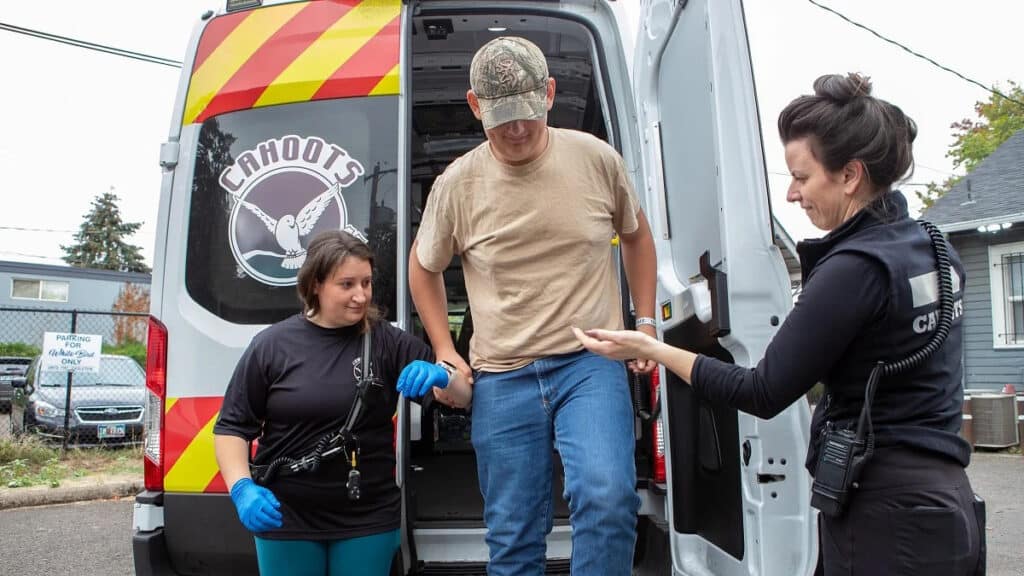
In 1989, the city of Eugene, Oregon, became the first in the US to embark on an experiment: what happens when someone other than the police answers 911 calls? Even then, the police were inundated with calls that didn’t require arrests, such as those concerning welfare checks, vagrancy, public intoxication, and mental health crises. With few other options at their disposal, however, cops often made an arrest, anyway. Worse, when armed officers arrived at a scene, situations sometimes escalated needlessly—and dangerously. Why not free up the police to handle more serious crimes, instead?
Eugene’s “alternative first response” program was called Crisis Assistance Helping Out On the Streets, or CAHOOTS, a tongue-in-cheek reference to the fact that the self-described “anarchist hippies” running the organization behind it were wary of partnering with the police. The plan: send out a team consisting of a mental health crisis worker and an EMT to handle low-risk cases involving mental health distress, addiction, or homelessness.
Though a pioneer, for a long time CAHOOTS was not quite a trailblazer. By the count of advocacy organization Law Enforcement Action Partnership (LEAP), until 2016, it was the sole such service in the country; by 2020, that had inched up to a measly six. Then came the murder of George Floyd, who was killed after a convenience store employee called police to investigate a possible counterfeit bill. The country began looking back on a string of what should have been simple police interactions that had ended in unnecessary violence and wondering what could have prevented them.
Following the Black Lives Matter protests, interest in these programs skyrocketed, and in 2021, Congress set aside $15 million in grants to fund their creation. Today, 93 alternative first response programs exist across 31 states. Most are in liberal enclaves, such as Austin, Texas, or Asheville, North Carolina, but others have popped up in places you wouldn’t necessarily expect: Cookeville, Tennessee, for instance, or Tulsa, Oklahoma.
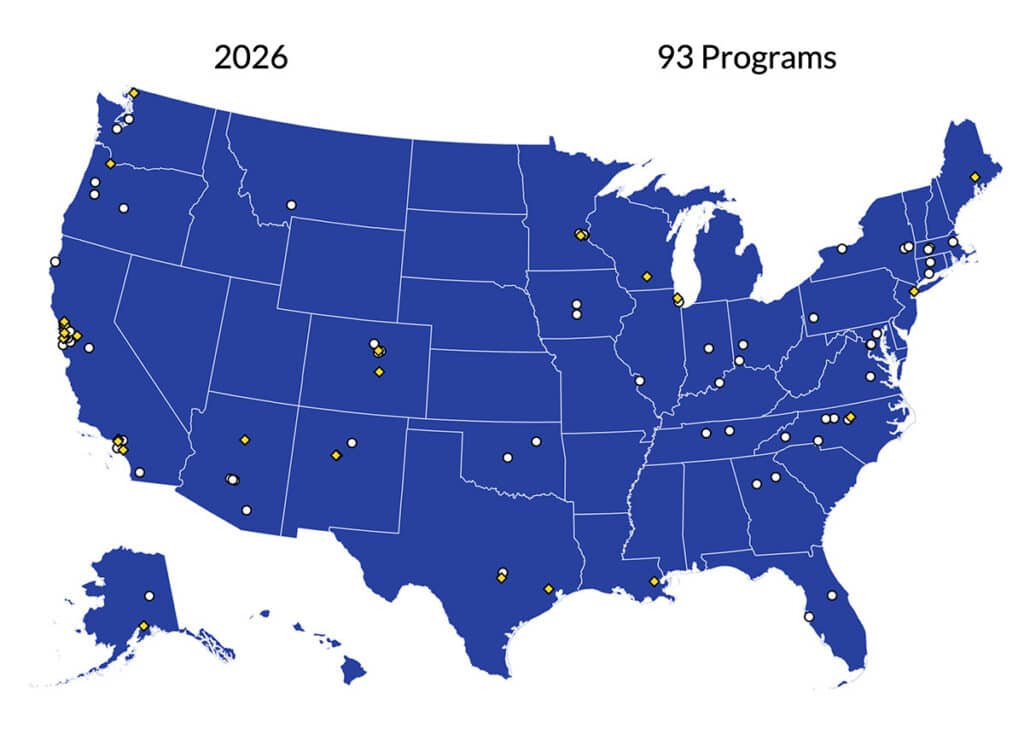
According to LEAP, alternative first response teams now divert 200,000 calls from police each year. Of those, the police end up being summoned just 1–3% of the time and emergency backup even less frequently. To date, no responder has been seriously injured or killed.
What is less certain, however, is whether the programs are otherwise efficacious. While high-quality analysis is sparse, a tentative but positive picture has begun to emerge: A study published last month, for instance, found that CAHOOTS reduced calls handled by police by 23%. That’s not only because it averts the need for police involvement, but also likely because its interventions—transport to social services, connection to counseling, and deescalation techniques, for example—prevent problems from compounding.
Another recent report found that Denver’s alternative first response program, STAR, reduced the probability of an arrest compared to cases handled solely by police. And a 2022 study found that STAR, then in its infancy, reduced reports of less serious crimes (public disorder, resisting arrest) by 34% with “no detectable effect on more serious crimes.” (Critics of alternative first response worry that less police involvement will encourage more criminal activity.) A preliminary study from 2025 found that Durham, North Carolina’s HEART program increased 911 calls, suggesting that “it fosters public trust.”
Even the police are coming around. Durham’s former chief, Patrice Andrews, who helped launch HEART, told NPRthat officers were originally skeptical of “this ultra-uber-liberal idea being pushed down our throats.” But an Arnold Ventures-funded study from this year found that 77% of the police department now considers it helpful.
Yet, not everything has been sorted. It’s difficult to study the cumulative efficacy of these programs, as their implementation differs substantially from place to place. There’s no set way to measure outcomes and no agreement about what constitutes success. Some, such as New York’s B-HEARD, have struggled to expand (although it is popular with those it does reach), and indeed, demand in many instances far exceeds a program’s ability to meet it. Responders are also discovering that there’s a limit to what they can do to counter chronic issues such as poverty or housing, while funding questions continue to loom large, especially as response teams commonly end up referring people they encounter to social services. CAHOOTS itself, which was for decades the country’s longest-running alternative first response service, shuttered in Eugene in 2025, although it remains operational in nearby Springfield. The city of Eugene now runs its own version.
It would be an overstatement to say that alternative first response is today a durable part of the country’s public infrastructure. Still, in just a few years, it has gone from a hippie vision confined to a single corner of the US to a workable template repeated nationwide. And sprouts of solid evidence—of fewer arrests and reduced police workloads—are confirmation of a positive and meaningful legacy of the George Floyd era.
—Emma Varvaloucas
What Could Go Right? S8 E26: Are We Becoming Too Afraid to Take Risks? | With Allison Schrager

As modern society grows wealthier and more technologically advanced, our increasing obsession with safety is quietly stalling human progress. Economist and author Allison Schrager joins host Zachary Karabell to break down the hidden costs of our increasingly risk-averse culture and explain why embracing uncertainty is essential for both personal fulfillment and economic innovation. | Listen now
By the Numbers
28%: Share of extra emissions avoided since 2000 due to the growth of wind and solar
$25B: Amount OpenAI’s new philanthropic arm has committed to giving away
~58%: Share of countries with legislation against age-based discrimination, up from 44.5% in 2018
Go Figure
Humans have been predicting the end of the world for almost as long as we’ve had a world to make predictions about. What we haven’t always had is Nvidia. Amid growing fears that autonomous AI agents could escape their digital confines and wreak species-ending havoc, the chipmaker has introduced a practical response: a better cage. Its new Open Agent Safety Platform surrounds AI agents with software restrictions and an independent hardware watchdog that quarantines a potential troublemaker within milliseconds once it strays beyond permitted boundaries. Use of the system is optional, but dozens of companies have signed on, including Anthropic, Microsoft, Oracle and SpaceX. (One notable absence from that list, so far: OpenAI.)
Quick Hits
💉 People with Type 1 diabetes were able to go off insulin in an early clinical trial that combined a pancreas transplant with an experimental antirejection drug.
🔬 “Triple agonist” weight-loss drugs have hit another milestone. In a Phase 3 clinical trial, so-called GLP-3s—the latest generation of the agonists—helped people with Type 2 diabetes lose up to 20% of their body weight, a new high water mark.
🇲🇦 The king of Morocco named the country’s first female prime minister, Marrakesh mayor Fatima Ezzahra El Mansouri, after her party won last week’s parliamentary elections.
🚀 Jessica Watkins became the first Black female commander to lead a crew to orbit, setting a US speed record to boot.
🚛 Global sales of medium- and heavy-duty electric trucks hit a record highin the first half of the year, spurred in large part by China, where around a third of all trucks sold so far in 2026 are electric.
🏙️ The slow sinking of cities could be reversed, new research finds, by reducing the extraction from the groundwater reservoirs underneath them, allowing them to recover. The tactic could be especially useful where sea levels are rising due to climate change.
🔞 California has become the 18th state to ban child marriage, leaving only two —New Mexico and Mississippi—with no minimum age to wed.
💍 The jewelry company Pandora is opening a crafting facility powered entirely by renewable energy and using 100% recycled gold and silver in a pioneering step for the industry. The fine-jewelry factory will also be the world’s largest.
🌏 Moth swarms are sweeping across Australia, a positive sign that the bogong moth, an important pollinator and food source in the region, is bouncing back after decades of decline. (Bonus for the laughs: how Australians are handling the moth-bardment.)
🧑🔬 The Trump administration has launched an initiative to make clinical trials—which can take a decade and cost up to $2 billion—quicker and less costly.
🦌 There are signs that animals are crossing the Greenland Wildlife Overpass, North America’s largest wildlife corridor. (You can build an overpass, but animals won’t always cross it.)
🐧 Scientists have discovered the first new penguin species in 100 years. No surprise it took so long: They live on the Kerguelen Islands, known in French as the Desolation Islands.
🐟 Last but not least, two heartwarming community-led efforts: Coastal villages in Scotland are celebrating the return of marine life 10 years after a victory to ban the seabed-damaging practice of scallop dredging. And in California, flowers chosen specifically to repair the land after the 2025 Palisades Fire, are blossoming after a massive “seed bomb” project.
👀 What we’re watching: A potential breakthrough drug to treat the “missed disease” endometriosis has been tested successfully in mice.
💡 Editor’s pick: The tech to replace animal testing is here. But scientists aren’t yet ready for it.
TPN Member Originals
(Who are our Members? Get to know them.)
- The 2026 midterms preview | Tangle | Isaac Saul
- Can the Federalist Papers shed useful light on our present predicament? | The Renovator | Danielle Allen
- Trump has a point about interest rates | WaPo ($) | Zachary Karabell
- The scientific case for being less in touch with your friends | NYT ($) | Adam Grant
- When White people like Hannah Gann pretend to be Black | NYT ($) | John McWhorter
- How “people power” ended the Marcos regime | Lucid | Ruth Ben-Ghiat
- Artificial intimacy with Sherry Turkle | Life with Machines | Baratunde Thurston
- Less for more: Employer health plans | No Mercy/No Malice | Scott Galloway
- Should we ban AI for kids? | The Atlantic ($) | Jonathan Haidt & David Brooks
- America can regulate AI—and still win the AI race | FP | Fareed Zakaria
- What the hell is going on in Europe? | The Argument | Matthew Yglesias
- We need to rethink how we diagnose mental illness | NYT ($) | Maia Szalavitz
- About last summer | The Ecomodernist | Ted Nordhaus
- Trump’s new student loan rule is fine | Slow Boring | Matthew Yglesias
- Midterm countdown, 33 days to go: Language from our leader | Breaking the News ($) | James Fallows
This Week in History: How Oil Saved Antarctica
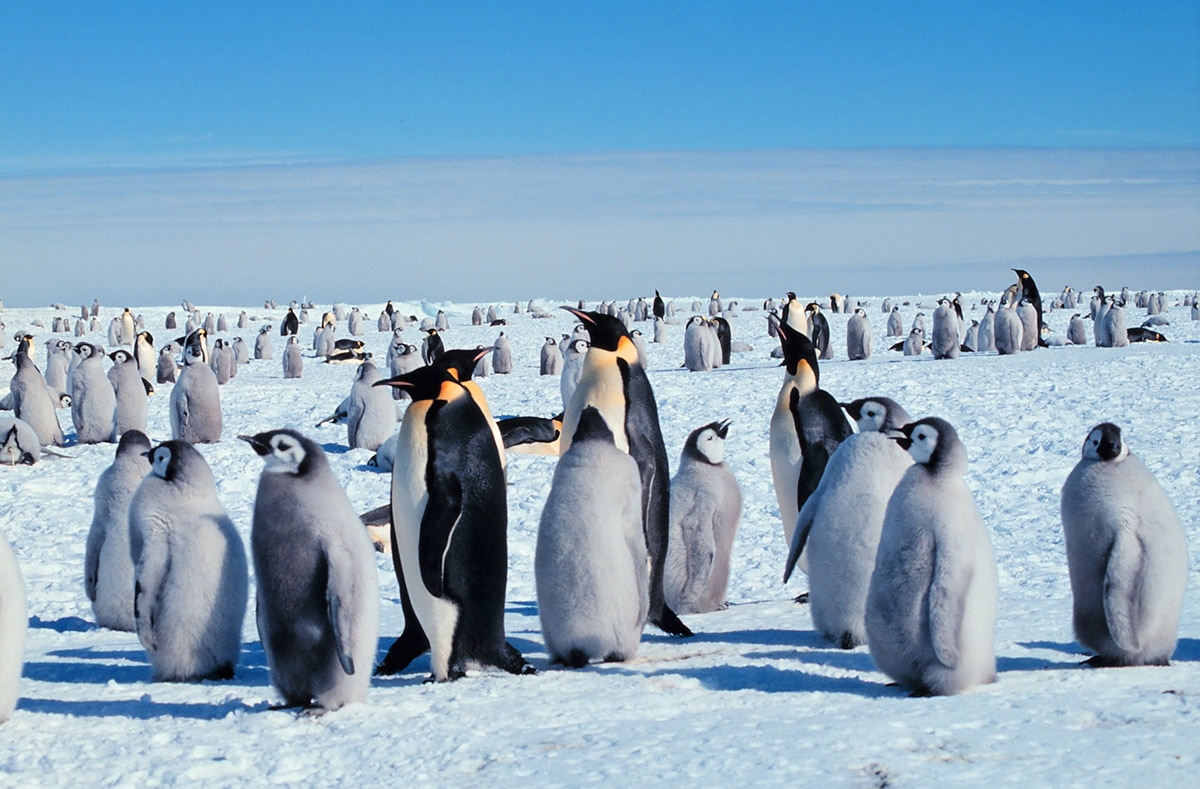
Ever wonder why there are no capitalists eyeing Antarctica? (Besides, you know, it being the coldest place on Earth.) The reason that penguins and whales can still frolic undisturbed on the continent is because on October 4, 1991, the world decided to declare it “a natural reserve, devoted to peace and science.”
Ironically, the motivation was oil. In the 1970s, when an Arab-led embargo resulted in gas shortages, sky-high prices, and a general panic, some countries began to look around for alternatives. Maybe Antarctica had some undiscovered reserves? By 1988, 33 countries, including the US, had signed the Antarctic Minerals Convention Treaty, to allow mining and drilling in the region.
But in an unexpected twist, oil started the conversation, and oil would end it. The following January, an Argentine supply vessel grounded off the west coast of the Antarctic Peninsula, dumping 160,000 gallons of petroleum into the ocean. The damage to Arthur Harbor, where the spill occurred, is studied to this day.
When the drilling treaty came up for ratification soon after, France and Australia did an about-face, and voted no, and India, East Germany, Italy, and Belgium decided to abstain. Requiring a unanimous vote to pass, the treaty was blocked.
Within two years, the world had done a complete 180, forging a new agreement that banned all activities relating to Antarctic mineral resources, except scientific research. The Protocol on Environmental Protection to the Antarctic Treaty was signed in Madrid on October 4, 1991, and its protections activated in 1998. Today, there are about 70 research stations on the continent with a rotating population of thousands of people—but no oil rigs.