Volcanoes are erupting in The Philippines, but on-fire Australia received some welcome rain. The Iran war cries have been called off and The Donald’s military powers are about to be hamstrung by the Senate. Meanwhile, his impeachment trial is starting, and we’re all on Twitter for a front-row seat.

What Could Go Right? Mercator’s Big Little Lie
A centuries-old distortion is finally losing its grip.

Emma Varvaloucas
This is our weekly newsletter, What Could Go Right? Sign up here to receive it in your inbox every Thursday at 5am ET. You can read past issues here.
Mercator’s Big Little Lie
Depending on your age, you likely grew up with images of our world that were based on a 16th-century map. The Mercator projection—long a staple of classroom walls everywhere—was originally created to aid sailors’ navigation. But while it preserves land masses’ shapes, their sizes become inflated the closer they are to the poles. Greenland, for example, appears roughly as large as Africa, despite the continent being 14 times bigger. What results is a distorted, not to mention problematic, communal perception: Critics hold that the map actually reinforces the colonial-era viewpoint of white-majority countries’ superiority.
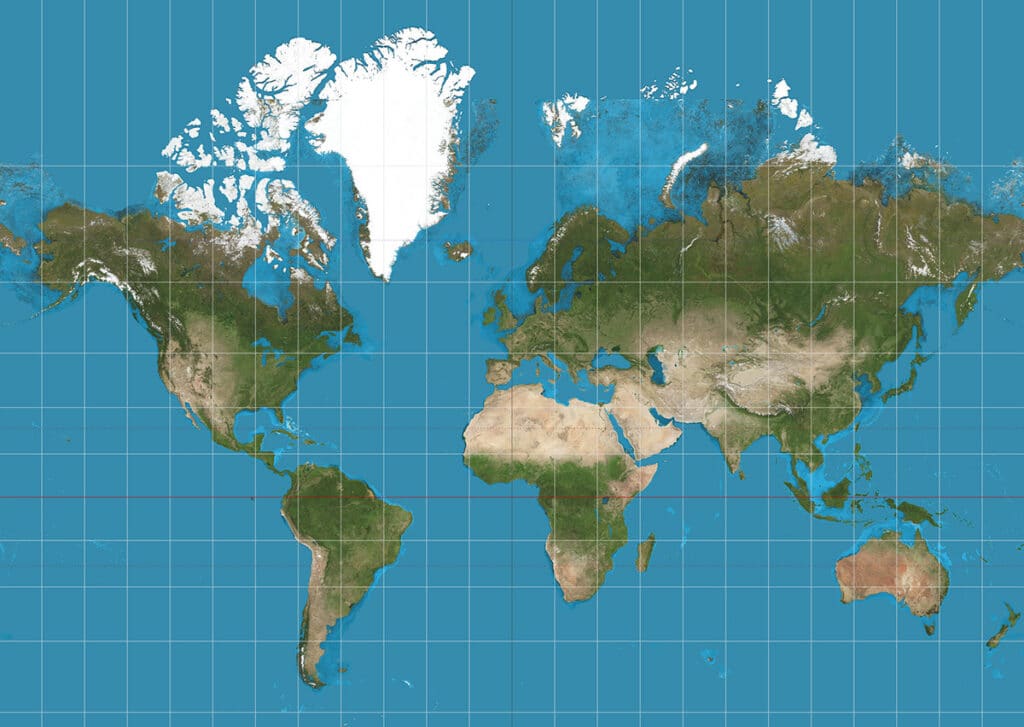
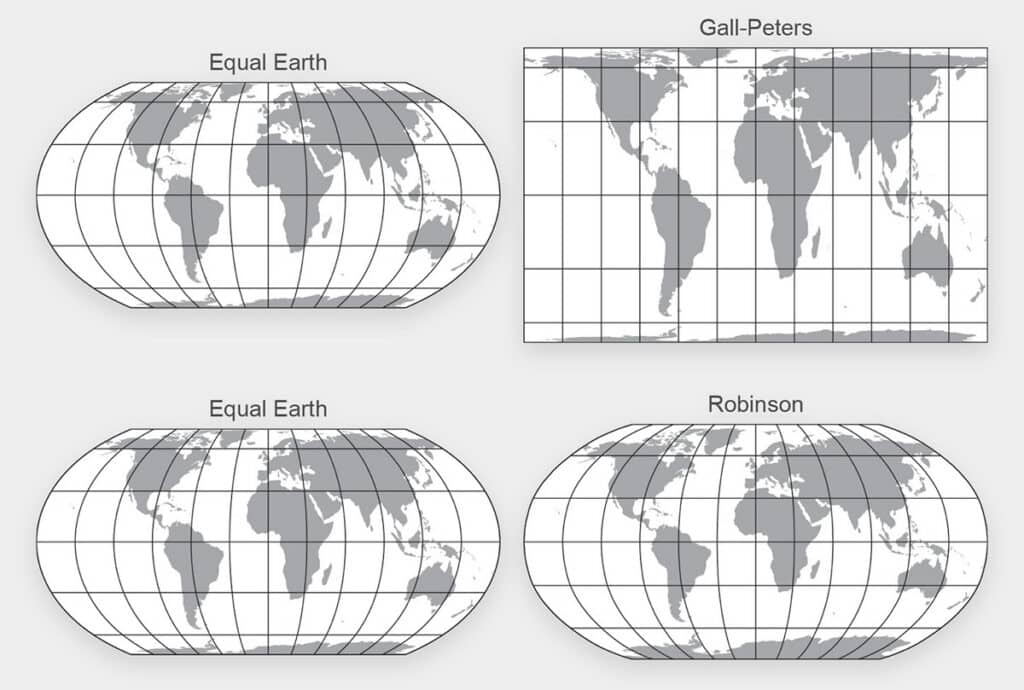
Earlier this month, the United Nations adopted a non-binding resolution to encourage schools, governments, international organizations, and technology companies to replace the Mercator projection with maps that more accurately represent continent size, such as Equal Earth, which, says the resolution, corrects the “symbolic minimization” of Africa. (The resolution was proposed by Togo.) Indeed, on the Equal Earth map, Africa—and everything else—is correctly proportioned.
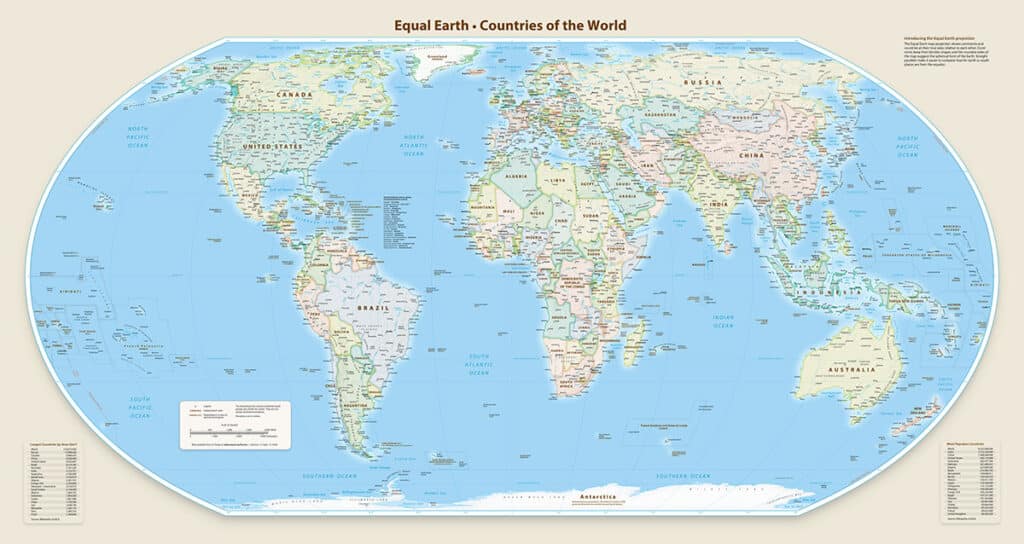
This push is but the latest in a history of cartographic corrections. The Peters projection, which similarly sought to portray the world more equitably but ends up stretching continents lengthwise, has been in use since the 1970s. In the late ’90s, institutions like the World Bank and National Geographic switched to the Winkel-Tripel or the Robinson. Equal Earth itself was created in 2018, the same year that Google Maps replaced the Mercator with an interactive 3D globe on its desktop view. In short, we’ve been slowly moving away from Mercator misrepresentation for decades.
And though it may be tempting to hand-wave away that move as merely symbolic, Robert Dussey, Togo’s foreign minister, begs to differ: “Maps shape our understanding of the world,” he said before the vote. “They guide education, nourish the imagination, and influence collective perceptions.”
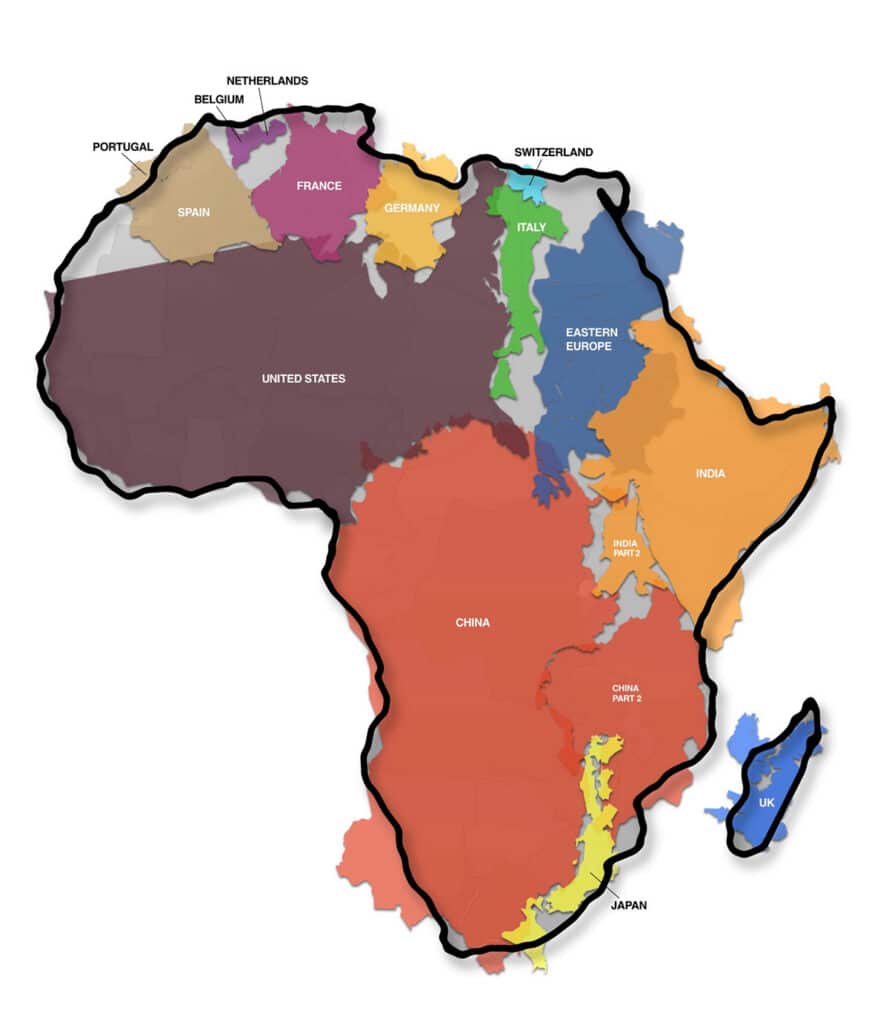
They also project power, political and cultural. What distinguishes this latest campaign from past ones is that it is African-led, and remarkably fleet. The resolution, which originated in the Correct the Map movement, was launched by two African advocacy organizations in April 2025. Within 17 months, they’d managed not only to get it picked up by the African Union, turning the Equal Earth map into official continental policy—the first time, according to SpeakUpAfrica, that a “pan-African institution has taken an official position on the visual representation of the continent”—but to get it passed by the UN.
And passed nearly unanimously, at that. The United States was the lone member state to vote against the measure. President Donald Trump’s favorite hobby of renaming bodies of water may seem petty, but he’s a perfect example of why maps matter. In 2022, Trump told reporters: “I always said: ‘Look at the size of [Greenland]. It’s massive. That should be part of the United States.”
You gotta wonder if his worldview would be different had the world been viewed in a more equitable way from the beginning.
—Emma Varvaloucas
What Could Go Right? S8 E23: Could Reparations Actually Happen in America? With Prof. Dorothy Brown
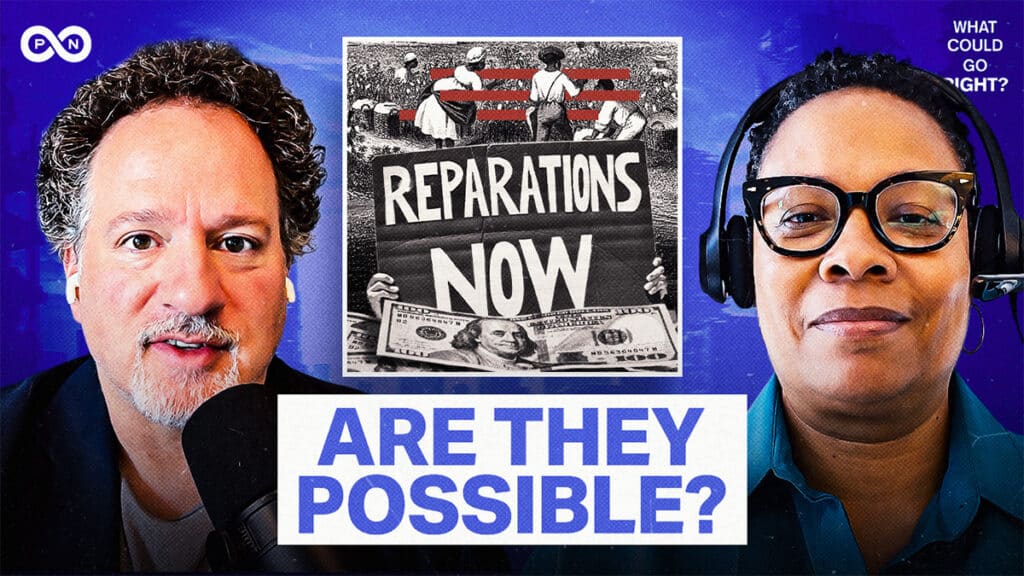
Georgetown Law Professor Dorothy Brown joins host Zachary Karabell to talk about her book Getting to Reparations: How Building a Different America Requires a Reckoning with Our Past. They discuss whether reparations are practical and actually possible in the near future. | Listen now
By the Numbers
50M: Homes US solar capacity can now power
7M: Estimated lives a new blockbuster tuberculosis vaccine could save by 2050
193%: Increase in PhD enrollment in India between 2015 and 2024
230K: Students pursuing higher education in Zambia, a doubling since 2019
Go Figure
You can keep a coal plant open, but you can’t make people burn coal in it. Despite executive orders extending the lives of seven plants scheduled for retirement, US coal-fired electricity generation fell 11% in the first half of 2026. More striking: Plants kept open by government intervention burned just 1.6 million tons of coal, down from 4.8 million a year earlier. “Blame” cheaper natural gas, solar, and wind power. Sometimes progress just won’t be stopped.
Quick Hits
🗳️ The Supreme Court has rejected the Trump administration’s bid to limit mail-in votingbefore the midterm elections.
🔬 Thousands of children exposed to 9/11’s toxic cloud will finally get a major health study, with $50M of federal funding being spent to determine the health issues that could have resulted from the exposure.
🧬 The next generation of gene editing is here. Epigenetic editing counters the effects of environmental factorssuch as secondhand smoke or chronic stress on gene expression.Several new tools are in clinical trials.
🤰 At last, scientists have discovered what triggers childbirth: the immune system. The discovery could help in the development of therapeutics to prevent preterm birth.
💊 A new drug for narcolepsy works so well that patients taking it report developing hobbies for the first time; unlike other narcolepsy medications, it’s not a stimulant but rather mimics an essential brain peptide.
🚀 A commercial rocket launched from continental Europe has reached space, ina regional breakthrough handled by a German startup.
🐋 Iceland is considering implementing a commercial whaling ban. If a bill comes to fruition—the government will submit one in February—it would leave Norway and Japan as the world’s last two whaling countries.
🐘 State-of-the-art tech systems with drones and AI installed in nature reserves across Africa have been remarkably successful, keeping track of endangered animals and cutting down on unwanted human-wildlife interactions.
👏 Chile and Bhutan have eliminated dog-transmitted rabies. Chile is the first South American country to do so; Bhutan the first in Southeast Asia.
👀 What we’re watching: After more than a decade of post-Gaddafi gridlock, Libya’s rival political camps have agreed to hold an election within two years.
💡 Editor’s pick: The AI pandemic isn’t on its way.
TPN Member Originals
(Who are our Members? Get to know them.)
- How to be happy at college | TFP ($) | Arthur Brooks
- Democracy is on the ballot in both America’s and Israel’s elections | NYT ($) | Thomas L. Friedman
- Medicine needs to get serious about AI | The Atlantic ($) | Ezekiel J. Emanuel
- When billionaires drop manifestos, history says run | Life with Machines | Baratunde Thurston
- Liberalism after 9/11 | The Argument | Matthew Yglesias
- Battle for Belarus | Diane Francis | Diane Francis
- Who says reading is dead? | NYT ($) | John McWhorter
- What is the good life? | The Atlantic ($) | David Brooks
- Hungary’s half-turn | Lucid | Ruth Ben-Ghiat
- The psychology of meaningful work | Flourishing Friday | Clay Routledge
- One ring to rule them all | No Mercy/No Malice | Scott Galloway
- The AI slowdown is not what it seems | TFP ($) | Tyler Cowen
- A simple plan to save the world from rogue AI | Slow Boring | Matthew Yglesias
- Trump’s $5,000 dividend promise | Tangle | Isaac Saul
This Week in History: The Broom Handle Petition That Won Women the Vote
On September 19, 1893, New Zealand became the first self-governing country in which all women could vote.
That’s the same year the world’s first Ferris wheel began to spin, a feat folks likely found terrifying. Not nearly as terrifying as letting women vote, though. That was a harder sell; in fact, New Zealand’s Parliament shot the idea down in 1891 and again in 1892. Then, Kate Sheppard—one of the first women to ride a bike in Christchurch and a die-hard anti-corset activist—put together the mother of all petitions.
Nearly 32,000 women signed it, at that time nearly a third of the country’s adult-woman population. After she pasted the sheets of the petition end to end on a broom handle, an ally unrolled that baby down Parliament’s aisle, all 270 meters of it—2.5 American football fields—until it hit the far wall.
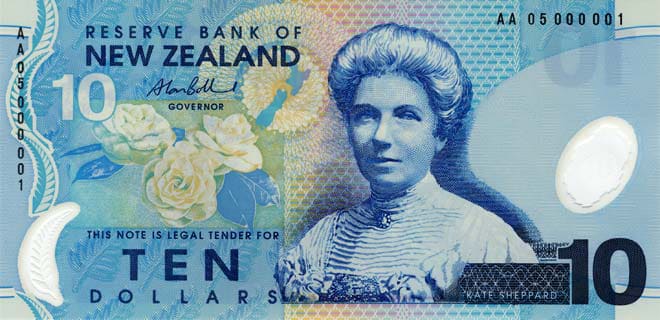
Ten weeks later, two in three women in New Zealand visited the polls for the first time, Māori women included, influencing suffrage campaigns around the globe. And Sheppard? She was immortalized on New Zealand’s $10 note.