Volcanoes are erupting in The Philippines, but on-fire Australia received some welcome rain. The Iran war cries have been called off and The Donald’s military powers are about to be hamstrung by the Senate. Meanwhile, his impeachment trial is starting, and we’re all on Twitter for a front-row seat.

What Could Go Right? AI Is (Mostly) Not Taking Our Jobs
So far, employment as a whole has been surprisingly resilient.

Emma Varvaloucas
This is our weekly newsletter, What Could Go Right? Sign up here to receive it in your inbox every Thursday at 5am ET. You can read past issues here.
AI Is (Mostly) Not Taking Our Jobs

You’ve probably heard by now that the latest employment report from the Labor Department was surprisingly positive: In August, the United States added 162,000 jobs, trouncing expectations. The unemployment rate—4.1%—was “lower,” The Economist reports, “than in almost 90% of months over the past half-century.”
So whether or not the mass employment disruption promised by AI companies and feared by Americans is still coming, it hasn’t yet. In May, The Economist ran a cover story about the work world’s apocalyptic future. The above quote was pulled from a more recent article titled “The jobs apocalypse is postponed.” What changed in just a few short months?
First off, some jobs are minimally exposed to AI. Yes, AI is hitting certain fields hard—tech, for instance, is going through a bloodbath right now, and it’s a terrible time for customer service agents and office administrators. But there are plenty of other sectors that have few AI touchpoints. August’s hiring came from bars and restaurants, healthcare, manufacturing, and local public schools.
Then there are the jobs that AI is generating. The Economist article includes an estimate that AI has so far been responsible for 200,000 layoffs since mid-2023—and the creation of one million new jobs. Some of these are white collar: a friend here in Greece, for example, is the chief financial officer at an AI-based startup. Another pitched the creation of a role for himself when his old job of writing online content for casinos became defunct. The role: head of AI, which he got, and still holds.
Other newly created jobs are blue collar. Americans are decidedly opposed to data centers, but they are employment boosters for some sectors, because their construction requires all kinds of tradespeople, from HVAC technicians to electricians. My partner’s boilermaker union in Philadelphia, for instance, is champing at the bit for work connected to them. The data center boom is one reason why the unemployment rate for young Americans without a college degree is among the lowest in decades—another piece of good news in the August report.
AI might even be giving legs to an American startup spurt that began during the pandemic. More than 3 million new-business applications were filed in the first six months of 2026, the most for the January–June period since data collection began in 2005—although their effect on the overall economy may be limited.
Last, there are the still-here jobs that we thought AI would have replaced by now. Radiologists are one well-cited example. Their jobs 10 years ago were predicted to become obsolete, but their ranks—and pay—have instead swelled. Economics writer Noah Smith also points to translators, who you would assume would already be fossils of a bygone age but whose numbers are actually stable. Not to mention, there is something to be said about a general anti-AI sentiment that I suspect is lending some professions some protection. You’d think I’d have AI writing these columns by now, but instead human originality has become a status symbol. (Feel free to run us through Pangram.) Meanwhile, the corporate overlords at Meta eventually overstepped during their transition to AI, and employees rebelled.
Of course, all is not positive. College graduates are struggling: The unemployment rate for workers aged 22–34 with a degree has only been worse during the pandemic and the 2008 financial crisis, per The Wall Street Journal. (It is, however, still lower than that of youngsters without a degree.) An analysis of US workers through June 2026 by Progress Network member Erik Brynjolfsson showed that employment for recent college graduates in AI-exposed occupations was down 19% compared with less-exposed peers. And while the unemployment rate as a whole is low, so is labor force participation, not only the result of dwindling immigration and older generations retiring, but also young people giving up on the job search entirely.
Hence, The Economist’s hedge that the apocalypse has been “postponed” rather than “averted.” Perhaps today’s college grads are indeed canaries in the coal mine, and economy-wide disruption is still on the horizon. For now, however, employment has been surprisingly resilient.
—Emma Varvaloucas
P.S. A bonus piece of belated Labor Day content: Latin America is catching up to the 40-hour workweek.
By the Numbers
33%: Share of the Delhi Metro system’s power usage met by solar
2: Seconds needed for a new AI tool to spot heart disease; it extracts more information from an ECG than the human eye can see
198.5%: Increase in the global health workforce since 1990
>30%: Share of lung cancer patients whose tumors shrank in a new trial of the blockbuster drug daraxonrasib, which was recently approved for pancreatic cancer
Go Figure
The threat of being ticketed isn’t always enough to curtail speeding, so Albuquerque and Portland are trying the opposite tack: rewarding drivers for obeying the posted limit. Some traffic signals in those cities stay red until an approaching car is detected; drivers traveling at or below the speed limit get an earlier green, while leadfoots wait. At Portland’s first test intersection, average speeds fell from 39 mph to the posted 30. Call it a win for the carrot over the stick.
Quick Hits
⚛️ Spotted: first signs of a dark matter particle! If confirmed, the “monumental” physics discovery could unravel secrets of the early universe and shake up the standard particle physics model.
🐖 After nine months with a temporary pig kidney, a patient has successfully received a permanent human one, a first for the field.
🛢️ China’s CO2 emissions fell by 1% in the second quarter of 2026, as oil consumption plummeted amid the Strait of Hormuz crisis. China’s CO2 emissions have been largely flat or falling since spring 2024.
🧬 A biotech startup has created the first gene-edited, hypoallergenic dogs, two beagles born two years ago who continue to seem “completely healthy.”
✈️ Africa’s middle class is behind a growing demand for air travel. The continent will double its commercial air fleet by 2045, and what will be one of the world’s largest airports is currently being built in Ethiopia.
🦧 Orangutans in American zoos are undergoing a baby boom. Eight have been born since 2025, a “staggering figure” that is the result of a cross-zoo breeding program.
♻️ The wind industry is entering a new era of environmental circularity, with wind farms now able to be recycled or reused nearly in their entirety.
☀️ Some solar stuff: Thailand plans to install rooftop solar panels on a million homes within a year; solar is now China’s top source of power capacity, surpassing coal for the first time; and solar power generation in the UK recently reached a new record.
🐴 For the first time in 200 years, a Przewalski’s horse foal has been born in the wild, a significant milestone after the horses were reintroduced to their native Kazakhstan in 2024.
🛺 India’s electric vehicle revolution is being built by micromanufacturers. Hundreds of thousands of e-rickshaws being put together in sheds and garages make up the bulk of the industry. (Bloomberg $)
📉 More good murder news: the murder rate in Mexico has been cut in half since 2020, the result of a government crackdown on cartels and shifting dynamics among criminal groups.
👀 What we’re watching: What if you could opt in or out of social media algorithms? Australia may be on the way to an answer.
💡 Editor’s pick: The end of reading has been declared. Booksellers see things differently.
TPN Member Originals
(Who are our Members? Get to know them.)
- Why won’t the boomers grow up? | TFP ($) | Arthur Brooks
- What I learned on the open road | Persuasion | Eboo Patel
- The US oil deal with Venezuela | Tangle | Isaac Saul
- An easy way to give kids more freedom | Slow Boring | Matthew Yglesias
- Democrats take a pragmatic step in pursuit of the White House | WaPo ($) | Theodore R. Johnson
- Authoritarianism, autocrats and educating for democracy | The Renovator | Danielle Allen & Ruth Ben-Ghiat
- AI is already changing what it means to be human | The Atlantic ($) | David Brooks
- Protect the Earth—build more data centers | WSJ ($) | Ted Nordhaus
- Little Tobacco moment | No Mercy/No Malice | Scott Galloway
- Putin: The cornered rat | Diane Francis | Diane Francis
This Week in History: The Grape Strike That Changed Everything
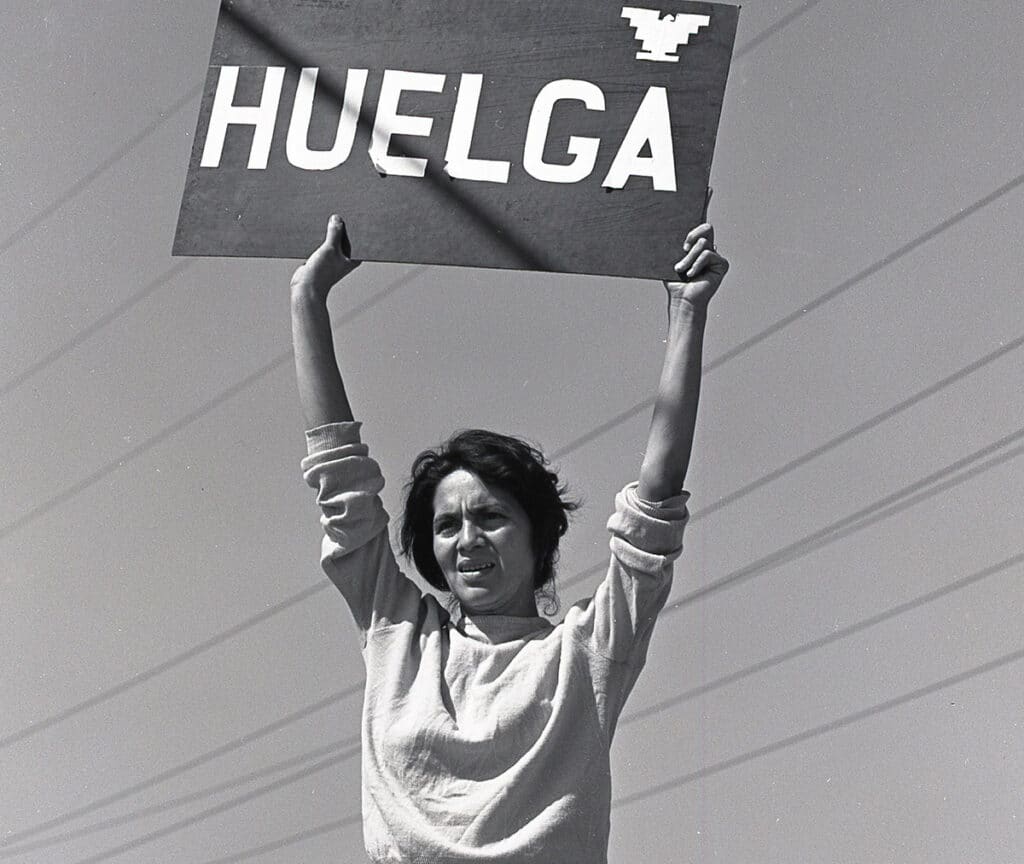
Sixty-one years ago this week, Filipino farm workers stuck it to the man, and changed America forever.
In Delano, California, pickers were housed in unheated metal shacks with no plumbing and no stoves. And yet, room and board was deducted from their pay at high rates, trapping them in a cycle of poverty.
The workers did have some leverage, though: their union had just squeezed a raise out of growers in Coachella (yes, same place, if a very different vibe). And on Sept. 8th, 1965, after Delano’s growers refused to match it, the workers walked, and the grapes stayed on the vine.
The growers tried to bring in Mexican-Americans as scabs, a pretty standard “divide and rule” tactic of the time that had always succeeded, because working crews stayed separated by ethnic group. Except, surprise, surprise—this time, for the first time ever, the groups united, the Mexican-American workers joining the Filipinos on strike. Eventually, the two unions combined to form the United Farm Workers, beginning the Farmworker Movement.
Five years and a national boycott later, the growers signed an agreement to give 70,000 farm workers higher pay and better working conditions. The United Farm Workers, meanwhile, still exists today as the longest-running farm worker labor union in the US.