
Volcanoes are erupting in The Philippines, but on-fire Australia received some welcome rain. The Iran war cries have been called off and The Donald’s military powers are about to be hamstrung by the Senate. Meanwhile, his impeachment trial is starting, and we’re all on Twitter for a front-row seat.

What Could Go Right? The Made-to-Order Cancer Vaccine
A long-shot idea is suddenly looking very real.

Emma Varvaloucas
This is our weekly newsletter, What Could Go Right? Sign up here to receive it in your inbox every Thursday at 5am ET. You can read past issues here.
The Made-to-Order Cancer Vaccine
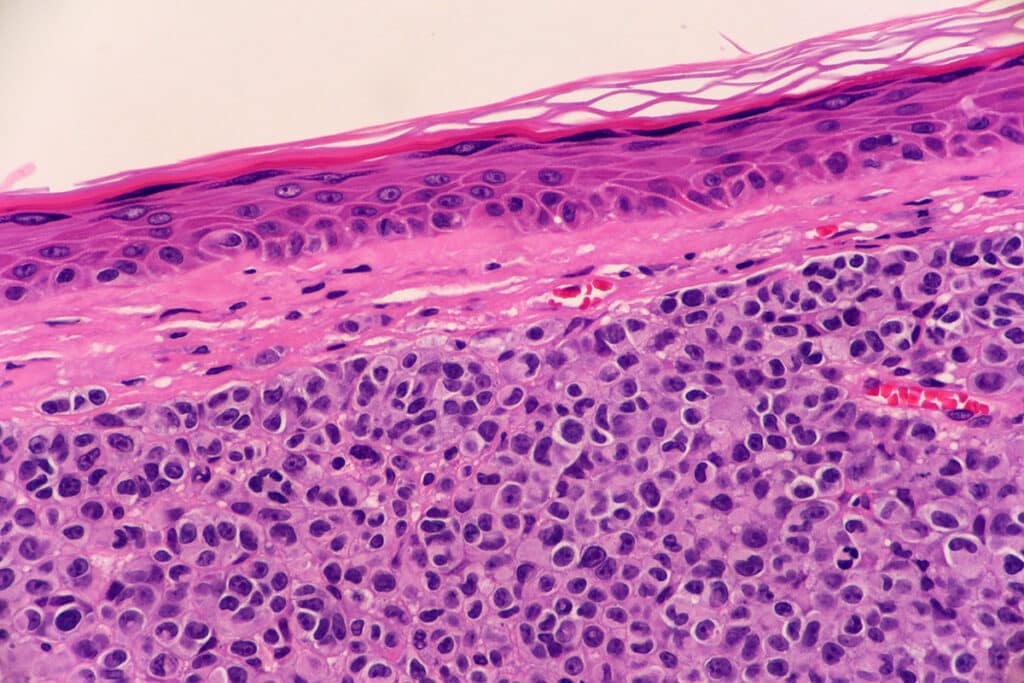
November, 2016. Donald Trump had just defeated Hillary Clinton to become the 45th president of the United States. The British monarchy drama The Crown began streaming on Netflix. And a bioinformatician you’ve never heard of named Jacob Feala left his post at the biotech company Moderna, having finished building, along with scientist Razvan Cristescu, an algorithm that would one day turn a cancer treatment dream into reality.
That algorithm is now the backbone behind Moderna and Merck’s cancer vaccine that was recently shown to significantly cut the risk of melanoma recurrence in a late-stage trial. When he heard the news, biotech reporter Adam Feuerstein posted on X that he “literally yelped.”
Why all the excitement from normally staid science journalists?
The companies will present their data in the coming months, and the FDA will take a closer look to see if it holds up. But already, the vaccine, intismeran, has claimed a series of extraordinary firsts: It’s the first patient-customized cancer vaccine and the first mRNA-based cancer therapy to pass a Phase 3 trial. If eventually approved, it will also be the first-ever medicine, STAT News reports, “whose genetic instructions” are written by an algorithm.
Historically, we’ve taken the nail of cancer, and instead of hitting it with an appropriately-sized tool, whacked the entire area with a sledgehammer—think of radiation or chemotherapy, which does successfully destroy cancer but also harms healthy cells in the process. Intismeran represents an entirely different approach: it enlists the body’s own immune system to fight off disease instead, as all vaccines do. And because it’s personalized, it does it in a way that is built not only to fight cancer, but also each patient’s cancer in particular.
Booby-Trapping the Body Against Cancer

It works in three steps. First is the biopsy—patients have their tumors removed, which are sequenced so that scientists can identify cancerous mutations in the tumors’ DNA. Then the algorithm gets cracking. A computer indicates which of the mutated genes create antigens, i.e., molecules found on cell surfaces that serve as a kind of cellular ID card. Their shape signals to the immune system whether something belongs to the body or not.
These antigens, because they are unique to the individual, are dubbed “neo” antigens. They’re the secret sauce behind intismeran, a version of which is custom-made for each and every patient. Combined with an immune system-boosting drug, the vaccine uses mRNA technology to instruct the body to temporarily produce cells with the cancer-signaling neoantigens. These then alert the body that there is an intruder and to raise its defenses. It’s the immune system equivalent of Kevin McCallister in Home Alone.
Unlike Kevin, the body doesn’t heat doorknobs and ice sidewalks—it sends out what are called T cells to fend off the cancer. But just like Kevin, the body remembers its survival lessons. One round of activation is all it needs to be prepared for future home invasions, attacking the burglars neoantigens whenever they next pop up.
This is the process behind intismeran’s remarkable outcomes. While the companies have yet to release full data from the latest trial, earlier results showed that the drug-plus-vaccine combination reduced the risk of recurrence or death by 49%. More than 90% of those in the test group were still living five years after the treatment.
A 60-Year Gambit
As with all breakthroughs, this one didn’t happen overnight. Scientists have been tinkering with the idea behind this vaccine for 60 years, without success. Even a decade ago, Moderna’s stab at it was described as a “gambit.” Several scientific stars had to align for the dream to be realized: a steep drop in DNA sequencing costs, steps forward around mRNA taken during the pandemic, as well as artificial intelligence—without the algorithm, immunologists would have to comb apart a tumor’s mutations by hand to find the ones with antigen-producing capabilities, a time investment that would have made individualized vaccines near impossible.
Now the gambit has paid off (literally—Moderna’s stock more than doubled after the announcement). And its arrival holds promise not only for melanoma, but other forms of cancer. Merck and Moderna are currently running nine other trials to test this type of vaccine against bladder and kidney cancers, among others.
Time will tell whether intismeran will be a one-hit wonder or the herald of a transformative new tool against cancer. Reporter Feuerstein, however, didn’t think it was too early to make a definitive statement: “2026 will go down as one of the most consequential years in cancer treatment, ever,” he wrote in that same X post.
—Emma Varvaloucas
What Could Go Right? S8 E21: Alien Civilizations, Mars Colonization & Humanity in the Age of AI | With Dr. Dakotah Tyler

In this episode of What Could Go Right, Zachary Karabell sits down with Dr. Dakotah Tyler, an astronomer and astrophysicist who pivoted from a promising college football career to unraveling the mysteries of the universe. They discuss the existential threats and promises of large language models, questioning whether tech leaders can manipulate human thought and if our innate drive to explore is being outsourced to bots. They also explore the statistical probability of discovering alien life and why complex organisms might be a rare cosmic anomaly. | Listen now
By the Numbers
100K: Solar panels installed across Africa every day so far in 2026
165: Countries with in-practice universal voting rights for men and women, up from 47 in 1950
>500K: HD TVs needed to display the full panorama of space that will be captured by NASA’s newest telescope
35%: Coral cover in the northern Great Barrier Reef in 2026, up from 30% last year—a demonstration of recovery after recent mass bleaching events
Go Figure
That 92% of births in Lesotho are now attended by a trained health care provider is very good news for a country working to combat a maternal mortality rate that is more than twice the global average. Very surprising news: About 300 male midwives are part of the solution, challenging traditional attitudes about a profession in which men make up less than 1% of practitioners worldwide.
Quick Hits
🏫 With just 13 minutes of warning, a Nepali principal saved the lives of 900 students before his school was washed away by the recent flash floods that have so far killed more than 1,000 people.
🔞 A bipartisan bill to outlaw child marriage has cleared California’s legislature after a decade-long fight. Once Gov. Gavin Newsom signs the bill into law, there will only be two states—Mississippi and New Mexico—left with no minimum marrying age.
⚖️ Greenlandic women will finally be compensated for contraception forced on them by the Danish government, many without their knowledge. The payments come with an official apology.
🧠 Using artificial intelligence and lab-grown mini brains, researchers have created the largest molecular map of autism yet, revealing relevant genetic mutations that may inform the development of more targeted therapies for the condition.
🪳 Your life may one day be saved by cyborg cockroaches armed with miniature syringes. Researchers are testing them to deliver emergency aid for rescue missions such as post-earthquake.
👷 A new federal grant program aids students enrolled in short-term job training to become electrical line workers, phlebotomists, firefighters, and more.
🏭 Turkmenistan, the world’s worst country for methane mega-leaks, has finally begun to plug them. Minimizing the leaks could have a rapid positive impact on reducing planet-warming emissions.
🔋 Clean energy is booming in the US despite the Trump administration’s best efforts. Same goes for battery technology, with one major difference: It’s supported on both sides of the aisle (albeit for different reasons).
⚡ Canada has announced plans to massively enhance wind and hydropower generation. If the project advances, it would produce enough electricity to light, heat, and cool all the homes in Toronto, Montreal, and Vancouver combined.
🌏 Researchers have rediscovered the spinach pipefish, unseen in more than 40 years and feared extinct. Turns out, the seahorse relative still lives in the rivers of Papua New Guinea.
📉 Direct deaths from wildfires are trending downward in Europe despite a decade in which the fires themselves have worsened—the result of early-warning systems, evacuation planning, and firefighting capacity.
👀 What we’re watching: Should we all be microdosing lithium to stave off dementia?
💡 Editor’s pick: The young are betrayed by the politics of doom.
TPN Member Originals
(Who are our Members? Get to know them.)
- Successful people have one habit in common | NYT ($) | Angela Duckworth
- There’s really only one way to stop students from cheating | NYT ($) | Adam Grant
- Should you believe the dire warnings about ‘AI takeover’? | TFP ($) | Tyler Cowen
- Entrenchers vs openers | The Renovator | Danielle Allen
- The Supreme Court’s latest mail-in ballot ruling | Tangle | Isaac Saul
- YIMBYs already have a bold vision for solving the housing crisis | Slow Boring | Matthew Yglesias
- America has never elected a Black Republican governor. That could change. | WaPo ($) | Theodore R. Johnson
- The race to build humanity’s future in space, with Chris Hadfield | GZERO | Ian Bremmer
This Week in History: The World’s First Power Station
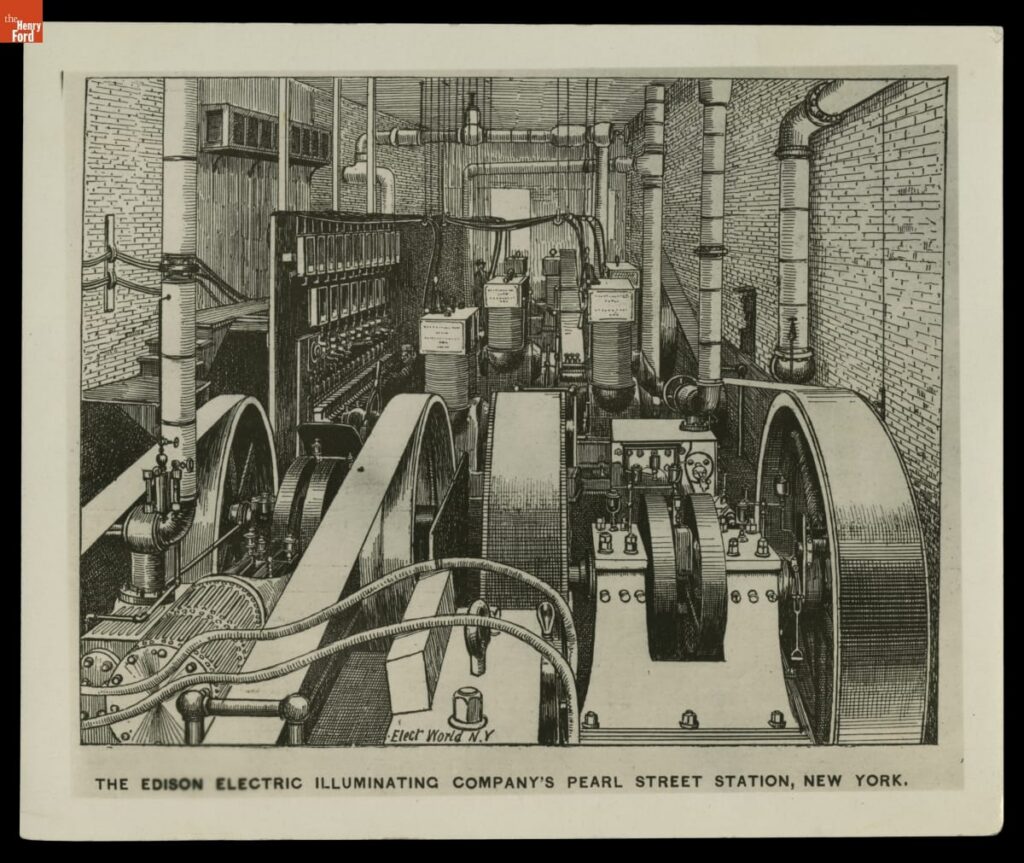
Everyone knows that Thomas Edison built the lightbulb we recognize today. Did you know he built the first commercial electrical grid, too?
On September 4, 1882, the Edison Electric Illuminating Company began supplying power to its first customers—all 59 of them—from its location on Pearl Street, in New York City’s Financial District. The power station, which serviced an area of one square mile, generated enough electricity to light about 7,200 incandescent lamps.
The science was solid. The financials? Not so much. The Pearl Street Station lost money, but its real value, the US Census Bureau says, was proof that “Edison’s design worked.” Investors came calling, and within a year, locales from Shamokin, Pennsylvania, to Milan, Italy, were running Edison power stations of their own. Six decades later, the Bureau started to ask whether American homes had electricity or not. By then, the predominant answer was yes.