
Volcanoes are erupting in The Philippines, but on-fire Australia received some welcome rain. The Iran war cries have been called off and The Donald’s military powers are about to be hamstrung by the Senate. Meanwhile, his impeachment trial is starting, and we’re all on Twitter for a front-row seat.

What Could Go Right? A Golden Age of Biodiversity Science
We’re learning more about life on our planet, and faster, than ever before.

Emma Varvaloucas
This is our weekly newsletter, What Could Go Right? Sign up here to receive it in your inbox every Thursday at 5am ET. You can read past issues here.
A Golden Age of Biodiversity Science
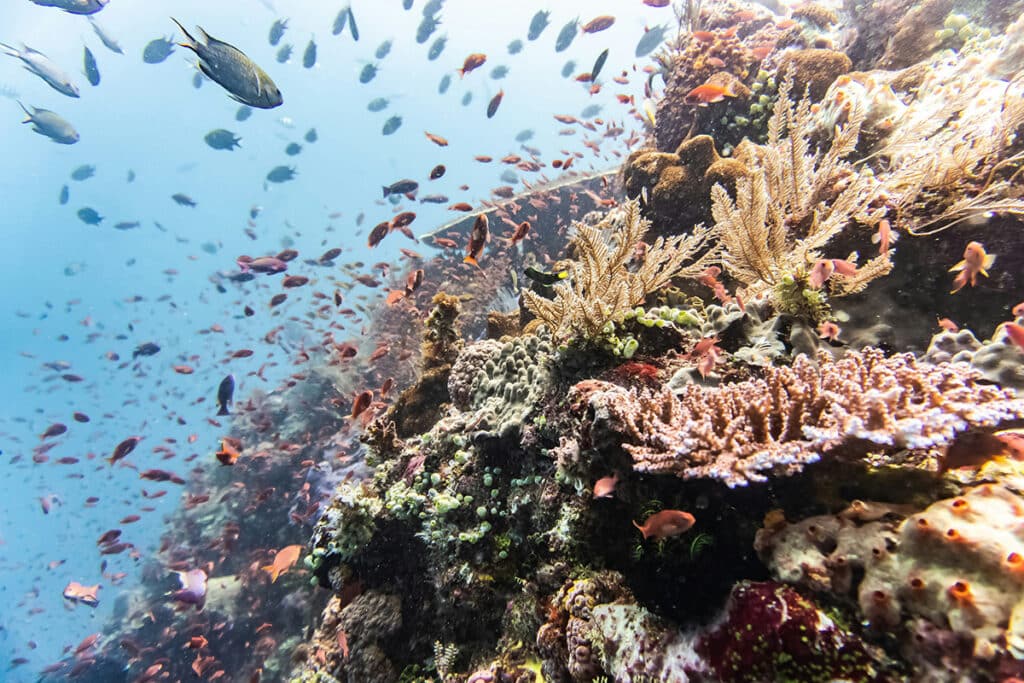
We all know that Earth’s biodiversity is under pressure. The share of species at risk of extinction keeps rising as we continue to chop down trees and dig up soil to cultivate crops or build infrastructure. And of course, the consequences of climate change loom large.
What we know less about is what that biodiversity actually entails. Despite sharing a home with these critters, scientists estimate that we’ve classified only about 14% of the world’s species —at best. The numbers of what remains unknown to us are staggering: an estimated 100,000 plant species, for example, and two million fungal ones, not to mention all the different bacteria, of which there may be trillions unidentified.
And because we can’t save what we don’t know, comprehensive cataloguing is an ever-more-urgent task.
The good news is that it’s incredibly exciting times for biodiversity science. Thanks to digital tools and other technological advances, we are learning more about life on our planet, and faster, than ever before. And that knowledge may prove to be the key to saving it.
For a long time, the peak of new species’ discovery was considered to be over a century ago, when colonial powers were still shipping off naturalists to traipse around the Global South. But a recent study found that between 2015 and 2020, scientists described new species at the fastest rates recorded in the history of modern taxonomy, at more than 16,000 per year. So many animals, insects (particularly beetles), fish (bony ones, to be specific), and arthropods—invertebrates with segmented bodies and jointed appendages, like crabs—were identified that the study’s authors estimate that up to a fifth of our total knowledge of these creatures had been accumulated in the previous two decades alone.
Much of this is the result of DNA sequencing becoming affordable; the cost has plummeted from tens of millions of dollars in the early 2000s to just a few hundred today. We’re also plumbing regions of the planet that we’ve never studied before, from the highlands of Angola, which had been made inaccessible for decades by war, to the depths of the sea, where only state-of-the-art robots can go.
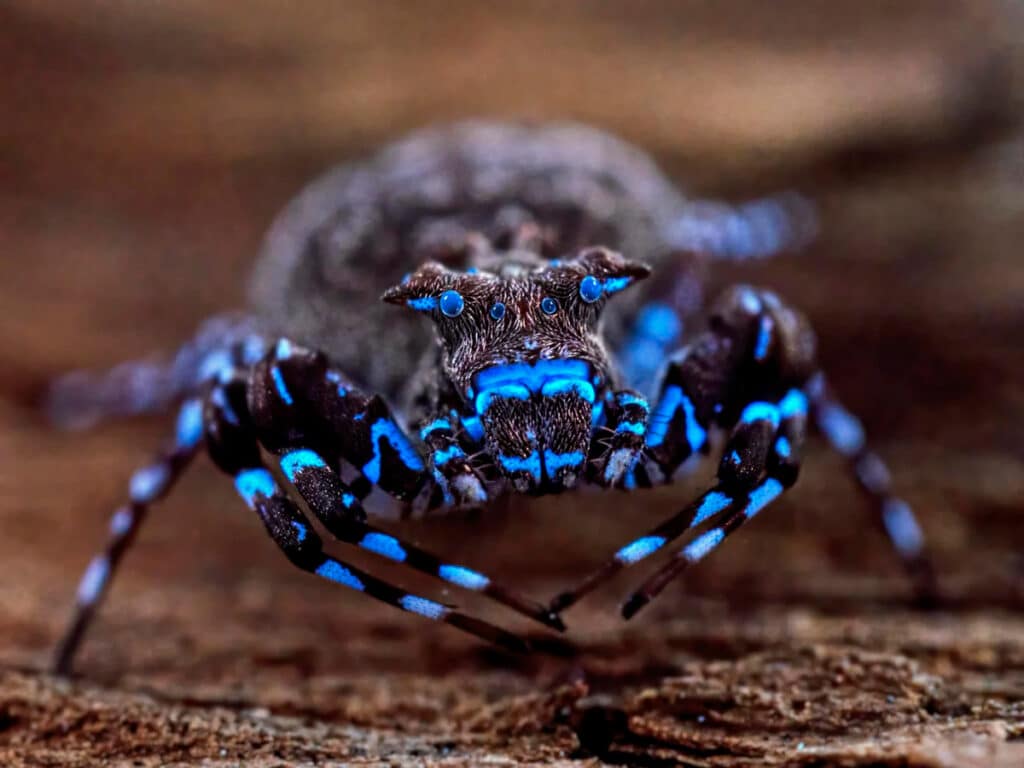
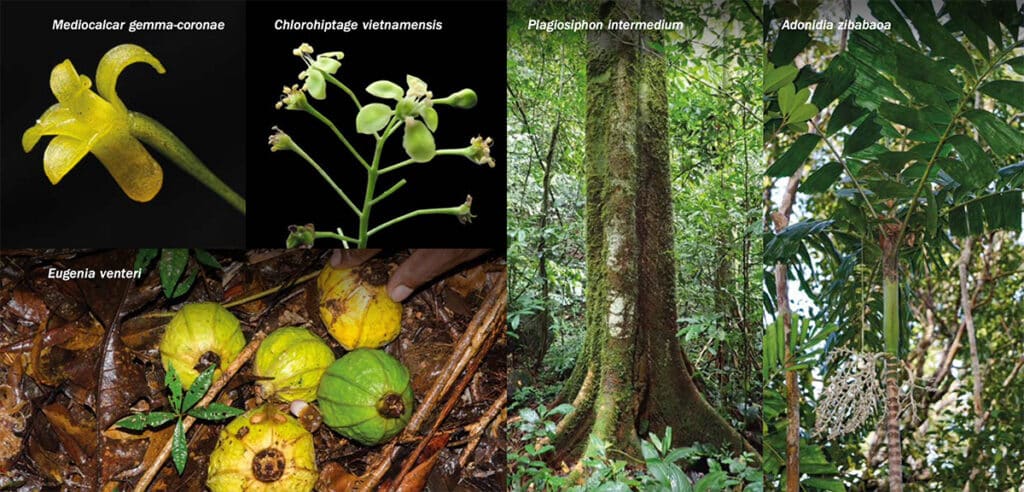
Identification of new flora hasn’t accelerated in the same way, holding fairly steady at about 2,500 species per year. But that, too, could be about to change. In their just-released State of the World’s Plants and Fungi 2026, scientists at London’s Royal Botanic Gardens, Kew, are hopeful that a combination of digitization and AI is about to transform plant taxonomy.
One reason why we’re discovering, say, fluorescent spiders faster than Chinese vascular plants (there’s a curatorial backlog of them, FYI) is that how we identify plants hasn’t changed much since the 16th century, when a Bolognese botany professor first pressed, dried, and mounted plants on paper called herbarium sheets. Those sheets are still the first step in an often incredibly slow process of classification. (Just ask the ghost palm of Borneo, which was finally named in 2024—92 years after it was first recorded.) The physical nature of the sheets basically makes global plant taxonomy about as efficient as a DMV that still files documents by hand.
Of late, though, there has been a massive push to digitize these collections, a precursor to putting AI to work on them. Kew has a digitization project of its own; just completed, it comprises 7.4 million plants. Others are popping up in biodiversity hotspots around the world, from Brazil to South Africa. While experts are still needed to confirm the results, AI’s data-crunching capabilities can fill in—such as is the case with China’s vascular plants—where resources or expertise are lacking, finding errors and otherwise helping scientists better assess extinction risk.
It’s not just the accumulation of data that has direct benefits for conservation. It’s also the precision. A new global assessment of coral reefs, for instance, used machine learning to locate an additional 166,000km2 of reefs that are resistant to climate change, triple the amount previously identified. The resulting map is 10,000 times more detailed than its predecessors, allowing conservationists to advocate for policies where they’ll have the most impact.
Can we classify and conserve species faster than they’re being wiped out? As the Kew report states, the race is on. But the information we have at our disposal to make a difference has never been better.
—Emma Varvaloucas
What Could Go Right? S8 E11: How to Read Economic News Without Spiraling | with Alex Mayyasi

Every time we open a news app, we are hit with a fresh wave of economic dread. But why does the financial forecast always sound like a pending apocalypse, even when the data tells a remarkably stable story? Longtime Planet Money contributor Alex Mayyasi joins host Zachary Karabell to offer a badly needed dose of fresh air to clear out the oppressive nature of recent economic news. | Listen now
By the Numbers
£1,100: Annual fuel cost savings of EV owners in the UK
~2X: Global increase in rice production between the 1960s and 2010s, despite climate change
$10T: Market value of the green economy, a record high
916: Turbines now operating at the US’ largest wind farm, in New Mexico
0: Cervical cancer deaths in young women recorded in England between 2020 and 2024, a first
Go Figure
With theWorld Cup in full form, we thought it timely to note that a growing body of research suggests that feelings of awe can play a meaningful role in our psychological, social, and physical health. Even brief daily experiences of positive astonishment have been linked to lower stress, anxiety, depression, inflammation, and loneliness, as well as stronger feelings of connection, generosity, and well-being.
Quick Hits
✈️ NASA is developing a plane that can fly faster than the speed of sound without creating sonic booms. It would produce a “supersonic thump” instead, which will “sound somewhere between a distant thunder crack and a car door slamming down the block.”
🧲 Scientists have made sperm magnetic to facilitate remote guidance toward an egg. The idea is to one day create a non-invasive IVF procedure.
🌎 French Polynesia will expand its fully protected waters by 520,000km2, bringing 30% of the South Pacific island nation’s waters under bans against seabed mining and industrial fishing.
💦 The new generation of GLP-1s may have yet another benefit: improving sperm quality and boosting testosterone levels. Scientists aren’t surprised—obesity’s detrimental effect on male fertility is well known.
🧠 A brain implant has allowed a paralyzed patient to text, email, and retain his job in climate advocacy for three years—“the longest-running speech communication of anyone” with such a device. The system operates via 256 microelectrodes that create text from the patient’s brain signals. A text-to-speech option even uses the patient’s real voice!
🔬 We are entering a period of Alzheimer’s research wherein it will start to compound. A couple highlights of recent developments: The first simple blood tests to screen for the disease were approved by the FDA last month, and a treatment being trialed could not only slow the disease but “delay its onset or even prevent it altogether.”
🐣 Asian companies are increasingly interested in chicken welfare, participating in a new scheme that helps farmers in their region go cageless.
📈 The global market for EVs is growing much more quickly than predicted. About 63% of new cars sold are now electric, up from 1% in 2019.
🚫 Colombia has become the first Latin American country to pass legislation prohibiting female genital mutilation nationwide. (It is also the only Latin American country where the procedure is known to be practiced.)
🏳️🌈 Acceptance of gay and lesbian people has risen significantly over the decades across much of the world. Countries that have legalized gay marriage have seen an especial bump.
⚖️ Hungary is poised to become the first EU member since the 1980s to introduce a wealth tax. The policy is aimed at oligarchs who struck it rich through public procurements during prime minister Viktor Orbán’s recent tenure. (The proposal will be unveiled in October.)
👀 What we’re watching: On the opposite side of conservationism are new “extinction drives” to eliminate pests harmful to humanity.
💡 Editor’s pick: Is US fertility at an all-time low? Not if you’re counting the number of babies being born, no.
TPN Member Originals
(Who are our Members? Get to know them.)
- The Knicks just made the case for sports fandom | TFP ($) | Arthur Brooks
- The SpaceX IPO has a bright side | WaPo ($) | Zachary Karabell
- The Supreme Court’s end-of-term sprint | The Preamble | Sharon McMahon
- UFC fight night at the White House | Tangle | Isaac Saul
- How much revolution does a guinea buy? | The Renovator | Danielle Allen
- The Middle East enters the G-Zero | GZERO | Ian Bremmer
- The Democrats need a candidate shake-up | NYT ($) | Matthew Yglesias
- A serious paper about the path to superintelligence | Faster, Please! | James Pethokoukis
- What Obama meant | Persuasion | Eboo Patel
- Europe IRL | No Mercy/No Malice | Scott Galloway