Volcanoes are erupting in The Philippines, but on-fire Australia received some welcome rain. The Iran war cries have been called off and The Donald’s military powers are about to be hamstrung by the Senate. Meanwhile, his impeachment trial is starting, and we’re all on Twitter for a front-row seat.

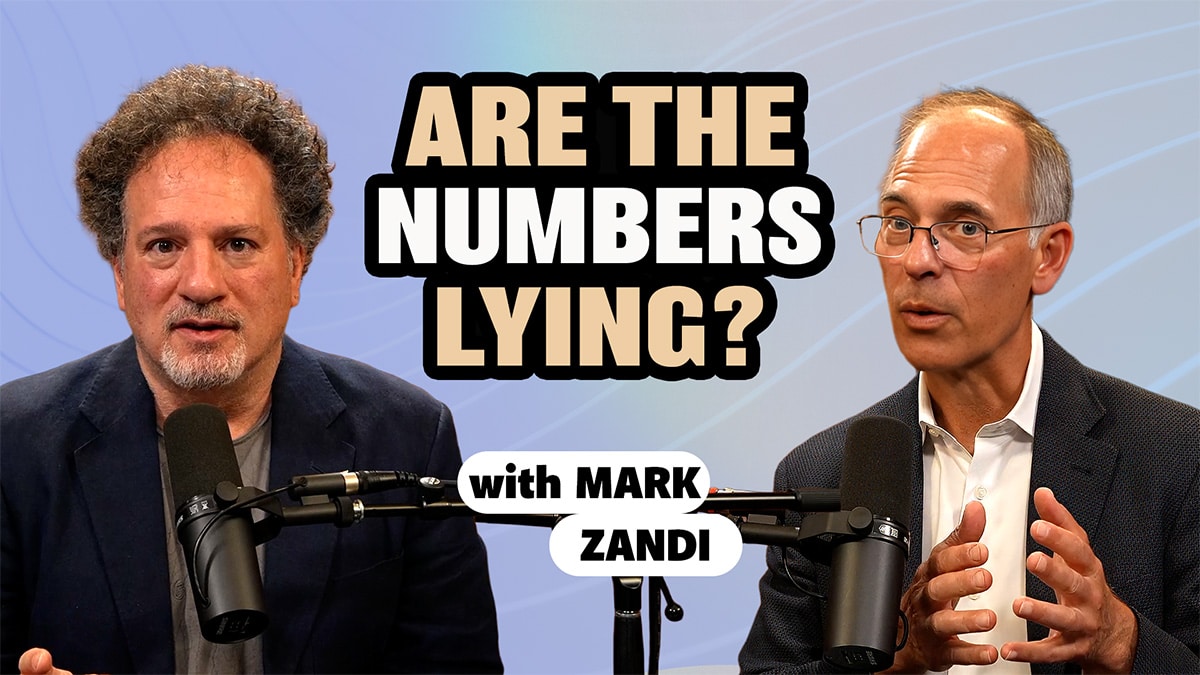
Why the Economic Numbers Don’t Match How You Feel
Featuring Mark Zandi
There is a massive chasm between what official data tells us about the financial landscape and how average Americans actually experience their daily lives. Mark Zandi, chief economist at Moody’s, joins Zachary Karabell to break down why this disconnect exists and how a skewing of income distribution means different classes are living in entirely separate realities.


Prefer to read? Check out the Audio Transcript
Although the transcription is largely accurate, in some cases it may be incomplete or inaccurate due to inaudible passages or transcription software errors.
Zachary Karabell: With each passing week and month, the gap between how most people think the economy is doing and what the numbers that we use to measure our economy tell us yawns like a chasm. It’s never been so wide between what people feel about what’s going on and what the numbers tell us is going on. And in order to figure out that conundrum, are our feelings right?
Are the numbers right? Are they both right? Are they both wrong? We need to really look at what is this thing that we call the economy. I’m Zachary Karabell, founder of The Progress Network, and this is my podcast, What Could Go Right, where we look at, well, what could go right, given that everyone is always looking at what could go wrong.
Today, I’m gonna talk with someone who has spent decades trying to parse this thing called the economy. Mark Zandi is chief economist at Moody’s, and before that he had started his own company, economy.com. Oh, the quaint years when you could just do a .com in front of whatever it is you were doing. Anyway, the point being, Mark Zandi has been looking at this thing called the economy for decades, and he has developed both an acute sense of what the numbers tell us and an acute sense of what the numbers don’t.
He is turned to by the media, he is turned to by financial companies who are trying to figure out how to read the tea leaves, and he also hosts a weekly podcast called Moody’s Talks: Inside Economics.
Mark Zandi: Like that title.
Zachary Karabell: So Mark Zandi, it’s a pleasure to be having this conversation with you. At least I, I hope that it’s a pleasure to be having this conversation with you.
Mark Zandi: Indeed, yeah. I’m very happy to be here.
Zachary Karabell: So the economy. Yeah. Everyone talks about the economy. Right. And this is a little bit of a pet peeve of mine, and I wrote a book I think like 12 years ago called The Leading Indicators about the economy isn’t a real thing. It’s a set of data that get told as a story of statistics that we weave together to create this thing called the economy.
Mark Zandi: Yeah.
Zachary Karabell: It’s not tangible. We don’t, you know- No … the economy doesn’t walk into a room. You don’t interact with it. You can’t make friends with it. It can’t be an enemy. It’s just, it’s just a statistical construct.
Mark Zandi: It’s like a Monet painting.
Zachary Karabell: Exactly.
Mark Zandi: Yeah.
Zachary Karabell: So why do we increasingly seem to have a massive public both debate and divide over what it is that this number story is telling us, the economy-
Mark Zandi: Right
Zachary Karabell: and what it is that most people live, and if you ask most people, their experience of the economy and the numerical representation of it are-
Mark Zandi: Well, I, I think, uh, the data we look at is generally an average, a median. It’s looking at the middle of the distribution. So it’s taking all American households, distilling down to the typical American household and say, “How’s that typical household doing?”
And that masks a lot of things around the edges of the distribution on the upside or the downside, and that’s become even more important, I think, more recently because of the skewing of the income, wealth, and consumption distribution. This goes to the K, so-called K-shaped economy. Folks in the top part of the income wealth distribution are doing quite well, and they have a different re- reality and perception of what’s going on.
And everyone else, uh, you know, they’re, they’re struggling. They don’t own AI stocks, and many don’t even own a home. You know, they got a job because unemployment’s generally low, but their wages are under pressure. And, uh, c- obviously, in the most recent period, their after-inflation, after-tax i- incomes are falling because inflation’s so high, cost of living is so high.
So the lived experiences here are, are very different, you know, depending on where you are in that distribution. And so if you look at the averages, you get one picture, but if you look at the distribution, you get a very different one.
Zachary Karabell: But don’t we all actually own… Not all of us, but 50% of American households own some portion of the US equity market.
How m-
Mark Zandi: did you get the percent?
Zachary Karabell: 50. Five-
Mark Zandi: Oh, f- I thought you said 53.
Zachary Karabell: No.
Mark Zandi: Yeah.
Zachary Karabell: I mean, it could be 53.
Mark Zandi: No, it could be. No. I see. I see. I was, I was im- pr- quite impressed- I, yeah … by the precision that you- I
Zachary Karabell: should do that, by the way. Yeah. There’s that old adage- Yeah … like, if you’re gonna lie, do it- Yeah,
Mark Zandi: yeah …
Zachary Karabell: do it with precision.
Mark Zandi: I thought you were gonna go to, like, the four significant digit.
Zachary Karabell: Oh, yeah. Yeah, yeah. No, it’s 53.42%- Yeah. It, it- … of American households It
Mark Zandi: probably is right. We can, we can- Yeah … you guys- I’m sure
Zachary Karabell: we could look it up afterwards.
Mark Zandi: Look it up. Um- We, we just ask Claude.
Zachary Karabell: Yeah. Should we do it now? Yeah, yeah. Let’s do that now.
We’re gonna have, we’re gonna have a Claude moment. I’m gonna do ChatGPT ‘cause I use that on my phone. I’m the only person left.
Mark Zandi: I got ChatGPT. I got them side by
Zachary Karabell: side. Quickly, quickly so we can see them both. Yeah. What percentage of US households own stocks? And the answer is, drum roll please. 50%. 53. 58%. Wow.
Oh,
Mark Zandi: okay. 58%.
Zachary Karabell: Best estimate in some form, but a lot of this is through retirement funds.
Mark Zandi: Well- So
Zachary Karabell: don’t we all own-
Mark Zandi: I’ll give, I’ll give you another statistic. Yeah. Folks in the top 10% of the income distribution, and I, I think you have to make closer to 300K to be in this, this, that rarefied. Not that, it may not mean a lot for someone sitting in New York, but that’s a lot of money- Yeah
in many parts of the country own, uh, the top 10% own 90% of the equity. Sure. So yeah, s- you know, folks in the middle part of the distribution own a little bit of stock, but it’s, eh, little, little bit. They are not really focused on it. Z- for them, it’s their home, right? Mm-hmm. Kinda the way I think about the, the American cons- uh, household is folks in the bottom third, you know, they rent.
Folks in the middle third of the distribution own a home, but not v- a- and of course the guys at the bottom of the distribution don’t own any stock, and they owe a lot of money. Folks in the middle part of the distribution, you know, they own a home, but they don’t own very much in the way of stock. It’s really the top third, and really the top 10%, top 1%, the top 1.1% that own the equity, and who’s really benefiting from what’s going on, you know, in the stock market today.
Zachary Karabell: What about pension? I mean, there are still a, a limited number of defined contribution pension plans. You know, CalPERS, the- Yeah … the California Teachers Union, Illinois Teachers Union, the firemen, the, the, the public servant unions in a lot of northeastern cities. Right. You know, one of the reasons why you have this disjuncture between how blue state, uh, balance sheets look very bad, it’s ‘cause- Yeah
you know, we, and I’m in New York City, have long-term obligations for pensions for public servants, teachers- Right … firemen, policemen. You don’t have the same embedded levels in, in the South. They, all those pension plans- True … own Nvidia, and-
Mark Zandi: Yeah …
Zachary Karabell: will now own a little bit of SpaceX. Yeah.
Mark Zandi: I don’t wanna overstate the case.
I think there is a strong case that the ownership of equity is very top-heavy, and has gotten more top-heavy.
Zachary Karabell: Yeah, I mean, I’m only pushing back from the perspective of there is this problem of we’re all somewhat invested in this economy. Right. Yes, percentage-wise, very, very different if you’ve got $10 million versus 100,000 or $50,000.
But the experience in general, and I, I think this is now ubiquitous, I mean, some of the most negative views about what’s going on economically- Uh-huh … are some of the richest people.
Mark Zandi: Uh-huh.
Zachary Karabell: Which is weird. Like, a lot of other places in the world- Uh-huh … if one is gonna just rankly generalize-
Mark Zandi: Right …
Zachary Karabell: you know, wealthy people tend to feel like they’re kind of in the catbird seat, you know?
Right. India’s got a lot of problems. You talk to really wealthy Indians, and they’re like, “Oh, things are, things are great.”
Mark Zandi: Right.
Zachary Karabell: You know? Is
Mark Zandi: that right?
Zachary Karabell: Yeah.
Mark Zandi: I didn’t know that.
Zachary Karabell: Yeah. I know that’s a generalization- Yeah … and it’s a bit anecdotal, but I think- Right … it’s, it would be merited by surveys if there were those.
Right. Everybody’s negative- Right … about what’s going on economically in the United States, you know? The wealthy are negative, and they’re building, you know, disaster shelters, and the- Right … the, you know, the poor thinking capitalism sucks. That’s interesting,
Mark Zandi: yeah.
Zachary Karabell: So, like, what, what gives?
Mark Zandi: Well, I don’t know.
I mean, if I look at… I, I’m an, an economist. I just- Right … I’m rooted in the data, however flawed. Uh, all data’s an imprecise representation of the reality of what’s going on. And I look at the consumer sentiment surveys, and they, they’ve got their p- problems, you know, there’s no doubt about it. But you look at it by the responses by, uh, parts of the income distribution, it’s pretty much what you’d expect.
You know, if you’re lower income, you’re not happy, really unhappy compared to the folks that are in the top part of the income distribution. It changes over time, and I’d say everyone’s not happy now. Uh, and that goes to, you know, we can talk about what, you know, what’s going on and why that would be the case.
I think it goes to our fractured politics and lots of other d- you know, societal issues that we’re, we’re struggling with. And there’s a lot of angst, I think, among higher income households and net worth households around kind of broader existential k- you know, questions. Things like, you know, climate change.
I’m sitting here in New York and, you know, we’re under a cloud of smoke. I mean, that feels pretty dystopic.
Zachary Karabell: Yeah, for those- Yeah … we’re, we’re recording this on a day when we’re getting the, the literally the blowback of- Right … like Ontario wildfires.
Mark Zandi: Right. And then, you know, uh, just look at economic policy, what’s going on in our streets with the immigrant population and, you know, the- people get very upset about that.
Some people like it of course, but that, that goes to the d- the differences here. But, so I think everyone’s, generally there’s a high level of angst, and I think the pandemic probably had some impact on collective psyche. I mean, since the pandemic s- sentiment surveys all have been depressed- Right
compared to pre-pandemic. So it feels like there’s some- something there.
Zachary Karabell: Yeah, and it used to be, by the way, the, the partisan effect was really noticeable in the aughts and the 2010s. Mm. Meaning, if you were Democrat and Obama or Biden was president-
Mark Zandi: Right …
Zachary Karabell: mostly Obama, you thought the economy was doing pretty well.
Mark Zandi: Yeah.
Zachary Karabell: If you were Republican under Bush and then Trump won, you thought the economy was doing pretty well, and it flipped.
Mark Zandi: Right.
Zachary Karabell: Now it would seem everybody thinks-
Mark Zandi: Well, it still flips.
Zachary Karabell: Yeah.
Mark Zandi: It’s just the level is lower.
Zachary Karabell: Right. That’s what I’m saying. Yeah, yeah. Like, it- Yeah … there is still a partisan divide.
Mark Zandi: Yeah, it’s still a partisan divide. But the whole th- Everyone is, like, more depressed.
Zachary Karabell: Right.
Mark Zandi: Yeah, more depressed. Uh- I, and, you know, I don’t know. There, uh, there’s, it’s a lot of things that we need to research, but things like social media and what kind of implications that have. And now AI. Yeah. I mean, just AI is really bothering people.
I mean, you could see it when a lot of the graduation ceremonies, the, the, there was people giving speeches about AI and they were getting booed by the students. So, you know, the, even the, the rate of technological change and what’s happening there might be having an impact on the collective psyche.
Zachary Karabell: But then there are still these weird statistical anomalies of you ask most people in their 20s, 30s or 40s about one of the major challenges, and they’ll say it’s buying a home.
That home- Mm … p- home purchases have become unaffordable- Right … out of reach, can’t see their way to it And then you look at historical home ownership percentage data-
Mark Zandi: Yeah …
Zachary Karabell: in the United States-
Mark Zandi: Right …
Zachary Karabell: from let’s say 1970 to- Right … 2025. And essentially it’s been in a band of about 63 or 64% to about a high of 67 or 68 at the end of the ‘90s or the mid-2000s.
But it’s not as if it’s gone from, you know, 50% to 70% back down to 50.
Mark Zandi: Yeah, but like that, that’s messed up by the age distribution of the population. Sure. Right? ‘Cause the age- we’re all aging.
Zachary Karabell: Right.
Mark Zandi: And j- typically if you’re older, you own a home. So the f- that mere demographic fact that the, the dis- the age distribution is shifting to the north is keeping the home ownership rate higher.
So if you adjusted for that- demographic fact, the homeownership rate’s definitely declining.
Zachary Karabell: It’s definitely declining for people- Yeah … in their 20s and early 30s. Yeah. Absolutely.
Mark Zandi: Well, it, it, yeah, it, yeah, true. Yeah.
Zachary Karabell: But so is marriage and the beginning of a family. I mean- Yeah … in a lot of American cities now, professional women, I mean, average age of first child is around mid-30s.
Mark Zandi: Right.
Zachary Karabell: That would’ve been five, six, seven- Yeah … eight years younger at various points in the 20th century.
Mark Zandi: But, uh, just a factoid. So, and we can ChatGPT it, you know, if you’d like, but if you go back just before the pandemic and you look at the average age of the first-time home buyer, and that’s five, seven years ago.
That’s not a long time ago. So, you know, we haven’t seen-
Zachary Karabell: Here, let’s
Mark Zandi: see that. Let’s look. Yeah, let’s do it. Yeah.
Zachary Karabell: We’re enjoying it. We’re enjoying this. Yeah. Yeah. So, so the viewers who are watching this, we’re kind of, this is the new way of, of… It used to be when you had a conversation with someone, the person who seemed- Right
to be the most certain about something just kinda won the argument. They are
Mark Zandi: the one. Um- This is, yeah, this is my, this is my household every dinner. We’re doing this the whole time. Yeah. Like, what’s- So- … the population of Argentina? I don’t know. Let’s see. Oh, it’s not 40 mi- 47 million, I know that for sure. I did that, uh, last night.
The
Zachary Karabell: age of- Yeah, yeah … first home ownership.
Mark Zandi: Yeah.
Zachary Karabell: 2001. Let’s just do 2018.
Mark Zandi: Yeah.
Zachary Karabell: United- I’d say 32. Okay.
Mark Zandi: The average age of the first-time home buyer.
Zachary Karabell: Yeah. Yeah. Yeah. So we’re, we’re, we’re- Yeah … it’s, let’s say it’s searching the web. By the way, you know, when it searches the web, it doesn’t mean… 2018,
Mark Zandi: 32. Okay.
There, there
Zachary Karabell: you go. Yeah. Yeah, that’s very good. Okay. Look at that. Yeah. Right?
Mark Zandi: Yeah.
Zachary Karabell: Uh, now it’s 40.
Mark Zandi: Okay.
Zachary Karabell: Right. Highest on record.
Mark Zandi: My point.
Zachary Karabell: Yeah. So that’s
Mark Zandi: the- Yeah. May actually d- reinforce the point. Yeah. And I got, I got a handshake out of it, too.
Zachary Karabell: But then the Federal Reserve says it’s 34 to 36, not 40. So there’s clearly a discrepancy.
I’m just, this is, this is what- Yeah, yeah … this is what
Mark Zandi: ChatGPT does. Yeah, what, what do, does the FHA probably the source data that you’re using? Yes. The FHA?
Zachary Karabell: No, the F- Federal Reserve Credit Panel, and the NAR, the National Association of Realtors- Oh, the
Mark Zandi: realtors? …
Zachary Karabell: reports
Mark Zandi: it was higher. Uh, they, they overstate it.
Zachary Karabell: Yeah.
Mark Zandi: Yeah, it’s overstated. So they,
Zachary Karabell: they say it’s 40.
Mark Zandi: It’s more like 38.
Zachary Karabell: Yeah. But then- Yeah … the other one says 30. So this is also the problem- Yeah, yeah … with these data numbers, which is-
Mark Zandi: Well, that’s why you need to pay me money.
Zachary Karabell: That’s why you pay you money- … ‘cause, ‘cause, ‘cause Mark is the source of all of data truth.
How do you, how do you harmonize- Yeah, yeah, yeah, yeah … these
Mark Zandi: numbers? Yeah. Go, Mark. ‘Cause there’s, there’s definition. There’s actually, there, y- they, the, how you define things determine a, a lot about, you know, things like this. Right. How, how do you define a first-time home buyer? In the case, I’m making this up, it’s roughly right, but i- i- in the case of the, I think, the FHA-
Zachary Karabell: Mm-hmm
Mark Zandi: that’s the Federal Housing Administration, that’s kind of where b- you get a lot of first-time home buyers, you can’t have purchased a home in the last, like, three years or something. Ah. So it kind of, it- Huh … it makes it not all your entire life you haven’t bought a home.
Zachary Karabell: And then I read that, uh, I think the Minnesota Fed came out with a whole new metric ‘
Mark Zandi: Cause
Zachary Karabell: they were trying to deal with this issue.
Mark Zandi: Right.
Zachary Karabell: And I think, and I don’t remember- It was… Really? Yes. Oh, okay. This came out this week, of if you add in people living in a home-
Mark Zandi: Uh-huh …
Zachary Karabell: your children are living in their 20s or something else- Oh, that’s
Mark Zandi: interesting …
Zachary Karabell: then the numbers go down into the high, like 53- Oh … 54%.
Mark Zandi: That’s interesting.
Zachary Karabell: They weren’t able to back test it- Go all
Mark Zandi: the way
Zachary Karabell: back
before 2006.
Mark Zandi: Yeah. ‘
Zachary Karabell: Cause they didn’t- Right … have the census data for it.
Mark Zandi: Right, yeah.
Zachary Karabell: So I don’t
Mark Zandi: know- Obviously, like Minnesota Fed?
Zachary Karabell: Yeah.
Mark Zandi: Oh, okay.
Zachary Karabell: So that came out.
Mark Zandi: You know, our new, the head of the CEA, Council of Economic Advisors, is a fellow from University of Minnesota. I, I know his brother, ‘cause he lives in…
I’m from Philly. His brother’s Ken Phelan.
Zachary Karabell: That’s an interesting pivot into the political dimension. Kevin Warsh gets appointed head- Yeah … of the Federal Reserve. Some of the supposed appeal was that he was more maybe not an inflation dove, but someone willing to lower rates more. It, though, it was a little unclear, right?
Right. President Trump clearly thinks the Federal Reserve interest rate level should be lower.
Mark Zandi: Right.
Zachary Karabell: Inflation numbers are volatile because of the Iran war. He doesn’t care
Mark Zandi: about the inflation numbers. And,
Zachary Karabell: Trump certainly doesn’t care about them. Yeah, yeah. But, you know-
Mark Zandi: Yeah …
Zachary Karabell: are you worried about the kind of politicization of the Fed?
Mark Zandi: Are, are you?
Zachary Karabell: No.
Mark Zandi: Uh- Not particularly … you’re not. Were you before, like six months ago?
Zachary Karabell: No.
Mark Zandi: No? Why? I
Zachary Karabell: mean, one, because there was a bunch of times in the ‘50s and ‘60s where the- Oh … president did actually fire Fed people. Right. So the, the Fed as a fully insulated, independent entity is relatively, it’s more recent than the history of the Fed itself.
And, you know, other than extreme moves, right? So if the Fed decided tomorrow, we’re gonna raise interest rates from 4% to
Mark Zandi: 8%- Uh-huh
Zachary Karabell: Unequivocally, that would have a shock effect on the economy. Right. Kind of like what Paul Volcker does- Right … in, in the early ‘80s. If the Fed said, “We’re gonna cut… You know, we just think this is all wrong, so we’re just gonna cut-”
Mark Zandi: Right
Zachary Karabell: overnight lending rates from 4% to 1%.”
Mark Zandi: Right.
Zachary Karabell: Big effect.
Mark Zandi: Right.
Zachary Karabell: Other than that, it seems like over the past 20-plus years, other than in a crisis, 2000, 2008, most of what sets interest rates is the market, not the Fed. Right, right. So I think the role of the Fed is overstated by itself. Right. Other than in a crisis.
In a crisis, like-
Mark Zandi: Big deal …
Zachary Karabell: thank God.
Mark Zandi: Yeah. Well, would your view change if, uh, the Lisa Cook case went the other direction and the president could fire at will?
Zachary Karabell: Yeah, I think
Mark Zandi: I- I think I’d be, I, I’d be DEFCON-
Zachary Karabell: Yeah …
Mark Zandi: is it one?
Zachary Karabell: I, I mean, I think- Two … I think I would be concerned about that- Yeah … more than I would-
Mark Zandi: But that was the real thing.
Zachary Karabell: Right. But I’m not, I’m not a huge fan of that in the case of-
Mark Zandi: Yeah …
Zachary Karabell: the SEC and the FDA either.
Mark Zandi: No. Uh,
Zachary Karabell: yeah. I mean, the Supreme Court did a weird thing, right? Yeah. They basically said-
Mark Zandi: Yeah … “
Zachary Karabell: You can do whatever you want for everything because statutorily we think that’s right.” Leave
Mark Zandi: the Fed alone. But
Zachary Karabell: you have to leave the Fed alone, even though statutorily-
the language is no different than it was- Right … about the FDA.
Mark Zandi: Yeah, I mean, it’s a real-
Zachary Karabell: But that’s what they decided …
Mark Zandi: magic trick. Yeah, yeah.
Zachary Karabell: They’ve-
Mark Zandi: But, but th- that’s why six months ago-
Zachary Karabell: Yeah …
Mark Zandi: I was very concerned because that, that was a real possibility. The president wanted to fire Lisa Cook at will.
Right. You know, not, uh, for a cause. And then he also sued then Chair, uh, Powell. That’s a real concern, right?
Zachary Karabell: Yeah.
Mark Zandi: And that was before Kevin Warsh came on the scene, who I think is a reasonably good guy. You know, I, I know him quite well, and I respect him, and I, I don’t agree with a lot of his positions. I find some of them just odd.
But, you know, it’s okay. Uh, you know, we need different, you know, perspectives on things. And I think he’ll be a fine, and I, uh, uh, chair, and I think he will protect the independence of it. And I do think it’s important because if you go back historically, the best case study is Nixon, Arthur Burns. I mean, that’s point blank we know that they conspired, uh, for political reasons.
Sure. It’s in the T- Nixon tapes, and that didn’t work out so well.
Zachary Karabell: No.
Mark Zandi: Yeah,
Zachary Karabell: so. Uh, and that, and that was after taking the US off the gold standard, so there was, I mean, there was- There
Mark Zandi: was a lot of stuff going on … right. Yeah. Yeah. Oil price shocks and everything else. So
Zachary Karabell: it was a volatile time. Yeah. No one really knew what they were doing.
Mark Zandi: Yeah. Six months ago, if we were having this conversation, I’d say I’m very worried about Fed independence. But, you know, at this point, I feel pretty good about it, especially with the Supreme Court decision, because there’s no way that there’s gonna be enough, uh, vacancies at the Fed to kinda change the complexion of the Fed, you know, over the next couple years, couple, three years.
Zachary Karabell: Look, it’s also an interesting thought experiment, which I, I appreciate we won’t have the opportunity to test in real time, and, and that’s probably a good thing, which is- You know, there are other aspects of the system that are countervailing factors. So in some hypothetical universe where you stocked the Fed only with your political apparatchik appointees- Yeah
and they all decided to do some version of what I just suggested, which is just kind of radically go off course- Yeah … because that was the political desire.
Mark Zandi: Right.
Zachary Karabell: You know, which is what happened in Turkey a few years ago, right? Sure. Erdogan in Turkey was frustrated with, uh, uh, the, the fact that interest rates were too high, and it was raising- Right
borrowing costs for his government, so he just, like, told the central banker to lower rates, and it wreaked havoc.
Mark Zandi: Yeah.
Zachary Karabell: And-
Mark Zandi: That didn’t work out so
Zachary Karabell: well … it didn’t work out so well. Yeah. And so in response, even though he retained the statutory ability to mess around with rates, he basically listened to the market, whatever that means- Right
and appointed someone who was much more of a technocrat. I could have imagined a similar kind of- chaotic result of over-politicization leading to enough pushback that that desire was held in check. Yeah. I mean, we, we won’t know.
Mark Zandi: I mean, it’s, the American system is pr- resilient. Right. Yeah. So I agree with you.
I’m not sure I agree with your statement you made about the Fed being not important, or maybe you didn’t mean that.
Zachary Karabell: No, what I meant is- Or less important … I, I meant, I think the role of the Fed in sort of month-to-month moves of interest rates absent a crisis can be overstated. Mm. Because if you look at the moves of the Fed- Mm
and then you look at the moves of the 10-year, it has moved more on market forces.
Mark Zandi: Uh, but I would point out that there’s a lot of interest rates that are tied to what the Fed does directly. Like, if you, if you borrowed against… I know you don’t borrow against your credit card, but many of those folks in the bottom third of the distribution do.
Right. That’s di- tied directly to what the Fed does. If you have a home equity line of credit, that’s ti- If you’re a small business person and you get a lo- a, a loan from a bank, that’s tied to prime rate, which is tied directly to- Sure … so what, what the Fed does really does matter. And you could see that back in 2022 when they jacked up interest rates.
I mean, it really created havoc, you know, so… I, I think you’re right. M- I- w- the Fed has this mystique that it kinda drives the entire global economic train. That’s vastly overstated, and its efficacy in setting policy and its impact on the economy has changed over time and probably has been reduced for lots of different reasons, but it’s still very important.
You know, uh, and I c- I can feel in my own work, you know, I have a lot of investors as clients, and they’re focused like a laser beam on what the Fed’s doing.
Zachary Karabell: Well, ‘cause it also affects margin rates. Yeah. So if you’re a professional investor and you’re-
Mark Zandi: Yeah …
Zachary Karabell: you know, you’re levering up your portfolio, what the Fed overnight rate is directly impacts your borrowing costs, which directly impacts what you need to make on your investments in order to justify the borrowing.
Mark Zandi: Right.
Zachary Karabell: So- Right. Yeah, I mean- Yeah, yeah … for if you’re a market participant.
Mark Zandi: So but I guess my point is I wouldn’t discount. It’s still quite important, and it’s actually worked out quite well. I mean, if you think, if the, we just pivot the conversation a little bit to digital currency, you know, I, I just think the f- the Fed, the, the fiat currency managed well in, in a transparent way, which is kinda sorta how we evolved over the years since 1913 when the Fed was put on the planet.
So worked out pretty well. I think, you know, th- we wanna preserve that, and that’s, that’s why I think the Fed independence is so important.
Zachary Karabell: So on real digital currencies, not just the digitization of the dollar, like We, you know, we’re in one of these lulls where before everyone was talking only about AI, they were briefly talking only about Bitcoin.
Yeah. And before that they were talking only about-
Mark Zandi: Did you invest?
Zachary Karabell: I, I, I invested t-
Mark Zandi: Oh, good for you …
Zachary Karabell: 12 years ago- Yeah … ‘cause I met somebody who was one of the early Bitcoin investors and told me to invest.
Mark Zandi: So you did well?
Zachary Karabell: I did. I’ve done well. But, but based on no acumen.
Mark Zandi: Well, that’s okay.
Zachary Karabell: Yeah.
Mark Zandi: It’s, luck is a big part of-
Zachary Karabell: I mean, I wasn’t- Yeah
like the pizza guy who delivered- … the Bitcoin pizza, but it was close.
Mark Zandi: It’s like my son. I go, he goes, he goes, “Dad, should I buy Ethereum?” Yeah. You know, that was, uh, uh… We, we decided Bitcoin was probably, if you’re gonna invest, that probably wouldn’t be the way, but although I’m not sure that was the right decision.
And I said, you know, “This is speculation. It, you know, it’d never be a store of value. Uh, uh, technology may change and at some point that might happen, but that’s certainly not the case, you know, here, here or now.” Of course, he went off and bought some Ethereum, and all I hear about is how it’s come back in, so he’s…
I haven’t heard from him recently, but you know, he’s done quite well with that. There was
Zachary Karabell: a little finger waving.
Mark Zandi: There was a little finger waving. Yeah. “What do you do for a living, Dad?” Yeah. Yeah.
Zachary Karabell: How’s that call? I mean, the store of value question is a really fascinating one in that, you know, my thoughts over the years have been gold and fiat currency have no inherent store of value.
Yeah. They have the store of value that human beings have ascribed to them and allowed for them over a long period of time- Sure … as opposed to- Digital crypto, which is so new that it hasn’t allowed for that sort of history of value being accrued. But I do think y- one has to step back and respect that most of what we do is based on human systems that we have ascribed value to.
Mark Zandi: Yeah.
Zachary Karabell: Not that they have intrinsic.
Mark Zandi: No, but the, the, the key I think to creating a store of value is stability in the value, and that, that goes back to the Fed and its stewardship of the value of the currency, you know, over a long period of time, and it creates trust in that, you know, the Fed’s gonna do the right thing at the right time and, and, and make sure that the value remains.
C- the case of Bitcoin and other digital currencies are l- all a little bit different, but… And stable coin’s a, a different animal altogether, but there’s no inherent reason to think that it’s going to be a stable source of value. It’s up and down and all around.
Zachary Karabell: Right.
Mark Zandi: And therefore, it can’t be a store of value, a significant medium of, of exchange.
But if you solve that problem, and that’s why m- the point is that if the technology evolves, and for a while we had a lot of bright people working on that problem, and probably still do, they’ll figure it out. Yeah. Uh, but, you know, maybe at some point, but I don’t think that’s the case now.
Zachary Karabell: So, uh, back to the, uh, your, your son buying Ethereum.
Mark Zandi: Yeah.
Zachary Karabell: Did you, like, when you were 17 years old, were you like, “I’m gonna, I’m gonna become an economist talking about things like the economy to a professional audience”?
Mark Zandi: Probably fourth grade.
Zachary Karabell: Oh my God.
Mark Zandi: Yeah. I didn’t know I was an economist.
Zachary Karabell: You were, you were that guy.
Mark Zandi: Yeah. I mean, I, I, I had a great, uh, teacher, a history teacher.
I think she was teaching. Her name was Mrs. Hornet, believe it or not. Wow. The group project is, was, and the question was, why was Detroit the cap- become the capital of the auto industry, the, the global auto industry?
Zachary Karabell: Why?
Mark Zandi: The waterways, the access to things to make steel, uh, cheap labor force, you know, pretty well-educated.
You know, all those kinds of things, you know, c- came to play. That was fourth, I think it was fourth grade. That’s a pretty- Meaty topic, right? Yeah. Yeah. I remember I had a cassette recorder where I recorded, and we had a little s- you know, with a poster board and, you know, explaining all this. And I go, “I like this.
This is cool.” And, but no, I didn’t have any idea what that was, you know, or economists. And then I went off to school. Uh, I’m from Philly, and I went to Penn, University of Pennsylvania. My entire life’s determined by the t- people who have taught me. And I had this guy named Sidney Weintraub, who was this fantastic, very liberal economist, and he just made me very excited about, uh…
And again, I didn’t know what economics was. And then of course at Penn, we had a Nobel laureate, Lawrence Klein, who started the study of empirical economics. He built the first macro model. Mm. Started a company that became an industry, and my, my company was an offshoot of, you know, that or- original business.
Zachary Karabell: And you started your company in…?
Mark Zandi: 1990.
Zachary Karabell: Huh.
Mark Zandi: Guess what the great, the big, uh, shiny technology was in 1990?
Zachary Karabell: The personal computer.
Mark Zandi: Yes. Yeah. Exactly. I’ll shake your hand. Very
Zachary Karabell: good.
Mark Zandi: Not many people know that. Yeah. Yeah. Yeah. Uh, yeah, that was- And that, and that empowered our ability to take off, ‘cause, uh, uh, the rest of the industry was on the mainframe, kind of like the servers of the day, and it was the, a high fixed cost.
You could not… You know, the barrier to entry, that came down. And the other thing that happened was interstate banking. Before that, you were chartered in a state and you operated in that state, but with interstate banking you could branch out, and so, uh, banks needed information about the economy outside their footprint, and that married, uh, created a company.
Zachary Karabell: Did you buy a Mac? Did you buy a Commodore?
Mark Zandi: No, no, this was a, a- In 1990, it was- It was an IBM.
Zachary Karabell: You bought an IBM. An
Mark Zandi: IBM PC.
Zachary Karabell: Okay.
Mark Zandi: Yeah.
Zachary Karabell: Which used MS-DOS.
Mark Zandi: MS-DOS, absolutely.
Zachary Karabell: It’s, it’s so weird to feel now like you have to explain that- … MS-DOS is, is Microsoft’s original program that makes Microsoft.
Mark Zandi: That’s, that’s a great point.
Zachary Karabell: And that IBM- Yeah … made computers-
Mark Zandi: That’s a great point. Right. Yeah. Well, you remember that, that now we’re all, you know, was 4.8 to Fable, to Mythos, or now, you know, g- g- ChatGPT, uh, Soul, the … We’re all focused on the next LLM. Back then it was 286 chip- Yeah … 386 chip. Yeah. The Pentium, oh my gosh, the Pentium chip.
Zachary Karabell: And like, just for, again, or just demographically, a 286 chip was like 286 kilobytes.
Mark Zandi: Yeah.
Zachary Karabell: It was 286K. Right.
Mark Zandi: Right.
Zachary Karabell: Just so we’re clear about the speed. I mean, it was like, it was like going two miles an hour at a, on a 64- It
Mark Zandi: felt pretty good.
Zachary Karabell: Felt nice. No, it was amazing. Yeah. It was incredible at the time.
Mark Zandi: I had this comp- this, uh, portable Compaq computer.
It was a suitcase. Oh, I
Zachary Karabell: had one of those too. Did you? I mean, it was, it was, it was like- Yeah … I felt like, uh, uh, Get Smart. Like, like it
Mark Zandi: was a- Yeah …
Zachary Karabell: I mean, it was a case.
Mark Zandi: Yeah, it was a case. It was like 10.
Zachary Karabell: It was,
Mark Zandi: yeah. It was a … And, and it had a little screen. 14,
Zachary Karabell: 14 pounds
Mark Zandi: or something like that. There was like a green screen.
Yeah. And when it processed, it shook. Yeah. It literally shook.
Zachary Karabell: And it was hot. And
Mark Zandi: it was hot. Yeah. It was, it had a big fan. Yeah. And the fan would go on. Yeah. Yeah. Oh, man. But even, but I felt like- So yeah, what, what were you doing back then? What were you- I
Zachary Karabell: was a graduate student.
Mark Zandi: Oh.
Zachary Karabell: I was a graduate student at Oxford, and then at Harvard.
Oh. And I had one of those heavy ones. It had a red screen, red, red letters on the screen. I thought it was like the coolest thing in the world. Oh, totally. I felt, I felt I was at some sort of- Totally … in some sort of control center. Yeah. Yeah. Like this was my version of Star Trek.
Mark Zandi: Yeah.
Zachary Karabell: You know?
Mark Zandi: Yeah, totally.
Zachary Karabell: But I look at that now- Yeah … and it’s just wow, clunky beyond belief. Yeah. I wonder too if there’s a degree of what we’re talking about economically where the velocity of change technologically versus the statistical framework, like they’re not.
Mark Zandi: No.
Zachary Karabell: They don’t align.
Mark Zandi: No. Takes time.
Zachary Karabell: And I don’t know if you’ve ever talked to, uh, Erik Brynjolfsson.
Yeah. Who’s the, he’s now at Stanford. He had been at MIT. Yep. And- Good guy … you know, he’s thought a lot about the digital economy. You know, he started talking about this at- Right … the early effects of like the internet economy in the ‘90s and is now talking a lot about AI. But one of his sort of points over the past decades has been, you know, we’ve basically not been able to integrate new technologies into current economic models.
Yeah. Because, you know, how do you even do it? Right. And it’s even harder when so much of this, the digital world is, is free.
Mark Zandi: Yeah.
Zachary Karabell: Right?
Mark Zandi: Well, that’s an interesting question that I’m trying to figure out myself is like it’s not free anymore. I mean, I have Claude and Gemini.
Zachary Karabell: Right. No, those you have to pay for the pro trigger.
Mark Zandi: Yeah, but they’re not, where are they in the inflation numbers or the CPI or anywhere? I’m, I’m, I don’t
Zachary Karabell: doubt, I
Mark Zandi: doubt they’re even in the basket right now. They’re, they’re not even in the basket right now. Right. Right? And that’s not inconsequential. At least it’s becoming my, my e- my, uh, AI bill is now approaching my, uh, streaming bill.
Yeah. Right,
Zachary Karabell: and I guess in, in government stats, it probably shows up in, like, producer as, as, uh, computer services. Like, there’s a line item for that.
Mark Zandi: It’s… Probably should, right? Yeah. Maybe software. Yeah. Yeah, maybe software. And, and that’s the other thing about software prices, right? They, they’re not quality adjusted in the current measure, so we’re overstating- Price
inflation. Yeah, you know, that part of inflation. Understating growth, you know, as a result, so.
Zachary Karabell: And, like, and m- m- Eric’s point has been we’ve been understating growth for 25 years bec- because we’ve failed to look at the, the, the free goods part.
Mark Zandi: Yeah.
Zachary Karabell: I mean, his whole just- Yeah … like, his whole thing was you go onto Google, and it’s, it’s free to the user.
Right. It’s actually not free ‘cause you’re paying with your data.
Mark Zandi: Well, I think now they… I, I, I don’t know that I would, I would be surprised if BLS doesn’t, B- Bureau of Labor Statistics doesn’t quality adjust things like the iPhone now. I would-
Zachary Karabell: No, they probably do that. They do,
Mark Zandi: yeah.
Zachary Karabell: Well, for this-
Mark Zandi: Yeah
Zachary Karabell: bizarre hedonic-
Mark Zandi: Yeah …
Zachary Karabell: price adjustments.
Mark Zandi: Right.
Zachary Karabell: Uh, which is- Yeah … the way for the, the Bureau of Labor Statistics-
Mark Zandi: Only someone from Oxford would say that’s bizarre.
Zachary Karabell: I,
Mark Zandi: I think- You know, if, if you’re from Penn, you
Zachary Karabell: would know that. I think, I think it’s bizarre. Um, it’s,
Mark Zandi: it’s
Zachary Karabell: a little like the scholastic, how many angels can dance on the head of an, of a needle.
Uh. Which also wasn’t fair to the scholastics. They didn’t actually do that. Someone made fun of the scholastics- By saying that? … claiming that they did that. Yeah. They never actually
Mark Zandi: did it. I didn’t know that.
Zachary Karabell: Yeah.
Mark Zandi: Not making that up.
Zachary Karabell: I’m not actually making that up. Can
Mark Zandi: we
Zachary Karabell: ChatGPT that? We can, ChatGPT that too.
But that’s definitely one of those… I think it was a 17th century person- All right … making fun of the scholastics-
Mark Zandi: Oh,
Zachary Karabell: okay … saying these were the kind of people who would’ve tried to count-
Mark Zandi: But
Zachary Karabell: that’s a, that’s such a great line … the number of angels on the head of a pin.
Mark Zandi: Such a great line.
Zachary Karabell: Right. I, I’m…
We’re just gonna go with it as a- Okay. I’m, I’m totally on that … even, even if they didn’t do it.
Mark Zandi: I’m totally with that.
Zachary Karabell: Um. Yeah. It’s fair. It’s a fair- Every… All
Mark Zandi: your audience is now googling it for sure.
Zachary Karabell: They’re all like, “Did they actually say, how many angels-” ChatGPT. “… can fit on the head of the scholastics?
Who the, what the hell were the scholastics?” Uh, but I do, I do think that that’s… Like, the A- the challenge of AI is also our silly conversation now. Yeah. We just look stuff up. Yeah. And yeah, I mean, I pay for Chat. Yeah. I don’t even know what I pay for Chat right now. Yeah. I don’t pay the-
Mark Zandi: Right …
Zachary Karabell: business level.
Mark Zandi: Probably 25 bucks.
Zachary Karabell: Right, but you have to pay for your analytics stuff. Yeah. Like, a lot. I do. Yeah.
Mark Zandi: A lot, yeah.
Zachary Karabell: Um, didn’t exist… What was it? 2022, right? ChatGPT?
Mark Zandi: N- yeah, ChatGPT was November of 2022. Right. And- Which
Zachary Karabell: is… I mean, I, it’s m- Yeah … it’s mind-boggling that we are now- This is embedded in the- Announced,
Mark Zandi: yeah
Zachary Karabell: uh, which I feel was true for the iPhone, which comes out in 2007, right? 2007? Uh,
Mark Zandi: sounds right.
Zachary Karabell: Uh, here, we’re gonna do that too. Yeah. Hold on. When did iPhone come out? I think it was 2007.
Mark Zandi: 2007.
Zachary Karabell: Yeah. And, and like within four years it’s suddenly everywhere. Are we just missing the forest for the trees, that these are like incredibly potent tools that don’t cost that much?
I mean, yes, they are not free the way Google was free, but nor are they beyond the reach of almost any income. I mean, it’s, it’s a Netflix subscription, right?
Mark Zandi: Yeah.
Zachary Karabell: And a m- a monthly subscription one
Mark Zandi: is. A- a- at this point in time.
Zachary Karabell: Yeah.
Mark Zandi: Yeah.
Zachary Karabell: I mean, presumably they’re not gonna get, they’re not gonna price themselves out of a market.
Mark Zandi: No. Like a streaming service it can get quite expensive pretty quick, right?
Zachary Karabell: Sure. But then you won’t, you won’t have four. Yeah. You’ll
Mark Zandi: pick
Zachary Karabell: your service.
Mark Zandi: Yeah. Right.
Zachary Karabell: So there’s a little bit of a-
Mark Zandi: Yeah. And hopefully we get some competition, the open weight, open source, you know, LLMs. Right. So
Zachary Karabell: you’ll have somebody who will
Mark Zandi: offer them- Hopefully, hopefully, for free
for, for less amount. Yeah Or so you know, you don’t need Fable, you know? The, the, you get something- The la- the
Zachary Karabell: latest
Mark Zandi: one … the latest from Claude Lam. The
Zachary Karabell: administration
Mark Zandi: tried to-
Zachary Karabell: Yeah, right … s- say yes, no, yes, no, yes, no. Export
Mark Zandi: restrictions.
Zachary Karabell: So do you think these things are gonna be- E- economically, disruptively disastrous or- No
constructive?
Mark Zandi: Okay, so, uh, let me say I’m confi- Well, when I t- I opine about s- lots of stuff. Some stuff I’m confident and some not so much. This would be the not so much.
Zachary Karabell: Okay.
Mark Zandi: You know, and I am an economist, so when I think about the, the future, when I forecast, I try to think about what is the best historical analog and use that.
And obviously, the internet period is, uh, the best analog. There’s other general purpose technology that’s come out ov- over the decades and centuries that are informative, but I, you know, look at the i- i- internet. And my sense of things is that new technologies like AI, uh, new general purpose technologies, take time to diffuse, a- adopt, and be used effectively.
And it’s only when new companies form and optimize around that technology, like when I started my company in 1990 and I optimized around the PC, that was … Uh, that’s a game changer. That … But that takes time, and it’s happening. I mean, you look at the business formation. This is one of the mo- most important reasons to be, to your podcast, what could go right.
This is, this is the one thing that’s really going right, where f- a lot of f- uh, companies are forming out there and doing lots of very interesting things, and they’re optimizing around the technology. Legacy companies, you know, existing companies, it’s very difficult, you know, for them to adopt. And I c- I can testify to that, you know, firsthand.
Difficult. We’re doing it, and we’re trying really hard, but there’s all kinds of frictions, you know, involved that we could talk about. But it, that therefore takes time. So what that means is the economy has time to adjust. So you do get all this job loss over here, uh, in occupations, industries that are substitutable with AI.
It’s already happening to, to some degree, not to the same degree that Eric would, or, you know, uh, suggest, but it’s happening. And then on the, over here, you’re getting, you’re getting job creation. The net of all that is, you know, in the aggregate, the going back to the averages and the medians, you know, it, it’s okay.
It all irons itself out. And then, you know, there’s a distribution of possible outcomes. That’s the most li- in my humble opinion, the most likely, again, with not a lot of confidence, but there’s, you know, scenarios where things could go more quickly, and you see more job loss and things where things you get more job creation than you’re anticipating, and they have probabilities.
And, and, and my kind of w- uh, probabilities, the way I attach probabilities to the scenarios depends on which podcast I listened to last.
Zachary Karabell: When we look back at the ‘90s now, and we look at the rise of populous movements, and not just in the United States, but Europe too, anywhere where the economy shifted. Uh, it’s funny, I say the economy, and I w- I, I wrote several versions of a piece that said there is no the economy.
Mark Zandi: Yeah ‘
Zachary Karabell: Cause it-
Mark Zandi: Well, how do you articulate it if you don’t say the economy?
Zachary Karabell: Well, that’s the problem. That’s the problem. It’s the problem with the patchwork. Yeah, yeah, yeah. Right. It’s, it’s a stand-in for a whole- Yeah … series of other things. Yeah. But it does create an illusion- Right … of this unitary phenomenon.
Mark Zandi: Yeah, for sure.
Zachary Karabell: But anywhere in the world that had been heavy-duty manufacturing faced a massive transition in the ‘90s, both to lower cost manufacturing in different nodes in the world, not China in the ‘90s, you know, Mexico, elsewhere, and then obviously China in the aughts, but also technology making individual workers less- Mm-hmm
needed in, in, en masse ‘cause of robotics primarily, not because of any of the other stuff. You could kinda see some of that coming, and if you had designed public policies that created safety net cushions for- Right … workers displaced-
Mark Zandi: Right …
Zachary Karabell: you probably would’ve offset some of the populist anger.
Mark Zandi: Right.
Zachary Karabell: And actually was clear even as it was happening that that was happening, so you, you could actually have expected some degree of-
Mark Zandi: Right …
Zachary Karabell: the 50-year-old who had been a welder for 25 years is not gonna become a world-class computer programmer. So job retooling was a bit of a, a silly… You should’ve just said, “Look, th- these, th- this group is gonna need support.”
Mark Zandi: Mm.
Zachary Karabell: Is that true for any group today? Like, should, should there be like a middle management or entry level, you know- Data work, paralegal relief bill. Like, what’s the AI equivalent of what we missed? ‘Cause we just, you know, y- all these countries missed something in the ‘90s, which is X number of people are gonna get displaced-
Mark Zandi: Do you think that was technology or that was, uh- I think-
China entering
Zachary Karabell: the WTO? I think it
Mark Zandi: was, I
Zachary Karabell: think it was the p- it was a combination of all those happening- Huh … simultaneously.
Mark Zandi: That’s a g- that’s an interesting point. I hadn’t… I, I, China obviously.
Zachary Karabell: Right. ‘
Mark Zandi: Cause that was, that w- that was later though, that was the 2000. That was 2004, ‘05, ‘
Zachary Karabell: 06.
Mark Zandi: Yeah, yeah, right.
Zachary Karabell: Already in the ‘90s, I mean-
Mark Zandi: Yeah …
Zachary Karabell: again, dating myself, there was a movie and a book called Primary Colors- Uh … which is about Bill Clinton’s- Yeah … election in twen- Right … 1992, and already because of the Cold War, right, you had the defense industry plants, McDonnell Douglas, all these- Uh … California manufacturing plants, Martin Marietta, shutting down some production.
But it was also part of a transition more into Silicon Valley and away from… That’s when Detroit w- was starting to have its-
Mark Zandi: Right …
Zachary Karabell: the beginnings of its end. Its problems. I mean, 2008, right, was the, the-
Mark Zandi: Right …
Zachary Karabell: So yeah, I think a lot of countries saw this happening for a lot of reasons.
Mark Zandi: Right. You know, if history’s a guide, and I, I, m- my kind of narrative of the history is a little different than yours, but I have to think about it.
But historically with these new technologies, the benefits of that technology kind of distributed br- more broadly. You know, uh, that, uh, there was enough competition, it brought down prices, and people’s real incomes increased, consumption improved, and, you know, we saw demand for stuff we hadn’t even imagined.
It created jobs, so forth and so on, and it all kind of worked out okay. Goes all the way back to Henry Ford and the Model T. You know, he said, “I gotta pay my workers a, a good wage because I gotta have someone to buy my car.” Right. You know? Same kind, same kind of deal. Well,
Zachary Karabell: but Walmart realized this, you know, 10 years ago.
Yeah, yeah, yeah. They’re like, “Look- Yeah … we, we need to pay… We have the largest workforce in the United States. Be a good idea to pay our own workers enough so that they can shop at Walmart.”
Mark Zandi: Right. Yeah, totally. And I do worry that that, that- Sort of dynamic may not play out the same way this go around.
We’ll have to see. M- you know, ki- I, I, I do take some solace in the competition that seems to be coming on in the industry. I mean, if you’ve been paying attention. I, I really love it when E- if you, uh, if you watch on Twitter, Elon Musk going after Sam Altman and back and forth.
Zachary Karabell: So good.
Mark Zandi: It’s, it’s-
Zachary Karabell: Like, bring it, you know- Yeah, b-
bring out
Mark Zandi: the popcorn. Yeah … yeah, exactly. Uh, you know, uh, compete. Yeah. Please compete. Uh, Apple sues, uh, uh, OpenAI. The New York Times sues OpenAI. Okay, you know? The, they’re competing. They’re heads on. I… Bring it on. Chi- China, uh, global competition, just as long as it doesn’t become a national security issue, that’s the other consideration.
But, you know, we want that competition globally to happen, ‘cause that brings down price, distr- allows for m- wider distribution of the technology and, and, you know, I think that all works out. But having said all that, I worry that that’s not the way it’s gonna play out. Benefits of this are gonna accrue to some s- few shareholders and senior management of these, and owners of these companies, and that’s a problem.
Zachary Karabell: But there too you could say, well, the people who profited from railroads 1880, 1890, 1900, actually weren’t even the people who invested in the railroads. Most of them lost all their money. All their money. It was the finance people who bought up the bonds.
Mark Zandi: Yeah, do you know Moody’s- Railroad bond …
Zachary Karabell: was a railroad
Mark Zandi: bond.
Yeah. And it, it said in the first paragraph by Richard Moody, you know, that’s why it’s Moody’s, we need to understand the broader economy to understand the railroad economy.
Zachary Karabell: That’s good. It’s,
Mark Zandi: it- And therefore, therefore, our reason for being within Moody’s.
Zachary Karabell: Yeah. Yeah. So that’s- Yeah … k- kind of QED case in point.
Yeah. And then the people who made most of the money from the personal computer. Yeah. I mean, the initial wave of, “Oh my God-” The people are being disrupted while Bill Gates is becoming filthy rich. I’m
Mark Zandi: not saying people aren’t g- they, they, uh, w- we want people to get wealthy.
Zachary Karabell: Right.
Mark Zandi: You do stuff like that, you change people’s lives, you d- bring it on.
That’s, that’s the, that’s the magic elixir of the American economy. We can solve problems if people can make money solving the problem. So I bring it on, but we do need to be cognizant of the folk- if it doesn’t, if the benefits don’t distribute more broadly.
Zachary Karabell: Correct. I’m just saying- And I agree with you
in most, in most moments, the benefits start concentrated- Yes … and then broaden out.
Mark Zandi: Yeah, it’s true.
Zachary Karabell: And we’re in the b- we’re in the- We’re in the… Yes … we’re in the concentrated part. Yeah. Now, you could say, well, this follows the Mark Zuckerberg, Jeff Bezos, Jobs, like, that, that the people who accrued the benefits of, through the, the aught social media economy, those benefits didn’t broaden out.
I don’t know if that’s true, but I think- Right … that’s a feeling.
Mark Zandi: Yeah.
Zachary Karabell: And now it’s getting compounded by the AI barons.
Mark Zandi: Right. Think about, the other thing about AI that scares people in this context is that it, uh, it can actually dis- carefully discern your interests, tastes, and design things to be very addictive.
This goes back to the social media.
Zachary Karabell: Right.
Mark Zandi: And that, you know, makes it very, uh, conc- uh, more likely to concentrate power and wealth in, you know, certain hands of a certain few. I don’t know. I think that’s what you’re saying, and I agree. But I think what we do know is, based on history, we should carefully consider the possibility that this is gonna be an issue, and what should we do about it?
So, you know, all of the discussions about universal basic income, uh, I think those are very useful kinds of conversations. I don’t think we need to adopt that, but we need to think about it. So
Zachary Karabell: yeah, let’s turn to that in, in, in, in the time remaining, which is, so you’re an economist by training, and you measure, you look at, you analyze the economy, and you try to give people some guidance about kinda where it is and where it’s going.
But there’s another question there, which is not, you know, either what you are paid for or necessarily should be, but it’s something we all need to think about, which is, like, what’s the goal here? What’s the purpose of all of this? Like, what’s the purpose of a- an economic system in a democratic 21st century society?
Mark Zandi: Well, isn’t it to create wealth and income for the folks in, that are living in, in, operating in that economy, and as equitable as a way as we decide collectively as it should be? I mean, that’s kind of sort of how I think about it.
Zachary Karabell: Uh And, and then the role of government in that is… ‘Cause, you know- Yeah … in the worlds you operate in, there are certainly people who still believe or still will aver a kind of a, i- in many ways an idealistic and false philosophy of government should be sort of seen and not heard or as invisible as possible, but, like, what’s the role of government in that?
Mark Zandi: Uh, well, I think first and foremost is to put down bright yellow lines to make sure that everyone understands the rules and plays by the rules, which is a problem in the current context. I mean, that’s why historically US economy is, again, one of the secret s- piece, uh, ingredients of the, the secret sauce is, you know, we play by the…
We had clear, bright yellow lines, and we played by the rules. And, you know, i- i- it’s a messy process setting down the yellow lines, but we set, we set them down, and we play by them. In the rest of the world, many of parts of the rest of the world, that’s not, not the case, and you can see the differences in the performance of those economies.
So that’s number one. But I, I do think it’s im- important that government also thinks about question of equity. That’s a political question, like, you know, kind of r- is outside the role of an economist. Economist can point out the distributional effects of these things, but that’s a judgment call that the society has to make collectively together.
But again, you need a political system that does that fairly and, you know, again, with bright yellow lines. The other thing I’d say, and this may be a bit of a change, and here I’m just kind of throwing this out as, uh, I, I don’t, I don’t hold to it as, as dearly as the other things, is the government does and can and does play a role in kinda shaping where we’re headed next, you know, as an economy.
Zachary Karabell: Expectation or, or goals. Yeah.
Mark Zandi: Yeah. I mean, even m- more specifically, when, you know, we dis- figured out in the pandemic that we were, uh, the, the country was very dependent on Chi- uh, Taiwanese chips, and we were, you know, in a pitch battle with China, and Taiwan is a, you know, potential target of China in the future, that didn’t make a whole lot of sense, right?
Strategically and from a, from a national security perspective. And so you say, “Okay, we get a Chips Act, you incent, you create market incentives for businesses to go out.” But again, bright yellow, clear lines, you know the rules. The thing that’s really makes me nervous and upsetting in the current context in the government’s role is the, the rules are not bright yellow lines anymore.
You know- Right … just take a look at what happened with Fable and Mythos and the Commerce Department’s decision to clamp down on, uh, the ability to, for those LLMs to be used by foreign nationals. That is ad hoc, you know, regulation- Right … licensing. That, nothing worse than that.
Zachary Karabell: Yeah. And then two weeks later, it’s, it, it’s reversed.
Mark Zandi: Yeah.
Zachary Karabell: But if you’re anybody buying those, particularly outside the United States, you’re suddenly aware of a vulnerability you didn’t even know existed- Right … which is I could suddenly have a tool that I’ve become completely dependent on just switched off overnight.
Mark Zandi: Yeah. Yeah, exactly. So do… How would you answer that question?
Zachary Karabell: Well, I appreciate the degree to which some of America’s economic strength Post 1945 is as a rule setter globally. I do think it’s also true that the United S- States in the 19th century really was a much more chaotic, anarchic- Yeah … place-
Mark Zandi: Right …
Zachary Karabell: that actually had intense economic vitality.
Mark Zandi: Right.
Zachary Karabell: Also had intense economic volatility, right?
Right. So, you know, the one thing-
Mark Zandi: We’d have financial crisis every-
Zachary Karabell: Every 20 years, but then- Yeah … even that masked- Yeah … a lot of the- The ups and downs … sort of episodic volatility l- regionally or locally. Right. So I think the one thing that we’ve done in the past 80 years is radically reduced the levels of volatility.
Mark Zandi: Right.
Zachary Karabell: We may also have somewhat reduced the levels of vitality, but that’s- Uh-huh … a whole other question.
Mark Zandi: Uh-huh.
Zachary Karabell: I just wonder, like, there is something about the United States that has been vital even in the absence of rules. Uh-huh. Capitalist, whatever the hell that means. Right. You know, like private property and the government not having a right to private- Right
property maybe being the only bright line. So I don’t know about the rules part. I, I do think- I’m
Mark Zandi: speaking to you as a business person.
Zachary Karabell: As a business person-
Mark Zandi: Give me the, give me whatever rule you want.
Zachary Karabell: Yeah.
Mark Zandi: I, you know, we can debate it, but, you know, but i- if I don’t know what the line is, then I’m gonna invest less.
Zachary Karabell: Yes.
Mark Zandi: I’m, I’m going to be less of a risk-taker, I’m gonna be more cautious- If you- … ‘cause I don’t know where the line is.
Zachary Karabell: Right. If you think that there is a force that exists out there, i.e. government That can expropriate or-
Mark Zandi: Yeah …
Zachary Karabell: or basically make it impossible- Change the rules … for you to use your, your stuff.
Or, yeah. Yeah.
Mark Zandi: Yes,
Zachary Karabell: that is a problem.
Mark Zandi: Yeah, it’s a problem.
Zachary Karabell: Um, erratic, promiscuous-
Mark Zandi: Right …
Zachary Karabell: opaque.
Mark Zandi: Right. Um- Or like the tariffs. I mean, it’s very opaque, not transparent, right? I mean, there’s all kinds of carve-outs and exemptions. They’re on again, they’re off again. This country, that country, this product, that product.
Yeah. That, that can… Talk to anyone in the s- global supply chain, they go, “What the hell is that?”
Zachary Karabell: Yeah, I was at a conference speaking, uh, to the North Dakota Trade Association, and for those of you who don’t know, ‘cause as a New Yorker, I probably didn’t as well, uh-
Mark Zandi: Did you go to North Dakota?
Zachary Karabell: I did. I went to Far- Did…
Fargo … I went to Fargo. Um, uh, immense wealth in North Dakota right now. Yeah. Yeah. Between fracking- Yeah … on the one hand, uh, and also agricultural prices. They were, they were my first
Mark Zandi: client, by the way.
Zachary Karabell: Oh, really? The
Mark Zandi: North, State of North Dakota.
Zachary Karabell: Yeah, I mean, so they have a lot of money. Yeah, yeah, yeah. God, yeah.
And they, they very quietly have a lot of money. And you would think, given the sort of milieu and how they voted, that they would be sort of more pro-Trump or pro-Republican. Right. But not only were they upset about the tariffs, even as the tariff case got overturned, administration unveiled an executive order that was actually not really publicized a lot about how you collect customs duties, period.
Mark Zandi: Hmm.
Zachary Karabell: Which was immensely complicated.
Mark Zandi: Hmm.
Zachary Karabell: And had to do with how you register as a, a registered importer.
Mark Zandi: Hmm.
Zachary Karabell: But the point is, it’s like it was a complete change of rules overnight. And the only people who were happy about it were, like, the lawyers and consultants trying to help the businesses figure out what to do.
Yeah.
Mark Zandi: Yeah.
Zachary Karabell: So I do think that’s a kind of a chaotic factor.
Mark Zandi: Yeah.
Zachary Karabell: Look, I think basically if you look at Democratic socialists, if you look at MAGA, in a really affluent society, an economy writ large, nobody should be without a home, a doctor, school, and a pension, or, or so- you know, some sort of- And can put
Mark Zandi: groceries on the table.
Zachary Karabell: Yeah.
Mark Zandi: Yeah.
Zachary Karabell: So basically, the basics of life- Yeah … should not be in question. Right. And should include healthcare.
Mark Zandi: Right.
Zachary Karabell: Should include education and should include aging.
Mark Zandi: Yeah.
Zachary Karabell: And, and childcare. And that a society that is affluent that fails to provide sort of baseline security for that-
Mark Zandi: Right …
Zachary Karabell: is gonna be perceived as a failure by a lot of people.
Right. That’s a hedonic change in people’s expectations. Right. ‘Cause, you know, 120 years ago, no one expected-
Mark Zandi: No,
Zachary Karabell: no … that.
Mark Zandi: No.
Zachary Karabell: You were kind of at the whim of-
Mark Zandi: Right …
Zachary Karabell: buffeted by forces beyond your control. Right.
Mark Zandi: And I totally agree with that. I mean, you c- it’s, it’s, it’s not as easy as it sounds. No, not easy at all.
‘Cause you gotta get the incentives right. Yeah. I mean, ‘cause, uh, one of the other, uh, uh, ingredients of the American secret sauce is we adjust. You know, shocks occur, things happen. ‘Cause there’s financial pain, we adjust. We move to another part of the country, we take another job, we go back to school. Right.
We, yeah. And we’re not gonna do that i- if the incentives are wrong.
Zachary Karabell: True.
Mark Zandi: So you have to set the… I totally agree with you, but it’s gotta be set in a way that, you know, you’re, you’re sensitive to that, undermining that, uh, that, that, uh, the, the, that’s part of the secret sauce that makes the American economy the American economy.
Zachary Karabell: You are in the business of highlighting potential challenges and risks for people, ‘cause that’s kind of what businesses want. They wanna know what the
Mark Zandi: I got a risk matrix Right … you know, you know, so forth and so on.
Zachary Karabell: Why does nobody have a, uh, like what would the opposite of a risk matri- a possibility matrix?
Yeah. Like there’s one thing I, I do think- Oh,
Mark Zandi: I love that …
Zachary Karabell: is what you’re, you’re welcome to come at me. Can I take it? You can totally take it.
Mark Zandi: Yeah. I’ll put a little, little- You
Zachary Karabell: can put a little TM next to it … yeah,
Mark Zandi: right,
Zachary Karabell: exactly. … but let me. Uh, because I do think there is a chronic risk that’s been true for the past years of companies, individuals are so focused on possible risks that they miss possible upsides.
Mark Zandi: Yeah, I, I think that’s the case. People are more foc- businesses, particularly in my world, in the financial services industry, are, you know, banks, insurance companies, they’re more focused on the downside. A- and, a- and to some degree that’s driven by the kind of the regulatory environment as well because they, you know, they, they have to guard against the downside.
Less focused on the upside, you know, what can I be doing to, you know, uh, uh, grow. So I think there’s truth to that. Uh, I do have a matrix that, uh, on the X axis, the horizontal axis is the economic loss if the risk were to occur, kind of like a present value kind of concept. And on the Y axis, the vertical axis, it’s the probability, and you can see the distribution of all these risks.
And I’ve thought about putting in… I hadn’t thought about the possibility matrix, but, you know, kind of the flip of that.
Zachary Karabell: Go
Mark Zandi: for it. Go
Zachary Karabell: for it, man. Yeah. I,
Mark Zandi: I think that’s-
Zachary Karabell: Yeah …
Mark Zandi: it’s harder. I think it’s harder, but- It
Zachary Karabell: is …
Mark Zandi: yeah.
Zachary Karabell: And it’s more, it is speculative-
Mark Zandi: Yeah …
Zachary Karabell: by nature.
Mark Zandi: Yeah.
Zachary Karabell: But I think it’s something we all should think about.
Mark Zandi: Yeah.
Zachary Karabell: Anyway, Mark-
Mark Zandi: Hey …
Zachary Karabell: thank you so much for the conversation today.
Mark Zandi: I really enjoyed this con- really? That was an hour or something? Or what- It was, it
Zachary Karabell: was an hour.
Mark Zandi: Wow. Yeah. Cool. It was an hour. That was really good. Yeah. I really enjoyed it.
Zachary Karabell: So this is the crucial question of what is an economy for, and particularly what is an economy for in the developed world?
And this idea of No affluent society should leave anybody without a home, a meal, a doctor, a school. Nobody should have children and worry about losing their job, and nobody should have an aging parent and worry about the same. That these are basic life needs that, yeah, most human beings for most of human history were totally on their own and totally at sea and totally at the whim of forces beyond their control.
So for an affluent society to have that expectation is a change in human expectations about what constitutes a baseline acceptable existence. But the United States in twenty twenty-six is the most affluent society the world has ever known. And whether or not you feel that way, whether or not you experience it as such, that is an absolute, not just statistical fact, but a lived reality.
It’s three hundred and fifty million people with a higher aggregate output than any society ever has, ever. And we should be able to achieve that within that reality, even if that is a reality that no society other than five million Danes or five million Finns or ten million Swedes or five million Norwegians– Yeah, there’s a few groups of people in the world who have managed to achieve that, but they have tended to be ethnically homogenous, have been struggling to get there for hundreds of years and finally have, and are not exactly the formula for a roiling society of three hundred and fifty million people.
And we should be able to create that, and that should be the goal of an economy, period. Anyway, I wanna thank, uh, Mark Zandi for being my guest today. That was a great conversation. I wanna thank the people at Kaleidoscope for producing, as always, and my team at the Progress Network, without which there would be no What Could Go Right.
Please go on to the Progress Network site, sign up for the weekly newsletter, which is sort of an adjunct to the podcast, also called What Could Go Right. Go on to Substack and sign up for my Edgy Optimist. They’re all free, and you are all welcome to contribute to them. It will all be for the greater good.
Thank you so much for your time. I do not take it for granted, and we will be back with you next week.
LOAD MORE
Meet the Hosts
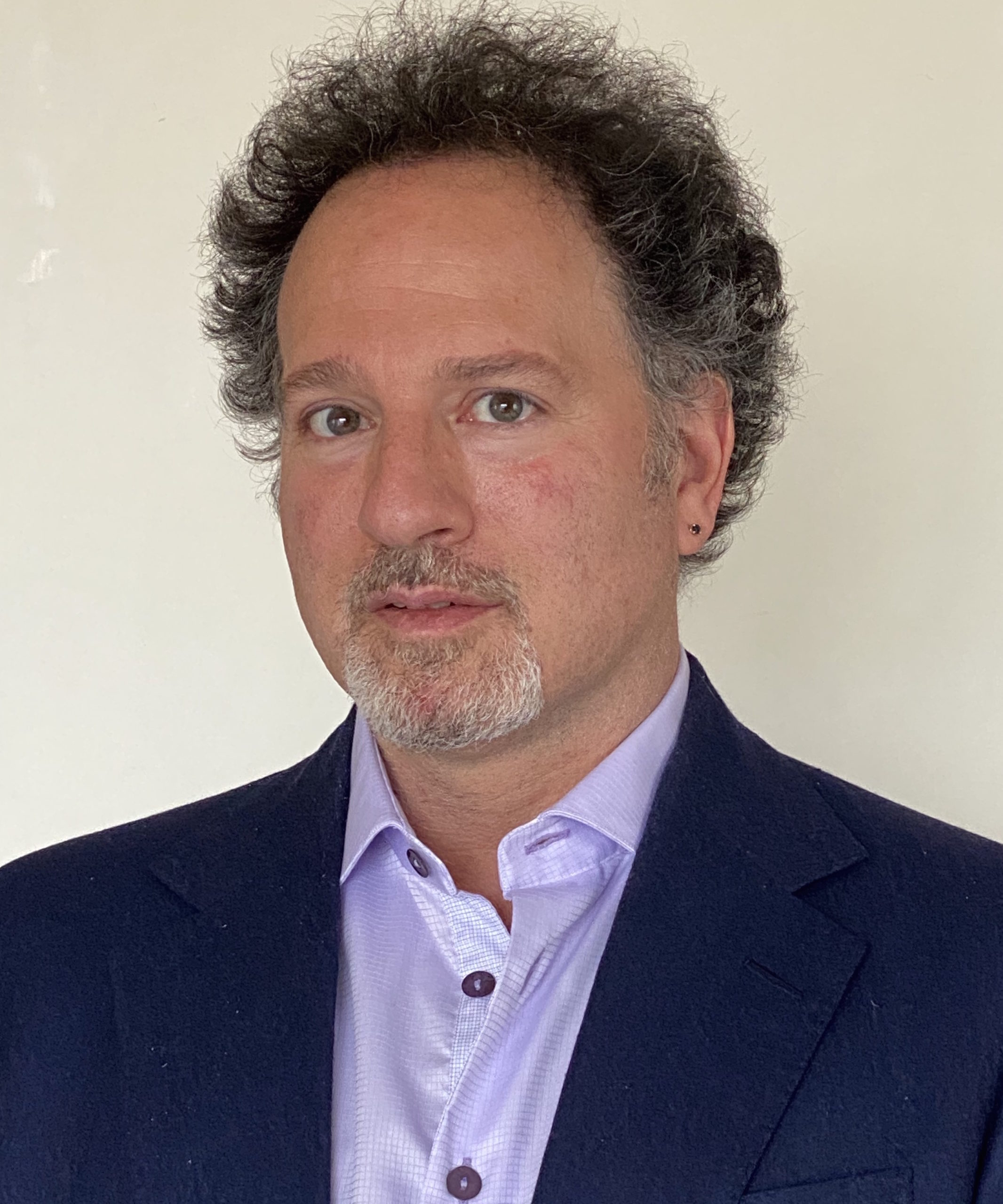
Zachary Karabell