Volcanoes are erupting in The Philippines, but on-fire Australia received some welcome rain. The Iran war cries have been called off and The Donald’s military powers are about to be hamstrung by the Senate. Meanwhile, his impeachment trial is starting, and we’re all on Twitter for a front-row seat.

What Could Go Right? Architects of Survival
Decades of quiet innovation are already helping us survive a hotter world.

Emma Varvaloucas
This is our weekly newsletter, What Could Go Right? Sign up here to receive it in your inbox every Thursday at 5am ET. You can read past issues here.
Architects of Survival
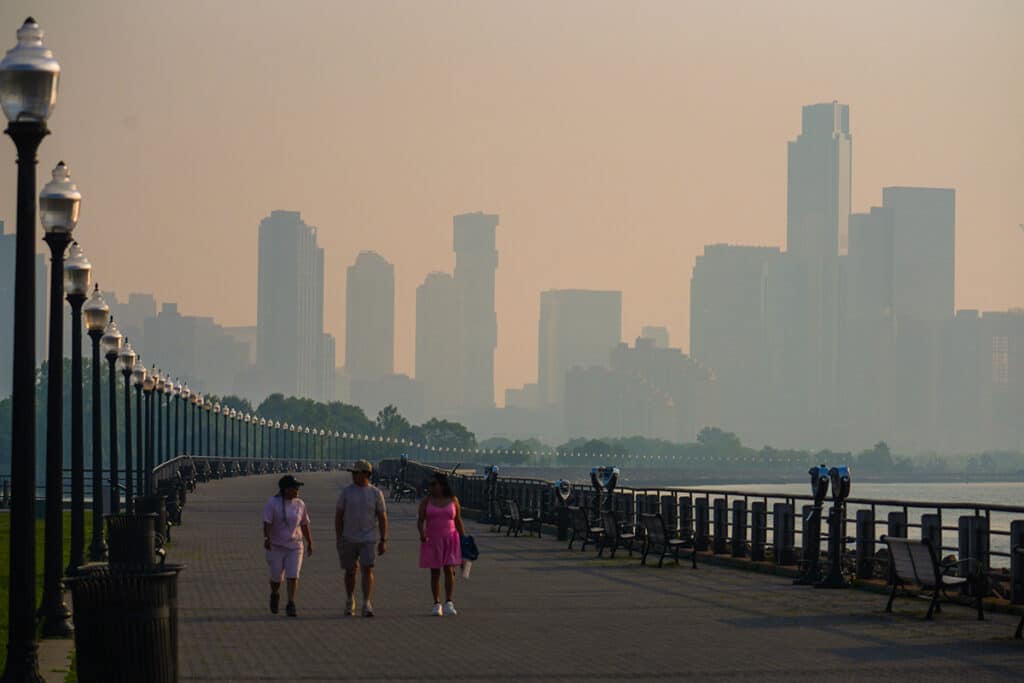
There’s nothing like a blanket of smoke settling over your city to make things feel decidedly apocalyptic. And while the haze from last week’s wildfires may be slowly clearing out of the United States and Canada, when you add in today’s genius political leadership on the issue, it’s no wonder that the “worst possible timeline” meme has become a mainstay of the internet.
Although the causes of any one fire are multiple, the latest attribution science fingers climate change as “very likely” to have “increased the likelihood and severity of extreme fire weather: the hot, dry, windy conditions that let fires ignite and spread,” as climate scientist Zeke Hausfather summarizes. So, yes, with the world set to continue to warm in the coming decades, this is probably far from the last time we’ll experience a smoke-laden summer.
And there lies the rub, because the real danger is not the fires themselves, but the smoke, which kills much larger numbers of people. It’s a frustrating timeline to be living in, given that we could have done a lot more to stave off a climate change-inflected future. But now that the chickens of our industrial choices have come home to roost, the challenge has become a dual one: in the medium and long term, cutting emissions, and in the short, mitigating climate change’s consequences on our lives as much as possible.
On the latter front, there are some silver linings. While the environmental threat has worsened over the years, the suite of tools we have at our disposal to protect us against smoke’s detrimental health effects has gotten considerably better. To illustrate what I mean, I invite you to join me on a highly specific trip through time. There’s only one condition: you have to take today’s wildfires with you. Let’s jump back about 80 years or so . . .
If it were 1942, you wouldn’t even have the option to seal your windows and doors with duct tape to prevent smoke infiltration; the multifunctional tape wasn’t invented until 1943, by an Illinois mom named Vesta Stoudt who was looking for a way soldiers could more quickly open ammunition boxes while under fire.
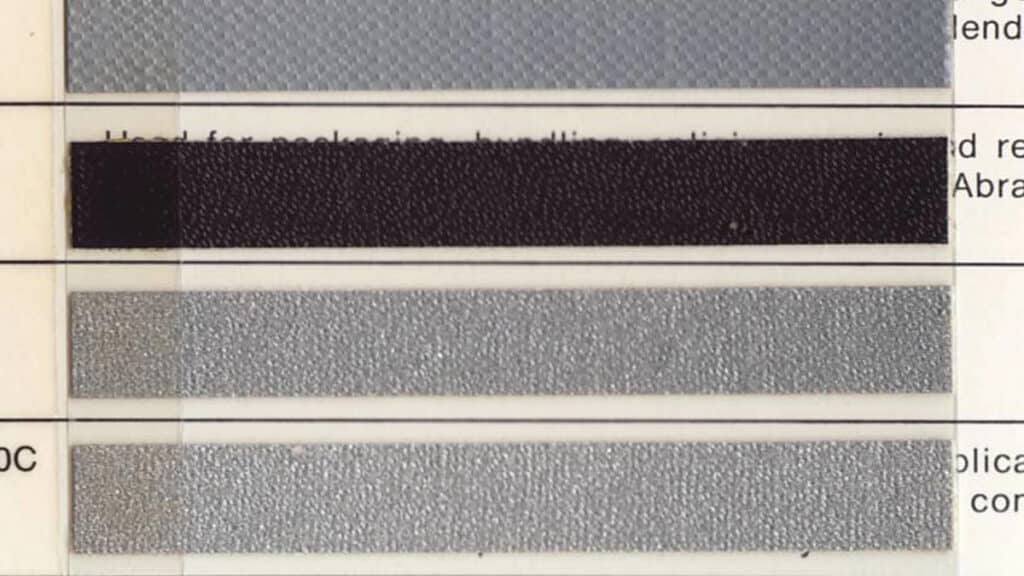
Duct tape prototypes | Johnson & Johnson Archives
Nor would you be able to buy an in-home air purifier, which also didn’t yet exist. The HEPA filter—the gold standard of air filters—was another invention of the WWII era, developed in the ’40s to protect those working on the Manhattan Project from radioactive particles.
If it were 1965, you could successfully duct tape your home . . . just to boil yourself alive in the heat, as it’s unlikely you’d yet have air conditioning. It’s unlikely you’d have it in your car yet, either, and even if you did, it would be another decade until the recirculation button—what you want to be using during fires to prevent the AC from sucking in outside smoke—would become common.
You’d also finally be able to buy an at-home air purifier, which first hit the market in 1963. Congratulations! There was only one issue: The cheapest option ran you nearly a thousand bucks in today’s dollars. And while the device would scrub your air of dirt, it also produced ozone gas as a byproduct, which, now that 1965-you is thinking about it, would explain that sudden onset of chest pain and those coughing fits.
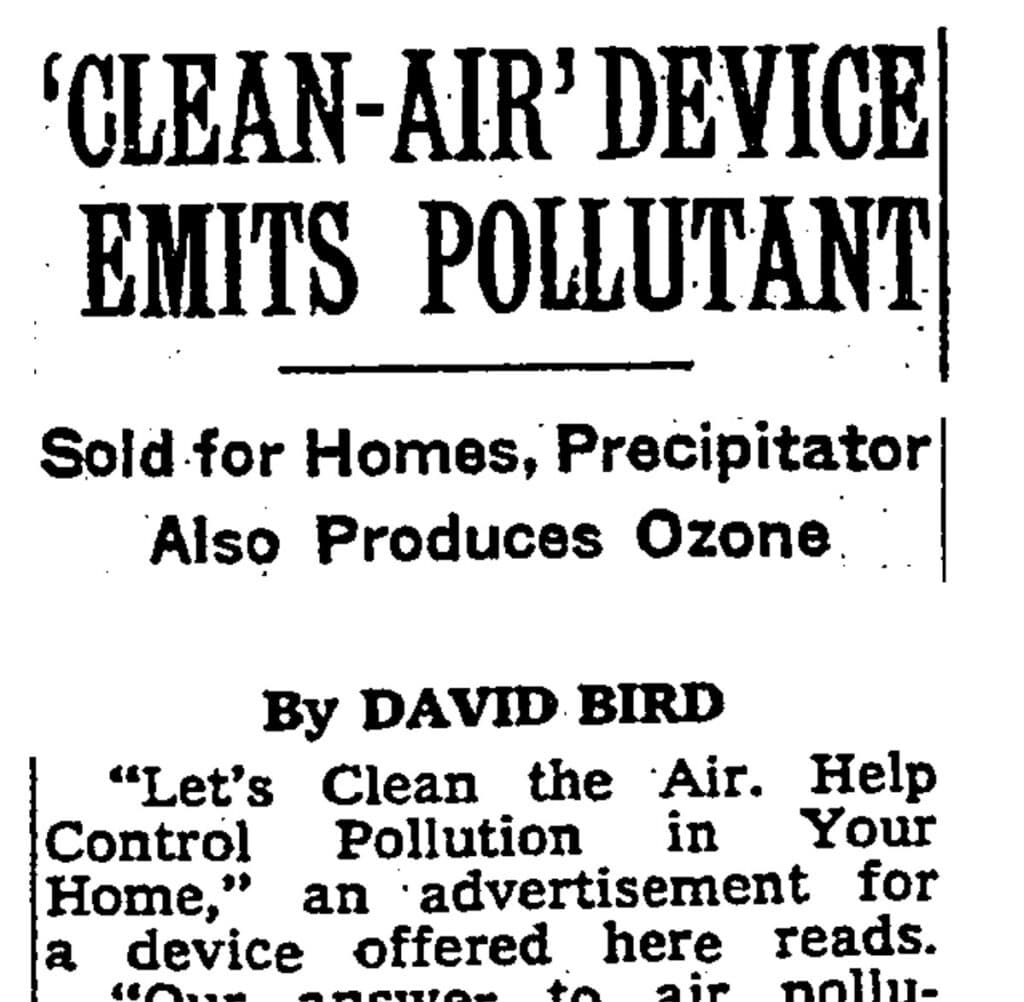
An article in the New York Times describing that era’s “air pollution control devices,” 1970 | The New York Times Archives
If it were 1989, odds are better that you could afford a non-ozone-producing purifier, but it wouldn’t include a prefilter or one made of activated carbon—both standard in today’s models—so the smell of smoke would fill your house. And while it would do a pretty good job on fine smoke particles, it wouldn’t catch the range of toxic gases wildfire smoke can carry. Oh, and it would operate just a touch more quietly than a vacuum cleaner.
If it were 1991, you wouldn’t be able to take a walk outside wearing a modern N95 mask, because the Taiwanese-American scientist Peter Tsai developed the process for electrostatically charging materials—the technology that makes those masks effective but breathable—a year later.
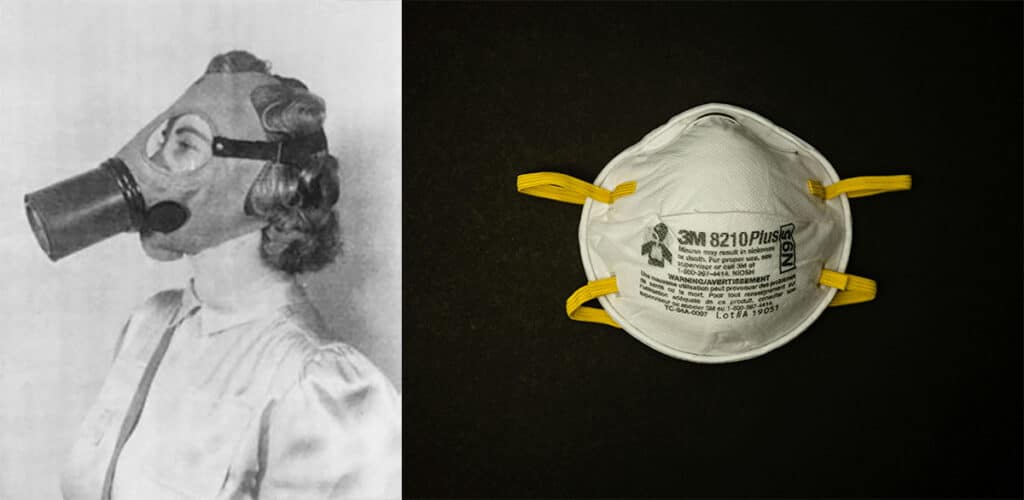
If it were 2009, you probably wouldn’t be able to Google instructions for DIY air purifiers, costing next to nothing, on your way to Home Depot, because smartphones were still transitioning from a tech-nerd luxury to everyday item. Besides, you wouldn’t find the necessary materials at the store, because MERV 13 filters—which you can, ahem, duct tape to the back of a fan if you don’t own a purifier with a HEPA filter—were just becoming available in a variety of sizes for residential use.
If it were 2011, you wouldn’t be able to buy an affordable air-quality sensor for your home, because scientists hadn’t yet figured out a way to shrink particle sensors enough to fit inside a consumer device.
And if it were 2018, you wouldn’t have the convenience of checking the outdoor air quality on your iPhone’s weather app, because Apple first rolled out the feature in 2020. (It wasn’t available in Canada until 2021.)
What’s all this matter in the face of the roaring wildfires of the future? Nothing, except decades of ever-better protection. Eric Kennedy, associate professor of disaster and emergency management at York University in Toronto, recommends getting air purifiers, air conditioners, and masks “into people’s hands” as a way to “literally save lives” where smoke is thickest. And such tools will only continue to improve, filtering ever-smaller pollutants and a broader range of gases. A combination of AI and built-in sensors could even allow future purifiers to automatically respond to the environment. “Your air purifier would turn on before you even smell smoke,” writes Anna Gragert for the consumer technology site CNET.
Living in a Schopenhauer polemic is bad enough, but the truly painful twist of the knife is the fear that we could well be the architects of our own demise, for failing to get a fast enough handle on climate change. That fear is valid. It’s smokier out there than it used to be, at least when it comes to wildfires in North America. And there is so much more we could be doing regarding climate change and fire management.
But adaptation is going to become an increasingly important issue as the years go by and the world gets hotter. Here, technological innovation deserves some credit. Because every time a new crisis comes our way, we don’t just sit back and take it. Filter by filter, sensor by sensor, mask by mask, we are also turning out to be the architects of our own survival.
—Emma Varvaloucas
What Could Go Right? S8 E15: The Case for Embracing Limits | with David Epstein
We live in an era of limitless options, but infinite choice might actually be paralyzing our ability to make decisions and find satisfaction. David Epstein, bestselling author of Range and the new book Inside the Box, joins host Zachary Karabell to argue that we severely overvalue complete freedom. Instead, Epstein reveals how imposing limits and constraints on ourselves can act as a powerful tool to drive creativity, spur innovation, and increase personal contentment. | Listen now
By the Numbers
32: Countries that have eliminated the eye disease trachoma; El Salvador is the latest
59%: Decrease in US deaths from coronary artery disease since 1990
5: African monkey species discovered in the past 75 years, including an orange-lipped one newly seen in the Congo
7.3%: Decrease in Argentina’s intentional homicide rate since 2024, bringing it to the lowest on record
Go Figure
The Ice Bucket Challenge is back, and with it hopes that another geyser of social media-generated funding will lead to the kind of progress that the original sparked. Chris Johnson, a recently diagnosed former NFL star, is leading this latest brrrrrroadside against the ultimately fatal neurodegenerative disease.
Quick Hits
🪐 Two big, back-to-back space discoveries: Researchers have found the first atmosphere surrounding a rocky planet within the habitable zone of a star, evidence that Earth-like conditions exist beyond our solar system. They also spotted the first sugar molecule in space, a hint that points to the origins of life on Earth.
🚘 Traveling by motor vehicle is becoming safer all over the world. There was a 21% decline in global road deaths between 2011 and 2025, according to the WHO. And in the US, 67% fewer teenagers have died in crashes since 1975.
🧬 An experimental immunotherapy has saved the lives of four children with a traditionally incurable brain cancer. While the therapy didn’t work for most of the participants in the small clinical trial, the results are still encouraging.
🧑💻 AI allowed programmers in Venezuela to build missing-persons databases in mere hours after earthquakes struck last month and it became clear that the state response was lacking. (Add another to the citizens’ army list.)
💦 A man’s ability to make sperm has been restored after a cutting-edge operation. He received grafts of his own tissue samples that were frozen 16 years earlier, before he underwent chemotherapy.
🌏 The numbat has been downlisted from endangered status after decades of conservation efforts. Its numbers are now in the thousands after the marsupial, the animal emblem of Western Australia, nearly went extinct in the 1970s.
☀️ Italy may be the next country to build a solar railway, after Switzerland unveiled the world’s first-ever version last year; initially planned as a three-year trial, early results have been so positive that a permanent installation is already expected. (Related: Switzerland is also experimenting—successfully—with alpine solar panels.)
🛝 American parents are uniting to save recess. After pressure to improve test performance in the 2000s led to the reduction or elimination of playtime in elementary schools, mothers and fathers are now pushing—and succeeding—to pass legislation to bring it back. (WSJ$)
📈 More people worldwide say that their communities are accepting of minorities and immigrants, a long-term pattern of improving perceptions that is linked to a positive outlook on life overall.
⚖️ A bill that would limit child marriage in the US has been introduced in Congress. The legislation closes an immigration loophole that allows younger girls to be forced into marriage and increases funding for grants and education, among other measures.
🧠 New blood tests can diagnose Alzheimer’s up to ten years in advance, potentially allowing the disease to be treated at its earliest stages.
👀 What we’re watching: In a major, albeit imperfect, step, Syria’s parliament met for the first time since the fall of dictator Bashar al-Assad.
💡 Editor’s pick: Jared Kushner wanted to build a luxury tourist resort that would gobble up millions of square feet of coastal Albania previously accessible to the public. Zoomers there said “no way”—and launched the Flamingo Revolution.
TPN Member Originals
(Who are our Members? Get to know them.)
- What AOC and Bernie Sanders get wrong about the oligarchy | The Argument | Matthew Yglesias
- Date farms, not data centers! | Life with Machines | Baratunde Thurston
- Putin propaganda | Diane Francis | Diane Francis
- Is Ukraine turning the tide against Russia? | GZERO | Ian Bremmer
- A test isn’t racist. Assumptions about Black kids can be. | NYT ($) | John McWhorter
- Two federal bills on boys and men. Two! | Of Boys and Men | Richard Reeves
- Trump’s gamble on Iraq | Middle East Uncovered | Faisal Saeed Al Mutar
- AI and dot-com déjà vu | No Mercy/No Malice | Scott Galloway
- Rethinking loneliness | Flourishing Friday | Clay Routledge
- Trump fires election commissioners | Tangle | Isaac Saul
- Maine Democrats are replacing an oysterman with a lumberjack. It might just work. | NYT ($) | Matthew Yglesias
- The morning after | The Renovator | Danielle Allen