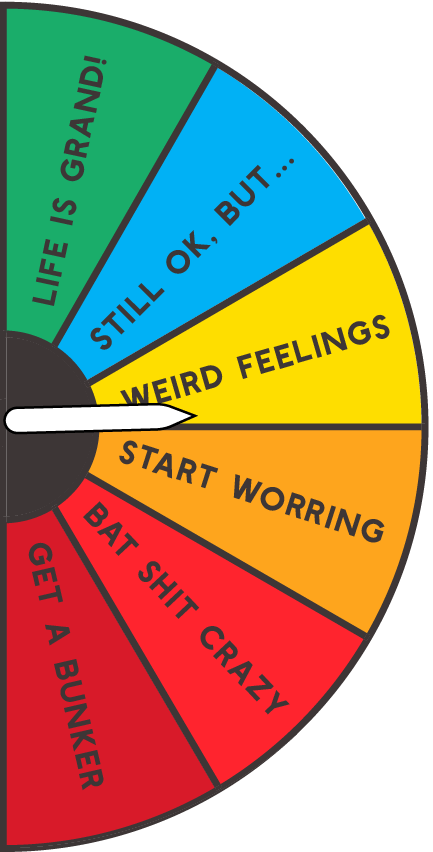
Volcanoes are erupting in The Philippines, but on-fire Australia received some welcome rain. The Iran war cries have been called off and The Donald’s military powers are about to be hamstrung by the Senate. Meanwhile, his impeachment trial is starting, and we’re all on Twitter for a front-row seat.

What Could Go Right? 5 Days of Pro-Democracy Triumphs
Halfway through a 10-day period of consequential elections, the news so far is mostly good.

Emma Varvaloucas
This is our weekly newsletter, What Could Go Right? Sign up here to receive it in your inbox every Thursday at 5am ET. You can read past issues here.
5 Days of Pro-Democracy Triumphs
The past couple of decades have not been kind to democracy. Since a wave of democratization swept across the globe in the ’80s and ’90s, democratic government has increasingly been on its back foot. And though the worldwide recession has not been bad enough to completely reverse progress, it has served as a disquieting reminder that democracy is never preordained.
Democracy mainly used to be lost at the hands of military coups. That is no longer the case. Its primary threat today is one many will recognize: a populist leader, legitimately elected, who erodes things from the inside. The scenario has played out in governments from South America to Asia.
Recently, however, some countries have begun to turn the tide again, ousting their authoritarian-leaning leaders. Those reversals, too, have followed a similar scenario: mass protests, often student-led, paired with surging voter turnout.
We’re five days into a 10-day period of elections in four countries that have been dealing with authoritarian drift—Serbia, Brazil, Israel, and the US—and the consequences will be massive. Purely from a pro-democracy perspective, the news so far has been mostly good.

It began with a whirlwind weekend. Serbians turned out in droves this past Sunday to cast aside incumbent Aleksandar Vucic, a campaign that succeeded despite a near-total government takeover of broadcast channels, vote-buying efforts, and other election irregularities. Serbia’s election commission estimated turnout at about 70%, the highest, reports Reuters, “since the breakup of Yugoslavia in 1992.”
Vucic served as president of Serbia for 12 years. But he could not outlast two years of continual protests, triggered in 2024 by a canopy collapse at a railway station that killed 16 people. The student-led movement that arose as a result accused Vucic’s administration of fraud and corruption and positioned itself as the harbinger of a new political era. Its slate of parliamentary candidates, known as the Student List, consists solely of political outsiders and runs the gamut from academics to farmers. Vucic quickly conceded defeat, sparking celebrations on the streets of Belgrade.

Also on Sunday, Brazil’s president, Luiz Inacio Lula da Silva—or Lula, as he goes by—was reelected in a shock result after a first voting round in which he trailed his opponent, Flavio Bolsonaro. Flavio is the son of Jair Bolsonaro, Brazil’s former president who is about a year into a 27-year prison sentence for the coup he attempted in 2022, after Lula defeated him. At the time, Lula’s win returned Brazil onto a democratic path, but the country looked ready to backslide again with another Bolsonaro at the helm. After at first alleging foul play and calling the election to be annulled, the younger Bolsonaro has now fled Brazil for the US, leaving before Brazil’s Supreme Court could confiscate his passport as part of a money laundering investigation.
In Brazil, too, an enormous voting surge made the difference. Brazil’s presidential elections consist of two voting rounds; usually, turnout falls between the first and the second. This time, however, nearly three million more Brazilians voted in the second round, a crowd mobilized via a vigorous, last-minute social media campaign. “We never saw anything like this,” Christian Lynch, a political scientist at Rio de Janeiro State University, told The New York Times.
As for Israel, its national election this past Tuesday was a chance to reverse the country’s descent into what some political scientists argue has already become competitive authoritarianism—when elections still occur but a regime’s abuse of power has given them an unfair leg up. Nearly 78% of Israel’s population cast ballots, the highest level of turnout since 1999, which included a major jump in the number of Arab voters.
The big question is whether President Benjamin Netanyahu will remain in power or an opposition bloc led by general and politician Gadi Eisenkot will prevail. So far, early results show no clear winner, and the complicated structure of Israeli politics means that a new government may not form for weeks or months.
The US will be last to go, next Tuesday. Will it follow in Serbia and Brazil’s footsteps? We don’t know yet, of course, but turnout is already surging: about 40 million Americans have already cast their vote, more than in 2018 and 2022 at the same point, according to NPR.
It’s unclear if these steps forward will prove enduring. For now, however, they are proof, as historian Francis Fukuyama writes, that “democracy, far from being a dying doctrine,” retains its “strength and vitality” in today’s world.
—Emma Varvaloucas
P.S. It has been a good few days for democracy in one other place, too: the popular opposition leader Maria Corina Machado has returned to Venezuela after nearly a year in exile. Her spokesman called it “a major step toward a democratic transition and free, fair, and verifiable presidential elections in the near future.”
By the Numbers
8.2%: Drop in US veteran homelessness in 2026, the biggest in a decade
9.2%: Drop in child labor in Brazil between 2024 and 2025
42%: Share of seats held by women in Taiwan’s legislature, the highest in Asia
29%: Share of US marriages in which both partners earn about the same, up from 11% in the 1970s
Go Figure
As America installs more giant batteries to store electricity for its power grid, communities grow increasingly worried about the associated fire risks. They can relax: According to data from the Electric Power Research Institute, as US grid battery installations increased 250-fold between 2016 and 2025, the annual rate of failure—i.e., arc flash, fire, and explosions—fell by more than 97%. In fact, batteries now fail at roughly the same rate as the transformers that have been fixtures of the grid for decades. Technology often gets safer a lot faster than it gets familiar.
Quick Hits
🔬 A new CAR T cell therapy may be the first approved treatment for stiff person syndrome, the autoimmune disease Celine Dion suffers from.
👑 We aren’t done with announcing discoveries! Egyptologists have identified ancient Egypt’s first female king: Meretneith, who ruled centuries before the construction of the pyramids at Giza. Meanwhile, researchers have found evidence of a previously unknown Ice Age mammal closely related to the yak.
⚽ Saudi women are now playing soccer in state-backed professional leagues. A mere eight years ago, they were barred from soccer stadiums.
👩⚕️ Pittsburgh nurses have won the first county-wide paid parental leave policy in the US. The policy covers 12 weeks for either parent in the first year after childbirth, adoption, foster placement, or stillbirth.
💊 The Indian government is imposing a price cap on 100+ cancer drugs after supreme court judges found that hospitals’ and retailers’ mark-ups amounted to “carnage” and “extortion.”
🏞️ The US has welcomed its first new national park in six years: Chiricahua National Park in Arizona, a sacred Apache site known as the “Wonderland of Rocks.”
🧬 The gene-editing tool CRISPR has been used to tweak DNA directly in a human body for the first time, part of a clinical trial to treat a rare liver condition.
📉 Young girls are giving birth at far lower rates than they did 30 years ago; the fertility rate decreased 76% for girls aged 10–14 between 1990 and 2023, and 48% for girls aged 15–19.
💉 Study results are in for Merck and Moderna’s personalized mRNA cancer vaccine. It cuts the risk of death or recurrence in melanoma patients by 42%. And, an experimental lung cancer drug from Swiss drugmaker Roche reduced the risk of death by 44% in a late-stage trial.
💡 Editor’s pick: What’s missing from the stories about the Cornell rape investigation?
TPN Member Originals
(Who are our Members? Get to know them.)
- France will never be enough for the people desecrating it ($) | Thomas Chatterton Williams
- The World Bank is ripping itself apart. It would be nice to know why. | Charles Kenny
- How uncertainty breaks the brain | Maia Szalavitz
- Are Americans just stupid? | Isaac Saul
- Environmentalists are wrong to oppose the Senate’s permitting deal | Jason Bordoff
- Trump thought his biggest political trick made him invincible. Not anymore. ($) | Theodore R. Johnson
- Strongmen fall when corruption is on the ballot | Ruth Ben-Ghiat
- Should living be enough ‘lived experience’ for a writer? ($) | John McWhorter
- Do miracles really happen? ($) | David Brooks
- ‘A golden age of science’ brought to you by the White House ($) | Tyler Cowen
- We disagree on policy, but we see the same problems in health care. ($) | Ezekiel J. Emanuel
- The DOJ’s Alaska lawsuit | Isaac Saul
This Week in History: The Last Smallpox Case
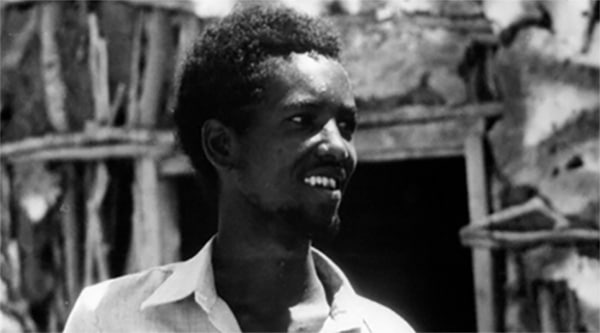
There’s only one human disease that we’ve managed to wipe off the face of the Earth: smallpox. About 50 years ago this week, the last man to catch it in the wild was infected.
The year was 1977. Jimmy Carter occupied the White House. Star Wars: A New Hope played in theaters. And in the coastal town of Merca, Somalia, there was a 23-year-old hospital cook named Ali Maow Maalin who, despite having been a vaccinator for a World Health Organization’s (WHO) smallpox program, had never gotten the jab himself. (“It looked like the shot hurt,” he said.)
One day in October, a driver came through town looking for directions, with two sick kids in the back. Maalin offered to hop in and show the way. The car ride was just 15 minutes, but it was enough time for Maalin to soon fall sick himself. He was diagnosed with smallpox on October 26.
The hospital he worked at swung into action. It stopped taking patients, and health workers vaccinated everyone around Maalin’s home—more than 50,000 people in two weeks—ensuring that no one else caught the disease.
Three years later, the WHO declared the world free of smallpox, after it had claimed 300 million lives in the 20th century alone.
Maalin himself survived. He became a polio vaccinator, going door to door to immunize kids. Whenever parents refused the shot, he’d tell his story. He was still at it in 2013, right before he passed away at the age of 59 from malaria.
His efforts, though, yielded real fruit. Somalia had been the last country with smallpox, and Maalin said he didn’t want it to be the last with polio, too. It wasn’t. Today, polio remains endemic in just two countries—Pakistan and Afghanistan—and global cases have dropped 99% since 1988.