Volcanoes are erupting in The Philippines, but on-fire Australia received some welcome rain. The Iran war cries have been called off and The Donald’s military powers are about to be hamstrung by the Senate. Meanwhile, his impeachment trial is starting, and we’re all on Twitter for a front-row seat.

What Could Go Right? Think We’ve Discovered Everything?
A baby planet, creatures of the abyss, and other reasons to think again

Emma Varvaloucas
This is our weekly newsletter, What Could Go Right? Sign up here to receive it in your inbox every Thursday at 5am ET. You can read past issues here.
Think We’ve Discovered Everything?
When you run an organization devoted to progress, you find yourself constantly consuming news about breakthrough scientific research, technological advancements, and general good news across the board. And when you do that, a funny thing happens to your perspective: You become convinced that there is still lots more to discover.
Whether that is actually the case remains a topic of heated debate. But it does strike me that most people probably feel the opposite—that is, that all things worthy of being discovered have already been discovered. (Meanwhile, even how our own bodies operate remains a mystery.)
From every angle, though, it seems that the past few months have been an especially fertile period of discovery, and I want to share a handful of findings that showcase the ongoing expansion of human knowledge. Today’s information environment is poisoned by crisis and overwhelm. Take this dose of wonder and curiosity, instead.
100+ previously unknown marine species
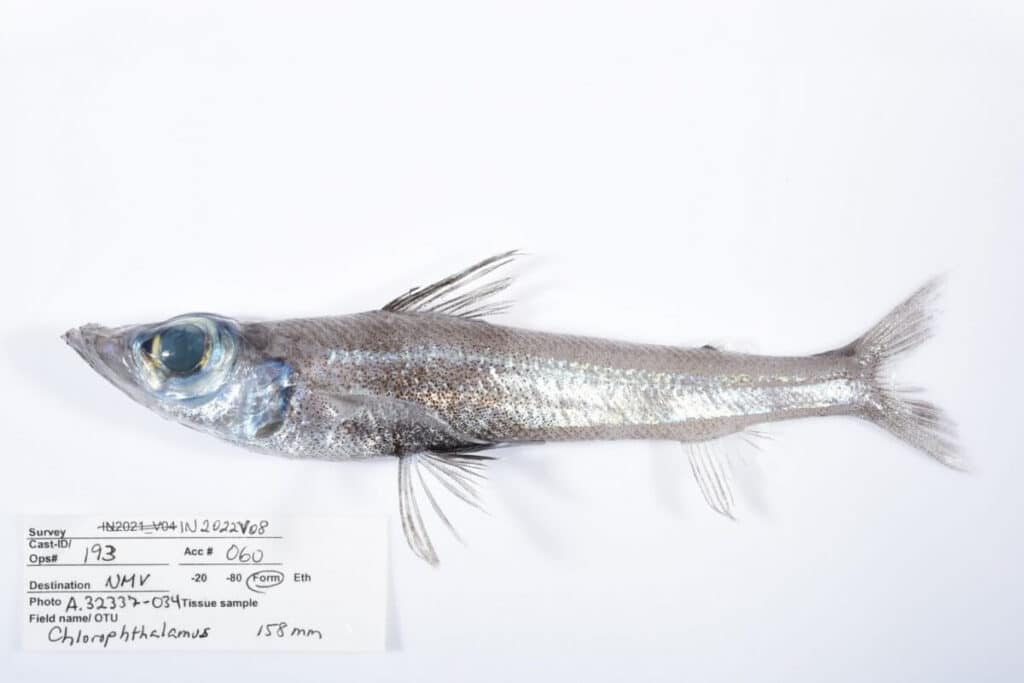
We still know famously little about our oceans: We’ve mapped less than a third of the seafloor—although that’s up from about 6% in 2017—and described about the same share of marine species. Even though the world’s oceans make up most of the planet’s habitable area, much of what lives in them is completely unknown to us, particularly in the deepest portions.
We are, however, slowly meeting the creatures of the abyss. Cutting-edge technologies now allow scientists to probe deeper water than ever before, in more remote locations, and to identify denizens much more quickly. For example, in June, 31 new marine species were discovered off the coast of Brazil. And in August, scientists added 149 more to the tally, from the never-before-studied waters surrounding the Christmas and Cocos islands, in the Indian Ocean between Australia and Sri Lanka. Among the newly identified: a white sea cucumber, the iridescent-eyed fish pictured above, and a parasitic barnacle.
A baby planet that is the youngest known
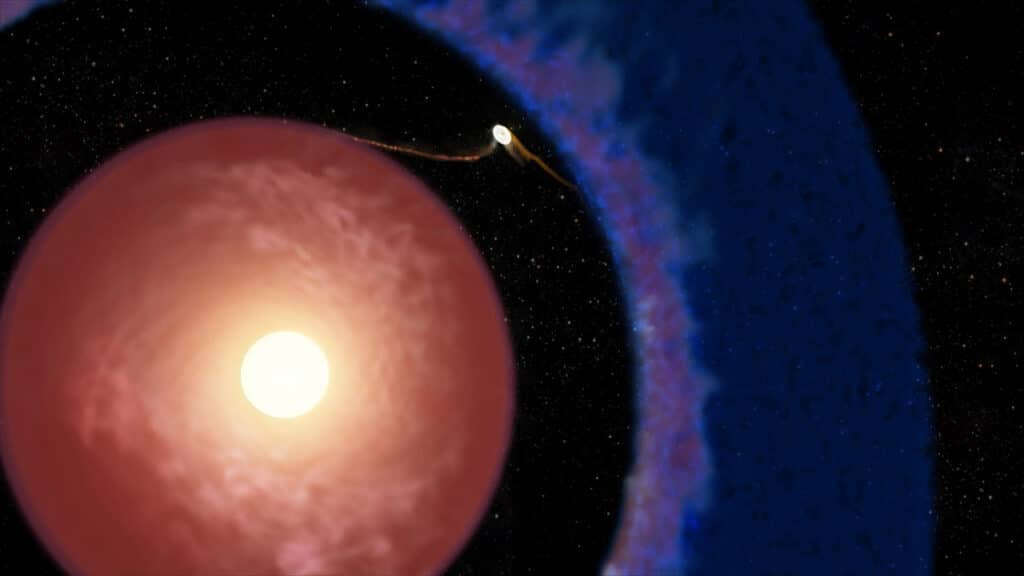
In September, doctoral candidate Andrea Bernardi went digging around in NASA’s archives and emerged with evidence of a planet still in its infancy. At less than a million years old, it blew past the standing record for youngest known world, previously held by a handful aged a youthful five million.
The planet, Elias 2-24 b, is located about 450 light-years from Earth. Rather big for a relative newborn, it’s about the size of Jupiter. Most important, its existence has shaken up the assumptions of planetary formation models. Scientists should know more soon. While Elias 2-24 b “is at the limit of what current telescopes can detect,” Bernardi told NASA, a more powerful telescope that launched in August will be able to detect more baby planets currently beyond the range of our sight.
Mangrove forests that are gaining ground
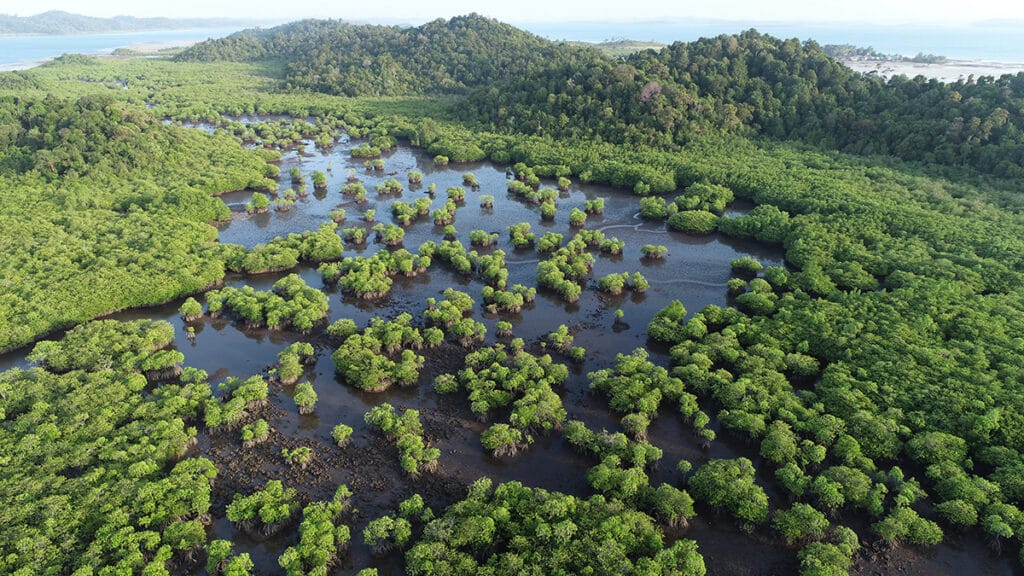
Mangrove forests are a key ecosystem in our warming world. Home to salt-tolerant trees and shrubs that grow at the juncture of land and sea, they store carbon, create ideal conditions for reefs and marine life, and protect communities against cyclones and storm surges. They’ve also been diminishing over the past decades as a result of human development, felled to make way for rice and palm oil plantations, for instance, or smothered under plastic pollution.
Lately, however, their fortune has reversed. In June and July, two separate trackers reported that since the 2010s, these forests have regenerated sufficiently to outweigh previous losses. If the net gain is minimal—by one count, less than 1% since the ’80s—the turn from contraction to expansion has been a genuine, and genuinely positive, surprise. Though the forests haven’t rebounded everywhere evenly, protective policy directives in countries like India, Australia, Pakistan, Senegal, and the Philippines have spurred growth overall.
Bonus: Chimpanzees have regional accents. Turns out, they may be able to clock the ape-equivalent of a Brooklyn “fuhgedabboutit” or a Boston “pahk the cah in Hahvahd Yahd”: A study released in September found that young chimps from different communities produce distinctly different grunts, whimpers, and laughter.
And, Turkish archaeologists believe they’ve found the world’s oldest shipwreck. More research is required before they can confidently claim the title, but for now, the wreck has been dated to about 2,400 to 2,700 BC—around the time the Great Sphinx of Giza was being built.
—Emma Varvaloucas
By the Numbers
2.5%: Undernourishment in the Dominican Republic, which recently exited the UN’s hunger map
53%: Decrease in US lung cancer deaths since the 1990s
113: Countries that have released new national action plans to address biodiversity loss, up from 55 a year ago
64%: Drop in Denver’s unsheltered population since 2023
Go Figure
It’s a sad truth that artificial intelligence is a powerful tool for online scammers. But it’s a happy truth that AI can be an effective weapon against them, too. An Australian company called Apate has posed some 350,000 AI bots as potential scam victims. (Apate is the Greek goddess of deceit.) The bots—which engage fraudsters in phone conversations that can last more than two hours, infiltrate online scam groups, and respond to fraudulent texts—have collected more than 250,000 pieces of intelligence on cybercriminals.
Quick Hits
🚀 Another potential future discovery to add to the list: Japan has launched the first mission to bring back a sample of moondust from one of Mars’ moons, in an attempt to solve the mystery of how they formed.
📉 Acute malnutrition among children under five in Gaza has been cut in half since humanitarian access expanded following the October 2025 ceasefire.
🦟 The global death rate from malaria has nearly halved since 2000, according to new data from the WHO.
🚫 Brazil has approved a constitutional amendment to ban the six-day workweek and cut the maximum workweek from 44 to 40 hours.
🌲 Deforestation in Brazil’s Amazon rainforest declined to the lowest level on record in a series of data that goes back to 1988.
📈 Poland’s transformation since the era of communism has been so total that its brain drain is now reversing, and incomes are converging with Western Europe’s.
🔬 It’s an exciting time for cancer therapy: precision oncology drugs that target tumor mutations mean cancers that were once a death sentence are now survivable. AI-powered screenings can catch nascent cancers that radiologists miss. And the UK’s National Institutes of Health are gearing up for an Operation Warp Speed-style push, but for cancer vaccines.
💊 A drug has reversed paralysis and vision loss in mice with multiple sclerosis (MS), a striking result since current MS drugs cannot restore already lost neurological function.
🪸 Bleached coral can heal in as fast as a month if touched against a healthy piece of coral, although it must be its genetic twin. This strategy can’t necessarily be used in the wild, but it opens doors to coral-saving approaches not previously considered.
👀 What we’re watching: Mexico joins the list of countries experimenting with ways to regulate social media: companies are now banned from recommending or exposing children to a range of harmful content, including content that “generates or promotes” eating disorders, self-harm, and sexual violence.
💡 Editor’s pick: Will the champion cause of the 2028 US presidential election be universal childcare?
TPN Member Originals
(Who are our Members? Get to know them.)
- Destroying the West in order to save it | Slow Boring | Matthew Yglesias
- Trump’s use of violent speech and spectacles echoes the autocrat’s playbook | Lucid | Ruth Ben-Ghiat
- America needs African immigrants | TFP ($) | Tyler Cowen
- ‘Extinction potential’: This alarmist AI narrative is more than bad PR | WaPo ($) | Zachary Karabell
- The Russia diesel deal | Tangle | Isaac Saul
- Why France has a nuclear-powered economy—and America doesn’t | Faster, Please! | James Pethokoukis
- Are we too political? | The Atlantic ($) | David Brooks
- What dementia taught me about living through a callous time | Reasons to Be Cheerful | Courtney E. Martin
- Why is no one doing anything about affordability? | NYT ($) | Matthew Yglesias
- Marco Rubio misunderstands what makes the West great | FP | Fareed Zakaria
- Europe cannot trust Trump | Diane Francis | Diane Francis
- Will AI help or hurt our pursuit of meaning? | Flourishing Friday | Clay Routledge
- Don’t get complacent but also don’t doom | Slow Boring | Matthew Yglesias
- Midterms 2026: Is a blue wave coming? | GZERO | Ian Bremmer
This Week in History: Getting to First Base
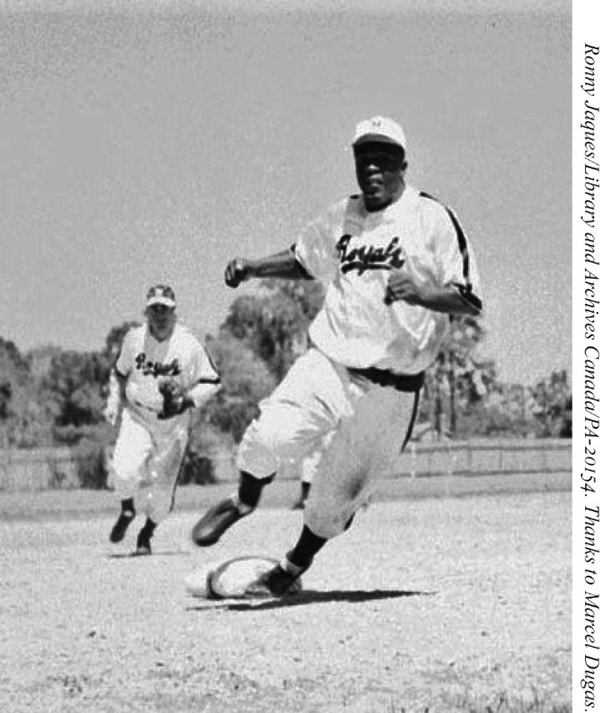
It was October 23, 1945, and 15 sportswriters and broadcasters had gathered at the home stadium of the Montreal Royals, in expectation of a “major announcement.” Speculation about what it could be ran wild in the lead-up. One editor guessed that the team had hired Babe Ruth as manager.
What awaited them instead was the introduction of a different (soon-to-be) famous baseball player: Jackie Robinson. Two years later, Robinson would break Major League Baseball’s color line, when he took the field as a first baseman for the Brooklyn Dodgers. That October announcement about his joining the Royals, though, was the actual beginning of his barrier-busting history.
As the first black man signed by the Dodgers’ top minor-league affiliate, Robinson didn’t exactly receive a warm response from the reporters that day. (One of them described the ensuing silence as “belligerent neutrality.”) And the road ahead was bumpy to say the least. Still, Robinson defied the naysayers to become one of the most recognized people ever to play the game. He was inducted into the Baseball Hall of Fame in 1962.