Volcanoes are erupting in The Philippines, but on-fire Australia received some welcome rain. The Iran war cries have been called off and The Donald’s military powers are about to be hamstrung by the Senate. Meanwhile, his impeachment trial is starting, and we’re all on Twitter for a front-row seat.

What Could Go Right? A Trace of DNA. A Decades-Long Mystery.
The clues were always there. Forensic science can finally read them.

Emma Varvaloucas
This is our weekly newsletter, What Could Go Right? Sign up here to receive it in your inbox every Thursday at 5am ET. You can read past issues here.
A Trace of DNA. A Decades-Long Mystery.
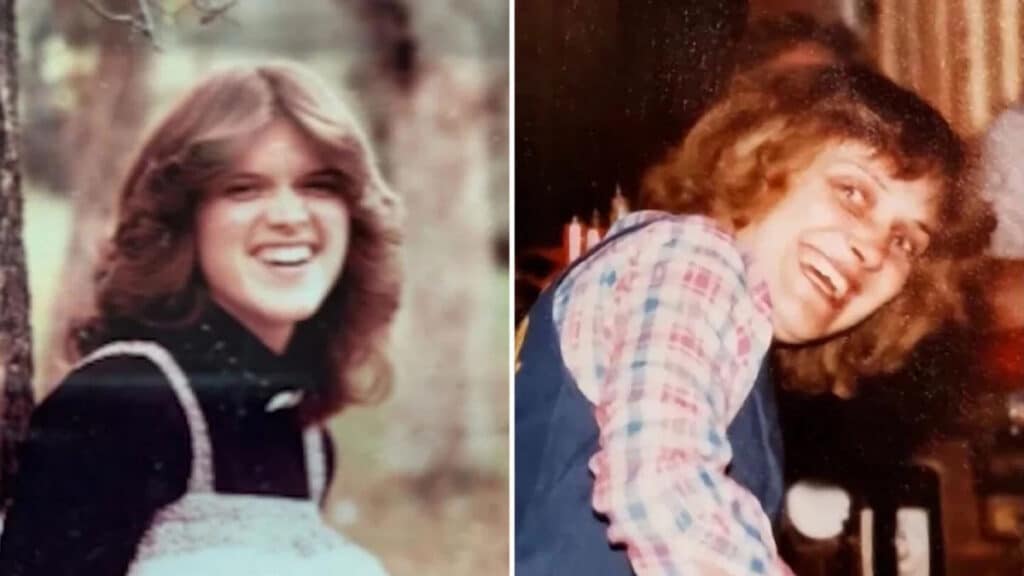
Judy Weaver was a 42-year-old mother living in northwestern Washington when she was found dead in her bedroom in 1984. Someone had tied her up, strangled her with a cord, then lit her bedspread on fire, the blaze quickly engulfing the room.
According to CNN, local police came up with “outlandish” theories to explain her death, “involving money laundering and cocaine.” They fingered her boyfriend as a suspect, but a decade later, the man had died, and they were no closer to solving the case. It stayed cold for another three decades.
In 2020, armed with an innovative software program that makes identifying trace amounts of DNA possible, law enforcement decided to reopen Weaver’s file. Genetic material was lifted from one of the ties that had bound Weaver’s body, and the program got to work. It identified three DNA profiles. One belonged to Weaver. The second was her boyfriend’s. The third, though? That was a mystery.
Forensic scientists didn’t think the unknown DNA necessarily belonged to Weaver’s killer; it could just as easily have been from a first responder to the scene, a scientist on the case told CNN. But when it was uploaded to a national database of convicted offenders, it got a ping: a rapist named Mitchell Gaff, who was still residing in the area.
In 2024, detectives obtained a DNA sample from Gaff after disguising themselves as employees of a chewing gum company going door to door to seek feedback on its latest flavors. The saliva-soaked stick confirmed that Gaff was their guy. This April, he confessed to Weaver’s murder—and to that of another woman, Susan Vesey, which had remained unsolved since 1980—and was sentenced to 50 years to life. More than four decades after the killings, the women’s cases were finally closed.
A Technological Upgrade
The story is incredible, given that DNA testing didn’t even exist in the early ’80s. But Weaver’s and Vesey’s cases are just two in a string that have been recently revisited since DNA technology has gone through a dramatic upgrade. At the heart are advances that make collecting and building profiles from tiny or even degraded DNA specks possible.
It used to be, explains Rich Press of the National Institute of Standards and Technology, that forensic scientists needed a “relatively large amount of material, such as a visible blood or semen stain,” to nab a perpetrator. Nowadays, collection methods are so sensitive that they can pick up DNA left behind by someone talking or sneezing, he writes. You could shake hands with someone who then opens a door—and your DNA could be picked up on the knob. The advantage is that experts are now swimming in previously invisible crime scene information. The disadvantage is that deciphering all of that information has become a highly complex endeavor. Did the DNA on the door belong to the victim? The assailant? An innocent acquaintance? A combination of two or all three?
That’s where the computers come in. For instance, the software program used in Weaver’s and Vesey’s cases, STRmix, performs a type of analysis called probabilistic genotyping, which employs statistical modeling to calculate the likelihood that DNA belongs to one person or another. It’s particularly handy when the sample is limited or an undifferentiated jumble.
STRmix is but one of a handful of probabilistic genotyping softwares. First introduced in Australia in 2012, it’s by far the most popular choice in the US; according to its website, it is used by nearly 100 private and public organizations across the country, and 30 international laboratories. Its adoption has recently sped up: Useful for both new cases and revisiting old ones, by 2023 it had played a role in more than 380,000 worldwide. That number now tops 700,000.
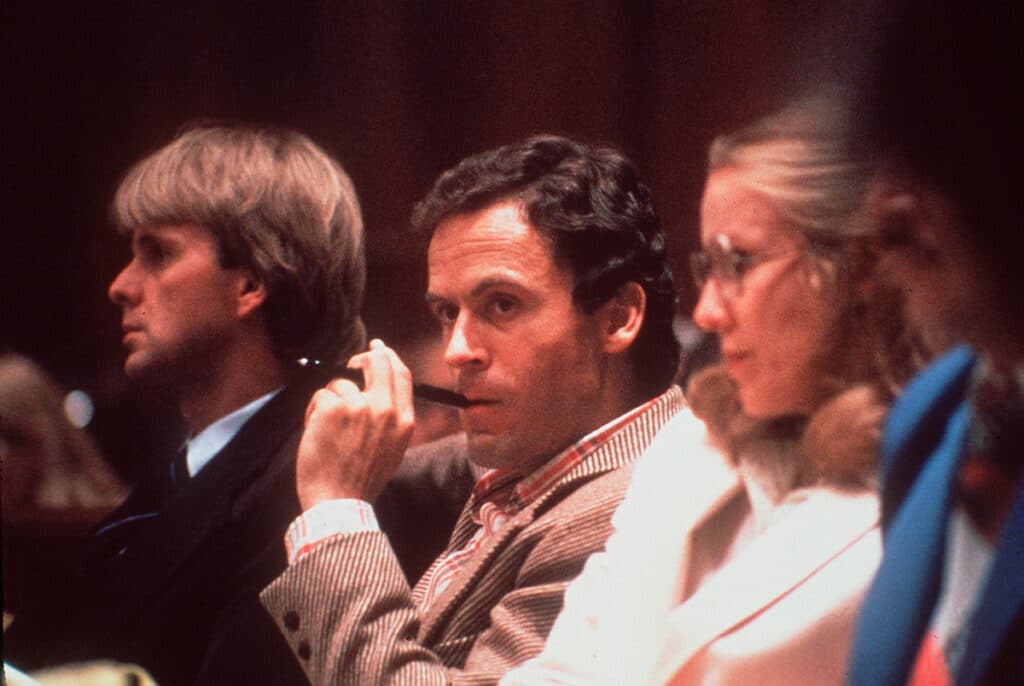
Just last month, Utah police used STRmix to confirm that Ted Bundy was behind the 1974 murder of 17-year-old Melissa Ann Smith. It was the second murder they were able to definitively link this year to the notorious serial killer with the software, which has been in use in the state for only three years. Other examples abound. STRmix has helped exonerate the wrongfully convicted, too: A Texas man named Martin Santillan was cleared of his murder charge in 2023 after DNA evidence from a jersey worn by the real gunman was collected and tested. Santillan had been behind bars since 1998.
Currently, there’s only about a 50-50 shot that a homicide case will be solved in the US—a much lower clearance rate than in decades past. There is evidence, however, that this so-called Great Decline, instead of reflecting an ineffectual police force or changing case patterns, may be the result of a system that requires higher standards of proof to make an arrest. Once an arrest is made, though, it’s much likelier to result in a conviction. Advances in DNA science are a big reason why.
—Emma Varvaloucas
By the Numbers
49%: Share of US adults who are in favor of the death penalty, the first time support has fallen below a majority since 1971
4K: Population of Antarctic blue whales, up from around 400 in the 1970s
2.4M: Equivalent number of oil barrels displaced by the growth of renewables since 2010
16,750: US traffic deaths in the first half of 2026, the fewest since 2015
Go Figure
Suburbia isn’t generally a hotbed of environmental activism. But across the US, shopping malls, parking lots, and golf courses are being transformed into green neighborhoods. In Austin, a defunct mall is now a mixed-use community anchored by a college campus. Outside Charlotte, a former golf course is now a walkable district with a park designed to reduce flooding. And on New York’s Long Island, a strip mall and parking lot are part of a site redeveloped with quality housing and amenities for residents of a poor community. The motivation isn’t always environmental; housing shortages, demand for walkable communities, and tax revenue are often bigger factors. But climate activists aren’t complaining.
Quick Hits
🏭 Global carbon emissions from fossil fuels will fall by 0.4% in 2026, according to the Global Carbon Budget; they’ve risen an average of 0.8% per year over the past seven years. Emissions are projected to fall in China (see below), the US, the EU, and Japan, but increase in India.
🔌 In the first half of 2026, China generated less than half of its electricity from coal for the first time ever.
⌚ A new wristwatch-style device calms the tics of Tourette’s syndrome and involuntary movements from other neurological conditions with rhythmic electrical pulses. (Watch its instantaneous effect in this tearjerker of a video.)
🏳️🌈 A colonial-era ban on gay sex has been overturned in Trinidad and Tobago by a British court, sparking hope for the 33 Commonwealth countries that still have anti-homosexuality laws on the books.
🚢 The largest passenger ship ever built in America will be the world’s biggest artificial reef. Earlier this month, the SS United States was saved from the scrapyard and deliberately sunk off the coast of Florida.
🐦 Biologists can now use sound recorders and AI to identify individual birds and track them over time. The new process currently only works on a single species, but in the future it could replace labor-intensive methods that require leg bands and stress out birds.
🗳️ Virginians approved a constitutional amendment that restores voting rights to those with felony convictions once they are released from prison. Twenty-seven states have similarly expanded such rights since 1997.
⚖️ Hungary’s new government is passing a package of women’s rights reforms, which includes criminalizing the misuse of intimate images, defining rape as the absence of consent, and no longer requiring a prescription for emergency contraception, among other measures.
💶 Greece has become a model of fiscal health in Europe. That’s a sentence that was unimaginable not 15 years ago during the country’s severe financial crisis. Unlike the continent’s major economies, it has posted budget surpluses every year since 2020.
🐟 One of the rarest fish on Earth is making a comeback—in Death Valley, California. Conservation efforts nearly doubled the population of the Devils Hole pupfish—up from a mere 77 fish—within one year.
🧂 A potassium-enriched salt could prevent nearly three million deaths and 10 million cases of cardiovascular and kidney disease globally every year. The healthier salt is more expensive than regular table salt, but looks and tastes just like it.
👀 What we’re watching: Israel’s parliament is considering bills that would set a term limit for the prime minister and restore power to the judiciary that had been limited by Prime Minister Benjamin Netanyahu.
💡 Editor’s pick: Why the Democrats’ landslide win may actually lead to more bipartisanship.
TPN Member Originals
(Who are our Members? Get to know them.)
- Jensen Huang’s secret is out. Who’s next? ($) | Tyler Cowen
- Did the Deep State do in Jensen Huang? | Robert Wright
- Spy vs. AI | Scott Galloway
- Sexpionage and world order | Diane Francis
- Is air travel getting less safe? | James Fallows
- These are not serious people | James Fallows
- Why won’t boomers grandparent? ($) | Arthur Brooks
- It’s time for Israelis to throw out their Trump ($) | Thomas L. Friedman
- Trump says US will end Israel aid | Isaac Saul
- How to end the imperial presidency ($) | Zachary Karabell
- Gasoline isn’t really that expensive | Matthew Yglesias
- What are those strange noises Trump makes? ($) | John McWhorter
- The high-stakes race to control AI | Ian Bremmer
This Week in History: What’s in a Kilogram?
Have you ever wondered what makes a meter a meter or a second a second? Both are defined by natural phenomena that are constant, everywhere and forever. The meter, for instance, is the distance traveled by light in a vacuum in 1/299,792,458th of a second.
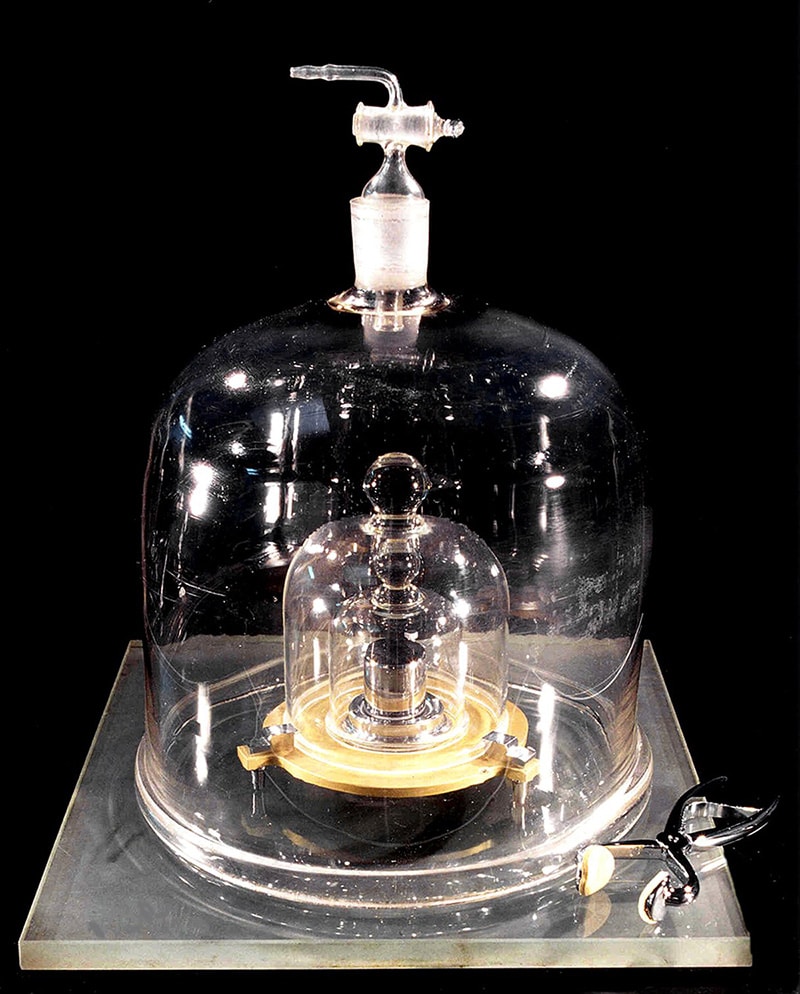
Until recently, however, a kilogram was defined by the weight of an actual physical object—specifically, a piece of golf ball-sized metal known as Le Grand K, nested within a series of glass bell jars and locked in a basement vault outside of Paris. A cylinder made of platinum and iridium, it was cast in 1879. As the international standard against which countries checked their own one-kilogram masses, the system required continual re-measurement.
Finicky, to say the least. Le Grand K, however, had an additional problem that anyone over the age of 35 will understand: Its weight yo-yos (not from eating too many Carvel ice cream cakes but because of tiny molecular fluctuations). The set-up also made measuring ever-smaller units—such as a millionth of a gram, a necessity of modern scientific endeavors—devilishly difficult.
On November 16, just shy of a decade ago, scientists from 60 countries decided to do away with Le Grand K, voting to base all measurement units on natural phenomena rather than physical objects. Three other units—ampere, kelvin, and mole—were redefined at the same time, making the moment the most significant to the International System of Units in more than a century. Today, the kilogram is defined using the Planck constant, the speed of light, and another natural invariant uncovered by advances in quantum science.
You surely haven’t noticed any difference since the kilogram was redefined, but these changes have real-world impact: When the meter and the second were similarly redone in the ’60s and ’80s, it set the stage for GPS technology as we know it now.